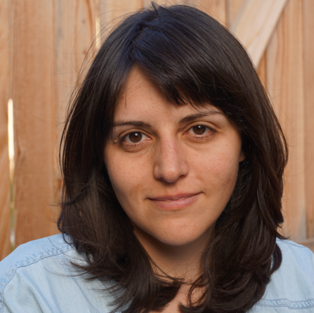
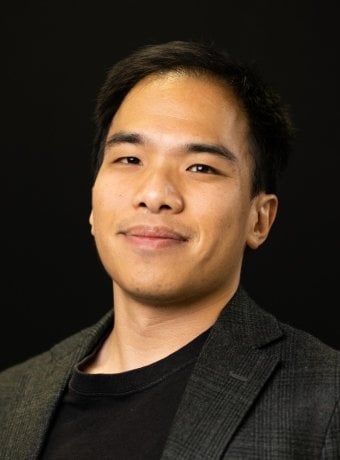
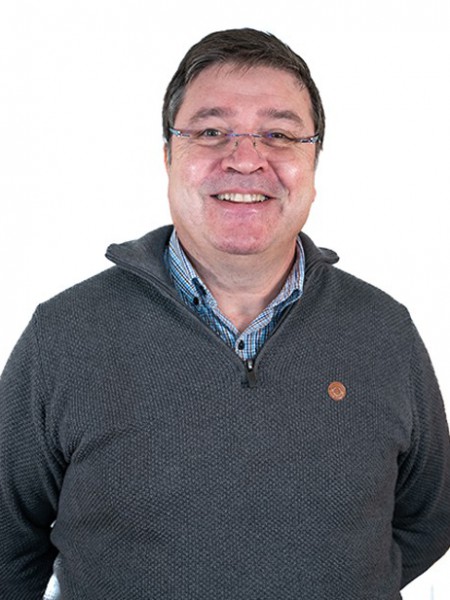
Nicole Hurtig is an Assistant Professor of Geochemistry in the Department of Earth and Environmental Science at New Mexico Institute of Mining and Technology. She holds a Ph.D. in Geochemistry from McGill University and has held academic positions at Colorado School of Mines and research fellowship at Colorado State University. Her research examines ore-forming processes, metal mobility in hydrothermal fluids, Re-Os isotope systematics in petroleum systems, and volcanic gas chemistry. Current projects focus on rare earth element (REE) geochemistry, including experimental studies of REE speciation in supercritical fluids and thermodynamic modeling of mineral solubility. Her publication record demonstrates consistent focus on metal transport mechanisms in geological fluids, with particular emphasis on rare earth elements since 2021. Research methodologies combine experimental geochemistry with spectroscopic techniques and numerical simulations. Dr. Hurtig supervises graduate research in economic geology and maintains collaborations through the Hydrothermal Geochemistry and Critical Minerals community. She contributes to developing the MINES thermodynamic database for geochemical modeling applications.
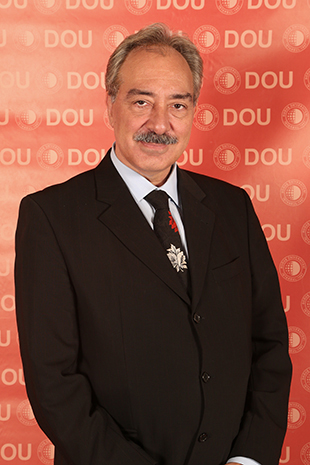
Prof. Dr. Ahmet Zafer ŞENALP is a Professor at the Department of Mechanical Engineering (English Program) at Doğuş Üniversitesi. He holds a PhD in Mechanical Engineering from ODTÜ (1998) and has extensive experience in CAD/CAM Robotics and metal forming processes. His academic career includes roles at Gebze Yüksek Teknoloji Enstitüsü (1999–2012 as Assistant Professor, promoted to Associate Professor by 2012) and Gebze Teknik Üniversitesi (until his retirement as an Associate Professor in 2019). His research focuses on finite element analysis, metal forming, plasticity theory, and ergonomic design. Education: BSc (1989), MSc (1991), and PhD (1998) in Mechanical Engineering from ODTÜ. He worked at ODTÜ CAD/CAM Robotics Center (1989–1998) and served in the military on the Panter Obüs project (1998–1999). Research Interests: Finite Element Analysis (FEA) applied to biomechanics, pressure vessels, prosthetics, and manufacturing processes. He also explores metal forming techniques, CAD/CAM integration, and material deformation mechanics. Publications span FEA-based studies on human joint forces, pressure vessel buckling, prosthetic design, and manufacturing optimization. His work often bridges computational methods with practical engineering challenges. Teaching includes courses on FEA fundamentals, mechanical vibrations, and design methodologies in both Turkish and English.
Valentina KRACHMALNICOFF is a CNRS Research Scientist at Institut Langevin, affiliated with ESPCI Paris and PSL University. She joined the institute in 2012 after completing her postdoctoral fellowship there in 2010. Her research focuses on experimental nanophotonics, particularly studying near-field interactions between fluorescent nano-emitters and nanostructured plasmonic or dielectric materials. Dr. KRACHMALNICOFF obtained her PhD from University Paris-Sud in 2009 with a thesis on quantum atom optics experiments supervised by Alain Aspect and Charles Westbrook. Her research interests span experimental nanophotonics with plasmonic and dielectric media, near-field optical microscopy with fluorescent nanoprobes, quantum optics applications, and the study of electromagnetic local density of states. She has developed expertise in fluorescence intensity and decay rate measurements of nano-objects grafted on scanning probe microscope tips, as well as nano-manipulation techniques. Her work bridges fundamental physics with potential applications in quantum technologies, biosensing, and thermal management at the nanoscale. She frequently employs super-resolution imaging techniques to overcome diffraction limits in optical measurements. Analysis of Dr. KRACHMALNICOFF's recent publications reveals a strong methodological evolution toward increasingly sophisticated combinations of experimental techniques with theoretical modeling. Her work consistently focuses on probing light-matter interactions at the nanoscale, with growing integration of biophysical approaches. The publications demonstrate expertise in thermal radiation at nanoscale distances, plasmonic and dielectric nanostructures, and super-resolution fluorescence lifetime imaging. Her research shows a trajectory from fundamental near-field optics toward applications in quantum information and biosensing. Dr. KRACHMALNICOFF has received notable scientific recognition: 2017: CNRS Bronze Medal for her pioneering work in nanophotonics 2007: L'Oréal France - UNESCO "For Women in Science" Prize Dr. KRACHMALNICOFF actively mentors doctoral students and postdoctoral researchers. Current advisees include Guillaume Blanquer and Dorian Bouchet (PhD candidates) and Vivien Loo (postdoctoral researcher). Former students include Da Cao and Etienne Castanié. Her research is supported by CNRS funding and collaborative grants with other institutions, evident from her extensive co-authorship network spanning theoretical physicists, materials scientists, and optical engineers. Dr. KRACHMALNICOFF leads an experimental research team at Institut Langevin specializing in nanophotonics. Her laboratory features advanced near-field optical microscopy capabilities, fluorescence lifetime imaging systems, and nano-manipulation setups. The team collaborates closely with other researchers at Institut Langevin, including Yannick De Wilde (CNRS Research Director) and Ignacio Izeddin (Associate Professor at ESPCI), forming a cohesive research group focused on light-matter interactions at the nanoscale.
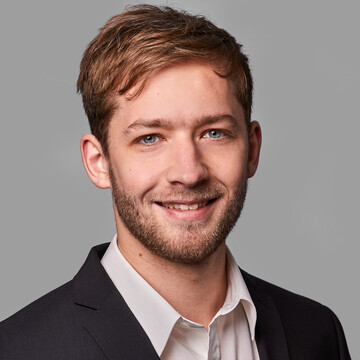
Sebastian Thiery serves as a Professor in Manufacturing Engineering at Leuphana University of Lüneburg, specifically holding a Ph.D. Professorship for Manufacturing – Innovative Manufacturing. His research focuses on advanced manufacturing processes with particular emphasis on sheet metal forming technologies. Thiery's primary research interests include Incremental Sheet Forming with Active Medium (IFAM) , Deep Drawing Processes , Process Control and Optimization , and the application of Artificial Neural Networks in manufacturing systems. His work bridges theoretical modeling with practical industrial applications, particularly in metal forming operations where geometrical accuracy and process robustness are critical concerns. Analysis of his publication record reveals a clear research trajectory focused on improving manufacturing processes through innovative control strategies. His recent work emphasizes the integration of machine learning techniques with traditional manufacturing processes, particularly using neural networks for friction compensation and draw-in prediction. The publications demonstrate increasing sophistication in process control methodologies, moving from basic IFAM process development to sophisticated closed-loop control systems that incorporate real-time monitoring and adaptive adjustments. Thiery actively collaborates with researchers including Mazhar Zein El Abdine, Jens Heger, and Noomane Ben Khalifa, suggesting participation in a dedicated research group or laboratory focused on advanced manufacturing processes. His work appears to be supported by research grants, including funding from the German Research Foundation (DFG) as indicated in one of his publications.
Dan Wik is an Associate Professor in the Department of Physics & Astronomy at the University of Utah . His research focuses on observational X-ray astronomy, particularly galaxy clusters, inverse Compton scattering, X-ray binaries, and the X-ray background. He has extensive experience in data calibration, analysis tool development, and mission collaborations such as NuSTAR, Chandra, and XRISM. Wik holds a PhD in Astronomy from the University of Virginia (2010) and a BS in Astrophysics from Ohio University . His research interests span galaxy cluster mergers, nonthermal emission processes, high-energy astrophysics, and cross-calibration studies between X-ray observatories. Recent articles highlight his work on NuSTAR observations of galaxy clusters, X-ray binary populations in M31 and M33, inverse Compton emission constraints, and stray light background analysis techniques. His studies often integrate multiwavelength data and address cosmological implications of X-ray observations. Wik has received multiple grants from NASA for projects like Time Domain X-ray Studies of AGN and Hard Bandpass Extension of XRISM Cluster Observations . He supervises undergraduate and graduate researchers and teaches courses from general education to advanced graduate levels, including Foundations of Astronomy and High Energy Astrophysics .
Vinh Nguyen is an Assistant Professor in the Department of Mechanical and Aerospace Engineering at Michigan Technological University, where he directs the Michigan Tech Center for AI and coordinates the NIST-PREP program. His research focuses on advanced manufacturing through Industry 4.0, human-robot-machine interaction, and physics-based/data-driven modeling. He has developed solutions for machining, additive manufacturing, metal forming, and robotic assembly to promote smart and sustainable manufacturing. Prior to joining Michigan Tech in 2022, he was a National Research Council Postdoctoral Fellow at NIST (2020–2022). Dr. Nguyen earned his PhD (2020), MS in Mechanical Engineering (2017), and MS in Electrical & Computer Engineering (2017) from Georgia Institute of Technology. He received dual bachelor’s degrees in Electrical and Mechanical Engineering from Rensselaer Polytechnic Institute (2014). His research portfolio spans Advanced Manufacturing Industry 4.0 and 5.0 Human-Robot Interaction Physics-Based/Data-Driven Modeling Industrial Automation based on his lab’s interdisciplinary focus on human-centric, resilient solutions. His recent publications address trends in Machine Learning for Manufacturing Autonomous Vehicle Sensors Hybrid Additive/Subtractive Manufacturing Augmented/Mixed Reality Interfaces Industrial Robot Diagnostics Material-Specific Machining with keywords spanning Robotics, Data Science, and Industrial Engineering.
Gaurav Arya is a Professor in the Thomas Lord Department of Mechanical Engineering and Materials Science at Duke University, with additional appointments in the Department of Chemistry and Biomedical Engineering. His research laboratory employs physics-based computational tools to investigate biological and soft-material systems at the molecular scale. Ph.D. from University of Notre Dame (2003) B.Tech. from Indian Institute of Technology Delhi (1998) Research focuses on: Molecular modeling and simulations Statistical mechanics DNA nanotechnology Viral DNA packaging Chromatin biophysics Polymer-nanoparticle composites Recent research trends emphasize AI-driven materials discovery and programmable DNA nanostructures. Key grants include: NSF DMREF: Architecting DNA nanodevices (2023-2027) DOE Mesoscale Self-Assembly (2020-2027) UC San Diego Ligand-Nanocrystal Interlayer Studies (2024-2027) Scientific contributions: Featured in 2025 Nature Communications on DNA superstructures 2022 Science Advances on DNA nanodevice reconfiguration 2021 PNAS on viral DNA packaging motors
Philippe Tassin is a Professor of Physics at Chalmers University, specializing in electromagnetic structured media and computational electrodynamics. He teaches optics, quantum mechanics, and computer science courses, earning recognition through the Golden Chalk award and Chalmers' Pedagogical Prize. M.Sc. and Ph.D. (summa cum laude) from Free University of Brussels Postdoctoral work at Iowa State University and Ames Laboratory (US DOE national lab) His research spans metamaterials, plasmonics, and nanophotonics, with significant contributions to inverse design methodologies using machine learning. He has authored influential papers in Science , Nature Photonics , and Physical Review Letters , and frequently presents at international conferences. Recent publications highlight advancements in liquid metal composites for electromagnetic absorption, AI-driven metasurface design, and adaptive meshing for photonic simulations. His work integrates computational physics with experimental validation across multiple electromagnetic domains. KAW Fellowship Swedish Research Council Grant IEEE & SPIE Fellowships BAEF Alumni Award Frans Van Cauwelaert Award (Royal Flemish Academy) As editor of Photonics and Nanostructures , member of the Young Academy of Sweden, and vice-chair of IEEE Photonics Sweden Chapter, he actively contributes to academic leadership and public science communication.
Augusto Luís Barros Lopes is an Assistant Professor in the Materials and Ceramic Engineering Department at the University of Aveiro since January 2009. Previously, he served as an Invited Assistant Professor at the same department (2004–2008). He holds a PhD in Materials Science and Engineering from the University of Aveiro (2001) and a Bachelor's in Ceramic and Glass Engineering (1989). He has been the Senior Technician responsible for the Electron Microscopy Service at the department (1991–2004). His research focuses on Materials Science and Engineering , with expertise in electron microscopy (SEM/TEM and EDS/PEELS) , microstructure-property relationships , and plastic deformation of materials . He teaches courses on metals, ceramics, characterization techniques, and mechanical properties. Key publications include studies on dual-phase steels, asymmetric rolling of aluminum alloys, and nanocomposite synthesis. He leads projects like EcoCerâmica (enhancing ceramics/crystal sector competitiveness) and FOCO (optimizing cabinet cooling). He advises PhD students and has collaborated internationally on materials processing and characterization. His work spans structural materials, energy-related materials, and advanced manufacturing techniques.
Franco Lombardi is a Full Professor at the Department of Management and Production Engineering (DIGEP) , Polytechnic of Turin , with affiliations to the J-Tech@PoliTO Interdepartmental Center . He has been a PhD college member for the Production Systems & Industrial Design program since the 19th cycle (2003/2004) and served as a course lecturer in Production Systems (Management Engineering) and Graphic Communication and Mechanical Manufacturing (Industrial Production Engineering) since 2019/2020. Research Focus: Manufacturing technologies, product lifecycle management (PLM), Industry 4.0, sustainable production systems, joining processes, and human-centric knowledge management frameworks. Article Trends: Recent work spans friction stir welding of industrial alloys (2025), sustainability evaluation of AI in product lifecycles (2024), integration of Industry 4.0 in agriculture (2024), and additive manufacturing eco-design (2024). Earlier projects include reconfigurable production systems (2009) and real-time production planning (2019). Grants and Projects: Scientific manager for PNRR-funded initiatives like AGRITECH Spoke 6 (2022-2025) and MANAGE5.0 (2022-2024), alongside regional projects such as TECNOPROTEO (2024-2027) and DynLab4JMat (2018-2021). Collaborated on national patents for gear machining processes. PhD Advisees: Temur Turgunboev (Ingegneria Gestionale), Nicolo Grasso (Gestione, Produzione E Design), Giovanni Marongiu (Gestione, Produzione E Design), Benedetta Fasciolo (Gestione, Produzione E Design), Luigi Panza (Gestione, Produzione E Design), Alberto Faveto (Gestione, Produzione E Design).
Oliver G. Ernst is a Professor of Numerical Analysis at Technische Universität Chemnitz . His research focuses on Numerical Analysis , Uncertainty Quantification , and Inverse Problems , with applications in Thermo-Hydro-Mechanical (THM) processes , Electromagnetics , and Stochastic Partial Differential Equations . He is associated with the Numerical Analysis group at TU Chemnitz. Key Research Areas : Efficient numerical methods for PDEs Krylov subspace techniques Stochastic finite element methods Multi-physics modeling Geoscientific applications Recent Publications (2025-2010): THM simulations under uncertainty Neural network PDE solvers Bayesian inversion frameworks Rational Krylov algorithms Deflated restarting strategies Collaborations : TU Bergakademie Freiberg University of Manchester Technical University of Munich University of Maryland University of Geneva Software Development : Contributor to OpenGeoSys platform Developer of FEMALY MATLAB library Academic Recognition : h-index 32, i10-index 66, with over 4423 citations since 2020.
António Manuel de Bastos Pereira is a Full Professor at the Department of Mechanical Engineering, University of Aveiro, Portugal. He has held significant leadership roles including Director of the Master's program in Welding Engineering and Director of the Research Unit Centre for Mechanical Technology and Automation (TEMA) from 2015 to 2024. Under his leadership, TEMA was classified with the highest rating by FCT and included in the European network of Key Enabling Technologies institutions. Dr. Pereira's research focuses on materials science, particularly the study of materials from composites to metals. His work spans advanced manufacturing technologies, surface engineering, and mechanical characterization of materials. He has published 97 articles in SCI journals with 2140 citations and an h-index of 29 (Scopus), demonstrating significant impact in his field. His research has led to the development of over 500 industrial projects worth approximately 100 million euros. His recent publications reveal consistent research trends in materials characterization, advanced manufacturing processes, and sustainable engineering solutions. Key themes include laser processing of materials, welding technologies, composite materials, surface treatments, and thermal engineering applications. His work often combines experimental and numerical approaches to solve practical engineering challenges, with growing emphasis on sustainable manufacturing methods and energy efficiency. Dr. Pereira has supervised numerous graduate students across various mechanical engineering topics, particularly in welding, materials processing, and mechanical design. He has been Principal Investigator for 39 scientific research projects and collaborated in 68 projects total, securing significant research funding. His project portfolio includes national and European initiatives focused on sustainable manufacturing, advanced materials, and innovative industrial processes. As Director of TEMA, he coordinated over 100 researchers within the Research Unit Centre for Mechanical Technology and Automation. TEMA is included in the "Portuguese Roadmap of Research Infrastructures of Strategic Relevance" and was selected to be part of the European network of institutions relevant within Key Enabling Technologies (KETs). Dr. Pereira also coordinated the thematic line "Innovative and Sustainable Industries" of LASI, Portugal's largest associated laboratory with around 500 PhD researchers. His leadership has positioned these research units as key players in technology transfer to small and medium enterprises across Portugal.
Professor Mohammad Reza Movahhedy is affiliated with the Department of Mechanical Engineering at Sharif University of Technology , Tehran, Iran. He holds the academic rank of Professor and specializes in Manufacturing Engineering . His research focuses on Additive Manufacturing, Machining Dynamics, and FEM Simulation. Education: PhD, Mechanical Engineering, University of British Columbia (2000) M.Sc., Mechanical Engineering, University of Waterloo (1994) B.Sc., Mechanical Engineering, University of Tehran (1988) Research Interests: Additive Manufacturing (3D Printing, Laser Cladding) Meta-Materials Fabrication Hybrid Machining Processes (Ultrasonic/Laser Assisted) Machining Dynamics and Machine Tool Behavior FEM Simulation of Metal Cutting/Forming Experimental Modal Analysis Computer-Aided Tolerancing Professional Contact: Email: movahhed@sharif.edu
Dr. Song Yu is an Associate Professor at the Department of Engineering Mechanics , School of Civil Engineering , Shandong University , with expertise in rock mechanics, fracture mechanics, and numerical simulation techniques. Education: B.E. (1989), M.E. (1992) in Machine Building, Ph.D. (2004) in Mould & Die Engineering, Post-doctoral research (2005-07) in Die & Mold CAD at Shanghai Jiao Tong University, Visiting Scholar at UC San Diego (2008) Research focuses on rock and soil mechanics , fracture mechanics , nondestructive AE detection , and numerical simulation for rock-metal interaction. Pioneered 3D DDA method applications in rock mechanics and fluid-solid coupling models. Recent publications emphasize geotechnical stability analysis under seismic loads, coupled hydro-mechanical modeling , and hexahedral mesh algorithms in metal forming. His work bridges computational methods with practical geotechnical challenges. Notable grants: National Natural Science Foundation of China (51579140), State Key Laboratory of Geotechnical Mechanics projects Teaches advanced topics in Finite Element Method (FEM) , structural optimization, and ANSYS simulation techniques. Collaborated with institutions including Shanghai Jiao Tong University and UC San Diego.
Associate Professor Kevin Laws is a materials scientist specializing in bulk metallic glasses and amorphous alloys at the School of Materials Science & Engineering, University of New South Wales (UNSW). His research focuses on the design, discovery, and development of magnesium- and aluminum-based metallic glasses for structural and functional applications, with expertise in die-casting, strip casting, and post-production processing of bulk metallic glasses. Professor Laws has held significant positions including Project Manager at the ARC Centre of Excellence for Design in Light Metals since 2009 and Postdoctoral Fellowship at UNSW since 2008. His research contributions are extensive, with over 30 refereed journal publications and approximately $100k in research funding since 2008. His work extends to international collaborations, having served as a Visiting Scientist at both the Swiss Federal Institute of Technology (ETH) in Zürich and the United States Air Force Research Laboratories. His primary research interests include bulk metallic glasses, amorphous alloys, magnesium and aluminum alloy development, composite materials, and advanced processing techniques. Professor Laws has made significant contributions to understanding the thermal and mechanical properties of metallic glasses, with applications spanning from structural components to functional devices. His recent work shows progression into high-entropy alloys, tungsten boride structures, and advanced characterization techniques while maintaining his core focus on metallic glasses. Professor Laws' publication record demonstrates a strong trajectory of research excellence, with consistent output of high-impact papers in leading materials science journals. His work shows increasing sophistication in both experimental techniques and computational modeling approaches, reflecting the evolving nature of materials science research. ARC Centre of Excellence Postdoctoral Research Fellowship (2007-) Invited Research Position at Swiss Federal Institute of Technology (2010) Invited Research Position at US Air Force Research Laboratory (2011) Member of Institute of Engineers, Australia (2003-) Member of Society of Automotive Engineers-International (2001-) Professor Laws has co-supervised 10 honors and 6 PhD students in the past 4 years, demonstrating his commitment to education and mentorship. He serves as course coordinator for Welding and Joining Processes and contributes as a guest lecturer for polymer engineering and demonstrator for foundry casting, rolling, and mechanical testing. His teaching responsibilities complement his research activities, creating a synergistic relationship between education and discovery. His research is conducted within the School of Materials Science & Engineering at UNSW, where he collaborates with colleagues on projects related to advanced materials development and characterization. The school provides state-of-the-art facilities for materials processing and characterization, enabling Professor Laws to pursue his research on metallic glasses and related materials.