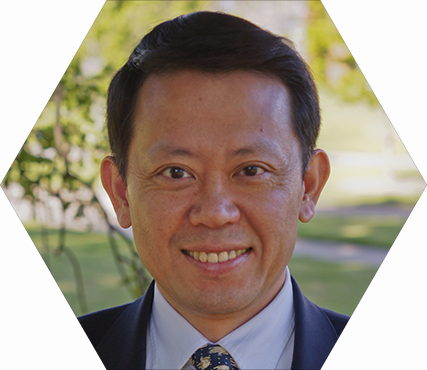
Steven Y. Liang , Regents' Professor at the Georgia Institute of Technology 's Woodruff School of Mechanical Engineering, focuses on precision manufacturing , additive manufacturing , and materials-driven process optimization . His research program bridges materials science and computational mechanics to develop predictive models for advanced manufacturing systems. Ph.D., University of California, Berkeley (1987) M.S., Michigan State University (1984) B.S., National Cheng-Kung University, Taiwan (1980) Dr. Liang's work emphasizes physics-based modeling of thermal-mechanical interactions in machining and additive manufacturing, particularly for Ti6Al4V and Inconel 718 alloys. Recent publications highlight tool wear prediction , laser-assisted micro-milling , and residual stress modeling using machine learning and analytical mechanics. His research has been recognized with the ASME Milton C. Shaw Manufacturing Research Medal (2016) , SME Gold Medal (2021) , and Outstanding Lifetime Service Award of NAMRI/SME (2021) , among others. Funded by federal agencies and aerospace/automotive industries, his work provides scientific foundations for process planning and optimization.
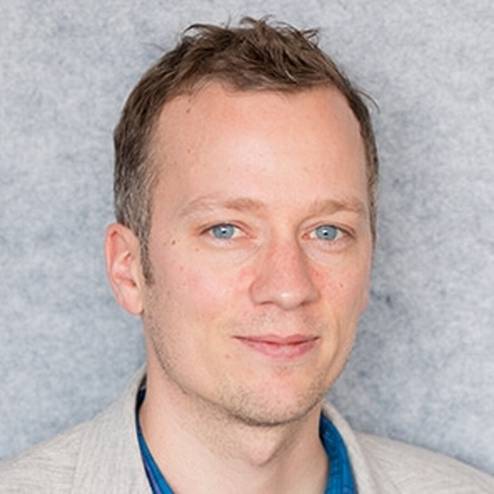
Luigi Bruno is an Associate Professor of Machine Design at the Department of Mechanical, Energy and Management Engineering (DIMEG), University of Calabria. He has held this position since 2014, following 12 years as an Assistant Professor at the same institution and Visiting Professorships at IIT Gandhinagar (2012), University of Alabama at Birmingham (2013-2017), and Free University of Bozen-Bolzano (2021). 1999 : Master's in Mechanical Engineering, University of Calabria (110/110 cum laude) 2003 : PhD in Mechanical Engineering, University of Pisa His research interests span: Experimental Mechanics : Pioneering speckle interferometry for micro-displacement measurement and residual stress analysis. Materials Science : Elastic characterization of anisotropic materials, biomedical applications of soft substrates, and 3D-printed composites. Biomedical Engineering : Mechanical behavior of biological tissues, ocular biomechanics, and dental implant material testing. Recent research trends focus on: Integrating artificial muscles into rehabilitation devices Advancing full-field optical measurement via microCT/DVC Optimizing 3D printed polymer adhesion for industrial components Exploring neuronal biomechanics on soft surfaces Scientific contributions include: CS2007A00010 patent for dual-focus speckle interferometers Deputy Editor of Optics and Lasers in Engineering (2019-present) Guest Editor for special issues on optical methods in experimental mechanics and nanobiotechnology Academic leadership extends to coordinating Mechanical Engineering committees (2021-present), serving on editorial boards, and organizing international conferences like AIAS National Conference (2018). He has secured multiple MIUR research grants and industry collaborations with Alfagomma, 3DNA, and Ferrovie della Calabria. His laboratory, Mechanics of Materials and Structures , supports both research and teaching activities with advanced optical measurement systems and computational tools for mechanical design.
Professor João Quinta da Fonseca is a Professor of Mechanical Metallurgy in the Department of Materials at The University of Manchester. He leads the LightForm project, a multidisciplinary initiative supported by the EPSRC, and is affiliated with the Materials Performance Centre and Dalton Nuclear Institute. His research focuses on microstructural-scale metal deformation mechanics, crystal plasticity modeling, and in-situ characterization using synchrotron/neutron diffraction. He chairs the IOM3 Advanced Metal Forming Committee and collaborates with industries like Rolls-Royce and Airbus. Education: PhD in Mechanical Behavior of High Volume Fraction MMCs from the University of Leeds. Academic Line Manager in the Department of Materials and EDI committee member. Research Interests: Experimental mechanics, texture analysis, phase transformations, and computational modeling. Pioneered HRDIC for sub-micron deformation measurement. Key applications include aerospace and energy sectors. Grants & Projects: Active grants include Rotational Vibration Assisted Increment Sheet Forming (EPSRC-funded) and collaborations on jet engine materials. Over 150 publications and datasets on magnesium alloys, titanium, and superalloys. Labs/Teams: Leads the Mechanical Metallurgy group, part of the Centre for Light Alloy Research and Innovation (CLARI).
Dr. Mani Khezri is a Lecturer in the School of Civil Engineering at The University of Sydney since 2014, specializing in structural mechanics and innovative numerical methods. His research focuses on cold-formed steel structures, buckling behavior of plates and laminated assemblies, and functionalizing buckling for structural morphing. He holds a Ph.D. in Structural Engineering from UNSW, an M.Sc. from SUT, and a B.Sc. from IUT. Key research areas include extending cold-formed steel applications to mid-rise structures through built-up sections, analyzing buckling and post-buckling behaviors, and leveraging buckling for smart technologies like kinetic façades. He collaborates with industry to develop affordable, prefabricated structures and sustainable materials through additive manufacturing. His work bridges theoretical analysis (e.g., meshfree methods) with practical applications, such as optimizing ventilation systems via buckling-induced airflow control. He leads grants like 'Solid-State Additive Manufacturing For Recycled Aluminium Alloys' and 'Complete limit state analysis of steel structural framework.' Students include Pouya AFSHAR IMANI (additive manufacturing), Cynthia LIU (built-up columns), Emad TAYARANINAJJARAN (floor systems), and Ruilin ZHANG (serviceability analysis). His lab, the Centre for Advanced Structural Engineering, explores advanced structural systems and computational mechanics.
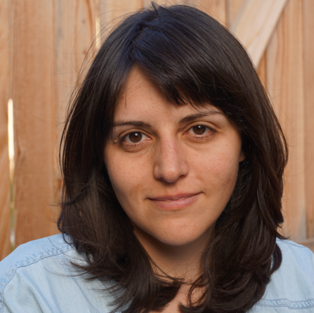
Shahrzad Esmaeili is a Professor in the Department of Mechanical and Mechatronics Engineering at the University of Waterloo. She holds a PhD in Materials Engineering from the University of British Columbia (2002), and master’s and bachelor’s degrees in Materials Science and Engineering from Shiraz University (1988, 1980). Her research focuses on processing-structure-property relationships in light alloys, metallic biomaterials, and additive manufacturing. She has expertise in phase transformations, surface modifications, and multi-length scale characterization. Notably, she received an Early Researcher Award from the Ontario Ministry of Research and Innovation. Her work bridges experimental and computational methods to study microstructural phenomena in aluminum and magnesium alloys. Recent publications emphasize non-isothermal annealing, precipitation hardening, and bio-structure fabrication. Education: PhD, Materials Engineering, University of British Columbia (2002) MSc, Materials Science and Engineering, Shiraz University (1988) BSc, Materials Science and Engineering, Shiraz University (1980) Research Interests: Her work integrates experimental and modeling approaches to study nanostructured materials, including metallic biomaterials and light alloys. Key areas include: Precipitation hardening mechanisms in Al-Mg-Si and Mg-Zn alloys Surface functionalization via laser-assisted deposition Additive manufacturing of porous titanium bio-structures Thermal-mechanical processing of aluminum composites Publications: Over 100 peer-reviewed articles span microstructural analysis, alloy behavior under thermal treatments, and biomedical applications. Recent trends focus on non-isothermal processing effects, microalloying strategies, and advanced surface modification techniques. Awards: Early Researcher Award (Ontario Ministry of Research and Innovation) Grants & Collaboration: Her research involves interdisciplinary collaborations, though specific grants are not detailed here. She leads studies on novel processing routes for high-performance alloys and biomaterials. Labs/Teams: Active in materials characterization and computational modeling groups at the University of Waterloo, focusing on multi-scale material analysis.
Dr. Triratna Muneshwar is an Assistant Professor in the Department of Metallurgical Engineering and Materials Science at the Indian Institute of Technology Bombay (IIT Bombay), where he has been serving since November 2021. His research focuses on advanced thin film deposition techniques, particularly atomic layer deposition (ALD) and atomic layer etching (ALE), for next-generation semiconductor devices. Ph.D. in Materials Engineering, University of Alberta, Canada (2014) Dual Degree (B.Tech & M.Tech) in Metallurgical Engineering and Materials Science, IIT Bombay (2009) His research interests lie at the intersection of materials science and semiconductor technology, with a strong emphasis on modeling and experimental analysis of vacuum thin film processes. He investigates atomic layer deposition of oxides, nitrides, and metals, surface reaction kinetics , dopant distribution in thin films , and parasitic reactions in high-aspect-ratio structures . His work bridges lab-scale innovation to industrial fabrication (Lab-to-Fab). Dr. Muneshwar's publications reveal a consistent focus on improving the precision, efficiency, and scalability of ALD processes. His work spans plasma-enhanced ALD , precursor chemistry , in-situ characterization , and numerical modeling of growth mechanisms. Key themes include precursor utilization optimization, nucleation control, and material characterization for logic and memory applications. Scientific recognitions include: Featured Article, Journal of Applied Physics (2016) Editors Pick, Journal of Applied Physics (2018) U.S. Patent on precursor utilization in pulsed ALD processes Dr. Muneshwar has mentored research at the postdoctoral and associate levels and continues to build a research program involving graduate students and collaborative projects. His prior experience includes a Postdoctoral Research Fellowship and Research Associate role at the University of Alberta. He is actively involved in advancing ALD/ALE technologies with industrial relevance. His research is conducted within the MEMS department at IIT Bombay, leveraging advanced fabrication and characterization facilities. He collaborates with teams working on semiconductor materials, nanofabrication, and process modeling, contributing to India's growing expertise in microelectronics and advanced materials.
Professor Abdy Kermani serves as Professor and Director of the Centre for Timber Engineering within the School of Engineering and The Built Environment at Edinburgh Napier University. With over 80 research outputs spanning nearly two decades, his work focuses on advancing timber engineering practices and sustainable construction methodologies. His research portfolio includes significant contributions to timber frame construction, structural analysis, and innovative timber applications in building systems. Professor Kermani's research interests center on timber engineering with particular emphasis on structural performance, racking behavior in timber framed walls, vibration analysis of timber floors, and innovative applications of timber in bridge construction. His work bridges theoretical analysis with practical applications, addressing critical challenges in sustainable construction and building performance. Through his leadership at the Centre for Timber Engineering, he has developed methodologies for assessing timber structural elements and implemented innovative design approaches for timber construction systems. Analysis of Professor Kermani's 15 most recent publications reveals a consistent focus on timber structural performance, with particular attention to racking resistance in timber framed walls, vibration characteristics of timber floors, and innovative applications of timber in structural systems. His research demonstrates a progression from fundamental structural analysis toward practical implementation of timber engineering solutions, with increasing emphasis on computational modeling and optimization techniques in recent years. KTP Simpson Strong Tie (2007-2012): £191,048 - Developed structural elements for timber frame market providing racking resistance KTP Diageo Plc (2007-2011): £213,688 - Optimized whisky cask design POC: Composite Insulated Beams (2004-2009): £179,881 James Jones & Sons Ltd (2004-2006): £70,429 - Secured European Product Approval for timber products Oregan Timber Frame Ltd (2004-2006): £69,596 - Developed integrated manufacturing strategy Professor Kermani has supervised numerous doctoral students including Roshan Dhonju (Racking performance of platform timber framed walls), Ahmed Mohamed (Photogrammetric techniques for evaluating timber properties), Eleni Tsechelidou (Investigating gaps in civil engineering education), Zaihan Jalaludin (Water vapour sorption behaviour of wood), and Kenneth Leitch (Development of a hybrid racking panel). His leadership extends to the Centre for Timber Engineering, where he directs research initiatives focused on advancing timber construction technologies and promoting sustainable building practices through innovative engineering solutions.
Professor Hailiang Yu is an Honorary Fellow at the University of Wollongong's School of Mechanical, Materials, Mechatronic and Biomedical Engineering. His research focuses on engineering materials, manufacturing processes, and mechanical engineering, with over 100 journal/conference publications and 30 science-focused newspaper commentaries. He serves as co-Editor-in-Chief of Modeling and Numerical Simulation of Material Science , and holds editorial roles in Scientific Reports and International Research Journal of Engineering Science, Technology and Innovation . Yu has secured significant funding through grants such as the Australian Research Council's 'Large-volume gradient materials' project (2017–2020) and 'A Physical-based abrasive wear model' (2013–2016). His work emphasizes cryorolling, microstructure optimization, and advanced material fabrication techniques. He currently supervises Master's and PhD students in materials engineering and manufacturing innovation. Key research themes include cryogenically processed alloys, bimetallic clad sheets, and high-entropy composites. His publications in journals like Metallurgical and Materials Transactions A and Journal of Materials Processing Technology reflect expertise in structural optimization, tribology, and corrosion resistance. Yu aims to become an international leader in materials manufacturing and mechanical engineering.
Chris Valentin Nielsen is an Associate Professor in the Department of Civil and Mechanical Engineering at the Technical University of Denmark (DTU). His research focuses on metal forming, joining processes, and tribology, with expertise in formability, tool development, and numerical modeling. His work contributes to UN Sustainable Development Goals related to sustainable manufacturing. He supervises PhD students in projects such as sustainable busbars for electric vehicles and adjustable tool design for high-volume production. His research interests include metal forming (e.g., deep drawing, ironing), joining technologies (resistance welding, laser welding), and advanced manufacturing methods like additive manufacturing. He employs finite element modeling and experimental analysis to bridge fundamental and applied research. Collaborations span global institutions, addressing challenges in material behavior, process optimization, and tool durability. Recent publications explore topics such as dieless Nakajima testing for additive materials, punch design improvements, and asperity deformation mechanics. His work emphasizes sustainability, robust production systems, and eco-friendly lubrication solutions. Projects involve interdisciplinary teams, integrating numerical simulations with industrial applications to enhance manufacturing efficiency and material performance.
Glenn Daehn is the Mars G. Fontana Professor of Metallurgical Engineering at The Ohio State University , where he has served as faculty since 1988. His work bridges materials science , advanced manufacturing , and STEM education , with leadership roles in initiatives like the Ohio Manufacturing Institute and NSF's HAMMER Center. Ph.D. & M.S., Materials Science & Engineering, Stanford University B.S., Materials Science & Engineering (departmental honors), Northwestern University Professor Daehn specializes in impulse-based manufacturing , focusing on plastic deformation , impact welding , and solid-state joining of dissimilar materials. His research drives innovations in lightweight materials, aerospace manufacturing, and biomedical device fabrication. His publications reveal a strong emphasis on dynamic material processing , robotic manufacturing , and sustainable materials systems . Recent work explores orbital cold welding and AI-enhanced surgical plate bending systems. ASM Marcus A. Grossman Young Author Award (1990) Army Research Office Young Investigator Award (1992) 2022 ASM Gold Medal Award Ranked top 2% of scientists worldwide (2021) Daehn has received multiple Lumley Research Awards and led groundbreaking projects including Metamorphic Manufacturing and Hybrid Autonomous Manufacturing . He maintains active collaborations with industry through initiatives like the Center for Design and Manufacturing Excellence .
Manuela De Maddis is a Tenured Researcher at the Department of Management and Production Engineering (DIGEP) of the Polytechnic of Turin (PoliTo), where she has worked since 2005. She is also a member of the Interdepartmental Center J-Tech@PoliTo. PhD in Industrial Production System Engineering (2004), Polytechnic of Turin MSc in Management Engineering (2001), University of Calabria Her research focuses on Manufacturing Technologies , particularly Welding Processes and Infrared Thermography for non-destructive testing. She leads projects like TECNOPROTEO (2024-2027) and NDTxW (2024-2025) as Scientific Manager. Her work integrates Machine Learning and High-Fidelity Modeling for digital manufacturing systems. Recent publications analyze active thermography in weld quality, electrode degradation in spot welding, and probabilistic tolerancing methods. She supervises PhD students in Materials Science and Production Engineering . Mentoring Polito Project (M2P) (2023) Learning to Teach (L2T) (2023) Manuela teaches courses like Industrial Welding Processes , Advanced Manufacturing Technologies , and Ergonomics in Production Innovation at both undergraduate and graduate levels. She contributes to interdisciplinary labs focused on Manufacturing Process Innovation and Technological Validation .
Jason E. Ybarra serves as a Teaching Assistant Professor and Director of the WVU Planetarium and Observatory at West Virginia University. His academic home resides within the Astronomy and Astrophysics department, where he integrates observational astronomy with innovative educational practices. As coordinator for the Sloan Digital Sky Survey (SDSS-V) Faculty and Student Team (FAST) program, he bridges research infrastructure with undergraduate development. Dr. Ybarra's educational background includes: Ph.D. in Astronomy from University of Florida (NASA GSRP Fellow) M.S. in Physics from San Francisco State University (co-discoverer of precessing jet evidence) His research spans galactic star formation in regions like the Rosette Molecular Cloud, protostellar outflow dynamics , and physics education with special focus on neurodiversity inclusion . Historical astronomy investigations feature prominently, particularly in rediscovering early variable star observations. His educational philosophy emphasizes neurodivergent accessibility, reflected in publications on inclusive STEM pedagogy. Recent publications reveal interdisciplinary trends merging astronomical research with computational methods (CNN analysis of historical records) and social sciences (neurodiversity studies). The Sloan Digital Sky Survey serves as a unifying thread across observational, educational, and historical investigations. Scientific recognition includes: NASA Graduate Student Researchers Program (GSRP) fellowship NASA Florida Space Grant Consortium fellowship As an educator, Dr. Ybarra has taught across diverse settings from Davidson College to Drepung Loseling Monastery in India through the Emory-Tibet Science Initiative. His FAST program coordination creates sustained undergraduate research pathways within SDSS-V. Current projects integrate planetarium outreach with neurodiversity-aware instructional design. The WVU Planetarium and Observatory serves as his primary research and educational hub, while SDSS-V provides large-scale collaborative infrastructure. His work uniquely connects historical astronomical practices with modern neuroinclusive education frameworks.
Dr. Alex Gysi is an Associate Professor at New Mexico Tech with dual appointments in the Department of Earth and Environmental Science and the Bureau of Geology and Mineral Resources. He leads the Ore Deposits and Critical Minerals research group and directs experimental laboratories focused on hydrothermal systems and critical mineral formation. His research examines fluid-mineral interactions in magmatic-hydrothermal environments, particularly concerning rare earth element mobility and mineralization. His primary research investigates geochemical mechanisms controlling rare earth element transport and deposition in critical mineral deposits, using integrated field studies, laboratory experiments, and thermodynamic modeling approaches. Current NSF and DOE-funded projects focus on quantifying REE partitioning between minerals and hydrothermal fluids under varying physicochemical conditions. Recent publications demonstrate methodological advances in determining REE speciation through UV-Vis spectrophotometry, Raman spectroscopy, and solution calorimetry. His experimental work has established new protocols for high-temperature hydrothermal solubility measurements and contributed to developing the MINES thermodynamic database for simulating ore-forming processes. He maintains active collaborations with Los Alamos National Laboratory, University of Indiana, and international partners. Field research focuses on REE deposits in New Mexico's Gallinas Mountains and Cornudas Mountains. Future work will address thermodynamic properties of REE complexes in supercritical fluids and mineral exploration applications.
Nicole Hurtig is an Assistant Professor of Geochemistry in the Department of Earth and Environmental Science at New Mexico Institute of Mining and Technology. She holds a Ph.D. in Geochemistry from McGill University and has held academic positions at Colorado School of Mines and research fellowship at Colorado State University. Her research examines ore-forming processes, metal mobility in hydrothermal fluids, Re-Os isotope systematics in petroleum systems, and volcanic gas chemistry. Current projects focus on rare earth element (REE) geochemistry, including experimental studies of REE speciation in supercritical fluids and thermodynamic modeling of mineral solubility. Her publication record demonstrates consistent focus on metal transport mechanisms in geological fluids, with particular emphasis on rare earth elements since 2021. Research methodologies combine experimental geochemistry with spectroscopic techniques and numerical simulations. Dr. Hurtig supervises graduate research in economic geology and maintains collaborations through the Hydrothermal Geochemistry and Critical Minerals community. She contributes to developing the MINES thermodynamic database for geochemical modeling applications.
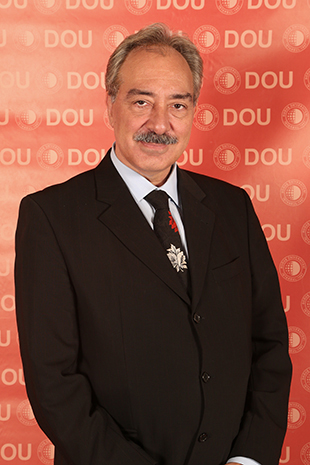
Prof. Dr. Ahmet Zafer ŞENALP is a Professor at the Department of Mechanical Engineering (English Program) at Doğuş Üniversitesi. He holds a PhD in Mechanical Engineering from ODTÜ (1998) and has extensive experience in CAD/CAM Robotics and metal forming processes. His academic career includes roles at Gebze Yüksek Teknoloji Enstitüsü (1999–2012 as Assistant Professor, promoted to Associate Professor by 2012) and Gebze Teknik Üniversitesi (until his retirement as an Associate Professor in 2019). His research focuses on finite element analysis, metal forming, plasticity theory, and ergonomic design. Education: BSc (1989), MSc (1991), and PhD (1998) in Mechanical Engineering from ODTÜ. He worked at ODTÜ CAD/CAM Robotics Center (1989–1998) and served in the military on the Panter Obüs project (1998–1999). Research Interests: Finite Element Analysis (FEA) applied to biomechanics, pressure vessels, prosthetics, and manufacturing processes. He also explores metal forming techniques, CAD/CAM integration, and material deformation mechanics. Publications span FEA-based studies on human joint forces, pressure vessel buckling, prosthetic design, and manufacturing optimization. His work often bridges computational methods with practical engineering challenges. Teaching includes courses on FEA fundamentals, mechanical vibrations, and design methodologies in both Turkish and English.