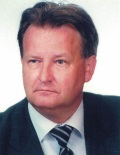
Prof. Czesław Smutnicki is the Dean and Head of the Department of Computer Engineering at the Faculty of Information and Communication Technology, Wrocław University of Science and Technology. His research focuses on manufacturing systems, operations research, and optimization, with a particular emphasis on scheduling algorithms and metaheuristics. Current Position: Dean, Department of Computer Engineering Institution: Wrocław University of Science and Technology Research Areas: Cyclic scheduling, Lagrangian relaxation, quantum annealing, and multi-criteria optimization Recent publications show a trajectory from classical scheduling (1996-2018) to modern applications involving quantum computing and distributed systems. The articles cluster around three main themes: (1) quantum-enhanced scheduling optimization, (2) Lagrangian relaxation techniques for tardiness minimization, and (3) robust scheduling under uncertainty in multi-vehicle/worker environments. Contact: czeslaw.smutnicki@pwr.edu.pl
Yu Wang is a Lecturer at Bielefeld University's Faculty of Linguistics and Literary Studies, affiliated with the Computational Linguistics department. He is associated with the research project Monitoring the understanding of explanations under Prof. Dr. Hendrik Buschmeier, focusing on digital linguistics and text technology. While his institutional affiliation highlights computational linguistics, his Google Scholar publications reveal interdisciplinary work in optimization algorithms, graph neural networks, and machine learning applications. Research Interests: Yu Wang's work bridges computational linguistics with advanced algorithmic techniques. His publications explore Multi-objective optimization Graph neural network architectures Swarm intelligence applications Evolutionary computation methods Sparse learning systems Biologically-inspired algorithms Labs & Projects: Yu Wang contributes to the Digital Linguistics Group at Bielefeld University, specifically working on explainability monitoring in explanatory processes. His technical publications suggest collaborations with researchers in optimization and machine learning domains.
Prof. Dr. Kevin Tierney is a Full Professor for Decision and Operation Technologies at Bielefeld University's Faculty of Business Administration and Economics. He also serves at the Department of Management Science & Business Analytics and is affiliated with the Bielefeld Center for Data Science (BiCDaS) and Center for Uncertainty Studies (CeUS). Chair of Business Administration, Decision and Operation Technologies Member of BIGSEM Graduate School PhD (2013) - IT University of Copenhagen Sc.M. (2010) & BS (2008) - Brown & RIT Research Interests His work focuses on: Learning to Optimize: Using deep reinforcement learning to automate solution heuristics for complex problems like routing and scheduling. Optimization under Uncertainty: Developing models that incorporate probabilistic elements for decision-making in unpredictable environments. Efficient Maritime Logistics: Specializing in container shipping, terminal operations, and fleet routing with real-world constraints. Recent publications demonstrate expertise in algorithm configuration, constraint programming, and machine learning applications to logistics challenges. Scientific Recognition Distinguished Paper Award - European Conference on Artificial Intelligence (2020) Projects & Grants Principal Investigator in projects: Self-learning methods with Deep Reinforcement Learning (DFG 2026) itsowl-MOVE (Land NRW 2024) AIPlan4EU Meta-planning engine (EU H2020 2023) Academic Leadership Module responsible for: Quantitative Business Administration Data Science Production and Operations Management
Ayman Yafoz is an active Associate Professor in the Department of Computer Science at Alexandria University's College of Engineering. His research bridges computer science and engineering with a focus on practical security and optimization applications. His scholarly output includes 60 publications with an h-index of 12, demonstrating consistent contributions to his fields of expertise. Dr. Yafoz's research interests center on the intersection of optimization algorithms and machine learning/deep learning techniques. His work spans network security, intrusion detection systems, medical image analysis, Arabic language processing, and IoT security applications. He frequently develops novel hybrid models that combine metaheuristic optimization approaches with neural network architectures to solve complex real-world problems. His publication portfolio reveals strong trends in security applications, with approximately 60% of his recent work focused on various aspects of cybersecurity including intrusion detection, botnet detection, and encryption. Another significant portion addresses medical imaging and accessibility technology, demonstrating his commitment to applying computational methods to healthcare challenges. Dr. Yafoz maintains active research collaborations with scholars across the Middle East, particularly with co-authors Raed Alsini, Omar Alghushairy, and Khaled Tarmissi. His work appears primarily in engineering journals with notable publications in Alexandria Engineering Journal, IEEE Access, and Sustainability.
Shu-Cherng Fang is a prominent academic in the fields of Operations Research , Optimization , and Machine Learning . His work spans theoretical advancements and practical applications in Mathematical programming Supply chain network design Fuzzy systems Support vector machines Algorithm development . While specific institutional affiliations and academic rank are not explicitly stated in the provided text, his extensive publication record in high-impact journals indicates a faculty-level role. Research interests include optimization under uncertainty , supply chain logistics , and kernel-free machine learning models . Key trends in recent articles focus on fourth-party logistics (4PL) network design distributionally robust optimization for machine learning mathematical modeling of customer behavior stochastic programming . Co-authors frequently include Min Huang, Zhibin Deng, Jian Luo, and Wenxun Xing, reflecting sustained collaborations. Articles emphasize interdisciplinary approaches combining fuzzy logic , game theory , and computational geometry to solve complex decision-making problems.
Eric Taillard is a Full Professor and Head of the Cross-functional Skills Group 'Optimization & Sustainability' at the School of Engineering and Management of the Canton of Vaud (HES-SO), part of the University of Applied Sciences and Arts Western Switzerland (HES-SO). He holds degrees in Computer Science, Engineering, and Production Management from HES-SO institutions. His research focuses on combinatorial optimization, metaheuristics, and algorithm design, with notable contributions to the Travelling Salesman Problem (TSP) and automated map labeling. Education: BSc in Computer Science and Communication Systems MSc in Engineering (Algorithms and Data Structures) MA in Production and Logistics Management Key Projects: Big Data in Combinatorial Optimization (2017–2020): Explored optimization techniques for large-scale problems. Parallel Computing on GPU Clusters (2010–2012): Enhanced combinatorial optimization via GPU parallelization. Automated Label Placement (2007–2008): Developed the PAL library for efficient cartographic labeling. Research Interests: Metaheuristics, TSP algorithms, POPMUSIC framework, algorithmic efficiency, and applications in logistics and cartography. His work has been published in journals like the EURO Journal of Operational Research and presented at Metaheuristics International Conferences. He leads interdisciplinary teams and collaborates with academic and industrial partners globally.
Dr. Kateryna Czerniachowska is a Lecturer at the Department of Process Management, Wrocław University of Economics. She specializes in logistics optimization, heuristic algorithms, and supply chain management. Her work focuses on solving complex problems such as order-picking efficiency, shelf space allocation, and inventory distribution in retail and warehouse systems. She is fluent in English, Polish, Russian, and Ukrainian. Her research emphasizes mathematical modeling for retail networks and warehouse layouts, incorporating innovative heuristics like Flower Cutting and Mushroom Picking algorithms. Recent studies address sequence-dependent constraints in conveyor systems and multi-axial product categorization. She actively collaborates with industry to apply these methods in practical settings. Her publications span optimization frameworks for space allocation, scheduling TV advertisements via genetic algorithms, and predicting public transportation delays using machine learning. She maintains active profiles on ResearchGate and ORCID. Consultations are available via Microsoft Teams upon prior arrangement via email. She contributes to pedagogical activities focused on operational research and logistics systems design.
Assoc. Prof. Dr. Yavuz CENGİZ holds an academic position in the Department of Circuits and Systems Theory at the Faculty of Engineering and Natural Sciences. His research focuses on microwave engineering, heuristic optimization algorithms, fuzzy logic, and data mining applications in electronic systems. He has conducted extensive work on amplifier design, neural network modeling, and electromagnetic testing methodologies such as the reverberation chamber approach. Education: Licentiate in Electrical-Electronic Engineering from Istanbul University (1997) Master's in Electronics and Communications Engineering from Süleyman Demirel University (2000) PhD in Communication Engineering from Yıldız Technical University (2004) Research Interests: Wide-Band Microwave Amplifiers, Fuzzy Logic, Artificial Neural Networks, Heuristic Optimization (e.g., Genetic Algorithms, Memetic Algorithms), Data Mining, Antenna Design, and RF Technologies. He has pioneered methods combining optimization algorithms with microwave device modeling and reverberation chamber testing. Recent Contributions: Recent work includes nanofiber-based frequency selective surfaces, elastic property modeling of timber using AI, and modified metaheuristic algorithms. His publications span IEEE journals, Expert Systems with Applications, and international conferences. Grants & Collaborations: No specific grants mentioned, but active collaboration with researchers in electromagnetics and optimization fields through co-authored papers. Labs/Teams: Engages in circuits and systems research without explicitly named labs, focusing on practical implementation of theoretical algorithms in microwave and communication systems.
Dr. Jasmin Jelovica is an Associate Professor in the Department of Civil Engineering and Mechanical Engineering at the University of British Columbia (UBC), with a joint appointment since 2017. He holds a D.Sc. (Tech.) from Aalto University and an M.Sc. in Naval Architecture from the University of Rijeka. His research focuses on computational methods for structural analysis and optimization, emphasizing lightweight structures and mechanical response analysis. He leads the Structural Efficiency Laboratory, exploring advanced materials, welding techniques, and machine learning applications in structural design. Research Interests: Structural optimization, computational methods, advanced materials, marine vessels design, machine learning, and welding technologies. His work spans structural mechanics, vibration analysis, and multi-objective optimization frameworks. Awards: NSERC/Seaspan Industrial Research Chair in Intelligent and Green Marine Vessels (2020). Lab & Collaborations: The Structural Efficiency Laboratory at UBC focuses on innovative structural components, topology optimization, and advanced welding processes. Research is supported by collaborations with Civil and Mechanical Engineering departments. Advising & Grants: Advises graduate students in structural analysis and optimization projects. Active in conferences such as MARSTRUCT and OMAE, publishing on topics like neural network-assisted constraint handling and underwater acoustics.
Prof. Nysret Musliu is an Associate Professor at TU Wien's Department of Databases and Artificial Intelligence within the Faculty of Informatics. His primary affiliation is with the E192-02 research area, focusing on optimization, scheduling, and AI applications. He leads projects like 'Artificial Intelligence in Employee Scheduling' and 'Predictive Analytics for Emergency Call Infrastructure,' demonstrating expertise in combinatorial optimization and real-world problem-solving. Academic Rank: Associate Professor Institution: TU Wien Key Projects: AI-driven scheduling, constraint programming, metaheuristics Research interests include scheduling algorithms, constraint programming, and hybrid optimization methods. His work bridges theoretical advancements with industrial applications, addressing challenges in manufacturing, healthcare, and transportation. Recent publications emphasize hyper-heuristics, large neighborhood search, and AI integration for complex scheduling problems. Notable contributions include systematizing test laboratory scheduling and developing exact methods for oven scheduling. His research group collaborates on projects involving personnel scheduling, production leveling, and parallel machine optimization.
Danijel Kučak is a Senior Lecturer at the University of Algebra since 2007. He holds a Master's in Mathematics from the Faculty of Science (2002) and a PhD in Information Sciences from the Faculty of Philosophy, University of Zagreb (2025). With 10 international programming certifications, his expertise spans web application development using .NET and Java platforms. He has authored/co-authored 5 books and over 20 scientific papers focusing on software engineering, machine learning, and educational technology. Beyond academia, he owns a programming business, contributing to systems like MedicalBit (for lung disease clinics) and CRIS (Croatian Road Inspection System). His research emphasizes gamification in education, blockchain applications, and AI-driven solutions. Research interests include machine learning applications, gamification strategies for programming education, and secure blockchain systems. His work bridges theoretical computer science with practical implementations in healthcare, transportation, and education. Notable contributions include empirical studies on gamification's long-term impact on student outcomes and innovative approaches to E-learning platforms. Awards: Multiple Best Lecturer Awards at the University of Algebra Business Experience: Developed custom software systems for healthcare and traffic management Publications: Over 20 peer-reviewed articles and 5 books on software engineering and educational technology Labs/Teams: Active in developing IoT architectures for environmental monitoring and AI models for educational outcomes prediction. His programming business integrates academic research with real-world system implementations.
Benjamin Doerr is a full Professor of Computer Science at École Polytechnique in France, affiliated with the Laboratoire d'Informatique (LIX). He conducts research in algorithms and artificial intelligence, with a specific focus on randomized algorithms and heuristic search. His work spans theoretical computer science, evolutionary computation, and mathematical analysis of optimization algorithms. Professor Doerr's research interests center on randomized search heuristics, including evolutionary algorithms, ant colony optimizers, and estimation-of-distribution algorithms. His work extends to foundational areas such as group theory (from his diploma work), discrepancy theory and combinatorial games (from his PhD), and algorithmic mathematics (from his habilitation). He has made significant contributions to understanding the runtime behavior of evolutionary algorithms and establishing theoretical guarantees for their performance across various optimization problems. His recent publications reveal a strong focus on multi-objective evolutionary algorithms, particularly analyzing and improving the performance of popular frameworks like NSGA-II, NSGA-III, and SMS-EMOA. His research demonstrates a consistent pattern of providing rigorous theoretical foundations for heuristic search methods, moving beyond empirical observations to establish provable performance guarantees. This theoretical approach has become increasingly influential in bridging the gap between theoretical computer science and practical optimization techniques. Professor Doerr has received several prestigious awards including two Otto-Hahn medals, the Dr. Eduard Martin prize, and the Digiteo-Digicosme prize. His students have also earned significant recognition, with multiple dissertation awards and nominations. He has supervised numerous PhD students to completion, including Tobias Friedrich (now director of HPI and professor at University of Potsdam), Carola Winzen (now permanent researcher at CNRS), and Marvin Künnemann (now professor in Kaiserslautern). He regularly supervises M1/M2 research projects, with many leading to international conference publications at venues like AAAI, IJCAI, and GECCO. Professor Doerr serves on the editorial boards of several leading journals including Artificial Intelligence, Evolutionary Computation, and IEEE Transactions on Evolutionary Computation. At École Polytechnique, Professor Doerr is a member of the executive board of the doctoral school of IP Paris, where he oversees computer science doctoral students across multiple institutions. He previously served as the habilitation reference person for the IDIA department and has been instrumental in shaping the academic processes for doctoral candidates and HDR (Habilitation à Diriger des Recherches) candidates.
Giusy Macrina is a Researcher at the Department of Mechanical, Energy and Management Engineering (University of Calabria, Italy). Her work focuses on Operations Research and Machine Learning applications to complex logistics and transportation problems. Specializes in Vehicle Routing Problems with drones and crowd-shipping Develops hybrid algorithms combining mathematical optimization and artificial intelligence Active in green logistics and sustainable transport systems Collaborates with international institutions like Amazon Her research spans smart mobility , energy-efficient delivery systems , and IoT localization challenges . Recent publications demonstrate her focus on integrating machine learning into traditional optimization problems . She teaches courses in Management Engineering , including Methods and Tools for Engineering and Production Management and Control at the graduate level. Her work addresses both static and dynamic optimization challenges in logistics and energy systems.
Belgin Türkay is a Professor in the Department of Electrical Engineering at Istanbul Technical University's Faculty of Electrical and Electronics Engineering. With an ORCID identifier (0000-0003-0922-8936) and Scopus profile showing 77 research outputs, 4 completed research projects, and a 14 h-index with 915 citations, she maintains an active research presence in power systems engineering. Her research focuses on power systems optimization , renewable energy integration , and smart grid technologies . Key areas include particle swarm optimization (86%), electric power distribution (85%), genetic algorithms (83%), and renewable energy systems (80%). Her work consistently addresses energy optimization challenges through computational intelligence methods. Recent publications (2024) demonstrate strong activity in Metaheuristic optimization for load frequency control Dynamic economic dispatch using advanced algorithms Energy storage integration in distribution networks Renewable energy applications in transportation and data infrastructure showing consistent contributions to IEEE and international conference proceedings. Awarded the Best Paper Track in 2023, her recognition highlights the impact of her research. Previous projects include coordinated control of energy storage systems for voltage regulation, demand-side management applications, and wind energy penetration studies. As Principal Investigator for four research projects between 2014-2023, she has secured funding for smart home energy management, distributed energy storage systems, and renewable integration studies. Her laboratory work centers on power system optimization using computational intelligence techniques applied to real-world energy challenges.
Müjde Güzelkaya is a Professor in the Department of Control and Automation Engineering at Istanbul Technical University (ITU), Faculty of Electrical and Electronic Engineering. She has been a prominent figure in the field of control systems since at least 1983, with over 108 research outputs and an h-index of 30. Her research spans fractional-order control, intelligent systems, and optimization algorithms. She leads multiple active research projects funded by ITU's BAP program and serves as principal investigator on initiatives involving federated learning, robust control, and uncertainty quantification. Her research interests are deeply rooted in control theory and automation , particularly in the design and optimization of controllers using fractional calculus , fuzzy logic , and metaheuristic algorithms like the Big Bang–Big Crunch method. She applies these techniques to diverse domains such as robotics, structural protection, and industrial automation. Her work emphasizes both theoretical development and practical implementation, as seen in applications to quadcopters, building seismic protection, and DC motor control. The most recent articles reflect a strong trend toward integrating fractional calculus with machine learning and distributed intelligence , particularly in system identification and adaptive learning frameworks. Her publications consistently focus on enhancing control performance, robustness, and adaptability in complex, nonlinear systems. Scientific Awards and Recognition: No specific awards are listed in the provided text. Advising and Grants: She is actively mentoring graduate students, with 50 theses currently in progress under her supervision. She has secured multiple competitive research grants, including: Federated Learning-Based System Identification and Uncertainty Quantification (2025–2027) Robust and Adaptive Loss Functions Using Fractional Calculus (2024–2025) Intelligent Systems and Fractional Order Controller Design (2023–2026) Controller Design for Fractional Order Systems (2018–2021) These projects highlight her leadership in cutting-edge control research. Labs and Research Teams: While specific lab names are not mentioned, her role as PI on multiple projects and her extensive collaboration network suggest she leads a research group focused on intelligent control and fractional-order systems at ITU. Her work involves interdisciplinary collaboration across engineering domains.