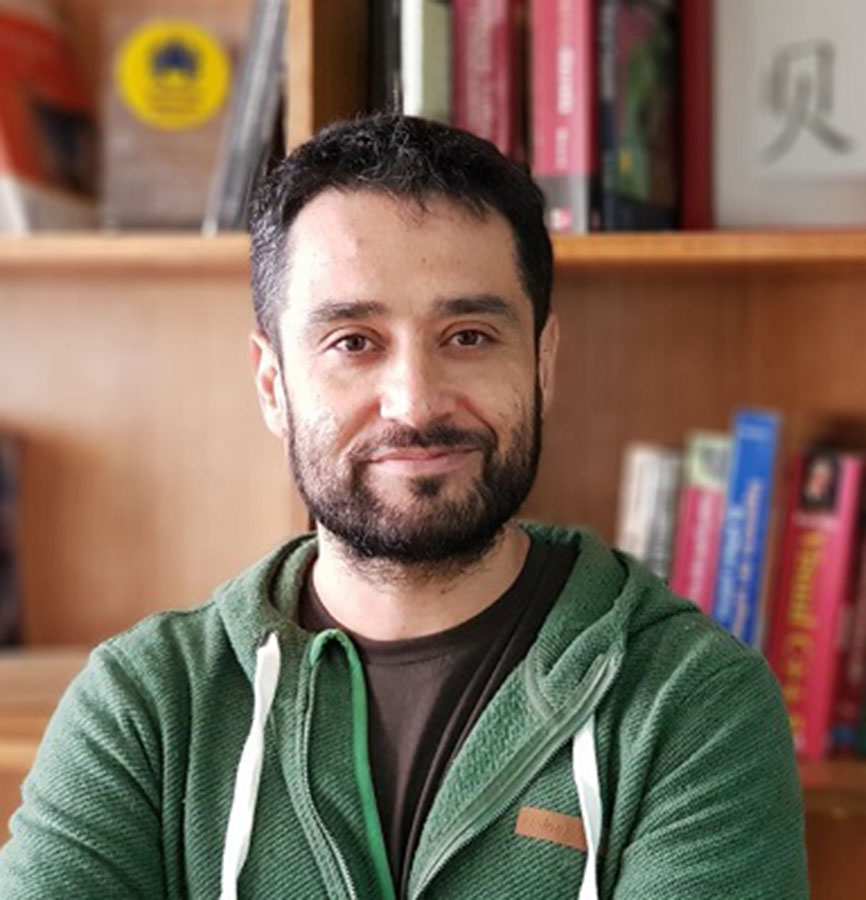
Sunith Bandaru is a Professor of Industrial Engineering at the University of Skövde, affiliated with the School of Engineering Science. He holds administrative roles such as Subject Coordinator for Informatics at Research Level and has contributed to program management for M.Sc. Industrial Systems Engineering. His research focuses on multi-objective optimization, digital twins, and knowledge-driven decision support in manufacturing systems. Bandaru's work bridges advanced algorithms with industrial applications, emphasizing optimization techniques (e.g., evolutionary algorithms) and their integration with AI-driven tools like digital twins. He has pioneered frameworks for bottleneck detection in production systems and develops interactive decision support systems using data mining and simulation-based methods. He has led projects like LITMUS (transitioning to Industry 5.0) and Virtual Engineering initiatives, aiming to enhance production sustainability and human-centric design. His contributions include tools like Mimer for knowledge discovery and optimization of maintenance prioritization via deep reinforcement learning.
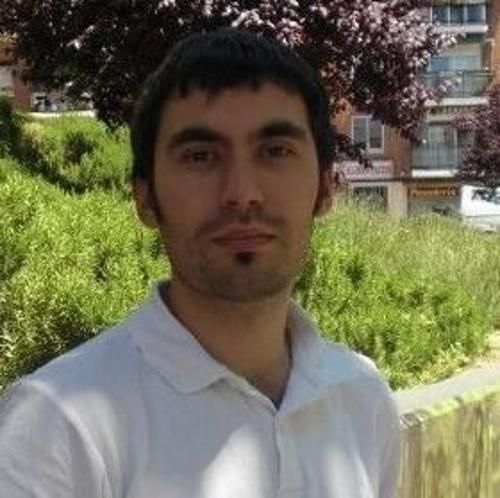
Florian Mischek is a researcher affiliated with TU Wien's Forschungsbereich Databases and Artificial Intelligence department. His work focuses on optimization problems in industrial scheduling, particularly in test laboratories and healthcare environments. He holds a BSc, Dipl.-Ing (engineer's diploma), and a Dr.techn (doctorate) in technical sciences. Research interests include scheduling algorithms, hyper-heuristics, constraint programming, reinforcement learning, and their applications to real-world challenges like test laboratory operations and pandemic-era healthcare staffing. His contributions span both theoretical advancements in optimization frameworks and practical system implementations for automated scheduling. Notable publications explore problem-independent hyper-heuristics, reinforcement learning for cross-domain optimization, and local search frameworks for industrial scheduling. He has collaborated extensively with Prof. Nysret Musliu on projects involving test laboratories and nurse rostering problems. His work often bridges mathematical programming and heuristic approaches, emphasizing practical applicability.
Sui-Hoi Hou is a Professor in the Department of Electrical and Computer Engineering at the New Jersey Institute of Technology (NJIT), with a former affiliation in the Office of the Provost. His research spans intelligent systems, optimization, and engineering education, contributing significantly to multi-robot systems and real-time scheduling. His research interests lie at the intersection of intelligent control, computational optimization, and practical engineering applications. Key areas include multi-robot patrolling , genetic algorithms , real-time resource allocation , and signal processing . He also contributes to engineering education , particularly in improving student success in foundational mathematics. The recent publications reflect a dual focus: advancing robotics and optimization algorithms, and enhancing pedagogical strategies in engineering curricula. Trends show consistent engagement with swarm intelligence, adversarial environments, and data-driven educational interventions. He has received federal research grants, including an NSF-funded collaborative project as Principal Investigator. While no formal awards are listed, his sustained research output and h-index of 17 indicate scholarly impact. Dr. Hou advises students in research related to intelligent systems and optimization, though specific advisees are not named in the text. He has led research projects with external funding and interdisciplinary collaboration. His work is associated with research in intelligent systems and cyber-physical systems at NJIT, particularly through federally funded projects focused on real-time scheduling and multi-agent coordination.
Pedro Pablo Pinacho-Davidson is an Assistant Professor at the Department of Computer Science and Engineering, University of Concepción, Chile. He also serves as an Associate Researcher at the Center for Manufacturing 4.0 and leads Ornitorrinco Labs. PhD in Computer Engineering from University of the Basque Country, Spain Key research areas: machine learning, artificial intelligence, metaheuristics, and artificial life His work focuses on combinatorial optimization and applied algorithm design, with recognition including the prestigious SEIO Prize and Fondecyt Grant. He contributes to Chilean cybersecurity policy development as a member of the Senate’s Cybersecurity Table. Scientific Awards SEIO Prize for industrial algorithm solutions Fondecyt Grant for hybrid metaheuristics research
Soumen Atta is a Postdoctoral Researcher at the Faculty of Information Technology , University of Jyväskylä , Finland, with additional affiliations as Visiting Researcher at ISCTE - University Institute of Lisbon and Leiden Institute of Advanced Computer Science . He holds a Habilitation (Docent) in Computer Science from the University of Nova Gorica, Slovenia, and a Ph.D. in Computer Science and Engineering from the University of Kalyani, India, with Erasmus+ research experience at the University of Łódź, Poland. His research focuses on optimization problems in logistics and healthcare, including facility location, hub location-allocation, transportation systems, and home healthcare routing/scheduling. He applies soft computing , evolutionary computation , and heuristic/metaheuristic algorithms to solve complex operations research challenges. Recent publications analyze Home Health Care Routing and Scheduling Problem (HHCRSP) and Capacitated Facility Location Problem with Service Distance and Outsourcing (CFLPSDO) , emphasizing algorithmic innovation (e.g., customized Artificial Bee Colony algorithms) and real-world applications in healthcare logistics and sustainable service optimization.
Burak Tagtekin is a researcher in computer science with significant contributions to optimization algorithms, recommender systems, and machine learning applications. His work spans both theoretical and practical domains, including evolutionary algorithms for compiler flag tuning, Bayesian personalized ranking models for recommendation systems, and genetic algorithm-based approaches to job scheduling and resource allocation challenges. Key Research Areas : Optimization Algorithms, Recommender Systems, Machine Learning, Compiler Engineering, Scheduling Problems Collaborations : Frequently collaborates with researchers like Tuna Çakar, Mahiye Uluyagmur Öztürk, and M. Sezer Recent Publications (2021-2024) demonstrate expertise in genetic algorithms, particle swarm optimization, and Bayesian modeling, achieving notable improvements in execution time and resource efficiency across diverse applications such as C++ compilation, job prioritization, and implicit feedback-based recommendation systems. Co-Author Network includes 18+ collaborators across computer science and engineering fields, with institutional connections to IEEE conferences and academic research communities.
Dr. Mahmoud Ghofrani is an Assistant Professor in the Department of Electrical Engineering at the School of Science, Technology, Engineering & Mathematics (STEM) at the University of Washington, Bothell, where he has been employed since September 2013. He holds a Ph.D. in Electrical Engineering from the University of Nevada, Reno (2014), an M.Sc. from the University of Tehran (2008), and a B.Sc. from Amir-Kabir University of Technology (2005). Research Interests: Power systems operation/planning, renewable energy systems, smart grids, electric vehicles, electricity markets, energy storage, and demand response. Publications: Focus on wind-solar-storage hybrid systems, V2G synergies, energy storage optimization, and grid stability under renewable penetration. Teaching: Courses in Circuits, Power Systems, and Electrical Engineering labs at UW Bothell and University of Nevada, Reno.
Maria Elena Bruni is an Associate Professor in Operations Research at the University of Calabria , actively contributing to research and teaching since 2006. Her academic journey includes a Ph.D. in Operations Research (2005) and an M.S. in Public Economy from Sapienza University of Rome (2002). She has held various teaching roles, including Optimization , Production Process Management , and Business Process Design , primarily within Mechanical and Energetic Engineering programs. Research Focus: Stochastic and robust optimization, healthcare logistics, project scheduling, and energy systems. Key Labs: Financial Engineering and Risk Management Lab (FERM), Decision Engineering for Healthcare Lab. Bruni's research centers on combinatorial optimization under uncertainty, with applications in healthcare (operating room scheduling, EMS design), logistics (vehicle routing, post-disaster relief), and energy systems (smart microgrids, prosumer management). Her work often combines mathematical programming with risk-averse strategies for real-world complexity. Scientific honors include multiple best poster awards at ICORES (2019, 2018, 2015) and scholarships from prestigious institutions. She serves on editorial boards of journals like Sustainability and Mathematical Problems in Engineering , and has participated in significant research projects such as PRIN 2018's MACHINE and PON HEALTHSOAF. Her supervision spans 3 doctoral theses in Operations Research and 2 in Mathematics/Computer Science. Notable scientific collaborations include co-authoring over 70 journal articles and book chapters, with a focus on stochastic programming and data envelopment analysis applications.
Lt Col James E. Bevins is an Adjunct Assistant Professor of Nuclear Engineering at the Air Force Institute of Technology (AFIT), where he has held the position since 2017. He is the recipient of the Air Force Technical Applications Endowed Term Chair for Nuclear Treaty Monitoring (2018) and has been actively involved in the National Science Foundation Graduate Fellowship (2014–2017). His academic affiliations include AFIT and the University of California, Berkeley, where he earned his Ph.D. in Nuclear Engineering in 2017. Prior to his doctoral studies, he received his B.S. (2009) and M.S. (2011) in Nuclear Engineering from the University of Tennessee and AFIT, respectively. His research focuses on advanced radiation detection methods, neutron spectra modeling, nuclear forensics, and weapon effects analysis for national security applications. Specific projects include developing customizable neutron spectra for treaty monitoring, optimizing rotating scatter mask systems for directional radiation detection, and applying machine learning to signal analysis in nuclear environments. He has also investigated asteroid deflection strategies using neutron energy simulations. Bevins has been recognized with numerous awards, including the 2020 Air Education and Training Command Educator of the Year, the 2019 Tau Beta Pi Outstanding Thesis Advisor Award, and multiple Air Force Meritorious Service Medals. His work spans collaborations with Sandia National Laboratories, the National Ignition Facility (NIF), and the 88-Inch Cyclotron at Berkeley, emphasizing applied nuclear science and defense-oriented research. As an educator, he has advised 4 PhD students and 8 M.S. students, with ongoing collaborations. His grants and projects include 8 research grants from organizations like the Air Force Technical Applications Center and the NSF. Bevins has contributed to labs such as the GENESIS spectrometer and the ATHENA radiation environment platform, advancing neutron spectroscopy and detector technology. His current efforts include refining metaheuristic optimization algorithms (e.g., Gnowee) and exploring nuclear data covariance for radiation transport simulations.
Jin Zhang is a Researcher in the Department of Quantitative Methods at the Faculty of Business and Economics, University of Basel. He holds a PhD in Computational Finance from the University of Essex, UK, awarded under the European Commission's Marie Curie Actions program, and has academic backgrounds in Engineering and Applied Statistics from institutions in China and Australia. Education: Bachelor of Engineering, Beijing University of Posts and Telecommunications, China M.Sc. in Mathematics and Applied Statistics, University of Wollongong, Australia PhD in Computational Finance, University of Essex, UK (Marie Curie Actions grant recipient) Jin Zhang's research lies at the intersection of computational methods and financial modeling. His work emphasizes trading strategy design , portfolio optimization , and derivative pricing using advanced numerical and computational techniques. He applies methods such as Laplace transforms, finite difference schemes, clustering algorithms, and copula modeling to solve complex financial problems. His interdisciplinary approach bridges applied mathematics, statistics, and finance. The analysis of his publications reveals a consistent focus on enhancing financial decision-making through computational innovation. His work spans algorithmic option pricing, risk-aware portfolio construction, and the application of machine learning-inspired clustering in finance. A recurring theme is the use of numerical and heuristic optimization to improve accuracy and stability in financial models. Scientific Awards and Honors: Marie Curie Actions Grant, European Commission Jin Zhang has been actively involved in research projects supported by competitive funding, notably the EC’s Marie Curie program. While no formal advising roles are listed, his collaborations with researchers like Dietmar Maringer and Songping Zhu indicate active participation in academic research teams. His publications in journals such as Expert Systems with Applications and Applied Mathematics and Computation reflect strong technical contributions to quantitative finance. Laboratories and Research Teams: Jin Zhang is affiliated with COMISEF (Computational Optimization and Modeling for Financial and Economic Applications), a European research network focused on training and knowledge transfer in computational finance. He contributes to working papers and collaborative research under this network, indicating engagement with an international academic community.
Amedeo Domenico Bernardo Manuello Bertetto is an Associate Professor at the Polytechnic University of Turin, Department of Structural, Building and Geotechnical Engineering (DISEG), and a member of the College of Architecture and Design. He is also part of the SISCON Interdepartmental Center for Infrastructure and Construction Safety and the Master's and Continuing Education School. His research focuses on structural integrity, non-destructive testing, and the stability of slender and historic structures. His research interests include: Structural Health Monitoring Non-Destructive Testing (Acoustic Emission) Instability of slender and long-span structures Additive and sustainable manufacturing Building sustainability Numerical modeling and computational engineering His recent publications reflect a strong trend in integrating computational methods—such as AI, generative design, and finite element modeling—with structural optimization of shells, arches, and gridshells. These works emphasize sustainability, reduced construction waste, and resilience in both modern and heritage structures. His research spans laboratory testing and real-world applications, including the Turin Cathedral and Notre-Dame de Paris. Scientific recognitions include: Keynote speaker at the IASS Tokyo Symposium (2016) International expert for the scientific restoration of Notre-Dame de Paris (CNRS-affiliated) He advises PhD student Jonathan Melchiorre on AI-driven structural optimization and leads multiple commercial research projects, including fire behavior analysis of structures and performance testing of fiber-reinforced concrete. He has no recorded grants listed, but his work is industry-funded and applied in real-world contexts. He is actively involved in organizing the Italian Workshop on Shells and Spatial Structures (IWSS) and collaborates with institutions like La Sapienza University and the Getty Foundation. He leads the Fracture Mechanics Laboratory at DISEG and the Monfron Site Lab, focusing on multi-parameter monitoring systems and in-situ material testing.
Angel Manuel González Rueda is an Assistant Professor at the University of Santiago de Compostela (USC), affiliated with the Department of Statistics, Mathematical Analysis and Optimization, part of the Higher Technical School of Engineering. He is a member of the MODESTYA research group (Optimization, decision, statistical models and applications) and the Galician Mathematical Research and Technology Center (CITMAga). His research focuses on optimization algorithms, energy networks, and decision models, with notable work on gas transmission systems, home care scheduling, and polynomial optimization tools like RAPOSa. He holds a Doctorate from USC (2017), completing his thesis on Gas transmission networks optimization algorithms and cost allocation methodologies , supervised by Dr. Julio González Díaz. His expertise spans mathematical modeling, computational optimization, and game theory applications in energy and logistics systems. Key research trends in his articles include: (1) Development of hybrid optimization algorithms for differential equations and network problems, (2) Multiobjective scheduling in healthcare and retail logistics, and (3) Fair cost allocation mechanisms in energy and gas networks using cooperative game theory. His RAPOSa software has become a notable open-source tool for polynomial optimization. Rueda has contributed to over 15 peer-reviewed articles since 2014, addressing topics ranging from wildfire suppression modeling to decentralized energy markets. Though no formal awards are listed, his work demonstrates significant innovation in applied mathematical optimization. He has advised no doctoral students listed here but collaborates extensively with industry partners on network optimization challenges. His affiliations include the Interuniversity Research Center CITMAga, emphasizing applied mathematics in technology, and the MODESTYA group, which bridges theoretical optimization with real-world applications in engineering and economics.
Arkadiusz Grzybowski is a researcher at the Department of Computer Systems and Networks, Faculty of Electronics, Wrocław University of Science and Technology. He is actively involved in multiple research teams, including the Machine Learning Team, Teaching Team, Advanced Data Analysis Methods Team, and Metaheuristics Team. He supervises diploma theses and contributes to key research initiatives in optimization and intelligent systems. His research interests span: Multi-criteria and dark-box optimization Evolutionary computation and gene-inspired search techniques Machine learning classifier training Application-aware multi-layer network optimization The recent articles extracted do not include specific publications, but the described research projects indicate a strong focus on algorithmic innovation in optimization and data science, particularly for complex decision-making tasks. His work bridges theoretical algorithm development with practical applications in networks and machine learning. Scientific awards received: Medal for Long-standing Service to the University Meritorious Service to the Faculty of Electronics Presidential Distinction from the President of the Republic of Poland (2020) He actively participates in academic service, including membership in the Faculty Council, and contributes to teaching and student supervision. While no specific grants are named, his leadership in multiple research projects suggests involvement in funded research activities. He is part of the following research groups: Machine Learning Team Teaching Team Computer Networks Team Advanced Data Analysis Methods Team Metaheuristics Team
Edward Puchała is an academic affiliated with a teaching and research-oriented institution, associated with the Teaching Team and potentially involved in various research initiatives including Machine Learning, Optimization, and Computer Networks. His work appears to focus on advanced optimization techniques, particularly in multi-criteria and evolutionary methods, as well as application-aware network optimization. His research interests span key areas in computer science and engineering, including: Machine Learning Evolutionary Algorithms Multi-Criteria Optimization Metaheuristics Data Analysis Computer Networks The general research direction suggests involvement in algorithm development for complex decision-making and classifier training, though no specific publications or projects directly attributed to him are listed. There is no information on scientific awards, student supervision, or formal education.
Zervoudakis Konstantinos is a Researcher at the School of Production Engineering and Management, Technical University of Crete. His work focuses on computational intelligence, optimization algorithms, and their applications in education and product design. He holds a fixed-term research position and is based in Office G3.0.01, Building G3. Research Interests: His primary areas include developing nature-inspired optimization algorithms (e.g., flying fox, mayfly, and bees algorithms), applying computational methods to educational challenges like student psychological fitness assessment and group formation, and optimizing product line design using metaheuristics like Tabu Search and Differential Evolution. He also investigates the impact of ICT on education and special education teacher efficacy. Publications Trends: Recent works emphasize hybrid optimization algorithms for real-world problems (maintenance scheduling, product design), AI-driven educational tools for mental health assessment and learning grouping, and algorithmic solutions for multi-objective decision-making. His research bridges computational innovation with practical applications in education and engineering. Awards: None explicitly mentioned in the provided texts. Advising & Grants: No student advisees listed. No grants disclosed in the data.