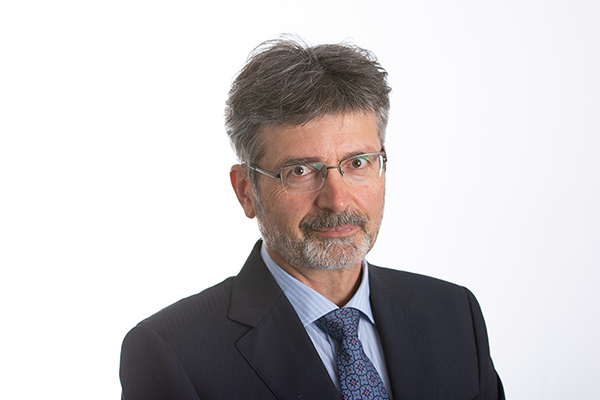
Bruce Spencer is an Adjunct Professor and Senior Research Scientist at the University of New Brunswick's Faculty of Computer Science. He holds a BSc from Dalhousie University and M.Math and Ph.D. degrees from the University of Waterloo. His research focuses on automated reasoning, data mining, social networks analysis, healthcare informatics, service-oriented architectures, and collaboration middleware systems. Spencer currently supervises graduate students Weihong Song (Ph.D.), Lei Wang (MCS), and Pratik Shah (MCS). He has contributed to initiatives such as a proposed joint master's program with the University of the Philippines-Diliman and has taught courses like CS 3997 Professional Practice and CS 5999 Social Networks Analysis. His work spans smart building temperature forecasting, ontology development for robotics, and decision support systems in agriculture. He actively engages in outreach activities and maintains collaborations through platforms like LinkedIn and Twitter. Spencer's research outputs reflect interdisciplinary approaches to challenges in automation, data analysis, and collaborative technologies, with a focus on practical applications in healthcare, education, and environmental management.
Smita Sahu is a Senior Lecturer in the School of Mathematics & Physics within the Faculty of Technology at the University of Portsmouth. She is actively involved in research and teaching, with a focus on mathematical modeling of energy systems, particularly lithium-ion batteries, and numerical methods for partial differential equations. She contributes to the Centre for Environmental and Renewable Energy Solutions and is accepting PhD students. Education: Ph.D. in High-order and coupled schemes for Hamilton-Jacobi-Bellman equations, University of Rome La Sapienza (awarded 21 Jul 2015) MSc from Indian Institute of Technology Delhi (awarded 8 Aug 2010) Fellow of the Higher Education Academy (FHEA), awarded 24 Jul 2024 Research Interests: Her work centers on mathematical modeling for lithium-ion batteries, computational and numerical methods for Hamilton-Jacobi equations, nondestructive testing of metals, and traffic flow models. She is currently developing novel mathematical models and fast solvers for physics-based battery models. She is a key developer of DandeLiion, an ultra-fast solver for electrochemical models, developed in collaboration with the University of Southampton, Imperial College London, and funded by the Faraday Institution. Publication Trends: Her recent publications demonstrate a strong focus on mathematical modeling in energy storage, particularly lithium-ion batteries. She integrates numerical analysis, uncertainty quantification, and data-driven methods into electrochemical models. Her work spans theoretical development, solver implementation, and experimental validation, showing a cohesive research trajectory in computational electrochemistry and applied mathematics. Scientific Awards: Second prize for a presentation (26 Jun 2021) Advising and Grants: She is currently supervising PhD student Joseph Petrassem De Sousa on a project titled 'Mathematical modelling of coffee brewing'. She serves as a Co-Investigator on the active 'Multi-Scale Modelling' project funded by the Faraday Institution, focusing on physics-based modeling of sodium-ion and lithium-ion batteries. Her research contributes to UN Sustainable Development Goals related to clean energy and innovation. Labs and Teams: She is part of the DandeLiion development team, a collaborative effort between the University of Portsmouth, University of Southampton, and Imperial College London. She also contributes to the Centre for Environmental and Renewable Energy Solutions at the University of Portsmouth, working on computational models for sustainable energy technologies.
Zhaoxin Ren is a Senior Lecturer in Aerospace Engineering at Swansea University, serving as the primary link to the UK-ARC Hydrogen Theme Group. He holds a MSc (2014) and PhD (2017) from Tsinghua University, followed by roles as Assistant Professor at Northwestern Polytechnical University (China) and Research Fellow at the University of Warwick (UK). His research focuses on turbulent multiphase flows, reacting flows, cryogenic hydrogen, detonation, and their applications in advanced aerospace propulsion and clean energy systems. Education: MSc in Engineering, Tsinghua University, 2014 PhD in Aerospace Engineering, Tsinghua University, 2017 Research Interests: Computational Fluid Dynamics (CFD) of compressible, multiphase, and reacting flows Supersonic and hypersonic combustion Rotating detonation engines and cryogenic hydrogen applications Detonation wave propagation and stabilization Energy conversion systems for clean energy Publications Highlight Key Themes: Cryogenic hydrogen jet dynamics and flame properties Rotating detonation wave behavior in kerosene-air mixtures Oblique detonation wave stabilization under varying conditions Supersonic spray combustion in scramjet environments Advising and Teaching: Supervising PhD research on cryogenic hydrogen multiphase flows Teaching modules: EG-194 (Introduction to Aerospace Engineering), EG-M329 (Advanced Propulsion) Labs/Teams: Active collaboration with the UK-ARC Hydrogen Theme Group and Swansea University’s research networks in propulsion and energy systems.
Professor Djordje Peric is a faculty member at Swansea University, affiliated with the School of Aerospace, Civil, Electrical and Mechanical Engineering, specifically within the Civil Engineering department. He holds the academic rank of Professor and specializes in computational mechanics, fluid-structure interaction, and material behavior modeling. His research focuses on computational methods for solid, structural, and fluid mechanics, including multiscale modeling, adaptive solution strategies, and free surface flows. Key contributions include advancements in finite element analysis and the development of numerical techniques for complex engineering problems. Professor Peric has contributed to over 150 publications, with recent work emphasizing biomechanical systems, neural network-based constitutive modeling, and fluid-structure interaction. His editorial roles include serving on the boards of several prestigious journals such as the International Journal for Numerical Methods in Engineering and Computational Mechanics.
Prof. Dr. Fernando Buarque is a Visiting Professor at the University of Münster, affiliated with the School of Business and Economics and the Department of Business Information Systems and Logistics. His research focuses on swarm intelligence algorithms, evolutionary computation, parallel computing, and optimization techniques applied to supply chain management. He collaborates closely with Prof. Hellingrath's research group and holds a DIC PhD and AvH (likely Alexander von Humboldt) fellowships. Key research areas include parameter control for optimization algorithms, high-level parallelization strategies, and application of metaheuristics to real-world problems. His work emphasizes GPU-based parallelization, algorithmic skeletons, and sensitivity analysis of hyper-heuristics. Recent contributions address parameterless population size control and learning properties of reinforcement learning in algorithmic frameworks. Publications span journals like Applied Soft Computing and International Journal of Parallel Programming, with conference contributions at IEEE events and the Genetic and Evolutionary Computation Conference (GECCO). His research bridges theoretical advancements with practical implementations in logistics and supply chain optimization.
Tony Wauters is an Associate Professor at the Faculty of Engineering Technology within KU Leuven , affiliated with the Department of Computer Science and the Numerical Analysis and Applied Mathematics (NUMA) unit. He serves as coordinator for research and education in Computer Science at both the Bruges and Ghent-Aalst campuses. Additionally, he is a member of the KU Leuven Institute for Artificial Intelligence (Leuven.AI) and the Institute for Mobility (LIM) . Research Topics: Metaheuristics, Scheduling, Vehicle Routing, Cutting & Packing, Optimization Algorithms Projects: C3PO (2023-2027), Trustworthy Algorithms for Industrial Decision Making (2021-2024), Parallel Cutting & Packing Algorithms (2017-2021), Constructive Matheuristics (2015-2017), Integrated Scheduling & Queueing Methodologies (2016-2019) Engagement: Coordinator of the European Working Group on Cutting & Packing Optimization (ESICUP) His research focuses on developing advanced optimization algorithms for real-world industrial problems, particularly in cutting, packing, scheduling, and vehicle routing. His recent work includes goal-driven heuristics for bin packing, semi-discrete representations for nesting problems, and matheuristic frameworks for 3D packing with practical constraints. The article trends highlight applications in operations research, computational geometry, and industrial engineering. As a senior academic staff member , Wauters participates in the Faculty of Engineering Technology Council and the Computer Science Department Council . He contributes to education through courses like Machine Learning Techniques , Data Engineering , and Optimization Techniques .
Assoc. Prof. Güray Tonguç is an Assistant Professor at Akdeniz University, Faculty of Applied Sciences , Department of Management Information Systems. Previously, he served as Lecturer PhD at Akdeniz University's Department of Informatics (2014-2022) and as a Lecturer at Süleyman Demirel University (2008-2014). Education: Doctorate in Energy, Süleyman Demirel University (2002-2014); Master's in Machine Education, Süleyman Demirel University (2004-2007); Bachelor's in Computer Systems Teaching, Süleyman Demirel University (1997-2002) His research spans Computer Science, Education, and Automation , focusing on computer vision, machine learning, and human-computer interaction. Key areas include fish behavior analysis, educational technology, and driver safety systems . Recent publications show trends in applying image processing to biological studies (2025), machine learning for environmental monitoring (2023), and emotional analytics for educational platforms (2020). He has contributed to holographic education (2020), early warning pictograms (2016), and mobile learning (2016) . With 48 WoS publications and H-indices exceeding 50 in multiple databases, his work bridges interdisciplinary domains like agricultural automation, ergonomics, and sustainable technologies . Currently, he applies AI to distance education dynamics and ecological research.
Wojciech Rafajłowicz is a Professor in the Department of Control Systems and Mechatronics at Wrocław University of Science and Technology's Faculty of Information and Communication Technology. His research focuses on optimization techniques, optimal control, image processing, and embedded systems development. Academic Rank: Professor University: Wrocław University of Science and Technology His recent publications demonstrate a strong focus on developing advanced mathematical and machine learning techniques for signal classification, medical image analysis, and industrial process optimization. Key trends include the application of Bezier-Durrmeyer descriptors for curve classification, shape-preserving autoencoders for data reconstruction, and multi-objective optimization approaches in pandemic mitigation. Notable research contributions include: Medical imaging analysis methods for bleeding detection Adaptive thresholding techniques in industrial control systems Functional data representation using Bernstein polynomials Vibration analysis for structural health monitoring Current work emphasizes the intersection of control theory, machine learning, and practical applications in mechatronics and industrial safety.
Ajay Kaushik is a Lecturer in Computer Science at the School of Computing, College of Science and Engineering, University of Derby, UK. He holds a PhD in Computer Science and Engineering from Delhi Technological University, India, and is a Fellow of Advance Higher Education, UK. He collaborates internationally with institutions in China, the UK, India, Finland, and the Netherlands, and has secured multiple research grants as Principal Investigator. Education: PhD in Computer Science and Engineering, Delhi Technological University, India Master's in Computer Science and Engineering, Kurukshetra University, India Bachelor's in Information Technology, Maharshi Dayanand University, India Academic Research Visitor, Brunel University London, UK Fellow, Advance Higher Education, UK Dr. Kaushik’s research spans Artificial Intelligence, Cyber Security, Internet of Things, 5G/6G, Edge Computing, Quantum Computing, and Wireless Sensor Networks . His work integrates nature-inspired optimization, machine learning, and secure communication protocols. He has published in top-tier journals including IEEE, Springer, and IGI Global, and holds an Indian patent in AI. His recent work focuses on intrusion detection, post-quantum cryptography, energy-efficient networks, and AI-driven healthcare solutions. The 15 most recent publications reflect a strong trend in securing next-generation networks (IoT, 6G), optimizing sensor and edge systems using bio-inspired algorithms, and applying AI to healthcare and environmental monitoring. His research bridges theoretical innovation with practical deployment in cyber-physical and biomedical systems. Scientific Awards and Grants: Fellow of Advance Higher Education, UK (2023) SERB Research Grant (INR 16.87 lakh, GBP 16,140) for SUPER CPS-6G project DSIR Research Grant (INR 18.87 lakh, GBP 18,057) as Principal Investigator SRM University SEED Grant (INR 90,000, GBP 885) Dr. Kaushik serves as a reviewer for IEEE Access, IEEE Transactions on Computational Social Systems, Wireless Personal Communications, and other high-impact journals. He mentors students and institutions globally, including SRM University and Delhi Metro Rail Corporation. He has no formal advisees listed but actively supervises research projects. He is involved in international research teams at Brunel University London, York University, and National University of Singapore. He is a keynote speaker at international conferences and has delivered guest lectures in the UK, India, and Afghanistan. His work is featured in media outlets highlighting his expertise in cyber security and AI.
Grzegorz Filcek is a Researcher at the Department of Computer Science and Systems Engineering , Faculty of Information and Communication Technology , Wrocław University of Science and Technology, Poland. His work focuses on multi-criteria optimization , evolutionary algorithms , and scheduling with applications in transportation systems , logistics , and industrial automation . Email: grzegorz.filcek@pwr.edu.pl Office: Building C-3, Room 14, Janiszewskiego 11/17, 50-372 Wrocław His research spans multi-criteria decision-making , location-scheduling integration , and transportation network optimization . Recent work includes frameworks for Pareto optimal solutions in MIP and rescheduling trains under track closures . He also explores evolutionary computation for freight parking planning and carpooling systems . Key trends in his publications include multi-criteria optimization (2019-2024), evolutionary algorithms (2020-2021), and transportation/logistics applications (2016-2023). His work often combines mathematical programming with real-world problem-solving in supply chains , railways , and emergency power systems .
Nurhizam Safie is an academic at Universiti Kebangsaan Malaysia's Faculty of Information Science and Technology, focusing on cybersecurity, AI, and IoT research. His work addresses critical challenges in smart cities, healthcare systems, and public sector digitalization. Key Collaborations: Mohammad Kamrul Hasan (13 papers), Shayla Islam (8 papers), Taher M. Ghazal (4 papers) Research Themes: IoT security protocols, AI maturity models, cloud health systems, and 5G/6G network architecture His publications show strong focus on interdisciplinary applications of technology in healthcare and urban infrastructure. Notable work includes: 2025: 5G/6G network architecture for smart cities 2024: Hybrid encryption techniques against side-channel attacks 2023: Solar activity prediction using ML in urban environments While no formal awards are listed, his systematic literature reviews on AI maturity and BIM-IoT integration demonstrate methodological expertise. Current work emphasizes ethical technology implementation in both commercial and public sectors.
Rostislav Staněk is a Professor and Chair of Applied Mathematics, specializing in optimization models, operations research, and interdisciplinary studies in e-mobility and electoral behavior. His work bridges theoretical mathematics with practical applications in infrastructure planning and social sciences. Research focuses on advanced optimization techniques, Tabu Search algorithms, and sustainable transportation systems. Conducts empirical studies on electoral competence and student engagement in political processes. Publications span peer-reviewed journals and international conference proceedings, including contributions to the Central European Journal of Operations Research and the Information – Wissenschaft & Praxis . Has supervised four academic works, emphasizing hands-on mentorship in mathematical modeling and algorithm development.
Dr. Serdar Özyön is an Associate Professor and Director of the Smart Systems Design Application and Research Center at Kütahya Dumlupınar University's Faculty of Engineering. He holds a PhD in Electrical and Electronics Engineering from the same university, with prior academic roles including Assistant Professor and Research Assistant since 2005. His expertise spans Electrical Energy Systems, Artificial Intelligence, and Renewable Energy, focusing on optimization algorithms for power distribution and energy systems. Education Bachelor's in Electrical and Electronics Engineering (Dumlupınar University, 2000–2005) Master's in Electrical Engineering (Dumlupınar University, 2006–2009) PhD in Electrical and Electronics Engineering (Dumlupınar University, 2015–2018) Research Interests : Dr. Özyön's work integrates optimization algorithms with power systems, renewable energy integration, and AI applications. He has developed methodologies for solving economic dispatch problems using gravitational search, charged system search, and artificial bee colony algorithms. His recent projects include optimizing solar and wind energy systems, and enhancing grid efficiency through smart system designs. Projects : He leads initiatives like the "Optimization Applications for Multidimensional Engineering Problems" (2022–2024) and has contributed to hydrothermal coordination studies. His research often addresses renewable energy integration challenges and algorithmic improvements for energy systems. Awards & Grants : While no specific awards are listed, his extensive publications and leadership in the Smart Systems Center highlight his academic contributions. Administrative roles include Technology Transfer Board Member and Research Committee participation. Labs/Teams : As Director of the Smart Systems Design Center, he oversees R&D in AI, IoT, Big Data, and Industry 4.0 applications, fostering collaboration between academia and industry.
Assoc. Prof. Dr. Ugur Dagdeviren is a geotechnical earthquake engineering expert at Kutahya Dumlupinar University , Faculty of Engineering. He teaches Advanced Soil Mechanics , Foundation Construction , and Geotechnical Earthquake Engineering courses at undergraduate and graduate levels. PhD in Geotechnical Engineering (Sakarya University, 2012) MSc in Civil Engineering (Dumlupinar University, 2005) BSc in Civil Engineering (Eskişehir Osmangazi University, 2002) His research focuses on geotechnical earthquake engineering , soil mechanics , and soil improvement , with recent emphasis on machine learning applications for soil behavior prediction. Over his career, he has published 47 peer-reviewed works including 2024 studies on automated machine learning for slope stability and ensemble learning for liquefaction prediction. 2024 - Deputy Head, Geotechnical Department 2023 - Director, Research and Application Center 2013 - Present: Active member, Soil Mechanics and Geotechnical Engineering Association
Majlinda Fetaji is a Full Professor at the South East European University (SEEU) , affiliated with the Faculty of Contemporary Sciences and Technologies . She holds a Doctorate in Computer Sciences (2010) from SEEU. Her roles include academic leadership, research supervision, and contributions to interdisciplinary initiatives. Education: PhD in Computer Sciences, South East European University (2007–2010) Master’s in Computer Techniques, Saints Cyril and Methodius University (2007) Research Interests: Focus on AI-driven cybersecurity frameworks, educational technology innovations, and healthcare analytics. Key areas include blockchain applications, mobile learning strategies, and metaheuristic algorithms in medical diagnosis. Her work bridges technology adoption theories with practical implementation in underdeveloped regions. Awards: Researcher of the Year (Macedonian Academy of Sciences and Arts, 2009) Grants & Labs: Active in EU-funded projects like HRS4R. Leads research in SEEU’s Contemporary Sciences Department, with collaborations on AI frameworks (e.g., FRAUD-X), educational VR tools (VIMATE), and health data analytics. Future Work: Expanding research on AI ethics, pandemic-driven digitalization in education, and scalable m-commerce models for SMEs.