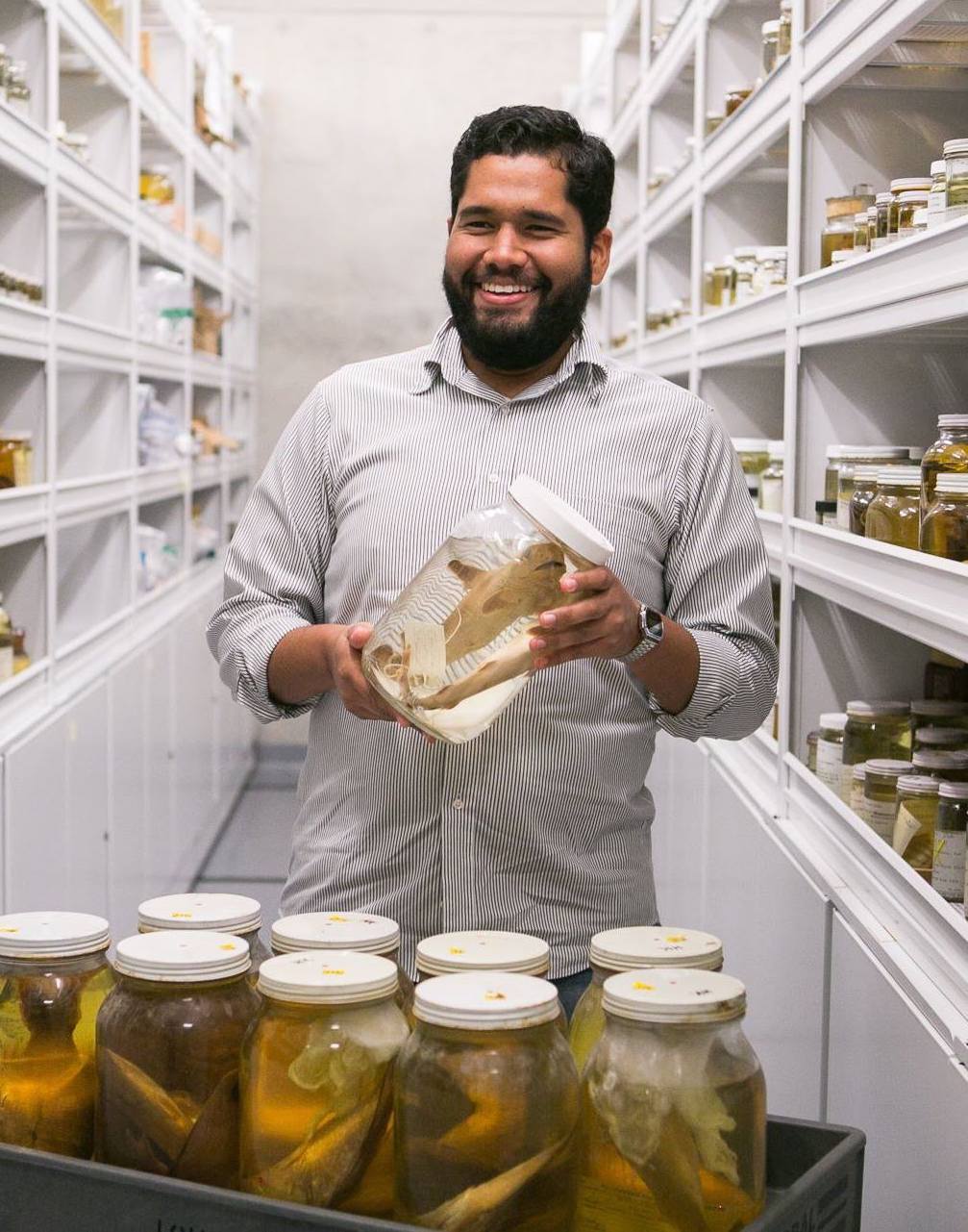
Moises A. Bernal is an Assistant Professor in the Department of Biological Sciences at Auburn University, where he leads the Fish Ecology and Evolution Lab. His research integrates ecological, evolutionary, and molecular approaches to study how marine fishes respond to environmental stressors such as climate change and ocean warming. Education: Postdoctoral Fellow – State University of New York at Buffalo (2018–2019) Postdoctoral Fellow – King Abdullah University of Science and Technology (2016–2018) Ph.D. in Marine Science – University of Texas, Austin (2009–2015) B.Sc. in Biology and Environmental Sciences – University of Panama (2003–2008) His research focuses on the metabolic, physiological, and epigenetic mechanisms underlying fish acclimation to climate change. He investigates transgenerational responses, thermal tolerance, and the role of environmental history in shaping population resilience. His work combines field studies with molecular tools such as transcriptomics and genomics. The recent publications highlight a strong trend in studying coral reef fishes under climate stress, particularly through molecular and genomic lenses. Key themes include thermal acclimation, gene expression changes during heatwaves, and evolutionary divergence in sympatric species. His work bridges organismal physiology with evolutionary genomics. He teaches courses such as BIOL 3040 (Biology of Marine Systems) and BIOL 5440/6440 (Climate Change Physiology and Evolution) at both undergraduate and graduate levels. He advises students in his lab and mentors research on fish responses to environmental change. The Fish Ecology and Evolution Lab conducts integrative research on marine fishes, focusing on stress response mechanisms and evolutionary adaptations. Lab activities include molecular analyses, experimental physiology, and fieldwork related to coral reef ecosystems.
Anthony Caterisano is a Professor of Health Sciences at Furman University, with over 35 years of academic and athletic leadership. He holds a Ph.D., M.A., and B.S. from The University of Connecticut, SUNY, and UNC Chapel Hill. His research focuses on exercise physiology, resistance training, and sports medicine, with notable publications in journals like Medicine and Science in Sports and Exercise . Dr. Caterisano is a Fellow of the American College of Sports Medicine (FACSM) and has authored/co-authored books on football training and resistance techniques. He has served as wrestling coach at Furman, Spartanburg Methodist College, and currently coaches at Wade Hampton High School. As a competitive powerlifter, he has secured 16 South Carolina state titles, 10 national titles, and 10 world gold medals in masters-level competitions. His work bridges scientific research and practical application, with grants and presentations on topics like strength training methodologies and cardiovascular adaptations. Key contributions include studies on Tsunami Barbell training, metabolic responses to exercise, and core muscle engagement. His awards reflect both academic excellence and athletic achievement, while his grants and presentations underscore his commitment to advancing sports science.
Christopher Turbill is an Associate Professor in Animal Science at Western Sydney University's School of Science, where he maintains an active research program focused on animal physiological ecology. He is affiliated with the Hawkesbury Institute for the Environment and serves as a Principal Investigator on multiple research projects while accepting HDR candidates for supervision. PhD from University of New England (2006) Thesis: Thermoregulatory Ecology of Tree-roosting Bats Supervised by Prof. Fritz Geiser Postdoctoral fellowships from Austrian Science Fund and Australian Research Council (DECRA) Former ecologist with NSW Government Professor Turbill's research integrates thermal and metabolic physiology with behavioral ecology to understand animal-environment interactions. His work has revealed significant ecological consequences of controlled body temperature variation in mammals and birds, linking these processes with metabolic energy expenditure, activity patterns, and life-history strategies. He specializes in bat biology and investigates conflicts between human environmental change and animal conservation requirements. His research keywords include ecophysiology, thermoregulation, energy expenditure, life-history ecology, body temperature, torpor, hibernation, and wildlife conservation. Analysis of Turbill's recent publications reveals a strong focus on thermal biology and conservation physiology, particularly regarding bats and birds. His work examines how animals manage energy through torpor, respond to climate change through thermal regulation, and adapt to anthropogenic disturbances. The research spans field studies of flying-foxes, microbats, and passerine birds across Australian ecosystems, with increasing emphasis on conservation applications related to white-nose syndrome, fire impacts, and wind energy development. Turbill leads significant research projects including the Ecology of the eastern horseshoe bat and its sensitivity to fire impacts (2024-2027), Vulnerability of Australian bats to white-nose syndrome (2021-2026), and Torpor use and burrowing behaviour in an arid zone passerine (2024). His work attracts funding from diverse sources including the Australian Research Council, Department of Planning and Environment, and various conservation organizations. Professor Turbill directs the BatsLab research group, which maintains a virtual hub for bat research at Western Sydney University. His team employs advanced methodologies including thermal imaging, GPS tracking, and physiological monitoring to study animal responses to environmental challenges. Current work focuses on developing conservation interventions for heat-stressed flying-foxes and assessing vulnerabilities of Australian bat species to emerging diseases.
Dr. Lourdes Pena-Castillo is a Professor jointly appointed in the Departments of Computer Science and Biology at Memorial University of Newfoundland's Faculty of Science. Her research focuses on applying machine learning and bioinformatics to study bacterial gene regulation, with emphasis on transcriptomics, gene expression pathways, and microbiology. She leads the Bioinformatics Lab at MUN, developing computational tools like Promotech for promoter prediction and sRNARFTarget for sRNA target identification. Education: BSc in Information Systems Engineering, ITESM-Mexico MSc in Computer Science, University of Alberta PhD in Computer Science (Doktoringenieurin), Otto-von-Guericke Universität Magdeburg Postdoc in Bioinformatics, University of Toronto Research Interests: Bioinformatics, Genomics, Machine Learning, Artificial Intelligence, Transcriptomics, Gene Regulation, Microbiology Her work integrates computational methods with biological data to address challenges in molecular biology, including analyzing bacterial sRNA functions, promoter recognition, and disease diagnostics using machine learning. She has advised numerous graduate students, including PhD candidates Purvikalyan Pallegar and Bonita McCuaig, and MSc students like Ruben Chevez-Guardado and Kratika Naskulwar. Her lab focuses on translational research with applications in both basic science and clinical contexts. Publications span computational methods for bacterial gene regulation, bioinformatics tool development, and interdisciplinary projects in VR and healthcare informatics. Her research has contributed to understanding symbiotic relationships in marine organisms, inflammatory bowel disease diagnostics, and clavulanic acid production in Streptomyces. Grants & Collaborations: Works with interdisciplinary teams across computer science and biology, supported by grants enabling projects in bacterial genomics and computational tool development. Labs & Teams: Leads the Bioinformatics Lab at MUN, fostering collaborations with researchers in microbiology, computer science, and healthcare.
Tiffany M Jamann is an Associate Professor in Crop Sciences at the University of Illinois, where she holds the Monsanto Fellowship in Plant Breeding. Her research program focuses on understanding and improving disease resistance mechanisms in maize through integrated genetic, genomic, and phenotypic approaches. Dr. Jamann's work spans multiple disease systems with particular emphasis on foliar diseases such as Northern Leaf Blight and ear diseases like Gibberella ear rot. Her research interests include: Quantitative trait locus (QTL) mapping for disease resistance in maize Development of near-isogenic line populations for gene discovery Comparative studies of resistance mechanisms across different pathosystems Investigation of pattern-triggered immunity in maize Standardization of pathogen inoculation and disease rating methodologies Analysis of Dr. Jamann's recent publications (2023-2025) reveals a strategic integration of traditional plant breeding with cutting-edge genomic approaches. Her work demonstrates increasing use of comparative genomics and transcriptomics to identify host-specificity genes in pathogens while maintaining strong focus on practical breeding applications. A notable trend is her development of standardized methodologies for pathogen inoculation across multiple disease systems, enabling more reliable resistance evaluation. Monsanto Fellow in Plant Breeding Multiple publications featured in news outlets and academic discussions Active research with significant social media engagement (46 X users mentioning her work) Dr. Jamann's research program likely involves extensive collaboration with other plant pathologists and breeders, as evidenced by her numerous co-authored publications. Her work on multi-environment trials suggests substantial field research across different geographical locations. The development of specialized maize germplasm, including near-isogenic lines, indicates long-term investment in genetic resources for disease resistance research. Her laboratory maintains sophisticated capabilities for pathogen characterization, high-throughput phenotyping using fluorescence microscopy, and genetic mapping approaches. The emphasis on both fundamental plant-pathogen interactions and applied crop improvement demonstrates a research program that bridges basic science with practical agricultural outcomes.
Iona Cheng is a Professor in the Department of Epidemiology and Biostatistics at the University of California, San Francisco (UCSF), where she conducts groundbreaking research in cancer epidemiology. She serves as co-Investigator of the SEER Greater Bay Area Cancer Registry and is Principal Investigator of multiple NIH- and foundation-funded projects examining genetics, lifestyle factors, and neighborhood characteristics in relation to cancer risk. Dr. Cheng has developed an extensive research program focused on racial/ethnic differences in cancer risk and leads population-based cancer surveillance studies that document variations in cancer incidence and mortality patterns across diverse racial and ethnic groups. University of California, Davis, BS, 1990–1994, Physiology Yale University, MPH, 1999–2001, Chronic Disease Epidemiology University of Southern California, PhD, 2001–2005, Epidemiology University of California, San Francisco, Postdoc, 2006–2008, Genetic and Molecular Epidemiology Dr. Cheng's research spans multiple disciplines within cancer epidemiology, with particular emphasis on understanding how environmental exposures, genetic factors, and social determinants interact to influence cancer risk and outcomes across different racial and ethnic populations. Her work frequently examines the impact of air pollution, endocrine-disrupting chemicals, and neighborhood characteristics on cancer development and survival. She has made significant contributions to understanding cancer disparities among Asian American, Native Hawaiian, and Pacific Islander populations, bringing attention to the unique cancer risks and outcomes within these understudied groups. Her research often leverages the Multiethnic Cohort Study, one of the largest prospective studies of cancer incidence and mortality across diverse racial/ethnic populations. Analysis of Dr. Cheng's recent publications reveals a consistent focus on environmental and social determinants of cancer risk across multiple organ sites. Her work demonstrates a sophisticated integration of epidemiological methods with environmental exposure assessment, genetic analysis, and health disparities research. Many of her studies examine the intersection of environmental exposures and racial/ethnic disparities in cancer outcomes, particularly regarding breast cancer, lung cancer, and other malignancies. She has published extensively on the impact of air pollution on cancer risk and survival, as well as the effects of endocrine-disrupting chemicals like bisphenol A, parabens, and phthalates. American Association for Cancer Research Scholar-in-Training Award (2007) National Institutes of Health Loan Repayment Award (2007) National Institutes of Health Loan Repayment Renewal Award (2009) American Association for Cancer Research Faculty Scholar Award (2011) National Institutes of Health Loan Repayment Renewal Award (2011) National Institutes of Health Loan Repayment Renewal Award (2013) American Journal of Epidemiology/Society of Epidemiology Research Top 10 manuscripts (2014) Cancer Prevention Institute of California Mentoring Award (2015) American Society of Human Genetics Top poster As Principal Investigator of multiple NIH-funded projects, Dr. Cheng oversees substantial research grants focused on cancer epidemiology and health disparities. Her work often involves large interdisciplinary collaborations with researchers across multiple institutions, including the Multiethnic Cohort Study which follows over 200,000 participants from diverse racial/ethnic backgrounds. She has demonstrated leadership in mentoring junior researchers, particularly those from underrepresented backgrounds in science, as evidenced by her Cancer Prevention Institute of California Mentoring Award. Her research program integrates data from cancer registries, electronic health records, and geospatial information to provide comprehensive insights into cancer patterns and risk factors. Dr. Cheng's research is closely connected to the UCSF Helen Diller Family Comprehensive Cancer Center and leverages collaborations with Lawrence Berkeley National Laboratory, which provides advanced technological resources for cancer research. Her work benefits from access to extensive cohort data, sophisticated exposure assessment methods, and interdisciplinary expertise in genetics, environmental science, and computational biology available through these institutional partnerships. She frequently collaborates with researchers studying the genetic and environmental determinants of cancer across multiple organ systems, contributing to a more comprehensive understanding of cancer etiology and prevention strategies.
Zhi-Pei Liang is the Franklin W. Woeltge Professor in the Department of Electrical and Computer Engineering at the University of Illinois at Urbana-Champaign, with joint appointments in the Department of Bioengineering, Beckman Institute for Advanced Science and Technology, and Coordinated Science Laboratory. His research spans biomedical engineering, medical imaging, and signal processing with a focus on advancing magnetic resonance imaging and spectroscopy technologies. His educational background includes a Ph.D. in Biomedical Engineering from Case Western Reserve University (1989) and a B.S. in Electrical Engineering from South-China University of Technology (1982), followed by postdoctoral training at UIUC (1989-1991). Professor Liang's research interests center on magnetic resonance imaging and spectroscopy , with particular emphasis on ultrafast imaging techniques , model-based reconstruction methods , and the integration of physics-based modeling with machine learning . His pioneering work on SPICE (SPectroscopic Imaging by exploiting spatiospectral CorrElation) has revolutionized high-resolution metabolic brain imaging by enabling label-free molecular imaging through the marriage of spin physics and machine learning. His research spans pattern recognition, parameter estimation, image formation theory, and algorithms for medical imaging applications. Analysis of his recent publications reveals a strong focus on high-resolution metabolic imaging , particularly using SPICE methodology to map brain metabolism with unprecedented detail. His work bridges fundamental physics of magnetic resonance with advanced computational methods to overcome traditional limitations in imaging speed and resolution. Current research directions include J-resolved spectroscopic imaging, deuterium-based metabolic mapping, and multimodal integration of PET and MRSI for studying neurological disorders. Elected to International Academy of Medical and Biological Engineering (2012) Gold Medal, International Society for Magnetic Resonance in Medicine (2022) Technical Achievement Award, IEEE Engineering in Medicine and Biology Society (2014) Fellow, National Academy of Inventors (2021) Author of influential book 'Principles of Magnetic Resonance Imaging' (1999) President of IEEE Engineering in Medicine and Biology Society (2011-2012) Professor Liang has advised numerous students and postdocs in biomedical imaging research and has received multiple teaching honors including the Ronald W. Pratt Outstanding Teaching Award (2005) and multiple listings among UIUC's Excellent Teachers. His research has been supported by various grants from NIH, NSF, and other funding agencies. He leads the SPICE (Spectroscopic Imaging by exploiting spatiospectral Correlation) research group which focuses on developing novel imaging techniques that combine physics-based modeling with machine learning for ultrafast metabolic imaging. His laboratory, part of the Beckman Institute's Integrative Imaging Theme, collaborates extensively with clinical researchers at Carle Illinois College of Medicine and other institutions to translate advanced imaging techniques into clinical applications for neurological disorders, cancer, and metabolic diseases. Current projects focus on high-resolution mapping of brain metabolism in Alzheimer's disease, stroke, and brain tumors using novel MR spectroscopic imaging techniques.
Dr. Andrew Best is an Assistant Professor of Biology at Massachusetts College of Liberal Arts (MCLA), specializing in biological anthropology with a focus on human physiological evolution. His primary research examines the role of sweating in human evolution, contemporary human sweat characteristics, and the metabolic limits of endurance performance. He holds a Ph.D. from the University of Massachusetts (2021), an M.A. from the University of Massachusetts (2016), an M.A. from Quinnipiac University (2006), and a B.A. from Saint Michael’s College (2004). Dr. Best teaches courses including BIOL 101: Biology Seminar for Majors , BIOL 342/343: Anatomy and Physiology , BIOL 440: Exercise Physiology , and BIOL 484: Biomechanics . His research integrates evolutionary biology, thermal physiology, and exercise science to explore how human metabolic and thermoregulatory systems have evolved to support extreme endurance activities. Key projects include studying sweat gland density variation across populations and the physiological constraints of ultra-endurance events. His publications span topics such as ultramarathon energy expenditure, strength training’s impact on endurance, and primate sweat gland evolution. He actively participates in academic conferences and collaborates with researchers globally. No scientific awards are explicitly noted in the provided materials. Dr. Best’s work reflects interdisciplinary approaches to understanding human biological adaptation, with ongoing projects likely extending into nutritional strategies for endurance athletes and comparative analyses of primate thermoregulation systems.
Owen Skinner is an Assistant Professor in the Department of Chemistry and Chemical Biology at Northeastern University, affiliated with the Barnett Institute of Chemical and Biological Analysis. He leads the Skinner Lab, which specializes in high-resolution mass spectrometry to study protein-metabolite interactions in health and disease. Skinner earned his Ph.D. from Northwestern University and conducted postdoctoral research at Massachusetts General Hospital. His research focuses on thiol redox regulation, vitamin cofactor metabolism, and oxidative phosphorylation dynamics. Education: Ph.D. in Chemistry (Northwestern University), Postdoctoral Fellowship in Analytical Chemistry (Massachusetts General Hospital). Research interests include proteomics, metabolomics, mitochondrial dysfunction, and metabolic signaling. The lab actively recruits graduate students, undergraduates, and postdoctoral researchers across Northeastern's scientific community. Affiliations: Barnett Institute, College of Science Lab Members: PhD students Yifan Liu, Michael Xiao, Angela Rojas-Merchan; Undergraduates Helena Rittenhouse, Ridha Shah; High School collaborator Helen Loango Techniques: Native mass spectrometry, proteomics, metabolomics, redox biology Publications span mitochondrial metabolism, metabolic biomarkers in septic shock, and enzyme engineering. The lab emphasizes interdisciplinary collaboration and supports students through Northeastern's experiential learning programs.
Ueli Grossniklaus is an Ordinary Professor at the University of Zurich within the Faculty of Mathematical and Natural Sciences , affiliated with the Department of Plant and Microbiology . His work focuses on plant developmental biology, particularly epigenetic and genetic mechanisms governing reproduction and adaptation. Key Courses: Epigenetics, Plant Biology Workshop, Group Seminars on Current Research Laboratory Techniques: Advanced methods in plant cell mechanics, transcriptomics, and genome editing Research Interests span plant epigenetics, reproductive biology, and the interplay between environmental stress and genetic regulation. He investigates: Mechanistic control of gametogenesis and fertilization Epigenetic contributions to plant adaptation Evolutionary implications of asexual reproduction Biophysical forces in plant cell growth Publication Trends (2025–2018) reveal expertise in: Arabidopsis and fern model systems Epigenetic regulation (DNA methylation, histone dynamics) Apomixis and hybrid seed failure mechanisms Biomechanics of pollen tubes and carnivorous plants Genome editing tools (CRISPR) and long-read sequencing Scientific Collaborations include interdisciplinary projects on: Microfluidic devices for plant cell analysis Gene drive ecology and ethics 3D imaging of plant reproductive structures Advising and Grants focus on mentoring through research internships in developmental biology, genetics, and systems biology. His lab engages in: Epigenetic response to environmental stress Cell wall mechanics in reproduction Computational modeling of plant growth Laboratory Teams integrate plant biologists, bioengineers, and computational scientists to study: Mechanistic gene regulation Evolutionary developmental biology Microrobotics for cellular force measurement
Travis Robbins is an Assistant Professor of Biology at the University of Nebraska Omaha's College of Arts and Sciences. His research focuses on ecological and evolutionary adaptations in reptiles, particularly lizards, emphasizing thermal biology, epigenetics, and responses to environmental stressors such as invasive species. He holds a Ph.D. in Biology and has published extensively on topics including latitudinal clines in lizard physiology, predator-prey dynamics, and the effects of temperature on developmental and metabolic processes. Key research interests include understanding how lizards adapt to thermal environments, the role of epigenetic mechanisms in phenotypic plasticity, and the impacts of invasive species on native populations. His work integrates field observations with controlled laboratory studies to explore questions at the interface of ecology, physiology, and evolution. Recent studies investigate the physiological stress responses in lizards exposed to novel predators and the transgenerational effects of environmental challenges. Dr. Robbins' publications highlight trends in thermal adaptation, behavioral plasticity, and the ecological consequences of anthropogenic changes. His work on Sceloporus lizards has been particularly influential in elucidating mechanisms underlying latitudinal variation in body size, growth rates, and reproductive strategies. He has also examined how invasive species like fire ants affect predator-prey interactions and immune function in reptiles. No scientific awards are explicitly mentioned in the text, but his contributions include significant grants likely tied to fieldwork and laboratory research. He advises students in experimental ecology and conservation biology, though specific advisee names are not listed here. His research extends to habitat restoration and citizen science initiatives, emphasizing community engagement in ecological monitoring and conservation efforts. Dr. Robbins is affiliated with UNO's Biology Department and collaborates with institutions like the University of South Florida on projects involving epigenetic markers in herpetofauna. His lab focuses on translating ecological epigenetics into actionable insights for species conservation under climate change scenarios.
Cornelius Barry is an Associate Professor in the Department of Horticulture at Michigan State University, with affiliations to the Plant Breeding, Genetics and Biotechnology program, AgBioResearch, and the Molecular Plant Sciences Graduate Program. He joined MSU in July 2007 with a 75% research and 25% teaching appointment. Education: PhD and BSc from the University of Nottingham and University College of Wales Current roles: Director of NSF REU Site: Plant Genomics @ MSU His research focuses on the evolution of biochemical diversity within the Solanaceae family , particularly specialized metabolites like terpenoids, flavonoids, and alkaloids. He investigates their roles in plant defense, pollinator attraction, and human applications through genomics, metabolite profiling, and synthetic biology. Recent publications show expertise in alkaloid biosynthesis , trichome chemistry , and metabolic pathway engineering . Key collaborations include teams at Boyce Thompson Institute, Texas A&M, and University of Nottingham. He advises graduate students in Genetics , Biochemistry & Molecular Biology , and Molecular Plant Sciences programs.
Jessica Forrest is an Associate Professor in the Department of Biology at the University of Ottawa, affiliated with the Faculty of Science. Her research focuses on evolutionary ecology, particularly plant-pollinator interactions, climate change impacts on pollinators, and the ecological consequences of phenological shifts. She studies native bees, their interactions with plants, and how agricultural practices can benefit from native bee ecology. Her work spans field studies in natural and agricultural landscapes, emphasizing pollinator conservation and climate adaptation. Notable projects include investigations into bee nesting habitat enhancement in orchards, the effects of drought on alpine bees, and the role of floral traits in pollinator attraction. Research Themes: Pollination ecology, climate change biology, bee behavior, and agricultural sustainability. Labs/Teams: Leads the Forrest Lab at the University of Ottawa, involving graduate and undergraduate students in field and lab-based studies. Her recent work highlights the importance of Asteraceae pollen in protecting mason bees from brood parasites and the complex effects of temperature on bee reproductive success in high-elevation habitats. Students advised include Lydia, Michelle, Natasha, Roisin, Tovah, and others, with projects ranging from bee cognition to agricultural pollination systems. The Forrest Lab collaborates widely, addressing applied and theoretical questions in pollinator ecology.
G. Petur Nielsen, MD is a Professor of Pathology at Harvard Medical School and serves as Subspecialty Head, Bone and Soft Tissue Pathology at Massachusetts General Hospital . With a clinical focus on bone and soft tissue tumors, his expertise spans diagnostic pathology, molecular genetics of neoplasms, and ancillary testing applications. Research interests center on Pathology and biology of bone/soft tissue tumors Molecular genetics of bone and soft tissue neoplasms Chordoma and sarcoma research Epithelioid vascular tumor differentiation Mesenchymal tumors of the female genital tract His work includes landmark studies on tumor misdiagnosis rates, immunohistochemical profiling, and genomic analysis of chordomas. Scientific contributions appear in leading journals like Nature and American Journal of Surgical Pathology , with major emphasis on Molecular tumor classification Mutational signature analysis Translational oncology Diagnostic accuracy improvement Genomic instability mechanisms
Dr. Marion Schrumpf is a Group Leader in the Soil Biogeochemistry research group at the Max Planck Institute for Biogeochemistry, affiliated with the Department of Biogeochemical Processes. Her work focuses on soil carbon dynamics, mineral-organic matter interactions, and climate change impacts on soil systems. Research areas: Soil biogeochemistry, carbon cycling, mineral-soil interactions, nutrient stoichiometry, microbial ecology, and climate modeling. Email: mschrumpf@... Phone: +49 3641 57-6182 Office: B2.015 Her recent publications address themes like mineral control over soil carbon stabilization, drought effects on soil processes, microbial stoichiometric adaptation, and the Jena Soil Model's role in simulating carbon-nutrient interactions. She leads efforts to disentangle the complex relationships between land use, mineralogy, and soil organic matter turnover across diverse ecosystems.