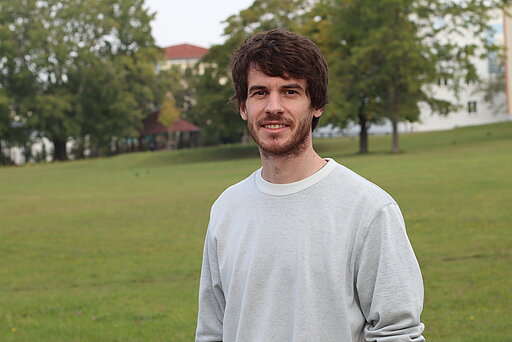
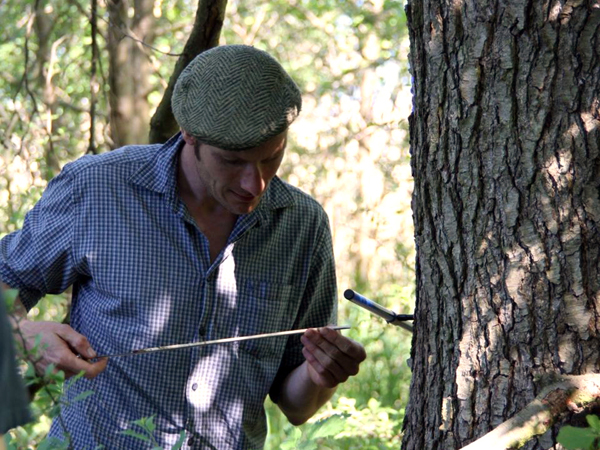
Isabelle Ewers is a researcher in Eukaryotic Microbiology at the Faculty of Biology, University of Duisburg-Essen, Germany. She specializes in phylogenetic placements for taxonomic assignment of environmental DNA, particularly focusing on colpodean ciliates and their evolutionary and ecological characteristics. Her research compares phylogenetic placement methods (EPA-ng, GAPPA) with pairwise alignment approaches (VSEARCH) to resolve taxonomic assignments in environmental sequencing data. This includes analyzing operational taxonomic units (OTUs) from Neotropical rainforest soils, evaluating likelihood weight ratios for placement accuracy, and measuring expected distances between placement locations to quantify uncertainty. Key findings include demonstrating that phylogenetic placement outperforms pairwise alignment for low-similarity sequences and establishing frameworks for interpreting multi-placement scenarios in microbial eukaryotes. Her work has implications for improving metabarcoding workflows and understanding protist diversity in understudied ecosystems.
Prof. Wolfgang Weisser holds the Chair of Terrestrial Ecology at the Technical University of Munich (TUM) within the TUM School of Life Sciences. His research focuses on ecological interactions between organisms and their consequences for populations, communities, and ecosystems, with emphases on land-use impacts on biodiversity and sustainable land-use strategies. He studied Biology and Mathematics at the Universities of Gießen and Bayreuth, earned his PhD in Zoology at the University of Oxford (1994), and held postdoctoral positions at Imperial College London and the University of Basel before becoming Professor of Terrestrial Ecology at Friedrich-Schiller-Universität Jena (1999) before joining TUM in 2011. His key research areas include biodiversity-ecosystem functioning, plant-insect interactions, and urban ecology. Specific interests include the effects of agricultural intensification, deadwood decomposition, and urban green infrastructure design on biodiversity. His work combines field experiments with advanced technologies like drone-based remote sensing and metabarcoding. Publications highlight interdisciplinary approaches, such as using acoustic monitoring for biodiversity assessment and developing frameworks for integrating biodiversity into urban planning. Recent studies address global challenges like insect decline and the coexistence of urban development with ecological functions. His contributions bridge ecology with applied solutions, influencing policy and sustainable land management strategies. Ongoing projects focus on multispecies urban design, forest biodiversity conservation, and the interplay between plant chemical diversity and arthropod communities.
Prof. Dr. Helge Wolfgang Arz is an accomplished marine geologist and paleoceanographer currently serving as Interim Director of the Leibniz Institute for Baltic Sea Research Warnemünde (IOW) and Professor of Marine Geology at Ernst-Moritz-Arndt University of Greifswald, Germany. He also heads the Marine Geology Section at IOW, where he leads research on sedimentation processes, paleoenvironmental reconstructions, and Late Quaternary climate dynamics across multiple ocean basins including the Baltic Sea, Black Sea, and southern Chilean fjords. Dr. Arz received his Diploma in Geology from Johannes Gutenberg University, Mainz in 1994, followed by his doctorate in the Department of Geosciences at the University of Bremen in 1998. His academic journey included postdoctoral work at the University of Bremen (1998-2003), research associate position at the German Research Centre for Geosciences (GFZ) in Potsdam (2003-2010), and a fellowship from the Gary Comer Science and Education Foundation on Abrupt Climate Change (2003-2008). Dr. Arz's research focuses on understanding Earth's climate system through the lens of marine geological records. His work spans multiple disciplines including marine geology, paleoceanography, sedimentology, and paleoclimatology. He specializes in multi-proxy reconstructions of past environmental conditions, with particular expertise in analyzing sediment cores from various marine settings to unravel climate dynamics on timescales ranging from seasonal to millennial. His research has significantly advanced our understanding of the postglacial development of the Baltic Sea, the freshwater and saltwater stages of the Black Sea, and the paleoceanography of the southern Chilean fjord region and other key areas. Analysis of Dr. Arz's recent publications reveals a strong focus on utilizing sediment archives to understand climate-ocean dynamics across multiple timescales. His work spans from the Late Quaternary to the late Miocene, examining phenomena such as millennial-scale ice sheet fluctuations, geomagnetic excursions, and long-term ocean circulation changes. A notable trend is the integration of multiple proxy records (including geochemical, paleomagnetic, and biological proxies) to build comprehensive paleoenvironmental reconstructions. His research increasingly emphasizes the connections between different ocean basins and hemispheres, highlighting the interconnected nature of Earth's climate system. Gary Comer Science and Education Foundation (CSEF) Fellowship on Abrupt Climate Change (2003-2008) Dr. Arz has secured and led numerous significant research projects including SESPOD (Plio-Pleistocene surface ocean dynamics in the eastern South Pacific), SolClim (Solar influences on climate), BaltRap (Baltic Sea and southern Lowlands), and several DFG-funded projects including DynNAP and HoloPark. His research has been supported by major funding bodies including the Leibniz Association, BMBF, and DFG, reflecting the significance and impact of his work in marine geology and paleoclimatology. As Head of the Marine Geology Section at IOW, Dr. Arz leads a team of researchers focused on paleoceanography and sedimentology. His group collaborates extensively with international partners on research expeditions across the globe, from the Baltic and Black Seas to the Chilean fjords and the South Pacific. The section maintains strong connections with the University of Greifswald, where Dr. Arz holds his professorship, fostering academic training and research collaboration.
Dr. Paulina Urban is a Postdoctoral Researcher at the University of Hamburg, affiliated with the Department of Biology under the Faculty of Mathematics, Computer Science and Natural Sciences. She works at the Institute of Marine Ecosystem and Fisheries Sciences. PhD in Biology (2020-2024) from DTU Aqua, Technical University of Denmark M.Sc. in Biological Oceanography (2017-2020) from Christian-Albrechts-University of Kiel B.Sc. in Biology (2013-2017) from Christian-Albrechts-University of Kiel Her research focuses on environmental DNA (eDNA) applications in marine ecology, particularly for: Bycatch estimation in fisheries Species composition analysis using Nanopore sequencing Allometric scaling methods for biomass quantification Arctic marine biodiversity studies Marine ecosystem dynamics Advanced genetic sampling techniques Key research projects include DNACATCH, DNA-MIX, and ECOTIP, with publications in journals like Environmental DNA and ICES Journal of Marine Science . Her work combines molecular biology, oceanography, and fisheries management to improve marine conservation practices.
Dr. Nele Martens is a Postdoctoral Researcher at the University of Hamburg , affiliated with the Faculty of Mathematics, Informatics, and Natural Sciences and specifically the Department of Biology . She works within the Institute of Marine Ecosystem and Fisheries Sciences under the Plankton Ecology and Evolution research group. Office: Room 108, Olbersweg 24, Hamburg, Germany Contact: nele.martens@uni-hamburg.de Martens specializes in plankton ecology , focusing on phytoplankton dynamics in estuarine and marine ecosystems. Her research explores metabarcoding techniques , nutrient acquisition mechanisms , and functional group interactions in aquatic environments. Recent publications highlight her work on organic compound influences on phytoplankton growth (2024, Royal Society B) and mixotrophic flagellate identification in the Elbe estuary (2024, Environmental Research). Earlier research (2021) examined carbon acquisition strategies in Baltic Sea pico-phytoplankton. She actively participates in collaborative research projects and third-party funded initiatives , mentoring students through MSc & BSc research projects . Her work bridges environmental science , microbial ecology , and evolutionary biology in aquatic systems.
Dr. Michael Mikát is an Assistant Professor in the Department of Zoology at Charles University in Prague, Czech Republic. His academic journey began with doctoral studies in Zoology/Entomology at Charles University (2014-2020), followed by a visiting research scholar position at the University of New Hampshire (2016). Most recently, he completed a prestigious Marie Curie-Sklodowska Global Fellowship (2020-2023) working jointly at Martin Luther University in Halle-Wittenberg, Germany and York University in Toronto, Canada under the supervision of Professor Robert J. Paxton and Associate Professor Sandra M. Rehan. Dr. Mikát's research focuses on the evolution of social behavior in insects, particularly in small carpenter bees of the genus Ceratina . His work spans multiple disciplines including behavioral ecology, evolutionary biology, and entomology. He has conducted extensive field research across diverse geographical regions including Europe, North America, Bangladesh, and Guatemala, examining the nesting biology, social structure, and evolutionary patterns of these fascinating insects. His research has revealed important insights into facultative sociality, biparental care, and the role of relatedness in social evolution among Ceratina bees. His current research portfolio includes phylogenomic studies of Ceratina bees using ultraconserved elements, investigations into the relationship between social behavior and reproductive strategies, and studies of pollination ecology. Dr. Mikát has built a substantial dataset comprising 16,570 nests across 29 Ceratina species, providing unprecedented insights into the natural history of these insects. Dr. Mikát has received recognition for his work through the prestigious Marie Curie-Sklodowska Global Fellowship. His research has resulted in numerous publications in high-impact journals, with findings that challenge previous notions about the social evolution of insects. His work demonstrates that Ceratina bees exhibit remarkable diversity in social behavior, with facultative sociality occurring across both tropical and Mediterranean species. As a mentor, Dr. Mikát has guided numerous students in field research, particularly during his expeditions to Bangladesh and other regions. His laboratory at Charles University continues to investigate the evolutionary patterns and ecological adaptations of social insects, with particular focus on the genus Ceratina .
Dr. Nicole Börner is a researcher at the Max Planck Institute for Biogeochemistry , where she leads project coordination for AI4PEX and EEBIOMASS. Her career spans scientific coordination roles at the Technische Universität Braunschweig (2017–2023) and research appointments in Germany, Canada, and China. Education : PhD in Geochemistry (2016, TU Braunschweig), Diplom in Biology with focus on Ecology/Zoology/Hydrology (2010–2016, Leibniz University Hannover) Research Interests : Paleoenvironmental reconstruction using ostracod shell chemistry , chironomid assemblages , and sedimentary ancient DNA to study Tibetan Plateau hydrology , monsoon dynamics , and Quaternary climate change . Publication Trends : Recent work focuses on multi-proxy comparisons (e.g., diatom vs. DNA data), elemental/isotopic analysis of microfossils, and high-altitude lake responses to 20th-century climate shifts. Scientific Awards : DAAD Scholarship (2013) Grants : Funded by DFG for her dissertation and OSL dating projects.
Katharina Schwesig is a Researcher and PhD Student at the Biodiversity and Ecosystem Research Group, Institute of Landscape Ecology, University of Münster. Her work focuses on restoration ecology, land use impacts on biodiversity, and monitoring conservation measures in mining sites and peat ecosystems. 2015-2019: B.Sc. in Landscape Ecology, University of Münster 2019-2022: M.Sc. in Landscape Ecology, University of Münster Her research explores ecological restoration in mining sites, eDNA metabarcoding for biodiversity monitoring, and vegetation dynamics in post-mining landscapes. She contributes to the GiBBS project, promoting holistic biodiversity management in the building materials industry. Katharina utilizes eDNA techniques to assess aquatic biodiversity and evaluates habitat heterogeneity in quarrying sites. Her publications and conference talks emphasize the value of mining sites as ecological niches for rare species. Co-supervised Bachelor's research on dragonfly populations in urban areas Jointly supervised Master's work on plant diversity in active mining sites She collaborates with institutions like NABU and the Leibniz Institute for the Analysis of Biodiversity Change (LIB) within the GiBBS project, funded by Germany's Federal Ministry of Education and Research (BMBF).
Prof. Hans-Peter Grossart is a Professor of Aquatic Microbial Ecology and Functional Biodiversity at the University of Potsdam, within the Faculty of Mathematics and Natural Sciences and the Institute of Biochemistry and Biology. He leads the Aquatic Microbial Ecology research group at the Leibniz-Institute of Freshwater Ecology and Inland Fisheries (IGB), where he has been Head of the Department since 2002. His expertise spans microbial community dynamics, organic matter cycling, and applications of aquatic ecology in biotechnology. He has held roles including Head of ASLO’s Young Researcher’s Committee and speaker of the IGB’s Aquatic Biodiversity research focus. Grossart’s research integrates field studies, experimental approaches, and genomic tools to address environmental challenges like microplastic impacts, climate-driven ecosystem changes, and biodiversity conservation. Education: Diploma in Limnology (1991), University of Constance PhD in Limnology (1995), University of Constance Postdoctoral research at Scripps Institution of Oceanography (1996–1998) and Yigal Allon Kinneret Limnological Laboratory (1995–1996) Research Interests: Grossart’s work focuses on microbial roles in nutrient cycles, aquatic biodiversity, and the ecological impacts of human activities. He investigates topics such as microbial interactions in lake ecosystems, fungal diversity, and the effects of pollutants like microplastics and PFAS. His projects bridge fundamental and applied research, including biotechnology applications for waste management and bioactive compound discovery. Key Contributions: Global studies on microplastic effects and antibiotic resistance dissemination Pioneering work on lake snow aggregates and their ecological significance Leadership in large-scale ecological monitoring and long-term dataset analysis Labs/Teams: Heads the IGB’s Aquatic Microbial Ecology group and collaborates internationally on projects like the ParAqua initiative to study zoosporic parasites in aquatic systems.
Dr. Anže Žerdoner Čalasan is a Researcher and Curator of Algae and Fungi at Ludwig-Maximilians-Universität München, affiliated with the Faculty of Biology and the Department of Systematics, Biodiversity, and Evolution of Plants. His research focuses on biodiversity and evolutionary biology across plants, fungi, and algae. He is based in Munich, working in Room 233, and reachable via A.Zerdoner@lmu.de. His research interests span multiple domains: Australian Amaranthaceae (e.g., Camphorosmeae) Fungal genus Russula Freshwater dinophytes He employs Next-Generation Sequencing (NGS) approaches including target enrichment, whole genome sequencing, and (meta)transcriptomics. His work aims to uncover evolutionary histories, hidden biodiversity, and develop novel methodologies in biodiversity research. His publications emphasize historical biogeography, phylogeography, and evolutionary adaptation in plants and algae, particularly in arid and steppe ecosystems. He collaborates with Prof. Kadereit’s research group and actively contributes to dinophyte biodiversity assessments in Bavarian lakes. His research bridges molecular genetics, ecology, and taxonomy, with a focus on understudied lineages. While no formal awards are noted, his work reflects significant contributions to plant and algal systematics.
Dr. Roberto Novella Fernandez is a Researcher at the Department of Global Change Ecology, University of Würzburg, Germany, within the School of Ecology. He previously held a PostDoctoral Researcher position at the Technical University of Munich (2021–2023) in the Terrestrial Ecology Research Group (School of Life Sciences). His research focuses on biogeographic processes, ecological interactions, and climate change impacts on biodiversity, particularly in bats and dragonflies. He holds a PhD in Biological Sciences from the University of Southampton (2016–2020), an MSc in Terrestrial Ecology from the Autonomous University of Barcelona (2014–2015), and a BSc in Environmental Biology (2010–2014) from the same institution, where he received the Best Academic Record Award. Dr. Novella Fernandez's work bridges community ecology, biogeography, and conservation biology. Key research themes include: 1) Biotic interactions shaping species distributions (e.g., bat assemblages), 2) Climate change effects on species ranges and phenology, 3) Ecological trait analysis in dragonflies and bats, and 4) Methodological advancements in ecological sampling and modeling. His recent studies explore how traits like coloration and morphological features influence community assembly under varying environmental conditions. His publications (2020–2024) highlight contributions to understanding: a) Dragonfly trait-based community ecology, b) Bat dietary niche modeling, c) Large-scale biogeographic avoidance patterns, and d) Improved sampling protocols for invertebrates. These works emphasize integrative approaches combining field data, genomic tools, and spatial modeling. Awards: Vincent Weir Scientific Award 2022 (Bat Conservation Trust), FPU PhD scholarship (Spanish Ministry of Education), and Best BSc Academic Record. Grants: COST Action STSM grant (2020), Autonomous University of Barcelona collaboration grant (2014). He collaborates with Prof. Christian Hof and leads projects on global change ecology within the Würzburg research group. His current work addresses how thermal adaptation and habitat changes affect species' distributions and community dynamics.
Prof. Martin Wilmking is a Professor of Landscape Ecology at the University of Greifswald, holding the Chair of Landscape Ecology. His research focuses on ecosystem dynamics, forest ecology, tree line studies, dendroecology, and carbon dynamics in boreal peatlands. He leads the Landscape Ecology and Ecosystem Dynamics working group, emphasizing interdisciplinary approaches to understand ecological responses to global change. Recent work includes studies on climate-growth relationships, forest resilience, and biodiversity monitoring using advanced techniques like metabarcoding. His research spans diverse ecosystems, from Baltic Sea regions to Alaskan treelines and Siberian peatlands. Collaborations with international networks highlight his commitment to addressing pressing ecological challenges through rigorous scientific inquiry. Research interests include: Ecosystem dynamics and landscape development Climate sensitivity of tree growth Peatland carbon dynamics and rewetting effects Tree line ecology and species distribution shifts Publications emphasize understanding ecological processes at multiple scales, with contributions to both applied and theoretical ecology. Ongoing projects explore innovative monitoring methods and sustainable land-use strategies.
Dr. Tobias Scharnweber is a researcher in the Department of Landscape Ecology and Ecosystem Dynamics at the Institute of Botany and Landscape Ecology. His work focuses on dendroecology, vegetation ecology, and forest ecosystem dynamics, particularly addressing climate change impacts on trees and ecosystems. Key research themes include climate-growth relationships, drought effects on tree species, and sustainable forest management strategies. His research integrates field observations, dendrochronological techniques, and remote sensing data to analyze tree responses to environmental changes. Notable studies include assessments of Douglas-fir growth stability in Baltic regions, legacy effects of extreme droughts on oaks, and biodiversity monitoring through metabarcoding. Scharnweber emphasizes practical applications, such as optimizing forest multifunctionality and developing real-time monitoring systems for ecosystem health. Publications highlight interdisciplinary approaches, combining ecological, climatic, and technological perspectives. His work contributes to understanding tree resilience, ecosystem services, and adaptation strategies under global change scenarios.
Dr. Hauke Flores is a marine biologist at the Alfred Wegener Institute (AWI), specializing in polar ecosystems and their response to climate change. His work focuses on sea-ice-associated fauna, Arctic and Antarctic biogeochemical processes, and the ecological impacts of ice loss. He leads research on key species like Arctic cod and Antarctic krill, emphasizing their roles in food webs and carbon cycling. His expertise includes polar oceanography, ecological modeling, and interdisciplinary projects such as the MOSAiC expedition. He advises policy groups like the Arctic Council's CBMP-CAFF initiative, linking science to conservation. Flores' research addresses climate-driven shifts in biodiversity, ecosystem services, and fisheries sustainability, with findings published in top journals like Biogeosciences and Ecological Applications . Awarded the Heinrich Award for climate science contributions, he also engages in education through lectures and seminars, bridging polar research with broader environmental challenges.
Dr. Uwe John is a Researcher in the Ecological Chemistry department at the Alfred Wegener Institute (AWI). His work focuses on ecological and evolutionary genomics, chemical interactions in marine systems, and the impacts of climate change on microbial communities. He leads research on harmful algal blooms, intraspecific diversity, and polyketide synthase evolution in marine microbes. John collaborates on projects investigating Arctic and North Sea ecosystems, with a particular emphasis on phytoplankton responses to warming and ocean acidification. His research integrates genomics, transcriptomics, and ecological modeling to understand species interactions and community dynamics. Affiliations: Alfred Wegener Institute, Ecological Chemistry Lab Key Projects: Studies on dinoflagellate toxicity, Arctic phytoplankton resilience, and genomic responses to environmental stress Research Interests: Dr. John’s work bridges molecular biology and ecology, addressing questions about how marine microbes adapt to environmental changes. He investigates how genetic diversity and phenotypic plasticity influence population dynamics, particularly in harmful algal species. His studies often employ high-throughput sequencing and experimental approaches to explore toxin production mechanisms and community-level effects of warming. Publications: Over 300 peer-reviewed articles, including high-impact studies on dinoflagellate genomics, Arctic microbial adaptation, and the ecological consequences of harmful algal blooms. Recent work highlights the role of genetic structure in bloom dynamics and the molecular basis of heat stress responses in marine microbes. Labs/Teams: Leads the Ecological Chemistry team at AWI, collaborating with global networks on oceanographic and microbiological research initiatives.