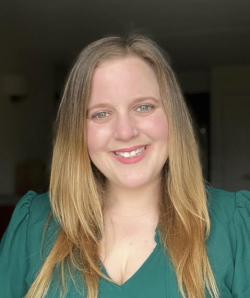
Rocio Lilen Segura is an Assistant Professor in the Department of Civil, Environmental and Sustainable Engineering at Santa Clara University's School of Engineering. She holds a Ph.D. in Civil Engineering from Sherbrooke University (2019) and a B.Sc. in Civil Engineering from Del Comahue National University (2013). Dr. Segura specializes in infrastructure resilience against extreme events and climate change, focusing on probabilistic risk assessment of critical infrastructure systems like dams and levees. Her work bridges civil engineering with machine learning and climate justice, integrating built, natural, and social systems to address environmental challenges. 2023 Severo Ochoa Mobility Programme grant 2019-2022 MITACS Accelerate industrial postdoc scholarship 2019 Léonard de Vinci medal and Scholarship Her research spans seismic risk reduction, surrogate modeling, and uncertainty quantification in dam engineering, with over 10 publications in journals like Advances in Civil Engineering and Water Journal. She previously collaborated with Hydro-Quebec during her postdoctoral research.
Dong Li is an Associate Professor at the University of California, Merced , where he directs the Parallel Architecture, System, and Algorithm Lab (PASA) and co-directs the High Performance Computing Systems and Architecture Group . He co-founded Yotta Labs Inc. and previously held research roles at Oak Ridge National Laboratory (2011-2014) and a PhD from Virginia Tech. Research Interests: Dong's work focuses on High performance computing (HPC) Memory heterogeneity and non-volatile memory Systems for machine learning and AI Fault tolerance in large-scale systems His innovations include heterogeneous memory optimization for recommendation models and GNNs, CXL memory integration, and persistent memory debugging tools. Recent Publications highlight advancements in CXL-based inter-node communication Memory tiering for laminography reconstruction ML-guided memory optimization for DLRM and GNN Fault tolerance benchmarks and error analysis Awards & Recognition: NSF CAREER Award (2016) Oracle Research Award (2022) ASPLOS Distinguished Artifact Award (2021) Virginia Tech Early Career Alumni Award (2023) Advising & Funding: Dong has mentored 22 students (8 PhD, 6 Master’s, 8 undergraduates) and secured grants from NSF, NVIDIA, Meta, and national labs (Argonne, Lawrence Berkeley, Lawrence Livermore). Collaborations include Microsoft (DeepSpeed, Intel PMDK), AMD, SK Hynix, and Intel/MICRON hardware donations.
Timothy Menzies is a full Professor in the Department of Computer Science at North Carolina State University's College of Engineering. He serves as the director of the Irrational Research lab (mad scientists r'us) and holds editorial positions as editor-in-chief of the Automated Software Engineering journal and associate editor for IEEE Transactions on Software Engineering. With over 300 publications and more than 24,000 citations, Menzies is a globally recognized leader in software engineering research. Menzies' research focuses on developing computer systems that make optimal decisions with minimal data, specializing in artificial intelligence, intelligent agents, data sciences, analytics, and software engineering. His pioneering work in data-driven, explainable, and minimal AI for software systems has redefined defect prediction, effort estimation, and multi-objective optimization. He is particularly known for his contributions to empirical software engineering, emphasizing transparency and reproducibility. As the co-creator of the PROMISE repository, he helped establish modern empirical software engineering by demonstrating that small, interpretable AI models can outperform larger, more complex ones. Menzies' recent publications reveal several key trends in his research: a growing emphasis on ethical considerations in AI deployment, particularly in sensitive domains like legal systems; continued innovation in software analytics with a focus on hyperparameter optimization tailored specifically for software engineering tasks; exploration of causal relationships in software analytics; and development of techniques that work effectively with limited data, including landscape analysis, surrogate learning, and active learning approaches. Mining Software Repositories Foundational Contribution Award (2017) Carol Miller Graduate Lecturer Award (2016) IBM Faculty Award (2016, 2017) ACM Fellow (2025) ASE Fellow (2024) IEEE Fellow Professor Menzies has advised 24 Ph.D. students throughout his career, with recent completions including Andre Motta (April 2025) and Xueqi Yang (October 2024). His research has secured over $19 million in funding from prestigious agencies including NSF, DARPA, and NASA, as well as industry partners like Meta, Microsoft, and IBM. Current grants focus on improving machine learning model efficiency, adapting empirical software engineering methods to computational science, vulnerability detection, and software analytics at scale using transfer learning across 10,000+ GitHub projects. Menzies has developed innovative approaches to help developers navigate the challenges of AI implementation while maintaining ethical standards and practical effectiveness. As director of the Irrational Research lab, Menzies leads a team focused on creating AI tools that are not only intelligent but also fair, transparent, and trustworthy. The lab's work emphasizes practical applications of AI in software engineering while addressing the human factors involved in developer-AI collaboration. Current projects include developing methods for better fuzzing with L3harris, improving vulnerability detection through smart pruning techniques, and creating AI platforms for workforce empowerment through credential gap diagnostics.
Stéphane Commend is an Associate HES Professor at the Fribourg School of Engineering and Architecture (HEIA-FR) under HES-SO Valais-Wallis. He also holds a lecturer role at the School of Engineering and Management of the Canton of Vaud. His primary research focuses on geotechnics, numerical simulations, and probabilistic modeling applied to infrastructure projects like tunneling and deep excavations. Education and affiliations include roles across multiple HES-SO institutions, with a strong emphasis on integrating advanced computational methods into geotechnical engineering. Notable projects include the Grand Paris Express tunnel project, Bayesian inference for wood constitutive modeling, and probabilistic risk analysis for urban construction. Research interests span soil-structure interaction, finite element modeling, and uncertainty quantification. Recent work emphasizes Bayesian methods for parameter calibration, machine learning in excavation design, and natural hazard vulnerability assessment. Key contributions include frameworks linking ZSOIL and UQLab for reliability analysis, and prototypes like SLIDE-PM for mudflow impact modeling. Current projects (e.g., iBAG and OptiSoil) focus on optimizing construction methods using AI and data-driven approaches. He leads collaborative teams across HES-SO institutes and academic partners like EPFL and CETU. Key Projects: iBAG Project (2022–2025): Bayesian methods in geotechnics OptiSoil (2019–2025): Machine learning for excavation design TULIP Project: TBM-pile interaction probabilistic analysis
Professor Ferrante Neri is a faculty member at the University of Surrey, holding the positions of Professor of Machine Learning and Artificial Intelligence and Associate Dean (International) for the Faculty of Engineering and Physical Sciences (FEPS). He is affiliated with the Nature Inspired Computing and Engineering Research Group, Surrey Institute for People-Centred AI (PAI), and the Computer Science Research Centre within the School of Computer Science and Electronic Engineering. His research focuses on optimization, explainable AI, and machine learning, with contributions to memetic computing and differential evolution. Since 2010, he has chaired the IEEE Task Force on Memetic Computing. He advises PhD students in topics like dynamic multi-objective optimization and AI-driven applications. His teaching expertise includes mathematical foundations for computer science. He has supervised students such as Aisha E S E Saeid and Pengjin Wu. Notable research areas include evolutionary algorithms, neural architecture search, and applications in robotics and environmental monitoring. Labs and teams include the Nature Inspired Computing group, which explores AI-driven solutions for complex problems. His work bridges theoretical advancements and practical applications in fields like autonomous systems and deep learning.
Dr. David Toal is an Associate Professor at the University of Southampton, specializing in the application of machine learning techniques to aerospace system design optimization. His research focuses on automated geometry creation, prediction of simulation outputs, and fundamental machine learning advancements. He is affiliated with the Computational Engineering and Design Group and the Institute for Life Sciences. His teaching interests include engineering design methods, optimization, reliability, and CAD integration. He supervises multiple PhD students in areas such as aerodynamic geometry generation and structural design automation. Dr. Toal has led projects funded by the European Union and EPSRC, including E-Break (FP7) and equipment grants for advanced computational tools. His work emphasizes multidisciplinary collaboration, leveraging CAD systems and deep learning for applications in advanced aerial mobility and turbine optimization. Recent publications highlight advancements in Kriging models, adversarial auto-encoders, and semantic segmentation for engineering design. Dr. Toal's research bridges computational methods with practical aerospace challenges, aiming to accelerate design processes through data-driven and AI-enhanced approaches.
Kun Chen is a Professor in the Department of Statistics at the University of Connecticut's College of Liberal Arts and Sciences. His research bridges advanced statistical methodology with critical applications in healthcare, environmental science, and mental health. His research focuses on large-scale statistical learning , machine learning optimization , and healthcare analytics , particularly in suicide risk prediction using electronic health records and health information exchanges. Recent work integrates natural language processing with social determinants of health for veteran suicide prediction and develops novel tensor regression methods for longitudinal data with missing observations. Analysis of his 15 most recent publications reveals a dominant trend in mental health data science (73% of articles), with significant contributions to statistical methodology (53%) including reduced-rank regression extensions and sparse factor modeling. His environmental statistics work (20%) focuses on nanomaterial applications in contaminated agriculture and microbiome-environment interactions. Scientific Recognition: Co-authored seminal 2023 Springer monograph Multivariate reduced-rank regression: theory, methods and applications (2nd Edition) Developed rrpack R package for reduced-rank regression (2019) His collaborative work spans UConn Health, Veterans Affairs, and multiple national consortia, with recent grants supporting data fusion techniques for suicide prevention and Parkinson's disease progression modeling. Current projects include transfer learning frameworks for hospital suicide risk prediction and gut microbiome analysis in neurological disorders. Dr. Chen maintains active leadership in statistical ecology applications and serves on editorial boards for biostatistics journals, with recent work on quantum dot analysis demonstrating methodological versatility across physical and health sciences.
Eleni Elia is a Senior Lecturer in Statistics at Oxford Brookes University's School of Engineering, Computing and Mathematics, leveraging expertise from research positions at Harvard University, Boston Children's Hospital, and the University of Leicester to develop AI-driven healthcare solutions that improve patient outcomes through advanced computational methods and biostatistics. Her academic foundation includes: BSc (Hons) in Mathematics MSc in Statistics PhD in Statistics Dr. Elia's research bridges biostatistics and artificial intelligence with clinical applications, focusing on prognosis research and healthcare data analysis . She pioneers computational approaches to transform patient care, particularly in pediatric cardiology and epidemic surveillance, using real-world data to address critical medical challenges through interdisciplinary collaboration. Analysis of her 14 publications (2015-2024) reveals consistent application of statistical modeling to medical domains, with growing emphasis on AI integration in cardiology, biomarker analysis, and epidemic prediction. Her work demonstrates methodological rigor while addressing urgent healthcare needs through pediatric applications and refugee camp disease surveillance. Her scientific recognition includes: Enterprise Champion Award 2022/23 for 'Gamifying entrepreneurship education for mathematics students' Executive Coaching Award 23/24 as a 'Research Leader' Mardia Prize from the Royal Statistical Society for refugee-focused statistical workshops Dr. Elia actively mentors PhD candidates and leads significant research initiatives including 'Infectious disease surveillance in refugee camps', 'Biomechanics interactive database development', and 'Epidemic surveillance systems', while securing substantial university funding for healthcare AI innovation and entrepreneurship programs. She contributes to cutting-edge research through the Artificial Intelligence, Data Analysis and Systems (AIDAS) Institute and Visual Artificial Intelligence Laboratory (VAIL), driving interdisciplinary projects that connect statistical theory with life-saving medical applications.
Ruth Etzioni is a Professor in the Biostatistics Program within the Public Health Sciences Division at Fred Hutchinson Cancer Center. She holds the Rosalie and Harold Rea Brown Endowed Chair and is a Member of the Translational Data Science Integrated Research Center (TDS IRC) at Fred Hutch. Dr. Etzioni received her PhD in Statistics from Carnegie Mellon University in 1990, following an MS in Statistics from the same institution in 1987, and a BS in Statistics from the University of Cape Town in 1985. As a biostatistician, Dr. Etzioni primarily focuses on cancer screening and early detection, with significant work in prostate and breast cancer. Her research involves developing methods for evaluating diagnostic tests, creating mathematical models to assess screening impact on cancer incidence and mortality, calculating costs and benefits of preventive screening, and tracking population trends related to screening behaviors. She has a longstanding interest in researching overdiagnosis associated with certain screening tests, evaluating novel cancer biomarkers, and tracking patterns and outcomes of cancer care. Her work bridges biostatistics, epidemiology, and clinical oncology to inform evidence-based cancer screening practices. Dr. Etzioni's recent research has increasingly focused on multi-cancer early detection technologies, surveillance-dependent outcomes, and applying sophisticated statistical modeling to understand cancer progression. Her publications demonstrate a strong emphasis on health disparities research, particularly regarding prostate cancer screening in Black men and racial inequities in treatment. Her notable recognition includes: Rosalie and Harold Rea Brown Endowed Chair at Fred Hutchinson Cancer Center Dr. Etzioni leads the biostatistics core for the National Cancer Institute-funded multicenter Northwest Prostate Cancer Specialized Program of Research Excellence (SPORE). She serves as a central consulting resource for prostate cancer investigators at Fred Hutch and the University of Washington, providing expertise in trial design and analysis. Her lab develops innovative statistical and computer modeling approaches to study cancer control outcomes, with expertise in simulation modeling, survival analysis, Bayesian methods, and data visualization. She is a key member of the FHIND Cancer (Fred Hutch Investigators in Novel Diagnostics for Cancer) Research Group, which brings together investigators across multiple disciplines to advance cancer diagnostic technologies and realize the promise of precision oncology.
Laurens Bliek is an Assistant Professor at the Department of Industrial Engineering & Innovation Sciences, Eindhoven University of Technology (TU/e). He specializes in combining artificial intelligence (AI) with optimization techniques for computationally intensive problems, focusing on sustainable applications such as public transport, electric vehicles, and CO 2 reduction. Education: MSc in Applied Mathematics (2014), PhD in Systems & Control (2019) from Delft University of Technology. Prior Role: Postdoctoral researcher at the Algorithmics group, Delft University of Technology. Research Interests: His work addresses AI-driven optimization of expensive cost functions, particularly in logistics, communications, and healthcare. He develops methods to handle computationally intensive simulators and digital twins, emphasizing real-time decision-making and sustainability. Recent Publications: His research spans predictive maintenance using Fourier graph neural networks, real-time container yard allocation, and 5G network optimization. Articles appear in journals like IEEE Transactions on Neural Networks and Learning Systems and Computer Networks . Collaborations: Laurens collaborates with industry partners (LioniX, Dutch Railways) and organizations (European Supply Chain Forum, Logistics Community Brabant). He co-leads the 12-PhD program AI Planner of the Future and participates in AI sustainability working groups. Supervision: Co-promotor of PhD students Ya Song and Abdo Abouelrous, focusing on AI applications in routing and maintenance logistics.
Delibra Giovanni is an Associate Professor at Sapienza University of Rome, specializing in aerodynamics, aeroacoustics, and renewable energy systems. His research focuses on optimizing turbomachinery performance, including axial fans, wind turbines, and hydrogen storage systems. He employs advanced computational fluid dynamics (CFD) and machine learning techniques to address challenges in renewable energy integration, thermal management, and noise reduction. Key research areas include: Wind energy systems and offshore wind farm design Hydrogen storage and safety in green energy applications Aeroacoustic control in industrial fans and turbines CFD-based optimization of heat exchangers and cooling systems Recent work emphasizes the integration of photovoltaic and biomass systems in renewable energy communities, as well as experimental validation of wave energy turbines. His publications highlight innovations in fan blade design, leakage modeling, and multi-objective optimization frameworks for sustainable energy infrastructure. Collaborations involve both academic institutions and industry partners, focusing on real-world applications such as tunnel ventilation systems and Mediterranean island energy solutions. Giovanni's contributions bridge theoretical modeling with practical engineering challenges in the transition to clean energy.
Shengdun Zhao is an active researcher in the fields of Electrical Engineering, Automotive Engineering, and Machine Learning, contributing extensively to optimization techniques and control systems for electric vehicles and motors. His work spans journals like IEEE Transactions on Vehicular Technology and Journal of Intelligent & Fuzzy Systems , focusing on practical applications of deep reinforcement learning, meta-learning, and multi-objective optimization. Key research areas: Electric motor control, energy management systems, and clustering algorithms. Collaborates with researchers such as Yiming Zhang, Wei Du, Chee-Kong Chui, and Chin-Boon Chng. His publications from 2007–2025 address technical challenges in mechatronics, sustainable transportation, and data-driven engineering solutions. Research Trends Recent articles highlight Zhao's emphasis on deep reinforcement learning for motor control, meta-learning in energy systems, and evolutionary algorithms for multi-objective optimization. He integrates machine learning with automotive engineering to improve electric vehicle efficiency and motor performance.
Lars Kotthoff is the Templeton Associate Professor and Derecho Professor at the University of Wyoming's School of Computing, Department of Electrical Engineering and Computer Science. He leads the MALLET lab, focusing on meta-algorithmics, learning, and large-scale empirical testing. His research integrates AI and machine learning to develop robust systems, particularly in algorithm selection, configuration, and automated machine learning (AutoML). He has held sabbaticals and collaborations globally, including at the University of Warsaw and NASA Ames. Awards include the Templeton Endowed Chair and Open Source Machine Learning Award. His work bridges computational mechanics, materials science, and optimization heuristics. Research interests include Bayesian optimization for materials science, automated parameter tuning, and interpretable machine learning models. Key projects include optimizing laser-induced graphene production and developing the mlr3 framework. Grants include NASA EPSCoR funding for in-space manufacturing and a Microsoft grant for biomedical imaging. He advises graduate and undergraduate students, mentors Google Summer of Code projects, and organizes workshops/conferences like COSEAL and Dagstuhl seminars. Publications span automated algorithm design, performance benchmarking, and interdisciplinary applications. His work emphasizes making machine learning accessible to non-experts through tools like Auto-WEKA and the mlr3 ecosystem. Current projects include NASA-funded advanced electronics manufacturing and collaborations with institutions worldwide.
Hassan Shirvani is a Professor of Engineering Design and Simulation at the School of Engineering and the Built Environment, Anglia Ruskin University. He serves as Director of the Engineering Analysis Simulation and Tribology (EAST) Research Group, focusing on industry collaborations to solve engineering challenges. PhD in Mechanical Engineering, University of Bath MSc in Mechanical Engineering, University of Birmingham Member, Institute of Mechanical Engineers (IMechE) His research spans mechanical engineering, artificial intelligence, and biomedical applications, including: Thermal system optimization Machine learning in clinical decision-making Composite metal foil manufacturing Virtual reality medical training systems Flow dynamics in heat exchangers and nozzles AI-assisted diagnostics Hybrid manufacturing processes Hassan's publications reflect expertise in computational modeling, multi-physics simulations, and industrial applications. Notable areas include deep learning for suicide prediction, thermodynamic analysis of sustainable energy systems, and tribology in mechanical components.
Holly Hartman, PhD, is an Assistant Professor in the Department of Population and Quantitative Health Sciences at Case Western Reserve University School of Medicine. Her research focuses on leveraging biostatistical methods to improve clinical trial design and analysis, particularly in oncology. She is a member of the Population and Cancer Prevention Program at the Case Comprehensive Cancer Center. Dr. Hartman holds a PhD in Biostatistics from the University of Michigan (2021), an MS in Biostatistics from the University of Alabama (2016), and a BS in Mathematics and Molecular & Cellular Biology from the University of Puget Sound (2011). Her work emphasizes addressing racial disparities in prostate cancer outcomes and optimizing radiation therapy approaches. Her research interests include clinical trial methodology, health disparities, and the integration of social determinants of health into oncology research. Recent studies have explored PSA screening policies, racial inequities in prostate cancer care, and the efficacy of androgen deprivation therapy in localized prostate cancer treatment. Dr. Hartman is affiliated with the Wolstein Research Building and Robbins Building facilities at Case Western Reserve University. She actively contributes to professional organizations including the American Statistical Association and the International Biometrics Society.