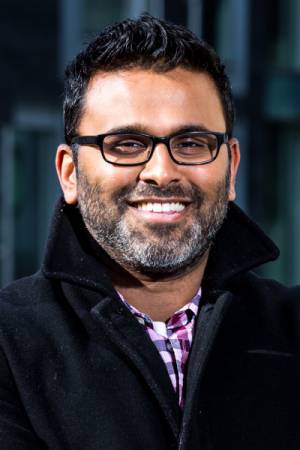
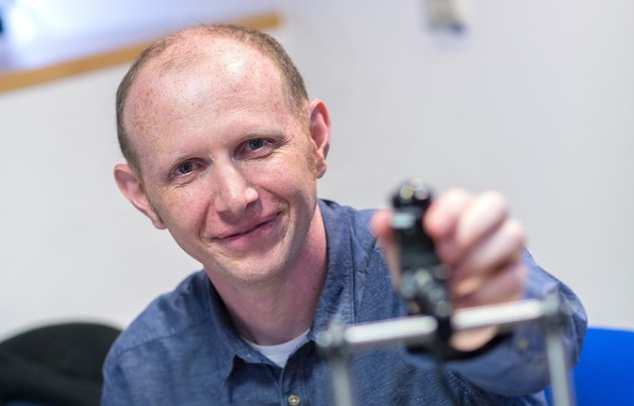
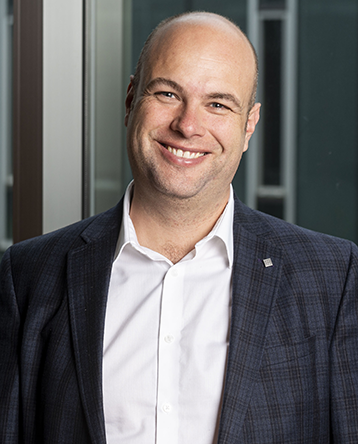
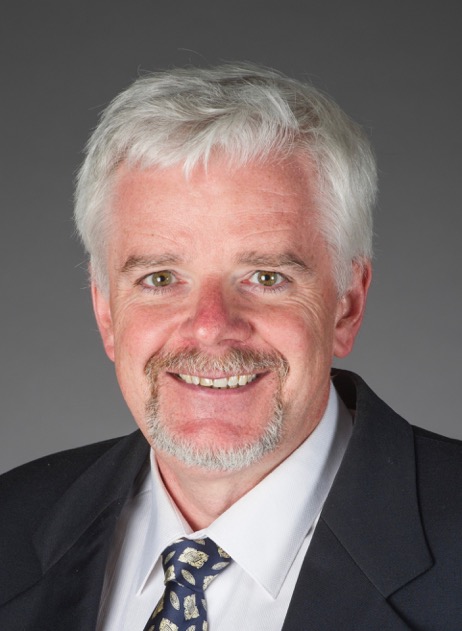
Deva Kannan Ramanan is a Professor at the Robotics Institute of Carnegie Mellon University , focusing on computer vision , machine learning , and human-centered robotics . His work bridges neurorobotics and visual perception , with applications in autonomous driving and 4D reconstruction . Research Topics Computer Vision 3-D Vision and Recognition Visual Servoing Neurorobotics Human-Centered Robotics Graphics & Creative Tools His recent publications in CVPR , ICRA , and ICCV emphasize 4D human reconstruction , neural rendering , and vision-language models for autonomous systems. He serves as General Chair of CVPR 2027 and Program Chair of CVPR 2018 , with IARPA funding for aerial-ground rendering (2023-2027). Current students include PhD candidates Sally Chen, Kangle Deng, and Zhiqiu Lin, while past advisees like Arun Vasudevan and Olga Russakovsky now hold positions at Amazon and Meta respectively.
Professor Andrew Davison holds the position of Professor of Robot Vision at Imperial College London's Department of Computing. He leads the Dyson Robotics Laboratory and the Robot Vision Research Group, focusing on advancing SLAM (Simultaneous Localization and Mapping) and Spatial AI. His groundbreaking work includes the MonoSLAM algorithm (2003), enabling real-time 3D vision for robotics and AR/VR. Current research emphasizes scalable, semantic-rich Spatial AI systems, as outlined in his FutureMapping papers (2018–2019). Education: BA in Physics (Oxford, 1994), D.Phil. (Oxford, 1998). Postdoctoral work at AIST, Japan (1998–2000), followed by a lectureship at Imperial (2002–present). Industrial collaborations include SLAMcore, a Spatial AI startup, and Dyson Robotics Lab. Over 18 PhD students supervised, many now leading roles at Meta, NVIDIA, SLAMcore, and academia. Notable contributions include DTAM, KinectFusion, and Event Camera SLAM. Recognized for software tools like SceneLib and contributions to robotics benchmarks (SLAMBench). Active on Twitter (@AjdDavison) for research updates.
Blase Ur is an Associate Professor of Computer Science at the University of Chicago, leading the UChicago SUPERgroup (Security, Usability, & Privacy Education & Research group). His research focuses on data-driven methods to improve online security, privacy, and usability of complex systems. He holds a PhD from Carnegie Mellon University and an AB from Harvard University. Education: PhD in Societal Computing, Carnegie Mellon University (2016) AB in Computer Science, Harvard University Research Interests: Blase's work spans computer security, privacy, HCI, and ethical AI. He develops tools like password meters, privacy transparency systems, and IoT security solutions. His SUPERgroup emphasizes interdisciplinary collaboration, with projects addressing data-driven decision-making and usability challenges in AI and IoT. Articles Trends: Recent work includes studies on ad transparency systems, user perceptions of privacy in AI, and barriers to passwordless authentication. Research often combines empirical user studies with technical implementations to bridge gaps between security mechanisms and user needs. Awards: NSF CAREER Award (2021) Quantrell Award for Teaching (2021) SIGCHI Outstanding Dissertation Award (2018) Advising & Grants: Advisor to PhD students like Kevin Bryson. Secured grants from NSF, Mozilla, and Meta. Active in outreach to broaden CS participation, including K-12 programs. Labs & Teams: Co-director of the SUPERgroup and affiliated with the Systems Group and CERES Center for Unstoppable Computing at UChicago.
Sebastian Scherer is an Associate Research Professor at the Robotics Institute (RI), Carnegie Mellon University (CMU), where he leads cutting-edge research in autonomous aerial systems and robotics. His work focuses on enabling unmanned rotorcraft to operate safely and efficiently in cluttered, low-altitude, and extreme environments. Education: Ph.D. in Robotics, Carnegie Mellon University (2010) MS in Robotics, Carnegie Mellon University (2007) BS in Computer Science (Minor in Robotics), Carnegie Mellon University (2004) His research interests span robotics, artificial intelligence, autonomous navigation, obstacle avoidance, SLAM, visual-inertial odometry, energy infrastructure, and public policy . He has made seminal contributions to UAV autonomy, including the first obstacle avoidance for micro aerial vehicles in natural environments (2008) and the first automatic landing zone detection and landing on a full-size helicopter (2010). His recent publications (2023–2025) demonstrate a strong focus on resilient autonomy, multi-robot exploration, foundation models for robotics, and large-scale dataset development. His team has released key datasets like TartanGround , BETTY , and SubT-MRS , and simulation tools like Pegasus Simulator , indicating a systems-level approach to advancing real-world autonomy. The research trends emphasize self-supervised learning, robust perception, risk-aware planning, and multi-modal fusion for off-road and urban environments. Scientific Awards: Popular Science Best of What's New 2010 Award AIAA@Infotech Best Paper Runner-up Award (2010) Siebel Scholar Dr. Scherer has advised numerous students and leads a vibrant research group focused on high-impact robotics applications. He has secured significant grants related to UAV autonomy, energy infrastructure, and urban air mobility. His lab develops experimental infrastructure such as AIrTonomy for testing next-generation autonomous aerial vehicles. He is actively involved in advancing SLAM and localization in extreme environments, notably through participation in the DARPA Subterranean Challenge. His team develops large-scale datasets and benchmarking frameworks to push the boundaries of robustness and generalization in mobile robotics.
Professor Stefan Maier holds the position of Head of School in Physics and Astronomy at Monash University. Previously, he served as the Lee Lucas Chair in Experimental Physics at Imperial College London (2007–2018) and built a new chair at Ludwig-Maximilians-Universität München (2019–2022). His research focuses on nanophotonics, plasmonics, and metasurface engineering, with emphasis on optical trapping, nonlinear optics, and novel photonic devices. Education: Bachelor’s degree in Physics, Technical University of Munich M.Sc. and Ph.D. in Applied Physics, California Institute of Technology (Caltech) Research Interests: Development of metamaterials and metasurfaces for light manipulation Applications of nanophotonics in sensing, imaging, and quantum technologies Optical trapping and plasmonic catalysis Nonlinear optical phenomena in nanostructured materials Articles Trends: Recent work emphasizes bound states in the continuum (BICs), 3D nanoprinted optical platforms, and active metasurfaces with tunable properties. Key themes include hybrid nanophotonics, ultra-high-Q resonators, and plasmonic nanomaterials for energy applications. Awards: ISI Highly Cited Researcher (2017–present) Grants/Projects: Chief Investigator in the All-on-chip twisted light modulator project (2022–2025) Leadership in Monash’s nanophotonics research team Labs/Teams: Directs a multidisciplinary lab at Monash focused on integrating 3D nanofabrication with optical physics, including collaborations in metafiber development and plasmonic biosensing.
Soumya Dutta is an Assistant Professor in the Department of Computer Science and Engineering at the Indian Institute of Technology Kanpur (IITK), where he leads the INSIGHT: Intelligent Scientific and Visual Computing of Big Data Research Group. He joined IIT Kanpur in October 2022 after working as a Scientist II at Los Alamos National Laboratory (LANL) from July 2019 to August 2022, and previously as a Postdoctoral Research Associate at LANL from June 2018 to July 2019. His educational background includes a Ph.D. and M.S. in Computer Science and Engineering from The Ohio State University (2011-2018), where he was part of the GRAVITY research group, and a B.Tech. in Electronics and Communication Engineering from West Bengal University of Technology, India (2005-2009). Research Interests: Dr. Dutta's research focuses on the intersection of machine learning, visual computing, big data, and high-performance computing. His primary research areas include Machine Learning for Visual Computing and Image Analysis, Big Data Visualization and Analytics, Data Science and HPC, Machine Learning for Scientific Computing, and Explainability and Interpretability of AI Models. His work addresses various big data characteristics including the 5 Vs: Volume, Velocity, Variety, Veracity, and Value. He develops techniques that make complex machine learning models more interpretable and explainable, enabling their effective adoption in real-life applications across scientific domains, social media, IoT, healthcare, and industry applications. Dr. Dutta's research group has secured multiple funded projects including: DAVi: An Intelligent Data Analytics and Visualization Framework (funded by ISRO), Intelligent Visual Computing of Extreme-scale Data for Accelerating Scientific Discovery (IIT Kanpur Initiation Grant), Enabling Interactive Big Data Analytics and Visualization at Exascale (SERB), Development of AI-Enabled National Portal for Efficient Search of Missing People (C3iHub), and Proactive and Generalized Deepfake Defense Mechanisms (C3iHub). Best Reviewer, Honorary Mention Award for IEEE Transactions on Visualization & Computer Graphics (TVCG), 2021 Best Paper Award at ISAV 2021, co-located with Supercomputing (SC) LAAP Award at Los Alamos National Laboratory, 2021 Best Paper Award at TopoInVis 2019 Best Paper Award at ISAV 2018, co-located with Supercomputing (SC) Best Poster Award in 12th Annual CSE Student Poster Exhibition, The Ohio State University, 2018 Best Poster Award in 11th Annual CSE Student Poster Exhibition, The Ohio State University, 2017 Best Paper Honorable Mention Award at IEEE Visualization Conference (IEEE VIS) 2016 Dr. Dutta actively mentors a large group of students including Ph.D., M.Tech., and B.Tech. students. His current Ph.D. students include Shanu Saklani, Sankhadeep Bhowmick, Ananya Chaturvedi, Arpita Santra, Anubhav Dixit (co-supervised), and Robin Shah. He has supervised numerous M.Tech. students with thesis topics ranging from uncertainty-aware neural networks to deepfake detection. Dr. Dutta currently teaches courses including CS360 - Introduction to Computer Graphics and CS661 - Big Data Visual Analytics. The INSIGHT research group collaborates internationally with researchers from Meta, Oak Ridge National Laboratory, and National Taiwan Normal University. The group's work focuses on building machine learning and data science-based solutions to analyze large-scale multifaceted data in a scalable way, enabling interactive and interpretable analytics of complex data from scientific simulations, social media, IoT, healthcare, and other application domains.
Parastoo Abtahi is an Assistant Professor in the Computer Science Department at Princeton University. She leads the Situated Interactions Lab (Ψ Lab) as part of the Princeton HCI Group, focusing on AR/VR and spatial computing. Prior to Princeton, she worked at Meta Reality Labs Research. PhD in Computer Science from Stanford University BSc in Electrical and Computer Engineering from University of Toronto (Engineering Science program) Her research explores wearable interactive technologies that augment human intelligence in physical contexts through: Input on-the-go: Low-effort, privacy-preserving multimodal interfaces Intelligent output: Timely, minimal multisensory systems Situated AI: Personalizable, predictable, safe physical-digital interaction Recent publications analyze: Drone-based haptic illusions for AR/VR Microgestures for mobile AR input Interactivity in explainable AI systems Temporal dynamics in VR haptics Awards include: 2025 Google Research Scholar Award CHI 2019 & 2018 Honorable Mentions She teaches courses like: COS 436: Human-Computer Interaction COS IW: AR Meets AI
Yang Liu is a tenured Associate Professor at the Department of Management and Engineering , Linköping University, Sweden, and an Adjunct Professor at the University of Oulu, Finland. His expertise spans smart manufacturing, clean energy transition, and Industry 4.0 applications. He holds an M.Sc. and D.Sc. from the University of Vaasa, Finland. Research & Awards: Liu's work focuses on sustainable systems, decision support systems, and AI-driven energy efficiency. He has authored over 140 Web of Science publications, including top 0.1% ESI Hot Papers. He is ranked among the world's top 2% scientists (Stanford-Elsevier) and leads globally in 'big data analytics in manufacturing' and 'Industry 4.0-driven circular economy' research. Leadership & Projects: He leads projects like FlexSUS (EU Horizon 2020) and PERSEUS, developing tools for smart urban energy planning and 15-minute city models. He serves as Editor-in-Chief of Cleaner Engineering and Technology and Guest Editor for multiple journals. His research emphasizes bridging data science with sustainability challenges in manufacturing and energy systems. Key Achievements: Top-ranked in global citations, ESI Highly Cited Papers, and industry-driven sustainability frameworks. Grants: Leads EU-funded projects and collaborates with Siemens Energy on energy transition solutions. Labs & Teams: Part of the Environmental Technology and Management (MILJÖ) division and Unit for Product Service Innovation (MILJOPSI) at Linköping.
Prof. Martin Haenggi is the Frank M. Freimann Professor of Electrical Engineering and Concurrent Professor in the Department of Applied and Computational Mathematics and Statistics at the University of Notre Dame. He holds a Dr.sc.techn. (Ph.D.) from ETH Zurich and has been at Notre Dame since 2000. His research focuses on stochastic geometry and wireless networks, including cellular, heterogeneous, vehicular, and millimeter-wave systems. He has held sabbaticals at UCSD (2007–2008), EPFL (2014–2015), and ETH Zurich (2021–2022). Education: Dipl.-Ing. (M.Sc.), ETH Zurich, 1995 Dr.sc.techn. (Ph.D.), ETH Zurich, 1999 Research interests emphasize stochastic geometry for analyzing network performance, including coverage, interference, and reliability in wireless systems. Key areas include meta distributions, spatial-temporal analysis, and network optimization. His work has been recognized with IEEE Fellow status, Clarivate Highly Cited Researcher distinction, and NSF CAREER Award (2005). Grants and Awards: NSF Award (Deep Stochastic Geometry: 2020–2023) NSF Award (Toward a Stochastic Geometry for Cellular Systems: 2015–2019) Rice Prize (2017), Best Survey Paper Award (2017), and Best Tutorial Paper Award (2010) from IEEE Communications Society Teaching includes advanced courses on stochastic geometry, wireless networks, and signal processing. His lab focuses on theoretical and applied aspects of network modeling, with collaborations in industry and academia.
Kwang Moo Yi is an Assistant Professor in the Department of Computer Science at the University of British Columbia (UBC), where he conducts research in computer vision and machine learning. He is affiliated with the Computer Vision Lab, CAIDA (Centre for Artificial Intelligence Decision-making and Action), and ICICS (Institute for Computing, Information and Cognitive Systems) at UBC. Education: B.Sc. from Seoul National University Ph.D. from Seoul National University under Prof. Jin Young Choi Post-doctoral researcher at École Polytechnique Fédérale de Lausanne (EPFL) with Prof. Pascal Fua and Prof. Vincent Lepetit Dr. Yi's research focuses on Visual Geometry with the goal of understanding local environments, adapting to them, and acting within them. His work spans applications in autonomous vehicles, drones, robots, and Augmented/Mixed Reality systems. He employs machine learning, particularly deep learning, as the primary tool for advancing computer vision capabilities. His recent publications demonstrate a strong focus on neural rendering techniques, especially 3D Gaussian Splatting and Neural Radiance Fields (NeRF). The research trends show increasing sophistication in handling occlusions, improving rendering quality, and developing more efficient training methods for neural fields. There's also significant work connecting computer vision with practical applications in industrial settings and energy systems. Dr. Yi serves as an area chair for top computer vision and machine learning conferences including CVPR, ICCV, ECCV, NeurIPS, ICML, and AAAI. He was part of the organizing committee for CVPR 2023. He supervises graduate students including Eric (who recently completed his PhD), Gopal (now at Samsung Research), and Jeong-Gi (joining as a postdoctoral fellow). His teaching includes CPSC 425: Computer Vision and CPSC 533Y: 3D Computer Vision with Deep Learning. Dr. Yi is actively involved with the Computer Vision Lab at UBC, collaborating with researchers across CAIDA and ICICS. His work bridges theoretical computer vision with practical applications in various domains including astronomy, industrial automation, and energy systems.
Prof. Dr. Armido Studer is a Full Professor of Organic Chemistry at the Institute of Organic Chemistry, Faculty of Mathematics and Natural Sciences, University of Münster (WWU Münster), Germany. He has been serving as a Full Professor (W3) since November 2009, following his appointment as a Full Professor (C4) in 2004. Studer also serves as the Spokesman of the International Research Training Group IRTG 2678 'Functional π-Systems: Activation, Interaction and Application (pi-Sys)' since 2021 and previously led the Collaborative Research Center SFB 858 'Synergetic Effects in Chemistry - From Additivity towards Cooperativity' from 2010 to 2021. Studer received his education at ETH Zürich, where he completed his diploma thesis and doctoral studies under Prof. Dr. D. Seebach. He conducted postdoctoral research at the University of Pittsburgh with Prof. Dr. D. P. Curran before returning to ETH Zürich for his habilitation. His academic career includes positions as Associate Professor at Philipps-Universität Marburg (2000-2004) and subsequent professorships at WWU Münster. Professor Studer's research focuses on radical chemistry, particularly in the development of new synthetic methods using radical intermediates. His work spans free radical chemistry, electron catalysis, and the application of nitroxides in organic synthesis. Recent research directions include 'Radical Chemistry with the Hydrogen Atom Through Water Activation (H-dot)' and 'The Electron as a Catalyst: e-cat', both funded by ERC Advanced Grants. His group has made significant contributions to C-H functionalization, skeletal editing of heterocycles, and cooperative catalysis involving photoredox and N-heterocyclic carbene systems. The research has applications in pharmaceutical chemistry, materials science, and sustainable chemical synthesis. Studer's publication record shows a strong focus on heterocyclic chemistry, radical reactions, and catalytic methodologies. His recent work demonstrates expertise in meta-selective functionalization of heteroarenes, skeletal editing techniques, and the development of novel radical cascade reactions. The group has published extensively in high-impact journals including Nature, Science, JACS, and Angewandte Chemie. Adolf-von-Baeyer-Denkmünze (2025) Arthur C. Cope Late Career Scholars Award of the American Chemical Society (2024) ERC Advanced Grants (2024, 2016) Multiple Highly Cited Researcher designations (2017-2022) Elected member of multiple academies (European Academy of Sciences, Academia Europaea, German National Academy of Sciences Leopoldina) Pedler Award of the Royal Society of Chemistry (2019) Professor Studer has mentored over 100 PhD students and postdoctoral researchers who have gone on to successful careers in academia and industry worldwide. His research is supported by significant grants including multiple ERC Advanced Grants and funding from the German Research Council (DFG) for collaborative research centers. The Studer Group maintains numerous international collaborations, particularly with institutions in Japan, China, and the United States, reflecting his global impact in organic chemistry. The Studer Group operates state-of-the-art laboratories at the University of Münster, equipped for advanced organic synthesis, photochemistry, and materials characterization. The group is known for its collaborative culture and has been featured in numerous group photos documenting its evolution since the early 2000s, first at Philipps-Universität Marburg and then at WWU Münster.
Maiken Mikkelsen is the James N. and Elizabeth H. Barton Associate Professor of Electrical and Computer Engineering at Duke University, promoted to Professor in 2025. She holds a secondary appointment as Associate Professor of Physics (2023–present) within Trinity College of Arts & Sciences. Her research bridges Nanophotonics , Quantum Materials , and Ultrafast Spectroscopy , focusing on plasmonic nanostructures and nonlinear metasurfaces for quantum optics and optoelectronic applications. Education: Ph.D. in Physics (University of California, Santa Barbara, 2009), B.S. in Physics (University of Copenhagen, 2004), postdoctoral work at University of California, Berkeley. Her work explores Plasmonics and Quantum Optics to engineer nanoscale light-matter interactions, enabling transformative technologies in Single-Photon Sources , Ultrafast Photodetectors , and Active Metasurfaces . Recent projects include real-time tunable lasing and polarization-controlled nanocavity systems. Her 2016–2025 publications highlight breakthroughs in plasmonic fluorescence enhancement, hot electron dynamics, and room-temperature quantum devices. Grants include Nano Solutions On-Chip (Triad National Security, LLC, 2025–2029) and Meta-Imaging (Air Force Office of Scientific Research, 2021–2026). Her lab, jointly based in Electrical & Computer Engineering and Physics, has graduated PhD students Eunso Shin and Hengming Li, and actively engages in STEM outreach initiatives.
Martin Kaltenbrunner is a Professor in the Department of Soft Matter Physics at the Faculty of Engineering & Natural Sciences, Johannes Kepler University Linz (JKU). He leads the LIT Soft Materials Lab and is affiliated with the Linz Institute of Technology (LIT), focusing on sustainable material innovations for next-generation electronics. His research spans biodegradable flexible electronics, energy-autonomous systems, and eco-friendly substrates. Key interests include perovskite solar cells for healthcare robotics, mycelium-based electronic skins, and algal polysaccharide conductive nanocomposites. He pioneers sustainable alternatives using organic materials to replace conventional electronics in soft robotics and wearable devices. Recent publications (2024-2025) emphasize circular economy principles, featuring mycelium substrates for PCBs, algae-derived transistors, and passivation techniques for high-efficiency solar cells. The work integrates materials science with environmental sustainability, targeting applications in medical sensors and autonomous robotics. Professor Kaltenbrunner has supervised 18 research works and leads multiple major grants: Personalized Sustainable Smart Patch Omnificence (Persimmon) - EU project (2024-2028) Mycelium-based substrate for sustainable flexible PCBs (MycoSub) - EU project (2024-2025) Intelligent cellulose-based sensors - FFG project (2022-2025) Metasurface Fabrication (META-FAB) - FFG project (2024-2027) Nadelholzreststoffe for mycelium packaging (MycoSoft) - FFG project (2023-2026) He directs the LIT Soft Materials Lab, which develops biodegradable gels, fungal biomaterials, and sawmill byproduct-based insulation. The lab collaborates across JKU's engineering and natural sciences divisions to advance sustainable electronics through interdisciplinary projects like Persimmon and MycoSub, emphasizing real-world deployment of eco-friendly technologies.
Halim Yanikomeroglu is a Full Professor and Chancellor's Professor at Carleton University's Department of Systems and Computer Engineering, part of the Faculty of Engineering and Design. His research focuses on wireless communications, including 5G/6G networks, non-terrestrial systems (HAPS/LEO satellites), MIMO, and cognitive radio. He has supervised numerous graduate students and holds IEEE Fellow status and the Harold Sobol Award. His work integrates machine learning, federated learning, and sustainability into next-generation networks. Affiliations: Carleton University, IEEE Education: Ph.D. (Toronto), M.A.Sc. (Toronto), B.Sc. (Middle East Technical University) Research interests span cellular networks, relay architectures, and energy-efficient systems. He pioneered cell-switching strategies for green networks and contributed to HAPS and UAV-based infrastructure. His recent work addresses NTN integration, AI-driven spectrum management, and 6G innovations. Awards include IEEE Fellow (2017) and multiple Research.com leadership accolades. His 150+ publications span journals like IEEE Transactions and conferences like ICC. Advising over 50 students, he emphasizes interdisciplinary solutions for future wireless challenges.
Stephen Y. Chou is the Joseph C. Elgin Professor of Engineering and Professor of Electrical and Computer Engineering at Princeton University. He is affiliated with the Princeton Materials Institute (PMI) and leads the Nano, Meta, and Bio-Health Laboratory (NMBH Lab), previously known as the Nanostructures Lab. His work spans nanotechnology, bioengineering, and photonics, integrating interdisciplinary approaches to address challenges in health, electronics, and manufacturing. Ph.D., Massachusetts Institute of Technology, 1986 M.A., Physics, State University of New York at Stony Brook, 1982 B.S., Physics, University of Science and Technology of China, 1978 Chou's research focuses on nano-bioengineering for diagnostics and health, nanophotonics (meta-optics and subwavelength elements), and nanofabrication techniques. His work has revolutionized nanoimprint lithography, enabling breakthroughs in semiconductor devices, optical sensors, and biomedical tools. The NMBH Lab's innovations include ultra-sensitive biosensors (D2PA), the iMOST™ diagnostic platform, and foundational contributions to gate-all-around (GAA) transistors for sub-3 nm CMOS technology. His publications reflect advancements in plasmonic biosensors, organic solar cells, nanofluidics, and scalable nanoimprint methods. Key themes include nanoscale light manipulation, low-cost diagnostic systems, and quantum electronic devices. Member, National Academy of Engineering (2007) IEEE Cledo Brunetti Award (2004) IEEE Nanotechnology Pioneer Award (2014) Nanoimprint Pioneer Award (2015) Packard Fellow (1991) Fellow, IEEE (2000) Inductee, New Jersey High Tech Hall of Fame (2004) MIT Technology Review Emerging Technologies (2003, 2007) Chou has founded three companies (Nanonex, NanoOpto, Essenlix) and co-founded BioNano Genomics (NASDAQ: BNGO). His work bridges academic research and industrial impact, with over 700 publications (H-index 97) and 400 patents, influencing global nanotechnology and diagnostics. The NMBH Lab develops transformative technologies in nano-bioengineering, nanophotonics, and nanofabrication, emphasizing practical applications for healthcare and electronics.