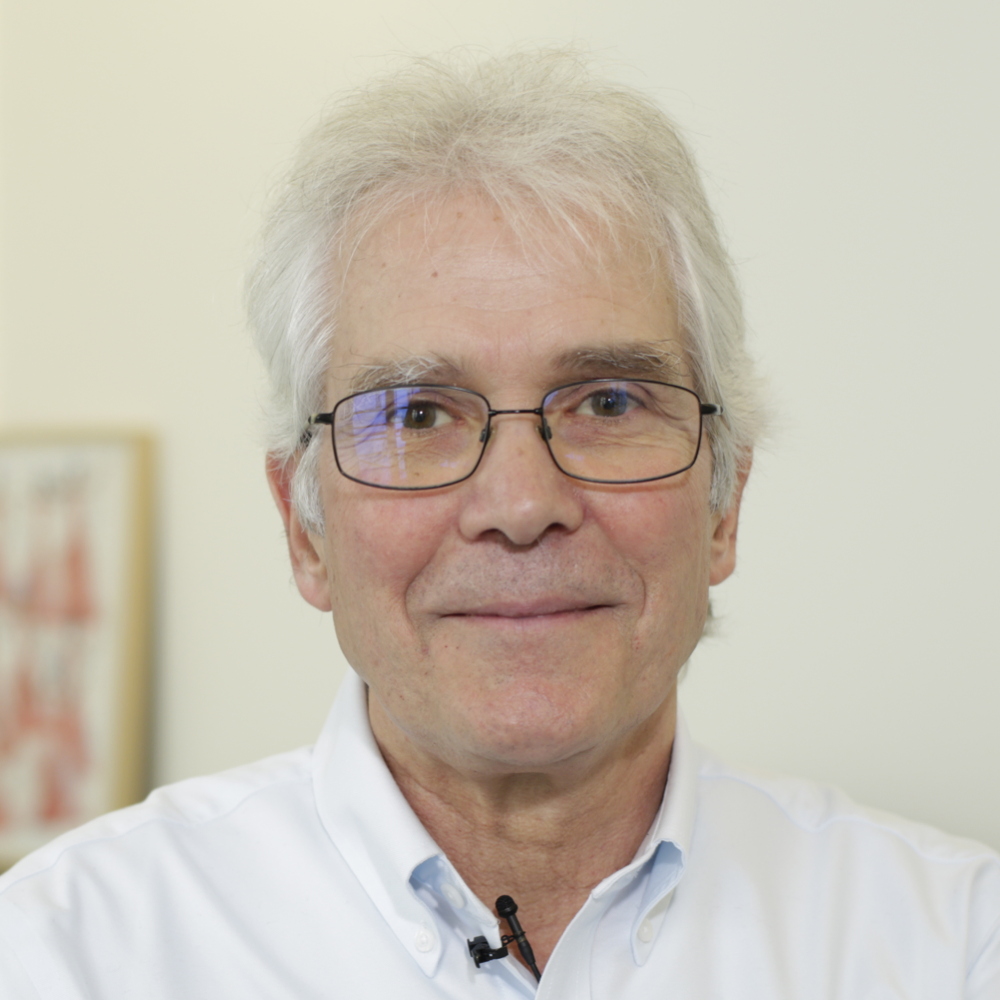
Jan Dreier is a Research Fellow at the Institute of Logic and Computation at Vienna University of Technology. His research centers on structural graph theory and algorithmic meta-theorems, particularly exploring the boundaries of tractability for model checking problems. Dreier's work bridges theoretical computer science and discrete mathematics, focusing on graph decompositions, parameterized complexity, and logical expressiveness. Key research themes include monadic stability in graph classes, applications of model theory to computer science, and efficient algorithms for logical queries on structured graphs. His publication record shows consistent focus on graph sparsity concepts and algorithmic applications of logic, with recent work expanding into approximation methods for counting queries. Research demonstrates sophisticated applications of combinatorial methods to fundamental problems in computational complexity.
Katja Hose is a Full Professor of Data Management at TU Wien's DBAI research unit, heading the Data Management and Knowledge-Driven AI Lab. She previously held a Poul Due Jensen Foundation Professorship at Aalborg University. Her research focuses on data and knowledge engineering, including graph databases, knowledge graphs, querying, analytics, and machine learning, with interdisciplinary applications in bioscience, healthcare, and environmental assessment. Education: PhD in Computer Science (Ilmenau University of Technology, 2009), Postdoc at Max Planck Institute for Informatics (2009–2012). Academic roles include Program Co-Chair for ISWC 2024 and EDBT 2023, and editorial board membership at VLDBJ and TGDK. She leads projects like TARGET (health virtual twins) and ARMADA (data management). Research Interests: Knowledge Graphs, Semantic Web, Big Data, Machine Learning, Data Integration, and Provenance Systems. Key contributions include SHACL shape extraction, conversational data analytics, and environmental knowledge graphs. Awards include the 2025 Distinguished Meta-Reviewer Award and 2024 Manfred Paul Award. Advising and Grants: Supervised students including E. Pürmayr (Diploma Thesis 2025). Active in EU projects (TARGET, ARMADA) and grant coordination. Labs/Teams: DMKI Lab at TU Wien, collaborating with interdisciplinary teams in healthcare and environmental science.
Jean-Pierre Gattuso is a CNRS Research Professor at the Laboratoire d'Océanographie de Villefranche (Sorbonne University) and Associate Scientist at the Institute for Sustainable Development and International Relations (IDDRI-SciencesPo, Paris). His research focuses on the impacts of ocean acidification and warming on marine ecosystems, as well as ocean-based solutions to climate change mitigation and adaptation. Current Roles : CNRS Research Professor, Associate Scientist at IDDRI-SciencesPo Past Positions : Research Professor at Shantou University (2006–2009), Visiting Scientist at Rutgers University and NCAR (2004–2005), Group Leader at Laboratoire d'Océanographie de Villefranche (1998–2004), and others. His research interests span ocean acidification , carbon and carbonate cycling , climate change impacts on marine ecosystems , and ocean-based mitigation strategies . He co-edited the first book on ocean acidification and contributed to IPCC AR5 and AR6 reports. Recent publications highlight his work on ocean alkalinity enhancement , CO2 sequestration , and climate policy integration . He has developed tools like FOCE systems for in situ ocean acidification experiments and standardized ocean carbonate chemistry analysis. Scientific Awards : Ruth Patrick Award (2020), Blaise Pascal Medal (2014), Vladimir Vernadsky Medal (2012), and others. Academic Memberships : Foreign member of the Chinese Academy of Sciences, elected member of the European Academy of Sciences, Academia Europaea, and founder of the European Geosciences Union. Gattuso has led the Ocean Acidification International Coordination Centre at the International Atomic Energy Agency and will co-chair the 2025 One Ocean Science Congress.
Marco Di Renzo is a CNRS Professor (Directeur de Recherche Titulaire) at University of Paris-Saclay, affiliated with CentraleSupelec and the Signals and Systems Laboratory (L2S). He serves as Coordinator of the Communications Networks Area at the DigiCosme Laboratory of Excellence and Editor-in-Chief of IEEE Communications Letters. His academic leadership includes membership in the Ph.D. School on ICT Admission Committee at Paris-Saclay University. His educational background includes a Laurea (cum laude) and Ph.D. in Electrical Engineering from University of L'Aquila, Italy (2003, 2007), and a Habilitation à Diriger des Recherches from University Paris-Sud (2013). Laurea (cum laude), Electrical Engineering, University of L'Aquila (2003) Ph.D., Electrical Engineering, University of L'Aquila (2007) Habilitation à Diriger des Recherches, University Paris-Sud (2013) Di Renzo's research focuses on next-generation wireless communications, particularly reconfigurable intelligent surfaces (RIS), 6G technologies, and stochastic geometry modeling. His work bridges theoretical communication theory with practical implementations in cellular networks, millimeter-wave communications, and ultra-wide band systems. Recent publications demonstrate leadership in holographic metasurfaces, integrated sensing and communication (ISAC), and AI-empowered network design, establishing him as a pioneer in electromagnetic wave manipulation for future networks. His award-winning publications span RIS-aided communications, channel modeling, and security frameworks. Analysis of his recent work reveals consistent focus on three pillars: (1) fundamental electromagnetic theory for wave manipulation, (2) practical RIS implementations across frequency bands, and (3) integration with AI for network optimization. His articles frequently address industrial applications including factory automation and space-air-ground networks. Di Renzo's scientific recognition includes: IEEE Fellow (2020) and IET Fellow (2020) Highly Cited Researcher (Web of Science, 2019) SEE-IEEE Alain Glavieux Award (2017) Multiple Best Paper Awards (IEEE ICC, EURASIP) Nokia Foundation Visiting Professorship (2020) As Principal Investigator for CNRS, he coordinates multiple Horizon 2020 projects including SURFER, PathFinder, and MetaWireless. His leadership extends to serving as Project Coordinator for H2020 5Gwireless, 5Gaura, MAPNET, and REDESIGN. With over 350 publications, 17,000+ citations, and h-index of 66+, his research group maintains strong industry partnerships with Nokia and other telecommunications leaders. Di Renzo directs the Signals and Systems Laboratory (L2S) at Paris-Saclay and coordinates the DigiCosme Excellence Lab's Communications Networks Area. His team specializes in electromagnetic modeling for wireless networks and has pioneered the European Telecommunications Standards Institute (ETSI) Industry Specification Group on RIS. The group maintains active collaborations with Aalto University (Finland), University of Technology Sydney (Australia), and University of L'Aquila (Italy).
Florian Kronenberg is a Full Professor and Head of the Institute of Genetic Epidemiology at the Medical University of Innsbruck, Austria. He has held leadership roles since 2004 and previously directed the Department of Medical Genetics, Molecular and Clinical Pharmacology (2008–2017). His research focuses on genetic and clinical epidemiological studies, particularly on lipoprotein(a) as a major genetic risk factor for cardiovascular disease. He leads a team with the largest sample collection (40,000+ individuals) for LPA gene characterization and serves as Co-Editor of Atherosclerosis , contributing to international guidelines (K/DOQI, KDIGO, EAS). MD from University of Innsbruck Training in Medical Genetics at Gerd Utermann's lab Postdoctoral work at University of Utah His work spans over 500 publications (400+ original papers, 100+ reviews) with an H-index of 107 (Google Scholar) and 47,408+ citations. Key research areas include lipoprotein metabolism, genetic epidemiology, and the interplay of complex diseases like atherosclerosis, kidney disease, and diabetes mellitus. Recent publications emphasize Mendelian randomization, cardiovascular risk stratification, and molecular genetics of LPA variants. Scientific Awards & Honors Lifetime Achievement Award (Dr. Johannes und Hertha Tuba-Stiftung, 2021) APART Fellowship (Austrian Academy of Sciences, 1997–2000) Knoll William Harvey Prize (1999) Research awards from Austrian Stroke Foundation, Diabetes Association, and others
Harold Snieder is a Professor of Genetic Epidemiology at the University Medical Center Groningen (UMCG), The Netherlands, leading the Unit of Genetic Epidemiology and Bioinformatics. Previously, he held roles including Visiting Professor at the Estonian Genome Center (2012–2015) and Full Professor of Pediatrics at the Medical College of Georgia (2005–2006). He earned his MSc from the Vrije Universiteit Amsterdam and PhD from the same institution, with postdoctoral work in London and Augusta. His research focuses on genetic and epigenetic factors influencing cardiovascular diseases, diabetes, kidney function, and mental health, employing twin studies and large cohort analyses. Key achievements include landmark studies on epigenetic markers in type 2 diabetes, genetic contributions to rheumatoid arthritis, and heritability of menopause age. His work has been funded by NIH, EU, and others, yielding over 350 peer-reviewed articles. Awards include the David Fulker Award (2002) and recognition for student mentorship, such as the Allianz European Demography Award (2017) for Felix Tropf’s thesis. Research trends emphasize epigenetic epidemiology, twin studies, and genetic-environmental interactions. His lab, the Unit of Genetic Epidemiology and Bioinformatics, drives interdisciplinary projects in public health and translational sciences. Ongoing efforts explore cardiometabolic diseases, renal biomarkers, and the genetic basis of blood pressure variability.
Fabienne Lind is a researcher at the Faculty of Social Sciences, Institute of Journalism and Communication Studies , focusing on communication studies, media framing, and political discourse. Her work spans migration, climate change, and social media analysis. Research interests include Comparative communication research Computational text analysis Media framing of climate justice and migration Digital political communication Multilingual text analysis Recent publications analyze social media dynamics , climate change coverage , and migration discourse across Brazil, India, and South Africa. Her 2025 work on longitudinal disparities in communication research highlights global trends. Scientific awards include PhD Award (2023) ICA Journalism Studies Division Top Student Paper Award (2019) Article of the Year by 'Communication Methods and Measures' (2018) She contributes to collaborative projects like CIDAPE (2024–2027) on climate, inequality, and democratic action, and engages in computational text analysis tools development for communication studies.
Peer Bork is a Professor at the European Molecular Biology Laboratory (EMBL) in Heidelberg, where he serves as Strategic Head of Bioinformatics and co-head of the Structural and Computational Biology Unit. He also holds honorary professorships at the University of Würzburg (Germany) and Fudan University (China). Educational background: PhD in Biochemistry (1990) Habilitation in Theoretical Biophysics (1995) Research interests span bioinformatics , systems biology , and microbiome analysis , focusing on functional prediction, comparative genomics, and data integration. His work explores global patterns in microbial communities, including enterotypes, drug-microbiome interactions, and planetary-scale gene fluxes. Scientific impact includes over 550 publications (70+ in Nature , Science , and Cell ) and groundbreaking discoveries like the human gut enterotypes and microbiome-based cancer biomarkers . Key projects include the SPIRE microbiome resource and the TARA Oceans expedition . Honors and leadership: EMBO member (2000) Nature Creative Mentoring Award (2008) ERC Advanced Investigator Grants (2011, 2015) Leopoldina member (2014) Honorary doctorate (University of Utrecht, 2017) Co-founder of 5 biotech companies Collaborative networks include partnerships with institutions in Berlin (Max-Delbrück-Center), Würzburg (Germany), and Shanghai (China), as well as global initiatives like the TREC expedition for environmental microbiome analysis.
Judith Schoonenboom is a Professor at the University of Vienna and Deputy Head of the Department of Education. She teaches courses in quantitative and interpretive methodologies, research design, and PhD/master's thesis supervision, including seminars like 'Methodology and Research Design' and 'Quantitative Methodologies in Education Science'. Her academic responsibilities reflect a focus on advanced research methodologies in educational contexts. Schoonenboom's research centers on mixed methods and multimethod approaches in education science, emphasizing methodological innovation, data integration, and theoretical development. Key interests include the interplay between qualitative and quantitative research, design patterns in mixed methods, and strategies for enhancing inferential rigor in social science studies. Her work bridges epistemological frameworks with practical research applications. Her scholarly publications demonstrate a consistent focus on advancing mixed methods research, particularly through innovations in design, integration techniques, and theoretical reflection. Recent works explore causal inference in qualitative research, visualization of methodological interactions, and performative approaches, highlighting trends toward interdisciplinary synthesis and practical methodology refinement.
Edgar Erdfelder is a Full Professor of Psychology at the University of Mannheim, Germany, holding the Chair of Cognitive Psychology and Individual Differences since 2008. He is affiliated with the School of Social Sciences and has made significant contributions to cognitive psychology, statistical modeling, and decision-making research. Previously, he served as Full Professor at the University of Mannheim (2002–2008), Associate Professor at the University of Giessen (2001–2002), and Senior Lecturer at the University of Bonn (1987–2001). Ph.D. in Psychology, University of Trier (1986) Habilitation in Psychology, University of Bonn (2000) Diploma (M.Sc.) in Psychology, University of Göttingen (1980) Erdfelder's research focuses on statistical power analysis, multinomial processing tree (MPT) modeling, sequential statistical inference, and cognitive modeling. His work explores judgment and decision-making through mathematical and computational frameworks, integrating signal-detection theory with threshold models. He developed the widely used GPOWER software for statistical power analysis and advanced MPT models to measure cognitive process speeds. His recent publications with students highlight applications of Bayesian sequential methods, meta-analyses of sleep effects on memory, and theoretical extensions of the recognition heuristic. These studies span subfields like cognitive architecture, decision theory, and experimental design. Martin Irle Award (2020) Fellow of the Association for Psychological Science (2016) Heinz Heckhausen Award (1988) Erdfelder has held leadership roles, including Vice President of Research at the University of Mannheim and Academic Director of the Center of Doctoral Studies in Social and Behavioral Sciences funded by the DFG. He mentored numerous Ph.D. students and led the DFG-funded Research Training Group SMiP, focusing on statistical modeling in psychology.
Erich Striessnig is an Associate Professor at the University of Vienna's Department of Demography, serving as Deputy Head of the department. He actively contributes to teaching courses such as Population Forecasting and Population, Climate Change and Sustainable Development , and collaborates with the Environment and Climate Research Hub. Research Focus : Striessnig integrates demography with climate change, sustainability, and human capital. His work examines how environmental concerns interact with fertility decisions, the role of education in climate risk mitigation, and the relationship between aging populations and temperature-related mortality. He also investigates demographic metabolism, intergenerational equity, and computational reproducibility in research. Scientific Contributions : His recent publications in Global and Planetary Health and Demographic Research include analyses of sustainable wellbeing metrics (e.g., 'Years of Good Life'), demographic responses to climate change, and methodological studies on data uncertainty. A key project, Climate, Health and Population (CHAP) , explores vulnerability differences in Vienna's metropolitan region.
Sabine Seidel is a full Professor at the Institute of Crop Production, Department of Agrarwissenschaften, University of Natural Resources and Life Sciences, Vienna (BOKU). Her research integrates plant modeling, sustainable agriculture, and digital farming to enhance climate-resilient and resource-efficient crop systems. Her research interests focus on the development and testing of innovative, diverse (organic) cultivation systems, particularly mixed cropping and intercropping. She investigates ecosystem services such as yield and greenhouse gas emissions through measurements and modeling. Her work emphasizes the interactions between genotype, environment, and management (G×E×M), especially concerning water, nitrogen, and root dynamics. She also explores root growth responses to nutrient deficiency and drought stress, and leads initiatives in digital farming, including AI tools for pollinator detection and digital twin development in agriculture. Analysis of her recent publications (2024–2025) reveals a strong trend in interdisciplinary research combining field experiments with advanced modeling. Her work spans agroecosystem modeling, intercropping systems (especially wheat and faba bean), soil-crop interactions, and the application of AI and machine learning in agriculture. She frequently contributes to multi-model studies and calibration protocols, emphasizing model accuracy and validation. Her research is highly collaborative, involving teams across Germany and Austria. Root:shoot ratio under conservation tillage Phenotypic plasticity in winter wheat Resource acquisition in intercropping Digital crop growth simulation using GANs Soil carbon sequestration and organic matter dynamics She has been actively involved in the PhenoRob Cluster of Excellence as a junior research group leader (2020–2025), focusing on optimizing plant mixtures through field experiments and modeling. Prior to this, she conducted postdoctoral research on subsoil management at the University of Bonn. Her work bridges ecology, plant science, soil science, and digital technologies. She earned her doctorate on plant modeling and irrigation from the Technical University of Dresden and studied agricultural sciences at the Technical University of Munich. She is based in Vienna and maintains an active presence in knowledge transfer, with media contributions in print and online outlets discussing sustainable farming practices.
John Geddes is the WA Handley Professor of Psychiatry at the University of Oxford, a Professorial Fellow at Merton College, and Director of the NIHR Oxford Health Biomedical Research Centre. He has held significant academic and clinical leadership roles since 2002, including Head of the Department of Psychiatry (2011-2021) and Director of R&D at Oxford Health NHS Foundation Trust. Education: MB ChB (University of Leeds, 1985) MD (University of Leeds, 1993) Member (1989) and Fellow (2000) of the Royal College of Psychiatrists His research spans mood disorders, evidence-based medicine, clinical trials, and digital phenotyping in psychiatry. Key contributions include large-scale evidence syntheses on antidepressants, lithium toxicity, and bipolar disorder treatments. Recent publications focus on post-COVID-19 neurological/psychiatric outcomes, comparative drug efficacy, and innovative trial designs. His work combines epidemiological approaches with clinical implementation strategies. Scientific Awards: Clarivate Highly Cited Researcher (Cross-Field) 2018-2022 ECNP Neuropsychopharmacology Award (2016) Royal College of Psychiatrists Academic Psychiatrist of the Year (2010) Aristotle University Honoris Causa (2018) National Institute for Health Research Senior Investigator (2012-2019) As principal investigator for the £35M NIHR Oxford Health Biomedical Research Centre, he leads multiple grants including studies on virtual reality interventions for psychosis and pharmacological approaches to treatment-resistant depression.
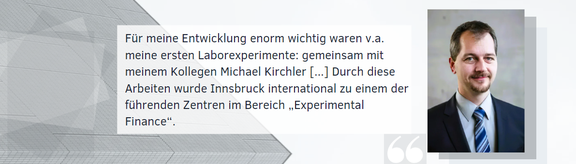
Jürgen Huber is a Full Professor in Finance and Head of the Department of Banking and Finance at the University of Innsbruck. He has been a central figure in experimental finance since 1998, founding the Society for Experimental Finance and leading international collaborations with institutions like Stockholm School of Economics and VU Amsterdam. Education: PhD in Political Sciences (2001) and Business Administration (Habilitation, 2007), both from University of Innsbruck. Research Interests: His work spans Experimental Economics , Behavioral Finance , and Meta Science , focusing on market microstructure, replicability of scientific research, and communication behavior. Recent projects explore: Climate change policy through CO2 taxation and climate dividends . Digital finance implications of cryptocurrencies and NFTs . Communication differences (face-to-face vs. online) and their impact on decision-making. Scientific objectivity in peer review via the Nobel and Novice project. Article Trends: His 2024 publications in Nature Human Behaviour and PNAS emphasize replicability crises, climate economics, and communication behavior. Earlier work in Management Science and Journal of Economic Behavior and Organization analyzes market microstructure, financial transaction taxes, and crowd-sourced research validation. Scientific Awards: Voted Professor of the Year by students (2019-2023), with multiple FWF and OeNB grants totaling over €1 million. Received the Pater Johannes Schasching SJ-Preis (2016) and Forschungspreis der Stiftung Südtiroler Sparkasse (2015). Teaching: Integrates research into interactive lectures, including lab-based simulations for stock market experiments. Taught at universities in Austria, Germany, USA, Thailand, Vietnam, and Indonesia.
Christine Bauer is a University Professor at the University of Salzburg specializing in Artificial Intelligence and Human Interfaces. She serves as Head of the program area 'InterMediation. Music—Effect—Analysis' (2024-2028) and is actively involved in the EXDIGIT project (Excellence in Digital Sciences and Interdisciplinary Technologies) running from 2022 to 2028. Her work spans computer science, social sciences, and economics, contributing to Sustainable Development Goals related to education and responsible innovation. Her research focuses on recommender systems, particularly examining fairness, gender bias, and ethical considerations in music recommendation algorithms. She investigates how choice models and ranking strategies impact gender imbalance in music recommendations, explores value alignment in news recommenders, and develops frameworks for evaluating conversational agents. Her interdisciplinary approach bridges technical algorithm development with social science perspectives to create more equitable and transparent recommendation systems. The analysis of her recent publications reveals a strong trend toward interdisciplinary evaluation frameworks for recommender systems, with particular emphasis on fairness metrics, gender bias mitigation, and stakeholder-centered perspectives. Her work increasingly addresses the social implications of algorithmic decision-making, especially in music streaming contexts where artist diversity and representation are critical concerns. She has been instrumental in establishing evaluation standards that consider multiple stakeholder perspectives beyond just end-users. Women in RecSys Journal Paper of the Year Award 2024, Senior category Women in RecSys Journal Paper of the Year Award 2023, Senior category Best Reviewer Award @ UMAP 2022 Best Reviewer Award @ RecSys 2019 CPDP 2013 Multidisciplinary Privacy Research Award Professor Bauer actively mentors through conference workshops and serves as an Independent Ethics Advisor (2023-2025). She has secured significant research funding through projects like EXDIGIT and has contributed to numerous grant-funded initiatives focused on digital sciences and interdisciplinary technologies. Her organizational activities include chairing major conferences such as the European Conference on Information Retrieval (2026) and the Human-Computer Interaction Conference of the Alpine region (2026). She leads research teams focused on recommender systems evaluation, particularly through the Perspectives on Evaluation of Recommender Systems (PERSPECTIVES) workshop series and the Music Recommender Systems (MuRS) workshops. Her current work with the EXDIGIT project involves collaboration with researchers across multiple disciplines to advance digital sciences and interdisciplinary technologies.