Professor Phil Trinder is a Professor of Computing Science at the University of Glasgow's School of Computing Science. He leads the Glasgow Parallelism Group (GPG) and is a member of the Glasgow Systems Section (GLASS) and the Scottish Programming Languages Seminar (SPLS). His research focuses on parallel and distributed programming models, functional programming, and applications in computational algebra. Trinder holds a DPhil from Oxford University and has over 100 publications. He has led 12 major research projects as Principal Investigator and coordinated EU projects. Collaborations include Ericsson, Maplesoft, Microsoft, and Motorola. His work emphasizes scalable distributed systems, actor-based platforms, and reliable computation. Notable contributions include the SymGridPar framework for computational algebra and research on Erlang scalability. He also explores IoT architectures and tierless programming languages. Key projects include improving Erlang's network scalability and developing frameworks for exact combinatorial search (YewPar). He has supervised numerous researchers and contributed to high-performance systems like HPC-GAP.
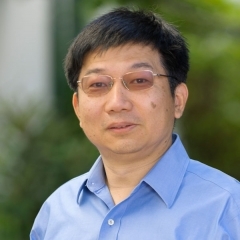
Tao Yang is a Professor in the Department of Computer Science at the University of California, Santa Barbara, where he has been a faculty member since 1993. His research spans web search and mining, database and information systems, machine learning and data mining, parallel and distributed systems, and cloud computing. He serves as an active educator, teaching courses including CS170 Operating Systems (Spring 2024), CS291A Neural Information Retrieval (Fall 2024), and CS140 Parallel Computing (Winter 2025). PhD in Computer Science, Rutgers University ME in Artificial Intelligence, Zhejiang University MS in Computer Science, Rutgers University BS in Computer Science, Zhejiang University Professor Yang's research focuses on advancing the field of information retrieval with particular emphasis on neural approaches to search and ranking. His recent work explores neural document ranking, privacy-aware search systems, and versioned data search. He has led significant projects including Neptune clustering infrastructure, Sorrento self-organizing storage cluster, and TMPI for MPI execution optimization. His research bridges theoretical advances with practical implementations, particularly in scaling search architectures to handle billions of documents while maintaining relevancy, performance, and freshness. His publication record shows a clear evolution from foundational work in parallel and distributed systems toward contemporary research in neural information retrieval. Recent publications demonstrate expertise in optimizing both sparse and dense retrieval methods, with particular focus on efficiency improvements for multi-vector representations. His work consistently addresses real-world challenges in search scalability and privacy preservation. Faculty Research Award, Google Research Research Initiation Award, NSF (1994) UC Regents' Junior Faculty Award (1994) Computer Science Faculty Teacher Award (1995) CAREER Award, NSF (1997) Noble Jeeviant Award, AskJeeves (2002) Professor Yang has supervised numerous graduate students, many of whom have gone on to prominent positions at companies like Google, Apple, and Coursera, or academic positions at universities worldwide. His industry experience as Chief Scientist for Ask.com (2001-2010) and founding Chief Scientist for Teoma (2000-2001) has informed his research direction and provided valuable practical context for his academic work. He has served on program committees for major conferences including WWW, SIGIR, KDD, WSDM, CIKM, ECIR, and EMNLP. His research group maintains active projects in neural information retrieval, privacy-aware search, similarity computing, and parallel computing systems. The group collaborates closely with industry partners, particularly in the search technology space, and has developed systems that power major search engines serving over 100 million users.
David Chisnall is a researcher affiliated with the University of Cambridge and active in systems programming, compiler design, and cross-language interoperability. He contributes to conferences like POPL, PLDI, ISMM, and SPLASH, with particular focus on secure compilation and memory management.
Quentin Stiévenart is a researcher at Université du Québec à Montréal, focusing on abstract interpretation, concurrency, and static analysis. His work spans programming language design, software verification, and tool development for WebAssembly and functional languages like Racket and Scheme. Active in organizing and reviewing for conferences including SPLASH, ICFP, ECOOP, and SAS Developed tools such as Wassail for WebAssembly static analysis and RacketLogger for educational purposes Contributions include theoretical work on effect-driven flow analysis and practical advancements in concolic execution abstraction His research addresses challenges in concurrency verification, cyclic reinforcement in incremental analysis, and security-focused taint tracking across multiple language paradigms.
Georgia Dede is an Assistant Professor at the Department of Informatics and Telematics, School of Digital Technology, Harokopio University of Athens. Her expertise lies in evaluating systems and electronic services, with a focus on cybersecurity, telecommunications, and operations research. She holds a PhD from National and Kapodistrian University of Athens (2015), a Master’s in Management and Economics of Telecommunications Networks (2007), and an undergraduate degree in Informatics and Telematics (2005). Education: PhD: Decision Making Methods and Uncertainty Study (2015), National and Kapodistrian University of Athens Master’s: Management and Economics of Telecommunications Networks (2007), National and Kapodistrian University of Athens Bachelor’s: Informatics and Telematics (2005), National and Kapodistrian University of Athens Research Interests: Georgia’s research spans cybersecurity frameworks, pairwise comparison methodologies for decision-making, and economic modeling of telecommunications infrastructure. She explores topics like resilient IoT systems, AI applications in governance, and competitive dynamics in energy and telecom markets. Her work integrates technical and socio-economic perspectives to address challenges in network security, service evaluation, and policy design. Grants and Projects: Leading and participating in EU-funded programs under Horizon Europe and Digital Europe initiatives Prior roles as senior advisor/administrator at Netcompany Intrasoft and ENISA Labs/Teams: Her involvement in projects at Harokopio University and collaborations with institutions like the University of Patras emphasize applied research in digital technology and policy innovation.
Stephen Siegel is an Associate Professor at the University of Delaware with a joint appointment in the Department of Computer and Information Sciences and the Department of Mathematical Sciences . Holding a PhD in Mathematics from the University of Chicago (1993), he transitioned from finite group theory research to formal methods in computer science, focusing on verification of parallel and scientific software. His research centers on the Verified Software Laboratory (VSL) and the CIVL Model Checker for HPC program verification. Recent work includes formal verification of PETSc components at CAV 2025 and collective contract frameworks for message-passing programs. Research Interests Formal methods for software verification Parallel and HPC software reliability Model checking techniques Application of mathematical logic to computing Academic Service Highlights Program Committee & Publication Chair, CAV 2025 Co-organizer, International Workshop on Verification of Scientific Software (VSS 2025) Chair, VerifyThis competition (2023) Editorial service at IEEE Transactions on Software Engineering (2015-2019) Teaching Portfolio CISC 404/604: Logic in Computer Science CISC 414/614: Formal Methods in Software Engineering CISC 372: Parallel Computing (MPI/OpenMP/CUDA instruction) Advanced Topics courses: Model Checking, Abstract Interpretation
Dr. Purushotham V. Bangalore serves as the James R. Cudworth Professor in the Department of Computer Science at the University of Alabama's College of Engineering and holds the position of Associate Director for the Center for Understandable, Performant Exascale Communication Systems (CUP-ECS), a Predictive Science Academic Alliance Program (PSAAP) Focused Investigatory Center. His academic credentials include: B.E. in Computer Science and Engineering from Bangalore University (1991) M.S. in Computer Science from Mississippi State University (1995) Ph.D. in Computational Engineering from Mississippi State University (2003) Dr. Bangalore's research centers on High-Performance Computing (HPC) with emphasis on designing abstraction layers for heterogeneous architectures, predictive performance modeling, and portability. His work extends to fault-tolerant message-passing middleware, exascale storage security, and reliability frameworks. Additional expertise spans data analytics, object-oriented numerical libraries, grid computing environments, and adaptive systems development through three decades of HPC and cloud computing innovation. Analysis of his 2021-2025 publications reveals dominant themes in HPC security architecture, containerization for scientific workloads, and MPI communication advancements. Key application areas include hydrological modeling (NextGen framework), GPU-accelerated communication protocols, and data provenance systems for exascale platforms, reflecting interdisciplinary approaches to computational challenges. Dr. Bangalore has secured approximately $20 million in research funding as PI/Co-PI from NSF, NIH, DoE, and industry partners, resulting in over 90 peer-reviewed publications. His academic service includes editorial roles for IEEE Transactions on Parallel and Distributed Systems, MPI Forum contributions to the MPI-4.0 standard, and organization of DoD-sponsored HPC training workshops. He leads research initiatives through CUP-ECS while maintaining active participation in the MPI Forum. His team develops frameworks for exascale communication systems with focus on security posture analysis, performance portability, and fault tolerance in next-generation computing environments.
Dr. Stephanie Balzer is an Assistant Professor in the Principles of Programming Group at Carnegie Mellon University's School of Computer Science. Her research focuses on enabling failure-free software through formal methods like type systems and verification logics. She emphasizes compositional proofs for scalability and practical validation via software artifacts. Programming Languages Type Theory Program Verification Concurrency & Security Her recent work explores timed protocols, disentanglement logic, and multiparty session types. Articles demonstrate semantic logical relations for termination (2025), deadlock freedom in Rust embeddings (2022), and information flow control (2024). Key collaborative papers address cyclic process networks and separation logic frameworks. Scientific recognition includes: NSF CAREER Award (2025) ACM SIGPLAN Distinguished Paper (2022) ECOOP Distinguished Paper (2022) She supervises PhD candidates Yue Yao, Yinsen Zhang, and Zak Kent (with Guy Blelloch), plus Master's student Sonya Simkin. Former advisee Jules Jacobs received Cum Laude distinction at Radboud University. Active in academic service, Balzer chairs PLMW@POPL workshops and co-organizes Oregon Programming Language Summer School. She serves on program committees for LICS, POPL, and ICFP.
Robbert Krebbers is an associate professor at the Department of Software Science at Radboud University Nijmegen, Netherlands. He is a leading researcher in program verification, specializing in separation logic and the Coq proof assistant. Krebbers is a core contributor to the Iris framework, a higher-order concurrent separation logic framework implemented in Coq. His research spans theoretical foundations of programming languages and practical applications to real-world languages including C, Rust, and Scala. His research interests focus on scaling program verification techniques to challenging programming paradigms like concurrency, higher-order functions, and modules. Krebbers' work bridges formal methods with practical language implementation, particularly in verifying memory safety and concurrency properties. He has made significant contributions to Rust verification through the RustBelt project and has pioneered techniques for verifying concurrent data structures and message-passing systems. Krebbers' recent publications demonstrate a strong trend toward verifying complex concurrency patterns, developing automated proof techniques, and applying separation logic to practical programming language features. His work frequently appears in top-tier programming languages conferences including POPL, PLDI, and ICFP, with several papers receiving distinguished paper awards. The research spans from foundational logic development to practical verification tools for real-world programming languages. As a principal investigator in the Iris project, Krebbers has secured significant research funding including the ERC Consolidator Grant for the RustBelt project. His work has influenced both academic research and industrial practice, particularly in the Rust programming language ecosystem. The Iris framework he helped develop has been adopted by numerous verification projects worldwide. Krebbers has advised PhD students including Ike Mulder (focusing on proof automation for concurrent separation logic) and Jules Jacobs (working on guarantees by construction). He has been actively involved in the programming languages research community, serving on program committees for major conferences and organizing workshops on formal methods and verification. He leads research in the Department of Software Science at Radboud University, where his group focuses on developing foundational techniques for program verification. The group collaborates closely with the Logic and Semantics Group and Foundations of Programming Group across institutions, contributing to a vibrant research ecosystem around formal methods and programming languages.
Stephanie Balzer is an Assistant Professor in the Principles of Programming Group at Carnegie Mellon University's School of Computer Science. She received her PhD from ETH Zurich under Thomas R. Gross and focuses on developing rigorous type systems and verification logics to build failure-free, secure software through compositional and practical methods. Education: PhD (ETH Zurich), Master's (University of Zurich), Semester Thesis (University of Zurich) Her research spans session types , logical relations , and separation logic to ensure correctness and security in concurrent systems. Recent work includes verifying timed message-passing protocols and disentanglement in type systems. Key publication trends include session-typed concurrency , noninterference , and deadlock freedom across programming languages, formal methods, and security domains. She has authored multiple distinguished papers at ECOOP and POPL. Scientific Awards: NSF CAREER Award, ACM SIGPLAN Distinguished Paper, ECOOP Distinguished Paper She advises PhD students including Yue Yao, Yinsen Zhang, and Zak Kent, and has supervised former PhD students like Jules Jacobs (now at Cornell). Her grants include NSF funding for IoT verification , heterogeneous applications , and real-time protocols .
Lukasz (Luke) Ziarek serves as Associate Dean for Academic Affairs and Associate Professor in the Department of Computer Science and Engineering at the University at Buffalo's School of Engineering and Applied Sciences. His work bridges theoretical computer science with practical systems engineering, focusing on real-time capabilities in distributed environments and safety-critical applications. His educational foundation includes a PhD in Computer Science from Purdue University (2011) and a BS in Computer Science from the University of Chicago (2003). Ziarek's research centers on formal verification of distributed protocols , real-time systems engineering , and mobile/embedded computing . He pioneers session type theory for IoT security, develops real-time variants of Android (RTDroid) and Standard ML (RTML), and investigates UAV software reliability. His work consistently addresses the tension between theoretical guarantees and practical system constraints in concurrency, timing, and security. Recent publications (2022-2025) reveal three dominant trajectories: formal methods for rate-based session types in IoT protocols, performance analysis of visual SLAM systems for robotics, and security vulnerabilities in embedded platforms like ARM TrustZone. These threads converge on ensuring correctness and timeliness in resource-constrained distributed systems. His scientific accolades include the IEEE Region One Technological Innovation Award (2023) and NSF CAREER Award (2018), reflecting dual excellence in research and education. IEEE Region One Technological Innovation (Academic) Award, 2023 President Emeritus and Mrs. Meyerson Award for Distinguished Undergraduate Teaching and Mentoring, 2022 NSF CAREER Award, 2018 SEAS Early Career Teacher of the Year, 2016 Halstead Award for Outstanding Research in Software Engineering, 2009 Intel Fellowship, 2008 GAANN Fellowship, 2004 Ziarek directs significant research initiatives including a $900K NSF UAV infrastructure project (as PI) and a $1.7M MRI grant for connected vehicle testing. His funding portfolio spans real-time systems, compiler design, and pocket-scale data management, emphasizing collaborative, interdisciplinary approaches to software reliability. CRI:CI-New UAV Infrastructure ($900K, PI 31%) NSF CAREER: Real-time Object-Oriented Systems ($500K, PI 100%) MRI: iCAVE2 Vehicle Testing ($1.7M, co-PI 14%) III: Just-in-Time Data Structures ($499K, co-PI 50%) II-EN: MLton Compiler Research ($606K, PI 63%) He leads an open-source ecosystem including RTDroid (real-time Android), Multi-MLton (parallel SML compiler), and BlueSeal (Android security analyzer), fostering community-driven advances in systems software.
Frank Pfenning is a Professor in the Department of Computer Science at Carnegie Mellon University's School of Computer Science. With decades of active research and service in programming languages and logic communities, he maintains a significant presence across major conferences including POPL, ICFP, and ESOP. His research spans foundational work in Programming Languages , Logic and Type Theory , Logical Frameworks , Automated Deduction , and Trustworthy Computing . Recent publications reveal a strong focus on session types, substructural logics, and their applications to concurrency and distributed systems. His work bridges theoretical foundations with practical implementations for reliable communication protocols. Analysis of his publication trends shows a consistent evolution from foundational type theory toward practical applications in concurrent and distributed systems. The integration of logical frameworks with session types represents a signature research trajectory, increasingly addressing real-world challenges in protocol verification and deadlock freedom. As an active community member, Pfenning has served on numerous program committees including POPL (2016-2025), ICFP (2015-2022), and ESOP. His mentoring activities include PLMW@POPL presentations, demonstrating commitment to training next-generation researchers. His technical contributions are primarily disseminated through premier venues in programming languages research. The absence of explicit grant information in available sources suggests focus on theoretical contributions rather than large-scale funded projects, though his sustained conference participation indicates stable institutional support.
Jing Zhou is a Lecturer in Statistics at the University of East Anglia, affiliated with the School of Engineering, Mathematics and Physics. Their research focuses on high-dimensional statistical methodologies, including variable selection, false discovery rate control, and robust estimation techniques. Dr. Zhou actively contributes to peer review for journals like Statistics and Computing and Statistics , and has presented at conferences such as the 2024 IMS International Conference on Statistics and Data Science. Research interests emphasize advancing statistical methods for social science and big data applications, particularly leveraging model-X knockoffs and black-box model assessments. Recent work explores trade-offs in false discovery vs. true positive rates in logistic regression and nonparametric quantile regression via vine copulas. Collaborative efforts include interdisciplinary projects addressing replication crises through methodological improvements. No scientific awards are explicitly listed. Advising activity and grants information is not provided in the text. Zhou is engaged in academic activities including invited talks and editorial work, contributing to both theoretical and applied statistical research.
Anthony Danalis is a Research Assistant Professor at the University of Tennessee's Innovative Computing Laboratory (ICL), affiliated with the Department of Electrical Engineering and Computer Science. His research focuses on high-performance computing (HPC), including performance analysis, system benchmarking, compilers, MPI, and accelerators. He holds a Ph.D. and two M.S. degrees in Computer Science from the University of Delaware and the University of Crete, along with a B.S. in Physics from the University of Crete. Education: Ph.D. in Computer Science, University of Delaware M.S. in Computer Science, University of Delaware M.S. in Computer Science, University of Crete B.S. in Physics, University of Crete Research Interests: High-Performance Computing (HPC) Performance Analysis and Optimization System Benchmarking Compilers and Runtime Systems Parallel Programming Models (e.g., MPI) Accelerator Technologies Publications Highlight Trends in: Advancements in the PAPI library for exascale computing Dataflow-based execution for scientific applications Hardware performance counter analysis Compiler-driven optimizations Scientific Awards: Best Research Poster Finalist at SC 2017 Advising and Grants: No formal advisees listed Contributions to ICL's leadership and collaborative projects Labs and Teams: Innovative Computing Laboratory (ICL) Participation in projects like DAGuE, DPLASMA, and SHOC
Tore Brox-Larsen is an Associate Professor in the Department of Informatics at UiT The Arctic University of Norway. He is actively involved in research and teaching, with a focus on distributed computing, high-performance systems, and visualization technologies. His work is centered on scalable systems for large displays, sensor networks, and remote data visualization, often in collaboration with interdisciplinary teams. His research interests include distributed and parallel computing, remote visualization over wide-area networks, large-scale display systems, health informatics, and Arctic monitoring technologies. He has contributed significantly to the development of systems for tiled display walls, genomics visualization, and sensor-based observatories. His work bridges theoretical computer science with practical applications in healthcare, environmental monitoring, and collaborative research environments. The most recent publications reflect a strong trend in applying computing technologies to real-world challenges, particularly in Arctic research and healthcare. His work emphasizes performance optimization, usability, and scalability in distributed systems. Topics span from low-level communication latency analysis to high-level collaborative visualization frameworks. Scientific Awards: No scientific awards mentioned in the provided text. Advising and Grants: There is no explicit information about students advised or research grants received. However, his extensive publication record and collaborative projects suggest active participation in funded research initiatives and potential mentorship of junior researchers and students. Labs and Teams: Tore Brox-Larsen is part of a long-standing research group at UiT involving Otto Anshus, John Markus Bjørndalen, and others, focusing on high-performance distributed systems. He has contributed to the development of the MultiStream system, scalable display walls, and the Arctic observatory sensor network. His work indicates involvement in both software and systems research teams, likely associated with UiT’s informatics infrastructure and high-performance computing initiatives.