
- Program analysis
- Symbolic execution
- Formal methods
- +۲ مورد دیگر
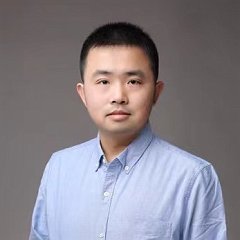
Zhenbang Chen is a Professor in the College of Computer at National University of Defense Technology (NUDT), China. His academic career spans over a decade with significant contributions to software engineering, particularly in program analysis and formal methods. He has served on program committees for major conferences including ASE, ICSE, and FSE, and has been actively involved in research that bridges theoretical formal methods with practical software engineering applications. Dr. Chen received his Ph.D. and Bachelor degrees in computer science from National University of Defense Technology (NUDT) in June 2009 and July 2002, respectively. His educational background from NUDT has provided a strong foundation for his research in software engineering and formal methods. Ph.D. in Computer Science, National University of Defense Technology (NUDT), 2009 Bachelor's Degree in Computer Science, National University of Defense Technology (NUDT), 2002 Zhenbang Chen's research primarily focuses on program analysis, with special emphasis on symbolic execution techniques. His work extends to formal methods and their practical applications in software engineering. He investigates constraint solving approaches to improve the efficiency of program analysis and explores program synthesis techniques to automate software development tasks. His research bridges theoretical foundations with practical software engineering challenges, particularly in the areas of software verification and testing. His recent work has increasingly focused on optimizing symbolic execution through novel constraint solving techniques and exploring multi-modal approaches to behavior tree synthesis. This demonstrates his commitment to advancing both the theoretical underpinnings and practical applications of software analysis techniques. Professor Chen's publication record shows a consistent focus on symbolic execution and constraint solving, with a clear progression toward more sophisticated optimization techniques. His recent work demonstrates a shift toward multi-objective optimization for floating-point constraints and multi-modal approaches to program synthesis. The research spans both theoretical foundations and practical implementations, with several tools developed from his research participating in international competitions. Dr. Chen's research excellence has been recognized through multiple prestigious awards: ACM SIGSOFT Distinguished Paper Award for FSE 2025 paper "QSF: Multi-Objective Optimization based Efficient Solving for Floating-Point Constraints" ACM SIGSOFT Distinguished Paper Award for ISSTA 2021 paper "Type and interval aware array constraint solving for symbolic execution" ACM SIGSOFT Distinguished Paper Award for ICSE 2018 paper "Towards optimal concolic testing" Bronze Medal (3rd place) in Cover-Branches category at Test-COMP 2025 for the FDSE tool Professor Chen is actively involved in mentoring the next generation of researchers, currently seeking Ph.D. and M.Sc. students to work with him on cutting-edge research in program analysis and formal methods. His research group has developed several tools that have gained recognition in international competitions, including AISE which ranked 1st in SV-COMP 2025's ReachSafety-Loops category and FDSE which won Bronze Medal in Test-COMP 2025. His research has been supported by grants that enable participation in major international conferences and competitions, fostering collaborations with researchers worldwide. Dr. Chen leads a research group focused on program analysis and formal methods at NUDT. His team has developed several notable tools including AISE for program verification and FDSE for software testing, which have achieved top rankings in international competitions like SV-COMP and Test-COMP. The research group maintains active collaborations with other institutions and participates regularly in major software engineering conferences, contributing to both theoretical advancements and practical tool development in the field.