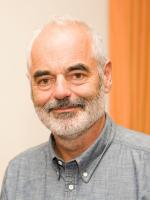
David Spiegelhalter is Professor of the Public Understanding of Risk at the University of Cambridge's Faculty of Mathematics. His research focuses on Bayesian statistics, public communication of uncertainty, biostatistics, and performance assessment in healthcare. He has contributed extensively to risk perception studies, particularly during the COVID-19 pandemic, and develops tools for statistical communication. Spiegelhalter's work bridges technical statistics with public understanding, emphasizing transparent communication of scientific uncertainty. His research interests include: Developing frameworks for trust in scientific advocacy Quantifying pandemic risks and public responses Creating accessible statistical tools for healthcare decisions His publications show consistent focus on: Public health communication strategies Philosophical foundations of probability Epidemiological modeling with recent emphasis on COVID-19 data interpretation.
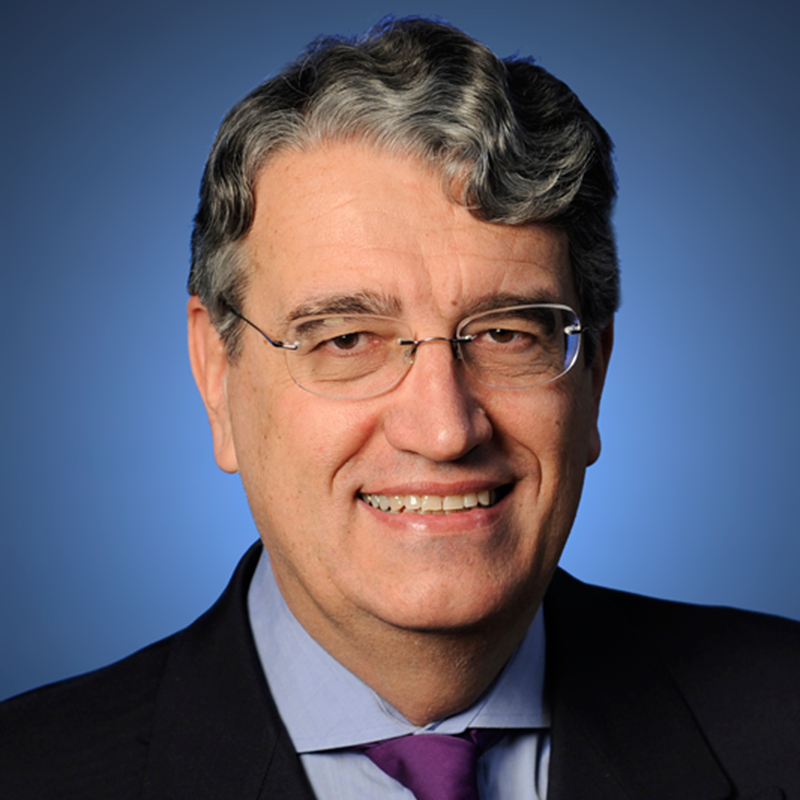
Virgil D. Gligor is a Professor in the Department of Electrical and Computer Engineering at Carnegie Mellon University (CMU), affiliated with the College of Engineering. He serves as Co-Director of CyLab, CMU's cybersecurity research center. His academic career spans over four decades, with a Ph.D. (1976) and M.Sc. (1973) from UC Berkeley, preceded by a B.Sc. (1972) in Electrical Engineering. His research focuses on network and distributed systems security, applied cryptography, and formal methods, with contributions to sensor network security, ad-hoc network trust models, and cryptographic protocol design. Recent work includes pioneering secure communication architectures (e.g., MiniSec), distributed detection of node replication attacks, and formal verification of security protocols. He has received prestigious recognitions, including induction into the Cybersecurity Hall of Fame (2019) and a Distinguished Paper Award at the NDSS Symposium (2019). His teaching includes courses on applied cryptography and network security. Current projects involve designing secure tactical mobile ad-hoc networks (MURI grant) and dynamic coalition management systems. Dr. Gligor’s work bridges theoretical foundations with practical implementations, emphasizing provable security guarantees even in compromised environments. His lab develops cryptographic primitives and security frameworks for modern distributed systems, addressing challenges in IoT, sensor networks, and coalition resource management.
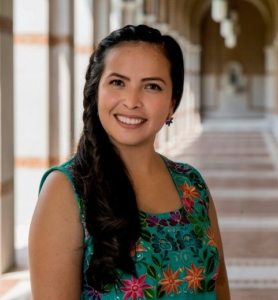
Margaret Michelle Torres is an Assistant Professor in the Department of Political Science at the University of California, Los Angeles (UCLA). Her research focuses on political methodology, computer vision, causal inference, and survey methodology, with substantive interests in political media communication, participation, and attitude formation. She holds a Ph.D. in Political Science and an A.M. in Statistics from Washington University in St. Louis, alongside a B.A. in Political Science and International Relations from CIDE (Mexico City). Her work bridges computational methods and social science inquiry, emphasizing innovative tools for analyzing visual and textual data. Recent projects explore how ideology influences perceptions of political groups, the role of visual frames in protests, and methodological issues in causal inference. Torres has authored influential papers on topics ranging from election dynamics to the application of machine learning in political analysis. Notable contributions include frameworks for unsupervised visual analysis and critiques of posttreatment variable pitfalls in experiments. Her research frequently intersects with questions of media representation, public opinion, and institutional trust. Torres advises students in quantitative methods and political behavior, though specific advisee names are not listed here.
Cristina Marinho is a Lecturer in Psychology at the University of Edinburgh's School of Philosophy, Psychology and Language Sciences. She holds a PhD in Social Psychology from Loughborough University and an MSc in Social and Organisational Psychology from ISCTE (University Institute of Lisbon, Portugal). Her research focuses on political manipulation, rhetorical strategies in parliamentary discourse, and public engagement with climate change communication. She actively supervises undergraduate and postgraduate students in qualitative methodologies and dissertation work. Education : PhD, Social Psychology, Loughborough University (UK) MSc, Social and Organisational Psychology, ISCTE, Portugal Her research investigates how politicians misrepresent reality through statistical manipulation and historical mythmaking, with a focus on Portuguese parliamentary rituals and UK/EU political discourse. Collaborations include projects on climate change communication with Dr Sue Widdicombe and Dr Rahul Sambaraju. She has published extensively with co-author Michael Billig on topics like political rhetoric and critical discourse analysis. Teaching responsibilities include Qualitative Social Psychology Lab, Psychology Mini-Dissertation supervision, and coordination of the Qualitative Methodologies in Psychological Research (QMiPR) course. She maintains regular office hours for student advising.
Anne Templeton serves as a Senior Lecturer in Social Psychology at the University of Edinburgh's School of Philosophy, Psychology and Language Sciences. She holds a UKRI Future Leaders Fellowship and leads the research group Identities and Collective Behaviour . Her academic journey includes a PhD from Sussex, MSc from Surrey, and MA (hons) from St Andrews. Her research centers on applying social identity theory to crowd psychology, particularly examining how group dynamics influence safety during emergencies and mass events. Key focus areas include: psychological crowd modeling, first responder communication strategies, and incorporating social identities into evacuation simulations. She develops behavioral interventions to improve public adherence during crises through computational modeling and virtual reality experiments. Her 15 most recent publications reveal strong thematic consistency across emergency management, crowd dynamics, and social identity applications. Recent work emphasizes high-rise evacuation protocols, tunnel fire egress, COP26 protest support mechanisms, and bystander CPR interventions. The research demonstrates interdisciplinary integration of psychology, computational modeling, and public safety practice. Scientific Recognition: UKRI Future Leaders Fellowship (2022) Research Leadership: Principal Investigator for ESRC, DCMS, and Chief Nursing Office grants totaling over £1.8 million, including the £1.377m UKRI project on first responder communication strategies. Current supervision of four PhD students (Waleed Alhajri, Sam Vo, Sayaka Hinata, Kayleigh Smith). Her knowledge exchange extends through government advisory roles including the Scottish Government COVID-19 Behavioural Insights team (2021-2022), UK Department of Digital, Culture, Media and Sport Science Board (2021), and Sports Grounds Safety Authority consultation (2020). Media engagements feature BBC, Reuters, and The Conversation coverage of Hajj crowd safety and stadium atmosphere research.
Gabriel Lopez-Moctezuma is an Assistant Professor of Political Science at the California Institute of Technology (Caltech) , joining the faculty in 2017. He holds a B.A. from Instituto Tecnologico Automomo de Mexico (2007), an M.A. (2012), and a Ph.D. (2016) from Princeton University. Caltech affiliations: Ronald and Maxine Linde Institute of Economic and Management Sciences Center for Theoretical and Experimental Social Sciences (CTESS) His research focuses on collective decision-making in committees (e.g., Federal Open Market Committee, U.S. Supreme Court) and electoral competition . Methodologically, he employs structural estimation , causal inference , and text analysis to study how sequential decision-making affects policy outcomes and voter behavior. Key contributions include analyzing social learning in judicial deliberations and quantifying the trade-off between ideological preferences and reelection incentives in U.S. Senate elections. Teaching roles include courses on Political Theory (SS 202 abc) and Applied Empirical Methods in the Social Sciences (SS 228 abc). Publications span topics from monetary policy dynamics to democratic representation , with ongoing work on political advertising effects and deliberation mechanisms in electoral systems.
Paolo Cavaliere is a Senior Lecturer in Digital Media and IT Law at the University of Edinburgh Law School, where he also serves as Co-Director of the Scottish Research Centre for Intellectual Property and Technology Law (SCRIPT) and Head of Subject Area for IP, Media and Technology. He joined the University in September 2014 and maintains active research and teaching in freedom of expression, media law, and communications law. His educational background includes a PhD in International Law and Economics from Bocconi University (Italy), an LLM in Public Law from University College London, and a Laurea in Law from the University of Pavia (Italy). Prior to his position at Edinburgh, he worked as a researcher at the Programme in Comparative Media Law and Policies at the University of Oxford's Centre for Socio-Legal Studies. Cavaliere's research focuses on the intersection of digital technologies and legal frameworks, with particular expertise in disinformation regulation, freedom of expression in digital environments, media law, and platform governance. His work examines how traditional legal concepts like truth, accuracy, and sovereignty are being redefined in the context of digital platforms and global information ecosystems. He has published extensively on topics including hate speech regulation, content moderation practices, micro-targeting in political campaigns, and the impact of disinformation on democratic processes. Analysis of his recent publications reveals a clear trajectory toward examining how legal frameworks are adapting to the challenges posed by digital platforms, particularly regarding disinformation, hate speech, and content governance. His work increasingly addresses the tension between protecting fundamental rights like freedom of expression and implementing effective regulatory measures for digital platforms. The 2024 publication on freedom of expression after disinformation represents a significant evolution in his thinking toward developing new paradigms for information rights in the digital age. Cavaliere maintains active professional affiliations as a research associate at the University of Oxford's Programme in Comparative Media Law and Policy and as a non-resident research fellow at the Central European University's Center for Media, Data and Society. He has provided expertise on telecommunications and media law to various NGOs and international organizations, including the African Union's Mission to Somalia and the Council of Europe. His teaching and research activities demonstrate strong engagement with both theoretical legal frameworks and practical policy implementation, particularly in the rapidly evolving field of digital media regulation. Cavaliere regularly contributes to policy discussions through commissioned reports, legal reviews, and participation in academic and professional networks focused on media law and digital governance.
Lucy Foulkes is a Prudence Trust Research Fellow at the University of Oxford’s Department of Experimental Psychology and an honorary lecturer at University College London (UCL). Her work focuses on adolescent mental health, social development, and the unintended consequences of mental health interventions. She investigates how school-based programs may inadvertently exacerbate mental health issues, particularly in vulnerable populations. Foulkes employs experimental, qualitative, and longitudinal methods to address gaps in quantitative research, emphasizing co-produced studies with adolescents. Her research explores topics such as self-diagnosis of mental disorders, the romanticization of mental health problems, and the impact of mental health awareness campaigns. She advocates for evidence-based approaches that account for social context and youth perspectives. Foulkes is a prominent science communicator, having authored books like What Mental Illness Really Is (…and what it isn’t) and contributing regularly to media outlets including The Guardian, BBC Radio, and podcasts. Key projects include analyzing how adolescents perceive mental health interventions, evaluating the role of identity development in symptom reporting, and investigating the psychosocial effects of mindfulness training. She emphasizes ethical considerations in research design, particularly regarding potential harm from universal interventions. Foulkes’ work bridges academic research and public engagement, aiming to inform policy and practice through rigorous, youth-centered methodologies. Her current projects include writing a book on adolescent development (Penguin Random House, 2024) and leading collaborative studies on mental health trends in education settings.
Dr. Kathryn Hart is a Senior Lecturer in Nutrition and Dietetics at the University of Surrey's School of Biosciences within the Faculty of Health and Medical Sciences. She holds a PhD in Nutrition and BSc in Nutrition & Dietetics. Her research focuses on improving clinical management for under-researched populations, particularly in early life nutrition, vitamin D, bariatric surgery outcomes, and dietary assessment methodologies. She collaborates with interdisciplinary groups including the Brain Nutrition Gut Microbiome Research Group and the Food, Consumer Behaviour and Health Research Centre. Dr. Hart teaches across undergraduate to postgraduate levels, including modules on Applied Nutrition and Pregnancy, Infancy and Childhood within the Nutritional Medicine MSc. She co-leads the Nutrition Society's Dietary Assessment course. Her research projects include evaluating prescribing practices in dietetics and studying reproductive health after bariatric surgery (RHAMS study), funded by the NIHR Policy Research programme. She currently supervises 7 PhD students at the University of Surrey and 1 at Monash University, Australia, with a 100% completion rate for previously supervised students. Notable collaborations include work with the European Food Information Council and St Richard's Hospital. Her research also addresses iodine intake in plant-based diets, AI-driven nutrition apps, and vitamin D's role in immune function and respiratory health. Her work aligns with Sustainable Development Goals related to good health and well-being, quality education, and responsible consumption. Recent publications explore pernicious anaemia management, post-surgical micronutrient deficiencies, and the impact of food reformulation policies on childhood obesity.
Maggie Jones is a Teaching Professor in the Department of English at the University of Pittsburgh’s Kenneth P. Dietrich School of Arts & Sciences. She is a prominent contributing writer for The New York Times Magazine , focusing on social issues including youth culture, immigration, gender dynamics, racial justice, and death rituals. Her reporting spans global locations like Japan, Thailand, South Korea, Myanmar, Guatemala, and across the U.S., emphasizing intersectional narratives. Her research interests revolve around the sociocultural dimensions of mortality, aging, digital identity, and marginalized communities’ struggles. Notable works include explorations of pandemic-era funeral practices, online pornography’s impact on adolescents, and adoptee repatriation movements. Jones holds a 2012 Nieman Fellowship from Harvard University and a 2014 Senior Ochberg Fellowship from Columbia University’s Dart Center, reflecting her expertise in trauma-informed journalism. Her articles critically examine contemporary societal challenges, blending investigative rigor with humanistic storytelling. Awards include National Magazine Award finalist status. While no formal advising roles are listed, her journalism often engages with educational themes through public discourse. Jones maintains active participation in literary and journalistic communities via platforms like The Smithsonian , Smithsonian Magazine , and the Pittsburgh Contemporary Writers Series.
Carl Kurlander is a Teaching Professor in Film & Media Studies at the University of Pittsburgh's Dietrich School of Arts & Sciences. Transitioning from a 20-year Hollywood career as a screenwriter (St. Elmo's Fire) and TV producer (Saved By the Bell), he now focuses on integrating professional industry experience with academic teaching. His work spans documentary filmmaking, screenwriting pedagogy, and media advocacy projects. Kurlander co-founded the Pitt in LA program and the Pittsburgh Lens initiative, emphasizing hands-on student collaboration. He has produced award-winning documentaries like The Shot Felt Round The World and Burden of Genius , both involving student teams. His research interests include public health storytelling, Pittsburgh's cultural identity, and the intersection of media with urban development. Education: Duke University/MCA-Universal Studios Scholar Award recipient (1980s), leading to a film production internship. Career highlights include Showrunner roles on Malibu, CA and over 150 TV episodes. He co-authored The F Word: How to Survive Your Family with comedian Louie Anderson and contributes to media outlets like Deadline.com and Scientific America. Kurlander is also the faculty adviser for SCENE (Steel City Entertainment Networking Entity), fostering industry connections for students. Notable documentaries include My Tale of Two Cities (2023), exploring Pittsburgh's cultural rebirth, and Chasing Covid , addressing pandemic response. His projects often highlight underrepresented narratives, such as the life of playwright August Wilson and transplant pioneer Dr. Thomas Starzl. Kurlander’s teaching portfolio includes courses on screenwriting, documentary production, film analysis, and industry dynamics. Scientific Awards: CINE Golden Eagle Award, Best Documentary (Burden of Genius) Key Projects: Pitt in LA program, Pittsburgh Lens, PITTch story initiative Media Advocacy: Steeltown Entertainment Project, Pittsburgh Entertainment Summit
Perry N. Halkitis is the Dean and Distinguished Professor of Biostatistics and Urban-Global Public Health at the Rutgers School of Public Health. He also holds the title of Professor Emeritus at New York University's College of Global Public Health. His research focuses on biobehavioral, psychological, and public health issues affecting LGBTQ+ populations, particularly HIV/AIDS, substance abuse, and mental health. Halkitis is a globally recognized expert in infectious disease epidemiology and serves as Editor-in-Chief of Behavioral Medicine and Founding Editor-in-Chief of Annals of LGBTQ Public and Population Health . Education and Background: Halkitis holds degrees in epidemiology, applied statistics, psychology, and education. His career spans three decades, with over 300 peer-reviewed publications and six authored books, including The AIDS Generation and Out in Time . He has received numerous awards, including the Placek Award and fellowships from prestigious organizations like the American Psychological Association. Research and Contributions: Halkitis leads the Center for Health, Identity, Behavior & Prevention Studies (CHIBPS), focusing on synergistic epidemics of HIV, drug abuse, and mental health. His work includes longitudinal studies on LGBTQ+ health, such as Project P18 and Project GOLD II. He has advised the New Jersey government on pandemic response, including contact tracing during the COVID-19 crisis. Awards and Recognition: Halkitis has been honored with the NJBIZ Health Care Power 50 award multiple times and received the Hermes Expo Hippocratic Award. In 2023, he was endowed with the Perry N Halkitis Chair in LGBTQ+ Public Health at Rutgers. Public Engagement: Halkitis frequently appears in media to discuss public health issues, including LGBTQ+ health, pandemic response, and HIV/AIDS advocacy. He actively disseminates research through TV, radio, and podcasts, emphasizing science-based policy and health equity.
Xavier Irz is a Professor at the University of Helsinki's Faculty of Agriculture and Forestry, Department of Economics and Management. His research focuses on sustainable diets, environmental economics, and policy analysis, particularly addressing climate impacts of food systems. He has led projects such as the EU-funded 'Water & Food Futures' and 'Blue Food Sustainability.' Key areas include optimizing diets for reduced carbon footprints, evaluating carbon taxes on food, and analyzing socio-demographic equity in dietary transitions. Education: PhD in Agricultural Economics (not explicitly stated but implied by academic rank) Research interests span food policy, agricultural innovation, and the intersection of health and environmental sustainability. He collaborates internationally on projects like the European carbon tax simulations and forest genetics economics. Advises doctoral students in the Sustainable Use of Renewable Resources program. Active in policy-oriented research, publishing in journals like European Journal of Nutrition and Public Health Nutrition .
Karl Pike is Senior Lecturer in the School of Politics and International Relations at Queen Mary University of London. His research examines Labour Party politics, social democracy, and the role of tradition and myth in political analysis. He received his PhD from Queen Mary University and was awarded the PSA Walter Bagehot Prize for best dissertation. His research focuses on Labour Party modernization, factionalism, and leadership interpretation. Current work explores narratives in Brexit politics and Conservative Party European policy. Dr. Pike's publications analyze political myth-making in Brexit negotiations, Labour leadership under Corbyn and Starmer, and Conservative Party reform efforts. His work combines historical analysis with contemporary political theory. Awards: PSA Walter Bagehot Prize for dissertation 'The party has a life of its own: Labour's ethos and party modernisation, 1983-1997'. He teaches courses on public policy analysis and evaluation, applying theoretical frameworks to contemporary governance challenges.
Adam J. Lee is a Professor of Computer Science and Vice Provost for Undergraduate Studies at the University of Pittsburgh's School of Computing and Information. He holds a PhD (2008) and MS (2005) from the University of Illinois at Urbana-Champaign, and a BS (2003) from Cornell University. His research bridges computer security, privacy, and distributed systems, focusing on systems that enable secure cross-domain interactions while preserving user privacy. Notable work includes studies on IoT privacy, cryptographic access control, and user perceptions of privacy in smart environments. Education: PhD in Computer Science, University of Illinois at Urbana-Champaign, 2008 MS in Computer Science, University of Illinois at Urbana-Champaign, 2005 BS in Computer Science, Cornell University, 2003 Research Interests: Explores secure distributed systems, privacy-preserving technologies, and user-centric design for IoT. Recent efforts include tangible privacy controls for smart devices, context-aware messaging agents, and formal analysis of cryptographic enforcement architectures. Supported by NSF and DARPA grants, including an NSF CAREER Award in 2013. Recent Work: Focuses on balancing utility and privacy in sensing systems, with contributions in ephemeral communication, auto-response agents, and privacy-aware smart voice assistants. Recent studies address user perceptions of temporal data redaction and trusted platforms. Awards: NSF Career Award (2013) ACM CSCW 2022 Best Paper ACM DIS 2022 Best Paper Advising & Grants: Advises PhD students in privacy and security research. Active in grant-funded projects on access control, cloud security, and health technology interventions. Collaborates with the Institute for Cyber Law, Policy, and Security on policy-relevant cybersecurity issues. Teaching: Courses include Discrete Structures for Computer Science and Computer and Network Security , emphasizing foundational theory and practical applications. Known for curriculum development in privacy-aware systems and ethical computing practices.