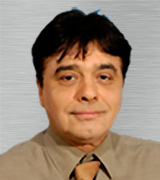
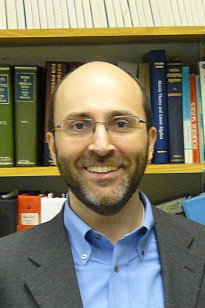
Matthew Gilbert is an Associate Professor in the Department of Electrical and Computer Engineering at the University of Illinois at Urbana-Champaign, where he leads the Quantum Transport Theory Group. His research focuses on theoretical condensed matter physics, emphasizing topological materials, quantum transport, and emergent phenomena in low-dimensional systems for next-generation nanoelectronics and quantum computing applications. Research Focus Gilbert's group investigates topological states of matter, including topological insulators, Weyl semimetals, and topological superconductors, with parallel work on quantum computing architectures. Key methodologies include quantum transport modeling, symmetry analysis, and computational techniques for classifying novel phases of matter. His research integrates fundamental theory with device-oriented applications in nanoelectronics and spintronics. Publication Trends Recent works (2023-2025) demonstrate a strong emphasis on topological superconductivity, Josephson junction phenomena, graphene-based quantum devices, and symmetry-driven phase transitions. Recurring themes include nonreciprocal transport, magnetic confinement effects, and the interplay between topology and superconductivity, with consistent application of quantum field theory and mesoscopic physics frameworks. Laboratory Leadership The Quantum Transport Theory Group develops theoretical tools to elucidate emergent quantum phenomena, collaborating closely with experimentalists to explore topological materials, quantum coherence, and low-dimensional systems. The group's work bridges fundamental physics with practical device innovation.
Dr Florian Ströhl is a Senior Researcher (equivalent to Research Professor) at the Department of Physics and Technology , UiT The Arctic University of Norway in Tromsø. He leads a highly interdisciplinary program that bridges optics, biology and medicine, acting as Principal Investigator on the ERC Starting Grant LiBriNa , the RCN FRIPRO SOLIS project, and the EU MSCA MitoQuant consortium. Education: Ph.D. Biotechnology (2018), University of Cambridge, UK M.Sc. Advanced Optical Technologies with honours & distinction (2014), University of Erlangen-Nuremberg, Germany B.Sc. Medical Engineering with BMBF award (2012), University of Erlangen-Nuremberg, Germany Research Interests: Dr Ströhl’s work revolves around advanced optical system development , spanning the full chain from optical theory and photolithography to instrumentation and biomedical application . Core themes include light-sheet microscopy , mechanosensitive Brillouin nanoscopy , label-free super-resolution techniques , and integrated photonics . Application domains cover dementia research , kidney & liver pathology , cardiac imaging and sustainable aquaculture . Scientific Awards & Funding: 2025 ERC Starting Grant—20 million NOK 2023 RCN Innovation Grant—1 million NOK 2021 RCN FRIPRO Young Research Talent Grant—8 million NOK 2019 EU Horizon 2020 MSCA Grant—2.1 million NOK EMBO Fellow, Nano DTC Fellow, OPTICA Senior Member Grants, Teams & Mentoring: Dr Ströhl currently directs a diverse team of post-docs, PhD candidates and engineers in the Ultrasound, Microwaves and Optics research group. He actively welcomes master’s thesis students and visiting scientists. All projects are supported by Norwegian and European funding frameworks and emphasize open science , cross-disciplinary collaboration and public outreach via video tutorials and popular-science talks.
Onofrio Rosario Battaglia serves as an Associate Professor in the Department of Physics and Chemistry at the University of Palermo, Italy, where he teaches Applied Physics for Biotechnology and Physics for Elementary and Kindergarten Schools. His academic profile centers on innovative physics pedagogy with emphasis on accessible experimental methods. His research expertise spans Physics Education , Science Education , and Educational Technology , specializing in inquiry-based learning frameworks and technology integration. Battaglia develops research-based teaching sequences using smartphone sensors and computer simulations to demystify complex phenomena including surface tension, thermally activated processes, and rotational dynamics. His work targets conceptual understanding across educational levels from primary schools to engineering programs, with notable focus on cluster analysis for evaluating student reasoning patterns and growth mindset development. Analysis of his publication trajectory reveals consistent innovation in making abstract physics tangible through low-cost experimentation, particularly in surface phenomena and thermodynamics education. Recent work integrates pandemic-era teaching adaptations and historical instrument studies, demonstrating responsiveness to evolving educational challenges while maintaining rigorous pedagogical validation. Within the Department of Physics and Chemistry, Battaglia contributes to curriculum development for teacher training programs and STEM laboratory initiatives, supporting the department's mission through evidence-based educational design and cross-disciplinary collaboration in science-mathematics integration projects.
Grazia Cottone is an Associate Professor in the Department of Physics and Chemistry at the University of Palermo, Italy. She holds regular office hours on Mondays and Wednesdays from 3:00 PM to 5:00 PM at Studio 102, Dip. DIFC, Viale delle Scienze, Building 18, first floor. Her research focuses on computational and biophysical studies of protein structure and dynamics, particularly in amorphous matrices and ion channels. Her work employs molecular dynamics simulations, FTIR spectroscopy, and SAXS to investigate protein-matrix interactions, bioprotection mechanisms, and ion channel behavior. Articles from 2025-2022 highlight trends in biophysics, toxin research, and biopreservation. Current studies extend to medical physics applications like diffusion correction in hydrogel dosimeters and structural modeling of neurotoxins. Contact: grazia.cottone@unipa.it | Phone: +39 091 23891713
Karen Kheruntsyan is Professor of Theoretical Physics at the University of Queensland's School of Mathematics and Physics. With a career spanning over 25 years at UQ, he progressed from postdoctoral researcher to full professor, holding key roles including ARC Future Fellow and Chief Investigator in the ARC Centre of Excellence for Quantum-Atom Optics. His research explores fundamental quantum phenomena in ultracold matter, with current focus on quantum thermodynamics, hydrodynamic modeling of quantum gases, and macroscopic quantum entanglement. Professor Kheruntsyan's research interests center on: Quantum thermodynamics of nanoscale heat engines Stochastic hydrodynamic approaches to non-equilibrium quantum dynamics Emergent phenomena in mesoscopic quantum transport Bell inequality tests with ultracold atomic systems His work bridges theoretical physics with experimental quantum science, particularly in atomic Bose-Einstein condensates and degenerate Fermi gases. His recent publications demonstrate strong focus on quantum thermodynamics (50% of 2020-2025 papers) and hydrodynamic modeling of 1D quantum gases (30%), with applications in quantum engine design, entanglement verification, and non-equilibrium dynamics. The research consistently combines mathematical rigor with experimental testability, featuring high-impact results in Physical Review Letters and Nature-family journals. Professor Kheruntsyan actively mentors graduate researchers, with current projects including quantum hydrodynamics and ultracold gas thermodynamics. He has secured continuous ARC funding since 2003, including Discovery Projects and Fellowships totaling over $3M. His laboratory activities involve theoretical and computational work, with strong ties to experimental quantum gas groups worldwide.
Martin Moško serves as an Associate Professor at the Faculty of Mathematics, Physics and Informatics, Comenius University in Bratislava, Slovakia. His academic activities center on experimental physics and materials research within the university's Mlynská dolina campus (Office F2 K4, Phone: 02/602 95 272). His research spans mesoscopic physics , quantum electronics , and advanced materials engineering , with emphasis on: Resistive switching phenomena and memristor applications Gas sensor development with intrinsic memory capabilities Atomic layer deposition of functional thin films Electrical characterization of nanoscale materials Recent publications (2019-2023) reveal a concentrated research trajectory in sensor-device integration and novel deposition techniques, particularly demonstrating expertise in translating material properties into functional electronic components. His work appears consistently in applied physics and materials science journals including Applied Physics Letters and Journal of Applied Physics . Martin Moško actively teaches Mesoscopic Physics and Quantum Electronics (2-FTL-224), conducting both lectures and exercises in room F2-223. His personal webpage ( http://www.dep.fmph.uniba.sk/mambo ) serves as his primary academic portal, though no email contact is publicly listed in the scraped content.
Marcelo Reggio is a Full Professor in the Department of Mechanical Engineering at Polytechnique Montréal, where he has established a significant research career spanning fluid dynamics and computational methods. He is an active member of the Fluid Dynamics Laboratory (LADYF), focusing on cutting-edge simulations of complex fluid phenomena. His educational background includes: Baccalaureate from Chile Master of Applied Science (M.Sc.A.) from Polytechnique Montréal Ph.D. from Polytechnique Montréal Research Focus: Professor Reggio's work centers on Computational Fluid Dynamics (CFD) with specialization in the Lattice Boltzmann Method (LBM). His research addresses fundamental and applied challenges in: Turbomachinery design optimization Wind turbine aerodynamics and icing effects Rarefied gas flows through porous media Multicomponent and multiphase flow modeling River current dynamics This work bridges theoretical fluid mechanics with industrial applications in energy and manufacturing. Publication Trends: Analysis of his 15 most recent articles (2016-2024) reveals dominant themes: advanced LBM techniques for non-equilibrium gas flows, validation of open-source CFD codes, multiphase interactions, and stochastic modeling of porous materials. His methodological innovations consistently target improved accuracy in complex physical scenarios. Academic Supervision: Professor Reggio maintains an active research group, having supervised: 12 doctoral students 20 master's students Student theses frequently explore LBM applications, turbomachinery, and numerical method development. Laboratory Leadership: At the Fluid Dynamics Laboratory (LADYF), he contributes to developing computational frameworks for fluid simulation, emphasizing GPU acceleration and industrial problem-solving.
Mehmet Saadeddin Öztürk is a part-time Assistant Professor at Bogazici University, specializing in biomedical optics, computational imaging, and diagnostic technology development. His research integrates optical imaging, microfluidics, and AI for label-free cancer diagnostics and veterinary applications. He teaches graduate courses in biomedical optics and medical imaging with a translational engineering focus. Education Ph.D. in Biomedical Engineering, Rensselaer Polytechnic Institute (2013-2016) M.Sc. in Manufacturing Engineering, Boston University (2008-2010) B.Sc. in Electronics Engineering, Kadir Has University (2002-2006) Research Focus Dr. Öztürk's work spans four key areas: Biomedical Optics : Development of imaging/diagnostic devices Computational Imaging : Light modeling for scattering environments Biomedical Instrumentation : Hardware/software integration Preclinical/Veterinary Imaging : Small animal studies and gait analysis Publications Overview His 15 most recent publications demonstrate consistent focus on optical tomography innovations, with evolving applications in cancer diagnostics (breast cancer, glioblastoma), veterinary science (feline neuroanatomy), and thermogenetic control systems. Recent works show increased integration of AI and multimodal platforms. Awards and Honors Marie Curie Co-Fund Post-Doctoral Fellowship (EMBL, 2017-2020) Best Doctoral Thesis Award (RPI, 2016) Multiple international travel grants (ESOF 2024, WMIC 2016) Full scholarships for B.Sc. and M.Sc. degrees Professional Activities He serves as project referee for TÜBİTAK and TUSEB funding panels, reviews for leading journals including Science Advances and Nature Communications Biology , and participates in TEKNOFEST technology competitions. Current research includes developing a preclinical multimodal imaging platform for drug monitoring.
Professor Edward Llewellin is a Professor of Volcanology and Director of Research in the Department of Earth Sciences at Durham University, where he has been a faculty member since 2007. He is also a Member of the Institute of Medieval and Early Modern Studies and serves as the Founder and Director of the Action on Natural Disasters Doctoral Training Centre at Durham University. His research focuses on understanding the physical controls on volcanic eruptive style, with particular emphasis on mesoscopic-scale processes within magma. Dr. Llewellin earned his PhD in Earth Sciences from the University of Bristol (1998-2002), where his thesis focused on 'The rheology of bubbly magmas.' Prior to joining Durham University as a Lecturer in Volcanology in 2007, he held NERC Research Fellowships at both the BP Institute, University of Cambridge and the Department of Earth Sciences, University of Durham/Bristol (2003-2008), and was a Lecturer at the University of Bristol (2002-2003). Professor Llewellin's primary research interest is quantifying the physical controls on volcanic eruptive style, with particular focus on the fundamental role played by magmatic processes and properties at the mesoscopic scale (the lengthscale of intra-magmatic bubbles and crystals). His ongoing research includes laboratory and numerical investigation of: the rheology of bubble- and particle-bearing magma, the flow of volcanic gases through permeable magma, and the dynamics of Strombolian eruptions. His work bridges experimental, numerical, and field approaches to understand volcanic processes from the microscale to the volcano scale. Analysis of Professor Llewellin's recent publications reveals a strong focus on magma dynamics, particularly concerning how bubble behavior, magma rheology, and conduit geometry influence volcanic eruptions. His work frequently combines experimental approaches with numerical modeling to investigate processes such as magma flow localization, thermoviscous effects in eruptions, and the transition between explosive and effusive activity. A notable trend in his recent work is the application of novel techniques like muon imaging to understand volcanic conduit structures, as well as crowd-sourced data collection methods for documenting eruptions. Thermo-Fischer Scientific VMSG Award (2021) British Society of Rheology Annual Award (2016) Journal of Volcanology and Geothermal Research Most Cited Author (2003-2007) Professor Llewellin has supervised students including Fakhri Bintang and Saskia Willar-Sheehan (MScR). He has been Principal Investigator on multiple significant research grants, including NERC/NSF Large Grant NE/N018443/1 (2016) on 'Quantifying disequilibrium processes in basaltic volcanism,' NERC Standard Grant NE/N002954/1 (2015) on the same topic, and a Royal Society International Exchanges grant (2013) on 'Fissures, fountains and flows: quantifying the evolution of basaltic eruptions.' His research has been consistently supported by major funding bodies including NERC, NSF, and the Royal Society. As Director of Research in the Department of Earth Sciences and Founder of the Action on Natural Disasters Doctoral Training Centre, Professor Llewellin plays a significant role in shaping research directions and training the next generation of volcanologists. He also serves on the Editorial Board of the Journal of Volcanology and Geothermal Research and is a Peer Review College Member for NERC. Additionally, he manages and develops PubVolc, a volcanology publication database.
Christophe Texier is a Professor at the University of Paris Saclay, affiliated with the Laboratory of Theoretical Physics and Statistical Models, located in Pascal Building No. 530, Paris-Sud University, F-91405 Orsay. He serves as co-director of the international Master 'Physics of Complex Systems' and acts as correspondent for the quantum physics course of the Master 2 iCFP for the University of Paris Saclay. Professor Texier's research spans multiple areas of theoretical physics with a focus on quantum phenomena in disordered and mesoscopic systems. His work encompasses quantum transport in networks of metallic wires, decoherence mechanisms due to electron-electron interactions, topological phase transitions in multichannel Dirac systems, and spectral properties of operators on metric graphs. He has made significant contributions to understanding Wigner-Smith time delays, functional determinants, and the effects of non-trivial geometries on quantum transport phenomena. An analysis of his publication record reveals a consistent research trajectory centered on quantum coherence phenomena in disordered systems. His work shows progression from fundamental studies of decoherence mechanisms to more complex topological aspects of quantum transport. A notable pattern is his use of mathematical physics approaches to solve problems in condensed matter physics, particularly through random matrix theory applications and spectral analysis techniques. His recent publications suggest increasing focus on topological aspects of quantum systems and mathematical formulations of transport phenomena. Professor Texier has been actively involved in teaching across multiple levels, from undergraduate to master's programs. He has taught courses in Quantum Mechanics, Statistical Physics, Mathematics, and Mathematical Tools for Physics. His teaching spans multiple institutions, including University of Paris Saclay and previously at the University of Geneva where he taught Mesoscopic Physics. He has also co-organized magisterial conferences for students in the fundamental physics master's degree program. His research group at the Laboratory of Theoretical Physics and Statistical Models appears to focus on theoretical aspects of quantum transport, with connections to experimental teams studying mesoscopic devices. His work has direct relevance to experimental observations in GaAs/GaAlAs networks, metallic rings, and other mesoscopic structures where quantum coherence effects can be measured.
Jean-Philippe Noyel serves as Associate Professor at ECAM School of Engineering in Lyon, France, within the Materials and Structures department. His academic position focuses on mechanical engineering research with specialization in material behavior under cyclic loading conditions and contact mechanics. His research expertise spans critical mechanical engineering domains: Finite Element Analysis and Computational Modeling Solid and Applied Mechanics Stress Analysis and Fracture Mechanics Damage Mechanics and Material Degradation Dr. Noyel's publication record (2009-2025) reveals a consistent research trajectory centered on rolling contact fatigue mechanisms, where he pioneered mesoscopic modeling approaches to predict crack initiation at grain boundaries. His work integrates crystal anisotropy and microstructural effects into cohesive zone models, advancing predictive capabilities for components like bearings and gears. Concurrently, he has made significant contributions to polymer nanocomposite research, particularly investigating viscoelastic effects in BaTiO3-filled HDPE systems through combined experimental and micromechanical approaches.
Graziano Vernizzi serves as Professor in the Department of Physics and Astronomy at Siena University (formerly Siena College) since 2016, having previously held Associate Professor (2013-2016) and Assistant Professor (2010-2013) positions at the same institution. His academic journey includes a Research Professor role at Northwestern University (2006-2010) and prestigious postdoctoral appointments at the Niels Bohr Institute, University of Oxford, CEA/Saclay, Spinoza Institute, and Northwestern University. His educational background includes: B.S. in Physics, University of Parma, Italy (1995) Ph.D. in Physics, University of Parma, Italy (2000) Vernizzi's research integrates computational and theoretical physics to address nanoscale phenomena, with core interests in Random Matrix Theory, biophysics (RNA/ssDNA structures and membrane theory), soft condensed matter physics, and nanoscale science. He develops computational models to analyze complex systems where theoretical frameworks are essential for interpreting experimental data, driving technological innovation and expanding career opportunities in emerging scientific fields. His methodology frequently bridges mathematical rigor with physical applications across disciplinary boundaries. Analysis of his publication trends reveals consistent interdisciplinary work connecting mathematics, physics, and engineering. Key recurring themes include topological constraints in biological and electronic systems, statistical mechanics approaches to soft matter, and algorithmic innovations for verification problems. His research demonstrates particular strength in applying abstract mathematical concepts like random matrix theory to concrete biophysical and engineering challenges, resulting in publications spanning Physical Review journals, Soft Matter, and specialized engineering conferences. His scientific recognition includes: Trust-Co Excellence Honor for advancing the mission of Siena College (Trustco Bank, 2015) No information regarding student advising, research grants, or dedicated laboratory facilities was provided in the source material. His professional activities focus on computational research, course development in nanoscale physics, and interdisciplinary collaboration without mention of specific research teams or experimental facilities.
François-Xavier Coudert holds dual appointments as Research Director at CNRS and Adjunct Professor at École Normale Supérieure, Paris Sciences et Lettres University, operating at the nexus of theoretical chemistry and materials science. His research program centers on molecular simulation methodologies applied to nanoporous materials , with particular focus on: Fluid adsorption thermodynamics in confined spaces Behavior of nanoconfined phases Metal-organic framework (MOF) characterization Multi-scale modeling from quantum to mesoscopic levels He investigates how confinement alters fundamental physical and chemical processes through integrated computational frameworks. Professor Coudert's work is organized under two research axes: Organometallic Chemistry and Polymerization Catalysis and Computational Chemistry , conducted through the COCP research team where he develops advanced simulation protocols for porous material analysis.
Marian NITA is a Senior Researcher III at the National Institute of Material Physics (NIMP) since 2001, specializing in theoretical physics and computational modeling. He leads research in the Laboratory of Theoretical Physics and Computational Modeling, focusing on quantum transport phenomena and condensed matter physics. Dr. NITA earned his PhD in Theoretical Physics from the University of Physics (1997-2004) with a thesis on "Magnetotransport in two-dimensional mesoscopic systems" under Prof. A. Aldea. Prior to this, he completed his studies at the Faculty of Physics, University of Bucharest (1990-1995), with a diploma titled "Integer Quantum Hall Effect" supervised by Prof. G. Nenciu. His research interests center around quantum phenomena in condensed matter systems, particularly the Quantum Hall Effect and topological invariants, models of mesoscopic systems, and quantum transport in nano and meso systems. His work bridges fundamental quantum physics with potential applications in quantum computation and nanoelectronics. Through his theoretical investigations of graphene structures, molecular systems, and quantum dots, he has made significant contributions to understanding conductance zeros, destructive quantum interference, and edge state phenomena. Dr. NITA's scientific contributions show a consistent focus on quantum transport phenomena, with recent work exploring applications in molecular logic gates, antimicrobial materials, and topological aspects of quantum systems. His interdisciplinary approach connects fundamental quantum physics with potential applications in nanotechnology and materials science. His scientific achievements include numerous publications in prestigious journals such as Physical Review B, Physical Review E, and Journal of Physics: Condensed Matter, demonstrating expertise in both theoretical modeling and practical applications of quantum phenomena. As a research advisor, Dr. NITA has mentored students working on theoretical physics projects, particularly in the areas of quantum transport and condensed matter physics, though specific student names are not listed in the available information. His laboratory work focuses on theoretical modeling of quantum systems, with particular emphasis on developing computational methods for analyzing quantum transport phenomena in nanostructures and exploring the topological properties of condensed matter systems.
Dr. Adélaïde Raguin leads the Computational and Theoretical Biophysics research group within the Institute for Computational Cell Biology at Heinrich Heine University Düsseldorf's Department of Computer Science. She established her independent third-party funded research team in 2021 after postdoctoral work at University of Aberdeen and Heinrich Heine University. Her group develops advanced stochastic simulation methods to investigate mesoscopic biological systems with emphasis on plant polysaccharides, protein synthesis regulation, and cytoskeletal transport. Her primary research interests focus on the dynamics of complex biological polymers , particularly plant cell wall biosynthesis/degradation, starch biogenesis, glycogen granule formation, and protein synthesis regulation. Using computational biophysics approaches, her team bridges theoretical modeling with experimental validation to understand how molecular structure interplays with enzymatic processes in systems like lignocellulose saccharification and starch granule formation. Key methodologies include stochastic simulations of collective transport processes and development of predictive tools for biological systems. The group's publication trends reveal strong focus on plant biomass conversion (40% of recent work), macromolecular dynamics (30%), and translation regulation (20%), with increasing emphasis on software tool development for experimentalists. Recent outputs include the PREDIG web application for saccharification prediction and ExpressInHost for codon optimization. Dr. Raguin actively supervises multiple PhD and Master's students while leading the Stochastic Models of Biological Systems module in the Computer Science Master's program. Her research is supported by major grants from CEPLAS, BioSC, DFG, and BMBF, including the OptiCellu project for sustainable cellulose fiber production and EtransColi for bacterial stress response studies. Her laboratory maintains strong collaborations with experimental groups through the CEPLAS Cluster of Excellence and develops open-source software tools including: ExpressInHost: Codon tuning for recombinant protein expression PREDIG: Web application for plant biomass saccharification modeling Glycogen granule biogenesis simulation tools Whole-translatome protein production models