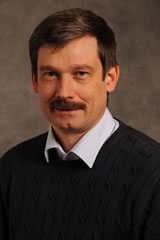
David González is a Professor in the Department of Mechanical Engineering at the University of Zaragoza, Spain. His research focuses on computational mechanics, numerical methods, and data-driven modeling techniques. Ph.D. in Applied Mathematics (2004), University of Zaragoza Research Interests: Computational Mechanics and Meshless Methods Proper Generalized Decomposition (PGD) and Scientific Machine Learning Real-time simulation and Computational Surgery Numerical simulation of forming processes and No-Newtonian Fluids Scientific Collaborations: Collaborated with Prof. E. Cueto, Prof. M. Doblaré, and Prof. I. Alfaro on advised theses.
Renato Vacondio is an Assistant Professor (RTD-b) in the Department of Engineering and Architecture at the University of Parma, where he also obtained his PhD in Civil Engineering. His work focuses on advanced numerical modeling for flood risk management, particularly using meshless Lagrangian methods such as Smoothed Particle Hydrodynamics (SPH). His research interests lie at the intersection of computational fluid dynamics , flood risk modeling , and hydraulic infrastructure protection . He develops and applies SPH-based solvers (SPHysics, DualSPHysics) to simulate rapidly varying free-surface flows, contributing significantly to both academic and industrial applications. He is deeply involved in the international SPH community through the SPHERIC Steering Committee and as editor of the SPHERIC newsletter. The recent publications reflect a strong trend toward high-fidelity simulation of flood events , integration of data-driven forecasting models , and development of advanced numerical schemes for non-hydrostatic and shallow water flows. His work increasingly emphasizes real-time applications and infrastructure resilience. Scientific Awards: SIR (Scientific Independence of young Researchers) Research Fellow (2014) Research Leadership and Supervision: Dr. Vacondio has served as Principal Investigator on multiple competitive research projects, including PARFLOOD (MIUR-SIR, €383k), PGRA (€1.1M), and Andritz-SPH (€102k), with total funding exceeding €1.4 million. He has supervised PhD students and postdoctoral researchers across projects such as PARFLOOD and RESILIENCE. He is also a member of the academic board of the PhD school in Civil Engineering and Architecture at the University of Parma. Professional Affiliations and Editorial Roles: He is a member of the SPHERIC Steering Committee and has served as Guest Editor for a special issue on SPH methods in Computers & Fluids . He has delivered invited keynotes at international institutions including Imperial College London and the University of Stuttgart.
Eduardo Divo is a Professor of Mechanical Engineering and currently serves as the Vice Provost for Faculty Affairs at Embry-Riddle Aeronautical University, within the College of Engineering. He previously held leadership roles as Chair of the Mechanical Engineering Department and Senior Associate Dean of the College of Engineering. His academic home is the Department of Mechanical Engineering at the Daytona Beach campus. Ph.D. in Mechanical Engineering, University of Central Florida, 1998 M.S. in Mechanical Engineering, University of Central Florida, 1996 B.S. in Statistical Control Analyst, Monterrey Institute of Technology (ITESM), 1993 Mechanical Engineering Degree, Central Technological University (UNITEC), Venezuela, 1992 Mechanics Technical Degree, UNITEC, 1990 Informatics Technical Degree, UNITEC, 1990 Dr. Divo's research is at the intersection of computational mechanics and biomedical engineering. He specializes in developing meshless methods and boundary element methods for automated numerical solutions in fluid dynamics, heat transfer, porosity, and elasticity. His work has significant applications in cardiovascular hemodynamics , particularly in modeling Fontan circulation, prosthetic heart valves, and left ventricular assist devices (LVADs). His research enables patient-specific simulations and optimization of medical device implantation. His recent publications show a strong trend in biofluid mechanics and biomedical device modeling , combining in vitro experiments with in silico simulations. These works span computational thermal sciences, fluid-structure interaction, and multi-scale optimization, reflecting a multidisciplinary approach to solving complex biomedical engineering challenges. Scientific Awards: 2001 Pi Tau Sigma UCF Professor of the Year 2007 UCF CECS Teacher of the Year 2009 E-Week Central Florida Engineer of the Year 2009 UCF CECS Distinguished Researcher Award 2008 & 2009 State of Florida University System Teaching and Research Awards 2014 National Education Award, Great Minds in STEM (HENAAC) 2015 Distinguished Researcher Award 2023 Distinguished Alumni Dr. Divo has secured over $5 million in research funding from federal, state, and private sources, including grants for mitigating microgravity deconditioning using resistive exercise. He has supervised 17 M.S. theses and 10 Ph.D. dissertations , contributing significantly to graduate education. He teaches core courses such as Fluid Mechanics , Thermodynamics , and Biofluid Mechanics , reflecting his broad expertise. He is also actively involved in professional service, including editorial duties for the Journal of Engineering Analysis with Boundary Elements . Dr. Divo is affiliated with several research teams and labs focused on computational modeling in biomedical applications. His collaborations include researchers from medical institutions and engineering teams working on cardiovascular devices. His lab integrates numerical simulation, benchtop experimentation, and clinical data to advance bioengineering solutions.
Flavio SARTORETTO is an Associate Professor in Scientific Computing at Ca' Foscari University of Venice. He holds a Mathematics degree from the University of Padua and has held academic positions at University of Padua (1982-1992) and Sapienza University of Rome (1992-1993) before joining Ca' Foscari in 1993. His research focuses on numerical analysis, computational methods, and interdisciplinary applications including environmental modeling, cognitive processes, and assistive technologies. Key research areas include numerical solutions of PDEs, meshless methods, EEG signal analysis, and e-learning tools for impaired individuals. He has participated in major research projects such as EC Network (1992-1995), PRIN initiatives (1997-2010), and contributed to software development for geomechanical models and air quality systems. His work spans computational fluid dynamics, robotics applications, and cognitive studies. Recent publications highlight advancements in mesh refinement strategies, robotic assistive devices, and spatial cognition research. He has reviewed for prestigious journals and served in academic committees for state examinations and international conferences. He maintains active involvement in academic service, including roles in evaluation committees and contributions to professional societies like SIAM and CICAP.
Stefan Schimanko is a Researcher affiliated with the Numerical Research Department at the Faculty of Mathematics and Geoinformation , Vienna University of Technology (TU Wien). His primary focus is on numerical analysis and computational methods for engineering applications, particularly in the areas of adaptive finite element methods (FEM), boundary element methods (BEM), and isogeometric analysis (IGA). He holds a Dipl.-Ing. (engineering diploma), Dr.techn. (doctorate in technical sciences), and BSc degree. His research emphasizes improving computational efficiency and accuracy in adaptive algorithms, with a focus on nonlinear operators, iterative solvers, and optimal complexity analysis. Recent contributions include studies on IGABEM stability in MATLAB, quasi-optimal adaptive algorithms, and preconditioned conjugate gradient (PCG) solvers for BEM. Collaborations with renowned researchers like Dirk Praetorius and Gregor Gantner highlight his active role in advancing adaptive numerical methods. Key achievements include demonstrating the quasi-optimal computational costs of adaptive FEM/BEM and developing localized smoothness control for isogeometric BEM. His work bridges theoretical numerical analysis with practical engineering applications, ensuring methods are both mathematically rigorous and computationally feasible. Education: BSc, Dipl.-Ing., Dr.techn. (Technical Sciences) Labs/Teams: Part of TU Wien's Numerical Research Department and Network Lab projects
Dr Duncan Borman is an Associate Professor at the School of Civil Engineering, University of Leeds . His expertise spans Computational Fluid Dynamics (CFD) , mathematical modeling , and multiphase flow with applications in environmental, energy, and industrial systems. Active in multidisciplinary research across the University, UK, and internationally Programme Leader for Civil and Structural Engineering undergraduate programme Faculty of Engineering Digital and Blended Learning Champion Research Interests : Dr Borman focuses on modeling complex multiphase flows involving chemical/biological processes (e.g., bioreactors, fuel cells, combustion) and moving boundaries (e.g., air-water interfaces, crystallization). His work combines in-house numerical code development with commercial solvers. Key projects: Algal growth/wastewater modeling for energy efficiency Crystallization of actinide salts using impinging droplets Alternative fuel combustion modeling for aviation emissions Development of SPH/meshless methods for inverse problems Collaborations : Works with the cross-faculty Centre for Computational Fluid Dynamics and the Institute for Public Health and Environmental Engineering (IPHEE). Engaged in PEM/SOFC fuel cell research with experimental facilities. Education Initiatives : Leads the ESTEEM1 project for interactive engineering mathematics education and chairs the Faculty of Engineering's Blended Learning committee. Scientific Awards : EPSRC Research Internship EPSRC and National Nuclear Laboratory funding University of Leeds Education Fellowship
Miloš Ivanović serves as an Assistant Professor at the Institute of Mathematics and Informatics within the Faculty of Natural Sciences and Mathematics at the University of Kragujevac. His academic career is deeply rooted in computer science and computational mathematics, with research spanning multiple interdisciplinary domains that bridge theoretical computer science with practical applications in engineering, physics, and biology. Dr. Ivanović earned his Doctorate in Computer Science from the Faculty of Natural Sciences and Mathematics (PMF) at the University of Kragujevac, establishing a foundation for his subsequent research career focused on computational methods and high-performance computing. His research interests represent a sophisticated convergence of computational theory and practical applications. Ivanović specializes in advanced computing paradigms including grid computing, GPGPU computing, and cloud-based high-performance computing systems. His work in fluid modeling employs meshless methods and particle dynamics approaches, particularly SPH and DPD techniques applied to microfluidic systems. The breadth of his research extends from theoretical mathematics (graph theory and chemical indices) to practical applications in hydrology, biomedical engineering, and nuclear physics. His interdisciplinary approach enables innovative solutions across diverse scientific domains that require intensive computational resources. The collection of his publications reveals a consistent trajectory of research focused on computational methods with applications spanning multiple scientific disciplines. His work demonstrates strong expertise in parallel computing architectures and their application to complex scientific problems. The publications show a progression from fundamental computational mathematics toward increasingly complex multi-domain applications, particularly in biomedical and environmental systems. His research consistently addresses the challenge of implementing computationally intensive methods on distributed and parallel architectures to solve real-world scientific problems. Throughout his career, Ivanović has participated in numerous national and European research and infrastructure projects, including FP6, FP7, and Tempus initiatives. His collaborative approach is evident in the diverse range of co-authors spanning multiple institutions and disciplines, reflecting his ability to bridge computational science with domain-specific applications. Dr. Ivanović is affiliated with the Group for Mathematical Modeling and Computer Simulations, which develops computational solutions across various domains including fluid dynamics, biomedical applications, and environmental modeling. The group's work encompasses software development for simulation purposes, as evidenced by projects like the SPH07 software package and various specialized simulation tools for engineering and biomedical applications.
Tolga Ulaş Gürbüz serves as Associate Professor in the Computer Engineering Department at Gaziantep University's Faculty of Engineering, Turkey. Appointed as Doctor Lecturer in 2015 and promoted to Associate Professor in 2021, he previously held roles as Research Engineer at Mitos Medikal Teknolojiler (2010-2015) and IT Specialist at the Ministry of Customs and Trade (2002-2010). His academic leadership includes Department Chairman tenure from 2016-2018. Education: Ph.D. in Satellite Communications and Remote Sensing, Istanbul Technical University (2007-2014) M.Sc. in Electronics and Communication Engineering, Istanbul Technical University (2001-2007) B.Sc. in Electrical and Electronics Engineering, Yeditepe University (1997-2001, Full Scholarship) Research Focus: Dr. Gürbüz specializes in computational electromagnetic methods for scattering analysis and imaging applications. His work develops semianalytical, meshless, and series solutions for electromagnetic wave interactions with complex structures—particularly multilayer cylindrical geometries. Key application areas include microwave breast cancer imaging using realistic anatomical models and subsurface detection of buried objects beneath rough surfaces. Publication Trends: His 12 journal publications (2014-2025) reveal consistent advancement in electromagnetic scattering theory, with increasing sophistication in handling complex material properties (ferrites, dispersive media) and geometries. Recent work emphasizes medical imaging applications, evidenced by the 2025 IEEE Antennas and Wireless Propagation Letters paper on eigenfunction expansion methods for ferrite-layered cylinders. Professional Activities: An IEEE member since 2012, he conducted TÜBİTAK 2219-funded research at Duke University on microwave breast cancer imaging. His teaching portfolio includes Electromagnetics II, Computer Programming, and Physics courses for engineering students since 2015.
Kürsat Yurt, M.Sc., serves as a Research Associate at the Institute for Rotorcraft and Vertical Flight, Technical University of Munich (TUM), based at Boltzmannstr. 15, 85748 Garching, Germany. His role encompasses advanced computational research in vertical flight systems, thesis supervision, and participation in multiple national and international projects targeting next-generation rotorcraft technologies and urban air mobility solutions. Yurt's research spans High Performance Computing, Performance Portable Programming, Rotor and Wake Aerodynamics, and Aeroelasticity. He develops GPU-accelerated meshless methods for large eddy simulations, creates real-time guidance algorithms for urban obstacle avoidance, and investigates morphing airfoil dynamics through fluid-structure interaction frameworks. His work bridges computational mechanics with practical rotorcraft design challenges, emphasizing energy efficiency and flight safety in complex environments. His 2022-2025 publications reveal a cohesive trajectory in computational rotorcraft aerodynamics, featuring innovations in meshless GPU simulations, partitioned coupling techniques, and urban air mobility guidance systems. These works integrate computational fluid dynamics, high-performance computing, and aerospace engineering to address vertical flight challenges including wake modeling, morphing rotor blades, and rotor-airframe interactions. Yurt actively supervises Master's and Bachelor's theses on vortex particle methods, rotorcraft simulation frameworks, and morphing rotor technologies. His research is funded through key projects: ENGEL - Energy Efficient Flight Guidance VARI-SPEED II ARCTIS LaBouR complemented by completed initiatives like InteReSt II and TEMA-UAV. The Institute provides critical infrastructure for his work through specialized facilities: Whirl Tower for rotor dynamics testing Flight Simulator Facilities for pilot-in-loop studies Unmanned Rotorcraft Testbed (AREA) High-performance GPU/CPU clusters for computational workloads These resources enable experimental validation of his computational models and support the institute's mission in vertical flight innovation.
Andreas Almqvist is a Professor in Machine Elements at Luleå University of Technology (LTU), working within the Department of Engineering Sciences and Mathematics. He serves as the director and operations manager of the Center for Sports and Performance Technology (SPORTC) and is actively involved in research and teaching related to computational tribology. Almqvist has been affiliated with LTU since completing his Master's degree in 2001, progressing through academic ranks to his current professorship. Almqvist completed his Master of Science in Engineering at LTU in December 2001 and defended his PhD thesis in September 2006 titled 'On the Effects of Surface Roughness in Lubrication.' Following a 2-year postdoctoral position with Shell Global Solutions in England under the Marie Curie Transfer of Knowledge program (2007-2008), he returned to LTU in January 2009. He became Docent in November 2010, was appointed Associate Professor in January 2012, and was promoted to Professor in Machine Elements in May 2017. His research focuses on computational tribology, with particular emphasis on multiphysics and multiscale modeling and simulation of continuum mechanical problems in tribology and sports technology. His work spans contact mechanics, flows in thin gaps, and friction phenomena, with recent applications to skiing performance. Since fall 2021, he has been collaborating with the Swedish Olympic Committee's 'Olympisk Offensiv' research program alongside other prominent Swedish sports scientists. His research approach integrates applied mathematics with practical engineering challenges, often involving collaborations across departments including Fluid Mechanics, Mathematics, and Machine Learning. Analysis of Almqvist's recent publications reveals a strong trend toward applying tribological principles to winter sports performance, particularly skiing. His work bridges fundamental computational methods with practical applications, showing increasing interdisciplinary collaboration across engineering disciplines, sports science, and materials science. The research demonstrates both theoretical advances in modeling techniques and practical applications for performance enhancement in Olympic sports. ERC Grant Recipient Marie Curie Transfer of Knowledge Program Participant VR (Swedish Research Council) Grant Recipient for multiple projects including 'New Concepts in Thin Film Flow Modelling' (DNR 2014-4894) and 'Multiscale Topological Optimization for Lower Friction, Less Wear and Leakage' (DNR 2019-04293) Almqvist serves as Editor-in-Chief for 'The Proceedings of the IMechE Part J - Journal of Engineering Tribology' since 2019 and has been involved in numerous research projects funded by both academic and industrial partners. He has supervised student projects in collaboration with academic and industrial partners and has secured significant research funding from the Swedish Research Council. His educational leadership extends to serving as program director for the Engineering Physics and Electrical Engineering program at LTU. As director of the Center for Sports and Performance Technology (SPORTC), Almqvist leads the Ski and Snow Lab which focuses on physics at different scales related to friction in skiing. The center represents a strategic initiative at LTU to bridge engineering science with sports performance, creating a unique interdisciplinary research environment that brings together expertise from multiple departments including Machine Elements, Fluid Mechanics, and Mathematics.
Professor Oleg Davydov holds a Professorship for Numerical Analysis at the Department of Mathematics, University of Giessen, Germany. His research focuses on developing advanced numerical methods with strong theoretical foundations and practical applications. He maintains an active research program with numerous recent publications and international collaborations. Position: Professor of Numerical Analysis Institution: University of Giessen, Department of Mathematics Contact: Heinrich-Buff-Ring 44, 35392 Giessen, HRZ Room 117 Email: oleg.davydov@math.uni-giessen.de Homepage: https://oleg-davydov.de/ Professor Davydov's research interests center around meshless numerical methods, approximation theory, and computational mathematics. His primary focus areas include: Meshless Finite Difference Method - Developing robust meshless techniques that avoid the need for structured grids Finite Element Method - Particularly Bernstein-Bézier finite elements and specialized approaches for complex geometries Scattered Data Fitting - Creating efficient algorithms for approximating data on irregular domains Approximation Theory - Investigating theoretical properties of splines, radial basis functions, and other approximation tools His research has resulted in several software packages including mFDlab (Meshless Finite Difference Method), BBFEM (Bernstein-Bézier Finite Elements), and TSFIT (Two-Stage Scattered Data Fitting), demonstrating the practical implementation of his theoretical work. Analysis of Professor Davydov's recent publications shows a consistent focus on improving meshless methods, particularly in stencil selection, error analysis, and applications to complex problems. His work spans both theoretical developments (like error bounds and optimal approximation orders) and practical implementations (for fluid dynamics, manifold learning, and interface problems). A notable trend is the increasing sophistication of adaptive techniques and the handling of challenging geometries. Professor Davydov has supervised several doctoral students to completion, including: Gaelle Andriamaro Fabien Rabarison Abid Saeed Wee Ping Yeo His research group appears to maintain active collaborations with institutions worldwide, as evidenced by his extensive co-authorship network. The group focuses on developing both theoretical foundations and practical implementations of numerical methods, with particular attention to problems involving irregular domains, singularities, and complex geometries. Students in his group would gain experience in both theoretical analysis and software development for numerical methods.
Whady Felipe Florez Escobar is a Research Professor at Pontifical Bolivarian University, coordinating the Energy and Thermodynamics Group (GET) and Mathematical Process Optimization group (ÓPTIMO). His work spans numerical methods, thermoelectric energy conversion, and biomedical applications with contributions to UN Sustainable Development Goals 7 and 9. Research Interests: Specializing in meshless methods using radial basis functions, his research addresses thermoelectric generators under mismatched thermal conditions, plasmonic effects in gold nanorods for photothermal therapy, and hydrogen energy systems. His fingerprint analysis shows strong focus on Two Dimensional Engineering (100%), Radial Basis Function Engineering (95%), and Boundary Element Method (61%). Publication Trends: Recent work (2024-2025) demonstrates interdisciplinary convergence between energy engineering and biomedical applications, featuring advanced numerical techniques for thermoelectric systems and cancer treatment. A clear shift toward industrial implementation is evident through partnerships with EPM utility company. Advising and Grants: Advises students including Daniel Sanín (thermoelectric generators) and R.C. Gómez Araque (photothermal therapy software). Current grants include: HYEPM2: Low-emission hydrogen production for EPM group (2025) UHP: Ultrasound-based testing for hydrogen pipelines (2025) PTARH2: Green hydrogen applications (2024) Photothermal therapy for gastric adenocarcinoma (2022-2024) Research Infrastructure: Leads GET and ÓPTIMO groups with active collaborations across 10 projects since 2020, focusing on numerical modeling for energy systems and industrial optimization.