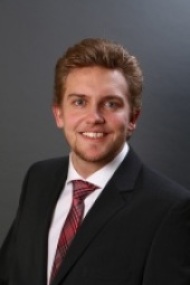
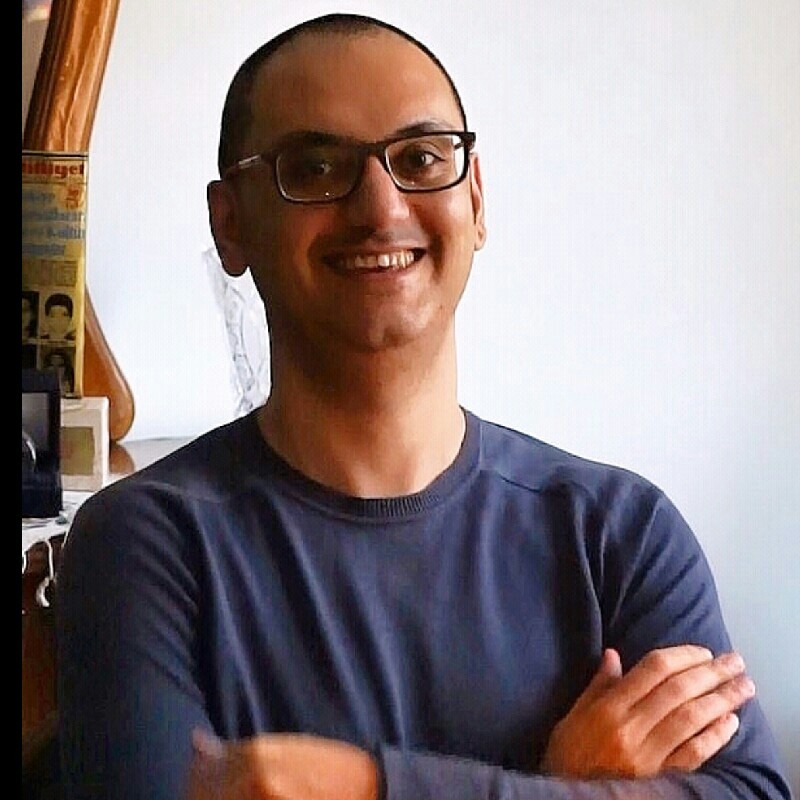
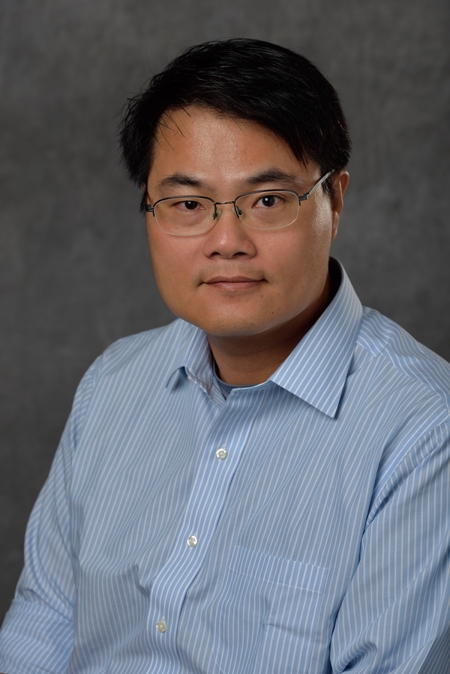
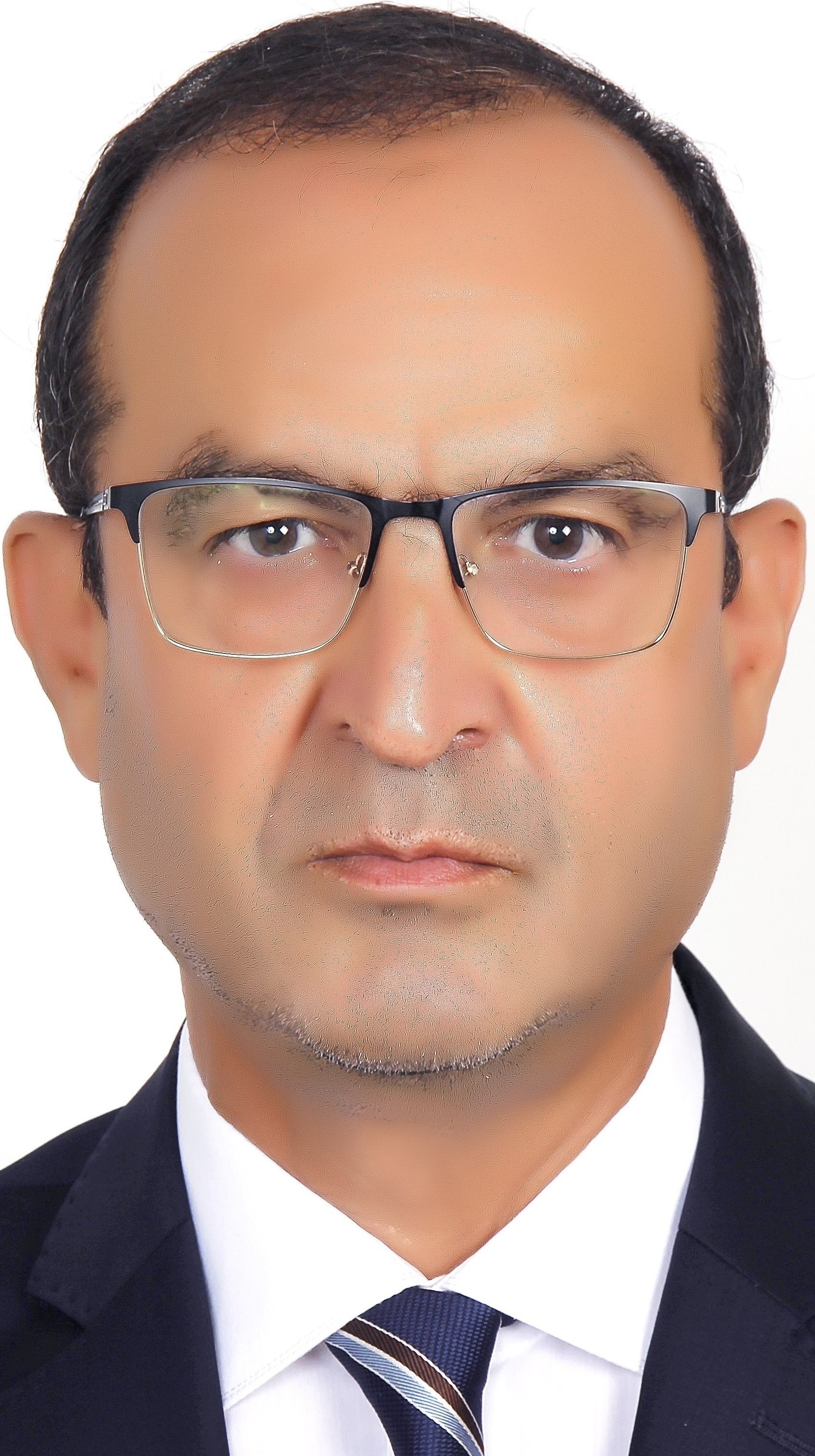
Benedek Plosz is a Professor at Oslo Metropolitan University, affiliated with the Faculty of Technology, Art and Design and the Department of Built Environment . His research focuses on environmental engineering, biotechnology, and computational modeling, particularly in water systems and wastewater treatment. His work includes advancements in digital twin applications for water resource recovery, N2O emission modeling , and antimicrobial resistance in biological wastewater systems. Recent publications highlight collaborations with researchers like Vince Bakos and Yuge Qiu, with studies appearing in Water Research and Chemical Engineering Journal . The Smart Water Engineering Group (SWING) drives his research, integrating machine learning and CFD modeling to optimize settling tanks and aeration systems. He has presented at international conferences such as IWA WRRmod and WATERMATEX, addressing topics like biofilm dynamics and gas transfer mechanisms. Benedek Plosz can be reached at benedek.plosz@oslomet.no . No scientific awards are listed in the provided data.
Hariswaran Sitaraman is a Researcher IV in the Computational Science Center at the National Renewable Energy Laboratory (NREL), specializing in computational modeling of reacting flows and numerical method development for high-performance computing architectures. His academic background includes: Bachelor of Aerospace Engineering from the Indian Institute of Technology Madras Master of Aerospace Engineering from The University of Texas at Austin PhD in Aerospace Engineering from The University of Texas at Austin Dr. Sitaraman's research centers on multiphase reacting flow simulations for biochemical conversion processes, adaptive mesh refinement algorithms, and continuum-Lagrangian solvers for granular flows. His work bridges computational fluid dynamics, reacting flow physics, and advanced numerical techniques with direct applications in energy decarbonization and sustainable manufacturing. Analysis of his 2025 publications reveals strong emphasis on plasma-assisted combustion for ammonia-air systems, high-fidelity simulation of industrial processes like steelmaking, and adaptive computing frameworks for scale-up challenges. These works demonstrate integration of computational science with energy transition technologies across power generation, transportation, and industrial sectors. Scientific awards: None documented in source material. Advising and grant activities are not specified in the provided information, though his collaborative network indicates active engagement with energy research initiatives. As a core member of NREL's Computational Science Center, Dr. Sitaraman contributes to national efforts in advancing computational methods for next-generation energy systems through high-performance computing infrastructure.
Dr. Malte Winckler is a research-active academic in the Faculty of Mathematics at the University of Duisburg-Essen, Germany. His work centers on the numerical analysis of partial differential equations with applications in superconductivity and electromagnetic field modeling. His research focuses on numerical analysis of PDEs , particularly Maxwell's equations , variational inequalities , and shape optimization . He applies advanced mathematical techniques to model physical phenomena in type-II superconductors , including Bean's critical-state model and H(curl)-elliptic systems. His methodological expertise lies in finite element methods, adaptive approximation schemes, and optimal control. The recent publications show a consistent focus on developing and analyzing numerical schemes for non-smooth and nonlinear PDEs arising in superconductivity. Key themes include adaptive edge elements , fully discrete approximations , and shape optimization under physical constraints . These works appear in top-tier applied mathematics journals such as SIAM Journal on Numerical Analysis and Computational Optimization and Applications . Dr. Winckler is involved in the DFG SPP 1962 Priority Programme as a contributor to project 22 on non-smooth distributed parameter systems. He teaches courses such as Introduction to Numerical Methods and collaborates closely with Prof. Dr. Irwin Yousept. He has no listed scientific awards in the provided text. He maintains active research profiles on Google Scholar , ResearchGate , ORCID , and GitLab , indicating engagement with the broader scientific community. He advises no students listed in the material and is not indicated as part-time, retired, or former staff.
Gianmarco Cherchi is a Tenure-Track Assistant Professor and Computer Science Researcher in the Department of Mathematics and Computer Science at the University of Cagliari, Italy, where he also completed his PhD. He teaches courses in Data Visualization and Web Programming at the undergraduate level. His research lies at the intersection of Computer Graphics and Geometry Processing, with a strong focus on surface and volumetric mesh generation, optimization, digital fabrication, and polycube-based modeling. His work combines algorithmic innovation with practical applications in fabrication, visualization, and interactive systems. The recent publications highlight a consistent trend in advanced hexahedral meshing techniques (e.g., HexBox, VOLMAP), robust geometric computation (e.g., mesh booleans), and interactive tools (e.g., ProtoSketchAR, Py3DViewer). His research spans theoretical algorithm development, benchmark creation, and applied systems for VR/AR and simulation. His scientific accolades include the Young Investigator Award 2024 from the Shape Modeling International Organization, and prior Best Thesis Awards from the Eurographics Italy Association for both his M.Sc. and Ph.D. work. Cherchi actively collaborates with researchers such as Marco Livesu, Riccardo Scateni, and others, contributing to major surveys and state-of-the-art methods in hexahedral meshing. His work is supported by publications in top venues like ACM Transactions on Graphics (SIGGRAPH), Computer Graphics Forum (Eurographics), and IEEE VR. He has also developed practical software tools like Py3DViewer for geometry processing prototyping. He leads research in digital fabrication pipelines, as evidenced by publications on polycube decomposition for manufacturing and automated flat pattern generation. His lab work involves developing interactive and robust systems for 3D modeling and analysis.
Asst. Prof. Emre Kara is a faculty member at Gaziantep University Faculty of Aviation and Aeronautical Sciences , Department of Aeronautical and Aerospace Engineering. With a Ph.D. in Mechanical Engineering (2015), he specializes in Computational Fluid Dynamics (CFD) , Synthetic Jet Actuators , and Coanda Effect-based Thrust Vectoring Systems . His work bridges aerospace engineering and biomedical applications through microfluidic experimental setups for glaucoma drainage devices. Ph.D. & M.Sc. in Mechanical Engineering (Gaziantep University) B.Sc. in Mechanical Engineering (Middle East Technical University) Research focuses on active flow control for aerodynamic efficiency and CFD-driven biomedical device design . His 2025 parametric SJA study and 2023 Coanda optimization paper highlight his methodology. Recent projects include portable test rigs for EDF propulsion and glaucoma implant evaluation . 18 journal articles and 29 conference proceedings demonstrate technical depth. Recipient of TÜBİTAK Yayın Teşvik Ödülü (2024, 2022, 2011). Supervised M.Sc. theses on synthetic jet CFD , hydrogen recovery , and glaucoma device modeling . Courses taught span Aerodynamics , Viscous Flow , and Computational Fluid Dynamics at undergraduate and graduate levels.
Shravan Veerapaneni is a Professor in the Department of Mathematics at the University of Michigan, within the College of Literature, Science, and the Arts. His research focuses on developing large-scale computational tools for solving differential and integral equations on complex moving geometries that arise in engineering and biophysics. His work spans multiple interdisciplinary areas connecting mathematics, computational science, and applied physics. Education: B.S. from Indian Institute of Technology (2003), Ph.D. from University of Pennsylvania (2008) Previous Position: Research Scientist at Courant Institute of Mathematical Sciences (NYU), 2008-2011 Teaching: Courses include Math 671, Math 371 (Numerical Methods for Engineers), and Math 156 (Applied Honors Calculus II) Professor Veerapaneni's research interests encompass scientific computing, fast algorithms, potential theory, complex fluids, microfluidics, soft-matter, and biomechanics. His core application areas include biomembrane mechanics, blood flow modeling, cilia-driven flows, and microfluidic-chip design. More recently, he has expanded his research to include scalable solvers and machine learning techniques for autonomous vehicle mobility in off-road settings. His work demonstrates a strong emphasis on developing high-order accurate numerical methods with practical applications in biomedical engineering and fluid dynamics. His publications reveal a consistent focus on boundary integral methods, Stokes flow simulations, and optimization problems in complex geometries. The research shows progression from fundamental mathematical methods to increasingly complex applications in biophysics and engineering. His work on vesicle dynamics, microswimmers, and particulate suspensions demonstrates expertise in computational fluid dynamics at microscales. NSF CAREER Award (2015) for project 'Fast Algorithms for Particulate Flows' Professor Veerapaneni has developed computational frameworks for simulating complex fluid-structure interactions, with applications ranging from biological systems (vesicles, cilia) to engineering problems (microfluidic chips, autonomous vehicles). His group has produced significant software contributions including visualization tools for fluid dynamics simulations, as evidenced by the animations of vesicle flows on his website. His collaborative work spans mathematics, engineering, and computer science departments, reflecting the interdisciplinary nature of his research.
Claes Eskilsson is a researcher at Chalmers University of Technology , specifically in the Department of Mechanics and Maritime Sciences under the Marine Technology division. His work focuses on computational fluid dynamics (CFD) , wave energy converters , and mooring system dynamics for marine applications. Research Projects: MIDWEST: Multi-fidelity decision tools for wave energy systems (2015-2018) Assessment of tidal turbine noise pollution (2015-2016) Including nonlinear/viscous effects in wave energy modeling (2015-2017) Forankringslösninger for wave energy devices (2015-2017) SDWED: Structural design of wave energy devices (2013-2014) His research interests include: Computational modeling of marine systems Wave energy converter hydrodynamics High-order numerical methods (spectral/hp elements, Discontinuous Galerkin) Cavitation and erosion analysis in marine flows Multiphysics modeling of floating structures The publications span topics in wave energy converter dynamics, mooring system analysis, and CFD methodology. Key trends include 2013-2015 developments in spectral/hp element methods for coastal engineering, and 2015-2020 advancements in multi-fidelity modeling of ocean energy systems. He has collaborated extensively with institutions such as Royal Institute of Technology (KTH) , Lund University , and Technical University of Denmark (DTU) , with funding from agencies including the Swedish Energy Agency and Danish Energy Agency .
Hui-Chia Yu is an Associate Professor in the Department of Computational Mathematics, Science and Engineering at Michigan State University. Their research focuses on computational modeling of electrochemical systems, particularly battery electrodes, using advanced numerical methods like the smoothed boundary method and phase-field simulations. Recent work involves simulating electrode microstructures to analyze electrochemical impedance, phase transformations, and transport dynamics. Applications include optimizing battery performance and understanding wetting behavior in ceramic-metal interfaces. Scientific awards: None listed. Contact: hcy@msu.edu
Professor Ahmet İhsan Kutlar is a distinguished academic in the Department of Mechanical Engineering at Gaziantep University's Faculty of Engineering, Turkey, with a career spanning over 30 years. His expertise lies in Fluid Mechanics, Aerodynamics, Thermodynamics , and Computational Fluid Dynamics (CFD) , alongside significant contributions to biomedical engineering through glaucoma drainage device research. Academic Roles: Professor (2018–present), Associate Professor (2012–2018), Assistant Professor (1993–2012), Research Assistant (1987–1993). Education: Doctorate in Mechanical Engineering (Thermofluids) from the University of Liverpool (1993), Master's and Bachelor's from Middle East Technical University. Kutlar's research integrates CFD simulations with experimental work, focusing on compressible flows, multiphase systems, and biomedical applications. His projects include glaucoma valve analysis and renewable energy thermodynamic studies. The 15 most recent articles highlight his work in Biomedical Engineering (e.g., glaucoma device testing), Computational Fluid Dynamics (adaptive solvers), and Thermodynamic Systems (power plants, energy recovery). These publications reflect a multidisciplinary approach combining theoretical and experimental methods. Kutlar has led and participated in TÜBİTAK and TEKMER projects, and contributed to academic leadership as Vice Dean and Faculty Board Member. He has supervised numerous PhD and Master's theses, emphasizing innovative engineering education and applied research .
Nicholas Morse is a Postdoctoral Researcher in the Engineering Mechanics Department at KTH Royal Institute of Technology in Stockholm, Sweden. He joined KTH in May 2025 and is supervised by Professors Philipp Schlatter (FAU Erlangen, KTH), Ramis Örlü (OsloMet, KTH), and Mihai Mihaescu (KTH). Dr. Morse earned his PhD in Aerospace Engineering & Mechanics from the University of Minnesota in 2023 under Professor Krishnan Mahesh. Prior to KTH, he served as a Senior Scientist at the Research Center Pharmaceutical Engineering in Graz, Austria (2023-2025), where he led simulation strategy for an EU Horizon 2020 project and developed computational methods for droplet breakup analysis. Nicholas Morse's research centers on: Curvature and rotational effects on turbulent flows Turbulent boundary layers on curved surfaces and spinning cones Eccentric Taylor-Couette-Poiseuille flow transition High-fidelity simulation of complex turbulent flows using DNS and LES His technical expertise spans: High-performance computing infrastructure Direct numerical and large-eddy simulation methodologies Adaptive mesh refinement algorithms Heterogeneous (GPU) computing implementations Multiphase flow modeling Academic recognition includes: John A. & Jane Dunning Copper Fellowship for Aerospace Engineering & Mechanics (2019) Donald & Shirley Gorence Scholarship (2018) Robert H. & Marjorie F. Jewitt Fund Scholarship (2017) Dr. Morse has extensive experience in computational fluid dynamics, having conducted large-scale simulations (>10,000 processors) at the University of Minnesota and developed the Multi-Element Wing Generator MATLAB application for Formula SAE aerodynamics design. His work bridges theoretical fluid mechanics with practical engineering applications across aerospace and pharmaceutical domains.
Frans Pretorius is a South African-Canadian physicist specializing in computational physics and numerical relativity. He currently serves as a professor at Princeton University and directs the Princeton Gravity Initiative , focusing on gravitational wave simulations and black hole dynamics. Education : B.Sc. in Computer Engineering (University of Victoria, 1996) M.Sc. in Physics (University of Victoria, 1999) Ph.D. in Physics (University of British Columbia, 2002) His research centers on numerical simulations of gravitational collapse, black hole mergers, and high-energy collisions, contributing foundational work to gravitational wave detection. He has developed adaptive mesh refinement algorithms for solving coupled elliptic-hyperbolic systems in general relativity. His publications focus on black hole formation in particle accelerators, evaporation of 2D black holes, and high-energy black hole collisions, with keywords spanning numerical relativity, gravitational radiation, and quantum gravity effects. Scientific Awards : Sloan Fellowship (2010) Aneesur Rahman Prize for Computational Physics (2010) Breakthrough Prize in Fundamental Physics (2016) New Horizons in Physics Prize (2017) Dirac Medal of the ICTP (2021) Galileo Galilei Medal (2021) He has held positions at the California Institute of Technology (Tolman Fellow, 2002–2005), University of Alberta (Assistant Professor, 2005), and Princeton University (Assistant Professor, 2007). His work bridges computational methods with fundamental physics.
C. S. Upadhyay serves as a Professor in the Department of Aerospace Engineering at the Indian Institute of Technology Kanpur. His academic career spans multiple institutions with a strong foundation in aerospace engineering and computational mechanics. Dr. Upadhyay completed his B.Tech in Aerospace Engineering from IIT Kharagpur in 1991, followed by advanced studies at Texas A&M University where he earned his M.S. in 1993 and PhD in 1997. His educational background provides a solid foundation for his research in computational structural mechanics. His research focuses on Solid Mechanics, Adaptive Finite Element Methods, and Structural Optimization . He has developed sophisticated computational models for analyzing composite materials, particularly unidirectional composites, with emphasis on material degradation and damage modeling. His work bridges theoretical mechanics with practical engineering applications, creating advanced numerical methods for structural analysis. Dr. Upadhyay's research has significant implications for aerospace design, where lightweight composite structures require precise modeling of failure mechanisms. Analysis of his recent publications reveals a clear research trajectory focused on micromechanical modeling of composite materials and adaptive computational techniques. His work progresses from fundamental material characterization to practical structural analysis methods, with consistent contributions to understanding damage mechanisms in composite laminates. The research demonstrates strong theoretical foundations combined with practical numerical implementations that advance the field of computational solid mechanics.
Dr. Esteban Ferrer Vaccarezza serves as a full Professor (Catedrático) in Applied Mathematics at the School of Aeronautics (ETSIAE-UPM) of the Polytechnic University of Madrid, where he leads the FerrerCFD research group within the Department of Mathematics Applied to Aerospace Engineering and the Center for Research in Computational Simulation (CCS). Education and Professional Background: Doctorate in Engineering from the University of Oxford, specializing in high-order numerical methods development Pre-PhD industry experience: Six years as research scientist/consultant at CENER (Spain's National Renewable Energy Centre) in the UK and Spain Research Focus: Dr. Ferrer pioneers high-order (order ≥ 3) Computational Fluid Dynamics solvers using Spectral and Discontinuous Galerkin methods. His work minimizes numerical dispersion/diffusion errors through mesh refinement (h-refinement) and polynomial enrichment (p-refinement), achieving exponential convergence for smooth solutions. Key application domains include aerodynamics, aeroacoustics, turbulence modeling, and machine learning integration for wind/tidal turbine optimization. Current Research Impact: The FerrerCFD group develops industry-relevant computational tools for complex aeronautical flows (e.g., airfoil simulations at high angles of attack) and renewable energy systems (horizontal-axis/Darrieus turbines). Their unique sliding mesh capability enables high-fidelity rotating body simulations, validated through Direct Numerical Simulation (DNS) and Large Eddy Simulation (LES) for bluff body flows and turbine wake interactions. Research Infrastructure: The group maintains active industry partnerships to translate mathematical innovations into practical engineering solutions, with demonstrated capabilities in 3D unstructured parallel solvers, Fourier-series-extended flow modeling, and multi-phase fluid dynamics simulations for cross-flow turbines.
Dr. Gonzalo Rubio Calzado is a Associate Professor at the Department of Applied Mathematics to Aerospace Engineering , part of the Universidad Politécnica de Madrid (UPM) . He is affiliated with the Research Group: Numerical Methods and Applications to Aerospace Technology and the Center for Research in Computational Simulation (CCS) at UPM. Bachelor's in Aeronautic Engineering (UPM, 2009) Master's in Aerospace Engineering (UPM, 2011) PhD in Aerospace Engineering (UPM, 2015) His research spans fluid dynamics, high-order numerical methods, and machine learning applications in CFD, with over 50 publications and an h-index of 15 (last 5 years). He focuses on: Discontinuous Galerkin (DG) methods Error estimation and hp-adaptation Turbulence modeling and LES Machine learning for flow simulations Multiphase flow analysis Industrial applications (aeronautics, energy systems) Recent publications emphasize machine learning integration with high-order DG solvers, turbulence modeling, and optimization techniques. His work includes collaborations with companies like REPSOL and AIRBUS, as well as national and European projects (SIMOPAIR, DeepCFD, HERFUSE, ROSAS). Scientific awards include the Extraordinary PhD Award (2015). He is the lead developer of the open-source HORSES3D high-order CFD project and contributes to energy measurement patents for building efficiency.
Kenji Takizawa is a Professor at the Faculty of Science and Engineering, School of Creative Science and Engineering at Waseda University. He holds a PhD from Tokyo Institute of Technology (2005) and specializes in computational mechanics with a focus on fluid-structure interaction problems. His educational background includes: PhD in Energy Sciences from Tokyo Institute of Technology (2005) Master's degree in Energy Sciences from Tokyo Institute of Technology (2002) Bachelor's degree in Mechanо-Aerospace Engineering from Tokyo Institute of Technology (2001) Takizawa's research focuses on computational fluid dynamics, isogeometric analysis, and fluid-structure interaction. His work centers on developing advanced computational methods for complex engineering problems involving moving boundaries, contact mechanics, and turbulent flows. He has pioneered space-time variational multiscale (ST-VMS) methods that enable high-fidelity simulations of challenging problems such as heart valve flows, tire aerodynamics, and wind turbine wake dynamics. His recent publications reveal a strong focus on space-time computational methods with applications spanning aerospace engineering, biomedical devices, automotive systems, and renewable energy. The research demonstrates consistent innovation in handling complex geometries, moving boundaries, and multi-scale phenomena through integrated computational frameworks that combine isogeometric analysis with topology change capabilities. His significant scientific achievements have been recognized through numerous prestigious awards: 2022 APACM Computational Mechanics Award 2018 JSPS Prize Multiple Highly Cited Researcher designations (2016-2018) Thomas J.R. Hughes Young Investigator Award (2012) Computational Mechanics Achievement Award from JSME (2014) Takizawa has made substantial contributions to computational mechanics through his development of innovative numerical methods that address previously intractable problems involving moving boundaries and interfaces. His work bridges theoretical advancements with practical applications across multiple engineering disciplines.