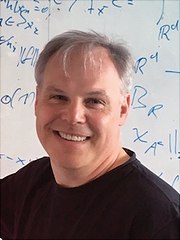
Salman Zubair Toor is a researcher at Uppsala University, Sweden, specializing in distributed computing, federated learning, and cloud/edge infrastructure optimization. His work spans resource scheduling, data streaming, and secure anomaly detection.
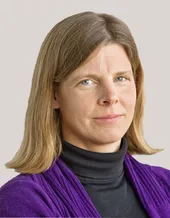
Shrisha Bharadwaj is a Doctoral Researcher at the Max Planck Institute for Intelligent Systems working within the Perceiving Systems group under supervision of Prof. Dr. Michael Black and Dr. Victoria Fernandez-Abrevaya. She began her Ph.D. in September 2024 after completing an internship with the same group starting September 2022. Her research spans several key areas in visual computing: Modeling realistic textures from sparse inputs 3D reconstruction of static environments Generative approaches to relighting Neural rendering without explicit geometry modeling Video diffusion applications for physical property manipulation Shrisha completed her Master's in Machine Learning at the University of Tübingen, where she worked with Prof. Andreas Geiger at the Autonomous Vision Group on improving radiance field reconstruction using depth information. Her recent publications demonstrate significant contributions to SIGGRAPH Asia and ACM Transactions on Graphics, particularly in creating efficient, relightable 3D avatars and novel approaches to single-image relighting. Her work shows a consistent trajectory toward solving complex vision and graphics problems using minimal input data, with practical applications in digital content creation, virtual reality, and augmented reality systems.
Jichun Li is a Professor in the Department of Mathematical Sciences at the University of Nevada Las Vegas, with a prolific research career spanning computational mathematics, image processing, and computer vision. His work bridges theoretical mathematics with practical applications in medical imaging, environmental science, and biometrics. Li's research interests center on computational mathematics with particular focus on partial differential equations and finite element methods, alongside significant contributions to image processing and computer vision. His work demonstrates a unique integration of mathematical theory with practical applications, particularly in medical imaging where his techniques enable improved early cancer diagnosis through advanced lesion segmentation. In environmental science, his research on land surface albedo dynamics provides critical insights into climate change impacts in sensitive regions like the Tibetan Plateau. His recent work on face recognition with synthetic data addresses contemporary challenges in biometric security systems. Analysis of Li's publication trends reveals a strategic evolution from foundational mathematical research toward interdisciplinary applications. While maintaining strong theoretical contributions in computational mathematics, particularly in PDEs and finite element methods, he has increasingly focused on medical imaging applications since 2020, developing novel techniques for cancer diagnosis and ultrasmall object detection in CT scans. His 2022-2025 publications show growing emphasis on synthetic data applications, particularly in face recognition challenges, demonstrating adaptability to emerging AI trends. Professor Li maintains an extensive collaborative network, with frequent co-authorship patterns suggesting mentorship relationships with researchers like Bo Yan, Weimin Tan, Guannan Chen, and Encai Zhang across multiple publications. His work appears in leading journals including IEEE Transactions on Neural Networks and Learning Systems, IEEE Transactions on Multimedia, and Computational Mathematics and Applications, reflecting both the theoretical depth and practical relevance of his research.
Malte Braack is a Professor of Applied Mathematics at Christian-Albrechts-University of Kiel (CAU Kiel). He serves as Director of the Mathematical Seminar and Principal Investigator in the Cluster of Excellence 'The Future Ocean'. Additional roles include Editorial Board membership at the Journal of Applied Mathematics and Computing, participation in the SHUG Extended Executive Board, and involvement in DFG Priority Programs (e.g., Optimization with Partial Differential Equations, MetStroem). PhD: University of Heidelberg (1998) Habilitation: University of Heidelberg (2005) Diploma: University of Hamburg (1994) DAAD scholarship: University of Complutense Madrid (1991-1992) Braack's research focuses on computational mathematics and fluid dynamics, particularly stabilized finite element methods for partial differential equations, reactive flows, and ocean modeling. Recent work includes sedimentation models, Nash equilibria for collective choice, and CO2 leakage detection in marine environments. His 15 most recent publications (2019-2025) span fluid dynamics, numerical analysis, oceanography, and optimization. Key subfields include Navier-Stokes stabilization, reactive transport, deep learning for geoscience, and game-theoretic policy modeling. DAAD scholarship during studies at Madrid (1991-1992) Editorial Board: Journal of Applied Mathematics and Computing Membership: Sociedad Española de Matemática Aplicada (SEMA)
Valentin Deschaintre is a Researcher at Adobe Research in London, focusing on image and 3D/appearance asset understanding, generation, and authoring with emphasis on user control. He previously held academic roles at Imperial College London and Inria Sophia-Antipolis , where he earned his PhD under Adrien Bousseau and George Drettakis, collaborating with Optis (Ansys). His work bridges computer graphics, computer vision, and machine learning. His research interests span generative models , diffusion-based image manipulation , material appearance modeling , and 3D scene reconstruction . Recent publications like IntrinsicEdit (2025) and MaterialPicker (2025) highlight his work in intrinsic space editing and multi-modal material generation, often integrating user control mechanisms. Scientific Awards : French Computer Graphics Thesis Award (2020), UCA Academic Excellence Thesis Award (2020), Eurographics Junior Fellow (2024), Eurographics Young Researcher Award (2025). Internship Mentoring : He actively mentors PhD students in Adobe's internship program, including Michael Fischer (2024), Julia Guerrero-Viu (2023-2024), and Ruben Wiersma (2023).
Marcel Campen is a Professor at Osnabrück University specializing in Computer Graphics and Geometry Processing. His research focuses on surface parametrization, quad mesh generation, and computational geometry. He has made significant contributions to the field of geometry processing, particularly in developing algorithms for quad layout generation, surface mapping, and mesh repair. His research interests span Computer Graphics, Geometry Processing, Surface Parametrization, Quad Mesh Generation, 3D Modeling, and Mesh Repair. Campen's work addresses fundamental challenges in representing and processing complex geometric shapes, with applications ranging from animation and simulation to reverse engineering and meshing. His research often combines theoretical insights with practical implementations, resulting in algorithms that are both mathematically sound and computationally efficient. Campen's publications demonstrate a strong focus on developing robust and efficient methods for geometry processing. His work on quad layout generation, parametrization techniques, and surface mapping has resulted in several award-winning papers, including Best Paper Awards at SGP 2021 and 2022. His research often bridges theoretical concepts with practical implementations, making his contributions highly influential in both academic and industrial settings. Best Paper Award (1st place) at SGP 2022 Best Paper Award at SGP 2021 Campen has made significant contributions to the field through his doctoral thesis on quad layout generation and numerous publications in top-tier conferences including SIGGRAPH, Eurographics, and SGP. His work on directional field synthesis, similarity maps, and bijective mappings has advanced the state of the art in geometry processing. He has also contributed to practical tools like libQEx for robust quad mesh extraction, demonstrating his commitment to making theoretical advances accessible to practitioners.
Affiliations & Roles Prof. Dr. Stefan Alexander Schneider holds a professorship in Autonomous Driving and Driver Assistance Systems at the Faculty of Electrical Engineering of Kempten University of Applied Sciences. He also serves as Program Coordinator and Academic Advisor for the Master's program in Driver Assistance Systems. Additionally, he is a Visiting Professor at Shibaura Institute of Technology (Tokyo, Japan) . Education & Academic Background He completed his doctoral thesis "Adaptive Solution of Elliptic Partial Differential Equations by Hierarchical Tensor Product Finite Elements" in 2000, laying groundwork for his later research in computational methods. Research Focus His work centers on autonomous driving technologies , including: Simulation methodologies for vehicle systems Safety validation of driver assistance systems Human-machine interface design for elderly mobility solutions Standardization of testing frameworks (e.g., Open Simulation Interface) Key Contributions Recent projects include: ZuMoBe: Exploring autonomous electric vehicles in mountain valleys Development of Virtual Systems Prototyping frameworks for automotive innovation Cross-border collaboration via the VIVID German-Japanese initiative Teaching & Mentorship As a leader in one of the world's few Master's programs dedicated to ADAS/AV technologies, he mentors students in cutting-edge topics like monocular depth estimation, trajectory modeling, and interface design. His advisees have produced impactful works on autonomous scooter usability, localization algorithms, and motion planning validation.
Prof. Dr. Armin Iske is a Full Professor of Numerical Approximation at the University of Hamburg's Department of Mathematics, within the Faculty of Mathematics, Computer Science and Natural Sciences. He holds a PhD from the University of Göttingen (1994) and habilitation from TU Munich (2002). His research focuses on numerical approximation, kernel-based methods, computational fluid dynamics, and medical imaging. He has held academic positions globally, including visiting roles at ANU (Australia) and the University of Leicester (UK). Research interests include scattered data approximation, adaptive particle methods for flow simulation, and high-dimensional data analysis. He has authored 118+ publications, including works on kernel interpolation, medical imaging reconstruction, and machine learning applications. He serves on editorial boards for journals like Advances in Computational Mathematics and Sampling Theory . His contributions span interdisciplinary projects, such as SFB/TRR 181 on energy transfer in atmosphere and ocean, and collaborations in nanotechnology for brain interfaces. His work bridges theoretical mathematics with practical applications in engineering and biosciences.
Peter G. Kropf is a Professor in the Department of Computer Science at the University of Neuchâtel, Switzerland, with a distinguished research career spanning over three decades. His academic journey reflects significant contributions to distributed systems, peer-to-peer networks, and cloud computing, with recent focus on IoT analytics and scientific computing applications. Dr. Kropf's research interests center on Distributed Systems , Peer-to-Peer Networks , Cloud Computing , Wireless Mesh Networks , and Scientific Workflows . His work demonstrates a clear evolution from foundational distributed systems research to practical applications in environmental monitoring, IoT analytics, and large-scale scientific computing. He has maintained consistent research productivity throughout his career, with publications appearing regularly from 1990 through 2024. Analysis of his recent publications reveals a strong trend toward real-time data processing for environmental applications, IoT analytics , and cloud-based scientific workflows . His work often bridges theoretical distributed systems concepts with practical implementations, particularly in environmental monitoring and resource management contexts. The interdisciplinary nature of his research connects computer science with environmental science and hydrology. Dr. Kropf has established long-term collaborations with researchers including Gilbert Babin (15 joint publications), Pascal Felber (14 publications), and Sabina Serbu (7 publications), forming a productive research network focused on distributed systems challenges. His work has appeared in prestigious venues including IEEE Internet Computing, Future Generation Computer Systems, and Middleware conference proceedings.
Stefanie Elgeti is Associate Professor and Private Lecturer at the Chair for Computational Analysis of Technical Systems (CATS), Faculty of Mechanical Engineering, RWTH Aachen University. She previously held a professorship in lightweight design at TU Vienna starting in 2019. Her research integrates computational mechanics with manufacturing process optimization, focusing on plastics extrusion, injection molding, and high-pressure die casting. Diploma in Mechanical Engineering, majoring in 'Manufacturing Techniques for Microsystems' PhD (2011): 'Free-Surface Flows in Shape Optimization of Extrusion Dies' Habilitation (2016): 'CAD-Conforming Finite Element Methods in Engineering Design' Her research centers on solving inverse problems in manufacturing through numerical simulation. She employs advanced techniques such as free-surface flow modeling, non-Newtonian material models, spline-based finite elements, and PDE-constrained shape optimization. Her group simulates entire process chains from filling to solidification and warpage prediction, enabling design optimization of cavities and cooling systems. The recent publications (2022–2024) reveal a strong trend toward integrating artificial intelligence—particularly physics-informed neural networks and Bayesian optimization—into traditional simulation workflows. There is increasing emphasis on warpage compensation, shape optimization of extrusion dies, and modeling of biomedical and environmental systems, showcasing a broadening scope from industrial manufacturing to interdisciplinary applications. She is actively involved in academic service, having served as vice-spokesperson of GAMM-Juniors (2013–2014) and currently co-chairing the ECCOMAS Young Investigator Group. While no formal awards are listed, her leadership roles and editorial contributions reflect significant recognition in the computational mechanics community. Prof. Elgeti advises students and leads multiple research initiatives at CATS, including work groups focused on production engineering, fluid-structure interaction, and INTERESST. Her team develops model hierarchies and digital twins for industrial processes, aiming to bridge simulation and real-world manufacturing through intelligent, adaptive systems.
Prof. Dr.-Ing. Wolfgang Schröder is a full professor at RWTH Aachen University and currently serves as Dean of the Faculty of Mechanical Engineering . In addition, he is Director of the Institute of Fluid Mechanics and Aerodynamics , a member of the Steering Committee of the Profile Area Modeling & Simulation Sciences , and RWTH’s representative in the Scientific and Technical Council (WTR) of the Forschungszentrum Jülich. His professional addresses are Wüllnerstraße 5a, 52062 Aachen and Eilfschornsteinstraße 18, 52062 Aachen , reachable at office@aia.rwth-aachen.de and dekan@fb4.rwth-aachen.de . His research portfolio spans computational fluid dynamics , large-eddy simulation , aero-acoustics , turbulent boundary-layer control , drag-reduction technologies , high-performance computing for multi-phase flows, and biomedical flow modeling . Recent work emphasizes: Multi-fidelity and surrogate modeling for active flow control and drag reduction. Advanced LES and hybrid RANS/LES methods for complex internal and external flows. Coupled CFD/CAA approaches to predict and mitigate aero-acoustic noise from airframes, landing gears, and distributed propellers. High-resolution simulations of gas-liquid and electrochemical flows in engineering and biomedical contexts. Across more than 80 peer-reviewed contributions since 2021, a clear trend emerges toward physics-based machine learning , real-time optimization , and exascale-ready algorithms that integrate experimental data (PIV, DLS) with massively parallel simulations. Scientific Awards & Honors : No specific awards are enumerated in the supplied text; however, his continuous leadership roles (Dean, Institute Director, WTR representative) indicate sustained recognition within the academic community. Advising & Funding : While individual student names are not listed, Prof. Schröder heads a large research group responsible for numerous doctoral and master’s theses. Projects are supported by German federal programs, EU Horizon initiatives, and industrial partnerships with aerospace and automotive sectors. Laboratories & Teams : He directs the Institute of Fluid Mechanics and Aerodynamics (AIA), operates within the Center for Computational Engineering Science (CCES), and leverages RWTH’s high-performance computing clusters for large-scale simulations.
Prof. Dr. Zorah Lähner is a Professor at the University of Siegen, leading research in the Department of Computer Vision. She will be transitioning to an Assistant Professor position at the University of Bonn starting January 2025. Her work bridges computer vision, machine learning, and quantum computing, focusing on fundamental geometric and algorithmic challenges in 3D shape analysis. Research interests span: Advanced shape matching methodologies Neural field representations on manifolds Quantum annealing applications in computer vision Scale-invariant correspondence frameworks Latent space alignment techniques Her publications demonstrate consistent innovation in geometric deep learning, with recent works exploring quantum-hybrid approaches for shape matching and neural fields for manifold learning. Publications predominantly appear in top-tier venues like CVPR, ICCV, and NeurIPS. While no specific awards are listed in the provided text, she maintains active collaborations across European institutions and supervises research in computer graphics and vision through her Lehrstuhl position.
Miriam Schulte is a Professor at the University of Stuttgart’s Institute for Parallel and Distributed Systems, leading the Institute for the Simulation of Large Systems. She holds a Carl von Linde Junior Fellowship and has held academic roles since 2002, including heading the CFD Group at TUM. Her expertise spans computational fluid dynamics (CFD), high-performance computing (HPC), and numerical methods for PDE solvers. She earned her diploma (1997) and PhD (2001) in mathematics from TUM, followed by habilitation in Computer Science (2010). Her research focuses on optimizing algorithms for efficient simulation software, integrating mathematics and computer science. Key areas include fluid-structure interactions, multi-physics coupling, and scalable parallel computing. She has contributed to frameworks like Peano for adaptive Cartesian grids and developed methodologies for partitioned fluid-structure interaction simulations. Publications highlight advancements in HPC, multi-physics coupling, and parallel algorithms. Awards include the Bayerische Begabtenfoerderung (1993–1997). Her work bridges computational methods with real-world applications, emphasizing scalability and efficiency in large-scale simulations.
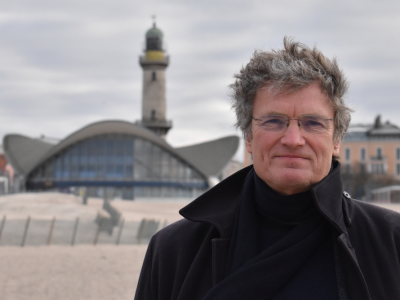
Hans Burchard is a Professor at the University of Rostock and Deputy Head of the Department of Physical Oceanography and Instrumentation at the Leibniz Institute for Baltic Sea Research . His research focuses on estuarine and coastal oceanography , with expertise in turbulence closure modeling (GOTM), three-dimensional numerical model development (GETM), and sediment dynamics . He leads projects examining anthropogenic impacts on coastal systems , long-term variability , and climate-driven mixing processes . Key projects include Skamix-WMT , CoastalFutures-2 , and GROCE-II , addressing issues like salinity intrusion , ice-ocean interactions , and ocean turbulence . Recent publications highlight diahaline mixing in marginal seas, storm-driven submesoscale processes , and numerical methods for ocean dynamics . Hans actively supervises PhD and Master’s students in topics related to ocean modeling , estuarine circulation , and sediment transport . He contributes to international collaborations through initiatives like the Virtual European Physical Oceanography and Shelf Sea Seminar Series (VEPOSSSS) and Gordon Research Conference on Coastal Ocean Dynamics (GRC) .
Bhaskaran Raman is a Professor in the Department of Computer Science and Engineering at the Indian Institute of Technology Bombay, where he leads research in networking systems with a focus on practical applications in developing regions. His work spans wireless networking, sensor systems, and mobile computing, with recent expansion into AI-assisted educational technologies. His research interests include wireless mesh networks for rural connectivity, transportation systems monitoring, mobile sensing applications, and educational technology. Notably, his lab has developed innovative solutions like Road-RFSense for traffic estimation in developing regions, FullStop for monitoring unsafe bus stopping behavior, and more recently, AI systems for automatic short answer grading with feedback. Analysis of his publication trends shows a consistent focus on practical networking challenges with strong emphasis on real-world deployment, particularly in resource-constrained environments. In recent years, he has expanded his research to include AI applications in education while maintaining his core expertise in systems research. Raman has mentored numerous graduate students who have become active researchers in networking and systems areas, with many continuing to collaborate with him on publications. His research has been supported by various grants focused on networking for developing regions and smart transportation systems. His lab at IIT Bombay focuses on building practical networking solutions with real-world impact, particularly for transportation safety and educational applications. The team combines expertise in wireless systems, mobile computing, and increasingly, artificial intelligence to address complex challenges in these domains.