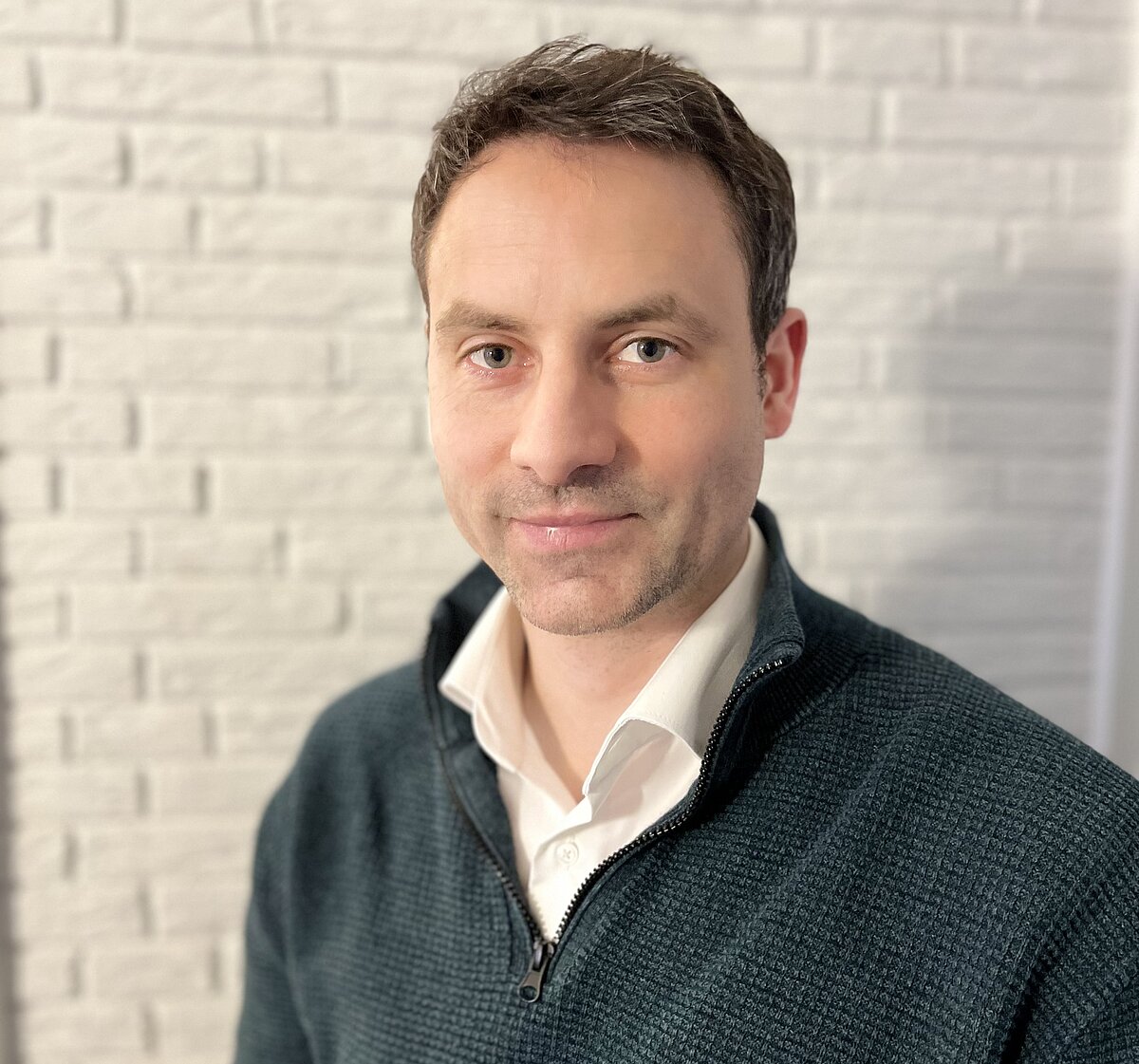
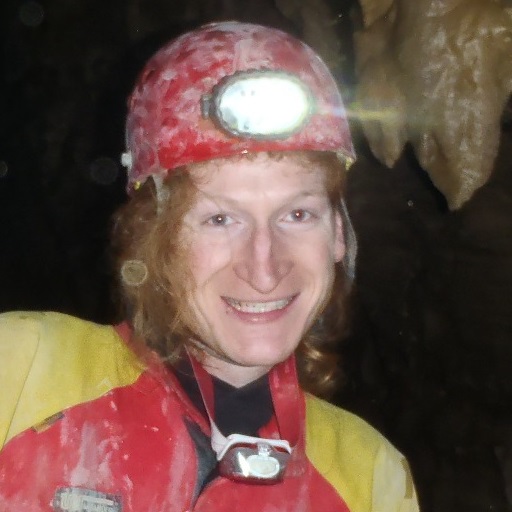
Desh Ranjan is a Professor at the College of Sciences, Old Dominion University , with a focus on Bioinformatics , High Performance Computing , and Algorithm Design . His work bridges Computational Biology and Parallel Computing . Ph.D., Cornell University (1992) M.S., Cornell University (1990) Other, Indian Institute of Technology Kanpur (1987) His research interests revolve around efficient algorithms for bioinformatics and computational complexity , with applications in protein structure prediction , GPU optimization , and particle accelerator simulations . He has secured over $2 million in federal grants , including a major 2015-2018 $2M award for Hispanic-Serving Institutions . Recent work emphasizes machine learning and real-time simulations in high-fidelity physics and genomic data analysis . 2011: Sage Graduate Fellowship, Cornell University 2011: Outstanding Faculty Member, Iowa State University 2009/2008: NMSU Millionaire Researcher 2006: University Research Council Distinguished Career Award, NMSU 1995: Morrison Award for Best Technical Presentation, Regional ACM Ranjan's publications span 25+ years , with recent trends in GPU-accelerated algorithms , structural biology , and parallel computing . His grants highlight collaborations in bioinformatics , physics simulations , and STEM education projects.
Prof. Dr. Roland Pesch is a Professor at the Institute for Applied Photogrammetry and Geoinformatics (IAPG) in Lower Saxony, Germany. He leads the professorship for Fundamentals and Applications of Geoinformation Systems , focusing on marine spatial protection, biodiversity modeling, and sustainable urban-rural planning through GIS and remote sensing. Projects : Protect Baltic (2023-2028), 4N: Geo-Toolbox (2022-2026) Cooperation Partners : Lower Saxony State Office for Geoinformation and Land Surveying (LGLN) His research interests span Marine Conservation , Spatial Modeling , and Environmental Science , with applications in Biodiversity Hotspots , Climate Scenarios , and Urban Green Spaces . Recent work includes systematic reviews of public green spaces, habitat suitability analysis for Ostrea edulis , and predictive modeling of marine habitats using convolutional meshes and sonar data. Publications trend toward interdisciplinary GIS applications in marine ecology and urban sustainability , often involving remote sensing and spatiotemporal analysis . Key subfields include habitat mapping , marine protected areas , and climate change impact assessment . He supervises theses on topics like reed bed monitoring , surface sealing analysis , and green space accessibility at institutions in Lower Saxony. His lab collaborates with the LGLN to optimize land management workflows using 3D metrology and environmental data systems .
Doç. Dr. Özgür Erol is an Associate Professor at the Department of Mechanical Engineering at Baskent University. With a career spanning over two decades, his expertise lies in energy systems, computational fluid dynamics, and renewable energy technologies. Doktora (2012): Gazi Üniversitesi, Makine Eğitimi Yüksek Lisans (2002): Orta Doğu Teknik Üniversitesi, Makine Mühendisliği Lisans (1999): Orta Doğu Teknik Üniversitesi, Makine Mühendisliği Research Interests Özgür Erol's work focuses on optimizing energy systems through computational fluid dynamics, with key contributions in solar air heaters, wind/hydro turbine aerodynamics, nuclear reactor design, and energy policy modeling. His research integrates numerical simulations and experimental validations to enhance energy efficiency and sustainability. Publication Trends His publications (2008-2023) emphasize renewable energy systems (solar, wind, hydro), nuclear reactor design (thorium, plutonium cycles), and energy policy using decision-making frameworks like Analytical Hierarchy Process. Recent works explore hybrid solar collectors and machine learning applications in aerodynamics.
Karsten Breddermann is a Research Fellow at GEOMAR Helmholtz Centre for Ocean Research Kiel, affiliated with Research Division 4: Dynamics of the Ocean Floor and the Magmatic and Hydrothermal Systems unit. He leads the 'Seafloor Modelling' working group. His research focuses on fluid-structure interactions, computational/experimental fluid dynamics, and underwater vehicle design. Key projects include optimizing fishing gear hydrodynamics (SimuNet), assessing lithium-rich geothermal brine flows, and developing sustainable aquaculture systems. Research Interests: Breddermann specializes in hydrodynamic modeling of marine systems, including fluid-environment interactions, fishing gear optimization, and deep-sea technology. His experimental work spans wind tunnels, towing tanks, and sea-based measurements. Publication Trends: His 15 most recent articles (2011–2024) predominantly address hydrodynamic modeling in marine engineering contexts. Key themes include drag/lift coefficient analysis, fluid-structure interactions in fisheries technology, and pressure-tolerant deep-sea systems. Computational fluid dynamics (CFD) and experimental validation are consistent methodologies. Projects & Collaborations: Notable projects include bycatch reduction initiatives with Technical University of Denmark (2020–2021), hydrokinetic turbine development (2016–2017), and EU-funded Baltic IMTA aquaculture systems (2013–2016). He collaborates internationally with institutions in Denmark, the USA, and Germany. Infrastructure: Utilizes experimental facilities including wind tunnels, towing tanks, and unmanned underwater vehicles for hydrodynamic validation.
Dr. Rabeb Mizouni is an Associate Professor at Khalifa University's Department of Electrical Engineering and Computer Science. Her research focuses on Blockchain, Machine Learning, IoT, Crowdsensing/Crowdsourcing, and Cloud Computing. She is affiliated with the Center for Cyber-Physical Systems and leads projects in secure mesh networks, radiation monitoring, energy management, and supply chain optimization. PhD, Electrical and Computer Engineering, Concordia University (2007) MSc, Electrical and Computer Engineering, Concordia University (2002) Her research spans multi-source data integration for AI models, radiation detection systems using IoT and crowdsensing, secure mobile communication via blockchain, and energy-efficient EV charging infrastructure . She collaborates with institutions like TII (Technology Innovation Institute) and emphasizes cross-disciplinary approaches in cyber-physical systems. Current research staff includes postdocs, engineers, and associates working on emerging technologies. She actively recruits candidates for PhD, MSc, and postdoc positions via email at ku.crowd.intelligence@gmail.com.
Dr. Michael Schlottke-Lakemper is a Professor of High-Performance Scientific Computing at the University of Augsburg, Faculty of Mathematics, Natural Sciences, and Materials Engineering. He previously held positions as an Interim Professor of Computational Mathematics at RWTH Aachen University (2022–2024) and led a research group at the High-Performance Computing Center Stuttgart (HLRS) from 2021 to 2024. His career includes postdoctoral roles at the University of Cologne and RWTH Aachen University/FZ Jülich. Education: Ph.D. in Mechanical Engineering, RWTH Aachen University (2017) Diplom in Aerospace Engineering, University of Stuttgart (2011) His research focuses on adaptive multi-physics simulations, research software engineering for high-performance computing (HPC), and scientific machine learning. Applications span fluid mechanics, aeroacoustics, and astrophysics, with recent work emphasizing robust high-order summation-by-parts methods and Julia-based computational frameworks like Trixi.jl and TrixiParticles.jl. His publications highlight advancements in discontinuous Galerkin methods, entropy stable schemes, and HPC optimization for compressible flows. Scientific contributions include Developing dynamic load balancing algorithms for multiphysics simulations Creating hybrid computational aeroacoustics methods Advancing Julia's adoption in HPC communities Improving error-based step size control in numerical solvers Current teaching activities include graduate seminars on Maschinelles Lernen in Theorie und Praxis and undergraduate courses in Numerische Lineare Algebra . He leads a research team at the University of Augsburg with collaborators across Germany, including Simon Candelaresi, Valentin Churavy, and Niklas Neher.
Francesca Mazzia is a Full Professor in the Department of Computer Science at the University of Bari (UniBA), Italy. She is a leading expert in numerical methods for differential equations and computational mathematics. Office: Campus - Via Orabona, 4 Bari, Department of Computer Science, fifth floor, room no. 565 Contact: +39 0805443291 | francesca.mazzia@uniba.it Personal website: http://archimede.uniba.it/~mazzia Research Interests: Numerical methods for Ordinary Differential Equations (IVP and BVP) Linear and nonlinear stability properties Parallel implementation techniques Saliency and change detection for hyperspectral images Quasi-interpolation methods Stability and conditioning of linear systems Parallel algorithms for large linear systems Notable Contributions: Co-author of the book Solving Differential Equations in R (Springer, 2012) Developer of the TOM MATLAB solver for boundary value problems Contributor to the QIBSH library and TestSets for IVP/BVP solvers Active participant in international conferences like SCICADE 03 Software Tools: TOM (Top Order Method) for ODE boundary value problems Integration with pde2path for optimal control problems Open-source contributions to MATLAB and R ecosystems
Bing Tie is a researcher at the Paris-Saclay Mechanics Laboratory within the University of Paris-Saclay, focusing on computational mechanics and numerical modeling. Their work bridges theoretical and applied mechanics, with a strong emphasis on wave propagation in composite materials and 3D-printed structures. Key research areas: Mechanics, Numerical Methods, Crack Propagation, 3D Printing, Elastic Wave Dynamics Their recent publications highlight applications of discontinuous Galerkin finite element methods to simulate acoustic/elastic wave coupling, ultrasonic imaging of synthetic tissues, and shock wave propagation in aerospace components. These studies often integrate high-fidelity numerical models for 3D-printed materials and structural components. Notable collaborations include work with Denis Aubry, Andrea Barbarulo, and Hossein Kamalinia. The research spans biomedical imaging , aerospace structural analysis , and material failure dynamics , with applications in synthetic organ printing and spacecraft vibration analysis.
Ehsan Aryafar is an Associate Professor of Computer Science in the Maseeh College of Engineering & Computer Science at Portland State University (PSU), with a courtesy appointment in the Electrical and Computer Engineering Department. Previously, he served as a Research Scientist at Intel Labs (2013-2017) and as a Postdoctoral Research Associate at Princeton University (2011-2013). His educational background includes a Ph.D. and M.S. in Electrical and Computer Engineering from Rice University (2011, 2007) and a B.S. in Electrical Engineering from Sharif University of Technology (2005). His research spans wireless networks and networked systems, with focus areas in mmWave communications, full-duplex wireless, virtual reality support over wireless, and distributed machine learning at the network edge. He leads the Networks and Wireless Systems (NeWS) Lab at PSU, which maintains equipment including WARP WiFi FPGAs, NVIDIA Jetsons, mmWave radios, and VR gear. His publications reveal a strong emphasis on practical implementation alongside theoretical modeling, with recent work focusing on VR streaming over mmWave, deep learning for blockage mitigation, and EBG-based antenna designs for full-duplex systems. The research trajectory shows evolution from foundational work in wireless mesh networks to cutting-edge explorations of 6G-enabling technologies. Award highlights include the 2020 NSF CAREER award, 2023-2025 David E. Wedge Vision Professorship, and the 2025 IEEE AIIoT Best Paper award. He has authored over 30 patents in mobile and wireless systems and serves on editorial boards including IEEE Transactions on Mobile Computing. As an educator, he teaches advanced courses in Wireless Networks, Virtual Reality, and Machine Learning, emphasizing hands-on implementation with Unity and Python. His mentorship spans 29 students including 5 Ph.D. graduates, with recent advisees founding startups like CacheWave based on their research.
Dr Jefferson Gomes , Senior Lecturer at the University of Aberdeen since 2023, is a computational physicist specializing in multi-fluid dynamics and nuclear engineering. His research spans energy technologies, environmental hazards, and geophysical systems. Education: PhD (Imperial College London, 2004), MSc (State University of Rio de Janeiro, 1999), BSc in Chemical Engineering (Federal University of Rio de Janeiro, 1996) Research Interests: Focus on computational multi-fluid dynamics (CMFD) and multi-physics modeling, with applications in nuclear reactor safety, unconventional shale gas, CO₂ migration, and geothermal energy. Expertise in finite element methods (FEM), machine learning, and reduced-order models. Recent Publications: 2025 work on multifluid reactor dynamics and shale gas adsorption; 2024 studies on CO₂ sequestration and corium flow during accidents. Earlier work includes nuclear reactor design optimization and granular flow modeling. Awards: Fellow of the Higher Education Academy (FHEA). Teaching: Offers courses in Chemical Thermodynamics, Process Engineering, and Computational Fluid Dynamics at undergraduate and postgraduate levels. Collaborations: Partnerships with Imperial College London, Federal University of Rio de Janeiro, and industry projects for BNFL, BP, and JAEA.
Vicente Quilis Quilis is a Full Professor (Catedrático de Universidad) in the Department of Astronomy and Astrophysics at the Faculty of Physics, Universitat de València. He leads research in computational astrophysics and cosmology, with a particular focus on galaxy clusters, cosmic voids, and numerical simulations of cosmological structure formation. He earned his PhD from the Universitat de València in 1998 with a thesis titled "Cosmología numérica formación y evolución de cúmulos de galaxias" (Numerical Cosmology: Formation and Evolution of Galaxy Clusters), supervised by Dr. Diego Sáez Milán. Quilis Quilis's research spans multiple areas of theoretical and computational astrophysics. His work primarily focuses on galaxy cluster formation and evolution , cosmic voids and large-scale structure , numerical methods for cosmological simulations , and astrophysical fluid dynamics . He has made significant contributions to understanding the role of shock waves in structure formation, the properties of intracluster medium, and the development of computational tools for analyzing cosmological simulations. His research group, CompAC (Computational Astrophysics and Cosmology Group), develops and utilizes advanced simulation techniques to study the universe's large-scale structure. An analysis of his recent publications (2022-2025) reveals a strong emphasis on galaxy cluster dynamics, cosmic void studies, and computational methodology development. His work bridges observational cosmology with numerical simulations, particularly through projects like CAVITY (Calar Alto Void Integral-field Treasury surveY) and the development of codes such as ASOHF (Adaptive Spherical Overdensity Halo Finder) and VORTEX for analyzing cosmological simulations. His research shows a consistent focus on understanding the formation history of cosmic structures through advanced computational techniques. While specific awards are not mentioned in the available information, his work has been influential in the field, with his 2007 paper "Fundamental differences between SPH and grid methods" cited 19 times according to zbMATH. Quilis Quilis collaborates extensively with researchers worldwide, as evidenced by his 25 co-authors across multiple publications. His research group CompAC appears to be actively involved in major cosmological projects and code development efforts. His work on the ASOHF halo finder and VORTEX analysis tools suggests significant contributions to the methodology of cosmological simulation analysis. The CompAC Computational Astrophysics and Cosmology Group, which Quilis Quilis is part of, focuses on developing and applying advanced computational methods to study cosmic structure formation. The group's work encompasses galaxy cluster simulations, void studies, and the development of analysis tools for cosmological data. Their research contributes to major projects like CAVITY and involves collaborations with observatories such as Calar Alto.
Dr. Benedikt Prifling is a Lecturer at Ulm University, specializing in computational materials science and electrochemistry. His research integrates advanced tomography, stochastic modeling, and machine learning to optimize materials for energy storage, particularly lithium-ion batteries. Research Focus: Prifling investigates microstructure-property relationships in porous media and battery electrodes. Key themes include: 3D microstructure modeling of battery components (anodes/cathodes) Synchrotron tomography for quantitative analysis of degradation Stochastic reconstruction of porous materials Data-driven prediction of mass transport phenomena His recent publications (2020-2024) demonstrate a strong emphasis on improving battery performance through computational design, manufacturing optimization, and electrochemical characterization. Common methodologies include lattice Boltzmann simulations, statistical learning, and digital twin generation.
Emmanuel Cledat is an Associate Professor of photogrammetry at the National Institute of Geographic and Forest Information (IGN) and lecturer at the ENSG (National School of Geographic Sciences), where he teaches courses in sensor technology, mathematics for photogrammetry, and applied photogrammetry. As a member of the UMR Lastig research unit and ACTE research team, he conducts interdisciplinary work spanning photogrammetry, geomatics, and transportation safety. His research interests focus on photogrammetry , sensor calibration , and measurement of risks faced by cyclists . Dr. Cledat specializes in macro-photogrammetry of small objects, drone-based mapping systems, and GNSS-denied environment navigation. His methodological expertise includes camera calibration models, 3D reconstruction, and fusion of photogrammetric and LiDAR data. Dr. Cledat's publication record demonstrates consistent contributions to photogrammetry and geospatial sciences since 2016, with recent work exploring AI applications in geomatics and historical bridge modeling. His research shows a clear trajectory from foundational work on drone photogrammetry calibration to more applied projects addressing transportation safety and cultural heritage preservation. ISPRS Best Young Author Award 2020 As principal investigator, Dr. Cledat leads the CycloSafe project which quantifies cycling risks using LIDAR-equipped bicycles, and the EntrePonts project focused on 3D modeling of historical bridge models from the 17th-19th centuries. His teaching portfolio spans undergraduate and graduate courses in photogrammetry fundamentals, underwater photogrammetry, and climate change workshops. His laboratory work centers around the UMR Lastig research unit, with projects involving drone mapping systems, 3D TOF camera calibration, and photogrammetric fieldwork methodologies for both small objects and large-scale environmental mapping.
Sun-Jeong Kim is a Professor at the Department of Computer Science within the School of Computer Science at Korea University . Her research focuses on real-time rendering techniques, GPU programming, and game engine optimization. Specializes in procedural modeling and interactive visualization Develops efficient rendering algorithms for virtual reality Active in graphics hardware acceleration and collision detection Her research has produced 15+ publications on topics including tessellation strategies, skeletal animation systems, and particle effect optimizations. While specific awards and students aren't detailed in the current text, her work demonstrates consistent contributions to real-time graphics and game development.
Milan Petkovic is a part-time Professor at the Department of Mathematics and Computer Science, Eindhoven University of Technology, Netherlands. He is affiliated with the Security group and EAISI Health institute, focusing on interdisciplinary research at the intersection of machine learning, health informatics, and system reliability. His work addresses challenges in data scarcity, fault detection, and biomedical applications. Research Interests : Machine learning for healthcare applications 3D modeling and computer vision Wearable data analysis Robust fault detection systems Data fusion techniques Publication Trends : Recent work spans eating disorder analytics using AI, 3D mesh synthesis through deep learning, and predictive maintenance frameworks Combines formal mathematical bounds with practical health monitoring solutions Applies neural networks and statistical models to wearable data interpretation