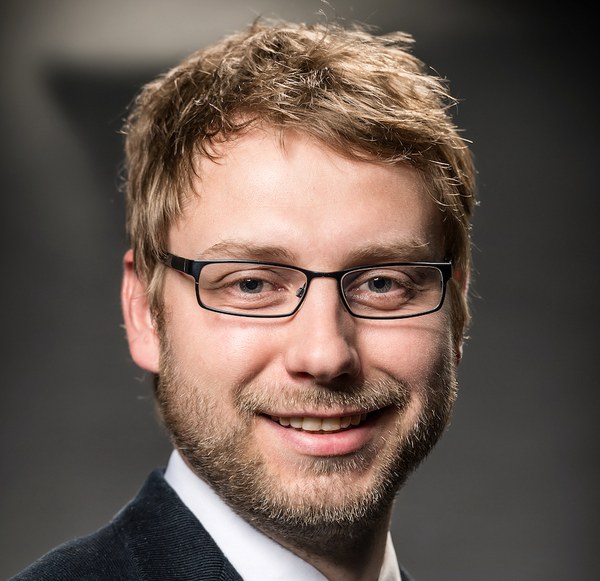
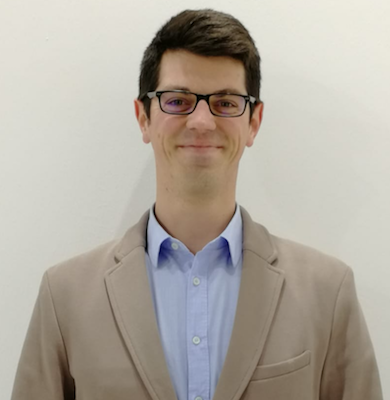
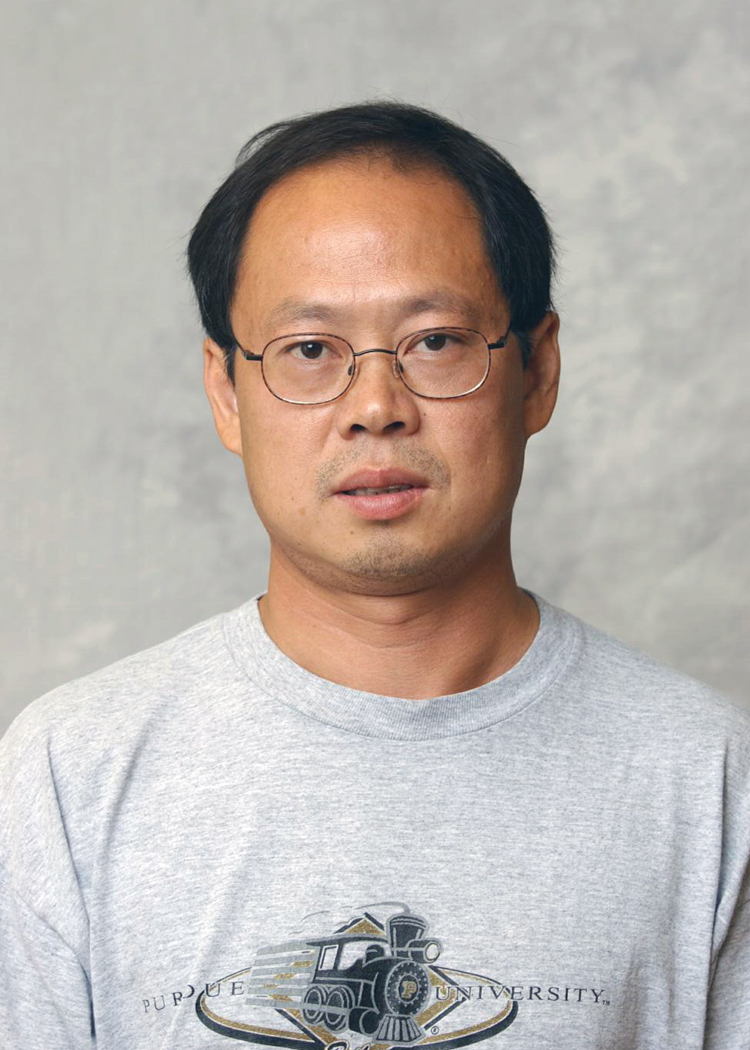
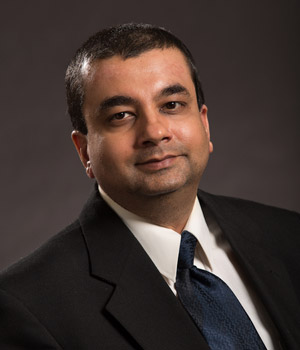
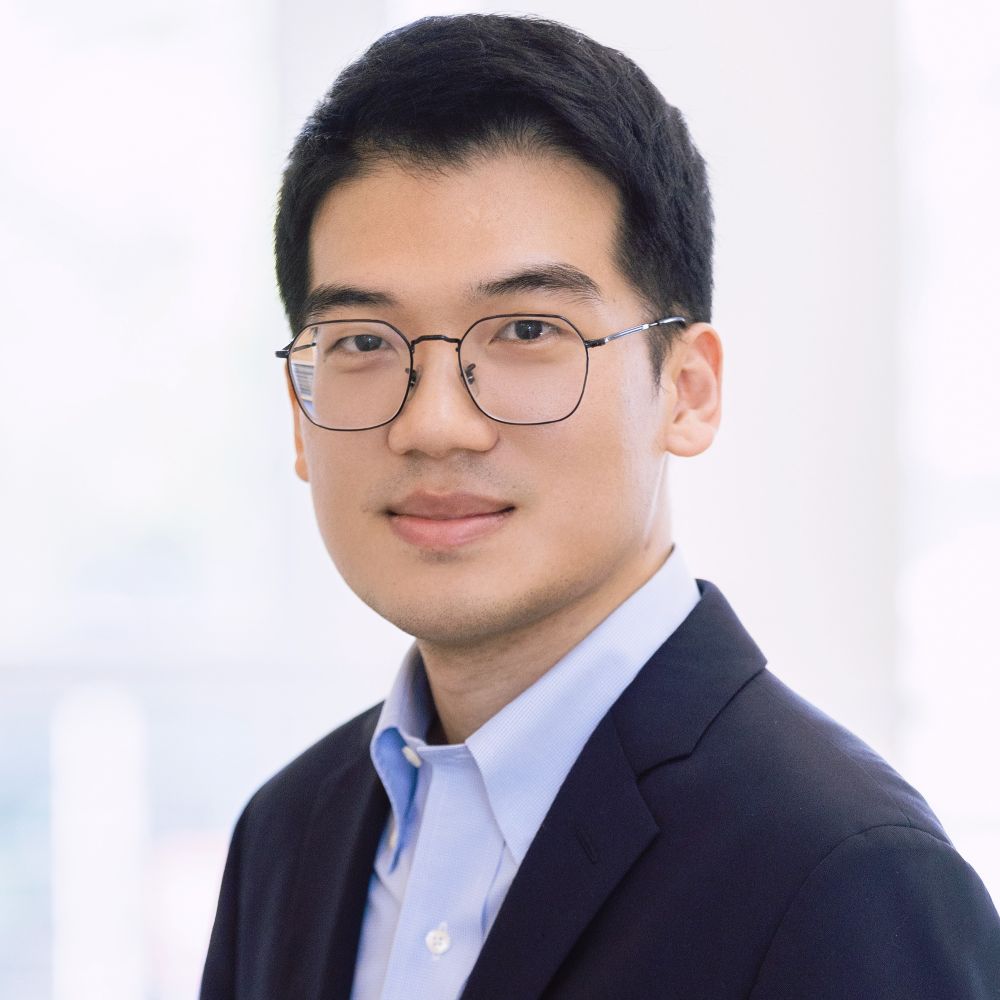
Hui Guo is an Adjunct Assistant Professor in the Department of Civil Engineering. Their research intersects computer vision, machine learning, and image processing, with a focus on advanced restoration and super-resolution techniques. Recent publications highlight contributions to image super-resolution challenges (NTIRE 2024/2025), vision transformers (QID), diffusion models for video restoration, and continual learning frameworks (PCL). Work spans OCR-free visual document analysis, adversarial degradation modeling (AND), and parametric image restoration. Contact: guoh15
Peter Oswald is a Professor and holds a Bonn Research Chair at the Hausdorff Center for Mathematics, affiliated with the Institute for Numerical Simulation at the University of Bonn. His research lies at the intersection of approximation theory, function spaces, and numerical methods for partial differential equations, with a focus on wavelets, splines, and multiscale computational techniques. University: University of Bonn School: Hausdorff Center for Mathematics Department: Institute for Numerical Simulation Email: oswald@ins.uni-bonn.de His research interests include Approximation Theory, Function Spaces and Applied Harmonic Analysis, Multiscale Methods in Scientific Computing, Numerical Methods for PDEs, Finite Elements, Splines, Wavelets, and Mathematical Modelling. These areas reflect a deep commitment to both theoretical foundations and computational applications in modern applied mathematics. The analysis of his recent publications reveals a consistent focus on iterative and subspace correction methods, preconditioning in sparse grid contexts, function space theory (especially Besov and Hilbert spaces), and the mathematical underpinnings of finite element and wavelet-based discretizations. His work often bridges pure and computational mathematics, with increasing exploration of stochastic and randomized algorithms in numerical linear algebra and high-dimensional problems. Peter Oswald has not been mentioned as having formal advisees in the provided texts, and no scientific awards are listed. However, his extensive collaboration with Michael Griebel and publication in prestigious journals and book series (e.g., Springer Series in Computational Mathematics) underscores his active and influential role in the mathematical community. He is involved in advanced research on space splittings, iterative solvers, and high-dimensional function approximation, contributing to both theoretical developments and practical computational frameworks. His work supports broader efforts in scientific computing, uncertainty quantification, and the numerical solution of complex physical models.
Andreas Lintermann is a postdoctoral researcher and group leader of the Simulation and Data Lab (SDL) Fluids & Solids Engineering at the Jülich Supercomputing Centre (JSC), Forschungszentrum Jülich. His work focuses on integrating artificial intelligence with high-performance computing for fluid and solid mechanics applications. Coordinates European Center of Excellence in Exascale Computing (CoE RAISE) Leads EU-funded projects: EuroCC/EuroCC2, interTwin, SPECTRUM Co-leads EU-project HANAMI, BMBF project StroemunsRaum, and BMWK project nxtAIM Research Interests: His group develops encoder-decoder CNNs for aeroacoustic field prediction, convolutional autoencoders for flow field compression/reconstruction, and physics-informed neural networks for large-scale simulation initialization. Applications include turbulence modeling, shape optimization, and medical imaging. Technical Focus: Specializes in AI-driven multi-physics coupling, heterogeneous hardware acceleration, and super-resolution algorithms for computational fluid dynamics.
Desh Ranjan is a Professor at the College of Sciences, Old Dominion University , with a focus on Bioinformatics , High Performance Computing , and Algorithm Design . His work bridges Computational Biology and Parallel Computing . Ph.D., Cornell University (1992) M.S., Cornell University (1990) Other, Indian Institute of Technology Kanpur (1987) His research interests revolve around efficient algorithms for bioinformatics and computational complexity , with applications in protein structure prediction , GPU optimization , and particle accelerator simulations . He has secured over $2 million in federal grants , including a major 2015-2018 $2M award for Hispanic-Serving Institutions . Recent work emphasizes machine learning and real-time simulations in high-fidelity physics and genomic data analysis . 2011: Sage Graduate Fellowship, Cornell University 2011: Outstanding Faculty Member, Iowa State University 2009/2008: NMSU Millionaire Researcher 2006: University Research Council Distinguished Career Award, NMSU 1995: Morrison Award for Best Technical Presentation, Regional ACM Ranjan's publications span 25+ years , with recent trends in GPU-accelerated algorithms , structural biology , and parallel computing . His grants highlight collaborations in bioinformatics , physics simulations , and STEM education projects.
Alan Hegarty serves as Associate Professor in the Department of Mathematics and Statistics at the University of Limerick, concurrently holding membership in the Centre for Research Training in Foundations of Data Science and the Mathematics Applications Consortium for Science and Industry (MACSI), which drives industry-academic partnerships in mathematical modeling. His academic credentials include a B.A. in Mathematics from Dublin University (1979), M.Sc. from Dublin (1982), and Ph.D. from Dublin (1986), establishing foundational expertise in computational mathematics. Dr. Hegarty's research specializes in numerical solutions for singular perturbation problems , with pioneering work in adaptive mesh methods and moving mesh techniques to resolve boundary layer phenomena. His methodologies address critical challenges in convection-diffusion systems and elliptic equations where conventional numerical approaches fail, employing specialized finite difference and finite element schemes on layer-adapted meshes to ensure stability and accuracy across thin transitional regions. Analysis of his 2020-2024 publications reveals consistent advancement in algorithmic precision for singularly perturbed systems, particularly through higher-order methods for elliptic problems and extensions to smooth domains. This trajectory demonstrates evolving sophistication in handling characteristic boundary layers and convection-dominated flows, with strong emphasis on achieving uniform convergence through fitted meshes and Shishkin-type adaptations. No scientific awards were documented in the provided materials. He actively supervises PhD candidates as indicated by his recruitment status and 52 cumulative research outputs, with funding channeled through MACSI's industry collaborations and the Centre for Research Training. These frameworks support applied mathematical research addressing real-world industrial challenges through consortium-based projects. Within MACSI and the Centre for Research Training, Hegarty contributes to interdisciplinary teams developing data-driven solutions where singular perturbation methods interface with modern data science applications, particularly in fluid dynamics modeling and industrial process optimization.
Stefano Scanzio is a Senior Researcher at the National Research Council of Italy (CNR-IEIIT) and teaches computer science courses at Politecnico di Torino . With over 60 publications in wireless networks, real-time communication, and industrial IoT, he serves as Associate Editor for Ad Hoc Networks , IEEE Access , and Electronics journals. Ph.D. in Computer Science (Politecnico di Torino, 2008) Laurea in Computer Science (Politecnico di Torino, 2004) His research focuses on industrial wireless networks , particularly Wi-Fi and IEEE 802.15.4 TSCH, with emphasis on: Energy-saving mechanisms in wireless sensor networks Predictive models for Wi-Fi channel quality Reliable communication through seamless redundancy Machine learning integration for network optimization Clock synchronization under non-Gaussian noise Recent publications analyze Wi-Fi 7's multi-link operation, executable QR codes for IoT, and AI-driven network self-configuration. His work has been recognized with multiple best paper awards .
Luca Davoli is a Fixed-term Assistant Professor at the University of Parma , Department of Engineering and Architecture. His research focuses on the integration of Internet of Things (IoT) technologies with Machine Learning and Smart City applications.
Prof. Dr. Roland Pesch is a Professor at the Institute for Applied Photogrammetry and Geoinformatics (IAPG) in Lower Saxony, Germany. He leads the professorship for Fundamentals and Applications of Geoinformation Systems , focusing on marine spatial protection, biodiversity modeling, and sustainable urban-rural planning through GIS and remote sensing. Projects : Protect Baltic (2023-2028), 4N: Geo-Toolbox (2022-2026) Cooperation Partners : Lower Saxony State Office for Geoinformation and Land Surveying (LGLN) His research interests span Marine Conservation , Spatial Modeling , and Environmental Science , with applications in Biodiversity Hotspots , Climate Scenarios , and Urban Green Spaces . Recent work includes systematic reviews of public green spaces, habitat suitability analysis for Ostrea edulis , and predictive modeling of marine habitats using convolutional meshes and sonar data. Publications trend toward interdisciplinary GIS applications in marine ecology and urban sustainability , often involving remote sensing and spatiotemporal analysis . Key subfields include habitat mapping , marine protected areas , and climate change impact assessment . He supervises theses on topics like reed bed monitoring , surface sealing analysis , and green space accessibility at institutions in Lower Saxony. His lab collaborates with the LGLN to optimize land management workflows using 3D metrology and environmental data systems .
Max Ehrlich is an Adjunct Assistant Professor at the University of Maryland in the Department of Computer Science and a research scientist at NVIDIA. His work spans machine learning, computational imaging, and compression technologies. Adjunct Assistant Professor, University of Maryland Research Scientist, NVIDIA Research Interests: Combines machine learning with computational imaging to solve real-world problems. Key areas include video/image compression, land cover segmentation, and explainable AI. Research focuses on first-principles understanding rather than black-box models. Recent Publication Trends: 2025 work on implicit neural representations for video compression, 2024 studies on metadata-driven video enhancement, 2023 contributions to adaptive networks, and earlier work on JPEG artifacts, multi-task learning, and remote sensing. Scientific Awards: 3rd place in 2018 CVPR DeepGlobe challenge Teaching: Instructed CMSC421 Intro to Artificial Intelligence (Spring 2024) and CMSC422 Intro to Machine Learning (Spring 2022). Also served as a mentor for high school students.
Zhiqiang Cai is a Professor of Mathematics at Purdue University's Department of Mathematics, part of the College of Science. He specializes in numerical analysis and applied mathematics, with a focus on finite element methods, computational fluid dynamics, and partial differential equations. His work includes developing adaptive numerical techniques and applying machine learning approaches to solve complex mathematical problems. Cai's research spans theoretical advancements in numerical methods and practical applications in areas like biotechnology and environmental engineering. He has authored numerous publications, including contributions to journals like SIAM Journal on Numerical Analysis and Mathematics of Computation. His recent work explores neural network-based methods for PDE solutions and enzyme catalysis optimization. Research highlights include advancements in least-squares finite element methods, fractional calculus applications, and microbial bioremediation. His interdisciplinary projects bridge computational mathematics with biology and environmental science. Cai collaborates extensively, evidenced by co-authored papers on topics ranging from enzyme engineering to meshless methods for fractional Laplacians. His work often addresses challenges in error estimation and algorithm efficiency for complex systems.
Daniel Tish is a Lecturer in Architecture at Harvard University's Graduate School of Design (GSD), holding a joint Postdoctoral Fellowship between the Materials Processes and Systems (MaP+S) group and the Lewis Lab in the School of Engineering and Applied Sciences. His research focuses on carbon-negative biocomposites derived from microorganisms, robotic fabrication, and circular economy solutions to reduce architecture's carbon footprint. Supported by the Salata Institute, Center for Green Buildings and Cities, and Joint Center for Housing Studies, his work bridges material science, biology, and design. Education includes a Doctor of Design from GSD, a Master of Architecture (Distinction) from the University of Michigan, and a Bachelor of Science in Architecture from Washington University in St. Louis with a self-designed Sustainable Design major. Research interests emphasize bespoke materiality, digital fabrication, sustainability, and computation. He investigates biomaterial fabrication methods that address unpredictability in materials, aligning with cyber-physical systems research. His work challenges industrialized materials in digital fabrication and promotes eco-conscious technologies. Publications appear in ACADIA, Fabricate, Rob|Arch, IASS conferences, and journals like Construction Robotics and TAD. Exhibitions include Design Miami/ Basel. He previously taught at the University of Michigan and University of Technology Sydney, and led Autodesk's computer-vision research for construction robotics. Grants include Salata Institute funding for biocomposite research and Lewis Lab collaborations. His courses include 'BioFabrication' (Spring 2025) at GSD.
Delis Anargyros is a Professor of Computational Mathematics at the School of Production Engineering & Management, Technical University of Crete. He holds a B.Sc. in Mathematics from the University of Crete (1993), an M.Sc. in Numerical Analysis and Computing from the University of Manchester (1994), and a Ph.D. in Applied and Computational Mathematics from the University of the West of England (1998). His academic career includes roles as Director of the MSc in Applied Mathematics program (2019–2023) and membership in research groups such as the Turbomachines & Fluid Dynamics Laboratory and the Applied Mathematics and Computers Laboratory (AMCL). B.Sc. Mathematics, University of Crete M.Sc. Numerical Analysis, University of Manchester Ph.D. Applied and Computational Mathematics, University of the West of England His research focuses on computational methods for fluid dynamics (e.g., shallow water equations, Boussinesq-type models), traffic flow modeling, and numerical analysis. Notable contributions include finite volume schemes for hydraulic and traffic systems, and collaborative projects like TRAMAN21 (traffic management) and C-NORA (transport systems control). He has advised on grants involving numerical methods for environmental systems and is active in coastal engineering applications. Recent work includes acoustic streaming simulations, wind turbine optimization, and PDE-based traffic control algorithms. He leads the MSc in Applied Mathematics and collaborates with institutions like IACM-FORTH and the Coastal Information Research Unit (CIRUM). His current projects address multi-lane traffic dynamics, cooperative vehicle systems, and unstructured mesh simulations for coastal and fluid dynamics problems.
Amol Mali is an Associate Professor in the Department of Computer Science at the University of Wisconsin-Milwaukee, currently on sabbatical for Spring 2025. His research bridges theoretical AI with practical applications across diverse domains, leveraging his interdisciplinary background spanning computer science and mechanical engineering. Education PhD, Computer Science, Arizona State University, Tempe, May 1999 MS, Mechanical Engineering with specialization in Robotics, Indian Institute of Technology, Kanpur, India, June 1994 BS, Engineering in Mechanical Engineering, Victoria Jubilee Technical Institute (VJTI), University of Bombay, India, July 1991 Research Interests Dr. Mali's work spans Data Science , Internet of Things , and Artificial Intelligence with specialized focus on Planning , Autonomous Agents , and Computer Game Design . His research extends to Robot Motion Planning and AI in Healthcare , while actively addressing Ethics, Diversity, Inclusion, and Equity implications in technology development and Higher Education practices. Publication Trends His 2016-2023 publications reveal a strong emphasis on AI applications in gaming (machine learning, motion planning, symbolic systems), health-focused AI/IoT implementations, and human-computer interaction innovations like ergonomic keyboard design. Work consistently connects theoretical AI frameworks to real-world problem-solving across healthcare, education, and accessibility domains. Scientific Awards No scientific awards were mentioned in the provided information. Advising and Grants The available documentation does not specify doctoral advisees, grant funding, or research team leadership roles. Labs and Teams No dedicated research laboratories or collaborative teams are referenced in the source material.
Zhihua Ma is a Senior Lecturer in the Department of Computing and Mathematics at Manchester Metropolitan University (MMU), UK, and a member of the Centre for Mathematical Modelling and Flow Analysis (CMMFA). He holds a BEng in Aerospace Engineering (2003) and a PhD in Fluid Dynamics (2008) from Nanjing University of Aeronautics & Astronautics, China. His research focuses on developing novel numerical methods for computational aerodynamics and wave hydrodynamics, with over 30 publications in top-tier journals such as the Journal of Fluid Mechanics and Physics of Fluids. **Education:** BEng in Aerospace Engineering, Nanjing University of Aeronautics & Astronautics, China (2003) PhD in Fluid Dynamics, Nanjing University of Aeronautics & Astronautics, China (2008) Advanced Fellow of Higher Education Academy (AFHEA, 2016) Fellow of Higher Education Academy (FHEA, 2018) **Research Interests:** Violent hydrodynamic impacts on rigid/flexible structures Extreme wave simulations under extreme conditions High-performance computing (CPU/GPU) Aerodynamic inverse design and optimization Multiphase flows and compressible meshless methods His recent work emphasizes advancing numerical methods for wave-structure interactions, compressible flow modeling, and offshore renewable energy applications. He has contributed to collaborative projects like the CCP-WSI Blind Test Series, focusing on validating CFD solvers for challenging hydrodynamic problems. **Advising/Grants:** Supervised 7+ PhD/MSc students in computational fluid dynamics and meshless methods Reviewer for EPSRC, Royal Society, and journals like Journal of Computational Physics Editorial roles: Guest Editor for Water (2021) **Labs/Teams:** Active member of the CMMFA and the Engineering & Materials Research Centre at MMU, focusing on mathematical modeling and flow analysis.
Hao Zheng is a tenure-track Assistant Professor in the Department of Electrical and Computer Engineering at the University of Central Florida , specializing in computer architecture and AI/ML systems . He received his Ph.D. from The George Washington University in 2021, advised by Prof. Ahmed Louri. Research Focus: Domain-specific accelerators, wafer-scale integration, hardware-software co-design, and AI-assisted chip design. Teaching: EEL6938 (Computer Architecture for AI/ML) since Fall 2025. His recent work explores graph neural networks , vision transformer acceleration , and secure on-chip communication , with publications at top venues like ISCA, MICRO, and DAC. He serves as an Associate Editor for IEEE Transactions on Computers and IEEE Transactions on Sustainable Computing. Notable honors include the NSF CAREER Award (2025) , GWU ECE Best Dissertation (2022) , and multiple AMD Fellowships for his students. His iCAT Lab focuses on cutting-edge research in computer architecture, supported by grants from L3Harris and NVIDIA .