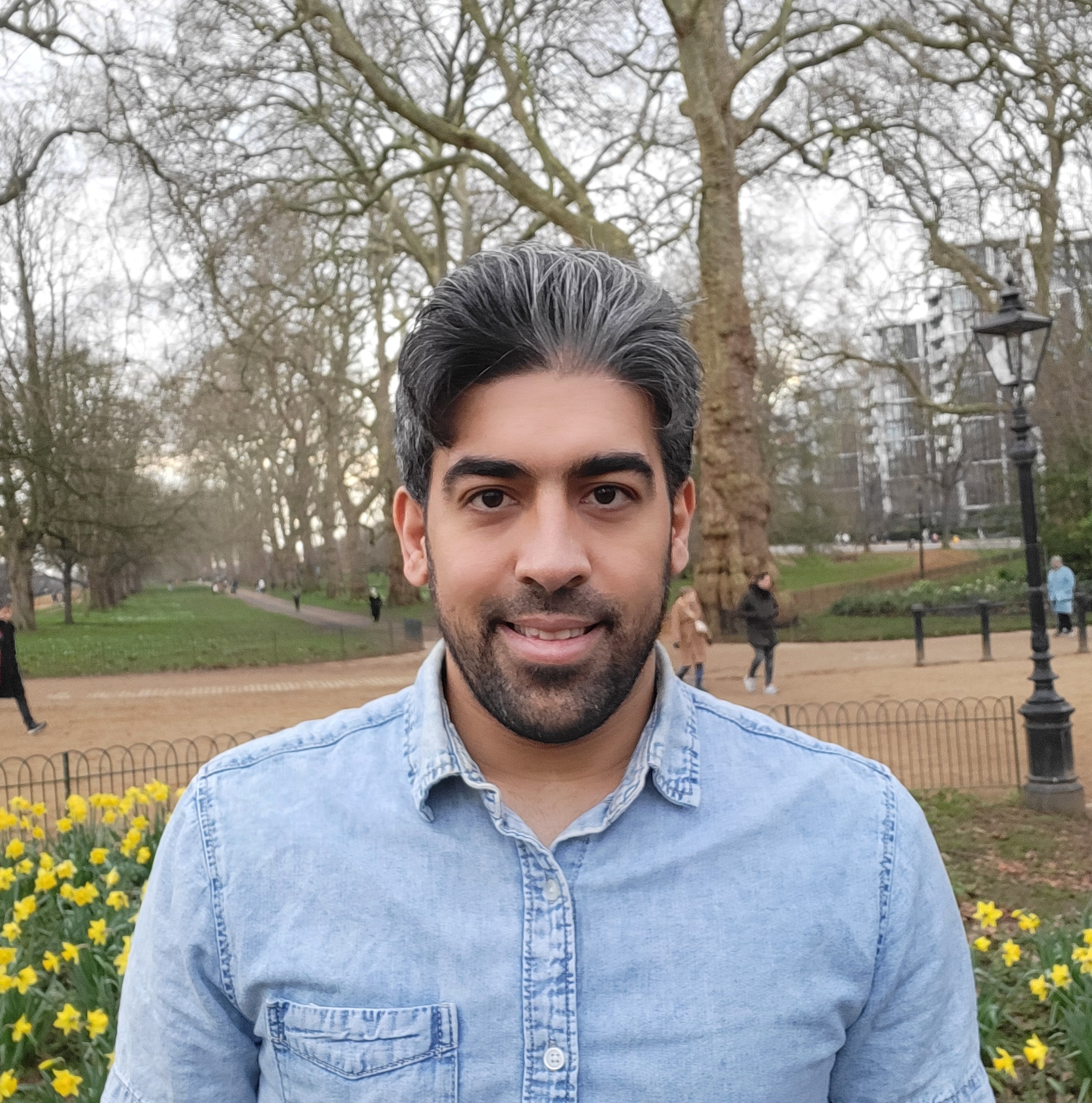
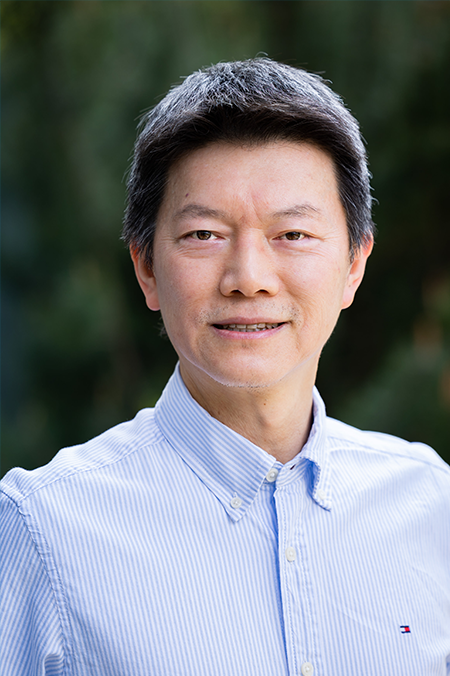
AmirEhsan Khorashadizadeh is a postdoctoral researcher affiliated with the Paul Scherrer Institute (PSI) and École Polytechnique Fédérale de Lausanne (EPFL) , working in the Computational X-ray Imaging group under Prof. Manuel Guizar Sicairos. His research integrates deep learning and computational imaging , focusing on physics-informed neural networks for applications in tomography , inverse scattering , and cosmological imaging . He collaborates with the Swiss Data Science Center (SDSC) on the CHIP project 'Machine-Learning-assisted Ptychographic nanotomography.' His work spans multiple domains, including medical imaging , Bayesian imaging , and astrophysical signal processing . Publications highlight advancements in scalable image reconstruction , injective flow-based models , and implicit neural representations , with applications in X-ray and cosmological imaging . Scientific Awards Promotion of Young Talent grant from University of Basel for 9-month visiting scholar at University College London (UCL) Top 25 most downloaded paper in IEEE Transactions on Computational Imaging (TCI) from Sept. 2022–Sept.2023
Nuno Fachada is an Assistant Professor at Lusófona University's School of Communication, Arts and Information (ECATI) and a researcher at COPELABS (Cognitive and People-centric Computing). He teaches Programming and AI in the Videogames Bachelor's program and Research Software in the Informatics PhD program, with research spanning Artificial Intelligence, Machine Learning, Modeling and Simulation, High Performance Computing, and Computer Science Education. His work integrates computational methods with applications in game development, wildfire management, and networking. Education: Bachelor's degree in Electrical and Computer Engineering from IST (2005) Master's degree in Electrical and Computer Engineering from IST (2008), focusing on immune system simulation PhD in Electrical and Computer Engineering from IST (2016) with thesis 'Agent-Based Modeling on High Performance Computing Architectures', awarded 'Pass with Distinction and Honour' Research interests emphasize Agent-Based Modeling for complex systems like wildfires and immune responses, Particle Swarm Optimization algorithms, and OpenCL for parallel computing. He develops educational tools for game development curricula and applies AI to environmental monitoring and wireless networks, with strong output in simulation frameworks and human-centric computing. Recent publications (2024-2025) reveal three dominant trends: wildfire modeling using satellite data and agent-based approaches, large language models for engineering code generation (e.g., LoRaWAN), and game AI for procedural content and rehabilitation. His work bridges theoretical computer science with practical applications in environmental science and healthcare, while maintaining focus on education through tools like TextCL and cf4ocl. Scientific Awards: No scientific awards, fellowships, or medals were mentioned in the provided text Advising and Grants: Fachada serves as a researcher in ILIND-funded projects, notably the 'Cybersecurity Awareness Training Simulator' (2024-2025) with six collaborators. He supervises PhD students in Informatics but specific advisees aren't listed. His grant activity primarily involves institutional projects through Lusófona University's research center, with emphasis on simulation-based tools for real-world applications. Labs and Teams: He is a core researcher at COPELABS, focusing on cognitive and people-centric computing projects including wildfire simulation and cybersecurity training. Prior to Lusófona, he conducted postdoctoral work at LaSEEB/ISR (Institute for Systems and Robotics), maintaining connections to IST. His team collaborations span international researchers in environmental modeling and AI, with recent projects involving Portuguese and European institutions.
Congyi Zhang is a postdoctoral research and teaching fellow in the Department of Computer Science at the University of British Columbia. He earned his Ph.D. in Computer Science from Peking University and a B.Sc. in Mathematics from Fudan University. Prior to his current role, he served as a research associate at the Department of Computer Science, Hong Kong University, and as a visiting researcher at the Max Planck Institute for Informatics. His research focuses on neural shape representation, AI-driven 3D content generation, human-computer interaction, and 3D reconstruction techniques. He has contributed to methods that improve geometric accuracy, optimize sampling strategies, and enable efficient local editing of 3D models. Recent publications highlight advancements in neural implicit fields, multiview diffusion models, and efficient 3D mesh creation from 2D inputs. His work balances theoretical innovation with practical applications in digital media, orthodontics, and archaeology. He is currently transitioning to an Assistant Professor position at the Computer Science Department, University of Texas at Dallas, where he seeks motivated Ph.D. students for Spring/Fall 2026 cohorts.
Bastian Wandt is a Researcher at the University of British Columbia in the group of Helge Rhodin, and will join Linköping University as an Assistant Professor in September 2022. He holds a PhD from Leibniz University Hannover (2015–2020) and a Mechatronics degree (B.Sc. 2012, M.Sc. 2015) from the same institution. His research focuses on human motion capture, 3D reconstruction, and machine learning, particularly deep learning techniques for weakly supervised training and probabilistic modeling. He founded the AI consulting company HEUWA in 2018 and has taught courses such as DATA 311 at UBC. Research interests include applying neural networks and dimensionality reduction to human pose estimation, with special emphasis on monocular video analysis and physics-based models. Key contributions involve unsupervised learning methods like ElePose and CanonPose , as well as anomaly detection frameworks like Same Same But DifferNet . Awards include the KI Talent Award (2020, €4,000) for his dissertation. He has supervised numerous theses on topics like pose space modeling, recurrent neural networks for motion capture, and texture synthesis. His work bridges computer vision, robotics, and medical imaging applications.
Håkan Vadst is a Senior Lecturer at Halmstad University, affiliated with the School of Business, Innovation and Sustainability. His teaching focuses on mechanical engineering in product development, computer-aided design, and lightweight design. His research interests include lightweight construction, bionics, and sustainability, particularly in the context of automotive engineering and industrial design processes. He serves on the Halmstad University Research and Education Board and manages the 5-year Master's program in Engineering Design, Sustainable Design, and Innovation. Research Themes: Vadst's work centers on integrating design analysis techniques into engineering workflows, leveraging bionic principles for sustainable design, and advancing additive manufacturing applications. He explores template-based methodologies to enhance designer efficiency and has contributed to studies on carbon fiber composites and robotic framing concepts in production systems. Publications: His recent work emphasizes process integration challenges, computer-based design analysis tools, and the application of bionics in automotive production. Key contributions include mesh-less analysis techniques, generic design analysis process models, and case studies on lightweight automotive components.
Andy Huynh is a Doctor of Philosophy student and Casual Teaching staff member at The University of Western Australia. His academic work bridges biomedical engineering and computational sciences, with a focus on developing innovative methods for medical image analysis and biomechanical modeling to address clinical challenges. His primary research interests encompass Biomedical Engineering , Computational Biomechanics , and Medical Image Analysis . Huynh's work involves creating computational models of the brain and vascular systems, utilizing advanced techniques in segmentation, mesh generation, and stress distribution analysis. These models aim to improve patient-specific diagnostics and treatment planning, particularly for conditions like abdominal aortic aneurysms. Recent publications demonstrate a consistent trajectory in enhancing the accuracy and automation of medical image processing for biomechanical simulations. His research spans brain atlas personalization, hexahedral mesh development for anatomical structures, and the impact of segmentation variability on vascular stress predictions, highlighting a strong commitment to translating computational advances into clinical applications. Scientific Awards: Citation for Outstanding Contributions to Student Learning (2024) William and Marlene Schrader Prize in Biomedical Engineering (27 October 2022) Although Huynh holds a casual teaching role and received an award for student learning contributions, there is no public record of him supervising graduate students or securing independent research grants. His current focus appears to be on his doctoral research and collaborative projects.
Eni Halilaj is an Associate Professor in the Department of Mechanical Engineering at Carnegie Mellon University’s College of Engineering, with courtesy appointments in Biomedical Engineering and the Robotics Institute. She also holds an adjunct faculty position in Orthopaedic Surgery at the University of Pittsburgh School of Medicine. She directs the CMU Musculoskeletal Biomechanics Lab, an interdisciplinary research group focused on understanding and optimizing human movement, particularly for individuals with mobility impairments. Ph.D., Biomedical Engineering, Brown University (2015) B.A., Engineering, Brown University (2008) Postdoctoral Fellow, Bioengineering, Stanford University (2018) Her research interests include biomechanics, computational modeling, wearable robotics, artificial intelligence, medical imaging, and rehabilitation engineering. She leverages motion capture, wearable sensors, computer vision, and machine learning to study musculoskeletal mechanics and develop technology-assisted rehabilitation strategies for preventing osteoarthritis and improving post-surgical outcomes. Her work emphasizes portable, scalable biomechanics tools that can be used outside traditional labs. Her recent publications demonstrate a strong trend in integrating AI and sensor fusion (IMU + video) to enable accurate, markerless human motion tracking in natural environments. These advances support clinical translation by enabling remote monitoring, personalized interventions, and large-scale biomechanical studies. She actively collaborates with UPMC and the Chan Zuckerberg Initiative on projects like DeepGaitLab, which aims to make markerless motion analysis accessible through open-source tools. NSF CAREER Award American Society of Biomechanics Early Career Achievement Award NIH K12 Career Development Scholarship George Tallman Ladd Research Award College of Engineering Dean’s Early Career Faculty Fellowship American Society of Biomechanics Young Scientist Award She advises multiple Ph.D., master’s, and undergraduate students and has received significant research funding, including a $2.7M NIH grant to predict post-traumatic osteoarthritis after ACL surgery. She teaches courses such as Dynamics and special topics in biomechanics and wearable health technologies. She is actively involved in outreach, including hosting workshops for high school girls and participating in National Biomechanics Day. Her lab, the CMU Musculoskeletal Biomechanics Lab, is a hub for interdisciplinary innovation, combining engineering, medicine, and computer science to improve human mobility and prevent joint disease.
Quanling Deng is a Lecturer in the School of Computing at the Australian National University (ANU), where he focuses on applied mathematics, computational methods, and machine learning. Previously, he held positions as a Van Vleck Visiting Assistant Professor at the University of Wisconsin-Madison (2020–2022) and a Research Associate at Curtin University (2016–2020). He earned his Ph.D. in Mathematics from the University of Wyoming in 2016 and has conducted visiting research at institutions including INRIA (Paris), AGH University (Krakow), and École des Ponts ParisTech. Education: Ph.D. in Mathematics, University of Wyoming, 2016 Moved to the USA in 2011 to pursue studies in mathematics His research interests span Applied Mathematics (e.g., sea ice dynamics, ocean/atmosphere systems), Computational Mathematics (finite element methods, isogeometric analysis), and Machine Learning (feature interaction, deep neural networks). He also investigates Data Assimilation techniques, including stochastic models and Lagrangian-Eulerian frameworks. Research Trends: His recent work emphasizes multiscale modeling (e.g., sea ice floes), eigenvalue problem solutions using advanced finite element techniques, and explainable machine learning. He explores applications of physics-informed neural networks and parallel computing for high-performance simulations. Grants & Projects: Leading the project "Advancing Numerical Computation for Schrödinger Eigenvalue Problems" (2023) Affiliations: Previously affiliated with Curtin Institute for Computation and Curtin TIGeR. Collaborates internationally on computational mathematics and climate modeling.
Yaoyao Liu is an Assistant Professor at the University of Illinois Urbana-Champaign, holding joint appointments in the School of Information Sciences and Coordinated Science Laboratory. He is affiliated with the Siebel School of Computing and Data Science, National Center for Supercomputing Applications (NCSA), and Illinois Informatics. His research focuses on computer vision and machine learning, particularly in areas like continual learning, few-shot learning, and 3D geometry modeling. He completed his PhD at the Max Planck Institute for Informatics and a BS at Tianjin University. Research Interests: Continual learning and class-incremental learning Generative models and diffusion models 3D geometry and medical imaging applications Awards: ECVA PhD Award (2024). Professional Activities: Area Chair for CVPR, NeurIPS, ICLR, and other top conferences. Served as Senior Program Committee member for AAAI and IJCAI. Labs/Teams: Active in interdisciplinary projects at NCSA and Illinois Informatics, collaborating on medical imaging and 3D vision challenges.
Gabriel Barrenechea is a Reader in the Department of Mathematics and Statistics at the University of Strathclyde, Faculty of Science. His academic work centers on the development and analysis of finite element methods with strong theoretical foundations, particularly applied to fluid mechanics and partial differential equations. His research interests lie at the intersection of numerical analysis and computational mathematics, with a focus on ensuring stability, accuracy, and physical consistency in simulations. Key areas include discrete maximum principles, bound-preserving schemes, stabilization techniques for convection-dominated flows, and multiscale methods. His work often addresses challenges in non-Newtonian fluids and high-Weissenberg number problems. The recent publications reflect a sustained focus on finite element discretizations that preserve physical bounds and mathematical monotonicity. These works span elliptic, parabolic, and fluid flow problems, employing hybrid, nodal, and implicit-explicit formulations. The trend shows increasing sophistication in handling nonlinearities, variable coefficients, and complex physical constraints through mathematically rigorous approaches. Best paper award Sociedad Espanola de Matematica Aplicada (SEMA) 2018 Gabriel Barrenechea has been actively involved in research leadership and student training. He has served as Principal Investigator on multiple EPSRC-funded and institutional projects, including doctoral training partnerships. He supervises postgraduate research and contributes to academic development frameworks. His professional activities include organizing major conferences such as the Biennial Conference on Numerical Analysis and the Scottish PDE Colloquium. He is a key organizer of academic events including the Impact Case Studies in Maths & Stats workshop and the Early Career Network in Mathematics and Statistics. His collaborations span the UK and international institutions, reflected in co-authored works and joint projects.
Jerzy Pamin serves as Professor and Chair for Computational Engineering within the Faculty of Civil Engineering at Krakow University of Technology, where he leads research in advanced computational mechanics for structural materials. His expertise bridges theoretical continuum mechanics with practical engineering applications, particularly in failure analysis of concrete and metallic structures. His educational background includes BEng, PhD, DSc, and full Professor qualifications. Key research domains encompass: Finite strain plasticity and thermo-mechanical coupling Gradient-enhanced damage and plasticity models Numerical regularization of localization phenomena Concrete durability under corrosion and impact Shear band formation in metals and soils Recent publications (2019-2025) demonstrate consistent innovation in regularization techniques for material instabilities, with significant focus on gradient models for concrete size effects, thermo-plasticity at large deformations, and corrosion-induced cracking mechanisms. His work systematically addresses numerical challenges in shear band propagation and dynamic failure through advanced finite element formulations. He has received 5 institutional achievements acknowledging his scholarly contributions, though specific award names aren't detailed in available records. Professor Pamin has mentored 6 doctoral students while securing research funding for computational mechanics projects. His leadership extends to developing numerical frameworks for structural safety assessment, particularly in corrosion-affected infrastructure and dynamic loading scenarios. As head of the Chair for Computational Engineering, he directs a research group specializing in material modeling and numerical methods, with ongoing projects focused on multi-physics failure simulations and advanced discretization techniques for civil engineering applications.
Hsi-Yung Feng is a Professor and Department Head in the Department of Mechanical Engineering at the University of British Columbia's Faculty of Applied Science. His academic leadership spans both research and administration within one of Canada's premier engineering institutions. His educational background includes a B.S. from National Taiwan, and M.S. and Ph.D. degrees from Ohio State University. He is a Professional Engineer (P.Eng.) and a Fellow of the American Society of Mechanical Engineers (FASME). Dr. Feng's research focuses on CAD/CAM/CAI (Computer-Aided Design, Manufacturing, and Inspection) systems, with particular emphasis on highly flexible and direct CAD modeling techniques, multi-axis CNC machining processes, and computational tools for 3D printing and laser scanning applications. His work bridges theoretical computational geometry with practical manufacturing solutions. His recent publications demonstrate a consistent focus on advancing geometric modeling, machining simulation, and quality inspection methodologies. The research shows progression from fundamental geometric algorithms toward increasingly sophisticated applications in manufacturing automation, with strong emphasis on practical implementation challenges in CNC machining and additive manufacturing. Among his professional recognitions, Dr. Feng received the prestigious Killam Teaching Award from the University of British Columbia in 2014, highlighting his excellence in engineering education. Killam Teaching Award, University of British Columbia, 2014 As Department Head, Dr. Feng oversees academic programs, faculty development, and strategic planning for mechanical engineering education and research. His leadership extends to directing the CAD/CAM/CAI Laboratory, which serves as a hub for advanced manufacturing research, focusing on developing innovative computational methods for modern manufacturing challenges. The CAD/CAM/CAI Laboratory, under Dr. Feng's direction, focuses on developing innovative computational methods for manufacturing challenges, particularly in multi-axis machining, 3D printing optimization, and quality inspection systems. Current research includes multi-axis CNC machining simulation, generic postprocessor development, and optimal printing paths with adaptive infill structures for 3D printing.
Oscar Argudo Medrano is a researcher at the Universitat Politècnica de Catalunya's Facultat d'Informàtica de Barcelona (FIB) , affiliated with the ViRVIG research group (Visualization, Virtual Reality, and Graphic Interaction). His work focuses on computer graphics and 3D terrain modeling , with recent publications in Computer Graphics Forum , ACM Transactions on Graphics , and Cartography and Geographic Information Science . He collaborates extensively with Carlos Andújar, Antonio Chica, and Nuria Pelechano. Email: oargudo@cs.upc.edu Research Areas : 3D terrain analysis and synthesis Environmental simulation Vegetation and ecosystem modeling Procedural content generation Cultural heritage digitization Recent Article Trends : His recent publications emphasize terrain descriptors , glacier modeling , tree variations , and mechanical weathering simulations , with applications in virtual reality , digital heritage , and ecosystem visualization . Collaborative projects like European Cloud for Heritage OpEn Science highlight his work in cultural preservation and environmental impact analysis .
Antonio Huerta is a Professor of Applied Mathematics at the Universitat Politècnica de Catalunya (UPC) and Director of ICREA. He leads the Laboratori de Càlcul Numèric (LaCàN) , focusing on numerical methods for scientific and engineering problems governed by mechanics and interdisciplinary principles. His research spans applied mathematics, computational science, and fluid dynamics. Education : Ph.D. from Northwestern University (1987), preceded by studies at the Escuela Técnica Superior de Ingeniería de Caminos, Canales y Puertos de Barcelona (1983). His work emphasizes numerical methods , particularly hybridizable discontinuous Galerkin (HDG), finite volume methods, and proper generalized decomposition (PGD), applied to problems in incompressible/compressible flow simulation , fluid-structure interaction , and magneto-mechanical coupling . Recent projects include data-driven design for automotive battery optimization ( GREEN ) and MATLAB-based open-source tools. Key collaborations include co-authoring the textbook Finite Element Methods for Flow Problems with Jean Donea and developing error estimation frameworks for finite element solutions. His publications highlight interdisciplinary applications in mechanics, mathematics, and computer science.
Subburaj Karupppasamy is an Associate Professor at Aarhus University's Department of Mechanical and Production Engineering, leading interdisciplinary research focused on medical device design, biomechanics, and computational modeling for aging-related musculoskeletal disorders including osteoarthritis, osteoporosis, and scoliosis. His work integrates engineering methodologies with clinical applications to develop diagnostic tools and treatment systems. Research interests span biomechanics, medical device innovation, diagnostics, computational modeling, and AI-driven design tools. His team employs medical imaging, 3D geometric analysis, finite element modeling, and mechanobiology principles to address bone and spine health challenges, emphasizing translational outcomes through industry and clinical collaborations. Publication trends reveal a dominant focus on computational biomechanics for vertebral fracture prediction, with significant contributions to finite element analysis optimization, medical device manufacturing, and design cognition studies. Recent works also explore VR/AR/MR systems for medical training and additive manufacturing of fabrics, demonstrating cross-disciplinary applications. Scientific Awards: No specific awards, fellowships, or medals listed in source text He actively supervises PhD candidates as evidenced by his participation in the Foundational Course in PhD Supervision (November 2023) and membership on PhD examination boards. His research has generated 4 patents and 2 technology transfers but grant details remain unmentioned. The team operates within Aarhus University Engineering facilities, utilizing medical imaging, finite element simulation, and AI tools for musculoskeletal health research. Collaborations with clinical institutions and industry partners drive their mission to translate engineering solutions into practical healthcare technologies for improving quality of life in chronic conditions.