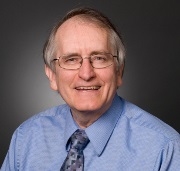
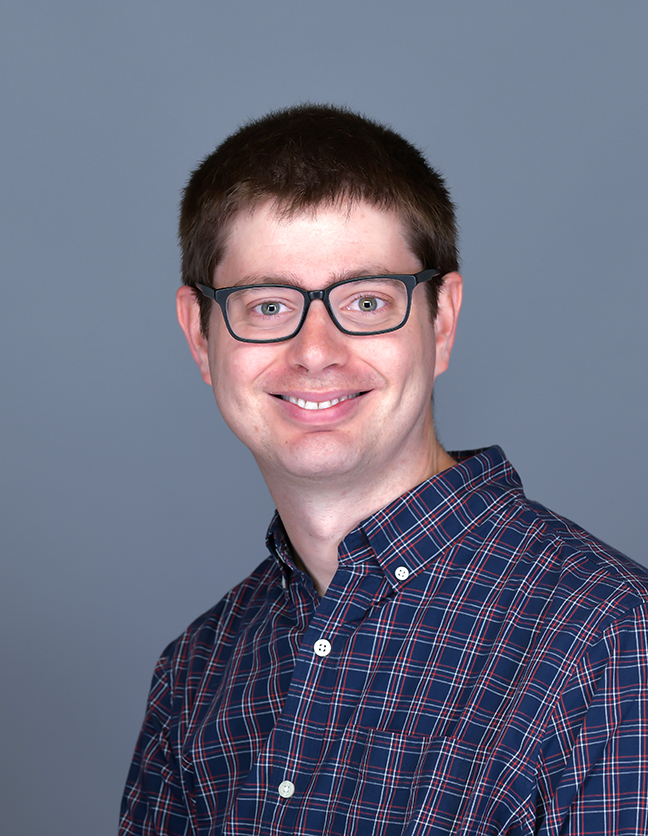
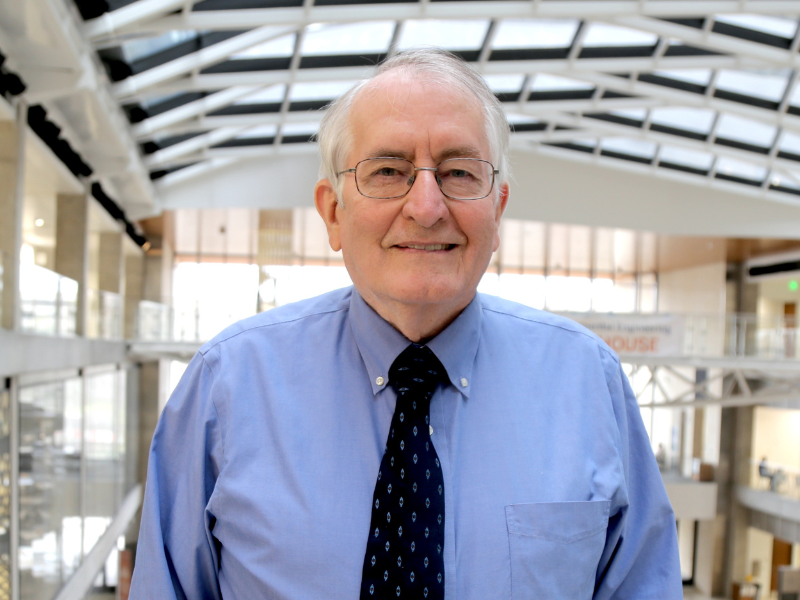
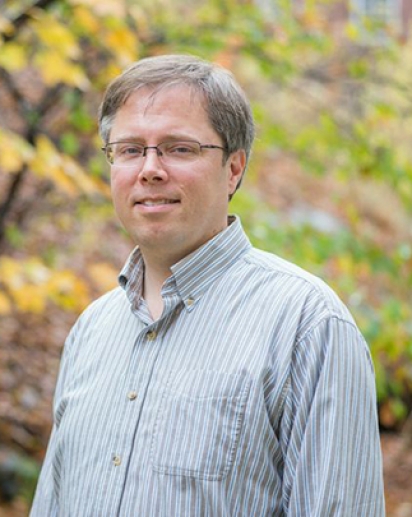
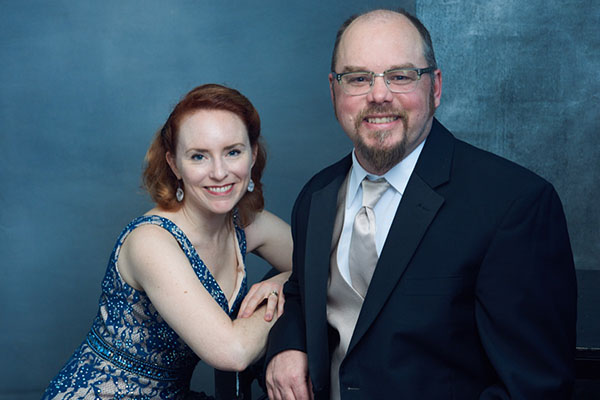
Gary Rochelle is the Carol and Henry Groppe Professor in Chemical Engineering and a faculty member at the University of Texas at Austin . His research focuses on developing fundamental insights into kinetic and mass transfer phenomena in aqueous technologies for air pollution control and acid gas treating, particularly for carbon dioxide and mercury removal. Education: Ph.D. in Chemical Engineering from UC Berkeley (1977), M.S./B.S. from MIT (1971) His work addresses critical challenges in CO2 capture using amine scrubbing, including process design optimization, solvent degradation mitigation, and pilot plant validation. Recent studies emphasize energy efficiency, oxidation inhibition, and environmental impacts such as amine aerosol emissions. The Texas Carbon Management Program , which he contributes to, aims to improve amine scrubbing technologies for retrofitting power plants and enabling geological sequestration or enhanced oil recovery. His group has validated concentrated aqueous piperazine (PZ) with an advanced flash stripper as the most efficient open-literature system.
Joseph P. Bressler is an Associate Professor at Johns Hopkins University, jointly affiliated with the Bloomberg School of Public Health and the Krieger School of Arts and Sciences. He is a member of the Department of Environmental Health and Engineering and conducts research at the Kennedy Krieger Institute in Baltimore, Maryland. His work bridges public health, neuroscience, and molecular toxicology, focusing on environmental impacts on brain development. Education: PhD, Rutgers University, 1978 Dr. Bressler’s research centers on neurotoxicology, particularly how environmental pollutants such as lead, cadmium, and aluminum disrupt metal transport systems and affect neurodevelopment. His laboratory investigates the role of iron and other metal transporters at the blood-brain barrier and in glial cells, revealing mechanisms of metal uptake and toxicity. His work has implications for understanding autism, fetal alcohol syndrome, and other neurodevelopmental disorders. His recent publications highlight ongoing research into metal homeostasis, cytotoxicity in cancer and neuronal cell lines, e-cigarette aerosol variability, and epigenetic changes in sex chromosome aneuploidies. The research spans molecular mechanisms, in vitro models, and human health outcomes, demonstrating a multidisciplinary approach to environmental health. Scientific Contributions: Elucidated how lead and cadmium hijack iron transporters to enter the brain Demonstrated aluminum activation of iron uptake pathways in glial cells Investigated flavoring agents like ethyl maltol in enhancing metal toxicity Explored epigenetic and behavioral impacts in rare genetic conditions Dr. Bressler has advised numerous researchers and collaborators across disciplines. His work has been supported by federal and institutional grants, though specific funding details are not provided in the source text. He actively publishes in high-impact toxicology and environmental health journals, with research cited in policy and public health discussions. He leads a research laboratory focused on cellular and molecular mechanisms of neurotoxicity, utilizing in vitro models of the blood-brain barrier, astrocytes, and neuronal cell lines. His team collaborates widely across neuroscience, public health, and environmental engineering domains.
Christian Lindh is an active Associate Professor and Senior Lecturer at Lund University's Division of Occupational and Environmental Medicine. He serves as Research Team Manager for Applied Mass Spectrometry in Environmental Medicine and is affiliated with EpiHealth: Epidemiology for Health. His research focuses on environmental and occupational exposures and their health impacts, with particular expertise in biomonitoring and analytical chemistry. His research interests span Occupational Health , Environmental Health , Analytical Chemistry , Exposure Assessment , and Epidemiology . Lindh specializes in studying human exposure to environmental pollutants including PFAS, heavy metals, phthalates, and polycyclic aromatic hydrocarbons, with particular focus on vulnerable populations such as pregnant women and children. His work contributes to UN Sustainable Development Goals related to health and environmental protection. Analysis of his recent publications reveals a strong focus on environmental epidemiology, particularly examining PFAS exposure patterns, heavy metal toxicity, and the health impacts of environmental contaminants across different life stages. His research employs advanced analytical techniques, particularly mass spectrometry, to precisely measure exposure levels and investigate dose-response relationships. Lindh has secured significant research funding, currently leading projects including 'Temporal Trends in Lead, Mercury, and Cadmium Levels in Children' (Swedish Environmental Protection Agency, 2025-2026) and 'Trade-offs between food safety and food security' (FORMAS, 2024-2027). He serves as Principal Investigator on multiple active research projects totaling 15, with 7 currently active and 7 completed. As Manager of the 'Targeted Exposomics at Lund University' infrastructure, Lindh leads the Applied Mass Spectrometry in Environmental Medicine research team. His work bridges analytical chemistry with public health research, developing methodologies to assess human exposure to environmental chemicals and evaluating their health consequences through epidemiological studies.
Dr. Suresh Bhargava is a Distinguished Professor and Director of AcSIR at RMIT University's Research & Innovation department. He has led interdisciplinary research in materials science, catalysis, and environmental engineering for over three decades, with a focus on strengthening Indo-Australian scientific collaboration. His work bridges academia and industry, addressing challenges in pollution control, nanotechnology, and cancer treatment. Research & Leadership: Established RMIT's Centre for Advanced Materials and Industrial Chemistry (CAMIC), pioneering translational research with industry applications. Supervised 70+ PhD students (100% employment rate), many now leading roles at global institutions. Holds distinguished professorships across six countries and advises governments and Fortune 500 firms on environmental and industrial issues. Awards & Recognition: Recipient of Australia's Member of the Order of Australia (2022), India's P.C. Ray Chair (2014), and the Khwarizmi International Award (2016). His work on mercury pollution control and gold-based anticancer drugs has garnered global acclaim, with over 800 publications (26,000+ citations, h-index 86). Key Contributions: Architect of the Australia-India Strategic Research Fund and the RMIT-AcSIR Joint Research Program. Innovated eco-friendly graphene production from eucalyptus bark and patented anti-cancer gold compounds. Advises on sustainable mineral processing, hydrogen energy, and CO₂ valorization. Industry Engagement: Consulted for Rio Tinto, BHP Billiton, and CSIRO on resource efficiency, pollution mitigation, and nanotechnology applications. His research has created jobs and driven innovation in Australia and Asia-Pacific.
Amanda Giang serves as Assistant Professor at the University of British Columbia's Faculty of Applied Science, Department of Mechanical Engineering, holding a Canada Research Chair in Environmental Modelling for Policy. She maintains a joint appointment with the Institute for Resources, Environment and Sustainability (IRES). Her educational background includes a B.A.Sc. from the University of Toronto, followed by M.S. and Ph.D. degrees from MIT, with postdoctoral training at MIT and Harvard. Dr. Giang's research employs interdisciplinary approaches to develop modeling tools for environmental policy analysis, focusing on pollution assessment, environmental injustice, and the intersection of air quality, decarbonization, and equity. Her work emphasizes action-oriented partnerships with community organizations and government health/environment agencies. Current projects address freight transport decarbonization equity, cumulative impact assessment methodologies for overburdened communities, and holistic environmental impact evaluation in technology design. Her recent publications demonstrate expertise across environmental modeling, policy analysis, and justice frameworks, with significant contributions to understanding spatial inequities in environmental risk distribution and developing community-engaged research methodologies. UBC Killam Research Prize, 2023 Dr. Giang actively collaborates with community groups and government authorities through her LEAP (Learning, Environmental Assessment, and Policy) research group. Her work integrates technical modeling with real-world policy applications, particularly in urban environmental planning contexts where equity considerations are paramount. She has developed innovative frameworks for cumulative impact assessment and environmental justice analysis that directly inform regulatory decision-making processes. Her research laboratory focuses on developing open-source modeling tools for environmental policy analysis while maintaining strong community partnerships that ensure research addresses pressing local environmental justice concerns.
Dr. Michael Philben is an Associate Professor of Chemistry and Geological and Environmental Science at Hope College, where he joined in 2019 after postdoctoral positions at Memorial University (Canada) and Oak Ridge National Laboratory. His research focuses on climate-carbon cycle feedbacks in vulnerable ecosystems, particularly peatlands and Arctic tundra. His educational background includes a Ph.D. in Marine Science from the University of South Carolina (2014) and a B.A. in Earth and Planetary Science from Northwestern University (2010). At Hope College, he teaches Environmental Science courses and contributes to the Day1: Watershed program. Philben's research centers on carbon and nitrogen cycling in ecosystems containing vast organic carbon stocks. He leads an NSF CAREER-funded project investigating Michigan peat bogs as natural laboratories for climate change impacts, using a north-south transect from Portage to Newberry as a 'space-for-time' experiment. His work examines methane emissions, nitrogen availability, and net carbon balance under warming conditions, with particular attention to Sphagnum-dominated peatlands at the southern edge of their climate range. His 15 most recent publications (2020-2024) reveal a strong focus on peatland biogeochemistry, with increasing emphasis on methane dynamics, nitrogen cycling, and the role of specific biochemical compounds like sphagnan. The research combines field measurements across climate gradients with laboratory experiments, often involving Hope College students in all project phases. NSF CAREER Award for peatland climate research Philben actively mentors undergraduate researchers through the Philben Research Group, which investigates how warming impacts carbon cycling in peatlands. His projects involve interdisciplinary work spanning analytical chemistry, geology, and ecology. The group maintains a network of seven Michigan peat bog field sites and collaborates on international research, including Arctic studies in Alaska and Canada. His laboratory focuses on using analytical chemistry tools to predict climate-carbon cycle feedbacks, with particular attention to southern Michigan peatlands as sentinels for larger northern peatland complexes. The research group employs techniques including greenhouse gas flux measurements, radiometric dating of peat cores, and analysis of organic matter composition.
Professor Jing Meng is a leading academic at University College London's Bartlett School of Sustainable Construction, holding the position since 2023 after progressing from Lecturer (2019-2021) to Associate Professor (2021-2023). She concurrently serves as a fellow at the Cambridge Centre for Environment, Energy and Natural Resource Governance and maintains active editorial roles as Executive Editor of the Journal of Cleaner Production and Associate Editor for Journal of Geophysical Research: Atmospheres. Her research spans three interconnected domains: Energy Transitions and Technology Innovation (examining cost forecasts and structural emission declines in China), Climate Change Policies (analyzing South-South trade effects and multinational enterprise emissions), and Emission-Health-Socioeconomics Nexus (assessing air pollution impacts and integrated co-mitigation strategies). This interdisciplinary approach is reflected in her publication record across Nature family journals and PNAS. Analysis of her recent publications reveals a consistent focus on global carbon accounting methodologies, with increasing attention to subnational (city-level) analyses, health co-benefits of climate policies, and technological innovation pathways for hard-to-abate sectors. Her work frequently employs multi-regional input-output modeling to trace emissions through complex supply chains. AGU Global Environmental Change Early Career Award (2023) MIT Technology Review Innovators Under 35 Asia Pacific (2022) Clarivate Highly Cited Researcher (2020-2024) Nature Communications Top 50 Earth Sciences Article (2018) MDPI Emerging Sustainability Leader Award (2020) Environmental Research Letters Best Early Career Article (2017) Professor Meng has secured substantial funding from diverse sources including NERC, the British Council, Quadrature Climate Foundation, The Royal Society, and UCL internal grants. She leads an interdisciplinary research group focused on technology innovation and climate policy, with particular emphasis on China's role in global emissions systems. Her work directly supports Sustainable Development Goal 13 (Climate Action) through actionable policy insights.
Gary T. Rochelle is a Professor holding the Carol & Henry Groppe Professorship in the McKetta Department of Chemical Engineering at The University of Texas at Austin, where he leads fundamental research in air pollution control and carbon management technologies. Education: Ph.D. in Chemical Engineering, University of California, Berkeley (1977) M.S. and B.S. in Chemical Engineering, Massachusetts Institute of Technology (1971) His research focuses on thermodynamic and kinetic phenomena in aqueous systems for CO2 capture, acid gas treating, and flue gas desulfurization. He pioneers mass transfer modeling with chemical reaction, electrolyte thermodynamics, and innovative solvent development like piperazine-based systems. Recent work emphasizes pilot-scale validation of carbon capture processes and mitigation of solvent degradation. Publication trends reveal evolving expertise from fundamental acid gas thermodynamics (1990s) toward integrated carbon management solutions, with current emphasis on process optimization, nitrosamine mitigation, and aerosol control in amine scrubbing systems. Scientific Awards: Carol & Henry Groppe Professorship in Chemical Engineering Professor Rochelle directs the Texas Carbon Management Program, advising four graduate students and two visiting researchers with funding from Department of Energy contracts (e.g., DE-AF26-99FT01029) and industry partnerships. His DOE-sponsored research established concentrated piperazine with advanced flash stripping as the benchmark amine scrubbing system. The group operates a pilot-scale CO2 capture facility at Pickle Research Campus and collaborates internationally through events like GHGT-16 and the Carbon Management Research Review, focusing on scaling carbon capture technologies for power plant retrofits.
Terri S. Hogue is a Professor in the Department of Civil and Environmental Engineering at the Colorado School of Mines, where she also serves as Dean of Earth and Society Programs and Director of the Center for a Sustainable WE 2 ST. Her work bridges engineering, hydrology, and environmental sustainability, with a strong focus on semi-arid regions. Education: PhD in Hydrology and Water Resources, University of Arizona, 2003 MS in Hydrology and Water Resources, University of Arizona, 1998 BS in Geology, University of Wisconsin-Eau Claire, 1995 Her research focuses on hydrologic and land surface processes, particularly in the context of water resource management, climate variability, urbanization, and natural hazards. She integrates field observations, remote sensing, and modeling to study catchment responses to wildfires, urban development, and climate change. Her work emphasizes improving hydrologic forecasts and understanding human-environment interactions in water-limited systems. The 15 most recent publications highlight consistent themes in hydrologic modeling, remote sensing applications, evapotranspiration estimation, post-wildfire hydrology, and urban water systems. Her research spans both observational and computational methods, with strong applications to real-world water management challenges in the western U.S. Scientific Awards and Honors: NSF Faculty Early Career Development (CAREER) Award, 2009 NSF Fellowship Trainee Award (multiple years) NASA Earth Observing System (EOS) Graduate Fellowship, 2001–2002 AMS Journal of Hydrometeorology Editor’s Award, 2011 UCLA Professor of the Year (2004, 2007, 2010) Appointment to National Academy of Sciences Board on Atmospheric Sciences and Climate, 2013 AMS Science and Policy Colloquium Fellowship, 2002 Multitude of scholarships and fellowships from NASA, NSF, and professional societies Dr. Hogue has been actively involved in advising and research leadership through her Hogue Research Group and the Center for a Sustainable WE 2 ST. She has secured significant grants, including the NSF CAREER Award, and contributes to national science policy through service on the AGU Hydrology Section and the National Academy of Sciences. Her work emphasizes interdisciplinary collaboration, data-driven modeling, and sustainable solutions for water-stressed regions. She leads the Hogue Research Group and the Center for a Sustainable WE 2 ST, both of which focus on integrated water, energy, and environmental systems. These teams bring together engineers, hydrologists, and environmental scientists to tackle pressing sustainability challenges through research, education, and policy engagement.
Jonathan W. Chipman is an Adjunct Assistant Professor at Dartmouth College and Director of the Citrin Family GIS/Applied Spatial Analysis Laboratory. He holds an A.B. from Dartmouth College and M.S./Ph.D. from the University of Wisconsin-Madison. Specializing in geospatial science, his work integrates remote sensing, GIS, and spatial analysis to study environmental and social systems. Research focuses include lake optical properties via satellite imagery, land-use changes in Egypt/China, vegetation dynamics in southern Africa, and socio-spatial segregation patterns in the US. Education: A.B., Dartmouth College M.S., University of Wisconsin-Madison Ph.D., University of Wisconsin-Madison Research Interests: Chipman applies geospatial tools to environmental challenges, including climate change impacts on glaciers, land-cover transformations, and socio-environmental linkages. His work bridges disciplines like hydrology, ecology, and public health through innovative GIS methods. Recent projects explore tropical glacier dynamics, greenspace health correlations, and malaria endemicity patterns. Key Article Trends: Publications emphasize remote sensing applications in glaciology, environmental toxicology, and socio-environmental systems. Themes include satellite-based monitoring of river systems, glacier classification in High Mountain Asia, and GIS-driven analysis of human health exposures tied to land cover. Lab & Collaborations: Leads the Citrin Lab, focusing on applied spatial analysis. Courses taught include GEOG 54 (Geovisualization) and EARS 77 (Environmental GIS). Active in 3D landscape modeling collaborations via SketchFab and Google Scholar.
Silvia Santa Maria Newell serves as Director of Michigan Sea Grant and Professor at the University of Michigan School for Environment and Sustainability (SEAS), where she leads critical research on freshwater ecosystems. Her work bridges academic scholarship with practical environmental management through federal partnerships and stakeholder engagement initiatives focused on the Great Lakes region. Education Ph.D. in Geosciences, Princeton University M.A. in Geosciences, Princeton University A.B. in Biogeochemistry, Smith College Newell specializes in nutrient biogeochemistry and microbial ecology, with primary focus on how excess nutrients from agricultural and wastewater sources drive harmful algal blooms (HABs) in freshwater systems. Her research integrates field studies of nitrogen cycling, mercury methylation processes, and climate change impacts on eutrophication. She develops stakeholder-driven solutions for nutrient reduction in watersheds through interdisciplinary collaboration with farmers, policymakers, and environmental managers. Analysis of her 15 most recent publications reveals dominant research themes in Great Lakes HABs mitigation, nutrient cycling dynamics (particularly nitrogen-phosphorus interactions), and emerging contaminants like mercury. Her work consistently connects microbial processes to ecosystem-scale phenomena, with strong emphasis on practical applications for water resource management across North American and international freshwater systems. Scientific Awards Excellence in Grantsmanship (2022) for securing $1M+ research funding AGU Top 10 Most Downloaded Paper (2021) Limnology & Oceanography Outstanding Reviewer (2021) ASTRA Fellow, Estonia Education (2019-2020) Newell actively mentors the next generation of environmental scientists as primary advisor to PhD candidates Berk Durutürk and Ran Jin, and Master's student Monica Woodruff. Her current $1.2M+ research portfolio includes NSF-funded projects on Lake Erie HABs mitigation (DISES CHABS: $150K), mercury-nitrogen cycling interactions (GEOTRACES: $378K), and Ohio wetland monitoring (H2Ohio: $500K). She directs major collaborative initiatives including the Great Lakes Commission HABs Collaboratory and Lake Erie Area Research Network. As Director of Michigan Sea Grant, Newell oversees a federal-state partnership that funds research, outreach, and education programs addressing critical Great Lakes challenges. Her leadership connects university resources with community stakeholders through the Maumee River watershed engagement project and international collaborations studying nutrient pollution impacts from Lake Erie to Lake Taihu in China.
Peter Oakley is a Professor of Material Culture at the Royal College of Art's School of Arts & Humanities, where he also serves as Co-Lead of the Material Engagements Research Cluster. His academic work bridges anthropology, creative practice, science and technology studies, and industrial heritage through ethnographic, experiential, and object-based research methodologies. Education PhD in Anthropology, University College London (2013) Peter Oakley specializes in the anthropology of materials and making, with particular expertise in sustainability across the crafts and applied arts. His research focuses on two main interconnected areas: the social, environmental, and ecological consequences of metal extraction, refining, and assaying throughout history, and the development of sustainable practices within contemporary craft communities. He employs ethnographic, experiential, and object-focused methodologies to examine material culture from multiple perspectives. Analysis of Professor Oakley's recent publications reveals a consistent focus on the intersection of material culture, sustainability, and ethical practices. His work spans historical examinations of mining heritage and contemporary investigations into ethical gold certification programs, with a particular emphasis on the social and environmental impacts of material extraction and use. There is a clear trajectory toward increasingly applied research addressing current sustainability challenges in the creative industries. Research Leadership and Funding UK Principal Investigator for "Toxic Heritage: Socio-natural Landscapes of Extraction and Pollution in the Harz and Cornwall" (AHRC-DFG funded, 2025-2028) Principal Investigator for "Embedding Carbon Literacy in the Applied Arts" (RCA Impact Development Scheme, 2023-2025) Principal Investigator for multiple AHRC-funded projects including "Carbon Measurement Tools in the Creative Industries" (2022-2023) Principal Investigator for international projects in Thailand, Kazakhstan, and other regions focusing on sustainable craft practices Professor Oakley actively supervises PhD candidates, currently advising Enitan Bankole-Race and Yu Lun Eve Lin, with previous successful completion of Wuthigrai Siriphon's doctoral work. His supervision focuses on material culture approaches to creative disciplines and traditional manual skills. Beyond direct supervision, he has led numerous research teams and secured funding from the Arts and Humanities Research Council, Global Challenges Research Fund, and Special Priorities Fund to support sustainability initiatives across the creative industries. As Co-Lead of the Material Engagements Research Cluster at the RCA, Professor Oakley collaborates with researchers across disciplines to advance understanding of material practices and sustainable approaches in the creative sector. His work connects academic research with practical applications through partnerships with craft communities in the UK and internationally, particularly in Thailand, Scotland, and Germany.
Peter Raymond is a Professor at Yale University in the Department of Forestry and Environmental Studies and the Department of Geology and Geophysics. His research focuses on biogeochemistry in natural systems, particularly carbon and nitrogen cycles in aquatic environments. He investigates watershed dynamics, estuary transformations, and climate impacts on riverine systems. Raymond leads the Raymond Lab, which utilizes isotopic analysis and watershed approaches to study carbon and nitrogen pools. Research interests include: Landscape controls on carbon export from watersheds Biogeochemical processes in estuaries and temperate rivers Mercury enrichment and carbon sequestration dynamics Climate change impacts on Arctic and permafrost regions Recent work highlights global methane budgets, greenhouse gas emissions from inland waters, and the role of rivers in carbon cycling. His team also explores novel carbon removal strategies like enhanced rock weathering. Raymond's studies often integrate field observations with modeling to address pressing environmental challenges. Labs/Teams: Raymond Lab (Yale University)
Dr. Cynthia Coles is an Associate Professor in the Department of Civil Engineering at Memorial University of Newfoundland's Faculty of Engineering and Applied Science. She specializes in environmental engineering, water resources, and geo-environmental engineering. Her research focuses on metal interactions with soils/sediments, arsenic distribution/removal, and mining impacts on groundwater. She teaches courses including Water and Wastewater Treatment, Environmental Pollution Mitigation, and Renewable Energy. Education: PhD (Geo-environmental Engineering) and M.Eng. (Water Resources) from McGill University, B.Eng. (Civil Engineering Structures) from McGill University. Industrial experience includes construction supervision in Sierra Leone and work with Conestoga-Rovers and Associates. Research Highlights: Over 15 peer-reviewed publications since 2000, focusing on heavy metal adsorption mechanisms, groundwater remediation techniques, and climate change impacts. Recent work addresses arsenic removal via sand filtration and peat-based sorbents. Teaching: Offers graduate courses in water treatment, soil chemistry, and environmental pollution control. Undergraduate instruction includes hydrology, municipal engineering, and environmental geotechnics. Current Opportunities: Accepting M.Env.Sci. students for research in geo-environmental engineering.
Dr. Sarah K. Carmichael is a Professor in the Department of Geological and Environmental Sciences at Appalachian State University , where she also serves in the Appalachian Studies Faculty . Her interdisciplinary research focuses on fluid-rock reactions , manganese geomicrobiology , and paleoenvironmental reconstruction of mass extinction events through Devonian period studies . B.A. from Smith College M.A. and Ph.D. from Johns Hopkins University Her research combines geochemistry of mass extinctions , microbe-mineral interactions in caves , and Appalachian manganese ore formation through fieldwork from Mongolian mountains to Vietnamese basins . She leads the DAGGER (Devonian Anoxia, Geochemistry, Geochronology, and Extinction Research) Team and collaborates with Dr. Suzanna Bräuer on cave geomicrobiology projects. Recent publications focus on Devonian-Mississippian stratigraphy in Mongolia , mercury isotope evidence for Late Devonian ocean anoxia , and human impact assessment in Appalachian caves . Her work has been recognized with National Geographic Explorer status, inclusion in the Explorers Club 50 , and the UNC Board of Governors Teaching Award . Scientific awards include National Geographic Explorer (2018, 2022) Explorers Club 50 (2022) Board of Governors Teaching Award (2020) Academy of Outstanding Teachers induction (2022) KWI Distinguished Service Award (2020) William C. Strickland Outstanding Junior Faculty Award (2014) She mentors numerous student researchers and has secured over $1.2 million in external funding from organizations like the National Science Foundation and National Geographic Society . Her laboratory work utilizes advanced techniques such as electron microscopy and isotope analysis to decode micron-scale mineral textures that reveal Earth's ancient environmental changes.