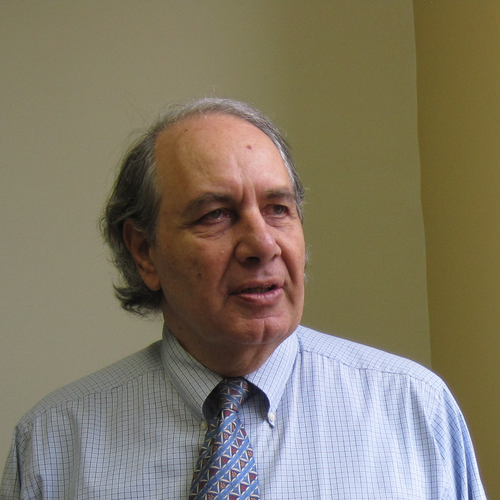
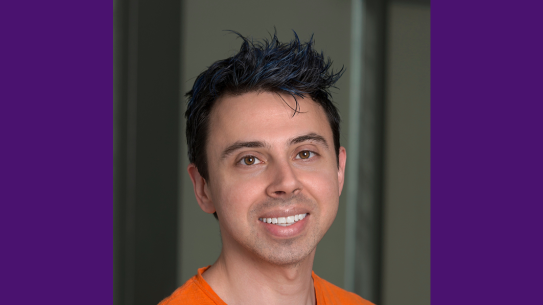
Dr Crispin Branfoot is a Reader in the History of South Asian Art and Archaeology at SOAS University of London, affiliated with the School of Arts and the Department of History of Art and Archaeology. He holds a BA in Ancient History and Archaeology from Manchester University, and an MA and PhD in Art and Archaeology from SOAS. His research focuses on the arts of southern India from the 14th to 20th centuries, with emphasis on Hindu temple architecture, colonial-era renovations, and the intersection of photography, archaeology, and conservation. He has supervised four PhD students examining topics ranging from temple iconography to colonial paper-making practices. His work explores how sacred spaces like the Minakshi-Sundareshvara temple in Madurai were reconfigured through colonial and post-colonial interventions, while also analyzing pilgrimage routes, portraiture traditions, and the legacy of the Vijayanagara Empire. He has contributed to major publications such as India: A History in Objects (2022), and his research bridges material culture studies with postcolonial theory. He previously worked at De Montfort University and the British Museum, where he gained expertise in South Asian art curation and historical documentation.
Dr. Grzegorz Kotłowski serves as an Assistant Professor at the University of Gdańsk's Faculty of Languages within the Institute of Classical and Slavonic Studies, Division of Classical Philology. He concurrently holds the significant administrative position of Deputy Dean for Students Affairs at the Faculty of Languages, demonstrating dual expertise in academic scholarship and institutional leadership. His research centers on Classical Philology with intense specialization in Latin epigraphy, particularly the documentation and analysis of Neo-Latin inscriptions in historical churches of Gdańsk (notably St. Mary's Church) and Warmia (Frombork Cathedral). Dr. Kotłowski's work bridges philological rigor with historical contextualization, examining epitaphs, sepulchral plates, and commemorative texts from the early modern period to reconstruct social hierarchies, religious practices, and cultural identities within Gdańsk's multicultural urban landscape. His methodological contributions extend to digital approaches in Neo-Latin studies, addressing data acquisition and dataset creation challenges. Recent publications (2020-2022) reveal a highly focused epigraphic output, with over twenty articles detailing specific monuments while collectively forming a comprehensive corpus of Gdańsk's Latin funerary heritage. His collaborative multi-volume series with Elżbieta Starek— Łacińskie inskrypcje w kościołach Gdańska (covering Mariacka Basilica, Śródmieście, and Oliwa) and Łacińskie inskrypcje w kościołach Warmii (Frombork)—establishes foundational references for regional epigraphic studies. No scientific awards are documented in available sources. Administrative responsibilities as Deputy Dean for Students Affairs indicate active engagement in academic governance, though specific advising roles or grant funding remain unreported in current materials. The absence of laboratory or team descriptions suggests individual or small-collaboration research models centered on archival and field-based epigraphy.
Markus A. Denzel is a Full Professor and Head of the Chair of Social and Economic History at the University of Leipzig since 2002. He also holds a Contract Professorship in Economic History at the Free University of Bolzano since 2000. He served as Dean (2005-2008) and Dean of Studies (2003-2005) at the Faculty of History, Arts and Oriental Studies in Leipzig. His research focuses on Economic History , Financial Systems , and Medieval/Early Modern Commercial Practices , with a particular emphasis on payment systems, merchant networks, and trade integration across Europe and its colonies. His work spans from the 13th century to the early 20th century , analyzing historical financial instruments like bills of exchange, marine insurance, and cashless transactions. 2009 : The Merchant Family in "Oberdeutsche Hochfinanz" 2008 : Latin America's cashless payments system 2007 : Munich's pre-modern financial systems 2006 : Marine insurance in the Mediterranean 2005 : Italian merchants in late Byzantium He received the Heinz Maier-Leibniz Prize (1998) for outstanding contributions to research in economic history.
Magnus Linnarsson is a Professor of History at Stockholm University's Department of History, specializing in political history with a focus on early modern and modern Sweden. His research examines institutional change, public-private service organization, and the evolution of the welfare city. He leads undergraduate programs and supervises students at all levels. PhD in History (2010), Lund University Associate Professor (2017), Stockholm University His research spans four centuries of political conflicts over public services, state formation, and urban development. Key works include analyses of Sweden's postal, customs, and welfare systems, comparing hierarchical and contractual state organization models. Recent publications (2024) in Nordic Welfare Cities explore urban citizenship and inclusive welfare systems since 1850, challenging national narratives by emphasizing local governance. Earlier studies (2022–2018) dissected regime shifts, mercantile-state relations, and publicness concepts in tramway and telecom debates. Current projects include: Skiftande regimer (2021–2025): State formation and administrative reform (Vetenskapsrådet-funded) Olika vägar till välfärdsstaden (2021–2025): Nordic urban welfare debates (Riksbankens jubileumsfond-funded) He advocates for interdisciplinary analysis of political economy, institutional loyalty, and spatial dynamics, connecting historical debates to modern policy challenges.
Academic Overview: Todd Lewis is a Distinguished Professor of Arts and Humanities at the College of the Holy Cross, holding the Monsignor Edward G. Murray Professorship. He specializes in Newar Buddhism, Himalayan religions, and the intersections of ecology and religion. Lewis earned his Ph.D. in Religion from Columbia University and has conducted extensive fieldwork in Nepal. Education: Ph.D. in Religion, Columbia University Research Interests: Lewis focuses on Buddhist narratives, ritual practices, and the role of merchants in religious history. His work explores Newar Buddhism, Himalayan cultural history, and the application of religious frameworks to contemporary issues like ecology. Grants & Leadership: Lewis directed six NEH summer institutes for educators, emphasizing Himalayan studies and Buddhist traditions. He has received fellowships from the Guggenheim Foundation, National Endowment for the Humanities, and others. Labs/Teams: Active in Holy Cross' Asian Studies and Environmental Studies programs. Co-founded the Journal of the North American Japanese Garden Association and serves on editorial boards for Journal of Buddhist Ethics and Religions .
Professor Martial Staub holds the position of Professor of Medieval History at the University of Sheffield, serving as Internationalisation Officer and SRDS Director within the School of History, Philosophy and Digital Humanities. He joined the university in 2004 after a research fellowship at the Max Planck Institute of History in Göttingen, Germany. His academic training includes degrees from the University of Paris I Panthéon-Sorbonne, Paris X Nanterre, and the Ecole des Hautes Etudes en Sciences Sociales, alongside studies at the Ecole Normale Supérieure de Fontenay/St Cloud. Staub’s research focuses on late medieval European history, particularly South German and Italian cities, with expertise in medieval philanthropy, historiography, and spatial mobility. He co-directs the Centre for the Study of Abrupt, Violent and Traumatic Change and leads projects on medieval global citizenship. His teaching spans undergraduate courses like 'Pagans, Christians and Heretics in Medieval Europe' and postgraduate programs such as 'Approaching the Middle Ages.' Professional roles include editorial board memberships for journals like Zeitschrift für Ideengeschichte and German History , alongside affiliations with institutions such as the Görres-Gesellschaft. His work bridges interdisciplinary collaborations, addressing themes of exile, urban history, and the interplay between medieval and modern contexts.
Dr. Farhad Merchant is an Assistant Professor of Innovative Computer Architecture at the Bernoulli Institute, University of Groningen, since July 2024. Previously, he served as a Lecturer (Assistant Professor) at Newcastle University (2022–2024) and held research roles at Bosch Research, NTU, and RWTH Aachen University. His research focuses on emerging technology-based computing and hardware-oriented security, including neuromorphic architectures, in-memory computing, and secure hardware design. Education: PhD in Electronics Engineering from the Indian Institute of Science, Bangalore, with a DAAD-funded visit to RWTH Aachen University. He also holds industry experience from Bosch Research. Research Interests : - Hardware Security - Neuromorphic Computing - Algorithm-Architecture Co-design - Reconfigurable Computing - Computer Arithmetic Projects : - Coordinator for the REACT project (2025–2029): Focuses on self-aware neuromorphic architectures. - Principal Investigator for Privacy-Preserving Computer Architectures (CogniGron, 2025–2029). - Completed BioNanoLock project (DFG-funded, focusing on bio-nanoelectronic security). Awards : - Best Paper Awards at ISQED 2022, NEWCAS 2023, and VLSI-DAT 2024. - Minerva Fellowship (Technion, Israel), HiPEAC Technology Transfer Award (2019). He co-founded the SeHAS workshop (since 2019) and serves on editorial and program committees for major conferences like DAC, ISLPED, and VLSI-SoC.
Nabil Matar is a Professor at the University of Minnesota, holding the Presidential Professorship in the President’s Interdisciplinary Initiative on Arts and Humanities and the Samuel Russell Chair in the Humanities. He teaches in both the English and History departments and contributes to the Religious Studies Program. Educated at the American University of Beirut (B.A., M.A.) and Cambridge University (Ph.D., 1976) Former Department Head at Florida Institute of Technology (1997-2007) Recipient of postdoctoral grants from the British Council and Fulbright His research focuses on early modern Euro-Islamic interactions , particularly examining Arab-European travel literature, captivity narratives, and religious exchanges. He has authored a foundational trilogy on Islam in Britain and comparative studies on Mediterranean encounters. Key publication trends include Anglo-Ottoman relations , cross-cultural identity formation , and premodern globalization , with works spanning from 1998 to 2018. His scholarship bridges religious studies , literary analysis , and cultural history . Building Bridges award (University of Cambridge, 2012) Kuwait Foundation for the Advancement of Sciences Award (2017) Matar has secured major grants including a National Endowment for the Humanities Conference on 'Shared Cultural Spaces' and has contributed to curricular development in religious and interdisciplinary studies.
Professor Robert S.G. Fletcher holds dual roles as Professor of History and Kinder Professor of British History at the University of Missouri , and serves as an Honorary Professorial Fellow in the Department of History at the University of Warwick (2015-2020). His academic career spans institutions including the University of Exeter, Nuffield College (Oxford), and Princeton University. Specializing in British imperial history , global history , and nomadic societies , his research examines the intersections of empire-building, desert administration, and maritime frontiers. Recent work (2024-2025) extends to interdisciplinary collaborations with museums like the Royal Museums Greenwich , focusing on colonial expeditions, locust control campaigns, and maritime cultural heritage. His scholarship appears in leading journals including Past and Present , The English Historical Review , and Journal of Historical Geography . Publications include the award-winning monographs British Imperialism and 'The Tribal Question' (OUP, 2015) and The Ghost of Namamugi (AUP, 2019). As Principal Investigator, he led the AHRC-funded Inlands: Empires, Contested Interiors (2024) and Science in Culture projects on desert locust campaigns. Major Awards Arts and Humanities Research Council (AHRC) Leadership Fellowship (2015-2018) AHRC Science in Culture award (2018) Key Collaborations Co-edited Connected Empires, Connected Worlds with Benjamin Mountford and Simon Potter (Routledge, 2022) Contributed to The Oxford Handbook of the Ends of Empire (2018)
Prof. Dr. Fatih BOZKURT serves as an Associate Professor in the Department of History at Sakarya University's Faculty of Humanities and Social Sciences. With academic appointments dating back to 2012, he has established himself as a prominent scholar specializing in Ottoman socio-economic history, material culture, and estate records research. His academic journey reflects deep engagement with Ottoman institutional structures and daily life patterns. Doctorate (2005-2011): Sakarya University, Institute of Social Sciences/History (Thesis: Estate books and change in Ottoman material culture (1785-1875 Istanbul example)) MA (2000-2003): Celal Bayar University, Institute of Social Sciences/Modern Age History (Thesis: Social and economic situation of Gördes district according to the Ministry of Finance Dividend Books) Licence (1996-2000): Istanbul University, Faculty of Literature/Department of History Professor BOZKURT's research primarily focuses on Ottoman socio-economic structures, particularly through the lens of estate records (tereke defterleri). His work examines material culture transformations, tradesmen organization, and daily life patterns in Ottoman society. He has made significant contributions to understanding Ottoman urban economies, inheritance practices, and cultural changes, especially during the 18th and 19th centuries. His methodological approach combines archival research with social history frameworks to reconstruct Ottoman economic and social realities. His extensive publication record reveals consistent thematic focus on Ottoman economic history, with particular attention to estate records as historical sources. The research demonstrates evolving sophistication in using these records to explore wealth distribution, consumption patterns, and social structures. His work bridges economic history with cultural studies, examining how material culture reflected and influenced social relations in Ottoman society. Certificate of Appreciation from the DIRECTORATE OF RELIGIOUS AFFAIRS (2015) Certificate of Appreciation from OSARK (International Ottoman Research Congress) (2015) Professor BOZKURT has supervised numerous graduate theses focusing on Ottoman institutions and civilization, guiding research on topics ranging from estate records to daily life practices. His current research includes a TÜBİTAK-1001 project titled 'Osmanlı İstanbul'unun Servet ve Demografik Yapısı (1650-1810)' which continues his longstanding interest in Ottoman economic and demographic structures. He has also participated in various TÜBA (Turkish Academy of Sciences) projects related to Turkish-Islamic scientific and cultural heritage. As an active academic administrator, he has served as Deputy Director of the Social Sciences Institute (2019) and History Department Deputy Chair (2023-2024). He has organized and participated in multiple International Ottoman Research Congresses (OSARK), contributing significantly to the institutional framework of Ottoman studies in Turkey.
James Davis is a Professor and Head of School at Queen's University Belfast's School of History, Anthropology, Philosophy and Politics. He holds a PhD from the University of Cambridge, focusing on medieval English market culture, and has been at Queen's since 2005. His research centers on medieval social and economic history, particularly urban markets, trade, and legal ethics. He leads the History Centre and oversees projects like 'Medieval Street Life: Space, Culture and Commerce' and 'Morality, Law and Misbehaviour in the Medieval English Marketplace.' Education: Bachelor's Degree: University of Durham PhD: University of Cambridge (Retail Trade and Market Culture in Late Medieval England) Research Interests: Dr. Davis explores medieval markets' moral and legal frameworks, urban history, and pre-modern trade networks. His seminal work Medieval Market Morality (2012) investigates ethical dimensions of medieval commerce. Recent projects examine early-Reformation heretical book trade and the cultural role of medieval town spaces. Key Contributions: Published 73+ works including monographs, articles, and edited volumes Recipient of British Academy fellowships and other honors Active in academic governance and peer review (e.g., Economic History Review , Transactions of the Royal Historical Society ) Teaching: Designs modules on medieval social history, including the Peasants' Revolt of 1381 and comparative early modern life in England/Ireland. Grants & Awards: £1.2M funding for collaborative projects British Academy Mid-Career Fellowship (2017) Public Engagement: Regular media contributions include BBC Radio discussions on medieval markets, the Black Death, and urban history.
Mark Netzloff is a Professor in the Department of English at the University of Wisconsin-Milwaukee, affiliated with the College of Letters & Science. He holds a PhD from the University of Delaware. His research focuses on Renaissance/Early Modern Literature, Shakespeare, Milton, and 19th-century British literature, with particular emphasis on themes of colonialism, diplomacy, and state formation. His work bridges literary analysis with historical and political contexts, examining topics like early modern travel writing, diplomatic practices, and the intersections of literature with economic and religious systems. Netzloff’s scholarship includes major monographs such as Agents Beyond the State: The Writings of English Travelers, Soldiers, and Diplomats in Early Modern Europe (2020) and edited volumes like Early Modern Drama in Performance (2014). His articles explore topics ranging from the legal frameworks of colonialism to the representation of labor in early modern texts. He maintains an active engagement with archival materials and interdisciplinary approaches to literary history. His research trends highlight a sustained interest in how literature reflects and shapes political, social, and cultural dynamics. Recent work delves into the role of diplomacy in shaping early modern identities and the material conditions of state formation. While no specific awards are listed, his contributions to early modern studies are widely recognized in academic circles. Netzloff’s academic profile includes extensive editorial work, such as the critical edition of John Norden’s The Surveyor’s Dialogue (2010), which contextualizes early modern scientific and agrarian practices. He also teaches courses in literature and cultural theory, contributing to both undergraduate and graduate education at UWM.
Dr. Marco in 't Veld is an Assistant Professor and Academic Co-Director of the Bachelor of Laws program at Tilburg Law School, specializing in Public Law and Governance. His research focuses on legal history, particularly the interplay between early modern institutions, commerce, and governance. He holds a PhD from Vrije Universiteit Brussels and has taught at Tilburg since 2017. His recent work includes a Starters Grant-funded project on 16th-century Rhine wine trade governance and co-authored the textbook Recht tussen staat en samenleving (2024). Education: LL.M. and PhD in Law from Erasmus University Rotterdam and Vrije Universiteit Brussels, respectively. His courses include European Legal History and Legal Philosophy A. Research interests emphasize medieval/early modern legal institutions, interdisciplinary approaches to law, and multilevel governance. His 2024 grant explores how commercial networks shaped legal frameworks in the Rhine region. Collaborative projects include studies on urban legal history and merchant guilds. Awards: Starters Grant (2024). Recent publications analyze Grotius’s colonial influence, Amsterdam’s rule of law, and Rembrandt’s legal struggles. He organizes academic events like the 2024 book launch and a 2025 workshop on global trade legalities. Lab/Team: Part of the Global Law & Governance research cluster, studying climate change, human rights, and transnational legal frameworks.
Dalpat Rajpurohit is an Assistant Professor at the University of Texas at Austin's College of Liberal Arts, specializing in Hindi language and literature within the College's Asian Studies department. Holding a PhD from Presidency University, Kolkata, he teaches courses exploring South Asian history, religions, and literary traditions through Sanskrit and Hindi texts. Education: PhD in Hindi Literature, Presidency University Affiliations: University of Texas at Austin, Asian Studies, College of Liberal Arts Research: Focuses on pre-modern Hindi/Braj literary intersections with Bhakti, Vedanta, Riti, and colonial language shifts His work challenges simplistic binaries in Hindi literary historiography, demonstrating how early modern Indian poet-saints like Sundardas blended devotional and courtly traditions under Mughal-Rajput multiculturalism. He analyzes how Dādūpanthi saints navigated Jain merchant networks and Mughal imperial policies like sulḥ-i kull while advancing non-dualist Vedanta in Braj poetry. Rajpurohit's research has been recognized with the 30th Devishankar Awasthi Samman and Amar Ujala Best Book Award (2023) . He supervises graduate students in pre-modern Hindi archives, early modern literary networks, and topics like caste, gender, and multilingualism in South Asian literature.
Damon McCoy is a Professor of Computer Science and Engineering at NYU Tandon School of Engineering and Co-Director of the NYU Center for Cybersecurity (CCS). He holds a Ph.D. in Computer Science from the University of Colorado, Boulder (2009) and a B.S. in the same field (1999). His research focuses on empirically measuring the security and privacy of technology systems, with a current emphasis on online payment systems, cybercrime economics, automotive security, privacy-enhancing technologies, and censorship resistance. He co-directs Cybersecurity for Democracy , a multi-university initiative addressing online threats to democratic processes. His research has examined topics such as the monetization of YouTube conspiracy content, toxic online discourse targeting election officials, and vulnerabilities in automotive systems. He has collaborated with institutions like the International Computer Science Institute and led studies on social media platforms' content moderation practices, including Facebook's handling of political ads and YouTube's ecosystem of deceptive advertising. McCoy's work often bridges cybersecurity with societal impacts, analyzing how technology intersects with democracy, misinformation, and economic exploitation. His contributions include developing frameworks for securing automotive software updates (Uptane) and methodologies to combat cybercrime supply chains. He has received funding from the National Science Foundation and other agencies to pursue projects addressing emerging cyber threats. Key affiliations include the NYU Center for Cybersecurity and the Center for Automotive Embedded Systems Security (CAESS), where he contributed to early automotive security analysis. He advises on cybersecurity policy and has published extensively in top-tier journals and conferences, focusing on real-world applications of security research.