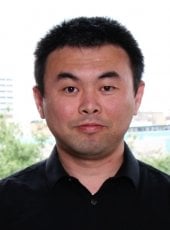
Ansgar Jüngel is a Full Professor for Analysis of Nonlinear Partial Differential Equations (PDEs) at the Technische Universität Wien (TU Vienna), affiliated with the E101-Institute for Analysis and Scientific Computing. His academic journey includes roles at universities in Berlin, Konstanz, Mainz, and Vienna since 1991. He specializes in mathematical analysis of cross-diffusion systems, entropy methods, semiconductor models, and quantum fluid dynamics. Notable achievements include an ERC Advanced Grant (2021) and the Tsungming-Tu Award (2011). Research focuses on nonlinear PDEs with applications in physics, engineering, and biology, emphasizing rigorous existence theory, numerical methods, and entropy-based approaches. Recent projects include 'Emerging network structures and neuromorphic applications' and 'Taming complexity in partial differential systems.' His teaching includes courses on partial differential equations, calculus of variations, and computational finance. Publications span over 200 works, with key contributions on cross-diffusion models, quantum hydrodynamics, and energy-transport systems. He has supervised numerous PhD students and collaborates internationally on topics like semiconductor simulations and stochastic interacting particle systems. Grants include an FWF Special Research Programme and ERC funding.
Deliang Fan is an Associate Professor at the School of Electrical, Computer and Energy Engineering, Arizona State University, Tempe, AZ. His research focuses on AI hardware, in-memory computing, and neuromorphic systems. He received his MS and PhD from Purdue University under Prof. Kaushik Roy. Education: PhD, Purdue University (2015) Research Interests: AI Hardware, In-Memory Computing, Adversarial AI, Neuromorphic Computing His work spans cross-layer co-design for AI applications, including deep learning, bioinformatics, and graph processing. He has authored 170+ peer-reviewed papers and developed hardware solutions for spintronic and memristor-based systems. Recent publications emphasize efficient architectures for transformers, federated learning, and robust neural networks. Awards include the NSF Career Award and multiple best paper recognitions. He serves in editorial and organizational roles for leading conferences like DAC, ISQED, and GLSVLSI.
Prof. Dr. Regina Dittmann is the Director of the Electronic Materials division (PGI-7) at the Peter Grünberg Institute (PGI), part of the Research Center Jülich. Her research focuses on memristive systems, resistive switching phenomena, and neuromorphic computing architectures. She leads a team exploring novel oxide materials and their applications in advanced electronics, including memristive heterostructures, nanoelectronics, and energy-efficient computing systems. Her work integrates materials science, device physics, and computational modeling to develop next-generation memory and neuromorphic hardware. Key research areas include the design and characterization of memristive devices, understanding ion migration in perovskite materials, and optimizing thermal and electronic stability in nanoscale systems. Recent studies emphasize the role of space charge effects in metal exsolution, the development of fault-tolerant neuromorphic architectures, and the application of synchrotron-based techniques for in-situ material analysis. Her contributions have advanced the theoretical and practical foundations of resistive switching mechanisms and their implementation in energy-efficient computing systems.
Ahmedullah Aziz is an Assistant Professor in the Department of Electrical Engineering and Computer Science at the University of Tennessee, Knoxville, within the Tickle College of Engineering. He earned his Ph.D. in Electrical and Computer Engineering from Purdue University (2019), an M.S. from Pennsylvania State University (2016), and a B.S. from Bangladesh University of Engineering & Technology (2013). His research focuses on mixed-signal VLSI circuits, non-volatile memory, and beyond-CMOS device design, emphasizing emerging technologies like ferroelectrics and spintronics. He leads the NorDIC Lab and has published over 60 articles in journals, conferences, and patents. Education: PhD, Electrical & Computer Engineering, Purdue University, 2019 MS, Electrical Engineering, Pennsylvania State University, 2016 BS, Electrical & Electronic Engineering, BUET, 2013 Research Interests: Aziz explores device-circuit-system co-design techniques, particularly in cryogenic neuromorphic systems, superconducting memory, and ferroelectric-based circuits. His work bridges material innovation with practical applications, aiming to advance energy-efficient and high-performance computing. Awards: EDAA Outstanding Dissertation Award (2019/2020) Outstanding Graduate Student Research Award (Purdue, 2019) Samsung 'Icon' Award (2013) Best Publication Awards (SRC-DARPA STARnet, 2015/2016) Advising & Grants: While specific grants are not detailed, his research has been supported by prestigious institutions. He has advised/co-advised projects in emerging technologies but no listed students. His work extends to reviewing IEEE journals, conference TPC roles, and editorial contributions. Labs & Teams: He directs the NorDIC Lab, focusing on next-generation computing and device innovation.
Fan Yao is an Associate Professor in the Department of Electrical and Computer Engineering at the University of Central Florida's College of Engineering and Computer Science. She received her Ph.D. in Computer Engineering from The George Washington University in 2018 and currently leads the Computer Architecture and Systems Research (CASR) lab. Her research focuses on the intersection of computer architecture, security, and machine learning, with particular emphasis on hardware-based security vulnerabilities and defenses. Dr. Yao's research interests span computer architecture, hardware and system security, AI security, energy-efficient computing, and cloud computing. Her work addresses critical security challenges in modern computing systems, particularly focusing on microarchitecture attacks, hardware-based model tampering in deep learning systems, and information leakage threats in emerging non-volatile memory systems. She has developed innovative defense mechanisms against cache timing channels, branch predictor vulnerabilities, and GPU-based side channels. Her recent publications demonstrate a strong focus on AI security (particularly Deep Neural Network vulnerabilities), hardware security (including cache and branch predictor attacks), and secure memory architectures. The research shows an evolution from traditional computer architecture topics toward the security implications of AI hardware and emerging memory technologies, with increasing emphasis on practical attacks and defenses in real-world systems. NSF GW I-Corps Site Grant Award, 2018 Best Dissertation Award, GWU, 2018 The Norris & Betty Hekimian Engineering Endowment Fellowship, GWU, 2017 Top Picks in Hardware and Embedded Security, 2019 NSF CAREER project award, 2024 Dr. Yao currently leads multiple NSF-funded research projects including 'Understanding and Taming Deterministic Model Bit Flip Attacks in Deep Neural Networks' (NSF SaTC, 2020-2023), 'Towards Secure-By-Design Integration of Emerging Non-Volatile Memory in Future System' (NSF CNS, 2020-2023), and 'Architecting Secure-by-Design Memristor-Based Memories' (NSF CNS, 2019-2022). She has successfully mentored numerous PhD students, many of whom appear as first authors on top-tier conference publications, demonstrating her commitment to graduate education and research mentorship. As the leader of the CASR lab, Dr. Yao oversees a vibrant research group focused on building secure-by-design, efficient, and advanced future systems through novel techniques spanning hardware, computer architecture, and systems. The lab actively publishes at top computer architecture and security conferences including ISCA, MICRO, HPCA, IEEE S&P, and USENIX Security, with multiple papers accepted to these venues annually. The group has developed several influential tools and frameworks for security analysis, including proof-of-concept code for BranchSpec exploits that has been widely cited in the hardware security community.
Professor Arokia Nathan is affiliated with the Department of Engineering at the University of Cambridge , where he holds the Chair in Photonic Systems and Displays. His work bridges semiconductor device engineering, flexible electronics, and intelligent systems. Specializes in Thin-Film Transistors (TFTs) for displays and sensors Key contributions to digital microfluidics and neuromorphic computing Focus on ultra-low-power and high-frequency CMOS circuits Advances in oxide semiconductor materials and hybrid electronics Recent publications highlight trends in neuromorphic perception , flexible battery technologies , and RF/wireless communication systems . His research also emphasizes bioinspired robotics , wearable electronics , and intelligent IoT devices .
Hai (Helen) Li is a Professor and Clare Boothe Luce Associate Chair at Duke University's Electrical and Computer Engineering department. She was a TUM-IAS Hans Fischer Fellow (2017) hosted by Prof. Ulf Schlichtmann in the Neuromorphic Computing focus group. Education: B.S./M.S. from Tsinghua University, Ph.D. from Purdue University Positions: Qualcomm, Intel, Seagate, Polytechnic Institute of New York University, University of Pittsburgh Her research spans neuromorphic computing systems , machine learning acceleration , emerging memory technologies , and low-power circuits . Publications demonstrate expertise in ReRAM/memristor-based accelerators, sparse neural networks, and processing-in-memory architectures. Key contributions include cross-layer optimization frameworks and robust neuromorphic designs. Her awards include: 9 Best Paper Awards (ASPDAC, ICMLA, ISVLSI, etc.) NSF Career Award DARPA Young Faculty Award IEEE Fellow (2019) ACM Distinguished Member (2017) IEEE TCSDM Outstanding Leadership Award (2021)
Dr. Abusaleh Jabir is a University Reader at the School of Engineering, Computing and Mathematics, Oxford Brookes University. He holds a DPhil in Computing from the University of Oxford and leads the Advanced Reliable Computer Systems (ARCoS) group. His research focuses on reliable hardware design, memristive nanotechnology, edge computing, and secure authentication systems. He has over 80 peer-reviewed publications and multiple patents, including innovations in error-tolerant circuits and memristive architectures. **Education**: DPhil in Computing (University of Oxford). **Research Interests**: Reliable hardware design, electronic design automation, sensing at the edge, physical uncloneable authentication, and emerging memristor technologies. His work addresses challenges in IoT, edge computing, and cybersecurity through innovative electronic systems. **Funding & Projects**: Current projects include the Leverhulme Trust-funded MONITOR gas sensor array initiative. His research has been supported by the UK Ministry of Defence, EPSRC, and Finance South East. **Awards & Patents**: Multiple patents granted, including EU 17706875.6 (memristive logic) and GB 1914221.5 (reconfigurable memristive logic). Recognized with best paper awards. **Advising & Impact**: Supervised PhD students now leading semiconductor and automotive industries (e.g., Infineon Technologies, Continental Teves AG). Collaborates with academic and industrial partners globally. **Labs & Teams**: Leads the ARCoS group within the Artificial Intelligence, Data Analysis and Systems (AIDAS) Institute, fostering interdisciplinary innovation in secure and reliable electronics.
Dr. Shideh Kabiri Ameri serves as Associate Professor in the Department of Electrical and Computer Engineering at Queen's University, where she joined in September 2018 after completing postdoctoral research at the University of Texas at Austin. Her interdisciplinary expertise bridges nanomaterials engineering and biomedical applications, with particular focus on developing imperceptible wearable sensors for continuous health monitoring. Her educational foundation includes: PhD in Electrical Engineering (2015) from Tufts University Master's and Bachelor's degrees in Physics (solid state) AS degree in Medical Laboratory Sciences Dr. Ameri's research program centers on 2D material-based electronic devices for wearable bioelectronics, human-machine interfaces (HMI), and mobile healthcare systems . Her lab pioneered graphene electronic tattoos (GETs) that achieve unprecedented skin conformity while recording high-fidelity physiological signals. Current work emphasizes ultrasoft hydrogel-based sensors that eliminate motion artifacts and enable months-long wear without skin irritation, representing a paradigm shift from conventional rigid medical devices toward truly imperceptible health monitors. Analysis of her 40+ publications reveals a strategic evolution from fundamental nanomaterial characterization toward clinically viable systems. Recent work (2021-2025) demonstrates increasing sophistication in multimodal sensing (simultaneous ECG/EEG/temperature), reusable sensor architectures , and wireless power integration . The trajectory shows clear progression from lab prototypes to FDA-pipeline devices, particularly in cardiac and neurological monitoring applications. Her scientific recognition includes: Rising Star in EECE 2017 award Dr. Ameri leads the Ameri Nano Research Group which operates advanced nanofabrication facilities for developing next-generation bioelectronic interfaces. Her research has attracted significant media attention from BBC, IEEE Spectrum, and Phys.Org, highlighting real-world impact in remote patient monitoring. The group actively collaborates with medical institutions to translate innovations into point-of-care diagnostics, with current projects focusing on in-ear physiological monitors and strain-neutralized neural recording systems. The research team maintains strong industry partnerships for commercializing soft bioelectronics, with particular emphasis on creating accessible health monitoring solutions for underserved communities through low-cost manufacturing approaches.
Maria Loi is a Professor at the Faculty of Science and Engineering , University of Groningen, leading the Photophysics and OptoElectronics group. With over 321 research outputs and 17 datasets, her work focuses on the photophysics and optoelectronics of novel semiconductors including perovskites and quantum dots. Her research aims to understand and optimize semiconductor properties for applications in solar cells, LEDs, and photodetectors. Notable contributions include advancements in tin-based perovskites and unraveling hot carrier dynamics that challenge Shockley-Queisser limits. Scientific Awards : ERC Advanced Grant (2022) ERC Starting Grant (2013) Physica Prijs (2018) Fellowships: American Physical Society (2020), KNAW (2022), Royal Society of Chemistry (2022), EURASC (2022) Recent Trends : 2024-2025 publications emphasize defect passivation , scalable fabrication methods , hot carrier dynamics , and neuromorphic device applications in tin-lead and low-dimensional perovskites.
Quanxi Jia is a SUNY Distinguished Professor, Empire Innovation Professor, and National Grid Professor of Materials Research at the University at Buffalo. He holds appointments in the Department of Materials Design and Innovation within the School of Engineering and Applied Sciences and serves as Scientific Director of the New York State Center of Excellence in Materials Informatics (CMI). Education: PhD in Electrical and Computer Engineering, University at Buffalo, 1991 MS in Electronic Engineering, Jiaotong University, Xian, China, 1985 BS in Electronic Engineering, Jiaotong University, Xian, China, 1982 Research Focus: Jia's work centers on advanced electronic and energy materials, particularly epitaxial thin films and heterostructures. His research investigates processing-structure-property relationships, monolithic integration of functional materials, and superconductors for quantum/energy applications. Key methodologies include pulsed laser deposition and polymer-assisted techniques, with emphasis on oxide heterostructures , memristive devices , and multiferroic systems for next-generation electronics. Publication Trends: Recent publications (2023-2025) reveal dominant focus on neuromorphic computing via resistive switching devices (58% of sampled works), superconducting thin films for quantum applications (20%), and strain-engineered oxide heterostructures (22%). His group pioneers HfO 2 -based artificial neurons, NbN superconducting films on CMOS platforms, and multiferroic membranes, demonstrating strong industry-academia translation potential. Scientific Recognition: Fellow of Los Alamos National Laboratory Fellow of Materials Research Society (MRS) Fellow of American Physical Society (APS) Fellow of American Ceramic Society (ACerS) Fellow of AAAS Fellow of IEEE Fellow of National Academy of Inventors (NAI) Leadership & Infrastructure: As CMI Scientific Director, Jia oversees New York's flagship materials informatics initiative integrating AI with experimental materials science. His prior directorship of DOE's Center for Integrated Nanotechnologies (Los Alamos/Sandia) established expertise in national lab collaboration. The group maintains 50+ U.S. patents and 500+ publications, with current work targeting quantum device integration and sustainable neuromorphic hardware. Research Ecosystem: The CMI hub connects Jia's team with industry partners (including National Grid) and national labs, facilitating rapid prototyping of energy materials. Current thrusts include machine learning-guided ferroelectric design, CMOS-compatible superconductors, and recyclable perovskite sensors, positioning the group at the semiconductor-energy nexus.
Linghao Song is an Assistant Professor in the Department of Electrical & Computer Engineering at Yale University. His research focuses on accelerator architecture design, FPGA-based acceleration systems, and ReRAM-based computing. He is affiliated with the School of Engineering & Applied Science and holds expertise in sparse matrix processing, high-level synthesis, and task-parallel programming frameworks. Education: Ph.D. and M.S. from Duke University and University of Pittsburgh, respectively, with a B.S.E. from Shanghai Jiao Tong University. Research Interests: Song's work spans FPGA-accelerated computing, resistive memory (ReRAM) architectures for deep learning and graph processing, and high-performance sparse matrix operations. His recent projects include the TAPA framework for FPGA programming, ReFloat for iterative linear solvers, and the Sextans/Serpens accelerators for sparse matrix computations. Key Contributions: Over 20 peer-reviewed publications on topics like ReRAM-based accelerators (e.g., GraphR, PipeLayer), FPGA optimization frameworks (TAPA, RapidStream), and novel hardware designs for neural networks and graph analytics. His work emphasizes energy efficiency, scalability, and cross-domain applicability of hardware accelerators. Awards: Recipient of the Duke ECE Outstanding Dissertation Award (2021), EDAA Outstanding Dissertation Award (2020), and National Scholarship of China (2012). Labs/Teams: Leads research in FPGA acceleration and memory-based computing, collaborating on projects involving HBM integration, resistive memory architectures, and task-parallel dataflow frameworks.
Mircea R. Stan is a Professor of Electrical and Computer Engineering at the University of Virginia, serving as Director of Computer Engineering and Virginia Microelectronics Consortium (VMEC) Professor. He leads the High-Performance Low-Power (HPLP) lab and is an associate director of the Center for Automata Processing (CAP). His research focuses on AI hardware, Processing in Memory, Low Power Design, Cyber-Physical Systems, and Spintronics. Education: Ph.D. (1996) and M.S. (1994) from UMass Amherst; Diploma (1984) from Politehnica University, Bucharest. Research interests include energy-efficient computing architectures, IoT systems, and emerging technologies like magnetic skyrmions and memristors. He has pioneered work on asynchronous stochastic computing, thermal-aware microarchitecture, and microfluidic cooling for 3D-ICs. Key awards include the 2024 A. Richard Newton Technical Impact Award, 2018 ISCA Influential Paper Award, and IEEE Fellow (2014). He has held editorial roles at IEEE TVLSI, IEEE TNano, and IEEE Design & Test. Notable contributions include the HPLP lab’s advancements in low-power logic computing, the VCRFID framework for Industry 4.0, and thermal-aware design tools like Hot-LEGO and Cool-3D.
Yu [Kevin] Cao is the Louis John Schnell Professor in the Department of Electrical and Computer Engineering at the University of Minnesota. His research focuses on microelectronics co-design for energy-efficient computing, spanning integrated circuit design, semiconductor physics, and machine learning methodologies. He leads the Microelectronics Co-design Research Group and actively collaborates with institutions like Georgia Institute of Technology, Sandia National Laboratories, and Notre Dame. His research interests include AI hardware acceleration , in-memory computing , cryogenic CMOS design , and 3D integration of heterogeneous chiplets . Current initiatives explore reconfigurable on-package systems for AI, spiking neural networks on neuromorphic hardware, and low-temperature logic technologies. Recent publications and projects highlight advancements in AI accelerators , RRAM-based compute-in-memory , graph convolutional networks , and 3D integration . His group develops tools like MN-SIM 2.0 for memristor modeling and investigates novel materials for neuromorphic systems. Grants include collaborative NSF funding for chiplet-based AI systems, CoCoSys center funding from SRC, and DOE/Sandia projects on neuromorphic hardware. Future work emphasizes scalable co-design frameworks for intelligent systems and heterogeneous integration challenges.
Hongyu An is an Assistant Professor in the Department of Electrical and Computer Engineering at Michigan Technological University. He holds affiliations with the Computer Science and Biomedical Engineering departments. Dr. An leads the BrainX Lab (Neuromorphic Robotics Lab and Neuromorphic Brain-Machine Interface Lab) and collaborates with the Institute of Computing and Cybersystems (ICC). He earned his PhD, MS, and BS in Electrical Engineering from Virginia Tech, Missouri University of Science and Technology, and Shenyang University of Technology respectively. Research Interests: Dr. An focuses on neuromorphic computing and its applications in AI hardware , robotics , and medical devices . His work spans memristor-based circuits , spiking neural networks , and energy-efficient AI systems . Key projects include associative learning in neuromorphic robots , neural prosthetics for memory restoration , and power-efficient adaptive deep brain stimulation systems . Publications & Research: With over 15 significant publications since 2016, Dr. An's work demonstrates expertise in 3D neuromorphic IC design , memristor reliability , and self-learning robotic systems . His research has appeared in journals like IEEE Transactions on Computing Aided Design and Frontiers in Computational Neuroscience. Awards & Funding: Bill and LaRue Blackwell Dissertation Award NSF CRII and ERI Awards USAF VFRP Fellowship Best Paper Nomination (2017 ISQED) Students & Collaborations: Dr. An mentors PhD students Tianze Liu and Md Abu Bakr Siddique, undergraduate Lucas Haddad, and volunteers like Vinay Kumar Pillalamarri. His team collaborates with Dr. Yan Zhang on neuromorphic brain-machine interfaces . The lab operates advanced infrastructure including LabLynx wireless neural recording systems and Intel Loihi-2 neuromorphic servers .