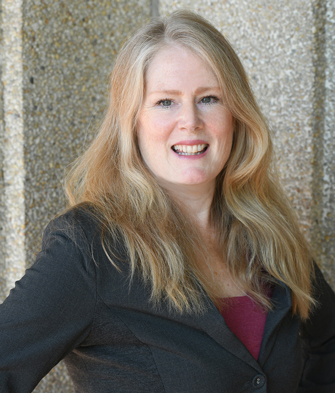
Dr Marieke Meelen is an Associate Professor in Historical Linguistics at the University of Cambridge, affiliated with the Faculty of Modern and Medieval Languages and Linguistics. She serves as a Fellow, Tutor, and Director of Studies at Trinity Hall. Research Interests: Historical Linguistics, Comparative Syntax, Information Structure, Grammaticalisation & Pragmaticalisation, NLP for low-resource languages, Celtic & Tibeto-Burman languages Projects: PI for ELDP-funded endangered language documentation in Nepal; collaborator on ERC-funded 'PaganTibet' and AHRC-funded 'Emergence of Egophoricity' Key Contributions: Development of ASR and HTR models for Tibeto-Burman languages; historical treebank of Welsh; computational approaches to Celtic and Tibeto-Burman syntax Publications & Grants focus on syntactic reconstruction, corpus creation, and NLP for endangered languages. She mentors PhD students working on Celtic or Tibeto-Burman languages and consults for computational linguistics projects.
Professor Lingxiao Jiang is a full-time faculty member at the School of Computing and Information Systems (SCIS), Singapore Management University (SMU) , where he serves as Director of the Centre for Research on Intelligent Software Engineering (RISE) . His research and teaching focus on software engineering , program analysis , code search & reuse , and deep learning of code to enhance software quality, development productivity, and security. PhD, University of California, Davis (2009) Professor Jiang's research explores context-aware software deep learning , code clone detection , and security & privacy through tools like DECKARD (code clone detection), EqMiner (functionally equivalent code), and SmartEmbed (smart contract security). His work leverages distributed computing , symbolic execution , and neural program models for large-scale code analysis. Recent publications highlight trends in deep learning-based code analysis , smart contract vulnerabilities , and automated program transformation . Key themes include code clone detection , semantic patches , and cross-language API mappings . Scientific Awards ACM SIGSOFT Impact Paper Award (2018) for scalable code clone detection As advisor, Professor Jiang has mentored 14 graduate students, including Lucia (Ph.D. 2014) , Shaowei Wang (Ph.D. 2015) , and current advisees in intelligent software engineering. He leads multiple grants on code mining , security of digital platforms , and AI systems governance . RISE Lab at SMU develops tools like MANDO (smart contract analysis), iTiger (issue title generation), and TreeCaps (code processing with capsule networks). The lab actively recruits researchers in software engineering and AI.
Kristin O'Brassill-Kulfan is Assistant Professor of History at Rutgers University–New Brunswick in the School of Arts and Sciences. She is Coordinator of the Public History Program and Director of the Initiative in Public Humanities. Her research and teaching focus on public history, social and legal history of the early American republic, poverty, mobility, labor, and carcerality. Her research interests include the criminalization of poverty, public histories of homelessness, labor activism, and the interpretation of challenging histories in museums and public forums. She specializes in archival methodologies and community-engaged public history projects that center marginalized voices. Her recent publications span topics such as vagrancy laws, poor relief systems, prison history, and the commemoration of poverty. These works reflect a strong interdisciplinary trend, combining legal analysis, social history, and public humanities to examine how poverty and mobility have been regulated and remembered in American history. G. Wesley Johnson Award for Best Article in The Public Historian (2024) New Jersey Studies Academic Alliance Teaching Award (2024) Andrew W. Mellon Fellowship, Massachusetts Historical Society (2023–2024) Larry J. Hackman Research Award (2020–2021) Faculty Fellow, Center for Cultural Analysis, Rutgers (2019–2020) Peter Parish Memorial Award (2014) She has advised and co-led numerous public history projects, including the Pequannock Community History Project, the 'Shelter' Luce Foundation-funded initiative during the pandemic, and student-curated exhibits such as 'War on Tramps.' She has received grants from the American Council of Learned Societies, the Institute for Global Racial Justice, and the Humanities Innovation Block Grant at Rutgers. O'Brassill-Kulfan leads the undergraduate Public History Program and the graduate Public Humanities Initiative. She is Co-Editor of Book Reviews for the Journal of the Early Republic and Editor of the Routledge series Global Perspectives on Public History. She also serves on the Advisory Council for Revolution NJ, the New Jersey Historical Commission’s Semiquincentennial Initiative.
Kathleen Gallagher is a Professor at the University of Toronto's Ontario Institute for Studies in Education. She directs the Centre for Drama, Theatre and Performance Studies and leads the SSHRC-funded Global Youth (Digital) Citizen-Artists project, focusing on youth-led theatre for socio-ecological justice. Her research bridges theatre, youth studies, and climate education, emphasizing ethnographic and community-engaged methodologies. She has authored monographs like Hope in a Collapsing World and co-edited collections on radical hope and climate crisis narratives. 2023 American Alliance for Theatre and Education Distinguished Book Award 2018 David E. Hunt Award for Graduate Teaching 2017 University of Toronto President’s Impact Award Recent publications explore speculative fiction, climate justice, and decolonizing performance, with keywords spanning theatre pedagogy, intergenerational dialogue, and digital-physical hybrid methods. Her work consistently prioritizes youth agency and ethical relationality in global urban contexts.
Maria Sanchez-Ortiz is a Senior Lecturer in Translation and Interpreting Studies at the School of Language, Literature, Music and Visual Culture (LLMVC), University of Aberdeen, where she has been actively contributing since 2016. She serves as Programme Director for both the on-campus and distance learning MSc in Translation Studies and co-directs the Centre for Multilingual Research. She previously directed the Centre for Translation and Interpreting Studies from 2020 to 2023 and coordinated the undergraduate programme in Modern Languages and Translation from 2017 to 2020. Her educational background is extensive and interdisciplinary: PhD in Translation Studies, University of Bradford (2006) MSc in Dubbing, Subtitling & Localization, Instituto Superior de Estudios Lingüísticos y Traducción, Spain (2019) Postgraduate Certificate in Academic Practice, University of Salford (2015) Diploma in Audiovisual Translation, Universidad de Educación a Distancia, Spain (2014) Diploma in Public Service Interpreting, CIoL (2007) MA in European Studies, University of Bradford (1994) Diploma in Spanish with Translation and Interpreting, CIoL (1992) BA in English Language and Literature, University of Granada, Spain (1989) Maria's research focuses on Translation and Interpreting Studies, with particular emphasis on literary translation, audiovisual translation, translator training, sociolinguistics, dialect translation, and the impact of AI on translation professions. She has supervised multiple PhD students to completion and actively welcomes new doctoral candidates in Spanish and Latin American Studies. Her work consistently bridges theory and practice, with a strong pedagogical orientation. Her 15 most recent publications span from 1996 to 2024, reflecting a sustained engagement with core issues in translation. The articles reveal a deep interest in the pragmatics, ethics, and cultural dimensions of translation, particularly in literary and dialectal contexts. A recurring theme is the translator's agency and the challenges of preserving stylistic and sociolinguistic nuances. More recently, her work has addressed gender, multiculturalism, and the evolving role of technology in translation. She has received numerous teaching accolades, including: Awarded 'Best Undergraduate Lecturer', University of Aberdeen (2024–2025) Awarded 'Funniest Lecturer', University of Aberdeen (2023–2024) Awarded 'Best Taught Postgraduate Lecturer', University of Aberdeen (2018–2019) Nominated for 'The Most Inspiring Lecturer' (2019–2020) and Excellence in Teaching awards Maria Sanchez-Ortiz is an active supervisor, mentor, and curriculum developer. She has served as an external examiner for MA and BA programmes at several UK universities, including Manchester, Open University, Portsmouth, Durham, and Bath. She is a Fellow of the UK Higher Education Academy (since 2015) and a member of key professional bodies such as the Institute of Translation and Interpreting (ITI) and the International Association for Translation and Intercultural Studies. She also contributes to academic journals as a member of editorial and advisory boards. She leads and co-directs major research centres at Aberdeen, fostering interdisciplinary collaboration and innovation in multilingual research. Her leadership in the European Graduate Placement Scheme and membership in the PACTE Research Group highlight her commitment to international cooperation and empirical research in translation competence.
Matteo Mario Pietro Motterlini is a Full Professor of Philosophy of Science at Università Vita-Salute San Raffaele in Milan, where he is affiliated with the Faculty of Philosophy. He is the director of the Center for Research in Experimental and Applied Epistemology (CRESA) and the Behavior Change Lab, and collaborates with the Cognitive Neuroscience Center and Division of Neuroscience. He holds teaching responsibilities in Cognitive Economics and Neuroeconomics, and Behavior Change, and serves on the university's academic committee. Università degli Studi di Milano – Philosophy London School of Economics – Economics Carnegie Mellon University – Cognitive Science His research lies at the intersection of philosophy, behavioral economics, and cognitive neuroscience, focusing on human rationality, decision-making processes, emotions, regret, and social learning, particularly in economic and financial contexts. He investigates how behavioral science can inform public policy and improve organizational practices. His work integrates experimental methods with neuroimaging to uncover the neurobiological foundations of judgment and choice. The recent publications highlight a strong trend in applying behavioral and cognitive sciences to societal challenges such as vaccine hesitancy, disinformation, charitable giving, and policy design. His work combines empirical rigor with philosophical depth, exploring topics like the epistemology of nudges, truth perception, and the role of expert endorsement. The integration of neuroscience, psychology, and economics is evident across his research output. Chief Behavioral Officer, E.ON Italia Spa Chief Behavioral Officer, Gruppo San Donato Scientific Advisor, MilanLab (AC Milan) Scientific Advisor, MarketPsych LLC Advisor for Behavioral Finance, Fidelity (Growth, Income & Stability project) Advisor for Social and Behavioral Sciences, Presidency of the Council of Ministers (Italy) He has received no explicitly mentioned scientific awards in the provided text. However, his advisory roles in high-impact public and private institutions reflect recognition of his expertise. His books are international bestsellers, translated into multiple languages, indicating broad scholarly and public influence. Motterlini has been actively involved in public engagement through collaborations with Corriere della Sera, Il Sole 24 Ore, and Il Foglio. He has delivered keynote lectures and participated in public festivals and media appearances, including on Sky TG24. He has advised on financial education (EDUFIN) and participated in events on longevity risk, health, and sustainability. His research is supported by interdisciplinary collaborations and applied projects with industry partners. He leads two major research units: the Center for Research in Experimental and Applied Epistemology (CRESA) and the Behavior Change Lab (also referred to as the E.ON Customer Behavior Lab), which focus on biometric and neuroscientific analysis of behavior. These labs serve as hubs for experimental research in decision-making, nudging, and behavioral interventions in health, finance, and sustainability.
Brent E. Sasley is an Associate Professor and Graduate Advisor in the Department of Political Science at the University of Texas at Arlington. He specializes in the politics of the Middle East, Israeli politics, identity formation, and foreign policy decision-making, with a particular interest in the role of emotions, language, and images in shaping policy. Institution: University of Texas at Arlington School: College of Liberal Arts Department: Department of Political Science Position: Associate Professor and Graduate Advisor Email: bsasley@uta.edu His research focuses on International Relations theory, emotional attachments in foreign policy, identity politics, diaspora influence, and Middle Eastern security. He has published widely on Turkish foreign policy, Israeli decision-making, and the Arab-Israeli conflict. His current research projects explore trauma and conflict resolution, emotional dynamics in international relations, and the role of Jewish scholars in public discourse. The 15 most recent publications reflect a consistent engagement with interdisciplinary themes, blending political psychology, IR theory, memory studies, and comparative politics. His work frequently examines how identity, emotion, and narrative shape foreign policy behavior in the Middle East, particularly in Israel and Turkey. There is a strong emphasis on public engagement, as seen in his numerous op-eds and academic blogging. Brent Sasley has received research grants from the University of Texas at Arlington and the International Council for Canadian Studies. He actively participates in academic conferences such as the International Studies Association and the Association for Israel Studies, and serves as a reviewer for numerous political science and international relations journals. He advises graduate students and teaches a range of courses including Introduction to Middle East Politics, The Politics and Foreign Policy of Israel, International Relations of the Middle East, and graduate seminars on identity and conflict. He is also known for his public scholarship, contributing to outlets like Foreign Affairs , Washington Post , Haaretz , and The Atlantic .
Kaiyi Ji is an Assistant Professor in the Department of Computer Science and Engineering at the University at Buffalo, SUNY. He earned his PhD in Electrical and Computer Engineering from Ohio State University in 2021 and completed a postdoctoral fellowship at the University of Michigan. His research focuses on large-scale optimization, machine learning, and foundation models. PhD: Electrical and Computer Engineering, Ohio State University (2021) Postdoc: University of Michigan (2022) BSc: University of Science and Technology of China (2016) Research interests include bilevel optimization, multi-task learning, continual learning, and AI4Science, with applications in robotics and crystal property prediction. Recent work explores efficient algorithms for LLM training and optimization. His publications span top venues like ICLR, ICML, NeurIPS, and IEEE Transactions on Information Theory. He received the CSE Junior Faculty Research Award (2023) and NSF CAREER Award (2025). He advises PhD students and actively participates in departmental service as Associate Chair for Graduate Student Admissions and organizer of academic workshops.
Volker Markl is a Professor at Technische Universität Berlin in the Institute of Software Engineering and Theoretical Computer Science, with additional affiliations at the Berlin Institute for the Foundations of Learning and Data (BIFOLD) and the German Research Center for Artificial Intelligence (DFKI). His research spans database systems, stream processing, and distributed data management with significant contributions to both theoretical foundations and practical implementations. Markl's research interests focus on next-generation data management systems, particularly for streaming and IoT environments. His work addresses critical challenges in distributed query processing, system integration, and performance optimization. He has pioneered approaches for stream processing in volatile infrastructures and developed innovative techniques for GPU-accelerated database operations. His NebulaStream project represents a major contribution to distributed stream processing systems. His publication record demonstrates consistent impact across top database venues including VLDB, SIGMOD, and ICDE. Recent work shows increasing focus on machine learning integration with database systems, privacy-preserving query processing, and educational approaches for teaching large-scale data management. Markl has mentored numerous researchers who have become prominent in the database community, with frequent collaborators including Steffen Zeuch, Tilmann Rabl, and Philipp Grulich. His leadership extends to major research initiatives and collaborations across European institutions.
Patrick A Stewart serves as Professor and Director of Online Education in the Department of Political Science at the University of Arkansas, Fayetteville, within the College of Arts and Sciences. His research bridges political science, psychology, and technology, focusing on nonverbal communication dynamics in high-stakes political contexts. His educational trajectory includes an A.A. from St. Petersburg J.C. (1987), B.A. (1988) and M.A. (1991) from the University of Central Florida, and a Ph.D. from Northern Illinois University (1998). Stewart specializes in decoding emotional responses to political leaders' nonverbal behavior using Facial Action Coding System (FACS) methodology. His work examines micro-expressions, laughter, and audience reactions during debates, presidential addresses, and elections, with growing emphasis on AI biometrics ethics. This research has been published in PLoS ONE , Political Psychology , and Computers in Human Behavior , and featured in The New York Times , The Washington Post , and Vox . He co-created the educational game "Citizenship Quest" to explore trust-building in political simulations. Analysis of his recent publications reveals consistent focus on presidential communication effectiveness, particularly laughter and micro-expressions as leadership indicators. His work spans historical analyses (Reagan's "great communicator" persona) and contemporary events (Trump-era debates, Brexit), utilizing interdisciplinary methods combining ethology, biometrics, and game-based learning. No scientific awards were documented in the provided materials. Stewart directs online education initiatives while maintaining an active research agenda; no student advising details or grant information were specified in the source texts. His "Citizenship Quest" project represents applied efforts to translate political psychology research into educational tools.
Martin Aumüller is a Lecturer in Theoretical Computer Science Algorithms at the IT University of Copenhagen . He serves as Head of Education and Master of Software Design , focusing on algorithm engineering, differential privacy, and similarity search. Research interests include: Algorithm engineering for high-dimensional data Locality-sensitive hashing and nearest neighbor search Privacy-preserving machine learning Fairness in approximate search algorithms Benchmarking and evaluation of similarity search tools Publications trends highlight his work on approximate nearest neighbor search , privacy-preserving techniques , clustering algorithms , and scalable outlier detection in high-dimensional spaces. His recent projects (2024-2025) focus on fairness, differential privacy, and efficient indexing. Grants and projects : DIREC (2020-2025): Digital Research Centre Denmark (Innovation Fund Denmark) DIREC: Bias and Benefit of Approximate Nearest Neighbor Search (2022-2025): Principal Investigator (Innovation Fund Denmark) BARC (2017-2024): Basic Algorithms Research Copenhagen (Villum Fonden) SSS (2014-2019): Scalable Similarity Search (European Commission)
Jessica A. Wachter is the Dr. Bruce I. Jacobs Professor in Quantitative Finance at the Wharton School of the University of Pennsylvania . She is a leading scholar in asset pricing and behavioral finance, with significant contributions to understanding rare events and investor memory in financial decision-making. PhD in Business Economics and AB in Mathematics from Harvard University Editor of Review of Financial Studies Former Chief Economist and Director of DERA at SEC (2021-2025) Published in top journals: Journal of Finance , Journal of Financial Economics , Quarterly Journal of Economics Her research explores asset pricing anomalies through Bayesian learning, correlation neglect, and representativeness heuristics. Recent work examines superstitious investors, sovereign default risk, and experience-driven behavioral biases in trading decisions. Key research themes: Stochastic disaster risk modeling Experience-based investor behavior Time-varying equity premiums Dynamic asset pricing Human capital risk Memory effects in economic decisions She has served on editorial boards of major finance journals and held academic positions at Wharton (2003-present) and NYU Stern School of Business.
Dr Raja Akrom is a Senior Lecturer in the Department of Computer Science , School of Natural and Computing Sciences , University of Aberdeen since July 2020. Previously, he held research positions at Royal Holloway, University of London (Post Doctoral Research Assistant), University of Waikato (Research Fellow), and Edinburgh Napier University (Senior Research Fellow). PhD in Information Security from Royal Holloway, University of London MSc in Information Security and Computer Science from Royal Holloway and University of Agriculture, Faisalabad BSc in Mathematics and Physics from University of the Punjab His research focuses on user-centric applied security and privacy architectures , data ownership in heterogeneous computing , security for machine learning , and security in emerging technologies such as blockchain, UAVs/drones, and autonomous vehicles. Key technical interests include smart card security, cryptographic protocols, IoT security, and Trusted Execution Environments. The article list reveals expertise in: edge computing security (DECML 2025), medical AI applications (2024), embedded device ownership (CO-TSM 2024), NFC transaction security (2024), and malware detection with ML (2024). Earlier work explored UAV security , blockchain governance , and smart card protocols . Currently teaching courses in Operating Systems , Secure Software Design , and Enterprise Security Architecture . Supervises postgraduate MSc Cybersecurity program.
Richard D. Wesel is an Associate Dean for Academic and Student Affairs at a College of Engineering, where he has held leadership roles such as Vice-Chair of the Electrical Engineering Department. With Ph.D. and M.S. degrees in Electrical Engineering from Stanford University and MIT respectively, his research focuses on communication theory and channel coding, particularly low-density parity-check (LDPC) codes and turbo codes for efficient data transmission over noisy channels. Education: MIT (B.S., M.S.), Stanford (Ph.D.) Leadership: Associate Dean, Former Vice-Chair of Electrical Engineering Wesel's research explores advanced techniques for broadcast and multiple-access communication systems, emphasizing applications in wireless LANs, satellite communications, and optical networks. His work integrates machine learning with traditional decoding algorithms, as seen in recent publications on neural-network-optimized LDPC decoding and parallel trellis-stage-combining methods for high-throughput systems. His articles demonstrate a focus on finite-blocklength coding, including CRC-aided list decoding for convolutional and polar codes, and voltage optimization strategies for flash memory reliability. Wesel has authored over 100 publications and led a research group that won the 2006 Design Automation Conference's top award for optical multiple access design. Scientific Awards: National Science Foundation CAREER Award Okawa Foundation Award As an educator, Wesel received the TRW Excellence in Teaching Award in 2000 and has contributed to academic governance through roles on the Faculty Executive Committee and Undergraduate Council. His work bridges theoretical communication systems with practical implementations, including FPGA-based decoders and adaptive coding for fading channels.
Dr. Xiong Yi is an Assistant Professor at the School of System Design and Intelligent Manufacturing (SDIM) at Southern University of Science and Technology (SUSTech) in Shenzhen, China. He leads the Computational Design and Fabrication (CoDeFab) research group, focusing on the integration of computational design methods with advanced manufacturing technologies, particularly in the field of additive manufacturing. Dr. Xiong has established himself as a leading researcher in computational design for additive manufacturing, with a strong international research background spanning Europe and Asia. Dr. Xiong's educational journey includes: Doctor of Science (DSc) in Engineering Design and Production from Aalto University, Finland (2012-2016) Master of Science (MSc) in Machine Automation from Tampere University of Technology, Finland (2010-2012) Bachelor of Engineering (BEng) in Mechanical Engineering from Hubei University of Technology, China (2006-2010) Dr. Xiong's research primarily focuses on computational design and fabrication methodologies, with particular emphasis on design for additive manufacturing (DfAM), intelligent manufacturing systems, and smart materials. His work bridges the gap between theoretical design principles and practical manufacturing constraints, developing novel approaches for the production of complex engineered products. He has pioneered research in continuous fiber-reinforced composite additive manufacturing, developing innovative process planning and optimization techniques that enable the production of high-performance structural components. His research in electrothermally controlled origami and 4D printing of smart materials represents cutting-edge work at the intersection of materials science, mechanical engineering, and computational design. Dr. Xiong's recent publications reveal a strong focus on continuous fiber-reinforced composites, with significant contributions to 4D printing, metamaterials, and intelligent process planning. His work integrates computational design with manufacturing constraints, creating novel approaches for topology optimization, toolpath planning, and structural design that consider both performance requirements and manufacturability limitations. The research demonstrates increasing sophistication in materials science applications, particularly in programmable materials and multi-functional structures. Dr. Xiong has received multiple prestigious awards for his research contributions, including: Best Presentation Award at the 24th Chinese Conference on Mechanisms and Machine Science (IFToMM CCMMS2024) Best Presentation Award at the International Conference on Frontiers of Additive Manufacturing Research (RAAM 2024) Best Paper Award at the International Conference on Design for 3D Printing (ICD3DP 2023) PhD Scholarship from Aalto University (2016) Research Travel Grant from the International Association for Vehicle System Dynamics (IAVSD) (2013) National Scholarship from the Ministry of Education (2008) As a dedicated educator and mentor, Dr. Xiong serves as a PhD supervisor at SUSTech and has successfully guided students who have gone on to pursue advanced studies and careers at prestigious institutions including Hong Kong Polytechnic University, Beihang University, DJI Innovations, and Singapore's A*STAR research institute. His research is supported by multiple competitive grants, including key projects from the National Key R&D Program of China, the National Natural Science Foundation of China, and provincial and municipal funding agencies. Dr. Xiong also serves on the editorial board of the Journal of Engineering Design and as a guest editor for Composites Communications, contributing to the advancement of his field through scholarly service. Dr. Xiong leads the CoDeFab research group, which maintains a strong collaborative culture focused on 'design leading manufacturing, manufacturing driving design, and digital-intelligent integration.' The group has developed several advanced manufacturing platforms, including multi-axis continuous fiber-reinforced composite additive manufacturing systems, smart composite additive manufacturing platforms, and multifunctional soft matter open manufacturing platforms. With a focus on practical applications and innovation, the CoDeFab group actively collaborates with industry partners and has established a joint laboratory to bridge academic research with industrial implementation.