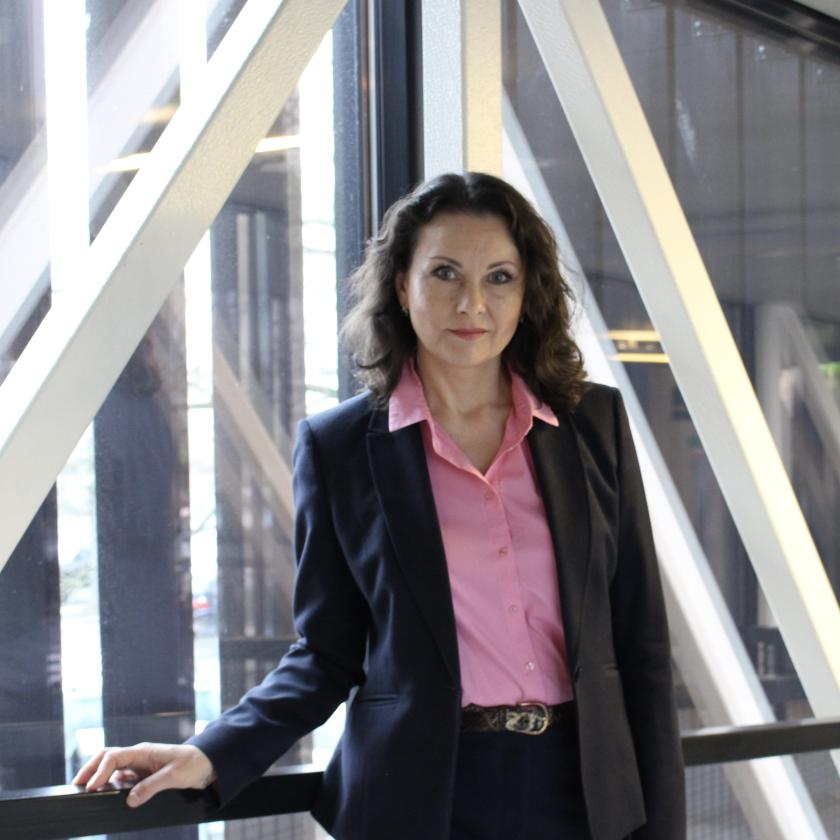
Julia Kuznetski is a Professor of English at the School of Humanities, Tallinn University. Her research focuses on literary theory, ecocriticism, gender studies, postcolonial theory, and diasporic literature. She teaches at all academic levels (BA, MA, PhD), supervises theses, and contributes to curriculum development. Her administrative roles include Head of English Studies and membership in the School of Humanities Research Council. Her research explores transcorporeality, ecofeminist philosophy, and crisis narratives in contemporary works by women authors. Key themes include environmental ethics, posthumanism, and diasporic identities. She is an active member of scholarly organizations such as ESSE, FINSSE, and ASLE. Prof. Kuznetski has published widely in Routledge, Palgrave Macmillan, and Taylor & Francis journals, focusing on women’s writing, ecological crises, and postcolonial narratives. Her recent work examines bodily agency in dystopian fiction and eco-apocalyptic narratives. Her administrative contributions include strategic work group memberships and organizing research seminars in English studies.
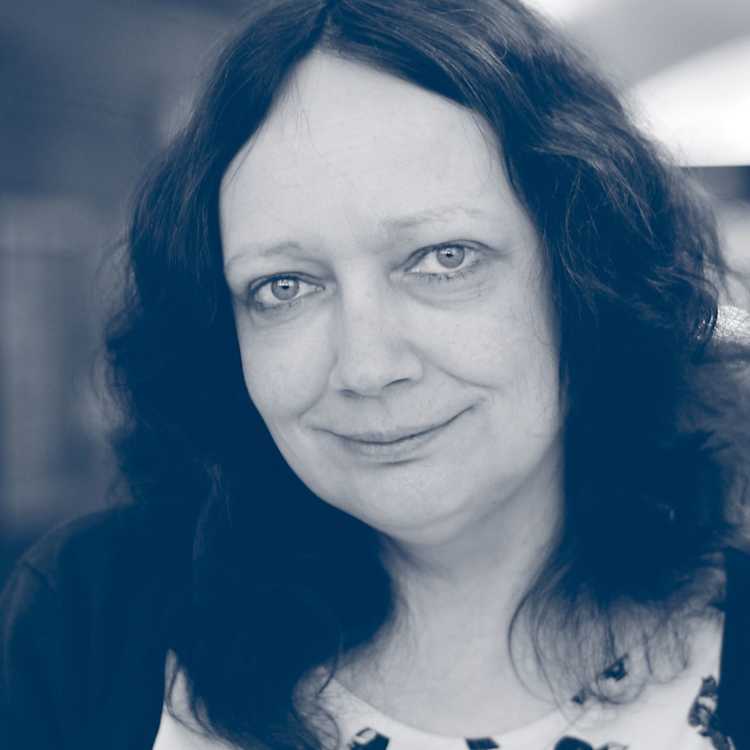
Dr. Nicole Hirt is a Research Fellow at the GIGA Institute for African Affairs, part of the German Institute for Global and Area Studies. Her work focuses on authoritarian regimes, diaspora dynamics, migration policies, and peace studies with a regional specialization in Eritrea, Ethiopia, and Djibouti. She holds a PhD from the University of Hamburg and has conducted extensive research on Eritrean militarization, diaspora governance, and transnational repression mechanisms. Her research has been supported by grants including the Swedish Research Council and the German Research Foundation (DFG). Education: PhD in Political Science, University of Hamburg (2000) Masters in Political Science & Sociology, University of Tübingen Bachelor in Social Work, Berufsakademie Heidenheim Her current research explores the role of second-generation diasporas in global democracy struggles and the EU’s flawed migration policies. She has led projects like the comparative study of diaspora responses in authoritarian regimes (2018–2021) and the transnational lives of repressed diasporas (2020–2023). Her work frequently examines how authoritarian regimes exploit diaspora communities to maintain power. Key Themes in Publications: Transgenerational trauma and political identity formation among Eritrean diaspora youth Remittance dependencies and authoritarian stabilization EU’s migration governance failures and humanitarian consequences Grants & Projects: Swedish Research Council (2020–2023): Transnational Lives in the Shadow of Repression DFG (2018–2021): Diaspora Responses to Authoritarian Rule EU Horizon 2020 (2018–2023): MAGYC Migration Governance Project
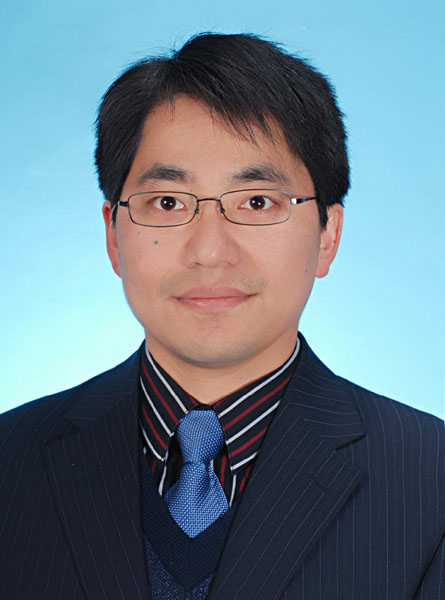
Biwu Shang is a Professor at the School of Foreign Languages, Shanghai Jiao Tong University , and holds the title of Changjiang Youth Scholar (2016-2019) and Youth Talent (2017-2021) from the Chinese Central Government. His research bridges Literary Theory , Ethical Literary Criticism , and Narratology , with a focus on Contemporary English Fiction and World Literature . He has served as Editor-in-Chief of Frontiers of Narrative Studies since 2004 and as Vice-Secretary of the International Association for Ethical Literary Criticism since 2012. Ph.D. in English, Shanghai Jiao Tong University (2010) M.A. in English, Shanghai Jiao Tong University (2007) B.A. in English, Anhui Normal University (2001) Shang’s scholarship explores the intersection of Ethics and Narrative , analyzing how fictional works construct moral frameworks through Postclassical Narratology and Transnational Comparative Literature . His work on Unnatural Narratives in Chinese and Western contexts redefines narrative boundaries, while his studies of authors like Ian McEwan and Kazuo Ishiguro reveal universal ethical tensions in Contemporary Fiction . He has received multiple honors including the Second Prize for Humanities Research from Shanghai Municipal Government (2016) and the Third Prize from the Ministry of Education (2015). As a Principal Investigator , he has led key projects funded by the National Social Sciences Foundation of China (2011-2022) and held fellowships at the National Humanities Center (2015-2016). His invited talks at institutions like Tel Aviv University (2017) and international symposia highlight his global academic influence.
Dr hab. Magdalena Piechota is a Professor at the Department of Media Communication within the Faculty of Political Science and Journalism at Maria Curie-Skłodowska University (UMCS), Poland. Her academic career spans over two decades, with affiliations starting in 2001 as an adjunct and progressing to her current role since 2019. Specializes in Journalistic Genres , Media Discourse , and Edutainment Key research areas: Narrative Analysis , Media Representations , and Cultural Communication Recent publications focus on Family Memory , Pandemic Narratives , and Holocaust Representation in literary reportage Her scholarly work includes analyses of Polish Reportage , Sports Media , and Postmemory in contemporary journalism. While no formal scientific awards are documented in the available materials, her 2023-2024 publications demonstrate ongoing contributions to media theory and practice.
Jennifer Cazenave is an Associate Professor of French and Director of Undergraduate Studies at Boston University’s College of Arts & Sciences. Her work bridges French studies with interdisciplinary fields including Cinema and Media Studies, Women’s, Gender, and Sexuality Studies, and Jewish Studies. She currently holds a visiting fellowship at UConn Humanities Institute (2025-2026) while on leave from BU. Education: BA from Bard College, MA and PhD from Northwestern University and Université Paris Diderot. Her research focuses on documentary cinema, disability studies, Holocaust archives, and the Anthropocene. Major publications include An Archive of the Catastrophe (2019) analyzing excluded Holocaust testimonies in Claude Lanzmann’s Shoah , and her forthcoming Lessons in Seeing (Columbia UP) examines disability representation in 20th-century media archives. Awarded 2025 Dean’s Excellence in Graduate Education Award and ACLS fellowship, her work has been supported by grants from the Charles H. Revson Foundation and BU’s Diversity & Inclusion Initiative. Her translations appear in Cinéaste and Traffic .
Brett Ashley Kaplan is a Professor and Conrad Humanities Scholar at the University of Illinois, Urbana-Champaign, affiliated with multiple departments including Comparative and World Literature, Germanic Languages and Literatures, Jewish Culture and Society, Unit for Criticism and Interpretive Theory, French and Italian, School of Art and Design, and Center for Global Studies. Her research spans Holocaust postmemory, Jewish-American literature, and race/ethnicity in contemporary art. Ph.D. in Rhetoric from University of California, Berkeley (2002) Key research areas include: Holocaust art and literature Jewish American literary analysis Race/ethnicity in visual and performance art Environmental trauma narratives Critical theory applications Recent publications focus on Jewish identity dynamics, Holocaust memory frameworks, and interdisciplinary aesthetics. As director of the Initiative in Holocaust, Genocide, and Memory Studies, she shapes global discourse on trauma and cultural memory through edited works like Critical Memory Studies: New Approaches (2023). Current creative work includes the novel Rare Stuff (2022) and its ecological themes, with Vandervelde Downs in progress.
Hakan GÜLTEKİN serves as Assistant Professor in the Department of Western Languages and Literatures at Artvin Coruh University's Faculty of Arts and Sciences since 2018, following his Instructor role (2013-2018). He concurrently holds significant administrative positions including Director of the Application and Research Center (2022-present), Erasmus Coordinator (2021-present), and former Vice Dean (2020-2022), demonstrating deep institutional engagement across academic and international domains. His educational trajectory spans a bachelor's degree from Atatürk University (2002-2007), master's from Karadeniz Technical University (2011-2014), doctoral studies at Istanbul Aydın University (2014-2018), and recent scholarly activity at the University of East Anglia (2022-2023). This foundation supports his dual expertise in English literary traditions and contemporary critical frameworks. GÜLTEKİN's research interrogates the intersection of theatre and socio-political crises, with particular emphasis on Brexit-era identity fragmentation, neoliberal economic policies, and multicultural tensions in British society. His scholarship consistently examines how playwrights like David Hare, Tom Stoppard, and emerging voices translate complex political realities into dramatic form, while maintaining strong connections to Shakespearean studies and postdramatic theory. This work reveals a methodological commitment to both textual analysis and performance studies. Analysis of his recent publications (2023-2025) shows intensifying focus on post-Brexit identity politics and climate consciousness, with 2025 alone yielding five major studies on British identity crises and sovereignty debates. His work increasingly incorporates transnational perspectives, examining parallels between Brexit and Trump-era populism while documenting theatre's role as a public sphere during political upheaval. Scientific awards: None documented in source materials. As principal investigator, GÜLTEKİN has secured four major EU-funded projects: 'Green Chemistry Applications on Medicinal Plants' (2022, ongoing), 'Back to Green: Youth Environmental Engagement' (2022, ongoing), 'HELP: Educating Students with Learning Challenges' (2015-2018), and 'Life Over Violence in Education' (2011-2013). These initiatives demonstrate his capacity to bridge humanities scholarship with environmental and educational innovation through international collaboration. He leads Artvin Coruh University's Erasmus program and coordinates external relations for the Ali Nihat Gökyiğit Botanical Garden, fostering networks that integrate academic research with community environmental stewardship. His administrative portfolio further includes Bologna Process coordination and quality assurance leadership, positioning him at the nexus of institutional development and international academic exchange.
Alan Berger is the Raddock Family Eminent Scholar Chair for Holocaust Studies and Professor of Judaic Studies at Florida Atlantic University, where he directs the Center for the Study of Values and Violence After Auschwitz. He founded the Holocaust and Judaic Studies B.A. program at FAU and previously led Jewish Studies at Syracuse University. Berger has held visiting positions at the College of William and Mary and has been a national leader in Holocaust scholarship. His research focuses on Holocaust literature, second- and third-generation trauma, Jewish-Christian dialogue, and post-Holocaust theology . His influential works include Children of Job , Second-Generation Voices , and Third–Generation Holocaust Representation . He has co-edited major reference works such as the Encyclopedia of Holocaust Literature , recognized as a top reference book. His scholarship explores how trauma, memory, and identity are transmitted across generations through literature and theology. Berger's publications span decades, revealing a sustained engagement with literary representations of the Holocaust, interfaith dialogue, and the ethical aftermath of genocide . His work increasingly examines third-generation narratives and global religious responses to violence, such as in Trialogue and Terror . The articles reflect interdisciplinary depth, combining literary analysis, theology, psychology, and ethics. B’nai Zion National Media Award (2002) Booklist Best Reference Book of 2002 Outstanding Reference Source 2003 (RUSA) Nominee, John Gilmary Shea Prize Doctor of Letters Honoris Causa, Luther College (1999) Berger has advised numerous academic projects and served as series editor for Religion, Theology, and the Holocaust (Syracuse University Press). He has been a judge for the National Jewish Book Awards and serves on the Readers Committee for The Elie Wiesel Prize in Ethics Essay Contest. His editorial leadership includes roles with Literature and Belief , Shofar , and Saul Bellow Journal . He currently edits the Rowman & Littlefield series Studies in Genocide: Religion, History and Human Rights . He directs the Center for the Study of Values and Violence After Auschwitz , a research hub promoting interdisciplinary scholarship on genocide, ethics, and religious responses to mass atrocity. The center hosts conferences, supports publications, and fosters dialogue among scholars, survivors, and religious communities.
Dr. Tom Vanassche is a researcher at the Institute for Germanistic and General Literary Studies (RWTH Aachen University), specializing in European-Jewish Literary and Cultural History. His work bridges Holocaust Studies, Memory Studies, and Emotion History, with a focus on affective ruptures in Shoah literature. Education: PhD in German Literature (RWTH Aachen, 2021, summa cum laude ); MA in German Studies, Comparative Literature, and European Studies (Ghent University, King’s College London). His research explores German-Jewish literature across centuries , documentary forms, Romanticism, and intersections of ecocriticism with migration narratives. Recent publications analyze pathos in Holocaust historiography and transnational memory frameworks. Key trends in his 15 most recent articles include: Memory processes in postwar German writing Interactions between factuality and fictionality in Shoah narratives Documentary aesthetics in contemporary literature Emotional rhetorics in trauma discourse Transnational memory politics Borderland epistemologies in Eastern European studies Scientific Awards: Prix de la Fondation Auschwitz (2020-2021) for dissertation excellence. Vanassche co-organized workshops on co-memoration and post-war reconciliation, supported by grants including DAAD Strategic Partnership U4 Network and TORCH travel funding. His monograph Pathos and Anti-Pathos (De Gruyter, 2023) and editorial contributions to journals like PhiN have advanced interdisciplinary Holocaust scholarship.
David R. Burns is an Associate Professor in the Radio, Television, and Digital Media program at Southern Illinois University. A digital media artist and publishing scholar, his creative-research investigates the intricate relationships between humans, technology, and nature. His internationally exhibited work, shown at over 130 venues including the National Media Museum (England) and Chelsea Art Museum (New York), bridges artistic practice and scholarly inquiry. Burns' educational background includes: M.F.A. in Design and Technology from Parsons School of Design (2001) AAS from Parsons School of Design (1999) B.A. from the University of South Florida (1995) His research centers on the tensions between technology, culture, and nature in public and private spheres, mediating memory and postmemory, and participatory self-expression through visual music. By integrating computer animation, 3D modeling, 3D printing, sound design, interactive media, and physical computing, Burns pushes the boundaries of digital media art. His interdisciplinary approach results in hybrid projects that function simultaneously as artistic exhibitions and scholarly publications, critically analyzing contemporary issues in media arts. Burns' artistic output from 2001 to 2019 reveals a thematic consistency in exploring the material and immaterial in digital creation, the cultural impact of technology, and memory studies. His works, ranging from real-time interactive installations to multi-channel video animations, address border politics, cultural transformation in urban landscapes, and historical remembrance. Over time, his technical mastery in 3D printing and complex animation has evolved, yet the human experience within technological systems remains central. Notable recognition includes: Fulbright Senior Research Fellowship He has also secured funding from the U.S. Department of State Bureau of Educational and Cultural Affairs, the U.S.-India Educational Foundation South and Central Asia Regional Travel Program, and the Bissaya Barreto Foundation in Portugal. As the developer of the Digital Media Arts + Animation specialization at SIU, Burns mentors students in 3D computer modeling, animation, and digital media arts studio practice. His grant-funded projects often involve cross-cultural collaboration, as evidenced by his Fulbright residency in Portugal and work with international festivals. While specific labs are not mentioned, Burns' practice involves creating interactive installations and digital prints that require technical expertise in physical computing and 3D fabrication. His ongoing projects, such as Bind (un)Bind, continue to explore the intersection of technology and interpersonal relationships.
Prof Cathy Gelbin is Professor of Film & German Studies at The University of Manchester. Her research focuses on Holocaust representations, German-Jewish cultural dynamics, and queer Jewish portrayals in global cinema. She holds a PhD and MA from Cornell University. Her career includes roles as Research Director at the Centre for German-Jewish Studies (University of Sussex) and co-ordinator of the Archive of Memory (GDR Holocaust testimony project). She has held visiting fellowships at institutions including the Moses Mendelssohn Centre (Potsdam) and Humboldt University Berlin. Key research interests include intersectional queer Jewish narratives, Jewish dissidence in Eastern Bloc contexts, and transnational cultural movements. She contributed expertise to the Jewish Museum Berlin’s 'Another Country' exhibition on Jewish life in the GDR. Recent articles explore 1980s East Berlin activism, conceptual frameworks of Jewish dissidence, and queer cinema. She has received the Hilde Robinsohn Guest-Fellowship (2022) and supervised numerous PhD projects on Jewish/German cultural studies. Her work engages with sustainable development goals related to cultural preservation and social justice through analysis of historical trauma and minority representation.
Chrisoula Lionis is a Research Fellow at the University of Manchester, working on the AHRC project Understanding Displacement Aesthetics . She holds a PhD in Visual Culture from UNSW Australia and has held international positions including a Marie Sklodowska-Curie Fellowship. Her research focuses on humor, cultural resilience, and visual culture in contexts of occupation and displacement. Lionis has authored influential books like Laughter in Occupied Palestine and edited Comedy in Crises , and curated exhibitions such as Traces of Displacement at the Whitworth Art Gallery. Her expertise spans visual culture, postcolonial studies, and memory politics. Lionis has been affiliated with institutions like UNSW’s National Institute for Experimental Arts and Panteion University in Athens. She currently chairs exhibitions at Hunar Symposia and co-directs the pedagogical platform Artists for Artists . Lionis’ work addresses humor’s role in socio-political resistance, with a focus on Palestinian art and cultural resilience. Her recent publications analyze humor in crises, contemporary art, and post-memory narratives. She has earned awards including the Marie Curie Fellowship and the Dean’s Award for Postgraduate Excellence. Her research integrates artistic practices with academic inquiry, emphasizing interdisciplinary and decolonial methodologies. Collaborative projects like Laughing in an Emergency highlight her commitment to bridging theory and activism through humor studies.
Professor Ève Morisi is a Professor of Literatures in French and Political Humanities at the University of Oxford and a Fellow of St Hugh’s College. She holds a joint affiliation with the Faculty of Medieval and Modern Languages and St Hugh’s College. Her research focuses on the intersections of poetics, politics, and ethics in French, Francophone, and comparative literature since the 19th century. Key themes include literary representations of violence and resistance, State power, and socio-political oppression. She has authored works on Albert Camus, Baudelaire, and contemporary Francophone writers, with current projects examining terrorism in French-Algerian literature. She completed her education at Université Paris VII-Denis Diderot, Columbia University, Princeton University, and the Sorbonne. Her teaching spans undergraduate and postgraduate levels, including courses on modern poetry, Francophone literature, and special subjects like 'Histories of Violence.' She actively promotes diversity in education, encouraging applications from non-selective state schools. Research collaborations: Amnesty International, Red Cross, Memorial Site of the Camp des Milles, Centre Albert Camus-Cité du Livre Curated exhibitions and founded the 'Contemporains' series at the Maison Française d'Oxford Co-organized the Oxford Modern French Research Seminar (2017–2022) Her awards include the Robert B. Silvers Grant and EURIAS Fellowship. She supervises doctoral research on topics such as Camus’s ethics of violence, multidirectional memory in fiction, and postmemory narratives in Holocaust literature.
David Slucki is Associate Professor at Monash University's Australian Centre for Jewish Civilisation, specializing in 20th century Jewish history, Holocaust studies, and memoir writing. His research examines Holocaust aftermath and survivor networks, with recent work analyzing humor's role in Holocaust representation. Publications include a multi-generational family memoir and edited volumes on humor in Holocaust memory. Research interests span Jewish diaspora experiences, memory transmission, Yiddish culture, and Holocaust representation in popular media. Current projects investigate Holocaust survivors' collective conceptualizations across national contexts and Melbourne Jewish community studies. Recent publications examine third-generation Holocaust memory globally, humor's complex relationship with historical trauma, and Australian Holocaust writing traditions. Articles demonstrate methodological innovation in analyzing comedic representations of historical trauma across media formats.
Cecilia Enjuto Rangel serves as Associate Professor of Spanish and Director of Undergraduate Studies in the Department of Romance Languages at the University of Oregon's School of Global Studies and Languages. Her scholarly profile centers on transatlantic literary connections, historical trauma, and urban representations across Latin American and Iberian cultural production. Education: B.A. from Universidad de Puerto Rico, Rio Piedras (1998) M.A. (2002) and Ph.D. (2005) from Yale University Her research interrogates transatlantic poetics through lenses of historical memory , particularly regarding Spanish Civil War legacies and post-dictatorship reckonings. She pioneers analysis of urban ruins in modern poetry, examining how cities like Madrid and Havana become sites of political contestation. Recent work integrates queer theory with film studies to explore non-normative memory practices in Spanish cinema, while sustained attention to gender politics reveals how female poets like Rosalía de Castro and Julia de Burgos negotiate national identity. Analysis of her 15 most recent publications shows consistent focus on transatlantic solidarity networks (2018-2023), with increasing attention to ecological dimensions of urban decay. The 2023 Cambridge University Press chapter connects metropolis ruins to contemporary climate crises, while her 2022 Cuba-Spain anthology establishes transatlantic poetics as critical framework for understanding diaspora literature. As Director of Undergraduate Studies, she shapes curriculum for Spanish/Portuguese majors and mentors students through honors theses. Her editorial leadership in Periphērica and collaborative forums like the 2015 'For Whom Do We Write?' demonstrate commitment to interdisciplinary dialogue and public scholarship.