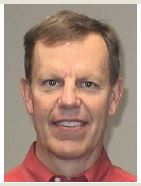
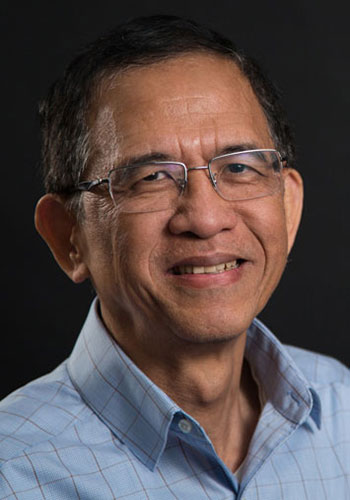
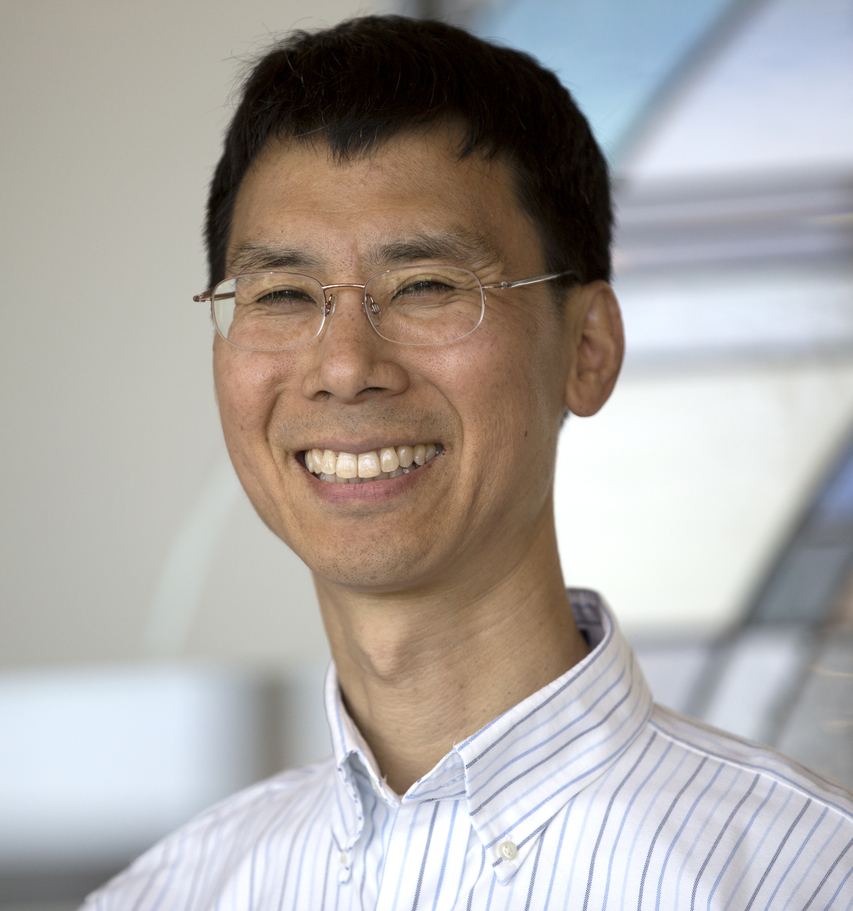
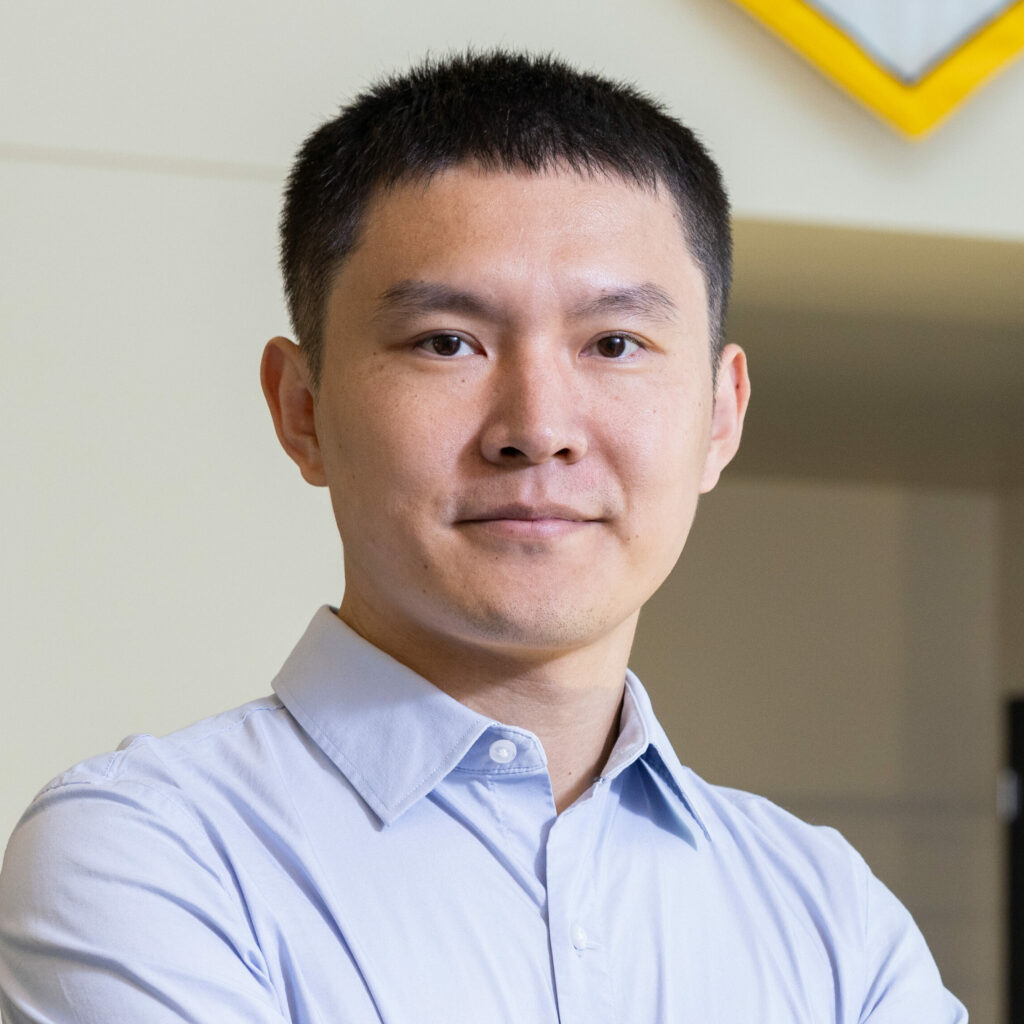
Kurt M. Ware serves as an Adjunct Professor in the Mechanical Engineering Department at the University of St. Thomas School of Engineering, leveraging over 30 years of industry expertise in integrated circuit design, analog systems, and memory architectures. His current teaching includes Control Systems and Automation (ENGR 410) for Fall 2025. His academic credentials feature: PhD in Electrical Engineering from Massachusetts Institute of Technology MSEE from Massachusetts Institute of Technology BSEE from Massachusetts Institute of Technology Research focuses on Integrated Circuit Design—specifically analog/high-speed digital circuits—and Low Power Circuit Design for medical devices and battery-powered systems, complemented by expertise in Digital Signal Processing, Memory Subsystems, and Computer Architecture. His work bridges theoretical engineering principles with practical applications in solid-state storage and medical technology. Industry experience spans ADC Telecommunications, Charles Stark Draper Laboratory, NASA/Caltech Jet Propulsion Laboratory, Boston Scientific, QLogic/Cavium, Teradyne, EnteroMedics, and Micron Technology, where he designed DRAM/NAND memory ICs and solid-state drives. He holds five U.S. patents in implanted medical devices and high-bandwidth memory systems, with additional leadership in R&D management and technical publications.
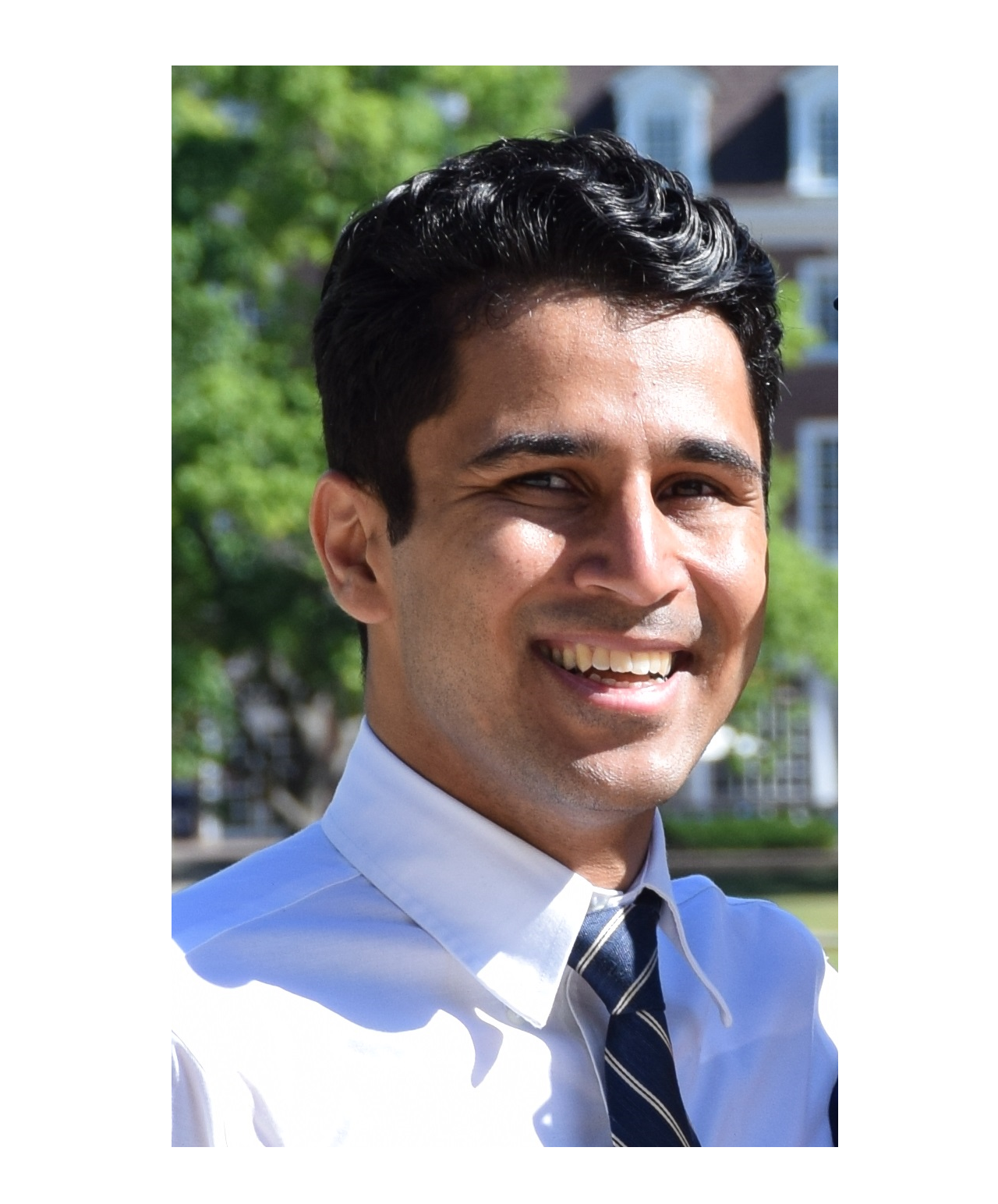
Dr. Hung Le is an Instructional Associate Professor at the University of Houston's Cullen College of Engineering, Department of Electrical and Computer Engineering. He holds IEEE Life Senior Member and Senior Member of the National Academy of Inventors statuses. With over 30 years of industry experience in computer, telecom, and oil/gas sectors, his expertise spans embedded systems, IoT, reconfigurable systems, and memory controller design. Education: M.Sc., Electrical Engineering, University of Alberta Ph.D., Electrical Engineering, University of Houston Research Interests: Embedded Systems & IoT Reconfigurable Systems (ASIC/FPGA) Memory Controllers Machine Learning His work emphasizes hardware-software co-design, adaptive systems, and secure memory architectures. Publications highlight advancements in memory subsystems, dynamic buffer mechanisms, and secure embedded systems. Over 20 patents underscore his contributions to memory management, password security, and low-power device communication. Advising focuses on graduate instruction, with no listed advisees. Professional experience includes adjunct roles (2005-2008) and current instructional professorship since 2017. No specific labs or teams explicitly mentioned, though his patents indicate involvement in interdisciplinary hardware research.
Alberto Ros Bardisa is a Professor at the Department of Computer Engineering and Technology within the Faculty of Informatics at the University of Murcia. He holds a Doctorate from the same university, completing his thesis on Efficient and Scalable Cache Coherence for Many-Core Chip Multiprocessors in 2009. His research focuses on computer architecture , with particular emphasis on cache coherence protocols , hardware transactional memory , speculative execution , and many-core systems . He has contributed to optimizing memory subsystems, concurrency management, and scalability in parallel computing environments. His work often bridges hardware-software co-design to enhance performance and security in modern architectures. Dr. Ros Bardisa is affiliated with the Computer Architecture and Parallel Systems research group and previously contributed to the Architecture and Parallel Computing group. His publications (over 130+ listed) reflect a sustained focus on advancing cache efficiency, transactional memory systems, and speculative execution techniques. His current work explores innovative solutions for fine-grain coherence , secure prefetching , and atomic operation optimization , with recent contributions in 2025 addressing novel protocols like WoperTM and MASCOT.
Peter M. Chen is the Arthur F. Thurnau Professor in the Department of Electrical Engineering and Computer Science (EECS) at the University of Michigan, part of the College of Engineering. He leads research in operating systems, distributed systems, and persistent memory technologies. His work includes foundational contributions to virtualization (e.g., ReVirt), reliable memory systems (Rio), and non-volatile memory semantics. He is a member of the Software Systems Lab and collaborates with the Computer Engineering Lab. Education and affiliations: Ph.D. in Computer Science (implied through career trajectory), affiliated with EECS and multiple labs at U-M. His research interests span speculative execution, security in distributed systems, and high-performance storage. He has advised over 20 graduate students, many of whom have contributed to seminal papers in systems research. Awards include the Arthur F. Thurnau Professorship and multiple best paper awards at top conferences like OSDI and SOSP. His work on ReVirt pioneered virtual machine logging for intrusion analysis, and Rio revolutionized reliable memory caching. Current projects focus on persistent memory programming models and wear management in NVM technologies. Key grants and teams: Active in NSF-funded projects on persistent memory systems and security. Collaborates with industry through partnerships in cloud computing and mobile systems optimization. His lab develops open-source tools like Rio and Vista, emphasizing practical system implementations alongside theoretical contributions.
Colin Scott is an Assistant Professor at Concordia University’s Department of Political Science, specializing in political psychology, comparative politics, and applied social research. His work bridges psychology and political science, focusing on intergroup relations, migration, and public opinion toward diversity. He collaborates with governments and NGOs in Canada and Latin America on evidence-based policy analysis and program evaluation. Education: Ph.D. in Political Science (McGill University, 2021), MA in Applied Social Psychology (University of Guelph, 2014), MA in Political Science (Memorial University of Newfoundland, 2013), BA in Psychology & Political Science (Memorial University of Newfoundland, 2011) Scott’s research explores democratic citizenship, social cohesion, and the psychological foundations of political attitudes. His recent publications analyze decentralization in Canada, minority rights in Québec, and refugee political engagement. He emphasizes behavioral science applications to public policy, particularly in migration and civic participation. Scientific awards include SSHRC fellowships, the H. Anthony Hampson Award, and the Dale Thompson Prize. He also engages in professional service as Assistant Editor for the International Journal of Intercultural Relations and Section Chair in the Canadian Psychological Association.
Samira Mirbagher Ajorpaz is an Assistant Professor in the Department of Electrical and Computer Engineering at North Carolina State University. Her work focuses on the intersection of computer architecture, systems security, and machine learning, with an emphasis on designing secure, energy-efficient microarchitectures and optimizing hardware for machine learning models. She has held a postdoctoral fellowship at UC San Diego and was recognized as an MIT ECE Rising Star. Education: PhD in Computer Science, Texas A&M University (2019) BS in Computer Engineering, University of Isfahan (2014) Her research addresses pre-silicon security verification of microarchitectural designs, adversarial machine learning attacks, and dynamic hardware adaptation using generative AI. Key areas include mitigating timing side channels, enhancing processor efficiency, and developing formal frameworks for secure computing. Recent work explores attacks on speculative vectorization and Intel AMX-based vulnerabilities. Publications highlight contributions to cache performance optimization, instruction prefetching, and proactive adaptive architectures balancing performance and security. No grants or advising roles are explicitly detailed in the provided information.
Dr. Michael Schwarz is a tenured faculty member at the CISPA Helmholtz Center for Information Security in Saarbrücken, Germany, where he leads the RootSec research group. Since 2020 he has been investigating microarchitectural side-channel attacks, system security, CPU security, transient-execution vulnerabilities, and corresponding defense mechanisms. He previously served as a post-doctoral researcher (2019–2020) and PhD student (2016–2019) at Graz University of Technology, after earning two master’s degrees in computer science and software engineering with a security focus. Education PhD, Graz University of Technology, 2019 — “Software-based Side-Channel Attacks and Defenses in Restricted Environments” (Advisor: Daniel Gruss) MSc, Computer Science, Graz University of Technology MSc, Software Engineering, Graz University of Technology Research Interests Dr. Schwarz’s work centers on microarchitectural side-channel attacks and system security , spanning: CPU security and transient-execution vulnerabilities (Meltdown, Spectre, Fallout, LVI, ZombieLoad, ÆPIC Leak, CacheWarp) Detection, mitigation, and formal guarantees against microarchitectural leakage Hardware–software co-design for secure operating systems and trusted execution environments Reverse engineering of CPU internals, cache architectures, and prefetchers Browser and web-platform security, including sandbox bypasses and fingerprinting Compiler security and constant-time programming enforcement Scientific Awards & Recognition 2022 Busy Beaver Award for “Foundations of Cybersecurity II” 2021 Busy Beaver Award for “Side-Channel Attacks and Defenses” 2020 EuroSys Roger Needham PhD Award 2019 IEEE S&P Distinguished Paper Award (Spectre) 2019 NSA Best Scientific Cybersecurity Paper Competition Honorable Mention (Meltdown) 2019 Open Exploit Award (Meltdown & Spectre) 2018 CSAW Best Paper Award (Meltdown) 2018 Pwnie Awards: Best Privilege Escalation Bug & Most Innovative Research 2023 USENIX Security Noteworthy Reviewer Award 2023 WOOT Best Paper Award (CustomProcessingUnit) 2022 Pwnie Award for Best Desktop Bug (ÆPIC) 2022 AI 2000 Security & Privacy Honorable Mention 2021 CCSW Best Paper Award & CSAW Best Paper 3rd Place Advising & Collaborations Dr. Schwarz currently mentors numerous PhD students and post-docs within the RootSec group. His collaborations extend across CISPA, Graz University of Technology, and an international network visible through extensive multi-author publications at top-tier venues including USENIX Security, IEEE S&P, ACM CCS, NDSS, ESORICS, DIMVA, ASPLOS, WWW, FC, and specialized microarchitecture security conferences. Labs & Teams He heads the RootSec Research Group at CISPA, whose core mission is to uncover, analyze, and mitigate microarchitectural and system-level security threats. The group maintains close links with industry partners, open-source communities, and policy makers to ensure that research findings are rapidly translated into practical defenses deployed in modern operating systems and processors.
Mark Horowitz holds the Fortinet Founders Chair in Electrical Engineering and is the Yahoo! Founders Professor in Stanford University's School of Engineering. He also serves as Professor of Computer Science. His career spans over four decades, with foundational contributions to microprocessor design, high-speed link architectures, and computational photography innovations like the Lytro camera. Education: PhD in Electrical Engineering, Stanford University (1984) MS in Electrical Engineering, MIT (1978) BS in Electrical Engineering, MIT (1978) Research Interests: His work bridges EE and CS with interdisciplinary focus on: Agile hardware design methodologies for VLSI systems High-speed signaling and memory interfaces (e.g., Rambus technology) Reconfigurable computing architectures (e.g., CGRA-based accelerators) Applications in computational biology and molecular systems Recent Directions: Recent publications emphasize energy-efficient accelerators for machine learning, memory subsystem innovations, and compiler-driven hardware design frameworks like AHA! His work on Onyx and Opal architectures demonstrates leadership in sparse tensor computation hardware. Labs & Teams: Leads the Stanford VLSI Research Group and AHA! initiative. Collaborations include work with Prof. Marc Levoy on computational imaging and partnerships with industry on memory interface standards.
Phillip Hamrick is an Associate Professor in the Department of Psychological Sciences at Kent State University. His research focuses on psycholinguistics, the psychology of learning and memory, particularly in second language acquisition (SLA) and bilingualism. He investigates how declarative and procedural memory systems underpin language learning, with a specific interest in declarative memory subsystems like episodic and semantic memory. He directs the Memory and Language Laboratory, exploring topics such as implicit statistical learning, working memory, and speech analysis in clinical populations (e.g., Alzheimer’s disease). Dr. Hamrick holds a PhD from Georgetown University (2013). He teaches courses including Quantitative Methods in Psychology, Advanced Quantitative Analysis in R, and Cognitive Psychology. He is actively involved in mentoring doctoral students and considers GRE scores when evaluating applicants for the PhD program. His work bridges cognitive psychology, neuropsychology, and SLA, contributing to theoretical frameworks on memory’s role in language processing and learning. Key contributions include studies on L2 lexical development, the validity of subjective awareness measures in learning, and the cognitive mechanisms behind speech degradation in Alzheimer’s patients. His research has been published in high-impact journals like *Studies in Second Language Acquisition* and *Proceedings of the National Academy of Sciences*.
Elizabeth Varki is an Associate Professor and Graduate Program Coordinator in the Department of Computer Science at the University of New Hampshire's College of Engineering and Physical Sciences. Her research focuses on computer operating systems, simulation/modeling, and systems analysis. She holds a Ph.D. in Computer Science from Vanderbilt University and multiple advanced degrees from the University of Delhi and Villanova University. Her work emphasizes performance evaluation of computing systems, storage optimization, and parallel systems design. Key research contributions include innovative approaches to storage positioning (GPSonflow), RAID systems (RAIDX), and cache prefetching techniques. Her teaching spans courses like Operating System Fundamentals, Database Systems, and Distributed Systems. Varki's publications span ACM Transactions, IEEE journals, and major conferences in performance evaluation and storage systems. Her advising and grants focus on advancing storage and distributed systems research, though specific grant details are not provided here. She is affiliated with the UNH's Computer Science department and contributes to interdisciplinary efforts in computational performance analysis.
Xin Xin is a tenure-track Assistant Professor in the Department of Electrical and Computer Engineering at the University of Central Florida since 2023, specializing in computer architecture with emphasis on memory systems and reliable hardware. Her educational background includes: Ph.D. in Electrical and Computer Engineering from University of Pittsburgh (2023) Master's degree from Tsinghua University (2016) Bachelor's degree from Lanzhou University (2013) Research focuses on resilient memory subsystems, domain-specific architectures, and hardware/software reliability. Key areas include processing-in-memory designs for databases, chip-kill ECC schemes, hybrid NVM-DRAM systems, and neural network accelerator reliability. Her work bridges computer architecture with IC design and semiconductor devices. Recent publications (2019-2022) demonstrate consistent contributions to memory hierarchy optimization across top conferences (MICRO, DAC, HPCA), featuring techniques for DRAM latency reduction, cache security, and in-memory processing. The research shows progression toward energy-efficient, fault-tolerant memory systems applicable to databases and AI workloads. She actively recruits PhD students for computer architecture research and serves as a journal reviewer for IEEE Computer Architecture Letters and Transactions on Embedded Computing Systems. Current projects include low-cost processing-in-memory for in-memory databases and reliable neural network accelerators.
Paul Hoffman is a Professor of Psychology at the University of Edinburgh's School of Philosophy, Psychology and Language Sciences. He holds a PhD in Cognitive Neuropsychology from the University of Manchester (2008) and has held roles including Visiting Scholar at Stanford University (2013) and Research Fellow at the Centre for Cognitive Ageing and Cognitive Epidemiology. His research focuses on semantic cognition, exploring conceptual knowledge, executive control, and neural mechanisms using neuroimaging, computational models, and TMS. He has been awarded the BNS Elizabeth Warrington Prize (2013). Teaching responsibilities include organizing the Critical Analysis undergraduate course and Specialist Techniques in Cognitive Neuroscience postgraduate course. He actively supervises PhD students (current: 7; past: 3), co-edited a Neuropsychologia special issue, and serves on academic committees. His research highlights aging effects on semantic networks, collaborative learning in older adults, and neural substrates of discourse coherence. He is affiliated with the Edinburgh Centre for Cognitive Ageing and regularly contributes to interdisciplinary discussions on semantic cognition. Key research areas include semantic dementia, executive control deficits, and semantic diversity metrics. He uses fMRI, TMS, and computational linguistics to investigate semantic processing across age groups and patient populations. Collaborative work spans neuropsychological studies, neuroimaging meta-analyses, and clinical applications of semantic knowledge assessment.
Keramidas Georgios is an Assistant Professor at the Department of Computer Science, Aristotle University of Thessaloniki. His research focuses on Computer Architecture , including Processor Architecture, Memory Subsystem Design, Multi-core Shared Memory Processors, Graphics Processors, Power Consumption Modeling, and Fault-Tolerant Architectures. PhD in Electrical Engineering and Computer Technology (University of Patras, 2008) Master's in Integrated Hardware and Software Systems (University of Patras, 2002) Diploma in Electrical Engineering and Computer Technology (University of Patras, 2000) He has professional experience with multiple institutions, including Hellenic Open University, Think Silicon SA, University of Peloponnese, and European Commission's Institute of Industrial Systems.
Shoaib Akram is a Lecturer at the ANU School of Computing, Australian National University. He holds a Ph.D. in Computer Science and Engineering from Ghent University (Belgium) and an M.S. in Electrical and Computer Engineering from the University of Illinois at Urbana-Champaign. He has received prestigious awards such as the Fulbright Scholarship (2007-2009) and a Marie Curie Fellowship (2010-2012). His research focuses on optimizing storage-intensive applications, computer architecture, and hardware-software interfaces, particularly for modern data-centric systems. He leads the Vertically Integrated Computer Systems (VICS) research group and has published extensively in top-tier conferences like PLDI, ASPLOS, and ISPASS. He teaches foundational computer architecture courses to over 400 students annually and restructured ANU’s computer systems curriculum. Education: Ph.D. in Computer Science and Engineering, Ghent University (Belgium) M.S. in Electrical and Computer Engineering, University of Illinois at Urbana-Champaign (USA) Research Interests: Storage-Intensive Applications Non-Volatile Memory Systems Garbage Collection Algorithms Big Data Framework Optimization Performance Analysis Hardware-Software Co-Design Awards: NVMW Memorable Paper Award (2019) HiPEAC Paper Awards (ASPLOS 2023, PLDI 2018) Marie Curie Fellowship (2010-2012) Fulbright Scholarship (2007-2009) Teaching & Service: Introductory and Advanced Computer Architecture Courses Program Committee Member for ISCA, MICRO, HPCA, and ASPLOS Artifact Evaluation Committee for OOPSLA and PLDI Labs/Groups: He leads the ANU's Vertically Integrated Computer Systems (VICS) research group, focusing on interdisciplinary system-level research.
Mohammad Alian is an Assistant Professor at the School of Electrical and Computer Engineering, Cornell University. He earned his Ph.D. (2020) and MS (2015) from UIUC and UW-Madison, respectively. His research focuses on redefining data-delivery hierarchies in data centers through computer architecture and systems research. Current Projects: Near-Memory Acceleration, Accelerator Fusion, Micro-Service Co-Design, Compound AI Systems, Memory Specialization, Gem5 Simulation Tools. Recent Awards: MICRO Hall of Fame (2025), NSF CAREER (2022), Miller Faculty Scholar (2023), Open Innovation Contest placements. His research spans Computer Architecture , Memory Systems , and Networked Computation , emphasizing algorithm-hardware co-design for distributed and heterogeneous computing. Recent work includes accelerating large-context LLMs (LongSight), optimizing gem5 simulation (Userspace Networking), and designing cross-accelerator chains (Data Motion Acceleration). ARG (Alian Research Group) collaborates with industry leaders like NVIDIA, Samsung, and SRC/DARPA JUMP 2.0 ACE Center. He serves on PC/Organizing Committees for top conferences (MICRO, ISCA, HPCA) and teaches Data Center Architecture (ECE 6960) and Digital Logic (ECE 2300) . Scientific Awards Inducted into MICRO Hall of Fame (2025) NSF CAREER Award (2022) IEEE Micro Top Picks Honorable Mention (2017) Best Paper Nominee - HPCA 2017, MICRO 2018 Open Innovation Contest: 2nd Place (2022), Finalist (2021) As Principal Investigator, he leads NSF-funded projects (CCRI, AI-Assisted Scaffolding) and co-leads the $31.5M SRC/DARPA JUMP 2.0 ACE Center . His lab develops open-source tools like dist-gem5 and DPDK on gem5, with industry support from NVIDIA (equipment donation) and Samsung.