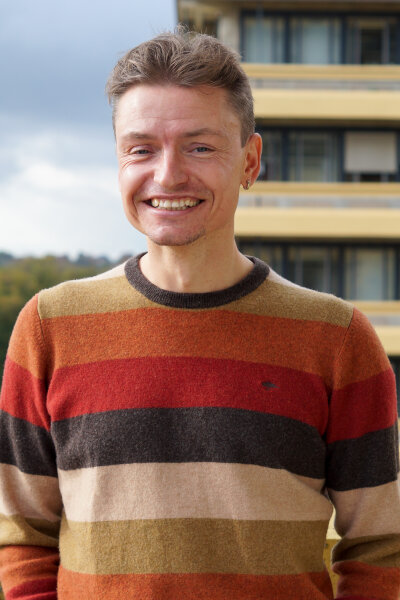
Dr. Tirso RJ Gonzalez Alam is a Lecturer in Psychology at Bangor University, UK. He works within the Controlled Semantic Cognition (CSC) Framework to understand cortical network organization and semantic cognition mechanisms, collaborating with Professor Beth Jefferies. Education: PhD in Cognitive Neuroscience (University of York, 2020), MSc in Clinical Neuropsychology (National Autonomous University of Mexico, 2011), BSc in Psychology (Anahuac Mayab University, 2005) Research Focus: Hemispheric differences in semantic cognition, intrinsic connectivity gradients, and interactions between control networks and default mode networks during complex semantic processing (metaphors, jokes, discourse comprehension). Methodologies include fMRI (task-based, resting-state, DTI), TMS, and multivariate analyses. Recent Article Trends: 2025 studies explore Visual-default network pathways in semantic processing Whole-brain gradients for language representation Cortical dissociation in metaphor comprehension 2024 work emphasizes Temporal lobe semantic gradients Contextual bias in word representations Scientific Contributions: UK Global Talent Visa (2021) ERC-funded FLEXSEM-771863 project Collaborations: Research with institutions in Mexico, UK, France, and Canada. Invited keynote at Anahuac University (2024). Supervision of 10 PhD students during York tenure.
Dr. Roman Abel is a Postdoctoral Researcher at the Department of Educational Psychology, Ruhr University Bochum. He is part of the Institute of Educational Science within the Faculty of Philosophy and Educational Research. His academic career includes a Dr. phil. in Psychology from the University of Kassel (2021), an M.Sc. in Educational Psychology from the University of Hildesheim (2014), and dual B.A. degrees in Educational Science and Educational Psychology from Novgorod University and the University of Hildesheim (2009). Abel’s research focuses on desirable difficulties in learning , including the interleaving effect , generation effect , retrieval practice , and multilingual vocabulary acquisition . His work emphasizes cognitive processes during learning with expository texts and the optimization of instructional strategies. His recent publications explore synergies between generative learning and retrieval practice, metastrategic decision-making in interleaving strategies, and cognitive processes in mushroom foraging as a naturalistic learning context. His research also addresses bilingual vocabulary development and socio-economic factors influencing educational outcomes. Abel’s work bridges theoretical cognitive science with practical educational applications, aiming to improve learning efficiency through evidence-based interventions.
Dr. Julie A. Van Dyke serves as Senior Research Scientist and Vice President of Research and Strategic Initiatives at Haskins Laboratories, an independent research institute affiliated with Yale University and the University of Connecticut. She holds adjunct professorships at McMaster University and the City University of New York Graduate Center while maintaining affiliate status at UConn's CT Institute for Brain and Cognitive Sciences. Her NIH-funded research investigates neurocognitive mechanisms underlying language comprehension and reading disorders. Her educational background includes: Ph.D. in Cognitive Psychology from University of Pittsburgh M.Sc. in Computational Linguistics from Carnegie Mellon University Honors B.A. in Computer Science and Linguistics from University of Delaware Dr. Van Dyke's research centers on cue-based retrieval theory, examining how retrieval interference causes comprehension failures in both normative processing and clinical populations (dyslexia, ADHD, age-related decline). She pioneered the application of speed-accuracy tradeoff methodology to diagnose direct-access retrieval mechanisms and investigates individual differences in eye-movement control during reading. Her work bridges cognitive theory with clinical applications through machine learning classifiers for reading disability and fixation-related brain imaging of word-by-word processing. Analysis of her recent publications reveals consistent focus on retrieval interference mechanisms across multiple methodologies: eye-tracking studies establish individual skill factors in oculomotor control, neuroimaging work identifies neural correlates of interference resolution, and machine learning approaches develop diagnostic classifiers. Key trends include the role of predictive timing in fluency disorders and dissociation between grammatical vs. semantic interference effects. Her scientific recognition includes: NIH/NICHD Institutional Post-doctoral National Research Service Award NIH/NICHD Individual Post-doctoral National Research Service Award Dr. Van Dyke actively shapes her field through editorial roles as Associate Editor for Journal of Experimental Psychology: General and Section Editor for Language and Linguistics Compass. Her NIH-funded grants support collaborative projects with researchers including Victor Kuperman, Luca Campanelli, and Clint Johns, focusing on retrieval interference, reading disability mechanisms, and neural underpinnings of comprehension. Current initiatives integrate computational linguistics with cognitive neuroscience to model real-time processing during reading. As Vice President at Haskins Laboratories, she leads a multidisciplinary team utilizing eye-tracking, EEG, fMRI, and machine learning to investigate language processing. Her lab collaborates with the CT Institute for Brain and Cognitive Sciences and maintains strong ties with UConn's neuroscience community, with ongoing data collection for fixation-related brain imaging studies.
Michael Christian Leitner serves as Head of Research & Transfer Services and External Lecturer in Information Technologies and Digitalisation at Salzburg University of Applied Sciences. With dual PhDs in Psychology and Communication Science from the University of Salzburg, he bridges academic research with practical applications in neuropsychology and sports psychology. PhD in Psychology (University of Salzburg, 2021) Master in Psychology (University of Salzburg, 2016) Bachelor in Psychology (University of Salzburg, 2014) PhD in Communication Science (University of Salzburg, 2012) Master in Communication Science (University of Salzburg, 2009) Bachelor in Communication Science (University of Salzburg, 2007) Master in Telecommunication & Media (St. Pölten University of Applied Sciences, 2005) Leitner's research spans three primary domains: neuropsychological rehabilitation for visual field defects after stroke, sport psychological effects of crowd absence during the COVID-19 pandemic (ghost games), and social engineering/cybersecurity. His innovative work combines eye-tracking technology, virtual reality interventions, and psychological assessment to address complex rehabilitation challenges and understand human behavior in high-pressure sports environments. The Salzburg Visual Field Trainer (SVFT), his VR-based rehabilitation system, represents a significant advancement over traditional stationary and unreliable visual restitution therapies. His publication record reveals a clear thematic progression from neuropsychological rehabilitation methods toward analyzing the psychological impacts of pandemic conditions on sports. The COVID-19 pandemic created a unique natural experiment for studying home advantage phenomena, resulting in multiple publications examining referee decisions, player behavior, and emotional responses in empty stadiums. His most recent work integrates eye-tracking with social science methodology to assess memory-related response variability. Science award (2022) Young Investigators Award (2022) Leitner has secured funding for significant research projects including 'The Psychological Impact of Ghost Games in Football during the COVID-19 Pandemic' (2020-2030) and 'Advanced Perimetry for the Evaluation of Neuroplasticity in the Visual Cortex' (2018-2023). His collaborative network spans multiple institutions with strong connections to the University of Salzburg's Centre for Cognitive Neuroscience. He actively engages with the public through media appearances discussing topics from emotional behavior in sports to the psychological aspects of neurovisual rehabilitation. As Head of Research & Transfer Services, Leitner leads the strategic reorientation of research at Salzburg University of Applied Sciences through a comprehensive organizational development process. His work contributes to UN Sustainable Development Goals through applications in health, wellbeing, and quality education.