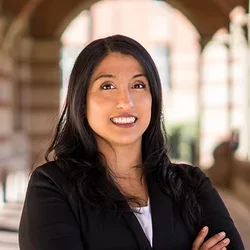
Rosario B. Jaime-Lara is an Assistant Professor at the University of California, Los Angeles (UCLA) School of Nursing. She holds advanced degrees including a PhD in Nursing from the University of Pennsylvania, MSN from Columbia University, and dual BS degrees in Nursing and Biological Sciences from University of Pennsylvania and UC Davis. Her research focuses on neurophysiological mechanisms of eating behavior, nutritional disparities in Mexican-American communities, and chemosensory science. Key themes include obesity research, sensory neuroscience, and translational clinical studies. She employs rodent models and clinical research methodologies to explore taste/smell physiology and metabolic health. Jaime-Lara has received over 17 honors including the 2022 Hommer Memorial Award and multiple diversity fellowships. Her work spans interdisciplinary collaborations in genomics, microbiome research, and health IT interventions for chronic disease management. Recent publications emphasize olfactory dysfunction in coronaviruses, fat taste mediators, and metabolic profiling. Her research bridges basic science and clinical practice, with particular attention to underserved populations.
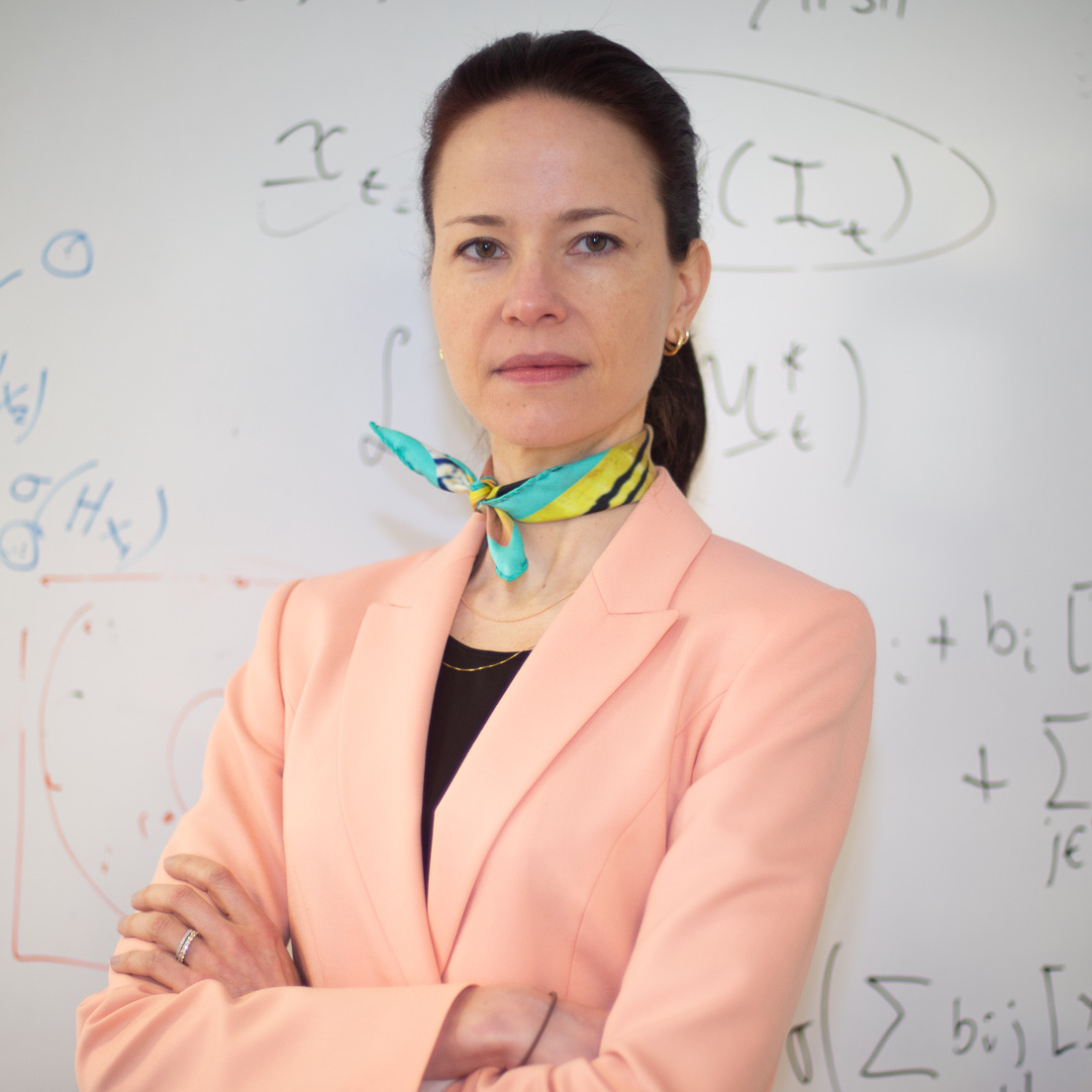
Professor Amanda Prorok leads the Prorok Lab at the University of Cambridge's Department of Computer Science and Technology, focusing on multi-agent and multi-robot systems. Her work integrates machine learning, planning, and control to coordinate intelligent agents in shared environments, with applications in transport, environmental monitoring, and search-and-rescue. She is a Fellow of Pembroke College and holds editorial roles at IEEE Robotics and Automation Letters and Autonomous Robots. Education: Ph.D., EPFL (Switzerland); Postdoctoral Research, University of Pennsylvania (USA). Research Interests: The lab pioneers methods like differentiable communication between learning agents and develops decentralized algorithms for navigation, coverage, and coordination. Key themes include neural diversity in collective learning, resilient swarm systems, and environment-aware control. Notable Achievements: ERC Starting Grant, Amazon Research Award, EPSRC New Investigator Award ABB Prize for Best Thesis in Computer Science (EPFL) Teaching: Leads Computing for Collective Intelligence (MPhil/Part III) modules. Lab & Infrastructure: The Prorok Lab operates the Cambridge RoboMaster platform and develops testbeds for connected vehicles and robot swarms. Recent work emphasizes scalable reinforcement learning and graph neural networks for decentralized decision-making.
Holly Branigan is a Professor of Psychology of Language and Cognition at the University of Edinburgh, affiliated with the School of Philosophy, Psychology and Language Sciences. Her research focuses on language production, dialogue, child language development, and bilingualism. She holds a Personal Chair and has led numerous grants including projects on conversational alignment in children with autism, language experience effects on development, and syntactic priming in dialogue. Her teaching includes undergraduate courses on Psychology of Language and postgraduate modules on Dialogue. She supervises PhD students in topics like syntactic processing, bilingualism, and interactional linguistics. Branigan has secured over £10M in research funding from bodies like the ESRC and EU, leading projects such as 'How does language experience support language development?' (2018–2023) and 'AThEME: Advancing European Multilingual Experience' (2014–2019). Her work explores how speakers adapt language based on social context, interlocutor traits, and cognitive factors. Key achievements include a 7-year ESRC fellowship (1999–2006), and recognition for contributions to understanding syntactic processing mechanisms. She currently leads research on child language imitation in social contexts and bilingual syntactic representation.
Gabriele Oettingen is a Professor of Psychology at New York University (since 2002) and the University of Hamburg (since 2000). Her work focuses on self-regulation processes, particularly mental contrasting with implementation intentions (MCII), which bridges positive fantasies and actionable goals. She holds a M.A. in Biology from Ludwig-Maximilians-Universität (1982), a Ph.D. in Biology (Ethology) from the same institution and the Max Planck Institute for Behavioral Physiology (1986), and a Habilitation in Psychology from Free University Berlin (1996). Her research explores how individuals engage with and disengage from goals, emphasizing the interplay between positive fantasies and realistic evaluations. Key areas include health behavior change, interpersonal relationships, and decision-making. Notable contributions include the development of the WOOP intervention (Wish, Outcome, Obstacle, Plan) for goal achievement. She has held positions at the Max Planck Institute for Human Development and the University of Pennsylvania. Research Interests: Self-regulation strategies, goal-setting mechanisms, mental contrasting, disengagement from unattainable goals, and applications in health, education, and clinical settings. Her work integrates cognitive, motivational, and cultural perspectives to understand human behavior. Lab: Motivation Lab at NYU Publications: Over 200 peer-reviewed articles and books, including *Rethinking Positive Thinking* (2014).
Lu Liu is an Assistant Professor at the School of Modern Languages, Georgia Institute of Technology. Her research examines intersections of literary, visual, and media cultures with transnational biological, hygienic, and environmental knowledge in modern China. She is completing a book manuscript, *Trans-species Revolution: Pests and the Unwanted Nature in Modern China, 1900s–1970s*, analyzing pests as agents in political and ecological struggles. Her work appears in journals like *British Journal for the History of Science* and *China Perspectives*, and edited volumes such as *Socializing Medicine* and *Global Humanities Approach to the UN SDGs*. Education: Ph.D. (University of Wisconsin-Madison), M.A. and B.A. (Peking University, China). Teaching focuses on Chinese literature, cinema, foodways, revolutionary art, and sustainability. Research interests span Chinese history of technology, literary studies, media studies, and science/technology studies, with a geographic focus on East Asia. Courses taught include Chinese language, culture, and special topics like food culture and health rhetoric. Publications highlight themes of scientific narratives in socialist China, environmental imagery in literature, and medical innovation. Advising and grants are not explicitly detailed in the text. She is affiliated with no specific lab or team mentioned.
Hanchao Lu is a full-time Professor and Interim School Chair in the School of History and Sociology at the Georgia Institute of Technology. Specializing in modern East Asian history, his work focuses on global cities, urban society, and the interplay between science, technology, and nationalism. He holds an honorary Senior Research Professor title at the Shanghai Academy of Social Sciences. Since joining Georgia Tech in 1994, Lu has pioneered Asian history curricula and co-founded the China Research Center with support from the Henry Luce Foundation and Carter Center, establishing its journal China Currents at Georgia Tech’s Ivan Allen College. His research explores everyday life in revolutionary China, urban dynamics, and cultural history, exemplified by award-winning works like Shanghai Tai Chi and Beyond the Neon Lights . As editor-in-chief of the Chinese Historical Review and series editor of The Culture and Customs of Asia , he has significantly contributed to academic publishing. Lu’s visiting positions include Harvard University’s Radcliffe Institute, Humboldt University, and Tsinghua University. Leveraging ethnographic and photographic sources, his studies bridge historical narratives with grassroots experiences, emphasizing marginalized voices and material culture. His interdisciplinary approach spans sociology, technology studies, and political culture, reflecting his commitment to understanding Asia’s socio-political transformations through lived realities.
John McGreevy is the Charles and Jill Fischer Provost and Francis A. McAnaney Professor of History at the University of Notre Dame's College of Arts and Letters. He joined the faculty in 1997, served as History Department Chair (2002–2008) and Dean of Arts and Letters (2008–2018), and became Provost in 2022. His research focuses on global Catholic history, modern religious and political dynamics, and transnational religious networks. McGreevy earned his Ph.D. from Stanford University. His major works include Parish Boundaries (1996), Catholicism and American Freedom (2003), American Jesuits and the World (2016), and Catholicism: A Global History (2022). His writings explore topics like Vatican II reforms, global church expansion, and Catholic responses to secularism. His recent articles analyze post-Revolutionary Catholicism, transnational religious networks, and modern papal leadership. Awards include Mellon and ACLS fellowships. He served on the Pulitzer Prize jury for History (2010) and co-chaired the Commonweal Foundation board (2018–2023). McGreevy’s academic leadership includes administrative roles shaping university policy and curriculum. His scholarship bridges historical analysis with contemporary religious and political discourse.
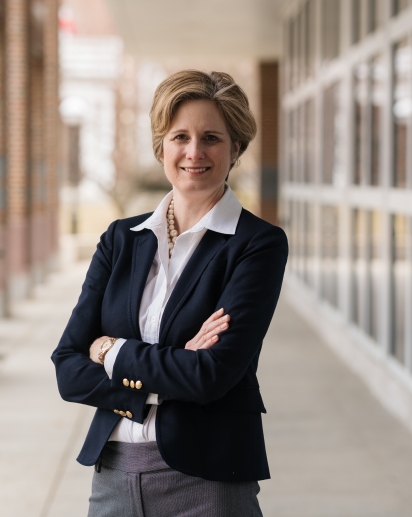
Jennifer M. Lind is an Associate Professor of Government at Dartmouth College and a Faculty Associate at Harvard University’s Reischauer Institute for Japanese Studies. She holds affiliations with Chatham House in London and has been a visiting scholar at Waseda University and SOAS, University of London. Her research focuses on international relations, East Asian security, and U.S. foreign policy toward East Asia. Lind earned her B.A. from UC Berkeley, M.I.A. from UC San Diego, and Ph.D. from MIT. Her work explores how authoritarian regimes like China adapt and innovate, challenging conventional views on their limitations. Notable publications include *Sorry States: Apologies in International Politics* (2008) and her forthcoming *Autocracy 2.0: How China’s Rise Transformed Tyranny* (2025). Lind’s research also addresses Japan’s security evolution, U.S.-China competition, and strategic dynamics in East Asia. She frequently contributes to outlets like *Foreign Affairs* and serves as editor-in-chief of the Substack *Blue Blaze*. Lind teaches courses on international politics, great power dynamics, and U.S.-China relations. Her grants and consultancy include work with RAND Corporation and the U.S. Department of Defense. She co-founded the Security Studies Faculty Network to foster collaboration among security scholars.
Professor Peter Chin is a Professor of Engineering at Dartmouth College and Director of the Learning, Intelligence + Signal Processing (LISP) Lab. He holds affiliations with the Thayer School of Engineering and serves as Associate Editor of IEEE Transactions on Computational Social Systems. His research bridges signal processing, machine learning, game theory, and differential geometry, with applications in cybersecurity, healthcare, and network analysis. Education: Bachelor of Science in Electrical Engineering, Computer Science, and Mathematics from Duke University (1993) Doctor of Philosophy in Mathematics from MIT (1998) Research Interests: Chin’s work focuses on fundamental questions at the intersection of machine learning, game theory, and signal processing. His lab explores topics like adversarial defense mechanisms, topological machine learning, and computational neuroscience. Recent projects include cybersecurity resilience modeling, medical imaging enhancements via GANs, and multi-agent reinforcement learning frameworks. Publications Trends: His most recent articles address cutting-edge challenges in cybersecurity (e.g., autonomous defense systems), medical AI (e.g., Alzheimer’s classification), and adversarial robustness. A notable 2025 focus is on quantitative resilience modeling for cyber defense, reflecting growing demand for AI-driven security solutions. Awards: Faculty Scholar Award, Duke University George Sherred III Award, Duke University Julia Dale Memorial Award, Duke University Grants & Leadership: Recipient of DARPA cybersecurity research grants Co-chair for SPIE/DSS Cyber Sensing Conference (2013–2020) Developed novel compressive sensing microscope for biological imaging LISP Lab: This interdisciplinary lab pioneers projects like nFlip (multiplayer security game models) and topological machine learning frameworks, emphasizing practical applications of theoretical advancements.
Dr. Chuan Khoo is a Lecturer in the Department of Design at Monash University, specializing in interaction design, digital media, and physical computing. He holds a PhD from RMIT University and an MFA from the Rhode Island School of Design. His work explores the dual edges of technology through projects like Touchstone (interactive public art) and Lumogram , which interrogate the relationship between humans and digital systems. Khoo’s research focuses on 'slow data'—design perspectives that critically engage with digital augmentation. He has exhibited internationally and developed tools like the mote mini , an IoT microcontroller for design students. His academic roles include teaching at RMIT and heading the Interaction Design program at Nanyang Polytechnic, Singapore. Key projects include When Echoes Find Light (2019), an interactive public bench installation, and Slow Data in the Age of Digital Things , his PhD work critiquing tech velocity. He co-designed the Alfred Health Universal Design Principles project (2024) and received a 2024 DIA Award shortlist for Lumogram . Khoo maintains Technologies for Interactivity , an open-source resource for physical computing, and collaborates globally on projects blending art, tech, and critical design.
Konstantinos Avramidis is an Assistant Professor at the Department of Architecture of the University of Cyprus , where he focuses on architectural design, urban cultural studies, and visual communication. He earned his PhD in Architectural Design from the University of Edinburgh as a fellow of the Edinburgh College of Art, following a Master's in Architecture and Spatial Design with distinction from the National Technical University of Athens and undergraduate training at Aristotle University of Thessaloniki. Current position: Assistant Professor, University of Cyprus Previous teaching: Drury University, University of Portsmouth Academic honors: Fellow of UK Higher Education Academy His research explores intersections between architectural design, graffiti/street art, and urban spatial practices. He has co-edited the book Graffiti and Street Art: Reading, Writing and Representing the City (Routledge, 2017) and founded the Drawing On research journal and Routledge Advances of Graffiti and Street Art Research series. His work analyzes urban inscriptions as critical spatial practices, examining how crises reshape architectural representation. Scientific distinctions include first prizes in the 'Kozani x4' and 'Thesprotia Chamber of Commerce' architectural competitions. His research has been presented at institutions like TU Delft, ICA, and University College London, with publications in journals such as City: Analysis of Urban Change and The Design Journal . He actively supervises student projects that have won multiple awards.
Ingvild Folkvord is a Professor at NTNU's Department of Language and Literature within the Faculty of Humanities. She leads the NTNU-based research group 'Literature as a Social Resource' and serves on the supervisory board of the International Research Training Group 'Baltic Peripeties'. Her research focuses on modern literary theory, intersections between literature and law, hermeneutical listening approaches, and translation studies. She has authored/co-edited influential works such as Stemmene etter 22. juli (2020) and Ernst Cassirer on Form and Technology (2012). Her work prominently engages with post-2011 Norwegian trauma narratives, analyzing how literature constructs collective memory around events like the July 22 attacks. She explores legal and literary symbolic forms in terrorism response, and has written extensively on authors like Ingeborg Bachmann, Bertolt Brecht, and Kamel Daoud. Her pedagogical research includes studies on academic writing processes and supervisory practices in PhD education. Recent publications analyze ambiguous temporalities in Kathrin Röggla's NSU-trial narratives, migration themes in Jenny Erpenbeck's fiction, and the power of voice in Cassirer/Brechtian theory. She regularly contributes essays to platforms like Prosa and Klassekampen , discussing contemporary literary responses to crises such as the Ukraine war. Folkvord's interdisciplinary approach connects literary analysis with legal discourse, cultural memory, and migration studies. Her research emphasizes how narrative forms mediate collective trauma and societal transformation, particularly through Germanic/Nordic literary traditions.
Professor Stephanie Decker is a leading academic at the University of Birmingham, affiliated with the Birmingham Business School and the Department of Strategy and International Business. She is Professor of Strategy and Co-Vice Chair for Research & Publications at the British Academy of Management (2022–2025). Her interdisciplinary work connects history and the social sciences, particularly in organization studies, strategy, and international business. Her research focuses on business history, especially the historical development of organizations and entrepreneurs in Africa, with attention to multinational corporations and postcolonial transitions. She is a pioneer in developing historical and archival methods for management research, including digital and email archives. She has published extensively in top journals such as Academy of Management Review , Journal of Management Studies , and Business History , and co-edited the Handbook of Historical Methods for Management (2023). Her recent work explores decolonizing curricula, generative AI, and organizational wrongdoing. Stephanie has secured research funding from the ESRC, AHRC, Leverhulme Trust, Newton Fund, Mellon Foundation, and British Academy. She has held visiting appointments at universities in Italy, Denmark, and Germany. Her awards include the Emerald Citations of Excellence (2017), the Henrietta Lawson Prize (2018 and 2021), and Best Paper Awards at the British Academy of Management (2020, 2024). She is a Fellow of the Academy of Social Sciences (2024) and the Higher Education Academy (2013). She supervises doctoral students at the University of Birmingham and the University of Bristol. She is a member of Unilever’s Independent Research Panel and serves on several scientific advisory boards, including those of the Chartered Association of Business Schools and Austrian Society of Business History. She also contributes to professional development for archivists and knowledge managers.
Hywel Dix is Professor in English at Bournemouth University, Faculty of Media and Communication, where he teaches across undergraduate and postgraduate programmes including BA English, BA Communication and Media, MA Creative Writing, and supervises doctoral research in English, Creative Writing, and History. He plays a significant leadership role in academic quality assurance as a leading member of the Quality Assurance and Enhancement Group (QAEG), chairing programme reviews across all faculties. He is also the Faculty Lead for TeachBU, supporting staff in achieving Fellowship of AdvanceHE. PhD in English, University of Glamorgan, 2006 MA in Literatures of Conflict, University of York, 2003 BA (Hons) in English, University of Cambridge, 2001 Hywel Dix’s research centers on autofiction, life writing, cultural memory, and the intersection of literature with social and political change . He is a leading international scholar in autofiction, particularly through his edited collection Autofiction in English (2018) and monograph The Late-Career Novelist (2017), which applies Career Construction Theory to literary careers. His recent work explores cultural identity in post-Brexit Britain, as seen in Compatriots or Competitors? (2022) and Autofiction and Cultural Memory (2023). He also investigates the therapeutic potential of creative writing for mental wellbeing. His recent publications (2020–2025) show a strong focus on autofiction, cultural memory, national identity, and narrative theory , with increasing interdisciplinary reach into psychology, education, and political discourse. Articles and books examine Welsh, Scottish, and Northern Irish writing in the context of Brexit, trauma and colonial memory, and the role of narrative in personal and professional development. Raymond Williams Research Fellowship (University of Glamorgan, 2003) Grant from Scientific and Technological Research Council of Türkiye (TUBITAK), 2025 (on Salman Rushdie’s memoirs) Hywel Dix has supervised numerous PhD students and is actively involved in staff development through Action Learning sets and TeachBU. He has secured competitive research grants and leads public engagement projects such as Write Your Future Self and Telling (My) Stories , which explore narrative and wellbeing. His work bridges academic research, pedagogical innovation, and community outreach. He is affiliated with the Centre for Journalism, Culture and Community at Bournemouth University and is a member of professional associations including MeCCSA, the Association for Welsh Writing in English, and the American Comparative Literature Association. He regularly delivers invited lectures and keynotes internationally, including at Goldsmiths, University of London, Bard College Berlin, and UNICAMP, Brazil.
Professor Bettina Kraus is a prominent architect and academic currently serving as Professor of Design in the Department of Architecture at the State Academy of Fine Arts Stuttgart, where she also chairs the Department of Architecture and serves as a Member of the Senate. Her academic career spans multiple prestigious institutions including TU Berlin, BTU Cottbus, and UdK Berlin, alongside an active architectural practice in Berlin. Her research and teaching focus on the elasticity of existing structures and their potential to adapt to changing programmatic or climatic conditions. Kraus explores how the morphology of architectural types and objects is influenced by context, function, and construction. Her methodology involves transformation strategies based on associative thinking and constructive action, integrating existing and new structures while questioning traditional notions of beauty and perfection. This approach allows her to reinterpret existing structures for contemporary and future requirements while reflecting local cultural identity. Kraus's architectural work demonstrates a consistent focus on transformation, adaptive reuse, and the integration of historical and contemporary elements. Her recent projects include residential buildings in Berlin (Lindenstraße 34-35, Brunnenstraße 19), cultural spaces, and urban interventions that have received numerous awards including the Berlin Architecture Prize (2023) and the Iconic Architecture Award (2019). Berlin Architecture Prize, Award 2023 (Lindenstraße 34.5) Berlin Architecture Prize, Prize 2023 (Malplaquetstraße 19) Iconic Architecture Award, Winner 2019 (Spreestudios) German Design Award 2014 (Medienhaus Schwäbischer Verlag) Architecture Prize Amsterdam, Prize 2010 (4 Towers Osdorp) As an educator, Professor Kraus has mentored numerous award-winning students including Theresa Weigand (ABK Stuttgart), Tom Seeger, and Ralf Hinrichs. Her academic research centers on two key parameters: Program and Typology (examining the Nolli Plan as a typological archive), and Difference and Interface (exploring material properties and surface experiments). Her work has been published extensively in architectural journals and as book chapters, with her most recent publication 'False Friends' currently in progress. Professor Kraus maintains an active architectural practice (Kraus Fischnaller Architects Partnership) in Berlin while contributing to the Board of the Berlin Architecture Prize since 2025.