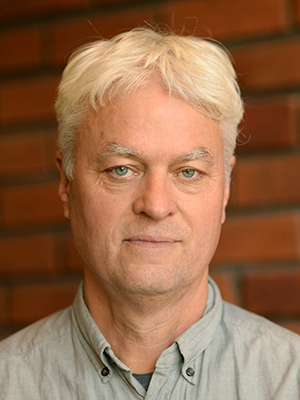
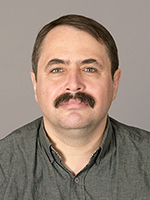
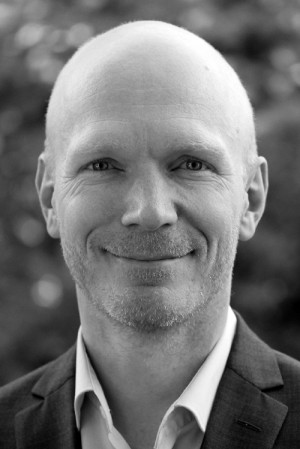
Dag Henrik Tuastad is a Professor of Middle East Studies at the Department of Culture Studies and Oriental Languages (IKOS) at the University of Oslo. His research focuses on kinship dynamics in Palestinian politics, rebel governance (notably Hamas rule in Gaza 2007–2023), political representation crises, and the intersection of sports and politics in the Middle East. Current projects include senior research at Football and Religion in the Middle East (FORM) , funded by the Norwegian Research Council (2021–2026) Former project leader for Rebel Governance in the Middle East (2017–2021) PhD in Social Anthropology (2008) on kinship in Palestinian politics His recent publications analyze Hamas’s symbolic authority, football’s role in Jordanian-Palestinian identity formation, and the erosion of legal frameworks in the West Bank. He critiques media bias (e.g., in Qatar World Cup coverage) and explores how football culture reflects broader political tensions. Teaching: Courses on Middle East history, cultural anthropology, and conflict resolution Regional Focus: Palestine, Jordan, Gaza, and the Levant
Vladimir Tikhonov is a Professor at the Department of Culture Studies and Oriental Languages, Faculty of Humanities, University of Oslo. Specializing in Korean history, his research focuses on Korean Buddhism, nationalism, modernity in East Asia, and labor movements. He holds a PhD from Moscow State University (1996) and has taught at KyungHee University (1997-2000). Current roles include co-leadership of the 'Militarism and Religions in Modern Asia' project and responsibility for the MA program in East Asian Culture and History. Research interests span colonial-era Korean perceptions of Japan and Russia, religious militarism, and the intersection of nationalism with Buddhist thought. Notable works include Buddhism and Violence (2012) and Modern Korea and Its Others (2015). Ongoing projects explore Korean communist movements and critical biographies of nationalist figures like Han Yongun. Teaching covers East Asian culture, history, and politics, with courses like EAST4510 and KOR4504. His publications combine historical analysis with transnational perspectives, addressing topics from colonial-era intellectual debates to contemporary South Korean military chaplaincy dynamics.
Blossom Gordana Champlain is a Professor of Intellectual History of Christianity at MF. She is currently on research leave. Her academic career includes roles such as Heisenberg Fellow (German Research Council, 2017–present), Junior Professor for Ethics in Antiquity and Christianity at the University of Mainz (2011–2017), and post-doctoral positions at institutions like Dumbarton Oaks and Aarhus University. She holds a Dr. phil in Religious Studies from the University of Erfurt (2005–2008). Her research focuses on early Christian history, gender studies, and the intersection of religion with queer and feminist perspectives. She leads MF’s research group on Manuscript Cultures and Modern Knowledge Production and is a Fellow of the MF Centre for Advanced Study of Religion. Recent work examines masculinity in early Christian teachings, historiographical methodologies, and archival practices in religious studies. Key academic contributions include articles on vulnerability in patristic theology, gendered historiography, and the recovery of marginalized religious narratives. Her awards reflect recognition of her scholarly impact, particularly the prestigious Heisenberg Fellowship.
Dr. Alexander Kofod-Jensen is a researcher at the University of Agder's Department of Nordic and Media Studies, specializing in Holocaust perpetrator fiction through comparative studies of French and Scandinavian literature. Associated with the Research Council of Norway-funded project "Unfinished Past: Norway and World War II in Contemporary Aesthetic Memory Culture" (Project #324738), his work examines contemporary representations of WWII criminals and their cultural implications. Education: Ph.D. in Literature, Karlstad University (Sweden), focusing on Jonathan Littell's Les Bienveillantes Research Expertise: Comparative Holocaust perpetrator fiction Scandinavian war crime literature Memory studies and trauma representation Postmodern narrative ethics 20th-century literary theory Historiographic metafiction Publication Trends: His recent scholarship (2024-2025) analyzes evolving fictional portrayals of Nazis in Danish literature and the ethical risks of perpetrator perspectives. Earlier works explore Kafka's narrative structures (2012), Fredrika Bremer's literary realism (2017), and Sebald's memory archeology (2017). Project Affiliation: "Unfinished Past: Norway and World War II in Contemporary Aesthetic Memory Culture" (Research Council of Norway)
Michael Rauhut is a Professor at the University of Agder where he leads the PhD specialization in popular music performance and represents subject teachers within scientific disciplines at the Department of Rhythmic Music . His academic work focuses on popular music studies and musicology, with supervisory responsibilities for master's and doctoral candidates. Rauhut's research explores the intersection of music, politics, and society, with particular emphasis on: Popular music history in socialist contexts (especially the GDR) Cultural transfer during the Cold War Blues, rock, and jazz as forms of cultural expression Youth cultures and music under authoritarian systems Church-state dynamics in musical expression His work demonstrates how music functioned as both state propaganda and vehicle for dissent. Analysis of Rauhut's publications reveals consistent focus on: Cultural mechanisms in socialist states (75% of recent works) Transnational music exchanges across the Iron Curtain Archival methodologies for reconstructing musical histories Identity formation through popular music State censorship and artistic resistance strategies His documentary filmography expands these themes into visual media. As PhD supervisor, Rauhut guides research in popular music performance and musicology. His extensive conference participation includes keynote addresses in Germany, USA, Georgia, and Ukraine, covering topics from blues reception to music's role in political revolutions.
Rune Svarverud is a Professor at the Department of Culture, Religion, Asian and Middle Eastern Studies, Faculty of Arts, University of Oslo. His research spans two major periods in Chinese history: early Chinese philosophy (pre-Qin to Han dynasties) and modern China (post-Opium War cultural encounters). Key research areas include conceptual history, environmental history, political philosophy, and cross-cultural translation studies. Permanent employee since 2004 Head of Department since 2021 Former PhD committee member and research leader (2007-2014) Active in international collaborations with Fudan, Nanjing, Kansai, and Zhejiang Universities His academic work focuses on: History of concepts and textual analysis in Chinese thought Environmental history and terminology evolution in modern China Qing dynasty legal and political philosophy Translation of Western knowledge into Chinese Interactions between Chinese and Western modernity Individualism in 20th-century Chinese society Recent publications examine environmental terminology, cross-cultural scientific translation, and conceptual frameworks in Qing reform. His interdisciplinary approach connects philosophy, law, and environmental studies through historical analysis. Co-edited works on standard languages and cultural communication Contributor to ACTA ORIENTALIA and PNAS Recipient of multiple research grants for Transsustain project
Jorunn Økland is a Professor at the University of Oslo, holding dual roles in the Faculty of Theology and the Centre for Interdisciplinary Gender Research. Her research spans ancient Mediterranean material culture, feminist critique of religion, and gender studies. She directs the Norwegian Institute at Athens and has led the Centre for Gender Research (2010–2013). Education: Dr.Theol. from University of Oslo, with classical studies expertise. Key positions include Professor of New Testament at University of Sheffield (2005–2007), and leadership roles in international organizations like the European Association of Biblical Studies (2009–2012). Research focuses on sacred texts, gender theory, and the intersection of religion and cultural memory. Recent work explores populism in Norwegian equality contexts, ancient Greek religion, and spatial theories in gender studies. Active in editorial roles for journals like Journal of the Bible and its Reception and serves on councils such as the Society of Biblical Literature. Awards and honors include leadership in gender research initiatives and academic administration.
Jasmin Richter is a Research Fellow at the University of Oslo, affiliated with the LCE - Literature, Cognition and Emotions and the Social Psychology Research Group. Her academic journey includes a Ph.D. in Psychology from the University of Cologne (2020), followed by postdoctoral positions at the University of Cologne (2020–2021) and the University of Oslo (2021–present). Education & Appointments: 2021–Present: Postdoctoral Fellow, University of Oslo 2020–2021: Postdoctoral Fellow, University of Cologne 2020: Ph.D. in Psychology, University of Cologne 2015–2020: Ph.D. Student, University of Cologne 2015: M.Sc. in Psychology, University of Bonn 2013: B.Sc. in Psychology, University of Giessen Research Interests: Dr. Richter specializes in cognitive and social psychology, focusing on evaluative conditioning, processing fluency, and moralization. Her work explores how repetition, stimulus pairing, and temporal dynamics influence truth/moral judgments, memory consolidation, and affective preferences. Key themes include the role of episodic retrieval in learning mechanisms and the interplay between unawareness and contingency awareness in valence processing. Publications Trends: Her recent work (2021–2025) emphasizes experimental psychology, with contributions to Cognition & Emotion , Journal of Experimental Social Psychology , and Developmental Review . Topics include evaluative conditioning under varying temporal conditions, the effects of simultaneous stimulus pairing, and the cognitive foundations of affective preferences. Labs & Collaborations: Active in interdisciplinary teams, her research integrates experimental designs with neurocognitive frameworks. Collaborations span institutions like the University of Cologne, the University of Bonn, and international co-authors in psychology and cognitive science.
Christine Amadou is a Professor in the Department of Philosophy, Classics, History of Art and Ideas at the University of Oslo, Faculty of Humanities. Her work is situated within the field of History of Ideas, with a focus on intellectual and cultural history from antiquity to the modern era. Her research interests include classical reception, religious studies, gender and antiquity, medieval thought, biblical translation history, and the transmission of knowledge. She has published on diverse topics such as Saint George, Thecla, Simone Weil, Procopius, Homeric reception in Norway, philhellenism, and the cultural identity embedded in religious translations. Her recent publications reveal a strong interdisciplinary trend, combining historical analysis with literary, philosophical, and gender studies approaches. Articles span from Late Antique hagiography to 19th-century Norwegian intellectual history, showing her engagement with both Scandinavian and Mediterranean intellectual traditions. Local Cult, Transforming Miracles, and Global Discourses: Saint George in Lydda Reading Thecla: Holy Women as Transmitters of Knowledge Philhellenism as a Regime of Forgetting: The Norwegian Archaeologist Ingvald Undset and His Report from Greece Simone Weil og "det greske mirakel" Den ukjente historien om keiser Justinian og Theodora Christine Amadou is involved in research groups such as 'Children and Youth in a History of Ideas Perspective' and 'Textual Traditions and Communities in Early Modern Europe.' She has contributed to projects like 'Narrative Hierarchies: Minor Characters in Byzantine and Medieval History Writing.' There is no public information available about her advising of students or research grants. She can be contacted at christine.amadou@ifikk.uio.no and is based in room 603 at the university’s campus in Oslo.
Tine Kristin Jensen is a Professor of Clinical Psychology at the University of Oslo's Department of Psychology, with a part-time affiliation at the Norwegian Centre for Violence and Traumatic Stress Studies. She specializes in child trauma, PTSD treatment, and developmental psychology, focusing on interventions for youth exposed to violence, disasters, and terrorism. Dr. Jensen co-leads major trauma-focused cognitive behavioral therapy (TF-CBT) implementation projects across Europe and conducts research on unaccompanied refugee minors and digital mental health interventions for war-affected children. Education: Cand. psychol. (University of Oslo, 1986) Approved specialist in clinical psychology (Norwegian Psychological Association, 1996) Dr. Psychol. (PhD, University of Oslo, 2005; thesis: Suspicions of Child Sexual Abuse) Her research interests span trauma treatment efficacy, post-traumatic stress symptom dynamics, and cultural influences on psychological recovery. She has pioneered studies on parental experiences of terrorism (e.g., Utøya attack survivors) and developed digital tools like apps to complement TF-CBT for adolescents. Dr. Jensen also addresses systemic challenges in child mental health services, including therapist burnout and resource allocation. Recent work explores social media literacy's role in youth mental health and evaluates stepped-care models for trauma survivors. She collaborates internationally with institutions like Drexel University and Denver University, contributing to global PTSD treatment guidelines. Key projects include: Implementation of TF-CBT in Norwegian child mental health clinics Treatment outcomes for unaccompanied asylum-seeking minors Longitudinal studies on terror survivors' mental health Development of trauma-focused interventions for online abuse victims Dr. Jensen actively contributes to Nordic psychology policy as a journal editor and sits on scientific committees for organizations like ECOTS. Her work bridges clinical practice, research, and public health policy to improve care for traumatized children and families.
Karmenlara Ely Seidman is a Professor and Artistic Director in Acting and Performance at the Norwegian Theatre Academy (NTA), Østfold University College, and a part-time Professor II at the School of Music, UiT The Arctic University of Norway. She holds a Ph.D. in Philosophy (2008) and an M.A. in Performance Studies (2001) from NYU's Tisch School of the Arts. Her research explores interdisciplinary intersections of performance, ethics, and cultural memory, with foci including: Relational aesthetics and embodiment in performance Intergenerational art practices and indigenous/diaspora knowledge systems Transatlantic archives and decolonial methodologies Experimental pedagogy and institutional reimagining Street performance and ritual/game structures Her publications emphasize performative archives, actor training, and ethical frameworks, frequently engaging with themes of cultural memory, embodiment, and institutional critique. Recent works demonstrate a strong focus on decolonial praxis and interdisciplinary collaboration. She leads major funded projects including: Sea Matters (2023–2026): Performance research pedagogy laboratory Spectral Collaborations (2019–2022): Performative entanglement in Nordic Transatlantic Slavery archives Infinite Record (2013–2017): Archive memory and performance She mentors PhD students internationally, serves on evaluation committees across Nordic institutions, and has developed innovative study programs bridging artistic practice and scholarly research.
Trine Anker is a Professor of Religious Studies with Subject Didactics at MF University of Applied Sciences' Faculty of Religious Studies and Society. She holds a PhD from the Norwegian School of Theology (2011), specializing in youth perspectives on respect in multicultural schools. Her academic career includes roles as Associate Professor at Østfold University College and MF University, with extensive experience in teacher education and professional development. Research interests focus on religious didactics, aesthetic teaching methods, ethics in education, and controversial topics like terrorism and memory culture. Notable contributions include analyzing the sacralization of July 22nd events in schools and exploring folk religions in Argentine football culture. She received the 2024 Distinguished Lecturer award for pedagogical innovation. Teaching responsibilities include courses on research methodology (MET-EMP910), pedagogy (PPU1010/1015), and didactic practices. She leads projects like EtiPP (Ethics in Professional Practice) and ReDi (Religion and Dialogue in Modern Societies), investigating ethical frameworks for educators and interfaith dialogue strategies. Publications span 30+ articles in journals like Journal of Moral Education and Prismet , addressing topics from classroom ethics to youth religious expression. Her 2020 textbook Analyse i praksis guides master's students in practical research methods.
Christian Unkelbach is Professor of Social Psychology at the Department of Psychology, Faculty of Humanities, University of Cologne, where he leads the Unkelbach Group. His research spans multiple domains of social and cognitive psychology with significant contributions to understanding evaluative processes. His primary research interests include Social Cognition, Evaluative Judgments, Information Ecologies, Stereotypes and Prejudice, Evaluative Learning, Fluency Effects, and Sport Psychology. Unkelbach's work examines how humans process evaluative information in social contexts, with particular focus on the truth-by-repetition effect , evaluative conditioning , and cognitive ecological frameworks that explain why certain information patterns dominate social cognition. His research demonstrates how repetition increases belief in information , how attributes become associated through mere pairings , and why positive information is processed more efficiently than negative information. Analysis of his recent publications reveals a consistent trajectory examining the relativity of social cognition , truth effects across contexts , and metacognitive awareness of cognitive biases . His work increasingly integrates cross-linguistic perspectives and examines real-world applications in media consumption and social judgment. Honorary Doctorate from UCLouvain (2025) ISCON Best Paper Award 2020 Speaker of DFG Research Unit FOR2150 'Relativity in Social Cognition' (2017-2021) Emmy Noether Research Grant (DFG, 2009-2013) Feodor Lynen Research Scholarship (Alexander von Humboldt Foundation) Fulbright Scholarship Unkelbach has advised numerous doctoral researchers including Andreas Miculka, Anne Irena Weitzel, Felix Speckmann, Lea Sperlich, and Tabea Zorn. His research group has secured multiple C-SEB grants for projects examining social cognition phenomena. The Unkelbach Group maintains active collaborations with international researchers across Europe and North America, with recent work funded through the DFG Research Unit on Relativity in Social Cognition. The Unkelbach Group laboratory at Richard-Strauss-Str. 2 in Cologne comprises postdoctoral researchers, doctoral candidates, and student assistants working on experimental paradigms examining evaluative learning, truth effects, and social judgment processes. Current projects investigate cross-linguistic truth effects, metacognitive monitoring of repetition effects, and ecological validity in social cognition frameworks.
Veronika Kalmus is a Professor of Sociology at the University of Tartu's Faculty of Social Sciences, Institute of Social Studies since 2015. She has held various academic positions at the University of Tartu since 1991, including Professor of Media Studies (2009-2013) and Associate Professor in Media Studies (2005-2009). She is an internationally recognized scholar with memberships in Academia Europaea and AcademiaNet, and has received numerous awards including the National Research Award in Social Sciences (2022). Her educational background includes a Doctor's Degree in Sociology from the University of Tartu (2003), a Research Master's Degree in Media Studies from the University of Oslo (1998), and additional graduate studies in Sociology at the University of Tartu. She completed her undergraduate studies in Sociology at the University of Tartu (cum laude, 1995). Kalmus's research focuses on social transformation, mediatization, datafication, and platformization in contemporary society, with particular attention to social acceleration, generational dynamics, and children's and young people's digital media use. Her work examines how digital technologies reshape socialization processes, value orientations, and intergenerational relationships. She investigates the formation of media generations, digital skills development, and the social mediation of children's media use in an increasingly datafied world. Her recent publications analyze surveillance experiences across generations, digital skills among European youth, and the impact of digital tools on mental well-being. Her work demonstrates a consistent focus on the intersection of digital technologies, social change, and generational dynamics, with methodological innovations in cross-cultural and intergenerational research. National Research Award in Social Sciences (2022) Membership of Academia Europaea (2019) Membership of AcademiaNet: Leading European Women Scientists (2020) The Badge of Distinction, University of Tartu (2017) Vitols Prize of the American Association of Baltic Studies (2010) Young Scientist Award of the Cultural Foundation of the President of the Republic of Estonia (2008) Professor Kalmus has supervised multiple doctoral students including Signe Opermann, Marit Napp, and Andra Siibak, with several receiving national recognition. She has led significant research projects including the Estonian Science Foundation grant project 'Children and Young People in the Emerging Information and Consumer Society' (2007-2010) and 'Generations and Inter-generational Relationships in the Emerging Information Society' (2011-2015). Her administrative roles include membership in the University of Tartu Senate (2017-present), Director of the PhD study programme in Sociology (2015-present), and founder of the European Media Salon (2021-2024). She leads the international research network EU Kids Online as Estonian project team leader (2007-present) and is actively involved in developing research methodologies for studying digital family life through the PlatFams project. Her work bridges academic research with practical applications for understanding digital transformations in everyday life across generations.
Ingvild Folkvord is a Professor at NTNU's Department of Language and Literature within the Faculty of Humanities. She leads the NTNU-based research group 'Literature as a Social Resource' and serves on the supervisory board of the International Research Training Group 'Baltic Peripeties'. Her research focuses on modern literary theory, intersections between literature and law, hermeneutical listening approaches, and translation studies. She has authored/co-edited influential works such as Stemmene etter 22. juli (2020) and Ernst Cassirer on Form and Technology (2012). Her work prominently engages with post-2011 Norwegian trauma narratives, analyzing how literature constructs collective memory around events like the July 22 attacks. She explores legal and literary symbolic forms in terrorism response, and has written extensively on authors like Ingeborg Bachmann, Bertolt Brecht, and Kamel Daoud. Her pedagogical research includes studies on academic writing processes and supervisory practices in PhD education. Recent publications analyze ambiguous temporalities in Kathrin Röggla's NSU-trial narratives, migration themes in Jenny Erpenbeck's fiction, and the power of voice in Cassirer/Brechtian theory. She regularly contributes essays to platforms like Prosa and Klassekampen , discussing contemporary literary responses to crises such as the Ukraine war. Folkvord's interdisciplinary approach connects literary analysis with legal discourse, cultural memory, and migration studies. Her research emphasizes how narrative forms mediate collective trauma and societal transformation, particularly through Germanic/Nordic literary traditions.