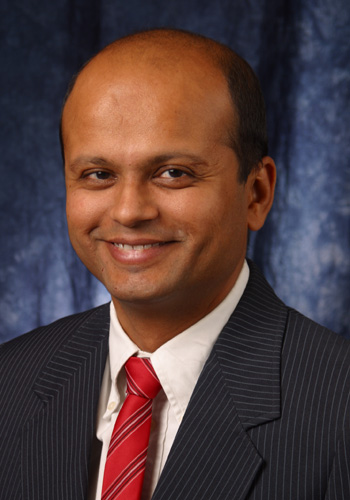
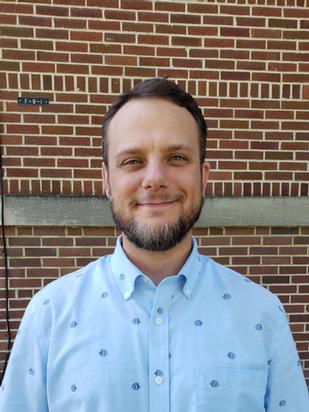
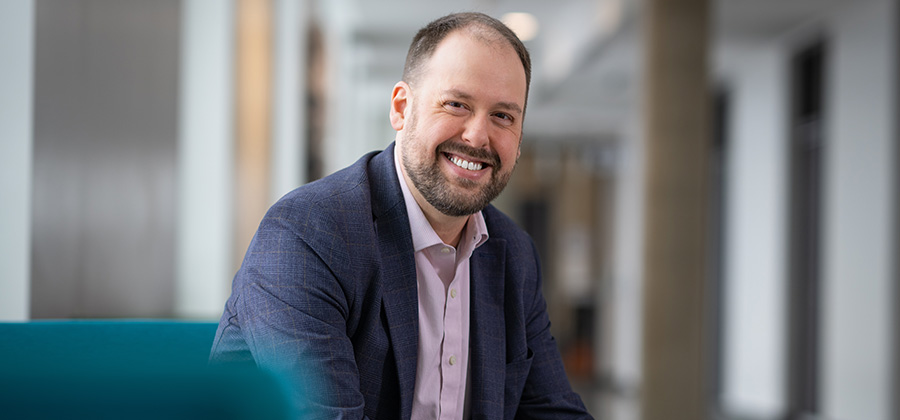
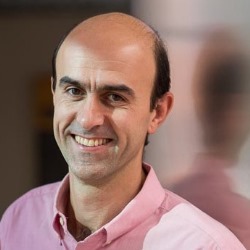
Bhavin R. Sheth is Associate Professor in Electrical and Computer Engineering at University of Houston's Cullen College of Engineering, directing the Sheth Lab for cognitive neuroscience research. Research spans visual perception, sleep functions, autism spectrum disorders, mind-body interactions, and neural basis of insight. His work integrates neuroengineering with cognitive science to explore perceptual statistics, cerebral blood flow dynamics, and eye movement patterns. Teaching includes Programming Applications in ECE, Digital Signal Processing, Digital Logic Design, and Introduction to Neuroengineering. Educational background features BS in Computer Science (summa cum laude), MS in Computer Science, MS in Electrical Engineering from University of Southern California, and PhD in Cognitive Neuroscience from MIT.
Professor Khan Wahid is a faculty member in the Department of Electrical and Computer Engineering at the University of Saskatchewan , affiliated with the Division of Biomedical Engineering . His research focuses on health informatics, IoT infrastructure, medical imaging, and wearable health monitoring , with notable contributions to wireless capsule endoscopy, smart-city applications, and sensor systems. He holds a GCC Stars in Global Health Award (2013) and has secured funding from multiple government and institutional grants. Education: BSc, MSc, PhD in relevant fields (details not specified in text). Research Interests : Health informatics & smart-health systems IoT design/deployment and drone infrastructure Medical imaging reconstruction (CT/MRI) Wireless sensor networks and body area networks Quantum-dot cellular automata (QCA) for nanoelectronics FPGA/ASIC-based embedded systems Funding & Recognition : Harper Government investment in medical imaging (2014) UofS GCC Stars in Global Health Award (2013) Advising & Grants : Supervises graduate students in interdisciplinary projects (specific names not listed). Active in securing grants for IoT-enabled healthcare and agricultural sensing systems. Collaborates on projects involving smart-pill devices, fluorometers for cancer detection, and LiDAR-based plant phenotyping. Labs & Teams : Leads projects integrating biomedical engineering, IoT, and nanotechnology within the College of Engineering. Collaborations span academic and industrial partners for medical device innovation.
Song Wu is Associate Professor in Applied Mathematics and Statistics at Stony Brook University, leading the Wu Lab focused on statistical genomics and bioinformatics. His research integrates statistics with genetics to analyze complex traits using next-generation sequencing data, microarray technologies, and longitudinal analysis methods. His recent publications highlight research in: Statistical methods for RNA-seq and isoform expression analysis Cancer risk modeling and biomarker discovery Neurovascular regulation of hippocampal neurogenesis High-throughput barcode clustering algorithms Multi-locus genetic mapping approaches
Mary Christ is an Associate Professor in the Department of Accounting at the University of Northern Iowa since 2007. She served as Department Head during the 2014-2016 academic years while maintaining her academic rank. Her work bridges accounting education and auditing research, with a focus on improving pedagogical methods and advancing audit decision-making frameworks. Her research interests include financial reporting transparency, auditing methodologies, team-based learning in business education, and cross-cultural assessment strategies. She has contributed to understanding how presentation formats influence auditor judgment and how collaborative classroom environments enhance student outcomes. Mary’s publications span topics from corporate governance practices to innovative teaching approaches. Her work on audit planning problem representations and team dynamics reflects a dual commitment to advancing both academic rigor and practical educational strategies.
Thomas Naselaris is an Associate Professor at the University of Minnesota, specializing in cognitive neuroscience and neuroimaging. His research focuses on decoding brain activity using advanced fMRI techniques and machine learning models, particularly in understanding visual perception, mental imagery, and memory. He leads the development of benchmark datasets like the Natural Scenes Dataset (NSD) and NSD-Imagery, which have become foundational for studying human visual cortex dynamics. His work integrates computational methods with neuroimaging to uncover how the brain represents and processes complex visual information. Notable contributions include reconstructing seen images from fMRI data and analyzing neural representations across different brain regions. He collaborates on large-scale studies involving ultra-high-field MRI and interdisciplinary approaches combining electrophysiology (iEEG) with fMRI. Key research themes include the role of generative models in visual processing, signal-to-noise dynamics in neural responses, and systems consolidation in memory. His grants include collaborative research proposals funded by CRCNS, focusing on evaluating machine learning architectures using benchmark datasets. Ongoing projects aim to bridge cognitive neuroscience with artificial intelligence, emphasizing interpretable models and scalable brain mapping techniques.
Ganesh Vasan is an Assistant Professor at the University of Minnesota's Department of Orthopedic Surgery. His research focuses on neurophysiology, biophysics, and marine biology, particularly investigating neural dynamics, voltage imaging techniques, and bioluminescent phenomena in marine organisms. He holds a PhD and has contributed to advancements in genetically encoded voltage indicators and high-resolution imaging technologies. Key research areas include dopamine-mediated memory interactions, olfactory bulb signaling, and deep-sea bioluminescence. His work bridges neuroscience and engineering, with applications in understanding neural circuitry and developing innovative imaging tools. Notable contributions include studies on neuronal voltage dynamics and the first evidence of bioluminescence on hydrothermal vents. Publications span 2011–2024, emphasizing interdisciplinary approaches. Awards are not explicitly listed, but his research has been published in high-impact journals. No grants or advising roles are detailed in the provided text. His department affiliation suggests involvement in orthopedic research, though specific clinical applications are not elaborated here.
JP Legerski is a Clinical Professor and NPCC Clinical Director at the Department of Psychology, University of North Dakota. He specializes in child psychopathology, memory development, and social-emotional development. His work focuses on trauma interventions, refugee youth mental health, and disaster response. Legerski received his Ph.D. in Clinical Child Psychology from the University of Kansas (2010), with prior degrees from Brigham Young University (B.S., 2004) and a pre-doctoral internship at Boys Town (2010). His research explores topics including post-traumatic stress in disaster survivors, cultural adaptations of evidence-based therapies, and burnout among behavioral health professionals. Notable contributions include studies on Bosnian war-affected youth and Hurricane Katrina evacuees. He teaches courses such as Clinical Practice, Child Psychopathology, and Advanced Individual Research. Legerski's publications span academic journals and edited volumes, with emphasis on trauma treatment, diagnostic frameworks, and developmental psychology. His clinical work integrates mindfulness practices and cognitive-behavioral approaches. He currently oversees graduate student training in UND's Clinical Psychology PhD Program.
Aditya Upadhyayula is a Research Fellow at Washington University in St. Louis, specializing in cognitive science and visual perception. His research explores computational modeling of visual narratives, spatiotemporal perception, and cognitive mechanisms underlying film viewing and change detection. Recent publications demonstrate his interdisciplinary focus on: Temporal and spatial perception in visual cognition Computational frameworks for hierarchical processing Neural and psychological aspects of time perception Medical imaging and artifact reduction techniques His work bridges cognitive psychology, neuroscience, and computer science methodologies.
Dr. Eric Legge is an Associate Professor in the Department of Psychology at MacEwan University since 2016. He holds a PhD and MSc from the University of Alberta and a BA (Honours) from Memorial University of Newfoundland. His research focuses on spatial cognition, navigation, and comparative animal behavior, with secondary interests in companion animal welfare and human-animal interaction. He teaches courses including Cognitive Psychology, Principles of Behaviour, and Comparative Cognition. Education: PhD (Alberta), MSc (Alberta), BA (Memorial University) His primary research investigates spatial memory mechanisms across species, including human navigation strategies, desert ant navigation systems, and the Method of Loci mnemonic technique. He also studies companion animal behavior, training ethics, and the therapeutic benefits of human-animal bonds. Dr. Legge has published extensively on spatial cognition, animal behavior, and mnemonic strategies, with recent work exploring empathy in pet owners and video game impacts on spatial tasks. He actively supervises student research projects in these areas. His publications span topics from pigeon cue integration to ant navigation algorithms, demonstrating cross-species applications of cognitive principles. While no specific awards are listed, his work contributes to foundational understanding of spatial and comparative cognition. His teaching and research emphasize bridging theoretical insights with practical applications in animal welfare and human cognition.
Mehrdad Jazayeri is a Professor in the Department of Brain and Cognitive Sciences at MIT and an Investigator at the McGovern Institute for Brain Research. He directs educational initiatives in the department and teaches 9.014: Quantitative Methods and Computational Models in Neuroscience , focusing on mathematical tools for analyzing neurobiological data. His research centers on the neural mechanisms of timing, sensorimotor integration, and decision-making, with contributions to understanding how the brain encodes time and generates flexible behaviors. Education and Background: Jazayeri earned his PhD in Neuroscience from New York University (NYU) and completed postdoctoral training there, supported by the Helen Hay Whitney Foundation. His work has been honored with prestigious awards including the Howard Hughes Medical Institute Investigator designation (2024), McKnight Scholars Award (2017), and multiple teaching awards from MIT. Research Interests: His lab explores how neural circuits in the frontal cortex and other regions support temporal processing, mental simulation, and hierarchical reasoning. Key topics include neural dynamics underlying interval timing, Bayesian computation in sensory-motor systems, and mechanisms of cognitive control. Recent work highlights the role of entorhinal cortex in mental navigation and the dynamics of working memory. Awards: Over 20 awards/fellowships span career milestones, including the 2024 HHMI Investigatorship, Sloan Research Fellowship (2014), and recognition for both research and teaching excellence. His early career was supported by the Goldsmith Fellowship (NYU) and NSERC Scholarship (Canada). Teaching and Education: As Director of Education in BCS, he shapes curricula for MIT’s Brain and Cognitive Sciences programs. His 9.014 course emphasizes computational modeling, MATLAB programming, and analysis of neurobiological data, reflecting his commitment to bridging theory and experiment. Lab and Collaborations: The JazLab develops innovative techniques like MEDiCINe for neural recordings and leverages primate models to study decision-making circuits. Collaborations integrate experimental neuroscience with computational modeling, addressing questions in temporal processing and neural plasticity.
Ye Wu is an Assistant Professor in Neurobiology and Biological Chemistry at UCLA's School of Medicine. Her laboratory investigates the neural mechanisms underlying empathy and prosocial behavior using interdisciplinary approaches including single-cell transcriptomics, in vivo calcium imaging, and machine learning. Her research has three primary objectives: 1) Decoding neural computations in prosocial interactions, 2) Mapping neural circuitry controlling prosocial behaviors, and 3) Examining disruptions in psychiatric models. Recent work identifies cortical regulation of helping behaviors, amygdala-hypothalamus reward circuits, and neural control of affiliative touch. Wu's research integrates molecular and systems neuroscience to bridge gaps between cellular mechanisms and complex social behaviors. Her work on autism spectrum disorder revealed widespread transcriptomic dysregulation across the cerebral cortex. Brain & Behavior Research Foundation Young Investigator Award (2024) UCLA Collaboratory Fellowship (2017) Stanford Graduate Fellowship (2007-2010)
H. Tad Blair is a Professor at the Department of Psychology , University of California, Los Angeles. His research integrates experimental neurophysiology and computational modeling to explore neural computation principles in the nervous system, with a focus on memory encoding and spatial/associative learning. Primary Area: Behavioral Neuroscience Email: blair@psych.ucla.edu Professor Blair's laboratory investigates how neural oscillators encode information and how synaptic learning modifies behavior. His work employs in-vivo calcium imaging and neurophysiological recordings from awake, behaving rats during cognitive tasks. His recent publications highlight interdisciplinary collaborations in neuroscience and engineering , particularly in FPGA-based motion correction and oscillatory interference models for spatial navigation. Research themes include hippocampal function , theta rhythms , and neural synchronization .
Kate Jeffery is a Professor and Head of the School of Psychology & Neuroscience at the University of Glasgow. Previously, she held roles including Professor of Behavioral Neuroscience and Vice Dean (Research) at University College London. Her research focuses on the neural mechanisms underlying spatial cognition, particularly the 'cognitive map' formed by the hippocampus and related structures. She explores how sensory input constructs spatial representations and the interplay between architecture and brain spatial processing. Affiliations: University of Glasgow (Head of School), Formerly University College London Key Roles: Academic leadership, Director of the Jeffery Lab, Collaborator in neuroscientific research projects Research Interests: Spatial navigation, hippocampal function, neural coding of 3D space, grid cells, head direction cells, and the architectural influence on spatial cognition. Her work bridges neuroscience and environmental design, emphasizing translational applications. Grants & Collaborations: Extensive grants supporting studies on spatial cognition, climate-conscious lab practices, and comparative cognition across species. Collaborates with institutions globally on projects like 3D spatial encoding and gamma oscillation mechanisms. Labs & Teams: Leads the Jeffery Lab at Glasgow, which investigates spatial navigation and hippocampal dynamics. Active in interdisciplinary teams studying neural circuits and environmental impact on cognition.
Balbir Singh is a Research Assistant Professor of Biomedical Engineering at Vanderbilt University, affiliated with the School of Engineering. His research focuses on neural signal processing, brain-computer interfaces, and cognitive neuroscience, with an emphasis on understanding neural mechanisms underlying memory, decision-making, and motor control. His work integrates electrophysiological techniques, advanced signal processing algorithms, and computational models to decode brain activity patterns. Key research areas include analyzing local field potentials (LFPs), studying oscillatory brain activity during cognitive tasks, and developing methods to enhance signal quality in biomedical recordings. He has contributed to advancements in EEG/EOG artifact removal, BCI system design, and neuroplasticity studies. His recent work explores how prefrontal cortex activity relates to working memory performance and decision-making processes in both human and primate models. Dr. Singh’s publications highlight interdisciplinary approaches, combining experimental neuroscience with engineering solutions to address challenges in neural decoding and clinical applications. His studies often involve collaborations to translate findings into practical tools for monitoring cognitive states and improving neuroprosthetic systems.
Prof James Ainge is a Professor and Head of the School of Psychology and Neuroscience at the University of St Andrews. He holds a PhD and BSc in Psychology from the same institution. His research focuses on understanding the neural mechanisms of episodic memory, using systems neuroscience approaches involving in vivo electrophysiology and genetic tools to study hippocampal and entorhinal cortex networks. Complementing this, his lab also investigates cognitive mechanisms of episodic memory in humans and children, with applications to Alzheimer’s disease therapy. Education : PhD in Behavioural Neuroscience, University of St Andrews BSc (Hons) Psychology, University of St Andrews His research interests span systems neuroscience, molecular biology, and translational approaches to neurodegenerative disorders. He has received a Lifetime Fellowship at the Institute of Advanced Studies, Durham University (2021) . Key projects include examining the role of the lateral entorhinal cortex in memory and collaborating on workplace physical activity interventions. He supervises PhD students like Benjamin Thompson and Maneesh Kuruvilla. Recent publications highlight interdisciplinary work on memory mechanisms, Alzheimer’s therapies, and public health initiatives. His lab is actively involved in collaborative projects and conferences, contributing to both basic and applied neuroscience.