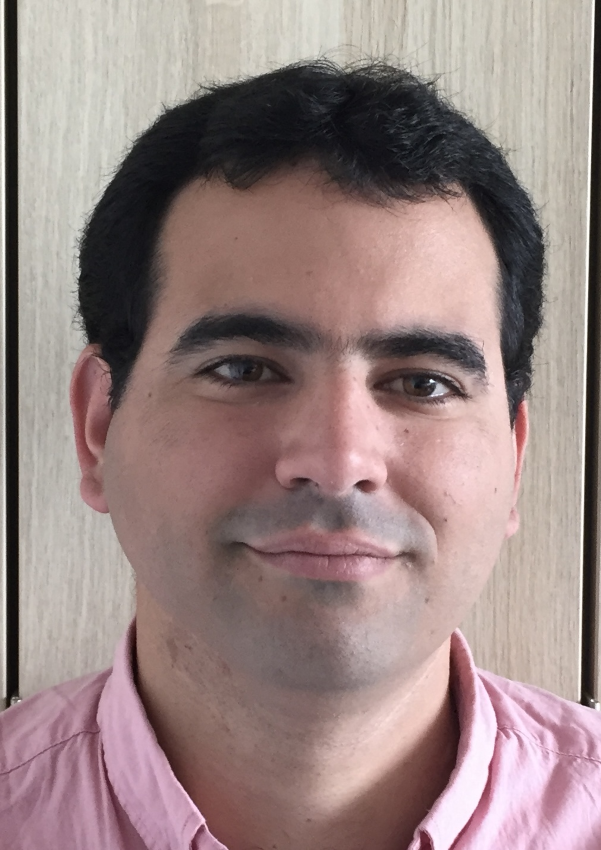
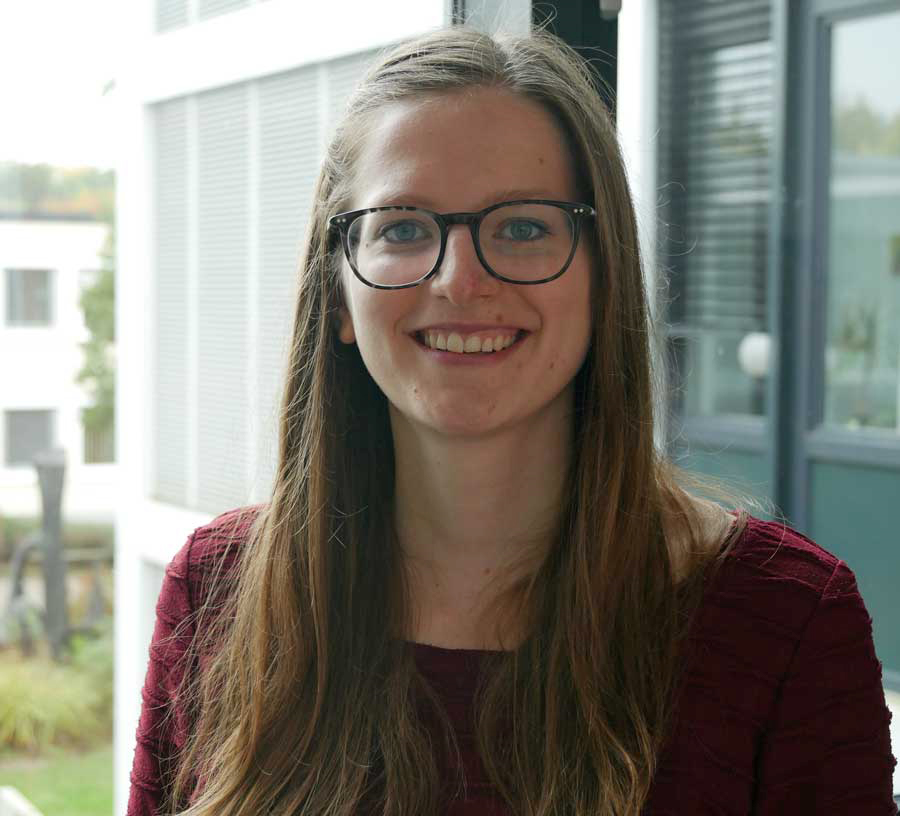
Keith Doelling is a researcher at the Pasteur Institute, affiliated with the Auditory Cognition and Communication team. His work focuses on the neural mechanisms underlying auditory perception, speech processing, and brain plasticity, particularly in aging and hearing rehabilitation contexts. His research interests include: Cognitive Neuroscience Auditory Perception Neural Oscillations Speech Processing Temporal Prediction Brain Plasticity His recent publications reveal a strong focus on how rhythmic structures, predictability, and acoustic features shape perception and cognition. He frequently collaborates with Diane S. Lazard and Luc H. Arnal, contributing to high-impact journals such as PLoS Biology , iScience , and Journal of Neuroscience . His work integrates psychophysics, neuroimaging, and computational modeling to understand how the brain processes temporal information in speech and sound. There are no listed scientific awards or grants. He has not been mentioned as advising students or leading a lab, though his role as Structure Manager suggests organizational and technical leadership within his research unit.
Jeffrey Lopez-Rojas is an Assistant Professor in the Department of Psychology at the University of Wisconsin–Milwaukee (UWM), with strong affiliations to the Neuroscience and Clinical Psychology programs. He is actively recruiting graduate students for the Clinical PhD, Neuroscience PhD, and Health MS programs, indicating an active research and mentoring role. His research focuses on the neural basis of social cognition, particularly the role of the lateral entorhinal cortex and hippocampal CA2 circuit in social memory. Using advanced techniques such as optogenetics, pharmacogenetics, and in vivo neuronal recordings, his lab investigates how multisensory social signals are integrated and processed in the brain. His work has significant implications for understanding and treating neuropsychiatric and neurodegenerative disorders characterized by social deficits. The recent publications highlight a consistent trajectory in neuroscience, particularly in hippocampal function, synaptic plasticity, ion channel regulation, and neural circuit dynamics. Key themes include social memory, dendritic excitability, calcium and potassium channel function, and structural plasticity in the dentate gyrus and hippocampus. His work bridges molecular, cellular, and systems-level neuroscience. Dr. Lopez-Rojas has contributed to high-impact journals such as Neuron , Nature Communications , and EMBO Journal , demonstrating a strong publication record. While no specific scientific awards are listed in the provided text, his research output suggests recognition in the neuroscience community. He advises graduate students in clinical, neuroscience, and health-related programs and likely secures external funding to support his experimental work, though specific grants are not mentioned. His lab employs a multidisciplinary approach, combining behavioral assays with cutting-edge neurophysiological and molecular tools, positioning his team at the forefront of systems neuroscience research. His laboratory focuses on the entorhinal-hippocampal network, utilizing transgenic models, circuit tracing, and functional imaging to dissect the mechanisms of social memory and pattern separation. The team’s work contributes to broader efforts in understanding cognitive decline and social dysfunction in brain disorders.
Steven Barger is a Professor at the University of Arkansas for Medical Sciences (UAMS) , affiliated with the College of Medicine in the Departments of Geriatrics , Neurobiology & Developmental Sciences , and Internal Medicine . Since 1996, he has held a joint appointment at the Department of Veterans Affairs , contributing to both academic research and translational medicine. Alumni of Hendrix College and Vanderbilt University (PhD in Cell Biology) Director of the course "The Basic Biology of Aging" Deputy Chief Editor, Journal of Neurochemistry His research focuses on neurodegenerative diseases , particularly Alzheimer's disease , investigating mechanisms such as glucose transport dysregulation , microglial activation , and amyloid-beta toxicity . Recent work highlights the role of Apolipoprotein E4 in autophagy and XC- transport inhibitors in neuroprotection. Current projects include NIH-funded studies on glucose transport in Alzheimer's (R01AG084473) and collaborations on musculoskeletal disease research . He has received accolades like the Odyssey Medal for Research (2010) and the Louise G. Hearn Endowed Chair (2020). Barger is actively involved in mentoring graduate students and has contributed to editorial boards of four scientific journals. His interdisciplinary approach bridges molecular neuroscience , metabolic regulation , and neuroinflammatory pathways .
Karin Humphreys is an Associate Professor in the Department of Psychology, Neuroscience & Behaviour at McMaster University. Her research focuses on cognitive mechanisms underlying language production, tip-of-the-tongue states, speech errors, and the impact of medical terminology on public health understanding. Primary research areas: Cognitive Psychology, Neuroscience, and Psycholinguistics Key contributions: Implicit learning in language errors, aging-related memory studies, and autism communication research Research Trends : Recent work (2022-2015) examines attentional mechanisms (desirable difficulty effects), speech rhythm in impaired speakers, self-triage decision-making, and cognitive control in video game players. Publications span journals like Cognition , Frontiers in Psychology , and PLoS ONE . Teaching Contributions : Has instructed courses in psychometrics, human cognition, quantitative methods, and advanced psychology topics (2001-2025). Notable courses include PSYCH 3MT3 (Psychometrics) and PNB 2XA3 (Human Perception & Cognition).
Dr. Chenyang Zhao is an Assistant Professor in the Department of Computer Science and Engineering at Shanghai Jiao Tong University's School of Electronic Information and Electrical Engineering. His research spans multiple domains at the intersection of computer vision, machine learning, and engineering applications. Dr. Zhao's primary research interests include: Computer Vision and Deep Learning Robotics and Autonomous Systems Medical Imaging and Healthcare Applications Hardware Acceleration for AI Precision Measurement and Instrumentation His recent work demonstrates a strong focus on practical applications of AI across diverse domains, from medical imaging to infrastructure inspection. Dr. Zhao has developed innovative approaches in areas such as sewer inspection systems using evidential deep learning, RGB-D semantic SLAM for robotics, and lightweight computing-in-memory architectures for edge AI applications. His research shows a consistent pattern of addressing real-world engineering challenges with cutting-edge machine learning techniques, particularly emphasizing trustworthiness, uncertainty quantification, and practical implementation constraints. Dr. Zhao's laboratory focuses on developing trustworthy AI systems with applications in: Infrastructure monitoring and maintenance Medical diagnostics and imaging Autonomous robotic systems Energy-efficient AI hardware
Professor Daniel Senkowski serves as Head of the research division Computational Neuroimaging and leads the Multisensory Integration Research Group at the Department of Psychiatry and Neurosciences, Charité – Universitätsmedizin Berlin. His work bridges clinical neuropsychology with advanced neuroimaging techniques to investigate fundamental neural mechanisms underlying human cognition and perception. Dr. Senkowski's primary research focus centers on multisensory integration processes, particularly examining how neural oscillations across multiple time scales contribute to information processing in both healthy individuals and clinical populations, especially those with schizophrenia and ADHD. His laboratory employs sophisticated methodologies including transcranial alternating current stimulation, eye tracking, computational modeling, and electroencephalography to unravel the complex dynamics of sensory integration. Analysis of his recent publications reveals a strong emphasis on neural oscillatory mechanisms, particularly gamma and beta band activity, in mediating multisensory processing. His 2024 Nature Reviews Neuroscience article on multi-timescale neural dynamics represents a significant theoretical contribution to understanding how the brain integrates information across different sensory modalities through oscillatory synchronization. His research group actively investigates cognitive deficits in schizophrenia, with particular attention to attention deficits, working memory impairments, and multisensory processing abnormalities. The team has produced numerous high-impact studies examining how oscillatory brain activity relates to perceptual and cognitive functions in both healthy and clinical populations.
Matteo Navone is an Associate Professor at the University of Genoa , affiliated with the Department of Italian, Romance, Classical, Arts and Entertainment Studies (DIRAAS). His academic work spans Italian literature from the Renaissance to 19th century, with a focus on critical editions and digital philology. Research Themes : Baroque literature, Tasso studies, Metastasio's epistolary, Ligurian dialect poetry, and digital humanities applications in textual scholarship. Collaborative Projects : Co-edited critical editions with Paola Cosentino, Valeria Guarna, and Stefano Verdino; contributed to the "Metastasio's Epistolary Texts Archive" initiative. Publication Trends include interdisciplinary analyses of sacred poetry, historical fiction evolution, and digital methodologies in literary research. His work often bridges classical textual studies with modern technological approaches.
Abhronil Sengupta is an Associate Professor in Electrical Engineering, specializing in neuromorphic computing, spiking neural networks, and spintronics. His research explores the intersection of artificial intelligence and hardware design, focusing on energy-efficient systems inspired by biological neural processes. Research Interests: Spiking Neural Networks, Neuromorphic Computing, Spintronics, Synaptic Plasticity, Energy-Efficient AI. His work spans both theoretical and practical domains, including algorithm development, device physics, and hardware implementation. Recent projects involve leveraging ferroelectric FETs for dendritic computing and spintronic devices for stochastic neural systems. Publications emphasize spatiotemporal pruning, adversarial attack resistance, and quantum material integration in neuromorphic systems. He actively collaborates on NSF-funded initiatives like CAREER and EFRI BRAID grants, aiming to advance brain-inspired computing paradigms.
Elizabeth Wakefield is an Associate Professor in the Department of Psychology at Loyola University Chicago, specializing in Developmental Psychology and Neuroscience . She also serves as Assistant Chair of her department. Post-Doc: University of Chicago Ph.D.: Indiana University B.A.: Kalamazoo College Her research explores the role of gestures in learning, focusing on how hand movements enhance education in domains like mathematics, language, spatial reasoning, and music. Using behavioral experiments and eye-tracking technology, she investigates: The cognitive mechanisms behind gesture’s impact on learning Individual differences affecting gesture-based learning outcomes Recent publications highlight gesture’s influence on children’s analogical reasoning , mental rotation , and informant selection , with studies spanning neuroimaging and developmental cognition . She teaches foundational courses including Neuroscience , Developmental Psychology , and Psychology of Music , while leading the Movement Learning Lab to advance gesture-based pedagogical research.
Dr. Minyu Chang is a cognitive psychologist and faculty member in the Department of Psychology at Trinity University, where she directs the Memory & Metacognition Lab. Her research investigates how memory errors occur, how people monitor and regulate their learning, how memory is shaped by semantic and contextual knowledge, and how these cognitive processes change across the human lifespan. Dr. Chang received her BSocSc in Psychology from the University of Hong Kong (2017), followed by a Ph.D. in Psychology from Cornell University (2022) under Dr. Charles Brainerd. She completed a postdoctoral fellowship at McGill University (2022-2024) with Dr. Brendan Johns before joining Trinity University. Her research employs behavioral experiments, mathematical models, and computational approaches to examine memory and metacognitive processes. She has made significant contributions to understanding false memory phenomena, particularly the distinctions between semantic and phonological false memories, demonstrating they follow different developmental trajectories and respond differently to experimental manipulations. Her work strongly supports fuzzy-trace theory's distinction between verbatim and gist memory processes. Dr. Chang's publications span top journals including Journal of Experimental Psychology, Psychonomic Bulletin & Review, and Memory & Cognition. Her research shows consistent patterns where semantic illusions increase with age in childhood while phonological illusions decrease, and hybrid list effects differ between short-term and long-term memory. Recipient of the 2021 Psychonomic Society Graduate Conference Award Recipient of the 2020 Psychonomic Society Graduate Conference Award Active research program with publications through 2025 Research has implications for cognitive aging and memory disorders As an educator, Dr. Chang teaches Fundamentals of Cognition and Memory and Cognition courses while mentoring undergraduate researchers in her lab. She encourages student applications at least two weeks before pre-registration and maintains an active research program integrating computational models with theoretical frameworks in memory research.
Laura-Isabelle Klatt is a postdoctoral researcher at the Leibniz Research Centre for Working Environment and Human Factors (IfaDo) in Dortmund, Germany, where she works in the Department of Ergonomics. Her research focuses on the intersection of selective attention, working memory, and multisensory processing, applying various methods from cognitive neuroscience and experimental psychology. She earned her PhD in Neuroscience summa cum laude from Ruhr University Bochum with a thesis titled "Attentional Orienting in Perceptual and Mnemonic Space: Investigating Electrophysiological Correlates of Selective Auditory Attention." Prior to this, she completed a Master's degree in Clinical Psychology, Neuroscience and Rehabilitation Sciences at Albert Ludwig University of Freiburg, and a Bachelor's degree in Psychology with a specialization in Cognitive Neuroscience from Ruhr University Bochum. Dr. Klatt's research explores how attention allows us to select currently relevant information and shape perception, with particular interest in how attention interacts with working memory. While her PhD work focused on the auditory domain, she has recently expanded her focus to multisensory processing, investigating whether selective processing in multimodal environments is governed by unisensory or amodal attention mechanisms, and how multisensory information is encoded and stored in working memory. She applies ERP analysis, time-frequency analysis, multivariate pattern analysis, and diffusion modeling in her research. Her recent publications and conference presentations demonstrate a consistent focus on attentional mechanisms, working memory processes, and their integration across sensory modalities. She actively participates in collaborative research initiatives like EEGManyLabs, EEGManyPipelines, and SCoNe (Scottish-EU Critical Oscillations Network), contributing to methodological advances in cognitive neuroscience. Dr. Klatt is passionate about open science practices and science communication, believing that transparency increases the credibility, trustworthiness, and impact of research. She actively engages with the scientific community through conferences like ICON2025 and ESCoP2025, and she co-organizes events such as the Young Scientist Retreat 2025. She is involved in collaborative research networks focusing on reproducibility in cognitive neuroscience, particularly examining how data transformations affect effect sizes and reliability. Her work often bridges theoretical questions about cognitive mechanisms with practical methodological considerations for experimental design and analysis in cognitive neuroscience.
Dr. Amir Hossein Azizi is a PostDoc researcher at the Institute of Neuroinformatics (INI), Faculty of Computer Science, Ruhr-Universität Bochum, specializing in computational models of hippocampal memory systems and neural replay mechanisms. His academic background includes: M.Sc. in Physics from Institute for Advanced Studies in Basic Sciences (IASBS) focusing on primate visual memory representation Ph.D. from Ruhr-Universität Bochum investigating hippocampal sequential activity and grid-to-place cell transformations Research centers on hippocampal computational principles , examining how exploration-driven learning shapes sequential neural activity and place field formation. His work integrates theoretical neuroscience with biologically plausible neural network modeling to decode memory encoding and spatial representation mechanisms, particularly emphasizing intrinsic factors governing neural plasticity in memory circuits. Publication trends reveal consistent advancement in understanding memory replay phenomena since 2011, with recent work (2023) linking working memory capacity to stimulus complexity. His research bridges hippocampal electrophysiology with computational theory, demonstrating robustness in spatial coding systems and category representation across species. Dr. Azizi actively mentors students through thesis supervision: J. Sowade (Master's, 2019 - Network oscillations) O. Hakobyan (Master's, 2016 - Sequential activity propagation) S. Klatt (Bachelor's, 2016 - Visual category representation) D. Ogiermann (Bachelor's, 2016 - Depression modeling) As core INI faculty, he collaborates within RUB's multidisciplinary cognitive science ecosystem combining neurophysiology, machine learning, and robotics to investigate natural and artificial cognitive architectures.
Martin Nisser is an Assistant Professor at the University of Washington in the Department of Aeronautics and Astronautics . He leads the Programmable Matter Lab , focusing on computational fabrication and assembly platforms for in-space and end-user applications. His educational background includes a PhD in Computer Science (2024) and an MS in Computer Science (2019) from MIT, an MSc in Robotics, Systems & Control from ETH Zurich (2015), and a BEng in Mechanical Engineering with Renewable Energy from the University of Edinburgh (2013). Research Interests Computational fabrication Self-assembly systems In-space manufacturing Programmable materials Modular robotics Scientific Awards Seth J. Teller Award (2023) Collier Medal (2023) Sweden-America Fellowship (2021) Thomas G. Stockham & Bernard Gold Fellowship (2022) IMechE Best Student Award (2013) Outreach & Teaching Co-founder of Brave Behind Bars prison education program Teaching Assistant at MIT SuperUROP and Engineering Interactive Technologies Mentored over 20 students in robotics and fabrication projects
Gian Carlo Cardarilli is a researcher specializing in digital hardware design and machine learning acceleration. His work focuses on FPGA implementations, Residue Number System (RNS) architectures, and reconfigurable computing for applications in wireless communication, edge AI, and fault-tolerant systems. Key collaborations with institutions like IEEE and ACM through publications. Active in translating theoretical algorithms into practical hardware solutions for real-time systems. Research interests include: Optimizing deep learning models for heterogeneous platforms. Developing radiation-hardened memory systems. Creating energy-efficient signal processing architectures. Advancing reconfigurable functional units for embedded processors. His article analyses span fields like Quantum Cellular Automata , Variable Fractional Delay Filters , and RNS-Based Position Estimation , reflecting a trend toward adaptive, low-power, and domain-specific hardware.
Prof. Dr. Peer Neubert is a Professor and Head of the Intelligent Autonomous Systems (INTAS) Working Group at the University of Koblenz. He is affiliated with the Department of Computer Visualistics (Department 4) and serves as Head of the Institute of Computational Visualistics. His academic roles include membership in the Department Council and Library Committee of FB4. His research focuses on robotics, computer vision, and autonomous systems, with particular emphasis on visual place recognition, SLAM, hyperdimensional computing, and adaptive navigation in dynamic environments. Neubert's work spans theoretical advancements and practical implementations, such as benchmarking systems (e.g., HS3-Bench), efficient algorithms (FETCH, LocalSPED), and sensor-based solutions (HealthWalk). His team addresses challenges in long-term navigation, environmental adaptation, and data-efficient learning. Collaborations include external PhD students like Kenny Schlegel and projects like MineSweeper, demonstrating interdisciplinary impact. His contributions are reflected in over 50 publications since 2007, covering topics from hyperspectral segmentation to biomedical applications. While no formal educational details are provided, his extensive research output and leadership roles underscore his expertise in computational visualistics and autonomous systems.