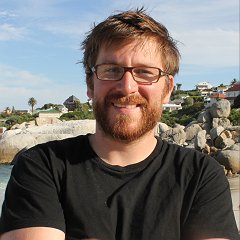
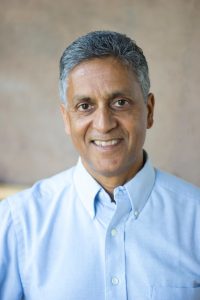
Assoc Prof Henry Nguyen is an Associate Professor at Griffith University's School of Information and Communication Technology, with expertise in data integration, data quality, recommender systems, and big data visualization. He directs the Responsible Big Data Lab and has secured over $3.5M in funding since 2015 from ARC, DFAT, and industry partners. PhD & Master's from EPFL, Switzerland ARC DECRA Award (2020) His research focuses on privacy-preserving AI for social data , IoT , and satellite analytics , with over 200 publications in top venues like SIGMOD, KDD, and IEEE TKDE. Recent work spans federated learning , graph neural networks , and secure AI systems . Article trends highlight 2024-2025 publications on: Federated recommendation security On-device AI optimization Privacy-preserving explainable AI Graph condensation techniques LLM-powered risk analysis Cloud-edge collaboration Scientific contributions include ARC DECRA Award 2020 Multiple senior PC roles in A* conferences Citations in International AI Safety Report 2025 Henry Nguyen supervises 12 active PhD/MSc students and has directed 8 completed doctoral theses . His funded projects include collaborations with Ubitech , KARI , and CSIRO , focusing on Australia-Korea partnerships and responsible AI development.
Manos Athanassoulis is an Associate Professor in the Department of Computer Science at the College of Arts and Sciences, Boston University. He is the Founder and Director of the BU Data-intensive Systems and Computing (DiSC) lab and a member of the BU MiDAS group. His research focuses on data systems, particularly cloud data management, hybrid transactional/analytical workloads, and integration with emerging hardware such as non-volatile memory and heterogeneous computing. His educational background includes a PhD from EPFL (2014), an MSc in Computer Systems Technology, and a BSc in Informatics and Telecommunications from the University of Athens, Greece. Prior to BU, he was a Postdoctoral Researcher and Research Associate at Harvard University, supported by a SNSF Postdoc Mobility Fellowship. His research interests span data systems, database architectures, LSM trees, indexing, storage systems, and performance optimization. He explores how novel hardware can be leveraged to improve data management efficiency and scalability, especially in cloud environments. His recent publications (2021–2025) predominantly focus on LSM trees, covering topics such as compaction policies, Bloom filter tuning, DPU offloading, adversarial resilience, and sustainable caching. Earlier works include foundational contributions on access methods (RUM Conjecture) and optimal key-value stores (Monkey). The trend shows a consistent focus on data system efficiency, adaptability, and robustness under varying workloads and hardware constraints. Scientific Awards: NSF CAREER Award (2022) Facebook Faculty Research Award (2020) NSF CRII Award (2019) Best of VLDB 2017 and Best of SIGMOD 2017 SIGMOD Most Reproducible Paper Award (2017) Multiple ACM SIGMOD Distinguished PC Member recognitions (2018–2025) VLDB 2023 Best Demo Award RedHat Collaboratory Research Incubation Awards (multiple, 2021–2023) SNSF Postdoc Mobility Fellowship (2015–16) IBM PhD Fellowship (2011–12) Dr. Athanassoulis has advised numerous students and collaborators, evident from his co-authorship on works with researchers such as Niv Dayan, Stratos Idreos, and A. Ailamaki. His grants include major awards from NSF, Facebook, and RedHat, supporting research in robust data systems, hardware-software co-design, and learned cost models. He has also been recognized for teaching excellence at Harvard University. He leads the DiSC lab at Boston University, which focuses on data-intensive computing and systems research. The lab explores next-generation data architectures, particularly in cloud and hardware-aware environments. Collaborations with the BU MiDAS group enhance interdisciplinary research in data science and AI.
Nele Mentens is a full professor at both KU Leuven and Leiden University, where she leads cutting-edge research in applied cryptography, hardware security, and secure embedded systems. At KU Leuven, she is affiliated with the Faculty of Engineering Technology and the Electrical Engineering Department (ESAT), leading the Emerging Technologies, Systems & Security (ES&S) research group at the Diepenbeek campus. Simultaneously, she holds a full professorship at Leiden University’s Leiden Institute of Advanced Computer Science (LIACS), focusing on applied cryptography and security. She has been instrumental in numerous national and international research initiatives, including Horizon Europe and NWO-funded projects. Full Professor, KU Leuven (since 2023) Full Professor, Leiden University (since 2020) Associate Professor, KU Leuven (2014–2023) Post-doctoral Researcher & Lecturer, KHLim / KU Leuven (2007–2014) Ph.D. in Engineering Science, KU Leuven (2007) M.Sc. in Electrical Engineering, KU Leuven (2003) Her research focuses on secure and efficient hardware design, particularly for cryptographic applications on FPGAs, reconfigurable architectures, IoT security, and neuromorphic computing. She explores physical attack resistance, side-channel analysis protection, and trusted computing architectures, with applications in healthcare, industrial monitoring, and endpoint AI. Her work bridges theoretical cryptography with practical hardware implementations, emphasizing energy efficiency and real-time performance. The 15 most recent publications reflect a strong trend toward secure, energy-efficient, and intelligent embedded systems. Topics include neuromorphic AI accelerators, trusted IoT architectures, dynamic reconfiguration for side-channel protection, and secure medical data processing. These works span disciplines such as computer architecture, cybersecurity, digital design, and embedded systems, with a focus on hardware-software co-design and real-world deployment. Nele Mentens has received recognition for her contributions, including: Best Paper Award, DATE'16 Best Paper Nomination, AsianHOST'17 Best Paper Award, CHES'19 She has supervised over 15 Ph.D. students and post-docs, both current and former, and has served as principal investigator in approximately 25 funded research projects. Her work has attracted significant grants from Horizon Europe, NWO, FWO, and national innovation programs. She actively contributes to the academic community through editorial roles in top journals and leadership in major conferences. Nele Mentens leads the ES&S research group at KU Leuven and collaborates closely with LIACS at Leiden University. Her team includes Ph.D. students, post-docs, and research experts working on projects like NimbleAI, NeuroSoC, and TrustedIoT. She has also established secure electronics labs through infrastructure grants and maintains strong international ties with institutions such as EPFL, Ruhr University Bochum, and ETH Zurich.
Baochun Li is a Professor and Associate Chair, Research at the Edward S. Rogers Sr. Department of Electrical and Computer Engineering at the University of Toronto , with a cross-appointment to the Department of Computer Science. He holds the Bell Canada Endowed Chair in Computer Engineering since 2005. Education: B.Engr. from Tsinghua University (1995), M.S. and Ph.D. from University of Illinois at Urbana-Champaign (1997, 2000) His research interests span cloud computing , distributed systems (including federated learning), security and privacy , and networking , often integrating control theory , game theory , and network coding into practical systems. Recent work focuses on asynchronous federated learning , secure mechanisms for UAV teams , and transformer-based distributed inference . His 15 most recent publications emphasize federated learning , security in distributed systems , and transformer optimization , reflecting trends in large language models and edge computing . Awards and Recognitions: IEEE Fellow (2014) IEEE INFOCOM Achievement Award (2024) Fellow of the Canadian Academy of Engineering (2023) University of Toronto McLean Award (2009) He has contributed extensively to teaching , including launching the first Canadian university course on Rust programming in Fall 2024 and receiving a Departmental Teaching Award (2011). As a professional service leader , he has chaired major conferences like IEEE INFOCOM and IEEE ICDCS.
Manuel Penschuck is a Research Fellow at the Institute of Computer Science , Goethe University Frankfurt, Germany. His research focuses on algorithm engineering, graph theory, and scalable network generation, with emphasis on parallel computing, I/O-efficient algorithms, and random graph models. He actively contributes to conferences like ESA, SEA, and IPDPS, and has co-authored publications in top venues including LIPIcs , IEEE Transactions , and SIAM . His work includes engineering algorithms for non-linear preferential attachment , parallel shuffling , and hyperbolic graph generation . He has co-organized program committees for ESA, EuroPar, and SEA, and his collaborations span institutions such as MPI-INF, TU Darmstadt, and Australian National University. Recent publications highlight advances in uniform graph sampling, geometric network models, and distributed systems. His research integrates theoretical rigor with practical implementation, addressing challenges in big data and high-performance computing. He is a key contributor to the Networkit toolkit for large-scale network analysis.
Joakim Jaldén is a Professor at the Division of Information Science and Engineering, School of Electrical Engineering and Computer Science (EECS), KTH Royal Institute of Technology. He holds a Ph.D. in Electrical Engineering from KTH (2007) and completed post-doctoral studies at Vienna University of Technology (2007-2009). With affiliations at Stanford University and ETH Zürich, his academic journey reflects global expertise. 2002: M.Sc. in Electrical Engineering, KTH 2007: Ph.D. in Electrical Engineering, KTH 2007-2009: Post-Doctoral Researcher, Vienna University of Technology Jaldén's research spans Signal Processing , Wireless Communications , and Biomedical Data Analysis . He pioneered MIMO communications and later developed ELISpot/FluoroSpot analysis algorithms commercialized by Mabtech AB. His work on cell migration tracking (IEEE ISBI 2012) and distributed optimization (ECO-PANDA method) demonstrates interdisciplinary impact. Key publication trends include Hidden Markov Models for DNA sequencing, Reinforcement Learning in communication systems, and Low-Complexity Beamforming for MU-MIMO networks. His 2024 work on mmWave MIMO beam coherence showcases continued leadership in wireless channel modeling. Scientific recognition includes: IEEE Signal Processing Society 2006 Young Author Best Paper Award Ingvar Carlsson Career Award 2009 (Swedish Foundation for Strategic Research) IEEE ISBI 2012 Best Paper Award Bitplane Awards (2013-2015) for cell tracking challenges As Program Director of KTH's 5-year Electrical Engineering Degree Program (CELTE) since 2016 and Vice-Chair of EECS Faculty Board , Jaldén leads academic initiatives. His collaborations with industry (e.g., Mabtech AB) and roles as examiner for advanced courses in communication systems highlight his educational impact.
Christina Delimitrou is an Assistant Professor in the Electrical and Computer Engineering Department at Cornell University, where she leads the SAIL research group and is a member of the Computer Systems Laboratory (CSL). She holds the John and Norma Balen Sesquicentennial Faculty Fellowship and will join MIT EECS and CSAIL as a professor starting September 2022. Dr. Delimitrou earned her Ph.D. and M.S. in Electrical Engineering from Stanford University, working with Christos Kozyrakis, and completed her undergraduate studies at the National Technical University of Athens. Her research focuses on computer architecture and systems, particularly on improving resource efficiency in large-scale datacenters through QoS-aware scheduling, resource management techniques, efficient server architectures, distributed performance debugging, and cloud security. Her publication record demonstrates consistent high-impact research in datacenter systems, with recurring themes in microservices architecture, machine learning for systems, and QoS-aware resource management. Her work bridges theoretical computer architecture with practical cloud computing challenges, resulting in multiple IEEE Micro TopPicks awards and best paper recognitions at major architecture conferences. Dr. Delimitrou has received numerous prestigious awards including: Sloan Research Fellowship in Computer Science NSF CAREER Award Microsoft Research Faculty Fellowship Intel Rising Star Award 2020 IEEE TCCA Young Computer Architect Award Multiple Google Faculty Research Awards Facebook Faculty Research Award Cornell Excellence in Research and Teaching Awards She actively mentors PhD, MS, and undergraduate students in the SAIL research group, focusing on cloud computing and computer architecture. Her research has been supported by significant grants from NSF, Google, Microsoft, Facebook, and Intel. She teaches ECE5710: Datacenter Computing at Cornell, exploring hardware, systems software, and distributed systems technology in modern datacenters. The SAIL research group develops innovative solutions for cloud infrastructure challenges, spanning from hardware acceleration to machine learning-driven resource management, with strong emphasis on practical implementation and real-world impact.
Riadul Islam serves as an Assistant Professor in the Department of Computer Science and Electrical Engineering at the University of Maryland, Baltimore County (UMBC), maintaining his primary office in room 316 of the Information Technology and Engineering (ITE) Building. His academic appointment focuses on hardware design and verification within the institution's engineering framework. His educational qualifications include: Ph.D. in Computer Engineering from UCSC (2017) M.A.Sc. in Electrical and Computer Engineering from Concordia University, Montreal (2011) B.Sc. in Electrical and Electronic Engineering from Bangladesh University of Engineering and Technology (2007) Professor Islam's research centers on VLSI CAD tools and low-power digital/mixed-signal IC design , with significant contributions to current-mode clock networks, vehicular security systems, and error-robust circuit architectures. His work increasingly integrates machine learning for design automation while exploring neuromorphic computing applications and secure hardware implementations. This multidisciplinary approach bridges traditional IC design with modern AI-driven optimization techniques. Analysis of his 2023-2025 publications reveals three dominant research thrusts: (1) Machine learning applications in early-stage Design Rule Checking (DRC) prediction and clock network optimization, (2) Graph-based intrusion detection systems for automotive networks (particularly CAN bus security), and (3) Event-based vision systems and neuromorphic computing architectures. These areas demonstrate consistent innovation in merging hardware design with AI/ML methodologies for enhanced system reliability and efficiency. He directs the UMBC VLSI and SoC Research Group , which develops energy-efficient clocking networks, secure vehicular communication protocols, and compute-in-memory architectures. The lab maintains active collaboration with industry partners on hardware security and neuromorphic computing initiatives while supporting graduate student research in cutting-edge IC design methodologies.
Deepti Raghavan serves as Assistant Professor in Brown University's Department of Computer Science, specializing in operating systems, networking, and machine learning systems. Her research develops novel networked abstractions to optimize data movement in distributed applications through API redesign. Her educational background includes: PhD in Computer Science from Stanford University (2024) MEng in Computer Science from Massachusetts Institute of Technology (2018) BS in Computer Science from Massachusetts Institute of Technology (2017) Her research integrates systems infrastructure with machine learning workloads , focusing on performance-critical communication patterns. Key innovations include zero-copy serialization techniques and network orchestrators for compound AI systems, bridging theoretical advances with practical deployment in cloud environments. Publication trends (2018-2024) reveal consistent contributions to high-performance networking and ML systems, with increasing focus on AI infrastructure. Her work shows strong collaboration patterns with Stanford/MIT researchers and addresses fundamental challenges in data movement efficiency across distributed systems. Scientific recognition includes: National Science Foundation Graduate Research Fellowship (2019) Stanford School of Engineering Fellowship (2018-2019) Distinguished Artifact Award at SOSP 2023 Best Paper Award at Usenix ATC 2018 She actively recruits PhD students for her research group and teaches advanced systems courses including Cloud and Datacenter Operating Systems. Her research is supported by prestigious fellowships and likely NSF grants, with teaching responsibilities spanning graduate seminars and core undergraduate systems education. Her research group collaborates with Stanford's Systems Lab and MIT's CSAIL Networks group, maintaining strong ties to the Networks and Mobile Systems research community. Current projects focus on next-generation abstractions for AI-driven networked applications.
Claire Prada is a CNRS Research Director at the Institut Langevin , specializing in laser ultrasound , guided wave propagation , and time-reversal acoustics . Her work bridges fundamental wave physics and applied nondestructive testing. Research Pillars : Zero-group-velocity (ZGV) Lamb modes for material characterization Anisotropic wave propagation and negative refraction phenomena Time-reversal operator decomposition for structural monitoring Passive acoustic defect localization with ambient noise Technological Innovations : Fourier-domain reconstruction algorithms for 3D imaging Single-pixel photoacoustic microscopy Adaptive projection methods for rib-cage ultrasound focusing Wave Physics Discoveries : Documentation of power flux skewing in anisotropic plates Identification of beating resonance patterns in elastic media Experimental validation of negative reflection in chaotic waveguides Medical & Industrial Applications : Quantitative elastography for tissue stiffness measurement Jet engine blade damage detection Cortical bone femoral neck assessment Thin layer thickness measurement via ZGV resonance shifts
Nectarios Koziris is a Professor at the Department of Computer Science , National Technical University of Athens (NTUA) , and former Dean of the School of Electrical and Computer Engineering . His research focuses on Parallel and Distributed Systems , Computer Architecture , and Cloud Computing . Key Research Themes: Compiler-OS-Architecture Interaction, Datacenter Hyperconvergence, Sparse Matrix Optimization, Quantum Computing, FPGA Virtualization Leadership: Founder of ~okeanos (Europe's largest public Cloud IaaS), Co-founder of GFOSS , Member of IEEE Computer Society Greece, Advisor to Arrikto Inc. His work has led to over 180 publications with 5800+ citations (h-index 33) , including two Best Paper Awards (IPDPS 2001, CCGRID 2013) and Intel Recognition (2015). He has supervised 12 PhD students and participated in 15+ EU projects as coordinator or consortium partner. Scientific Leadership: Program Co-Chair for Europar 2012 , Organizer for IPDPS , ICPP , SC conferences, and active member in Cloud Computing Expert Groups for the European Commission.
Laurent Bellaiche is a Distinguished Professor in the Department of Physics within the College of Arts and Sciences at the University of Arkansas. His research focuses on computational condensed matter physics with emphasis on ferroelectrics, multiferroics, and semiconductor materials. He leads the Computational Condensed Matter Physics (CCMP) Group and serves as a founding member of the Smart Ferroic Materials Center. His primary research interests include: Developing first-principles methods for predicting properties of ferroelectrics and multiferroics Investigating topological defects, spin liquids, and magnetic skyrmions Studying non-equilibrium effects for neuromorphic computing applications Optimizing electro-optic, electrocaloric, and piezoelectric effects Designing antiferroelectrics for high-energy-density applications Professor Bellaiche's recent publications (2024-2025) demonstrate significant activity in topological polar structures, skyrmion engineering, strain-induced phenomena, and computational design of functional materials. His work shows strong interdisciplinary connections between condensed matter theory, materials science, and device physics with particular emphasis on emergent topological phenomena in low-dimensional systems. Scientific awards include: Twenty-First Century Professorship in Nanotechnology and Science Education NSF CAREER Awardee Bellaiche maintains active collaborations with experimental groups internationally, particularly with CentraleSupélec in France. He is involved in innovative educational initiatives including a course titled "Thinking Outside the Box: Physics, Soccer and much more" and contributes to the Soccernostalgia podcast. His research group emphasizes both fundamental theoretical advances and practical applications in next-generation electronic and energy materials.
Brandon Lucia is a Full Professor in the Department of Electrical and Computer Engineering at Carnegie Mellon University's College of Engineering. He leads the abstract research group focusing on the intersection of computer architecture, systems, and programming languages. His work bridges theoretical foundations with practical implementations in energy-constrained environments. Lucia's research centers on intermittent computing systems and edge computing in extreme environments. His work on energy-harvesting systems has established fundamental principles for batteryless computing, while his orbital edge computing research pioneers computational intelligence for nanosatellite constellations. These research thrusts address critical challenges in reliability, efficiency, and programmability for systems operating under severe power constraints. His publication record shows a clear evolution from foundational work on intermittent computing models to sophisticated applications in space computing and edge intelligence. Recent publications demonstrate increasing integration of dataflow architectures with energy-harvesting constraints, particularly in satellite constellations where computational resources must be managed across distributed, power-constrained platforms operating in extreme environments. NSF CAREER Award (2017) IEEE TCCA Young Computer Architect Award (2019) Sloan Foundation Fellowship (2021) ASPLOS Best Paper Awards (2018, 2020) OOPSLA Distinguished Paper and Artifact Awards (2015) Lucia actively mentors numerous PhD students including Brad Denby, Zhuo Cheng, and Emily Ruppel, many of whom contribute significantly to his research program. His abstract research group maintains strong industry connections while pursuing fundamental advances in computing systems. The group has developed multiple open-source tools including Legerdemain for program analysis and MultiCacheSim for cache coherence simulation. His laboratory work spans from theoretical foundations of intermittent computing to practical implementations in space systems. Current projects include computational nanosatellite constellations, energy-minimal dataflow architectures, and secure edge computing systems that operate reliably despite frequent power failures.
Dr. Saidi Siuhi serves as an Associate Professor of Civil Engineering at South Carolina State University, where he teaches undergraduate and graduate courses while conducting research and providing institutional service across departmental and university levels. His academic credentials include: Ph.D. in Civil Engineering from the University of Nevada, Las Vegas (2009) M.Sc. in Civil Engineering from Florida State University (2006) B.Sc. in Civil Engineering from the University of Dar-es-Salaam (2003) Specializing in transportation engineering, Dr. Siuhi's research focuses on traffic safety, transportation planning, and microscopic traffic simulation. His work addresses critical transportation challenges including distracted driving/walking behaviors, traffic management during special events (notably the 2017 solar eclipse), and the application of advanced computational methods to transportation networks. He integrates emerging technologies like virtual reality, machine learning, and deep learning to develop innovative safety solutions for complex transportation systems. Analysis of his recent publications (2021-2025) reveals a strong trajectory toward computational transportation safety, with increasing emphasis on AI-driven solutions for pedestrian safety, driver behavior analysis, and infrastructure monitoring. His work consistently bridges theoretical transportation models with practical safety applications, particularly in distracted behavior analysis and event-based traffic management. Dr. Siuhi actively mentors students through senior design projects (CE 459/460) and graduate coursework, though specific advisee names aren't documented. His service contributions span departmental, college, and university committees, supporting academic operations and strategic initiatives within the engineering program.
Nikil Dutt is a Chancellor’s Professor at the University of California, Irvine (UCI), with academic appointments in Computer Science, Electrical Engineering and Computer Science (EECS), and Cognitive Sciences. He is affiliated with UCI's Center for Embedded Computer Systems (CECS), Center for Cognitive Neuroscience and Engineering (CENCE), Calit2, CPCC, and LUCI. His research focuses on embedded systems, electronic design automation, computer architecture, and healthcare IoT. Dutt has authored/co-authored seven books and holds IEEE Fellow and ACM Distinguished Scientist titles. Education: B.E. (Mechanical Engineering) from Birla Institute of Technology and Science (Pilani, India), 1980; M.S. (Computer Science) from Pennsylvania State University, 1983; Ph.D. (Computer Science) from University of Illinois at Urbana-Champaign, 1989. Research Interests: Embedded systems, brain-inspired architectures, neuromorphic computing, and healthcare IoT. Current projects include the Information Processing Factory (IPF) for autonomous systems and CareDex for disaster resilience in aging communities. Awards: Multiple Best Paper Awards, NSF grants, and fellowships. Serves as editor for ACM TECS, IEEE TVLSI, and former Editor-in-Chief of ACM TODAES. Active in academic service, including ESWEEK Steering Committee roles. Grants: NSF IPF, UNITE, CareDex, and industry partnerships (e.g., Facebook). Research addresses energy-efficient data centers, autonomous driving systems, and wearable health technologies. Labs/Teams: Leads the Dutt Research Group (DRG), focusing on self-aware systems, edge computing, and neuromorphic architectures.