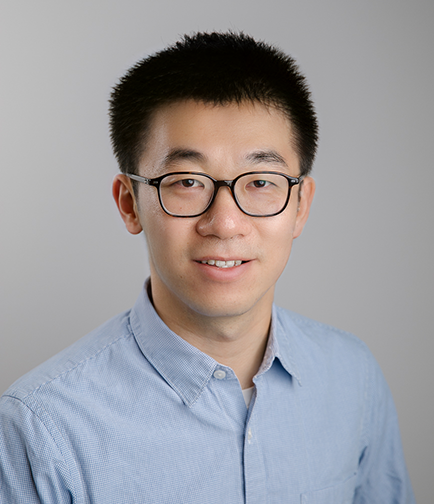
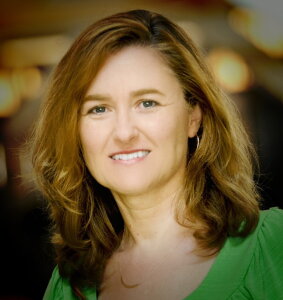
Hokeun Kim is an Assistant Professor in the School of Computing and Augmented Intelligence (SCAI) at Arizona State University (ASU), part of the Ira A. Fulton Schools of Engineering. He previously held positions at Hanyang University (2021-2023) and worked in industry roles at Google, LinkedIn, and HP Labs. His research focuses on cyber-physical systems, IoT security, and computer architecture, with a particular emphasis on safety and security aspects of time-sensitive systems. Education: Ph.D. in EECS, University of California, Berkeley (2017) M.S. in EECS, Seoul National University (2012) B.S. in Computer Science and Engineering, Seoul National University (2010) Research Interests: Kim’s work spans secure IoT frameworks, real-time embedded systems, and edge computing. He develops tools like the Secure Swarm Toolkit (SST) and Lingua Franca, addressing challenges in distributed system security, interoperability, and performance. Key Contributions: Authored over 30 peer-reviewed publications in top venues like IEEE Transactions, ACM Conferences, and DATE. Received the ACM/IEEE Best Paper Award (IoTDI 2017) and IEEE Micro Top Picks Honorable Mention (2017). Active in organizing conferences (e.g., DATE, FDL) and serves on technical committees for top journals/conferences. Teaching: Courses include Computer Architecture I/II, Real-Time Embedded Systems, and IoT design at both undergraduate and graduate levels.
Mohamed Sarwat is an Associate Professor at Arizona State University specializing in databases , spatial data management , and recommender systems . His research focuses on GeoSpark —a cluster computing framework for spatial data—and its extensions like GeoSparkViz for visualization and GeoSparkSim for traffic simulation. Key Contributions: LARS* (Location-Aware Recommender System), Horton* (Graph Reachability), Sindbad (GeoSocial Platform), and Riso-Tree (Graph Database Indexing) Research Themes: Integration of spatial/temporal data with machine learning, efficient indexing for big geospatial datasets, and scalable frameworks for mobility data science His work spans collaborations with 23+ co-authors across institutions like University of Minnesota, University of Melbourne, and University of Salzburg. Current projects emphasize GeoTorchAI —a spatiotemporal deep learning system—and mobility data science infrastructure.
Dr. Dong Gong is a Senior Lecturer and ARC DECRA Fellow (2023-2026) at the School of Computer Science and Engineering (CSE), UNSW. He holds an adjunct position at the Australian Institute for Machine Learning (AIML), University of Adelaide. His research focuses on machine learning challenges in dynamic environments, including continual learning, foundation models, generative models, and applications in interdisciplinary areas like mining and agriculture. Research interests include learning with non-ideal supervision, foundation model adaptation, generative models, and interdisciplinary problems combining CV/ML with domain-specific applications. His work often addresses real-world scenarios such as mineral exploration and soil trait analysis using CV/ML technologies. Outstanding Reviewer: NeurIPS 2018 Outstanding Area Chair: ACM MM 2024 ARC DECRA Fellowship (2023-2026) Advising and grants: Actively supervises PhD/MPhil students in computer vision and ML. Collaborates with industry and government on research projects. Utilizes advanced infrastructure like UNSW's Katana supercomputing cluster and Gadi (NCI). Labs/Teams: Involved in interdisciplinary research groups at UNSW CSE and AIML, focusing on dynamic learning paradigms and real-world applications of AI.
Diane M Beck is Professor and Head of Psychology at the University of Illinois, with additional affiliations in the Neuroscience Program and Beckman Institute for Advanced Science and Technology. She earned her Ph.D. from the University of California, Berkeley. Her research investigates cognitive processes and neural mechanisms underlying visual perception and attention. Key interests include: Factors determining visual awareness and object representation Neural constraints on simultaneous item processing Attention modulation in visual cortex Efficient processing of natural scenes Roles of statistical regularities in perception Methodologies include fMRI, behavioral experiments, and transcranial magnetic stimulation (TMS). Research publications demonstrate strong emphasis on visual cognition (58%), attention mechanisms (25%), and neural encoding of statistical regularities (17%), with neuroimaging being the primary methodology (72% of recent works). Directs the Attention and Perception Lab, advising 4 current graduate students and 18+ alumni. Major collaborators include Fei-Fei Li (Stanford), Kara Federmeier (Illinois), and Gabriele Gratton (Illinois).
Dr. Sukarn Agarwal is an Assistant Professor in the EECS Department at IISER Bhopal. His primary research focuses on modern computer architecture, including emerging non-volatile memory management, energy-efficient optimizations in network-on-chip, thermal-aware chip management, and heterogeneous system design. He utilizes tools such as GEM-5, CACTI, NVSIM, and McPAT for research. Dr. Agarwal actively seeks motivated PhD, M.Tech, and long-term internship candidates aligned with his research areas. Research Interests : Non-volatile memory hierarchies, energy-performance trade-offs, thermal-aware computing, and hybrid memory systems. Key Tools : GEM-5, CACTI, NVSIM, McPAT, Hotspot. His recent work includes publications on approximate computing in MLC-MRAM-based systems, thermal-aware frameworks for ReRAM, and energy-efficient cache architectures using STT-RAM. He emphasizes interdisciplinary approaches to address challenges in modern computing systems.
Kaiyi Ji is an Assistant Professor in the Department of Computer Science and Engineering at the University at Buffalo, SUNY. He earned his PhD in Electrical and Computer Engineering from Ohio State University in 2021 and completed a postdoctoral fellowship at the University of Michigan. His research focuses on large-scale optimization, machine learning, and foundation models. PhD: Electrical and Computer Engineering, Ohio State University (2021) Postdoc: University of Michigan (2022) BSc: University of Science and Technology of China (2016) Research interests include bilevel optimization, multi-task learning, continual learning, and AI4Science, with applications in robotics and crystal property prediction. Recent work explores efficient algorithms for LLM training and optimization. His publications span top venues like ICLR, ICML, NeurIPS, and IEEE Transactions on Information Theory. He received the CSE Junior Faculty Research Award (2023) and NSF CAREER Award (2025). He advises PhD students and actively participates in departmental service as Associate Chair for Graduate Student Admissions and organizer of academic workshops.
Prof. Dr. Thomas Stäcker is a Part-time Professor for Digital Humanities at the Department of Information Sciences, University of Applied Sciences Potsdam. He serves as Director of the University and State Library Darmstadt (since 2017) and Deputy Director of the Herzog August Library Wolfenbüttel (since 2009). His career spans roles as a librarian at Herzog August Bibliothek (since 1998) and Johannes a Lasco Library in Emden (1997-1998). Education: Master's degree in History of Philosophy and Latin (1991), doctorate (1994) from TU Braunschweig, University of Essex, and University of Osnabrück Research: Digital Humanities, digitization of early printed books, XML/TEI encoding, OCR technologies, and cultural heritage preservation Leadership: Key roles in major digitization projects (e.g., VD17, Dünnhaupt Digital) and digital library development His work bridges library science with scholarly research, emphasizing open access, digital editions, and metadata standards. He has authored/co-authored numerous monographs, including the 2015 'Grenzen und Möglichkeiten der Digital Humanities' and the 2016 Festschrift chapter on open access. Stäcker co-edited digital editions like Christoph Heidmann's Oratio de Bibliotheca Julia (2013) and maintained active engagement through blogs like 'dhd-blog.org' (2015 post on humanities research data).
Nuno Pereira Lopes is an Associate Professor at Instituto Superior Técnico , part of Universidade de Lisboa , and a researcher at INESC-ID . He also serves as an advisor at FuriosaAI , focusing on tensor contraction processors for AI workloads. Research Interests : Compilers, formal verification of LLVM optimizations, machine learning frameworks, undefined behavior exploitation, probabilistic model checking, blockchain security, and many-core code generation. Teaching : Compilers and Computer/Informatics Engineering projects. Funding : Supported by Google, Matter Labs, NLnet, Oracle, PRACE, RNCA, and Woven by Toyota. Recent Publications focus on LLVM backend validation , PyTorch pipeline parallelism , C++ dynamic cast optimization , undefined behavior in C/C++ , and AI tensor processors . His work bridges compiler design, formal methods, and AI hardware. Academic Service includes representing Portugal in ISO/IEC JTC 1/SC 22 (C++), organizing FLoC'26 , and serving on program committees for PLDI, EuroLLVM, and CGO.
Martin Aumüller is a Lecturer in Theoretical Computer Science Algorithms at the IT University of Copenhagen . He serves as Head of Education and Master of Software Design , focusing on algorithm engineering, differential privacy, and similarity search. Research interests include: Algorithm engineering for high-dimensional data Locality-sensitive hashing and nearest neighbor search Privacy-preserving machine learning Fairness in approximate search algorithms Benchmarking and evaluation of similarity search tools Publications trends highlight his work on approximate nearest neighbor search , privacy-preserving techniques , clustering algorithms , and scalable outlier detection in high-dimensional spaces. His recent projects (2024-2025) focus on fairness, differential privacy, and efficient indexing. Grants and projects : DIREC (2020-2025): Digital Research Centre Denmark (Innovation Fund Denmark) DIREC: Bias and Benefit of Approximate Nearest Neighbor Search (2022-2025): Principal Investigator (Innovation Fund Denmark) BARC (2017-2024): Basic Algorithms Research Copenhagen (Villum Fonden) SSS (2014-2019): Scalable Similarity Search (European Commission)
Richard D. Wesel is an Associate Dean for Academic and Student Affairs at a College of Engineering, where he has held leadership roles such as Vice-Chair of the Electrical Engineering Department. With Ph.D. and M.S. degrees in Electrical Engineering from Stanford University and MIT respectively, his research focuses on communication theory and channel coding, particularly low-density parity-check (LDPC) codes and turbo codes for efficient data transmission over noisy channels. Education: MIT (B.S., M.S.), Stanford (Ph.D.) Leadership: Associate Dean, Former Vice-Chair of Electrical Engineering Wesel's research explores advanced techniques for broadcast and multiple-access communication systems, emphasizing applications in wireless LANs, satellite communications, and optical networks. His work integrates machine learning with traditional decoding algorithms, as seen in recent publications on neural-network-optimized LDPC decoding and parallel trellis-stage-combining methods for high-throughput systems. His articles demonstrate a focus on finite-blocklength coding, including CRC-aided list decoding for convolutional and polar codes, and voltage optimization strategies for flash memory reliability. Wesel has authored over 100 publications and led a research group that won the 2006 Design Automation Conference's top award for optical multiple access design. Scientific Awards: National Science Foundation CAREER Award Okawa Foundation Award As an educator, Wesel received the TRW Excellence in Teaching Award in 2000 and has contributed to academic governance through roles on the Faculty Executive Committee and Undergraduate Council. His work bridges theoretical communication systems with practical implementations, including FPGA-based decoders and adaptive coding for fading channels.
Prof. Vladimir Krasnov is a leading researcher in Experimental Condensed Matter Physics at Stockholm University , focusing on mesoscopic superconductivity, Josephson junctions, and nanoscale quantum phenomena. He heads the Experimental Condensed Matter Physics Group since 2005. Department: Department of Physics Lab: EKMF Lab (SU-KTH collaboration) Key Methodologies: Pulsed laser deposition, FIB nanofabrication, cryogenic measurements (0.25-300 K), THz spectroscopy Research Themes: His work bridges fundamental superconductivity studies (high-Tc cuprates, iron-pnictides) with applied quantum electronics. Notable contributions include Developing vortex-based cryogenic memory Controllable spin-triplet supercurrents in magnetic junctions THz emission from intrinsic Josephson stacks Quantum phase transitions via electrical doping Magnetic field effects on mesoscopic systems Scientific Trends: Analysis of 15 recent publications reveals strong emphasis on Josephson vortex dynamics, superconducting/ferromagnetic hybrid systems, THz applications, and non-equilibrium phenomena in quantum circuits. Facilities: Utilizes Nano-Fab clean-room for sample engineering and Low-T lab for high-field (17T), cryogenic experiments.
Dr. Xiong Yi is an Assistant Professor at the School of System Design and Intelligent Manufacturing (SDIM) at Southern University of Science and Technology (SUSTech) in Shenzhen, China. He leads the Computational Design and Fabrication (CoDeFab) research group, focusing on the integration of computational design methods with advanced manufacturing technologies, particularly in the field of additive manufacturing. Dr. Xiong has established himself as a leading researcher in computational design for additive manufacturing, with a strong international research background spanning Europe and Asia. Dr. Xiong's educational journey includes: Doctor of Science (DSc) in Engineering Design and Production from Aalto University, Finland (2012-2016) Master of Science (MSc) in Machine Automation from Tampere University of Technology, Finland (2010-2012) Bachelor of Engineering (BEng) in Mechanical Engineering from Hubei University of Technology, China (2006-2010) Dr. Xiong's research primarily focuses on computational design and fabrication methodologies, with particular emphasis on design for additive manufacturing (DfAM), intelligent manufacturing systems, and smart materials. His work bridges the gap between theoretical design principles and practical manufacturing constraints, developing novel approaches for the production of complex engineered products. He has pioneered research in continuous fiber-reinforced composite additive manufacturing, developing innovative process planning and optimization techniques that enable the production of high-performance structural components. His research in electrothermally controlled origami and 4D printing of smart materials represents cutting-edge work at the intersection of materials science, mechanical engineering, and computational design. Dr. Xiong's recent publications reveal a strong focus on continuous fiber-reinforced composites, with significant contributions to 4D printing, metamaterials, and intelligent process planning. His work integrates computational design with manufacturing constraints, creating novel approaches for topology optimization, toolpath planning, and structural design that consider both performance requirements and manufacturability limitations. The research demonstrates increasing sophistication in materials science applications, particularly in programmable materials and multi-functional structures. Dr. Xiong has received multiple prestigious awards for his research contributions, including: Best Presentation Award at the 24th Chinese Conference on Mechanisms and Machine Science (IFToMM CCMMS2024) Best Presentation Award at the International Conference on Frontiers of Additive Manufacturing Research (RAAM 2024) Best Paper Award at the International Conference on Design for 3D Printing (ICD3DP 2023) PhD Scholarship from Aalto University (2016) Research Travel Grant from the International Association for Vehicle System Dynamics (IAVSD) (2013) National Scholarship from the Ministry of Education (2008) As a dedicated educator and mentor, Dr. Xiong serves as a PhD supervisor at SUSTech and has successfully guided students who have gone on to pursue advanced studies and careers at prestigious institutions including Hong Kong Polytechnic University, Beihang University, DJI Innovations, and Singapore's A*STAR research institute. His research is supported by multiple competitive grants, including key projects from the National Key R&D Program of China, the National Natural Science Foundation of China, and provincial and municipal funding agencies. Dr. Xiong also serves on the editorial board of the Journal of Engineering Design and as a guest editor for Composites Communications, contributing to the advancement of his field through scholarly service. Dr. Xiong leads the CoDeFab research group, which maintains a strong collaborative culture focused on 'design leading manufacturing, manufacturing driving design, and digital-intelligent integration.' The group has developed several advanced manufacturing platforms, including multi-axis continuous fiber-reinforced composite additive manufacturing systems, smart composite additive manufacturing platforms, and multifunctional soft matter open manufacturing platforms. With a focus on practical applications and innovation, the CoDeFab group actively collaborates with industry partners and has established a joint laboratory to bridge academic research with industrial implementation.
Deliang Fan is an Associate Professor at the School of Electrical, Computer and Energy Engineering, Arizona State University, Tempe, AZ. His research focuses on AI hardware, in-memory computing, and neuromorphic systems. He received his MS and PhD from Purdue University under Prof. Kaushik Roy. Education: PhD, Purdue University (2015) Research Interests: AI Hardware, In-Memory Computing, Adversarial AI, Neuromorphic Computing His work spans cross-layer co-design for AI applications, including deep learning, bioinformatics, and graph processing. He has authored 170+ peer-reviewed papers and developed hardware solutions for spintronic and memristor-based systems. Recent publications emphasize efficient architectures for transformers, federated learning, and robust neural networks. Awards include the NSF Career Award and multiple best paper recognitions. He serves in editorial and organizational roles for leading conferences like DAC, ISQED, and GLSVLSI.
Sonia Lopez Alarcon is an Associate Professor in the Department of Computer Engineering at the Kate Gleason College of Engineering, Rochester Institute of Technology (RIT). She has been a faculty member since 2009, teaching core courses like Computer Organization and developing quantum computing curricula including the new CMPE-257 undergraduate course and CMPE-757 graduate course. Her research bridges computer architecture and quantum computing with emphasis on practical quantum circuit implementation. Her educational background includes a Bachelor of Physics and Master's in Device Physics from the University Complutense of Madrid (2002), followed by a PhD in Computer Engineering (2009) where she researched cache hierarchy in simultaneous multithreaded architectures. During her studies, she gained industry experience at Lucent Technologies and Fundetel working on integrated circuit design. Dr. Lopez Alarcon's primary research focuses on Quantum Computing and heterogeneous hardware solutions, specifically quantum circuit compilation processes, scalability challenges, and error resilience techniques. She investigates how to translate theoretical quantum algorithms into executable circuits while managing noise and resource constraints, with applications in optimization problems and physics simulations. Her work connects computer engineering principles to emerging quantum technologies. Analysis of her publication timeline shows a strategic shift from traditional computer architecture (2015-2018 cache/HLS research for GPU/heterogeneous systems) to quantum computing (2019-2021). Recent work explores quantum algorithms for combinatorial optimization (Grover's), quantum simulation of physical systems, and machine learning applications, reflecting her adaptation to the rapidly evolving quantum landscape while maintaining her architectural expertise. Her teaching excellence has been recognized through multiple awards: Kate Gleason College of Engineering Exemplary Performance in Teaching Award (2016, 2017, 2020) Computer Engineering Most Effective Teacher Award (2016) She actively mentors graduate students including Mark Danza (MS Computer Engineering candidate 2025), with whom she collaborated on quantum machine learning research featured in Quantum Zeitgeist (May 2025). She contributes to RIT's quantum information science minor launched in 2022, developing curriculum and supervising student research in this emerging field. Dr. Lopez Alarcon leads quantum computing research efforts within RIT's Department of Computer Engineering, collaborating with colleagues like Cory Merkel on quantum algorithm applications. Her work is supported through her personal research website and integration into university-wide quantum initiatives, positioning her at the forefront of academic quantum computing education and research.
Takuya Taniguchi is an Associate Professor at the Center for Data Science, Waseda University, where he has been employed since 2019, first as an Assistant Professor (2019-2021) before promotion to his current non-tenure track position. His interdisciplinary research bridges organic chemistry, materials science, and data science, with a focus on developing and analyzing functional organic materials, particularly photo-responsive molecular crystals. He maintains active collaborations with research groups including Hideko Koshima and Toru Asahi, and serves on professional committees such as the Manufacturing Industry AI Promotion Association. Education Doctor of Engineering, Waseda University (2019) Graduate studies at Waseda University's Graduate School of Advanced Science and Engineering Undergraduate studies at Waseda University's School of Advanced Science and Engineering, Department of Life Science and Medical Bioscience Research Focus Professor Taniguchi's work centers on structural organic chemistry and physical organic chemistry , with particular emphasis on organic functional materials and the application of materials informatics to crystal engineering. His research investigates how molecular structure influences macroscopic mechanical properties, especially photo-mechanical behaviors in organic crystals. He has pioneered the use of machine learning techniques to predict crystal properties, optimize materials performance, and design novel functional materials with applications in soft robotics and energy conversion. His recent work demonstrates a clear progression from fundamental studies of photo-mechanical crystals toward increasingly sophisticated applications of machine learning in materials science. The 15 most recent publications reveal a strong focus on neural network potentials for crystal property prediction, optimization of photo-actuated materials, and exploration of phase transitions in molecular crystals. This research trajectory shows consistent innovation in combining experimental chemistry with advanced computational methods. Awards and Recognition Inoue Research Encouragement Prize (2019) Ono Azusa Memorial Award from Waseda University (2019) Student Presentation Award at Japan Chemical Society 99th Spring Annual Meeting (2019) Poster Presentation Award at Chirality 2017 Multiple poster and presentation awards at international crystallography conferences Research Leadership Dr. Taniguchi leads multiple research projects funded by JSPS, JST, and industry partners including ENEOS Corporation and Sumitomo Foundation. His current projects include 'Efficient crystal structure prediction for organic porous materials,' 'Machine learning simulation of HOF material stability,' and 'Machine learning application for organic solid-phase transition.' He has successfully secured competitive funding including JST ACT-X and JSPS Early-Career Scientist grants. His work has received significant media attention, with coverage in Nikkan Kogyo Shimbun and Kagaku Kogyo Nippo highlighting breakthroughs in light-driven organic crystals with 3.7x improved output force. Academic Contributions Beyond research, Professor Taniguchi teaches extensively in Waseda's Global Education Center, offering courses in data science, statistical analysis with R, and statistics literacy across multiple academic quarters. He has contributed chapters to technical publications on process informatics, Bayesian optimization, and crystallization process design. His scholarly impact is evidenced by an h-index of 11 (Google Scholar) with 581 total citations, demonstrating significant influence in the emerging field of materials informatics for organic crystals.