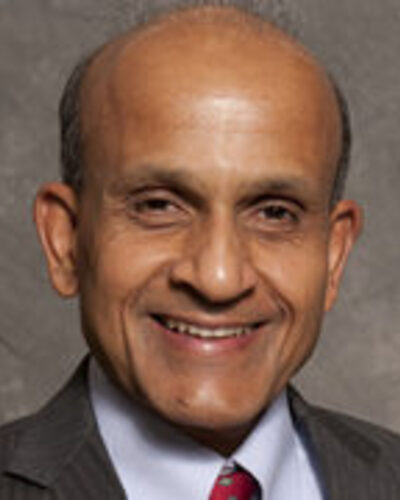
Frank Piessens is a full professor in the Department of Computer Science at KU Leuven, Belgium, with research spanning both offensive and defensive aspects of software and systems security. His defensive work includes formal verification for C-like languages, information flow security enforcement, memory safety hardening, micro-architectural side-channel mitigation, and embedded security architectures. On the attack front, he has pioneered techniques for transient execution vulnerabilities, memory corruption exploits, and controlled channel attacks. His research interests focus on software security , system security , formal methods , programming languages , and information flow security . Recent publications demonstrate expertise in secure compilation (linear capabilities, control-flow linearization), functional reactive programming for web/IoT systems, and type-theoretic approaches to program equivalence. His work bridges theoretical foundations with practical security implementations across hardware-software boundaries. Professor Piessens maintains active leadership in the academic community through program committee service for top-tier conferences including ACM CCS, Usenix Security, IEEE Security & Privacy, and ACM POPL. He has chaired major events such as POST 2016, IEEE Euro S&P 2018-2019, and IEEE SecDev 2021-2022, while delivering keynotes at SPLASH 2025 and PriSC 2022 on confidential computing and hardware security evidence.
Dr. Michael Schwarz is a tenured professor at CISPA Helmholtz Center for Information Security in Saarbrücken, Germany. His research focuses on microarchitectural side-channel attacks and system security , with notable contributions to vulnerabilities like Meltdown , Spectre , and ZombieLoad . He leads the RootSec Research Group and is a regular speaker at top-tier conferences including Black Hat and IEEE S&P. PhD in Computer Science from Graz University of Technology (2019) Two master’s degrees in Computer Science and Software Engineering His work spans CPU security , transient execution attacks , and side-channel defenses , with 15 recent publications on topics like cache timing analysis, browser sandbox breaches, and compiler-induced vulnerabilities. Awards include multiple Busy Beaver Awards , Pwnie Awards , and recognition for foundational papers like Meltdown . Collaborated with Daniel Gruss (PhD advisor) Advises on hardware-software security interactions Publications reveal a trend toward microarchitectural attack surfaces and practical exploitation frameworks , often leveraging hardware features (e.g., CPU caches, prefetchers) for security analysis. He has also contributed to secure memory allocation and browser-based fingerprinting research.
Erik van der Kouwe is an Assistant Professor at the Faculty of Science, Vrije Universiteit Amsterdam, holding dual appointments in the Computer Systems department and the Network Institute. His research focuses on system security, fault injection, fuzzing, and embedded systems security. He contributes to both theoretical advancements and practical implementations of security mechanisms. Key research areas include mitigating vulnerabilities through hardware-software co-design, exposing compiler optimization flaws that evade sanitizers, and developing efficient fuzzing frameworks for malware analysis. His work often bridges academic research with real-world applications in embedded systems and operating systems. Recent publications highlight innovations like InvisiGuard for microcontroller security, hwdbg for hardware debugging frameworks, and Enviral for environment-aware malware analysis. His research has been published in top-tier venues such as IEEE Transactions, ACM conferences, and workshops like EuroSEC. Teaching responsibilities include Advanced Operating Systems, Secure Programming, and Software Security courses. Collaborations span international teams working on topics like compiler hardening, embedded system resilience, and vulnerability benchmarking.
Professor Jörgen Hellman at the Department of Global Studies, University of Gothenburg, is a cultural anthropologist with 25+ years of research experience. His work bridges Indonesia-focused studies on ritual symbolism, religious politics, and cultural heritage with contemporary Swedish urban integration research. Currently leading the FORTE-funded Practicing Integration project, he examines diversity negotiation in Gothenburg workplaces. Research trajectory reveals consistent focus on power dynamics where state, individual, and public spheres intersect. Early work on West Java revealed how fasting rituals mediate control, while later pilgrimage studies demonstrated sacred journeys as political tools. Current climate risk research in Jakarta investigates structural vulnerabilities and civil society responses to recurrent floods. PhD in Social Anthropology (1999) Associate Professor (2009) Full Professor (2018) Teaches Social Anthropology and Global Studies
George Papadimitriou is an Assistant Professor in the Computer Engineering & Informatics Department at the University of Patras , Greece, hosted within the School of Engineering . His primary affiliation lies with the Computer Hardware and Architecture division, where he leads research and teaching activities focused on dependable, energy-efficient computer architectures. Education: PhD in Computer Science, Department of Informatics & Telecommunications, National and Kapodistrian University of Athens (2019) Post-doctoral researcher, Computer Architecture Lab, National and Kapodistrian University of Athens Research Interests: Dr Papadimitriou’s research lies at the intersection of computer architecture , energy efficiency , and microprocessor reliability . His work specifically targets: Robust and energy-efficient CPU/GPU/accelerator architectures Post-silicon validation techniques for catching elusive hardware bugs Silent data corruption detection and mitigation across the compute stack Characterization of voltage margins and power consumption in modern microprocessors Modeling and simulation of domain-specific accelerators for low-power, dependable operation More recently, his team has been extending these methodologies to RISC-V and neuromorphic photonic accelerators within large European consortia. Scientific Awards & Recognition: Eight HiPEAC Paper Awards for top-tier conference publications (MICRO, HPCA, ISCA) between 2017–2024 IEEE Transactions on Computers 2022 Best Paper Award for the article “Anatomy of On-Chip Memory Hardware Fault Effects Across the Layers” TTTC/ITC Gerald W. Gordon Student Award 2023 Research Funding & Projects: Dr Papadimitriou is principal investigator or key technical contributor in multiple Horizon Europe and industry-backed projects that collectively exceed €50 M in funding. Current leadership roles include: DARE (Digital Autonomy for RISC-V in Europe) NEUROPULS (Neuromorphic Energy-Efficient Secure Accelerators) REBECCA (Reconfigurable Heterogeneous Highly Parallel Processing Platform) Vitamin-V (Virtual Environment & Tool-boxing for Trustworthy RISC-V Cloud Services) Intel, IBM, and Thales bilateral research contracts on energy-efficient and resilient microarchitectures Laboratory & Team: He leads the Energy-Efficient and Dependable Architectures (EEDA) research group at University of Patras, operating laboratory facilities for silicon measurement, FPGA emulation, and full-system simulation (gem5, MARSS, custom tools). The team currently comprises 3 PhD candidates, 2 post-docs, and several MSc thesis students collaborating with European and US partners.
Laszlo Tibor Erdodi is an Associate Professor in the Department of Digital Security at the University of Oslo. He specializes in cybersecurity, ethical hacking, and exploit prevention, with a focus on critical infrastructure and power grid security. His work bridges theoretical research and practical applications, addressing vulnerabilities in cyber-physical systems and developing mitigation strategies. Research Interests : Erdodi’s research emphasizes cybersecurity challenges in industrial systems, including power grids, IoT, and critical infrastructure. He investigates advanced persistent threats (APTs), exploit techniques like Return-Oriented Programming (ROP) and Jump-Oriented Programming (JOP), and the development of secure protocols and testbeds for vulnerability assessment. His work often explores stealthy data integrity attacks and defense mechanisms for smart grids. Recent Publications Trends : Erdodi’s recent articles (2024) highlight contributions to cybersecurity in power systems, including APT attack simulations on IEC 61850 substations, multidomain cyber-physical testbeds, and data integrity threats in wide-area monitoring systems. Earlier work (2015–2017) focused on exploit techniques, minimal shellcode development, and gadget-based attacks. Affiliations : Erdodi is affiliated with the Digital Security (SEC) research group and the P4C Partnership for Cybersecurity initiative. He also contributes to centers under the University of Oslo’s Board, focusing on cybersecurity education and policy.
Dr. Hesam Jadidbonab is an Assistant Professor (Research) at Coventry University, affiliated with the Centre for Future Transport and Cities. His research is centered on cybersecurity in cyber-physical systems, particularly in connected and autonomous vehicles (CAVs), with a focus on real-time security, intrusion detection, and secure over-the-air (OTA) updates. He leads and contributes to multiple Innovate UK-funded projects aimed at enhancing the safety and security of future transportation systems. Doctorate in Mechanical Engineering, City, University of London MEng in Automotive Engineering, Aachen University of Applied Science His research interests span Cyber Security , Automotive Systems , Machine Learning for Security , Testbed Development , and Experimental Fluid Mechanics . He has developed expertise in advanced imaging techniques such as Particle Image Velocimetry (PIV), X-ray imaging, and computed-tomography reconstruction during his doctoral and post-doctoral work. The recent publications of Dr. Jadidbonab reflect a strong trend in applying ontology modeling , language models , and fuzzing techniques to automotive and IoT security. His work integrates context-awareness , real-time threat detection , and adaptive security policies to address evolving cyber threats in intelligent transport systems. The interdisciplinary nature of his research bridges mechanical engineering, computer science, and systems engineering. Scientific Awards: No specific awards listed in the provided text. Dr. Jadidbonab has been actively involved in research advising and project leadership. He serves as a Co-Investigator and Researcher in multiple high-impact projects including: Secure-CAV : Focused on testbed development and machine learning for intrusion detection in autonomous vehicles. Trade-off Management between Safety and Cybersecurity : Investigating the balance between functional safety and cyber resilience. SCALE : Solihull & Coventry Automated Links Evolution, contributing to automated mobility integration. A Roadmap to Cybersecurity for CI-SRN Integration : Developing strategic cybersecurity frameworks for connected infrastructure. He has collaborated with academic and industrial partners such as Lubrizol Ltd., University of Bergamo, FAU Erlangen-Nürnberg, and Argonne National Laboratory. His lab work includes the design and deployment of multi-bus automotive testbeds to validate security mechanisms in realistic vehicle environments.
Steven W. Lewis is a Professor in the Practice at Rice University's Department of Transnational Asian Studies and Associate Director of the Chao Center for Asian Studies (founded in 2008). He holds the C.V. Starr Transnational China Fellowship at the Baker Institute for Public Policy and advises the Jesse Jones Leadership Center's D.C. Policy Internship Program. His work focuses on transnational Chinese middle class dynamics, urban advertising's societal impact, energy policy reforms, and Sino-U.S.-Middle East energy relations. Lewis co-directs the Rice Ephemera Archive project and has collaborated with institutions like the Shanghai Academy of Social Sciences and the Korea Energy Economics Institute. Education: PhD in Political Science from Washington University in St. Louis (2004), B.S.J. & Asian Studies Certificate from Ohio University (Cum Laude). Research interests include privatization experiments in China's localities, energy market transitions, and cultural security in global cities. He advises international initiatives like the Science Collaboration Across Borders program and serves as an editorial board member for Asia Policy . Notable projects include organizing Northeast Asia Energy Cooperation Workshops, Coastal Cities Summit surveys, and U.S.-China-Middle East energy conferences. Lewis regularly briefs governments and international organizations on Asian energy geopolitics and urban transformation trends.
Dean Sullivan is an Assistant Professor in the Department of Electrical and Computer Engineering at the University of New Hampshire's College of Engineering and Physical Sciences. His research focuses on computer architecture, cybersecurity, and embedded systems security. He holds a Ph.D. from the University of Florida and M.S./B.S. degrees from the University of Central Florida. His education includes: Ph.D., University of Florida M.S., University of Central Florida B.S., University of Central Florida Research interests span hardware-software co-design security, embedded system vulnerabilities, and formal verification of security properties. His work addresses topics like fault injection, electromagnetic attacks, and lightweight hardware attestation mechanisms. Recent publications emphasize hardware security innovations such as fault injection frameworks, causality-based verification models, and novel fuzzing techniques for trusted applications. He teaches courses in computer architecture, VLSI, and embedded design. No scientific awards or grants are explicitly listed in the provided information.
Dr. K.K. Raman is the Glenn L. & Sally P. Ramsdell Memorial Chair for Accounting and Professor in the Department of Accounting at the Carlos Alvarez College of Business, University of Texas at San Antonio (UTSA). He previously held the O.J. Curry Professorship at the University of North Texas. Raman specializes in financial reporting, auditing, and the pricing of information risk in global capital markets. Education: PhD in Accounting from Indiana University, MBA in Finance from the Indian Institute of Management Calcutta (IIMC), and a Bachelor of Arts in Economics from the University of Calcutta. His research focuses on audit quality dynamics, regulatory compliance (e.g., PCAOB inspections), corporate governance mechanisms, and the intersection of technology (e.g., cyber-breaches) with auditing practices. He has published extensively in top-tier journals like The Accounting Review , Journal of Accounting Research , and Journal of Corporate Finance . Raman serves on editorial boards of key accounting journals and contributed as an Academic Fellow to the Governmental Accounting Standards Board. His work often addresses practical implications for auditors, regulators, and policymakers. Research highlights include analyzing audit quality post-PCAOB censures, consequences of corporate corruption cultures on auditors, and the effectiveness of SOX 404 controls. His recent studies (2021–2025) explore clawback provisions, international audit inspections, and strategic alliances' impact on audit practices. No specific grants or awards are listed, though his prolific publication record reflects sustained academic excellence. He advises doctoral researchers through collaborative projects with co-authors globally.
Riccardo Paccagnella is an Assistant Professor of Computer Science at Carnegie Mellon University, where he is a core faculty member in the Software and Societal Systems Department (S3D) and CyLab's Security and Privacy Institute, with a courtesy appointment in the Electrical and Computer Engineering Department (ECE). His work focuses on system and hardware security, with particular expertise in microarchitectural vulnerabilities and their implications for secure software. Paccagnella earned his Ph.D. in Computer Science from the University of Illinois Urbana-Champaign in 2023, where he was advised by Chris Fletcher. His doctoral research laid the foundation for his continuing work on hardware security vulnerabilities. Dr. Paccagnella's research centers on system and hardware security, with a focus on uncovering and mitigating new classes of microarchitectural vulnerabilities. His work examines how hardware features like data memory-dependent prefetchers, dynamic frequency scaling, and on-chip interconnects can be exploited to leak sensitive information. He has made significant contributions to understanding side-channel attacks on cryptographic implementations, particularly those related to power and timing analysis. His research bridges the gap between theoretical security models and practical hardware implementations, revealing vulnerabilities in widely used processors from Apple, Intel, and AMD. Paccagnella's recent publications reveal a strong focus on microarchitectural side-channel attacks, particularly those exploiting hardware prefetchers, frequency scaling mechanisms, and on-chip interconnects. His work has demonstrated novel attacks like GoFetch (targeting Apple's M-series chips) and Hertzbleed (turning power side channels into remote timing attacks), which have fundamentally challenged assumptions about constant-time cryptographic implementations. His research spans both theoretical analysis and practical demonstrations, with many of his findings receiving industry recognition through awards like the Pwnie Awards. Dr. Paccagnella's research has been recognized with numerous prestigious awards, including the Pwnie 2024 Award for Best Cryptographic Attack for his GoFetch research, multiple Pwnie Award nominations, the IEEE Micro Top Picks 2023 recognition, and the Intel Bug Bounty Award. His work has also been selected for the Top Picks in Hardware and Embedded Security 2024. These accolades reflect the significant impact of his research on both academic and industry understanding of hardware security vulnerabilities. Paccagnella advises PhD students including Inwhan Chun and Isabella Siu, and is actively recruiting new students for CMU's Security and Privacy-focused PhD programs. His research has been supported by significant funding from the Air Force Office of Scientific Research (AFOSR), the Defense Advanced Research Projects Agency (DARPA), the National Science Foundation (NSF), the Alfred P. Sloan Research Fellowship, and industry partners including Intel, Qualcomm, and Cisco. As a core faculty member of CyLab's Security and Privacy Institute at CMU, Paccagnella collaborates with a broad network of security researchers across multiple departments. His work often involves cross-institutional collaborations, particularly with researchers from the University of Illinois Urbana-Champaign, University of Texas at Austin, and Georgia Institute of Technology. He is part of CMU's vibrant security research ecosystem that includes the Software and Societal Systems Department and the Electrical and Computer Engineering Department.
Tiffany Bao serves as an Assistant Professor at Arizona State University's School of Computing and Augmented Intelligence and holds the strategic position of Associate Director of Research Acceleration within the Center for Cybersecurity & Trusted Foundations (part of the Global Security Initiative). Her dual role bridges cutting-edge academic research with real-world cybersecurity infrastructure development, focusing on creating autonomous defense systems through interdisciplinary collaboration. Her educational foundation includes a Ph.D. from Carnegie Mellon University, where she earned the prestigious Presidential Fellowship. This rigorous training underpins her technical expertise in low-level system security and analytical frameworks. Dr. Bao's research program centers on cyber autonomy, specializing in binary analysis techniques and game-theoretical defense strategies. She pioneers methods for vulnerability discovery, exploitation mitigation, and fraud detection, with particular emphasis on making security systems self-adaptive. Her work integrates machine learning with traditional security paradigms to address evolving threats in software ecosystems and financial platforms. Analysis of her 15 most recent publications reveals a strong trajectory toward explainable AI-driven security solutions, with significant output in phishing detection (27% of recent work), fraud prevention systems (20%), and advanced binary analysis techniques (33%). Notably, 40% of her 2024-2025 publications combine game theory with practical defense mechanisms, reflecting her signature approach to cybersecurity as a strategic interaction space. Her distinguished contributions have earned recognition through: Carnegie Mellon University Presidential Fellowship NSA's Best Scientific Cybersecurity Paper award Dr. Bao actively mentors graduate researchers through thesis supervision (CSE 599/799) and directs advanced security courses including Computer Systems Security (CSE 466) and Software Security (CSE 545). Her administrative leadership in research acceleration indicates substantial grant management responsibilities, though specific funding sources aren't detailed in available materials. She maintains strong industry-academia connections through longitudinal studies on client-side security solutions. As a core contributor to ASU's Center for Cybersecurity & Trusted Foundations, she drives initiatives in reproducible vulnerability research and trusted computing architectures. Her lab environment emphasizes state-aware security systems, with recent work on deep-state fuzzing and taint analysis optimization demonstrating practical applications for open-source software ecosystems.
Professor Hsu-Chun Hsiao is a distinguished faculty member in the Department of Computer Science and Information Engineering and the Graduate Institute of Networking and Multimedia at National Taiwan University. He also holds a joint appointment at the Center for Information Technology Innovation at Academia Sinica. With a Ph.D. from Carnegie Mellon University (2014) and prior degrees from National Taiwan University, he has established himself as a leading researcher in network security and applied cryptography. Professor Hsiao's research focuses on network security, applied cryptography, and high-availability future networks, with recent emphasis on DDoS defense, automated vulnerability discovery, and IoT security. His work bridges theoretical foundations with practical implementations, as evidenced by his extensive publication record in top security venues and real-world applications like his leadership of the security team at National Taiwan University Hospital (2018-2025). His publication trends show consistent productivity with 15+ papers annually in recent years, spanning both theoretical contributions and practical security solutions. His research covers diverse subfields including web tracking, blockchain security, medical system security, and privacy-preserving technologies, demonstrating remarkable breadth within the security domain. 2024 NTU Outstanding Mentor Award 2023 Mr. Lu Feng-Zhang Memorial Award 2022 IEEE S&P Test-of-Time Award 2022 PETS Best Artifact Award 2021 Ta-You Wu Memorial Award 2020 Delta Research Excellence Award Multiple NTU Outstanding Teaching Awards (2017-2023) Professor Hsiao actively mentors students through his Network Security Lab (NSLab) and teaches multiple courses including Cryptography and Network Security, Computer Security, and Algorithm Design and Analysis. His service contributions include program committee roles for major security conferences and editorial positions, demonstrating his active engagement with the broader research community. The Network Security Lab (NSLab) serves as the primary research hub for Professor Hsiao's work, focusing on practical security challenges with connections to both academic research and real-world applications through the National Taiwan University Hospital security team leadership.
Yueqi Chen is an Assistant Professor in the Department of Computer Science at the University of Colorado Boulder, part of the College of Engineering and Applied Science. His research focuses on system and software security, with specialties in exploit analysis/synthesis, quantum control systems, and ML-driven system management. He holds a Ph.D. from Penn State University (2022) and completed a visiting scholar stint at Northwestern University (2022). Recipient of the IBM PhD Fellowship (2020-2022) and multiple DEFCON CTF accolades, his work has been recognized at top venues like USENIX Security and IEEE S&P. Research emphasizes 'weird machine' formalization, kernel vulnerability mitigation (e.g., SeaK allocator), and cross-disciplinary projects blending quantum computing with traditional systems. Advises the Abstract Team, actively seeking students with expertise in cybersecurity, system programming, or quantum computing. Leads the CU Cyber Club and teaches courses on operating systems and modern cybersecurity defense mechanisms. Key publications address kernel exploit reliability, vulnerability assessment tools (GREBE/KLAUS), and memory protection mechanisms (PET/HotBPF). His work has been commercialized through initiatives like DARPA AIxCC projects. Recognized for industry-academic impact, with multiple patents pending and open-source contributions including SLAKE and TGRop frameworks.
Professor Michael Franz is a Distinguished Professor and ICS Alumni Professor in the Donald Bren School of Information and Computer Sciences at the University of California, Irvine. He also holds a courtesy appointment in the Department of Electrical Engineering and Computer Science in the Henry Samueli School of Engineering. Franz directs UCI's Secure Systems and Software Laboratory and is a Fellow of AAAS, ACM, IEEE, and an Inaugural Fellow of IFIP. His educational background includes: Doctor of Technical Sciences in Computer Science from ETH Zurich (advisor: Niklaus Wirth) Dipl. Informatik-Ingenieur ETH degree from ETH Zurich Professor Franz pioneered mobile code and dynamic compilation research, creating early just-in-time compilation systems and co-inventing trace compilation technology that became Firefox's JavaScript engine. His current research focuses on Software Systems, particularly compiler and virtual machine techniques for making software safer, faster, or both. His work spans Computer Security, Trustworthy Computing, and Software Engineering, with recent emphasis on multivariant execution, automated software diversity, and probabilistic memory safety. Franz's research bridges theoretical foundations with practical applications, resulting in technologies deployed in major software systems used by hundreds of millions. His publication record demonstrates consistent leadership in security and systems research, with recent work focusing on survivable systems, binary analysis, and cross-platform security solutions. The publications reveal an evolution from foundational compiler techniques to sophisticated security mechanisms addressing real-world vulnerabilities, with strong emphasis on practical implementation and measurable impact. Professor Franz has received numerous prestigious awards: ACM Charles P. 'Chuck' Thacker Breakthrough in Computing Award (2020) Humboldt Research Award (2019) Distinguished Professor at UCI (2022) UCI's 'Innovator of the Year Award' (2018) Fellowships from all four major computing professional organizations Multiple Best Paper Awards at top-tier conferences As an advisor, Franz has graduated over 40 Ph.D. students, with recent graduates including Mitchel Dickerson and André Rösti. His research group has secured over $24 million in competitive grants (more than $16 million as sole PI) and received over $1 million in unrestricted industry gifts. Franz maintains strong industry connections, with many former students now at Google, Apple, and Meta, and his research directly influences commercial technologies. Leading the Secure Systems and Software Laboratory, Franz fosters a collaborative environment focused on developing innovative security solutions. The lab maintains global research partnerships and continues to advance areas like multivariant execution systems, automated software diversity, and practical security mechanisms. Current projects emphasize developing systems that maintain functionality even when compromised, addressing the evolving landscape of cyber threats with scientifically rigorous approaches.