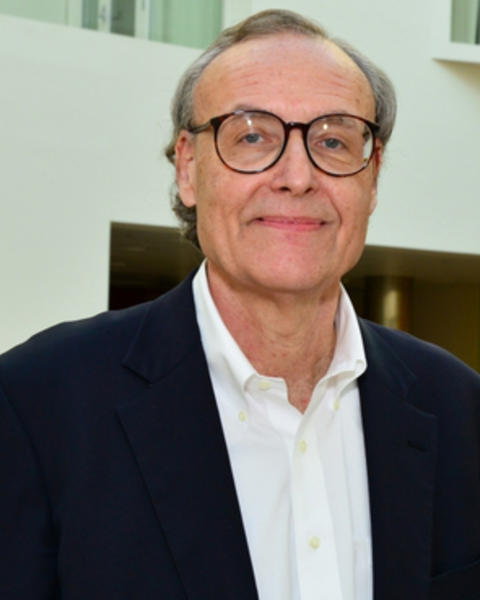
Kevin S. LaBar is Professor of Psychology and Neuroscience and Professor in Psychiatry and Behavioral Sciences at Duke University's Trinity College of Arts & Sciences. He serves as Associate Director of the Center for Cognitive Neuroscience and maintains affiliations with the Duke Initiative for Science & Society, the Center for Brain Imaging and Analysis, and the Center for Cognitive Neuroscience. His academic journey began with a B.A. from Lafayette College in 1990, followed by a Ph.D. from New York University in 1996. Dr. LaBar's research focuses on understanding how emotional events modulate cognitive processes in the human brain. His laboratory aims to identify brain regions that encode the emotional properties of sensory stimuli and demonstrate how these regions interact with neural systems supporting social cognition, executive control, and learning and memory. His integrative approach utilizes psychophysiological monitoring, functional magnetic resonance imaging (fMRI), machine learning, and behavioral studies in both healthy adults and psychiatric patients. His work spans multiple domains including fear conditioning, emotional memory, emotion regulation, and the neural basis of emotional experience. His recent publications reveal a strong emphasis on emotional memory mechanisms, emotion regulation strategies across the lifespan, neural correlates of anxiety and fear, and developing neuroscience-informed interventions for emotional dysregulation. His research increasingly incorporates advanced neuroimaging techniques, computational approaches, and translational applications for clinical populations. Fellow, Association for Psychological Science (2010) Young Investigator Award, Cognitive Neuroscience Society (2005) CAREER Award, National Science Foundation (2003) Ralph E. Powe Junior Faculty Enhancement Award, Oak Ridge Associated Universities (2001) Young Investigator Award, National Alliance for Research on Schizophrenia and Depression (2000) Scholar of the Year Award, Lafayette College Alumni Association (1990) Dr. LaBar has secured substantial research funding, including multiple NIH grants and VA awards, with projects spanning from basic emotion research to clinical applications for conditions like PTSD, depression, and misophonia. His laboratory has trained numerous graduate students and postdoctoral fellows who have gone on to successful careers in academia and research. His work bridges cognitive neuroscience with clinical applications, particularly in developing neurostimulation-enhanced behavioral interventions for emotion dysregulation.