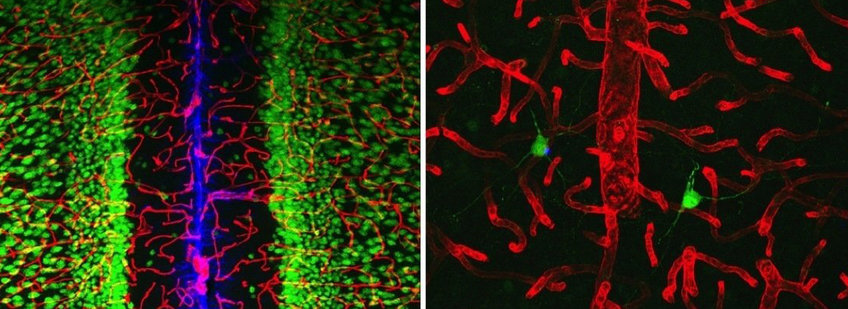
Ali José Mashtizadeh is an Associate Professor at the Cheriton School of Computer Science, University of Waterloo. His research focuses on operating systems, distributed systems, and storage, with expertise in system reliability, network optimization, and concurrent programming. Education: Ph.D., Computer Science, Stanford University (2017) M.S., Computer Science, Stanford University (2017) M.Eng., Electrical Engineering and Computer Science, MIT (2007) B.S., Electrical Engineering, MIT (2006) His research centers on designing scalable and reliable systems, with recent publications exploring TCP network frameworks, in-memory data persistence, and microsecond-scale scheduling. Key themes include optimizing tail latency, neutralization-based memory reclamation, and fault-tolerant distributed services. His articles consistently demonstrate innovations in low-latency networking, operating system architecture, and cloud infrastructure, with recent emphasis on serverless benchmarks and processor customization. No scientific awards or advising relationships are detailed in the provided materials.
David H. Russell is the MDS-Sciex Professor of Mass Spectrometry in the Department of Chemistry at Texas A&M University. His research group is housed in the Interdisciplinary Life Sciences Building (ILSB) Room 1201, where he leads cutting-edge research in bioanalytical and biophysical chemistry with a focus on mass spectrometry and ion mobility techniques. He maintains active collaborations with chemical biologists, biochemists, and other chemists across disciplines. Russell earned his B.S. from the University of Arkansas-Little Rock in 1974 and his Ph.D. from the University of Nebraska-Lincoln in 1978. His extensive academic background has positioned him as a leader in the field of mass spectrometry, particularly in developing novel instrumentation and methodologies. Russell's research primarily centers on bioanalytical and biophysical chemistry, with special emphasis on developing next-generation native ion mobility and mass spectrometry techniques. His work explores protein structures and conformational dynamics, focusing on how Gibbs free energy (GEL) regulates these systems through entropy and enthalpy. A key innovation from his lab is the variable-temperature nano-electrospray ionization (vT-ESI) ion mobility-mass spectrometer, which enables unprecedented studies of temperature-dependent chemical processes in proteins and protein complexes. Analysis of his recent publications reveals a consistent focus on advancing structural biology through native mass spectrometry. His work spans protein folding dynamics, collision cross section measurements, iron-sulfur cluster biogenesis, and the fundamental paradoxes in ion mobility spectrometry. These studies collectively advance our understanding of protein-ligand interactions, conformational stability, and thermodynamic measurements in biological systems. Scientific Awards and Honors: 2019 ACS Analytical Chemistry Division Award in Chemical Instrumentation 2013 Frank H. Field and Joe L. Franklin Award for Outstanding Achievement in Mass Spectrometry 2006 Fred M. Garland Memorial Lecture and Award 2004 Association of Former Students Distinguished Achievement Award for Research 2004 Fellow, American Association for Advancement of Science 2002 AB/MDS Sciex Professor of Mass Spectrometry 1998 NSF Special Creativity Extension Award Russell has mentored an extensive number of students throughout his career, with over 90 documented PhD students, Master's students, and postdoctoral researchers who have gone on to successful careers in academia and industry. His research has been consistently funded by major organizations including the National Institutes of Health (NIH), with current support from NIH R01 and RM1 grants as well as The Welch Foundation, demonstrating sustained recognition of the importance and impact of his work. The Russell Research Group operates state-of-the-art laboratories in the Interdisciplinary Life Sciences Building, featuring specialized instrumentation for biological mass spectrometry. The group actively develops novel instrumentation centered around ion mobility time-of-flight mass spectrometers, with ongoing projects focused on improving sensitivity, resolution, and versatility for structural characterization of biomolecules. The lab maintains strong connections with commercial instrument manufacturers and collaborates extensively across disciplinary boundaries.
Dr. Rand J. Gruen is an Assistant Clinical Professor in the Department of Psychiatry at Yale School of Medicine. He specializes in psychotherapy and supervises residents in clinical practice. His academic background includes a PhD in Psychology from the University of California, Berkeley (1985), followed by postdoctoral training at Yale School of Medicine (1989). Education: BA, MA, and PhD in Psychology, University of California, Berkeley (1982-1985) Postdoctoral Fellow, Yale University School of Medicine (1989) Research Focus: Dr. Gruen's work spans clinical and neuroscience domains. Key areas include: - Neuropharmacology of GABAergic and dopaminergic systems - Stress neurobiology and its impact on brain function - Alzheimer's disease mechanisms (amyloid-beta pathology) - Psychological aspects of stress appraisal and coping - Psychotherapeutic approaches to depressive disorders Publications Trend: His research demonstrates cross-disciplinary expertise: - Early work (1980s-1990s) focused on neurochemical mechanisms (GABAA receptors, dopamine pathways) - Later studies (2000s) addressed Alzheimer's biomarkers and clinical psychology - Consistent exploration of brain-behavior relationships across development and stress contexts Grants & Advising: No specific grants or advisee names are listed in available records. His clinical supervision role suggests involvement in resident training programs. Labs/Teams: Affiliated with Yale Psychiatry Department research programs, though specific lab affiliations are not detailed in the provided information.
Roslyn Holly Fitch is a distinguished Professor in the Department of Psychological Sciences at the University of Connecticut, where she maintains an active research laboratory (Fitch Lab) focused on developmental neuroscience and neurodevelopmental disorders. Her work bridges basic science with clinical applications, particularly in understanding the neural mechanisms underlying developmental disabilities. Dr. Fitch's research interests center on rodent models of developmental disability and neonatal brain injury, with specific focus on the modulating effects of hormones and experience on neurodevelopment, and neuroprotective strategies. Her laboratory investigates the genetic and neural bases of dyslexia and related language processing disorders, using sophisticated behavioral and neuroanatomical approaches with rodent models. Analysis of Dr. Fitch's recent publications reveals a strong emphasis on genetic models of neurodevelopmental disorders (particularly dyslexia susceptibility genes like DYX1C1 and DCDC2), sex differences in brain injury outcomes, and the development of therapeutic interventions for neonatal hypoxic-ischemic injury. Her work consistently integrates behavioral, anatomical, and molecular approaches to understand the complex interplay between genes, brain development, and cognitive function. Dr. Fitch has been recognized with numerous prestigious awards including the CLAS Excellence in Teaching Award (2012), being a Finalist for CTC Women of Innovation in Academic Innovation (2014), and the National Dyslexia Research Foundation Award for Distinguished Young Researcher in Cognitive Neuroscience (1993). She mentors numerous graduate students and postdoctoral researchers, many of whom have become first authors on significant publications. Her teaching portfolio includes undergraduate courses in Physiological Psychology and graduate seminars in Neurodevelopment and Plasticity, as well as grant writing instruction. The Fitch Lab continues to be at the forefront of research connecting basic neuroscience with clinical applications in developmental disorders.
Knut Ivar Austvoll is an Associate Professor in the Department of Archaeology, Conservation and History at the University of Oslo, where he has held permanent academic positions since 2019, including Senior Lecturer and current Associate Professor since 2023. He previously served as a Postdoctoral Researcher at the University of Gothenburg (2021–2023) and completed his PhD at the University of Oslo in 2018. His academic journey reflects a strong foundation in Scandinavian prehistory, with degrees from the University of Oslo, Aarhus University, and the University of Stavanger. His research is centered on the social organization, political economy, and maritime interactions of Late Neolithic and Bronze Age societies in northwestern Scandinavia. He investigates how ecological factors, seafaring, and long-distance exchange networks contributed to sociopolitical complexity, utilizing theoretical frameworks such as collective action theory and political economy. His work challenges terrestrial narratives in archaeology by emphasizing the role of maritime connectivity in prehistoric Europe. The trends in his publications reveal a consistent focus on Bronze Age Scandinavia, with recent articles (2020–2025) exploring coercive and cooperative power structures, climate resilience, boat-building sites, and mobility patterns. His research integrates archaeological data with paleoclimatic and biomolecular evidence, reflecting an interdisciplinary and macro-regional approach to understanding prehistoric societies. Scientific Awards: No scientific awards explicitly mentioned in the provided text. Advising and Grants: While specific PhD students are not listed, Austvoll has contributed to academic training as Head of Research Training at the University of Oslo. He is involved in multiple research projects, including Maritime Encounters , Modeling Bronze Age Societies , SCAPES (Social Complexity and Population Entanglements), and The Heritage Experience Initiative (HEI) , indicating active grant involvement and leadership in collaborative research. Labs, Teams, and Research Groups: He is affiliated with several research groups at the University of Oslo, including Heritage, Time and Memory , Materialities – in the past and present , and Violence . The Gendering the Nordic Past group is noted as completed. His collaborative work with scholars such as Johan Ling, Mikael Fauvelle, and Christopher Prescott highlights his integration into national and international research networks.
Dr. Yuanhong Chen is a Postdoc Researcher at the Australian Institute for Machine Learning (AIML) within the University of Adelaide's Division of Research and Innovation. His work focuses on advancing computer vision, multimodal learning, and generative models, particularly in medical image analysis and audio-visual perception. He explores integrating large language models for cross-modal understanding to enhance AI systems' interpretability and robustness. Research interests include: Interpretable AI frameworks for medical imaging Semi-supervised and self-supervised learning techniques Audio-visual contextual learning and binaural audio generation Applications in breast cancer screening and disease classification Recent publications highlight innovations in prototype-based learning for medical diagnosis, cross-modal segmentation, and unsupervised anomaly detection. His work on Braix risk score and AutoCumulus demonstrates contributions to automated medical biomarker development. Collaborations within AIML and interdisciplinary projects at the University of Adelaide underscore his commitment to bridging foundational AI research with real-world healthcare applications.
Claire McEvoy is a Senior Lecturer at the School of Medicine, Dentistry and Biomedical Sciences , Queen's University Belfast, and affiliated with the Centre for Public Health . She serves as a Principal Investigator (PI) and Collaborator (CoI) on multiple projects focused on nutrition and ageing, including interventions for diabetes education in care homes and digital health solutions. Atlantic Fellow, Global Brain Health Institute (2015-present) Beeson-CARDI Career Development Fellow (2015-2018) AFAR Beeson-CARDI Innovation Fund awardee (2018) Her research investigates how plant-based dietary patterns influence physical and cognitive function during ageing, with a focus on dementia prevention , cardiometabolic disease , and food insecurity . She designs and evaluates clinical/community dietary interventions and cohort studies using data from populations like the Northern Ireland PRIME Study and Health and Retirement Study. Recent work includes: digital diabetes education tools for care homes, brain health games for children, and alcohol consumption effects on brain health. Her 15 most recent articles (2024-2025) address topics spanning dietary patterns , food insecurity , protein nutrition , and cognitive decline biomarkers . Scientific Awards : Beeson-CARDI Career Development Fellowship (American Federation of Aging Research, 2015) AFAR Beeson-CARDI Innovation Fund Award (2018) Senior Atlantic Fellow, Global Brain Health Institute (2015-present) She actively supervises PhD students in projects related to mediterranean diets , protein optimization , and diet quality in cystic fibrosis , while serving on numerous research committees and presenting at national/international conferences on topics like undernutrition and dementia risk .
Sharma V. Thankachan is an Associate Professor in the Department of Computer Science at North Carolina State University since 2022, previously serving as an Assistant Professor at the University of Central Florida (2017-2022). His academic journey includes postdoctoral research at the University of Waterloo with Ian Munro and Georgia Institute of Technology with Srinivas Aluru. His educational credentials feature: Ph.D. in Computer Science from Louisiana State University (2014) B.Tech in Electrical and Electronics Engineering from National Institute of Technology Calicut, India (2006) Dr. Thankachan's research centers on string algorithms and compressed data structures with critical applications in computational biology, particularly addressing pan-genomic data modeling and gapped pattern matching challenges. His theoretical work bridges algorithmic design with practical genomic analysis, focusing on space-efficient representations for repetitive biological sequences. Analysis of his 2022-2025 publications reveals dominant themes in BWT-based indexing, non-overlapping pattern constraints, and external memory optimization. These contributions advance core areas of data compression, bioinformatics algorithms, and scalable text processing systems, demonstrating consistent innovation in handling genomic-scale data. His distinguished recognition includes the NSF CAREER award: National Science Foundation Faculty Early CAREER Development Award (2022) Dr. Thankachan mentors multiple doctoral students including Mano Prakash Parthasarathi, Paul Macnichol, and Oliver Chubet (co-advised with Donald Sheehy), with alumni Paniz Abedin, Daniel Gibney, and Sahar Hooshmand now holding faculty positions. His research is supported by two major NSF grants: CAREER: Algorithmic Aspects of Pan-genomic Data Modeling, Indexing and Querying (2023-2027, $513,686) AF: Small: Theoretical Aspects of Repetition-Aware Text Compression and Indexing (2023-2026, $414,034)
Amparo Acker-Palmer is a Professor at Goethe University Frankfurt's Institute of Cell Biology and Neuroscience, Department of Molecular and Cellular Neurobiology, and holds a Max Planck Fellow position at the MPI for Brain Research since 2014. Her research focuses on the molecular crosstalk between vascular and nervous systems at the neurovascular interface. Her primary research interests include: Neurovascular communication during CNS development Molecular pathways in vessel-nerve crosstalk Vascular roles in synaptic plasticity Ephrin/VEGF receptor signaling mechanisms Neurovascular interface in disease models Analysis of her 51 publications reveals consistent focus on vascular guidance in neural development, receptor crosstalk (particularly EphrinB2/VEGFR2), and neurovascular unit dynamics. Her work spans molecular neuroscience, vascular biology, and developmental neurobiology, with significant contributions to understanding how blood vessels instruct neuronal behavior. Her laboratory utilizes mouse and zebrafish models to investigate these processes, with recent work emphasizing therapeutic implications for neural repair and cancer metastasis.
Christin Schulze serves as Senior Research Scientist at the Max Planck Institute for Human Development and Adjunct Associate Professor at The Arctic University of Norway since 2019. Her work bridges cognitive psychology and decision science, focusing on how humans develop and execute choices under uncertainty across individual and social contexts. Education Ph.D. Psychology, University of New South Wales (2015) M.Sc. Psychology (Dipl. Psych.), Friedrich-Schiller University Jena (2011) Research Focus : Schulze leads the “Development of Decision Making” research area within the Adaptive Rationality group. Her investigations span experience-based decisions under uncertainty , childhood development of decision strategies , cognitive modeling of judgment , and social/group decision dynamics . She employs experimental paradigms and computational models to dissect how environmental structure, cognitive constraints, and social interactions shape choices from infancy through adulthood. Publication Trends : Her 2015-2021 corpus reveals consistent exploration of probability matching phenomena, social sampling mechanisms, and description-experience gaps. Key contributions demonstrate how group contexts eliminate individual decision biases (Schulze & Newell, 2016) and how bounded rationality governs social information acquisition (Schulze et al., 2021), bridging cognitive, developmental, and social psychology. Scientific Awards Advising & Grants : While specific students and funding sources aren’t detailed in available materials, her leadership of a Max Planck research area implies significant mentorship responsibilities and grant management for decision-science projects. Research Infrastructure : Schulze heads the “Development of Decision Making” unit within the Adaptive Rationality department at Max Planck, directing a team investigating cognitive architectures of choice through behavioral experiments and mathematical modeling.
Ulman Lindenberger is Managing Director (2006-2009, 2016-2019, 2025-2027) and Director of the Center for Lifespan Psychology at the Max Planck Institute for Human Development in Berlin. He concurrently serves as Co-Director of the Max Planck UCL Centre for Computational Psychiatry and Ageing Research. He holds honorary professorships at Freie Universität Berlin, Universität des Saarlandes, and Humboldt-Universität zu Berlin. Education includes a Dipl.-Psych. from Technische Universität Berlin (1985), Dr. phil. from Freie Universität Berlin (1990 summa cum laude ), and Habilitation in Psychology (1998). His research examines: Behavioral and neural plasticity across lifespan Brain-behavior relationships Lifespan developmental theory Multivariate developmental methodology Formal models of behavioral change His publications focus on cognitive aging patterns, neural plasticity mechanisms, and methodological innovations in lifespan psychology. Research demonstrates consistent themes: neurocognitive dedifferentiation in aging, dopaminergic modulation of cognition, and environmental influences on brain plasticity. Awards include: Gottfried Wilhelm Leibniz Prize (2010) Fellow of Royal Society (2025) Foreign Member of Royal Swedish Academy of Sciences (2023) Mentoring Award of German Psychological Society (2011) He has supervised over 50 doctoral students and secured major grants including DFG collaborative projects, BMBF initiatives (Berlin Aging Study I/II), EU Horizon 2020 (LIFEBRAIN), and Max Planck Society strategic funds. Leads multidisciplinary teams at Center for Lifespan Psychology and Max Planck UCL Centre, coordinating international projects like COBRA (Cognition, Brain, and Aging) and SYNAPSE.
Popescu-Belis Andrei serves as an Associate Professor at the University of Applied Sciences and Arts Western Switzerland (HES-SO), specifically within the Institute of Information and Communication Technologies (IICT) at HEIG-VD campus in Yverdon-les-Bains. His academic work spans teaching computer science fundamentals and advanced natural language processing concepts across both undergraduate and graduate programs. His research interests focus on Natural Language Processing , Machine Translation , and Human-Machine Dialogue systems, with particular emphasis on low-resource language scenarios. His work addresses challenges in speech-to-speech translation, subword tokenization, neural machine translation optimization, and creative applications like poem generation. Recent publications through 2025 demonstrate his ongoing contributions to the field, particularly in multilingual NMT training schedules and low-resource language processing pipelines. Analysis of his 15 most recent publications reveals consistent focus on practical solutions for language barriers, with increasing attention to reinforcement learning applications and creative language generation. His work on GPoeT demonstrates the intersection of traditional literary forms with modern language models, while his research on low-resource translation pipelines addresses real-world community interpreting needs. He has led significant research projects including Digital Lyric (2019-2020), a collaboration with UNIL (University of Lausanne) to develop systems for aiding poem generation for a public exhibition at Morges Castle. This project demonstrates his interdisciplinary approach bridging computational linguistics with creative applications. His academic contributions include: Development of specialized training pipelines for low-resource neural machine translation Innovative approaches to speech-to-speech translation for community interpreting Novel methods for constrained language model applications in creative writing Significant contributions to understanding subword tokenization mechanics Popescu-Belis maintains active research collaborations across institutions, as evidenced by his work with UNIL and various international conference publications. His teaching portfolio includes courses in natural language processing, data preparation, unsupervised machine learning, and computer science fundamentals, demonstrating his commitment to both theoretical and practical aspects of the field.
Ramin Hasani is a researcher at TU Wien's Cyber-Physical Systems department. He holds a Dr.techn. (Doctor of Engineering) and specializes in machine learning applications for robotics, control systems, and biologically-inspired neural networks. His work focuses on developing interpretable neural architectures like Liquid Time-Constant Networks and Neural Circuit Policies, emphasizing safety and stability in autonomous systems. Hasani's research bridges neural network theory with practical robotics challenges, including autonomous racing, medical data analysis, and adversarial robustness. Key research areas include continuous-time neural networks, formal verification of neural ODEs, and bio-inspired control mechanisms derived from biological neural circuits (e.g., Caenorhabditis elegans). He collaborates extensively with institutions like MIT and ETH Zurich, contributing to projects in health-monitoring systems and end-to-end robot learning frameworks. His publications consistently address real-world challenges such as sepsis prediction via reinforcement learning and robust CNN architectures for image classification. Recent work highlights include developing stable recurrent networks through Gershgorin loss functions and advancing zero-shot transfer learning for autonomous systems. Hasani's interdisciplinary approach integrates principles from neuroscience, control theory, and machine learning to create auditable, high-performance AI solutions for cyber-physical environments.
Douglas Comer is a distinguished academic and researcher in computer science and electrical engineering at Purdue University, affiliated with the School of Electrical and Computer Engineering. He holds the position of Distinguished Professor, reflecting his significant contributions to the field. His primary research interests include computer networking, TCP/IP protocols, software-defined networking (SDN), cloud computing architectures, data center networks, and network security. Comer is also recognized for his influential textbooks on computer networking and operating systems, which are widely used in academic curricula globally. Comer's academic contributions span decades, with a focus on foundational networking principles and practical implementations. His work on DCnet, an innovative data center network architecture, and the development of SDN frameworks like Osdf and Umbrella highlight his expertise in scalable and resilient network systems. He has also explored emerging areas such as space-terrestrial integrated networks and IoT protocol emulation through projects like WIST. His research emphasizes bridging theoretical concepts with real-world applications, evident in his experimental studies on network simulation reliability and packet delivery resilience. Comer's publications consistently address challenges in network architecture, security, and performance, making him a pivotal figure in both academia and industry. Comer's academic leadership includes contributions to institutional awards and recognition at Purdue University, though specific honors are not detailed in the provided text. His teaching and research labs focus on hands-on networking projects and network processor design, as seen in courses like Network Systems Design (CS490N). He has advised numerous students through his academic roles, though specific advisee names are not listed here. His work has been supported by grants focused on next-generation network architectures and cloud computing infrastructure advancements.
Stephanie Snow is Professor and Chair in Health, History and Policy at the University of Manchester's Centre for the History of Science, Technology and Medicine (CHSTM), with additional affiliations at the Institute of Population Health's Health Policy, Politics and Organisations group and the Health Services Research Centre. Her interdisciplinary research analyzes medical knowledge, practice, and healthcare performance across historical periods and cultural contexts. Research interests focus on: The history of anesthesia and its societal impacts Evolution of stroke treatment paradigms and global healthcare prioritization Quality measurement in healthcare systems since the 1960s Experiences of Black and minority ethnic clinicians in the NHS Contemporary health policy analysis using historical methodologies Medical humanities approaches to patient identity and trauma Her publications demonstrate consistent thematic focus on healthcare system evolution, policy implementation, and marginalized perspectives in medicine. Recent work emphasizes pandemic documentation through oral history and re-evaluation of clinical priorities based on historical evidence. Awards and recognition include: 2016 Making a Difference Award for Outstanding Public Engagement Highly Commended in 2009 Longman/History Today Book of the Year Awards Supervision includes PhD co-supervision of Felix Goodbody and mentorship of Master's students. Major funded projects include the Wellcome Trust University Award on healthcare quality and the NHS Voices of Covid-19 oral history archive. Collaborative initiatives span clinical institutions (Guy's and St Thomas' Hospital), policy bodies (Department of Health), and public engagement projects like Stroke: Stories of the Self .