Zakaria Djebbara is an Associate Professor at Aalborg University's Department of Architecture, Design and Media Technology, part of The Technical Faculty of IT and Design. His research explores how built environments influence human cognitive processes, focusing on neural synchronization patterns and the interplay between architectural features and attention/working memory. He employs Virtual Reality (VR) combined with mobile EEG and body tracking to study these phenomena. Key Projects: "Neuronal and Urban rhythms effect on memory" (2024-2027, PhD supervision) "Architecture & Transitions: an enactive and electrophysiological approach" (2017-2020) Research Themes: Neuroarchitecture and cognitive neuroscience Embodied cognition and sensorimotor interactions Mobile brain/body imaging (MoBI) His work bridges architecture, neuroscience, and technology, examining how spatial rhythms and visual patterns shape neural activity. Recent studies include EEG investigations in historical cities like Ghardaïa, Algeria, and VR experiments analyzing navigation strategies. Awards: 2021 Spar Nord Fondens Forskningspris 2020 Brain Products MoBI Award Key Contributions: Developed the BeMoBIL pipeline for multimodal neuro-architectural data analysis Advocated for biophilic design and adaptive facades to enhance well-being Co-organized the Designing Atmospheres symposium (2023)
IRENA OROVIC is a researcher affiliated with COPELABS (Cognitive and People-centric Computing), focusing on signal processing and sparse signal reconstruction. She actively contributes to advanced research in compressive sensing, time-frequency analysis, and machine learning applications. Research Interests: Her work spans Compressive Sensing Sparse Signal Processing Signal Reconstruction Time-Frequency Analysis Watermarking Machine Learning Publications: Recent research outputs include advancements in adaptive compressive sensing, Hopfield network optimization, and Hermite transform applications, reflecting her expertise in sparse signal analysis and multidisciplinary computational methods.
Wenjie Li is a Professor at the Department of Computing, Hong Kong Polytechnic University, and holds a PhD from the Chinese University of Hong Kong (1997). His research spans Natural Language Processing, Artificial Intelligence, and Machine Learning , focusing on Large Language Models (LLMs) Multimodal Systems Dialogue and Recommender Systems Speculative Decoding and Inference Optimization Chain-of-Thought Reasoning Recent work emphasizes generative retrieval , personalized web agents , and error-resilient LLM frameworks . Key contributions include the JobFormer for skill-aware recommendations, STeCa for trajectory calibration, and TokenSkip for controllable reasoning compression. Publications reveal a trend toward enhancing multimodal alignment and safety mechanisms in aligned LLMs. Li actively collaborates with institutions like Queen's University , Tsinghua University , and Nanjing University , working on projects such as text-image interleaved retrieval and speculative decoding surveys . His 2024-2025 output includes 15+ papers at venues like ACL, CVPR, ICLR , and journals like IEEE Transactions on Neural Networks .
Maurizio Rebaudengo is a Full Professor at the Department of Control and Computer Science (DAUIN) of the Polytechnic University of Turin. He is a member of the PIC4SeR Interdepartmental Center for Service Robotics and holds expertise in embedded systems, fault tolerance, and sensor network applications. Research Interests: Embedded systems, fault tolerance, precision agriculture, RFID technology, wireless sensor networks, and system dependability Scientific Awards: Ramamoorthy Best Paper Award (1997) Leadership Roles: Program Chair for the 4th International EURASIP Workshop on RFID, Committee Member for Public Administration Agreements (2020-2024) Projects: Scientific Director for HONEY (Hybrid ONline tEchnologY for particle therapy), FDM (Food Digital Monitoring), IDEM (Internet of Data for Environmental Monitoring), and OPLON (Healthy Longevity Opportunities). Teaching: Course lecturer for Electronic Calculators, Computer Science, Systems Programming, and Cybersecurity at both undergraduate and postgraduate levels. His work spans IoT applications in agriculture and healthcare, focusing on low-cost sensor networks , RFID-based traceability , and cyber-physical system resilience . Recent publications emphasize particulate matter monitoring and secure communication protocols in wireless environments.
Prof. Shmuel Avidan serves as a Professor in the School of Electrical Engineering at Tel Aviv University's Iby and Aladar Fleischman Faculty of Engineering. Holding a Ph.D. from Hebrew University's School of Computer Science (1999), he brings extensive industry experience from Adobe, Mitsubishi Electric Research Labs, MobilEye, and Microsoft Research to his academic role. His educational trajectory features: Ph.D. in Computer Science, Hebrew University of Jerusalem (1999) Avidan's research centers on pixel-centric computational problems, with seminal contributions in video object tracking and 3D object modeling from 2D images. His work spans computer vision, image processing, and machine learning, emphasizing practical applications in industrial settings. Current investigations explore neural rendering, foundation models, and diffusion-based architectures for visual understanding. Recent publications (2023-2025) demonstrate concentrated innovation in neural radiance fields (NeRF), category-agnostic pose estimation, and texture-aware segmentation. These works increasingly integrate foundation models with domain-specific applications in medical imaging, autonomous systems, and materials science, reflecting a strategic shift toward scalable vision systems. Though specific awards aren't documented in source materials, his prolific publication record and sustained industry partnerships signify substantial field impact. His research group maintains active collaboration with leading technology firms, translating academic discoveries into real-world solutions. Professor Avidan mentors graduate students in computer vision while securing competitive grants for projects at the intersection of theoretical computer vision and industrial implementation. His lab focuses on developing robust algorithms for challenging visual environments, particularly in autonomous driving and medical imaging contexts. Leading an active research group within Tel Aviv University's Electrical Engineering department, he drives innovation in neural rendering and vision-language models. The team regularly contributes to premier conferences including CVPR, ICCV, and ECCV, maintaining strong industry ties through ongoing partnerships with automotive and imaging technology companies.
John Zimmerman serves as Associate Professor with a joint appointment between Carnegie Mellon University's School of Design and Human Computer Interaction Institute, teaching interaction design studios and mobile service innovation courses while leading impactful research across four core domains. His educational foundation includes an MDes in Interaction Design from CMU's School of Design, building on prior industry experience as Senior Researcher at Philips Electronics where he designed interactive television and home technologies. Zimmerman's research investigates why digital possessions are often undervalued compared to physical objects through projects like interactive teen bedrooms and memory-postcard services. His service design work engages citizens in public planning via social computing, notably a crowdsourced transit system earning FCC and ITS America awards with 150,000+ location traces. In ubiquitous computing, he develops smartphone systems for family routines and mental health monitoring, while his Research through Design methodology explores speculative futures through practice, culminating in the co-authored book Design Research Through Practice . Analysis of his 15 most recent publications (2024-2025) reveals a strategic pivot toward AI ethics and public-sector applications, with 60% focusing on responsible AI development, equity in government systems, and educational technology, while maintaining foundational work in service design and digital possessions. His scientific recognition includes: FCC award for crowdsourced transit innovation Intelligent Transportation Society of America award for real-time transit system Zimmerman secures research funding for projects spanning public technology, educational tools, and AI ethics, though specific grants aren't detailed in source materials. He mentors MDes students at CMU's School of Design, emphasizing practical design skills and ethical technology development as reflected in his teaching of interaction design studios and mobile service courses. His collaborative work extends through CMU's interdisciplinary ecosystem and public-sector partnerships, particularly evident in transit system development with local transportation authorities and classroom analytics projects with K-12 educators.
Lauri Lovén is a tenure-tracked Assistant Professor at the University of Oulu's Faculty of Information Technology and Electrical Engineering. As vice-director of the Center for Ubiquitous Computing (UBICOMP) and leader of the Future Computing Group (20+ researchers), he coordinates the Distributed Intelligence strategic research area within Finland's 6G Flagship program. Education: D.Sc.(Tech.) 2021, Docent (Edge Intelligence) 2025, University of Oulu Prior Affiliations: TU Wien (2022), ETH Zürich (2023) Research Focus: Specializing in edge intelligence and distributed AI, his work explores cognitive computing continuums across 6G networks, IoT systems, and industrial metaverse applications. Recent Trends: Recent publications reveal two key directions: 1) AI optimization for 6G wireless networks (handover management, semantic slicing), and 2) intelligent data management frameworks (data fabric, message brokers) for distributed systems. Industry Experience: Combines 20 years of software industry expertise with academic research, having served as founder, CTO, and advisor in AI startups.
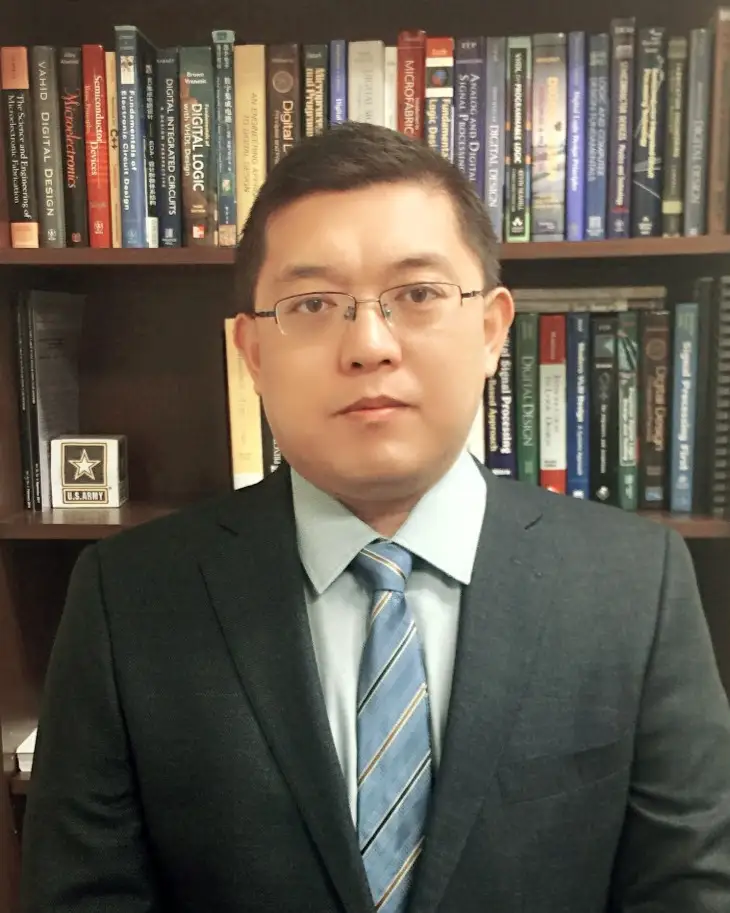
Jinhui Wang is a Professor in the Department of Electrical and Computer Engineering at the University of South Alabama's College of Engineering. His research focuses on cutting-edge technologies in Artificial Intelligence , VLSI Circuits , and Neuromorphic Computing . Education: Postdoctoral work in VLSI Design at University of Rochester, NY, USA; Ph.D. and B.S. in Electrical Engineering from Beijing University of Technology and Hebei University, China. His work addresses 3D IC Design , Emerging Memory Systems , and Cooling Techniques for Electronic Devices , with recent publications emphasizing privacy-preserving AI hardware and intelligent memory architectures for mobile and embedded systems. Collaborative projects span applications in Wireless Sensor Networks , IoT , and UAV Electronic Subsystems .
George D Konidaris serves as Associate Professor of Computer Science at Brown University, where his research bridges artificial intelligence, machine learning, and robotics with emphasis on autonomous decision-making systems. His work focuses on developing algorithms that enable robots and AI agents to learn hierarchical structures, discover reusable skills, and operate effectively in complex environments. Education: 2010: PhD, University of Massachusetts, Amherst 2003: MS, University of Edinburgh 2001: BS, University of the Witwatersrand 2000: BS, University of the Witwatersrand His research spans reinforcement learning , robotic motion planning , and hierarchical abstraction , with significant contributions to skill discovery, temporal abstraction, and model-based methods. Current work integrates visuo-haptic perception for manipulation tasks and explores language-guided robotics using large language models. His approach emphasizes creating systems that learn compact world representations for efficient long-horizon planning in partially observable environments. Analysis of his 2025 publications reveals strong trends in model-based reinforcement learning with focus on memory mechanisms, uncertainty quantification, and hierarchical skill composition. Key themes include temporal abstraction for planning efficiency, visuo-haptic fusion for robotic manipulation, and language grounding for task specification. His work increasingly connects cognitive science concepts like theory of mind with AI capabilities. Teaching responsibilities include CSCI 1410 (Artificial Intelligence) and CSCI 2951X (Reintegrating AI), where he bridges theoretical foundations with practical robotics applications.
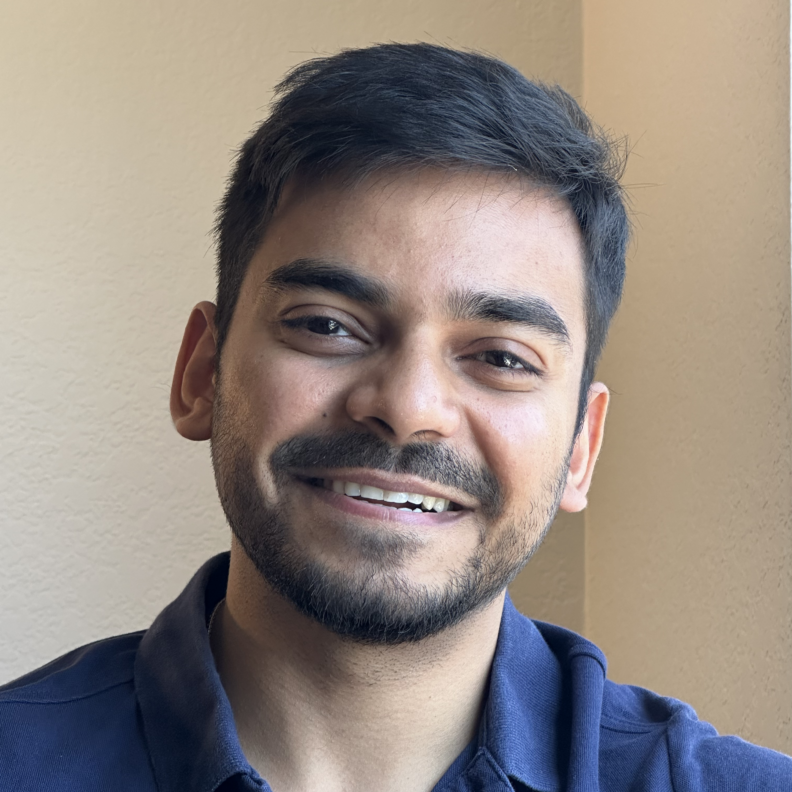
Abhishek Moitra serves as an Assistant Professor in the School of Electrical Engineering & Computer Science at Washington State University, maintaining his office in EME 503. His research bridges hardware innovation and artificial intelligence systems. His academic credentials include: Doctoral Degree from Yale University (2025) Master’s Degree from Yale University (2023) Bachelor’s Degree from Birla Institute of Technology & Science (BITS) (2019) Moitra specializes in optimizing computational infrastructure for next-generation AI, with primary focus areas including large language model efficiency, neuromorphic architectures, and memory-centric computing paradigms. His work emphasizes co-design methodologies to overcome hardware limitations in machine learning deployment. Professional accolades comprise: IEEE Transactions on Computer‐Aided Design Donald O. Pederson Best Paper Award (2025) Bell Labs Outstanding Innovation Award (2024) Research featured at SRC TECHCON Conference (2024) No details regarding graduate student supervision or active research grants appear in the source material. Similarly, laboratory facilities, research teams, and future project pipelines remain unspecified in available documentation.
Dr. Tobias Grundgeiger is an Associate Professor in Human-Computer Interaction at Julius-Maximilians-University Würzburg, where he serves as an Academic Councillor in the Faculty of Human Sciences. He leads research in the Institute for Human-Computer-Media, specifically within the Psychological Ergonomics group under Prof. Dr. Jörn Hurtienne. Additionally, he holds an Associate Professor/Honorary Research Fellow position at The University of Queensland, Brisbane, Australia. His educational background includes: PhD studies at The University of Queensland, Brisbane, Australia (2007-2010) Psychology studies at the University of Regensburg (2001-2006) Habilitation/Associate Professor qualification in Human-Computer Interaction (2022) Dr. Grundgeiger's research focuses on the interaction between people and technology in socio-technical systems, particularly in healthcare environments such as hospitals, control rooms, and aviation. His work examines how technology can be designed and integrated into complex systems to maximize user benefits while maintaining safety. A secondary research interest explores technology's role in relation to dying and death, aiming to develop technologies that transform engagement with these experiences into meaningful, eudaimonic encounters. His methodological approach combines empirical studies in real-world settings with theoretical frameworks from activity theory, embodied interaction, and psychological need satisfaction. His recent publications reveal a strong focus on AI applications in anesthesiology, human-AI teaming, augmented reality interfaces, and interruption management in safety-critical contexts. A significant portion of his work examines how technology can support clinicians during high-stress medical procedures while maintaining workflow integrity. His research demonstrates how cognitive aids, documentation assistants, and monitoring systems can be designed to align with clinical workflows rather than disrupt them. Dr. Grundgeiger is actively involved in several major research projects, most notably as contact person for the CASSANDRA project (2022-2025), which develops an AI team member for anesthesiology. This €1.34 million project, funded by the German Federal Ministry of Education and Research, aims to create a voice-based virtual agent that supports anesthesia teams through automated documentation and clinical decision support. His teaching responsibilities span both undergraduate and graduate levels, covering Human-Computer Systems, Psychological Ergonomics, Healthcare Usability & User Experience, Eye-Tracking methods, and Theories of Human-Computer Interaction. His pedagogical approach emphasizes practical applications of theoretical concepts in real-world settings.
Rolf Drechsler is a Full Professor and Head of the Group of Computer Architecture at the University of Bremen's Institute of Computer Science since 2001, and Director of the Cyber-Physical Systems Group at DFKI Bremen since 2011. He holds an adjunct professorship at the Indian Statistical Institute and has been affiliated with Duke University. Education: Diploma (1992) and Dr. phil. nat. (1995) in Computer Science from Goethe University Frankfurt Academic Leadership: Dean of Mathematics and Computer Science Faculty (2018-2025), Vice Rector for Research (2008-2013) His research focuses on formal verification , RISC-V architectures , and quantum/in-memory computing . Recent work explores LLM integration in hardware testing and polynomial-based verification techniques. Publications from 2024-2025 span IEEE Transactions , DATE , and DAC , emphasizing automated verification , quantum circuit mapping , and LLM-driven testbench generation . Scientific Awards IEEE/ACM Best Paper Awards (2013, 2018) Berninghausen-Preis for Innovative Teaching (2018) IEEE Fellow (2015) Founder Award for Solvertec (2013) He has served on program committees for DAC, ICCAD, DATE, and founded graduate schools in Embedded Systems and System Design under Germany's Excellence Initiative.
Yun Jang is a Professor in the Department of Computer Engineering at Sejong University , South Korea. His research spans Data Visualization , Visual Analytics , and Artificial Intelligence applications, with a focus on Spatiotemporal Analysis , Volume Rendering , and Human-Computer Interaction . Ph.D. in Electrical and Computer Engineering, Purdue University (2007) M.S. in Electrical and Computer Engineering, Purdue University (2002) B.S. in Electrical Engineering, Seoul National University (2000) His research interests include: Visual Analytics for Big Data Causal Analysis in Urban Traffic Virtual Reality and Cybersickness Measurement Interactive Volume Rendering EEG and Gaze Data Analysis Recent publications emphasize causal modeling in traffic analysis, volume rendering techniques with CNNs, and AI-driven applications for smart cities. He holds multiple Korean and US patents in traffic analytics, VR systems, and data visualization technologies. Notable scientific awards include the Daeyang Distinguished Professor Award and a Best Poster Award at PacificVis 2020 . He leads the Data Visualization Lab at Sejong University, supported by grants from Korean government agencies and industry partners.
Estela Bicho is a Full Professor at the Department of Industrial Electronics, School of Engineering (EEUM), University of Minho, where she coordinates the Control, Automation and Robotics Group and leads the MAR Lab (Mobile and Anthropomorphic Robotics Lab). She previously served as Associate Director of Algoritmi Research Centre (2013-2015) and vice-president of EEUM (2019-2022). Her research focuses on Uni- and multi-robot systems Human-robot interaction & collaboration Machine learning applications Bimanual robotic manipulation Autonomous navigation Medical robotics for Parkinson's/Alzheimer's diagnosis Neuro-rehabilitation technologies Her work has produced over 100 publications in top journals (Mechanism and Machine Theory, Autonomous Robots, Neural Networks) and conferences (IROS, ICRA). Notable achievements include: 1999 IBM Portuguese PhD Award JAST project selected as European robotics success story IEEE IROS Jubilee video award finalist 2019 student team prize in Beijing Brain-Inspired Computing Competition 2021 RoboHub '50 Women in Robotics' recognition She has supervised 12 PhD theses and 35+ MSc dissertations, with current advisees including Ana Margarida Trigo, Ankit Patel, Gianpaolo Gulletta, and Tiago Malheiro.
Distinguished Professor Chin-Teng Lin is a leading academic at the University of Technology Sydney (UTS) , where he serves as Co-Director of the Australian AI Institute (AAII) and Director of the Computational Intelligence and Brain Computer Interface Lab . With a career spanning decades, he has pioneered advancements in artificial intelligence (AI) and brain-computer interfaces (BCI) , focusing on human-machine collaboration, wearable EEG systems, and neuroergonomics. School of Computer Science, UTS Co-Director, Australian AI Institute Director, Computational Intelligence and BCI Lab Lin’s research interests are deeply rooted in machine-intelligent systems , cognitive neuroscience , and human-centric AI . He has developed groundbreaking technologies like fuzzy neural networks (FNNs) in 1992, which revolutionized AI by integrating human-like reasoning. His work extends to multi-agent reinforcement learning for cybersecurity, wearable EEG devices for real-world applications, and neurofeedback interventions for chronic pain management. His research outputs include over 950 peer-reviewed publications , with a focus on deep learning , transformer models , and clustering algorithms . Articles like the MGRW-Transformer (2025) and Autonomous Clustering (2025) highlight his leadership in interpretable AI and parameter-free methods. Scientific awards and recognitions include: IEEE Fellow (2005) IFSA Fellow (2012) IEEE Fuzzy Systems Pioneer Award (2017) Outstanding Achievement Award, Asia Pacific Neural Network Assembly Lin has supervised 72 PhD candidates , 30 postdoctoral fellows , and 237 research Masters students since 1992, mentoring notable alumni such as Dr. Zehong Cao (ARC DECRA Fellow) and Prof. Chia-Feng Juang (IEEE Fellow). His funding portfolio includes $10M+ from the US Army Research Lab , $3.8M from the Australian Defence Innovation Hub , and $30.2M in industry collaborations .