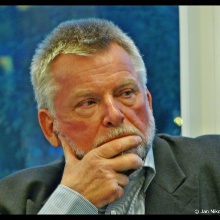
Charles Hilken is a Professor in the History Department at Saint Mary's College of California's School of Liberal Arts, where he also directs the Bishop John S. Cummins Institute for Catholic Thought, Culture, and Action. His research examines medieval monastic institutions through paleographical and architectural analysis. Education includes: Ph.D. in Medieval History from University of Toronto (1994) M.S.L. from Pontifical Institute of Mediaeval Studies (1991) M.A. in Medieval History from University of Toronto (1987) B.A. in History from Saint Mary's College of California (1978) Research focuses on: South Italian monastic culture and Beneventan script Function of chapter rooms in medieval monasteries Necrologies and memorial practices Current projects include analysis of Vatican Codex Barberinianus latinus 421 and Beneventan regional studies Publications predominantly explore monastic architecture, manuscript traditions, and medieval Italian religious history, with recurring focus on Montecassino's historical significance. Awards: Nicky B. Carpenter Fellowship in Manuscript Studies (2017)
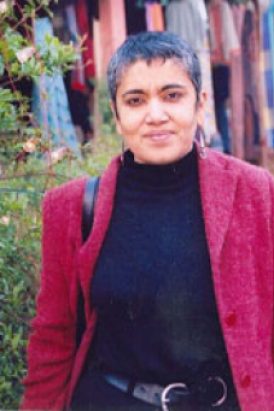
Clare Harris serves as Professor of Visual Anthropology and Head of the School of Anthropology and Museum Ethnography at the University of Oxford, concurrently holding curatorship of Asian Collections at the Pitt Rivers Museum and a Fellowship at Magdalen College. Her academic leadership spans institutional administration, museum curation, and doctoral supervision within Oxford's anthropological ecosystem. Her educational foundation includes a BA from the University of Cambridge and MA/doctorate from SOAS, University of London. Early career roles comprised Lecturer in Anthropology of Art at the University of East Anglia (1994-1998) before her Oxford appointment. Harris pioneers research at the intersection of visual anthropology, Tibetan studies, and museum decolonization. Her work critically examines Himalayan visual culture, colonial/post-colonial photography, and museum representation politics, evolving toward digital repatriation and community-centered curation. She integrates anthropological fieldwork (conducted in Tibetan diaspora communities since the 1990s) with art historical analysis and archival research. Her 13 recent publications (2004-2022) reveal a progressive trajectory from Tibetan art history toward urgent museum decolonization debates, with consistent focus on photographic practices and cross-cultural representation. Key thematic developments include the shift from historical analysis to active digital repatriation projects and increased engagement with contemporary artists. Harris's accolades include: Fellowship of the British Academy (2019) E. Gene Smith Prize for The Museum on the Roof of the World (2014) Visual Anthropology Prize for In the Image of Tibet (2000) She currently supervises five DPhil students while examining over 25 completed doctorates globally. Research funding spans British Academy personal grants, Leverhulme Trust support, and major collaborative projects including AHRC, Wenner-Gren Foundation, and EU grants—most notably the current AHRC-funded Decolonising the Museum: Digital Repatriation of the Gaidinliu Collection . At the Pitt Rivers Museum, Harris leads high-impact curatorial initiatives including the Abramović collaboration ( Gates and Portals ), Nyema Droma's Performing Tibetan Identities , and community projects like My Tibet Museum , establishing innovative frameworks for museum-public engagement.
Asma Sayeed is an Associate Professor and Program Director of Islamic Studies at UCLA's Near Eastern Languages and Cultures department, part of the UCLA College. She holds a PhD in Near Eastern Studies from Princeton University (2005) and previously served as an Assistant Professor at Lafayette College. Her research focuses on early Muslim social history, Muslim education, gender studies, and hadith transmission by women. She has authored Women and the Transmission of Religious Knowledge in Islam (2013) and contributed to numerous journals and encyclopedias. Sayeed received a Fulbright Fellowship (2010) for archival research on Muslim women’s education in Syria. She teaches courses such as 'Introduction to Islam' and graduate seminars on research methodologies. Her current work examines textual practices in Muslim education across historical contexts. Education: PhD, Near Eastern Studies, Princeton University (2005) MA, History, Binghamton University (1994) BA, Politics, Princeton University (1991) Certificate in Near Eastern Studies, Princeton University (1991) Research Interests: Her scholarship emphasizes women’s roles in religious knowledge transmission, legal and social history intersections, and medieval Muslim educational systems. She frequently addresses how gender shaped access to religious authority and spaces. Awards: Fulbright Fellowship (2010) Teaching and Professional Engagement: Sayeed’s courses cover Quranic studies, Islam in the West, and methodological frameworks in Islamic studies. She actively participates in academic conferences and initiatives, including keynote lectures on women’s intellectual engagement in classical Islam and digital humanities projects mapping women’s educational histories.
Michelle Arrow is a Professor at Macquarie University's School of Humanities and Centre for Media History. Her research focuses on cultural history, post-war Australia, and feminist movements. She holds a PhD from the University of Sydney (1999), with notable works including Upstaged (2002), Friday on Our Minds (2010), and The Seventies (2019), which won the Ernest Scott Prize. Her work explores how culture shapes identities and responds to political shifts. She has led projects like 'Public Intimacy: A Biography of Anne Deveson' and contributed to media initiatives such as ABC TV's Rewind . Awards include Fellowships from the Academy of the Social Sciences (2023) and the Royal Historical Society (2025). Her current projects include a biography of Anne Deveson and studies on gender citizenship and LGBTQIA+ activism. Michelle has been a media commentator on topics like historical representation and social policy. Education: PhD in History, University of Sydney (1999) Thesis: Social and cultural history of Australian women playwrights (published as Upstaged ) Research Interests: 1970s Australia, Royal Commissions, feminist politics Popular culture and its political dimensions Historical representation in media and film Awards: Ernest Scott Prize (2020) NSW Premiers' Multimedia History Prize (2014) Elected Fellowships (2023, 2025) Grants/Projects: ARC-funded projects on women's refuges and children's rights Audio-visual archive prototyping (2017) Biography of Anne Deveson (2020–2023) Media Engagement: ABC TV presenter ( Rewind ) Contributions to The Conversation and public talks
Susan Schreibman serves as Full Professor and Key Domain Chair of Digital Arts and Culture within the Faculty of Arts and Social Sciences at Maastricht University. She concurrently holds board positions at the National Library of Ireland and Research School Media Studies, and serves as Academic Editor for the University of Illinois Press. Her research centers on computationally-driven analysis of digital archives, cultural innovation, and participatory engagement design, with core specializations in Digital Humanities, Media Studies, Literary Modernism, and Irish Cultural Studies. She pioneers methodologies for remediating analog publication modalities into born-digital paradigms while critically examining their societal impact. Analysis of her 2022-2025 publications reveals dominant trends in 3D digital scholarship (particularly multimodal historical narratives like the Battle of Mount Street Bridge project), feminist approaches to digital humanities infrastructure, and social justice applications in archival systems. Her work consistently bridges technical innovation with cultural critique across heritage, education, and gender studies contexts. No scientific awards were documented in the source materials. Professor Schreibman leads significant research initiatives including PURE3D Contested Memories and #dariahTeach, indicating active grant-funded collaborations though specific funding sources remain unmentioned. Her editorial role for University of Illinois Press and co-edited volumes like Feminist Digital Humanities: Intersections in Practice (2025) demonstrate scholarly leadership. She directs the PURE3D project developing 3D reconstructions of historical events, contributes to the #dariahTeach digital humanities education platform, and participates in the IGNITE initiative advancing digital scholarly practices. These efforts operate within Maastricht University's Faculty of Arts and Social Sciences infrastructure with external partnerships at cultural institutions like the National Library of Ireland.
Professor Katharine Cockin is a leading scholar in Victorian theatre, women's suffrage history, and interdisciplinary literary studies at the University of Essex. She holds the Chair of English Literature in the Department of Literature, Film, and Theatre Studies (LiFTS). Her research focuses on Ellen Terry and Edith Craig, pioneering figures in theatre and suffrage activism, with major publications including Edith Craig and the Theatres of Art (2017) and the Collected Letters of Ellen Terry (8 vols., 2010–). She leads the AHRC-funded Searching for Theatrical Ancestors and Ellen Terry and Edith Craig Database projects, recognized nationally for their impact on cultural heritage. Education: BA, MA, and PhD in English Literature from the University of Leicester. Her doctoral thesis examined the Pioneer Players theatre society (1911–25). She previously held professorial roles at the University of Hull, where she established interdisciplinary programs in literature and law. Research interests include archival studies, women's suffrage literature, modern literature, and the 'Literary North'. She advises on topics like science fiction and autobiography. Awards include a Principal Fellowship of the Higher Education Academy and AHRC Peer Review College membership. Administrative roles at Essex include Director of the Centre for Interdisciplinary Research in Literary Studies and former Director of Research for LiFTS. Publications span over 50 articles and edited volumes, emphasizing feminist historiography and cultural preservation. Her work bridges academia and public engagement through digital archives and collaborative projects.
Margus Pärtlas is Professor of Music Theory and Vice Rector for Academic Affairs and Research at the Estonian Academy of Music and Theatre (EAMT). He earned his Doctorate from the St. Petersburg Conservatory in 1992 with a dissertation on Eduard Tubin's symphonies. His career includes positions as Associate Professor (1993-2003), Senior Teacher (1987-1993), and Fulbright Visiting Scholar at the University of North Texas (1999-2000). Pärtlas's research focuses on music analysis methodologies , specializing in the works of Eduard Tubin and Richard Strauss. Key areas include symphonic form, tonal transformation in Romantic music, semiotic analysis of choral works, and cultural identity in exile compositions. His publications consistently explore structural innovation in 19th-20th century European music. His recent articles reflect a thematic emphasis on Estonian musical heritage , institutional development of music academies, and analytical studies of concerti/symphonies. A significant trend involves examining how composers negotiate cultural identity through structural elements. Awards & Honors: Fulbright Visiting Scholar Grant (1999) Best Music Article Award from 'Teater. Muusika. Kino' (1992) Academic Leadership: Chaired accreditation committees internationally (Latvia, Lithuania, Russia, Armenia), serves on editorial boards of Res Musica and Eduard Tubin's Complete Works, and organized major conferences including 'Eduard Tubin 100'. Doctoral Supervision: Guided 4 PhD students in music analysis and interpretation, focusing on topics like Tubin's piano sonatas, Estonian song traditions, and analytical approaches to contemporary performance.
Todd McCallum is an Assistant Professor in the Department of History at Dalhousie University . His research focuses on North American social and cultural history , particularly intersections with Marxism, anarchism, and working-class movements . He also explores themes of gender and sexuality within historical contexts. PhD in History from Queen’s University MA in History from Simon Fraser University BA in History from Queen’s University McCallum’s recent publications analyze transient worker communities, labor activism, and spatial marginalization during economic crises. His work critically examines how categories like “tramp” evolved alongside industrial capitalism and social policy, often incorporating interdisciplinary lenses such as eugenics, documentary photography, and urban sociology. Key trends in his research include the dialectic of mobility and marginality, gendered interpretations of transient life, and the role of radical ideologies in shaping worker identities. He has contributed extensively to journals like Labor/Le Travail and BC Studies , with a particular focus on Vancouver’s Depression-era hobo communities. His teaching portfolio includes courses on the history of the future , conspiracy theories , and gender formation in North America . Office hours are held in the Marion McCain Building, Halifax.
Dr. Fabian Schulz is a Senior Researcher in Ancient History at the University of Tübingen, where he works in the Department of History within the Faculty of Humanities. He leads a prestigious Junior Research Group under the Emmy Noether Programme of the German Research Foundation (DFG), titled 'Power and Influence: Influencing Emperors between Antiquity and the Middle Ages.' His academic profile also includes association with the Collaborative Research Center (SFB) 923 'Threatened Order - Societies under Stress' and active participation in the 'Tübingen Theosophy' research group. Previously, he contributed to the Heidelberg Academy of Sciences and Humanities project on John Malalas' Chronicle and the University of Tübingen's DFG project 'East and West 400-600 AD.' Dr. Schulz earned his PhD in Classics from Freie Universität Berlin (2006-2010), where he also served as a teaching assistant. During his doctoral studies, he was a Pensionnaire étranger at the École Normale Supérieure Paris. Prior to that, he completed an MA equivalent degree in Classics at Freie Universität Berlin, with time spent as a visiting student at the University of Oxford (1999-2005). His early career included teaching Latin and Greek at a grammar school in Lübeck (2006). His research specializes in power structures and influence mechanisms in ancient societies, with particular focus on how advisors shaped imperial decisions in Late Antiquity. He has made significant contributions to understanding councils of elders in Archaic Greece (especially the Spartan Gerousie), Byzantine chronography (particularly John Malalas' works), and the complex dynamics between Eastern and Western Roman empires during the 5th and 6th centuries. His methodological innovation lies in applying modern sociological models of interpersonal influence to historical analysis of ancient political culture, bridging literary representation with political reality in pre-modern monarchical states. Young researchers award for 'Ratgeber, Experten, Manipulatoren: Einfluss als Machtfaktor und Diskursobjekt in der Antike' As principal investigator of his Emmy Noether project, Dr. Schulz has secured substantial research funding from the German Research Foundation. His collaborative work includes multiple edited volumes on Late Antique history and Byzantine chronography, reflecting his strong international scholarly network. He currently serves as a deputizing member (non-professorial academic staff) on the faculty board of Humanities at the University of Tübingen. His research often intersects with contemporary concerns about power dynamics, political influence, and historical memory, as evidenced by his work on video game representations of ancient history. Dr. Schulz is an active contributor to the online commentary project on John Malalas' chronicle, specifically editing sections of Book XVIII. His work frequently involves detailed textual criticism and analysis of historical sources, with particular attention to how narratives are transmitted and reinterpreted across different cultural contexts. His scholarly approach combines philological precision with broader historical and sociological perspectives.
Peter C. Caldwell is the Samuel G. McCann Professor of History at Rice University and Director of the Program in Politics, Law, and Social Thought. He specializes in modern European history with a focus on Germany, constitutionalism, welfare state development, and political thought. His research spans Weimar Republic legal crises, postwar West Germany, and 19th/20th-century intellectual movements. Education: PhD (1993), MA (1989), and BA (1987) from Cornell University, New York University. Awards include the George R. Brown Award for Teaching (2016) and Humboldt Fellowship. He has authored/co-authored major works like Democracy, Capitalism, and the Welfare State (2019) and Germany Since 1945 (2018, 2023 revision). Teaching focuses on European political history, comparative welfare states, and 19th-century political thought. Current research examines democratic rhetoric in contemporary Mexican politics and authoritarian constitutionalism. Advised over a dozen undergraduate theses on topics ranging from Weimar Republic legal theory to Cold War historiography. Publications span German constitutional history, Cold War dynamics, and East German politics. His work bridges legal, economic, and cultural dimensions of modern European history with interdisciplinary approaches to political theory.
Robert Wellington serves as Associate Professor and Director of the Centre for Art History & Art Theory at the School of Art & Design, Australian National University (ANU), within the College of Arts & Social Sciences. His academic leadership focuses on advancing art historical research and public engagement through institutional initiatives. His research spans Art History, Early Modern European Art (particularly Louis XIV's France), Museum Studies, Public Humanities, and Cultural Heritage. Wellington investigates transcultural object exchange, royal iconography, and identity construction through material culture, with emphasis on Versailles, medals, and marginalia. His work bridges historical scholarship with contemporary public humanities applications in museums and digital archives. Analysis of his 2020-2024 publications reveals concentrated exploration of Louis XIV's cultural legacy, Versailles' global impact, and the evolving role of humanities institutions. He pioneers digital critical editions while examining how objects shape identity across cultural boundaries, consistently connecting historical practices to modern museum and archival challenges. No scientific awards were documented in the provided materials. As Centre Director, Wellington oversees research programs and institutional partnerships, though specific student advisees and grant details remain unlisted in available sources. His leadership facilitates interdisciplinary projects including the Jean-Benjamin de Laborde digital edition initiative. The Centre for Art History & Art Theory functions as a research hub under Wellington's direction, driving public humanities innovation through the ANU's Art & Design Seminar Series, Visiting Artist Program, and collaborative projects with national collections. Current initiatives focus on digital heritage and community-engaged scholarship within the School of Art & Design framework.
Ali Mousavi is Assistant Professor of Iranian Archaeology in UCLA’s Department of Near Eastern Languages and Cultures and a core faculty member of the Cotsen Institute of Archaeology. A Berkeley PhD and former fellow of the Smithsonian, Maison de l’Orient and Global Heritage Fund, he has directed excavations and UNESCO World-Heritage projects at Pasargadae, Bam, Susa, Sultaniyeh and Turang Tepe and authored prize-winning volumes Ancient Iran from the Air and Persepolis: Discovery and Afterlife of a World Wonder . Education PhD, Near Eastern Studies (Archaeology), University of California, Berkeley (2005) MA, Archaeology, History and Languages of Old World Civilizations, Université Lyon II, France (1997) BA, Archaeology and Art History of Europe and the East Mediterranean, Université Lyon II, France (1996) Research interests span the archaeology and art history of Iran from the Neolithic to the early-20th century, with particular focus on Achaemenid and Sasanian monumental architecture, ancient irrigation (qanats), landscape archaeology, digital heritage, and the modern historiography of Iranian archaeology. His field projects integrate remote sensing, epigraphy, GIS and conservation science to investigate imperial capitals, rock-cut monuments and water-management systems across the Iranian plateau. Across more than 30 peer-reviewed articles and book chapters, Mousavi has re-examined dating criteria for Achaemenid stone monuments, analysed royal inscriptions as visual displays, traced medieval Persian pilgrims’ graffiti at ancient sites, and produced synthetic archaeological surveys of the Sasanian empire and the Central Alborz Iron-Age cultures. The corpus reflects a sustained engagement with primary field data, archival research and critical historiography of 19th- and 20th-century excavations. Selected honours Ehsan Yarshater Book Award (2014) Iranian Ministry of Culture World Book Award (2014) Leon Levy – Shelby White publication grant (2008) UNESCO award for World-Heritage nomination files (2003) Iran Heritage Foundation field-work award (2003) Guitty Azarpay Fellowship, UC Berkeley (2000-2003) IFRI Fellowship, Paris (1998) At UCLA he offers undergraduate courses “Archaeology of Iran” and “Ancient Cities of Iran (4000 BC-AD 1900)” and mentors graduate researchers in the Cotsen Institute. His grants and fellowships from NSF-equivalent European and American agencies underwrite both field seasons and publication of critical archaeological corpora, while his service on Iranian, UNESCO and international heritage boards continues to link scholarly output with heritage-management policy.
Gerhard Hirschfeld is an Honorary Professor at the Department of History, University of Stuttgart, and has served as Director of the Bibliothek für Zeitgeschichte since 1989. His research focuses on Social and Cultural History of World War I , Comparative Occupation History of World War II , 20th Century Netherlands History , and Academic Emigration post-1933 . He has been a Fellow of the Netherlands Institute of Advanced Studies in the Humanities and Social Sciences (1996/1997, 2006/2007) Fellow of the German Historical Institute London and held leadership roles including Chair of the German Committee for the History of WWII (1991–2000) and President of the International Committee for the History of WWII (2000–2010). His publications span monographs, edited volumes, and essays on occupation policies, collaboration, and exile studies. Recent works emphasize the media representation of WWI , continuity of nationalist rhetoric , and ethical dimensions of historical taboos . He contributes to journals like Zeithistorische Forschungen and Tijdschrift voor Geschiedenis . Scientific awards include Fellowships at NIAS and DHIL Editorial leadership in academic series like Zeit der Weltkriege and Schriften der Bibliothek für Zeitgeschichte and advocacy for interdisciplinary war studies.
Mrinalini Sinha is the Alice Freeman Palmer Professor of History and Professor of English Language and Literature at the University of Michigan. Her research focuses on Colonial India, the British Empire, World History, and South Asian Studies with particular attention to Colonialism, Imperialism, Global Studies, and Women's Studies. She is affiliated with the Center for South Asian Studies and the International Institute. Dr. Sinha holds a Master's degree from Jawaharlal Nehru University, New Delhi, and a PhD from the State University of New York at Stony Brook. Her work bridges historiography, gender studies, and postcolonial theory, examining themes such as nationalism, colonial governance, and feminist movements in South Asia. Recent publications explore oral histories in Pakistan, gendered nationalism, and contested colonial reforms like the Ilbert Bill controversy. Her academic contributions include seminal works on colonial masculinity, the intersection of feminism and nationalism, and critiques of imperial social formations. She actively engages with global debates on empire, race, and the legacies of colonialism through her teaching and research.
Julie Rak is the HM Tory Chair and Professor in the Department of English and Film Studies at the University of Alberta. She holds a BA and PhD from McMaster University and an MA from Carleton University. Her research focuses on auto/biography, life writing, and nonfiction in North America, with specialties in gender, Canadian literature, and publishing studies. She has authored or co-edited numerous books, including False Summit: Gender in Mountaineering Nonfiction (2021) and The Routledge Introduction to Auto/biography in Canada (2023). Rak’s academic roles include interim Chair of the EFS Department (2023–2024) and leadership in the Stories of Change research group. She has received prestigious awards such as the J. Gordin Kaplan Award (2023) and the Killam Annual Professorship (2017–2018). Her research explores marginalized narratives, including Inuit literature and digital life writing, with a commitment to inclusivity and community engagement. Her teaching spans undergraduate and graduate courses on autobiography, gender theory, and Canadian literature. She actively supervises research projects and supports student initiatives like the Roger Smith Undergraduate Research Award. Rak’s work bridges academic rigor with public scholarship, with over 90 media engagements. Education: PhD in English, McMaster University MA in Canadian Studies, Carleton University BA in English, McMaster University Grants & Projects: SSHRC Insight Grant for Government Agents, Literary Agents: Inuit Books and Government Intervention, 1968–1985 Leadership in the Stories of Change initiative Awards & Honors: Fellow of the Royal Society of Canada (2022) Henry Marshall Tory Chair (2019–2025) 2024 Visiting Professor at Merton College, Oxford