Guy Dove is a Professor in the School of Arts & Sciences Humanities at the University of Louisville. His research bridges philosophy, cognitive science, neuroscience, linguistics, and artificial intelligence, focusing on the philosophy of psychology and abstract concept formation. PhD in Philosophy from the University of Chicago His work explores how language shapes cognition, advocating for a multimodal and flexible framework to understand abstract concepts. Recent publications address the implications of large language models for human cognition and the role of linguistic scaffolding in semantic memory. Key journals include Philosophical Transactions of the Royal Society B , Cognitive Neuropsychology , and Topics in Cognitive Science . He co-authored the book Consciousness and Physicalism: A Defense of a Research Program . Prior to his current role, Dove worked in the Developmental Neuropsychology and Electrophysiology Lab (2002-2003) and taught in the Department of Psychological and Brain Sciences (2004-2008).
Miklós Zeidler is a habilitated Associate Professor at Eötvös Loránd University (ELTE), Budapest, lecturing in the Department of Modern and Contemporary Hungarian History within the Institute of Historical Studies. His principal research covers Hungary’s twentieth-century diplomatic, political and cultural history, with a strong focus on the Treaty of Trianon, inter-war revisionism, the League of Nations, and the memory-culture of irredentism. Research interests: Professor Zeidler explores the consequences of the 1920 peace settlement for Hungarian state- and nation-building, the functioning of the League of Nations in East-Central Europe, and the interplay between sport, propaganda and national identity. His recent publications analyse financial stabilisation loans supervised by the League, the micro-history of border disputes, and the symbolic geography of inter-war Geneva. Publication profile: Between 2020 and 2024 he authored studies on the making and reception of the Trianon treaty, the composition and lobbying activity of the Hungarian peace delegation, and the cultural mythology of irredentism. A recurrent methodological thread is the integration of diplomatic, urban and memory-history perspectives, often relying on previously unused Hungarian and League archives. Campus presence: His office is located in the Humanities Faculty building at 1088 Budapest, Múzeum körút 6–8, room 216; he can be reached at zeidler.miklos@btk.elte.hu. Comprehensive publication lists are available on MTMT.hu and his doctoral data sheet at doktori.hu.
Matt Nassar is an Associate Professor of Neuroscience and Assistant Professor of Cognitive and Psychological Sciences at Brown University. He leads the Learning, Memory and Decision Lab, which is part of the Department of Neuroscience and the Robert J. & Nancy D. Carney Institute for Brain Science. His research focuses on understanding how the brain flexibly processes information to achieve complex and adaptive behaviors through computational approaches that bridge cognitive psychology and neuroscience. Education: PhD, University of Pennsylvania (2012) BA, Colgate University (2004) Nassar's research examines how different cognitive systems—learning, memory, and perception—leverage common computational principles to optimize decision-making. His work particularly focuses on how the brain balances stability and flexibility in processing information, how uncertainty is represented and utilized in learning, and how neural computations underlie complex behaviors. Through computational modeling and empirical research, he investigates how modular information-processing systems impact decisions and complex behavior in dynamic environments. His research integrates methods from cognitive psychology, neuroscience, and computational modeling to address fundamental questions about human cognition. Analysis of Nassar's recent publications (2020-2024) reveals a strong focus on computational neuroscience applied to decision-making, learning, and psychiatric conditions. His work frequently employs Bayesian modeling approaches to understand belief updating, uncertainty processing, and structure learning. Key themes include the neural basis of flexibility in learning, computational mechanisms underlying psychiatric symptoms, and age-related changes in cognitive processing. His research bridges cognitive psychology, neuroscience, and computational modeling to provide insights into both healthy cognition and disorders such as depression and schizophrenia. Scientific Contributions: Developed computational models of belief updating and learning under uncertainty Investigated neural mechanisms of stability-flexibility tradeoffs in cognition Examined age-related differences in learning and memory processes Explored computational mechanisms underlying psychiatric conditions Studied the role of noise correlations in neural learning systems Investigated how prefrontal cortex representations shape decision processes Nassar actively mentors researchers in his lab, with recent announcements highlighting postdocs joining from prestigious institutions like Max Planck UCL and Freie Universität Berlin. His lab appears to receive significant research funding, supporting multiple postdoctoral positions and research projects. Collaborations span multiple departments at Brown University, particularly with researchers in Cognitive and Psychological Sciences, Neurology, and Psychiatry. The lab has produced numerous high-impact publications in top journals including Nature Human Behaviour, Brain, and eLife. The Learning, Memory and Decision Lab, led by Nassar, is an active research group that uses computational models to understand how the brain represents and stores information for effective decision making. Recent lab announcements (as of February 2025) indicate the lab is expanding with new postdoctoral researchers joining from Harvard, Max Planck UCL, and Freie Universität Berlin, suggesting strong research momentum and funding support. The lab appears to be well-integrated within Brown's neuroscience community, with collaborations spanning multiple departments and research centers.
Tavia Nyong'o serves as the William Lampson Professor at Yale University with cross-disciplinary appointments across American Studies, Black Studies, Performance Studies, and Women’s, Gender, & Sexuality Studies. His scholarly practice interrogates the intersections of race, sexuality, and aesthetics through Black queer performance and speculative frameworks. Central to Nyong'o's research is the exploration of affective historiography and the re-examination of 'race' within performance and aesthetics. His work critically engages with racial and sexual dissidence in art, the performative dimensions of museum practice, and Black speculative thought at the precipice of planetary crisis. He actively reframes theoretical binaries between afropessimism and afrofuturism to illuminate Black futurity. His publication trajectory reveals a sustained investigation into Black cultural production, evolving from historical analyses of racial memory in 'The Amalgamation Waltz' (2009) to the queer dramaturgy of Black life in 'Afro-Fabulations' (2018), and culminating in the apocalyptic speculations of 'Black Apocalypse' (2025). These works collectively traverse cultural history, contemporary art criticism, and critical race/gender theory. His scientific recognition includes: Guggenheim Fellow (2024) Alexander von Humboldt Foundation Fellowship American Society for Theatre Research Fellowship Ford Foundation Fellowship Jacob K. Javits Fellowship British Marshall Foundation Fellowship Nyong'o co-founded the Practicing Refusal Collective and contributes to the Sojourner Project—a transnational Black Studies academy addressing anti-Black violence and Black futurity. As curator at Park Avenue Armory and editor-at-large of 'Social Text', he bridges academic scholarship with public intellectual engagement through editorial leadership of 'Sexual Cultures' book series and multiple journal editorial boards.
Nevin Reda serves as Associate Professor of Muslim Studies and Director of the Muslim Studies program (MPS) at Emmanuel College, Victoria University within the University of Toronto. Her academic leadership spans Qur'anic scholarship, Islamic legal theory, and interfaith education, with active teaching in courses such as Surat al-Baqara, Islamic Law, and Bible-Qur'an Dialogue. Her educational foundation includes: BSc, Cairo University (1989) MA, University of Toronto (2003) PhD, University of Toronto (2010) Dr. Reda's research centers on Qur'anic poetics and narrative structure, integrating literary theory, Islamic spiritual care, and Biblical Hebrew studies. She pioneers spiritually integrative approaches to Islamic ethical-legal theory (uṣūl al-fiqh) and develops interreligious pedagogies that bridge theological divides. Her work critically engages gender justice, domestic violence interpretations, and democratic theology through Qur'anic exegesis, emphasizing contextual hermeneutics and feminist perspectives. Analysis of her 15 most recent publications (2024-2010) reveals dominant trends in Qur'anic narrative analysis, gender-ethics intersections in Islamic law, and postcolonial interfaith dialogue frameworks. Key subfields include spiritually integrative readings of verse 4:34, reform of uṣūl al-fiqh for marriage ethics, and comparative Torah-Qur'an exegesis, demonstrating consistent methodological innovation across disciplines. No scientific awards were documented in the source material. As MPS Director, Dr. Reda mentors graduate students in Muslim Studies while advancing curriculum development for intercultural theological education. Her scholarly output—including two monographs and collaborations with institutions like Women and Memory Forum—reflects sustained research leadership, though specific grant details remain unreported. Current projects focus on Qur'anic structure theory and decolonizing epistemologies in religious studies.
Frank E. Garcea, Ph.D., is a Research Assistant Professor in the Department of Neurosurgery and Neuroscience at the University of Rochester School of Medicine and Dentistry. His research focuses on the cognitive and neural mechanisms underlying tool use, apraxia, and stroke recovery. He employs neuropsychological testing, fMRI, and lesion-symptom mapping to study brain injury effects on functional connectivity and action knowledge. Education: Bachelor of Science in Psychology, St. John Fisher College (2006–2010) PhD in Brain and Cognitive Sciences, University of Rochester (2012–2017) Research Interests: Dr. Garcea investigates how brain regions like the parietal cortex and dorsal/ventral streams mediate object manipulation and tool use. His work explores stroke-related disconnection syndromes, motor speech coordination networks, and translational brain mapping to preserve neural function during surgery. He collaborates on projects involving epilepsy patients undergoing electrocorticography to study action-related neural pathways. Labs & Affiliations: Principal Investigator of the Garcea Lab at URMC, focusing on tool use deficits in brain tumor/stroke survivors. Affiliated with the Del Monte Institute for Neuroscience and the Neurobiology & Anatomy Program. His lab integrates neuroimaging, lesion analysis, and clinical care to advance personalized brain mapping strategies.
Edward Muir is the Clarence L. Ver Steeg Professor in the Arts and Sciences and Charles Deering McCormick Professor of Teaching Excellence at Northwestern University, with joint appointments in the Department of History and Italian Studies at Weinberg College of Arts and Sciences. His academic journey includes a B.A. from the University of Utah (1969), an M.A. (1970), and Ph.D. (1975) in Modern European History from Rutgers University, including a Semester in Italy Program at Syracuse University (1967). Muir's research explores the intersection of ritual, violence, and power in Renaissance Europe, with emphases on Italian history, microhistory, and cultural anthropology. His work examines civic ceremonies, gender exclusion, and the sociopolitical underpinnings of early opera. Key themes include the anthropology of Venice, religious processions, and community formation in pre-modern societies. His scholarly publications reveal a consistent focus on Renaissance cultural practices, Venetian society, and methodological innovations in microhistory. Recent works analyze opera's emergence in 17th-century Venice, anti-war movements, and gendered public spaces, blending archival rigor with interdisciplinary theory. Awards and Honors: Herbert Baxter Adams Prize (1982) Two-time Howard R. Marraro Prize winner (1982, 1993) Andrew W. Mellon Foundation Distinguished Achievement Award (2010, $1.5 million) Fellow, American Academy of Arts and Sciences (2014) Charles Deering McCormick Professorship for Teaching Excellence (2006) Muir has held major administrative roles including Department Chair at Northwestern and LSU, co-directed the Graduate Program in Italian Studies, and served on editorial boards for journals like the American Historical Review . He mentors through graduate programs but no specific student advisees are listed.
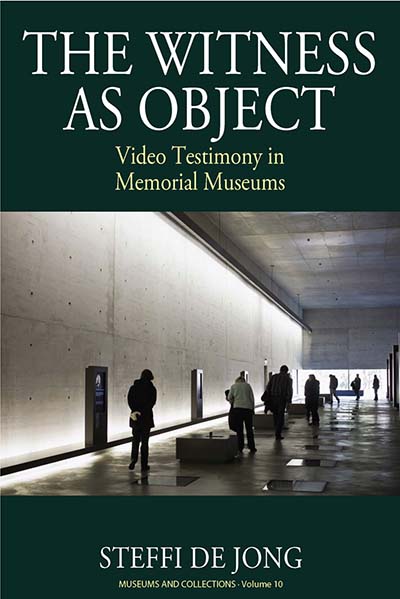
Steffi de Jong is Associate Professor of Public History and History Didactics at NTNU's Department of Historical and Classical Studies. She holds a PhD from NTNU and previously held positions at Maastricht University and University of Cologne. Research encompasses: Museum representation of historical testimony Digital memory of the Holocaust Re-enactment as historical practice Sensory dimensions of public history Virtual reality in memorial culture Her publications critically examine how technologies like VR transform Holocaust commemoration, arguing that simulated experiences create new forms of 'post-witnessing'. Recent projects include Gerda Henkel Foundation-funded research on historical re-enactment origins and analyses of digital Holocaust memory. Monographs include 'The Witness as Object' (Berghahn, 2018), which analyzes video testimony in memorial museums, and edited volumes on choreomusicology and women's musical leadership.
Jerry Zee is Assistant Professor of Anthropology and the High Meadows Environmental Institute at Princeton University. His research examines environmental emergence through political, meteorological, and geopolitical lenses, with focus on China's ecological transformations and transpacific entanglements. Publications analyze dust governance, aerosol politics, and racialized ecologies, employing interdisciplinary approaches from feminist STS and environmental humanities. Current work investigates planetary-scale infrastructural projects and necrotic politics.
Katrin Bromber is a German Researcher at the Centre for Modern Oriental Studies in Berlin, where she has led the research group "Progress and its Discontents: Ideas, Practices, Materiality" since 2014. Her career spans senior research roles at ZMO and academic teaching positions at the University of Vienna. Nationality: German. Language skills: Native German, fluent English/Swahili, moderate Amharic, good reading knowledge in French/Russian, basic Tigrinya. Habilitation (2009–): African Studies, University of Vienna PhD (1993): African Linguistics, University of Leipzig MA (1988): Swahili Studies, University of Leipzig Katrin Bromber's research interrogates intersections of body politics , sports history , Swahili linguistics , and Ethiopian modernity . Her work traces how physical culture, media representation, and colonial/imperial narratives shape national identities across Africa and Asia. Current focus: "Progress" as contested concept in Ethiopian and Gulf urbanism. Key article trends reflect her translocal methodology: 2017 studies on Ethiopian stadiums and fitness culture ; 2014-2013 publications analyzing East African military press , sports branding in the Gulf , and Swahili poetry ; 2007-2000 works on colonial linguistic politics , Indian Ocean slavery , and German colonial Swahili promotion . Recurring sub-fields: body as political text, translocal modernity, media historiography. Scientific Awards: Research Grant of the Berlin City Council (1999-2000): Gendered Slavery study Service to the Scientific Community: Chairwoman, Academic Association for Horn of Africa Studies (2012–) Editorial Advisory Board - Stichproben. Vienna Journal of African Studies (2015–) Editorial Advisory Board - Studies of Department of African Languages and Cultures (2015–) Teaching Experience: Textlinguistics, Mediacommunication, African Linguistics, Swahili (elementary/advanced), Swahili Literature, Swahili in Arabic Script at Leipzig, Humboldt-Berlin, Free Berlin, and Vienna universities Anthropology of the Body at Mekelle University Summer School Field Research: Tanzania (1993-2003): Swahili Poetry, Intellectual History Kenya (2005): Indian Ocean WW2 UAE/Bahrain (2009): Sports and Body Cultures Ethiopia (2009-2015): Sports, Body Politics
Dr. Manuel Anglada-Tort is a Lecturer in Psychology at Goldsmiths, University of London, and a visiting researcher at the Max Planck Institute for Empirical Aesthetics. His research focuses on the psychology of cultural systems, including music, creativity, and empirical aesthetics. He combines computational methods with psychological experiments to explore cultural evolution, music perception, and the interplay of cognition and social interaction. Research Interests: Cultural Evolution Music Perception & Cognition Empirical Aesthetics Creativity Big Data Analyses Key Projects: Large-scale iterated singing experiments on music evolution Investigating weather's influence on music success Developing the REPP platform for online sensorimotor synchronization studies Teaching: MSc in Music, Mind, and Brain MSc Psychology of the Arts, Neuroaesthetics, and Creativity Affiliations: Music, Mind and Brain Group at Goldsmiths Computational Auditory Perception Group at Max Planck Institute
Renate Sachse is a Researcher and Responsible Investigator at the Chair of Structural Analysis, Technical University of Munich (TUM), under Prof. Kai-Uwe Bletzinger. She holds a Dr.-Ing. from the University of Stuttgart and has held postdoctoral positions at Harvard University (Bertoldi Lab) and TU Munich's Institute for Computational Mechanics. Her research focuses on biomimetic adaptive structures, biomechanics, and smart materials. Education M.Sc. in Civil Engineering (University of Stuttgart, 2014) – Thesis: "Isogeometric Contact Analysis of Thin-Walled Structures" B.Sc. in Civil Engineering (University of Stuttgart, 2011) – Thesis: "Elementary School Pavilion Structural Analysis" Study Abroad: École Spéciale des Travaux Publics (ESTP, France, 2012) Research Interests Her work integrates principles from biology and mechanics to design adaptive structures, including motion design, soft robotics, and active metamaterials. Notable projects include studying snapping mechanisms in plants (e.g., Venus flytrap) and developing bio-inspired systems like Flectofold shading devices. She also explores isogeometric analysis and structural optimization for thin-walled and slender structures. Grants & Awards Bertha Benz Prize 2022 (Daimler and Benz Foundation) Klaus Tschira Boost Fund Fellowship (€80,000 interdisciplinary grant) 3rd Place AVK-Prize for Innovations (2017, Flectofold Shading System) GAMM Juniors Fellowship (2020–2022) Teaching & Grants She teaches advanced finite element methods and nonlinear mechanics at TUM and has supervised projects in computational mechanics. Her grants include CareerDesign@TUM funding and the Klaus Tschira Fellowship for high-risk, interdisciplinary research. Labs & Teams Associated with the Chair of Structural Analysis at TUM, collaborating on projects like livMatS (Living Materials Systems) and the Harvard SEAS Bertoldi Lab. Involved in software development (e.g., Carat++, Kiwi!3d) and third-party initiatives (CoDA, FlexWing).
Rebecca Herman is an Associate Professor in the History Department at the University of California, Berkeley. As a historian of the Americas, her research spans environmental politics, US military basing in Latin America during World War II, and transnational environmental organizing in decolonizing contexts. Current research: Antarctic governance and sovereignty in international borderless zones Secondary research: Latin American engagement with sustainable development and global environmentalism in the 1980s-90s Her work examines tensions between national sovereignty and global governance, particularly through case studies involving Argentina, Chile, and Panama. She is writing a book analyzing competing visions for Antarctica's future resource management in the context of decolonization. 50% of her recent publications focus on Latin American environmental politics, including a 2024 Environmental History article on Greenpeace's Buenos Aires office and a 2024 chapter exploring colonial legacies in Antarctic governance. Other works analyze US-Latin America relations during World War II and Cold War-era global governance frameworks. National Endowment for the Humanities Fellowship American Society for Environmental History Fellowship Hellman Fellows Program Fellowship Society for Historians of American Foreign Relations Bernath Scholarly Article Prize Honorable Mention Benenson Award in the Arts Lewis Hine Documentary Fellowship She received her PhD in History (2014) and MA in History (2010) from UC Berkeley, following a BA in Literature & History and Spanish from Duke University (2008). Prior to academia, she worked in Argentina, Bolivia, Brazil, and Boston on documentary and translation projects. Her research has been supported by fellowships from Social Science Research Council, Smithsonian Institution, and Council on Library and Information Resources.
Dr Jonathan Cook is a Research Fellow at Jesus College, University of Oxford, affiliated with the Medical Sciences division. He holds a primary medical qualification from Queen’s University (Canada, 2021) and a PhD investigating viral immune evasion mechanisms under Prof Jeffrey Lee. His work was supported by the Vanier Canada Graduate Scholarship and recognized with the Stuart Alan Hoffman Memorial Prize. As an incoming Banting Fellow at the Jenner Institute, he focuses on vaccine design for infectious diseases. His research interests include malaria eradication, emerging pathogens, and structure-based vaccine strategies. **Education**: - PhD (Investigation of viral entry glycoproteins), University of Toronto, supervised by Prof Jeffrey Lee - Primary Medical Qualification, Queen’s University, Canada **Research Interests**: - Malaria Eradication : Developing vaccines targeting Plasmodium species. - Emerging Infectious Diseases : Designing rapid-response strategies for pathogens like SARS-CoV-2. - Structure-Based Vaccine Design : Leveraging protein structural data to enhance immunogenicity. **Awards**: - Vanier Canada Graduate Scholarships Programme (2017–2020) - Stuart Alan Hoffman Memorial Prize (2021) - Banting Fellowship (incoming) **Grants/Advising**: Works on Jenner Institute-funded projects. No listed advisees yet. **Labs/Teams**: Collaborates with Prof Lee's lab at the Jenner Institute and the University of Toronto's Medical Microbiology program.
Nie Zhenzhao is a distinguished academic and Distinguished Professor of Literature at Zhejiang University, serving as Founding Director of the Institute for Interdisciplinary Studies of World Literatures. He holds leadership roles in multiple national and international scholarly associations, including Vice President of the International Association for Ethical Literary Criticism and Co-Founder of the Chinese/American Association of Poetry and Poetics. His research focuses on comparative literature, ethical criticism, and literary theory, with significant contributions to translation studies. He is a Principal Investigator for major research projects with the National Social Sciences Foundation of China and has received prestigious awards such as the K.C. Wong Fellowship and the Ministry of Education’s Humanities and Social Sciences Awards. Nie leads the National Course for Excellence on foreign literature history and has authored foundational works like Introduction to Ethical Literary Criticism . Editor-in-Chief of Interdisciplinary Studies of Literature and Forum for World Literature Studies Member of the Experts' Panel for China’s National Social Sciences Foundation Recipient of the Central Government Special Annual Stipend since 1993 His research bridges ethical philosophy and literary analysis, emphasizing interdisciplinary approaches to global literature. Recent projects explore oral literature’s cognitive dimensions and the intersection of ethics with narrative structures.