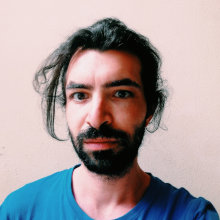
Maciej Smołka, PhD hab., serves as a University Professor at the Institute of Computer Science within the Faculty of Computer Science at AGH University of Science and Technology in Kraków, Poland. His office is located at D-17, Kawiory 21, room 2.25, and he actively contributes to academic governance through the Computer Science Discipline Council and College of the Faculty of Computer Science. His research centers on computational optimization, specializing in metaheuristics, evolutionary algorithms, and inverse problems. He addresses complex challenges in non-convex optimization, time-delay systems, and stabilization of forward solvers, with significant contributions to hierarchical memetic strategies including the pyHMS Python library. His interdisciplinary work extends to Music Informatics, where he investigates urban soundscapes as carriers of local identity and applies computational methods to musical harmonization. Recent publications (2022-2025) demonstrate advancements in auto-configured metaheuristics for engineering optimization, socio-cognitive approaches to time-delay control, and LLM-generated algorithm design. His work bridges computational intelligence with practical applications in thermal systems and Gaussian mixture modeling, while maintaining a parallel research thread on musicology and urban acoustic ecology.
Theresa Henn-Latus is a research associate at the Chair of Business Information Systems with a focus on Social Networks at the University of Bamberg's Faculty of Business Information Systems and Applied Computer Science. She works under Professor Dr. Oliver Posegga's leadership and contributes significantly to research projects and teaching activities within the department. Education: Bachelor of Arts in Political Science with focus on Economics from University of Mannheim and Trinity College Dublin Master of Arts in Political Science with focus on Computational Social Sciences from University of Bamberg Study abroad at Sciences Po Lille Three-month "Data Science for the Social Good" fellowship at RPTU and DFKI in collaboration with Carnegie Mellon University and University of Warwick (2022) Her research focuses on the analysis of online communities, particularly protest movements, with specific interest in boundary dynamics shaped by collective identities, media coverage, and framing of protest movements online. She examines cultural diffusion processes on social media through memes and other digital artifacts. Methodologically, she specializes in image analysis, network analysis, and statistical methods applied to digital trace data. Her recent publications reveal a clear trajectory focusing on the intersection of social movement theory and digital methods, particularly examining how memes function as cultural symbols and boundary markers within online communities. Her work bridges computational social science with traditional sociological concepts of collective identity formation. Awards: Nominated for WIAI Faculty's "Award for Good Teaching" in 2022 Received WIAI Faculty's "Award for Good Teaching" in 2023 She actively supervises bachelor's and master's theses while teaching courses including "Knowledge and Information Management" (Bachelor), "Selected Topics in Business Information Systems" (Bachelor), "Social Network Analysis" (Master), "Network Theory" (Master), and "Project Online Social Networks" (Master). Her research has been supported through the Bavarian Research Institute for Digital Transformation (bidt) project "How are the central social conflict structures changing in Germany? Social Media Analytics of collective protests and movements" (2020-2023). Her work connects with broader research initiatives at the University of Bamberg including the Competence Center Mobile Business and Social Media, contributing to interdisciplinary projects at the intersection of computer science, sociology, and political science.
Professor Hisao Ishibuchi is Chair Professor of Computer Science and Engineering at Southern University of Science and Technology (SUSTech) in Shenzhen, China, a role he has held since April 2017. Previously, he spent nearly three decades at Osaka Prefecture University, progressing from Research Associate (1987-1993) to Assistant Professor (1993), Associate Professor (1994-1999), and full Professor (1999-2017). He is an IEEE Fellow , served as Vice-President of the IEEE Computational Intelligence Society (2010-2013) , and is currently President of the Japan Society for Evolutionary Computation (2016-2018) . He is Editor-in-Chief of IEEE Computational Intelligence Magazine (2014-2019) and the Journal of the Japan EC Society (2014-2018). Education: Ph.D. in Engineering, Osaka Prefecture University, 1992 M.S. in Engineering, Kyoto University, 1987 B.S. in Engineering, Kyoto University, 1985 Research Focus: Professor Ishibuchi is internationally recognised as a pioneer of computational intelligence , with seminal contributions to evolutionary multi-objective optimisation , evolutionary machine learning , fuzzy systems , neural networks , and hybrid intelligent systems . He introduced the first multi-objective memetic algorithm and early methods for multi-objective fuzzy rule-based classifier design that balance accuracy and interpretability. Publications & Impact: With over 100 journal papers in top-tier venues such as IEEE Transactions on Evolutionary Computation and nearly 500 conference papers, his work has attracted more than 24 000 Google-Scholar citations and an h-index of 68. His recent articles concentrate on many-objective optimisation, fuzzy machine learning, and transfer learning techniques. Honours & Awards: IEEE Computational Intelligence Society Fuzzy Systems Pioneer Award 2019 IEEE Fellow 2014 JSPS Prize 2007 (Japan’s most prestigious mid-career award) Multiple Best Paper Awards from GECCO, FUZZ-IEEE, SCIS & ISIS, WAC, ACIIDS, HIS-NCEI, and others Teaching & Mentoring: At SUSTech he teaches Advanced Algorithms and Advanced Optimization Algorithms , covering greedy algorithms, hyper-heuristics, memetic algorithms, multi-objective optimisation, and performance assessment. His research group actively recruits post-doctoral fellows and research assistants in evolutionary computation, fuzzy systems, and neural networks. Labs & Teams: He leads the Computational Intelligence Research Group at SUSTech, maintaining active collaboration networks across Asia, Europe, and North America, and supervising several post-doctoral researchers and graduate students working on next-generation intelligent systems.
Professor Memet Şahin is a distinguished academic at Gaziantep University, Faculty of Arts and Sciences, Department of Mathematics, where he has served since 1991. He currently holds the position of Professor, having progressed through the academic ranks from Research Assistant to his current role. His primary research focuses on neutrosophic sets, fuzzy logic, and mathematical structures with applications in decision-making systems. Education: Doctorate in Mathematics (1998-2004) from Karadeniz Technical University, Institute of Sciences Master's in Mathematics (1993-1994) from Hacettepe University, Institute of Sciences Bachelor's in Mathematics Teaching (1985-1990) from Hacettepe University, Faculty of Education Associate Degree in Law Justice (2015-2020) from Atatürk University, Faculty of Open Education Professor Şahin's research primarily centers on neutrosophic mathematics, a field that extends fuzzy logic to handle indeterminacy more effectively. His work spans neutrosophic triplet structures, neutrosophic metric spaces, and applications of neutrosophic sets in decision-making processes. He has made significant contributions to the theoretical foundations of neutrosophic algebraic structures, including neutrosophic triplet groups, rings, and vector spaces. His research also explores practical applications in social science modeling, particularly applying neutrosophic theory to sociological frameworks like Talcott Parsons's action theory. His scholarly output reveals a clear progression from foundational work in fuzzy and neutrosophic sets toward increasingly sophisticated applications in decision-making systems. The research demonstrates strong interdisciplinary connections between pure mathematics, computer science, and social sciences. Recent work focuses on higher-order neutrosophic structures like quintuple and quadruple sets, indicating a trend toward more complex mathematical models capable of handling greater degrees of uncertainty. Professor Şahin has supervised numerous research projects focused on making mathematics more accessible, including 'Kolay Matematik' (Easy Mathematics) initiatives aimed at addressing students' difficulties with mathematical concepts. His applied work bridges theoretical mathematics with practical educational challenges, demonstrating commitment to both academic advancement and pedagogical improvement.
Tommaso Guariento is a Research Fellow at the Department of Philosophy and Cultural Heritage, Ca' Foscari University of Venice. With a PhD in European Cultural Studies from the University of Palermo (2015), he conducted research at Université Paris-1 Panthéon Sorbonne and École des hautes études en sciences sociales (EHESS) in Paris. His work bridges contemporary French philosophy, Anthropocene studies, and semiotics. Education : PhD (2015) - University of Palermo; MA & BA in Philosophy - University of Padua Research : Focuses on collective intelligence, cultural evolution, and computational complexity in the ERC AIMODELS project Guariento's publications reveal interdisciplinary engagement with cognitive psychology, political philosophy, and visual anthropology. His recent articles explore topics like collaborative review systems, memetics, and ontological complexity in the Anthropocene, while his monograph "Miti meme iperstizioni" (2022) examines cultural transmission mechanisms. As a researcher, he develops theoretical frameworks connecting ancient arts of memory with modern computational systems, proposing innovative models for cultural analytics. His work spans from metaphysical explorations of inhuman subjectivity to practical experiments in open-access publishing systems.
Professor Andrzej Jaszkiewicz is a faculty member at the Faculty of Computer Science and Telecommunications, Poznań University of Technology, where he works in the Institute of Informatics. He holds the position of full professor with extensive experience in multiobjective optimization and evolutionary algorithms, as evidenced by his habilitation completed in 2001 and continuous research output through 2025. Professor Jaszkiewicz's research focuses on theoretical and practical aspects of multiobjective optimization, particularly addressing the challenges of many-objective problems. His work spans quality indicator development (hypervolume, R2), efficient data structures (ND-Trees), evolutionary algorithm design, and applications to combinatorial optimization problems. His publications demonstrate consistent theoretical rigor combined with practical implementation considerations. Recent publications (2022-2025) reveal continued productivity with multiple articles in top journals like IEEE Transactions on Evolutionary Computation and Physics of Fluids. These works explore theoretical properties of quality indicators, efficient calculation methods, and novel applications of optimization techniques to complex problems including fluid dynamics. Professor Jaszkiewicz has supervised doctoral research including Tarek Alkhaeir's 2021 dissertation on software quality metrics and Marek Kubiak's 2009 work on memetic algorithms. He has also reviewed numerous doctoral dissertations in related fields, demonstrating his standing in the academic community and commitment to graduate education. His scholarly output includes journal articles, conference papers, book chapters, and two books. The 2005 edited volume 'Advanced OR and AI methods in transportation' reflects his interest in practical applications of optimization techniques. His research demonstrates sustained scholarly activity from the 1990s to the present, with particular emphasis on advancing the state-of-the-art in multiobjective optimization theory and practice.