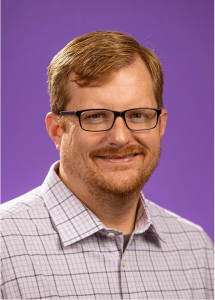
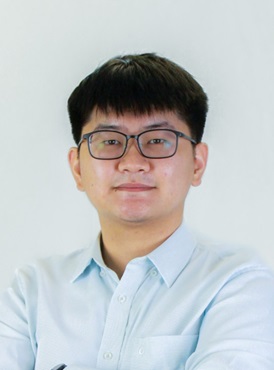
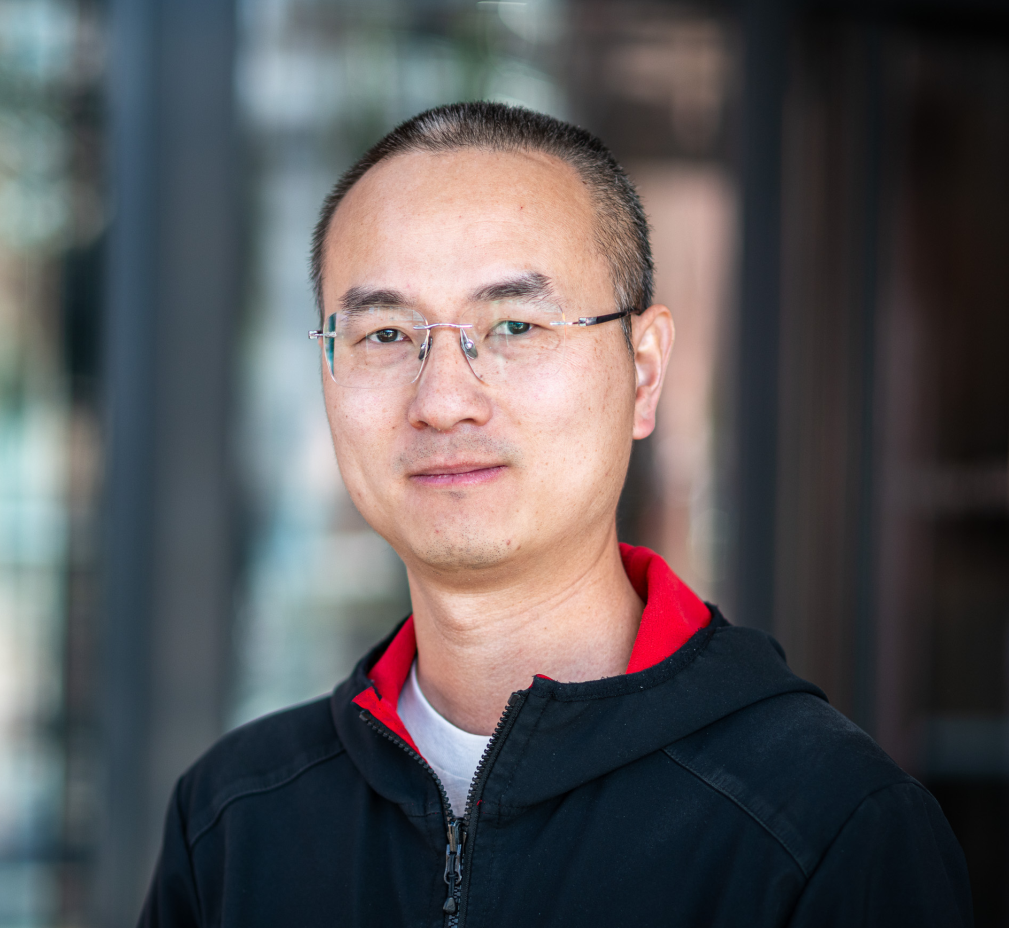
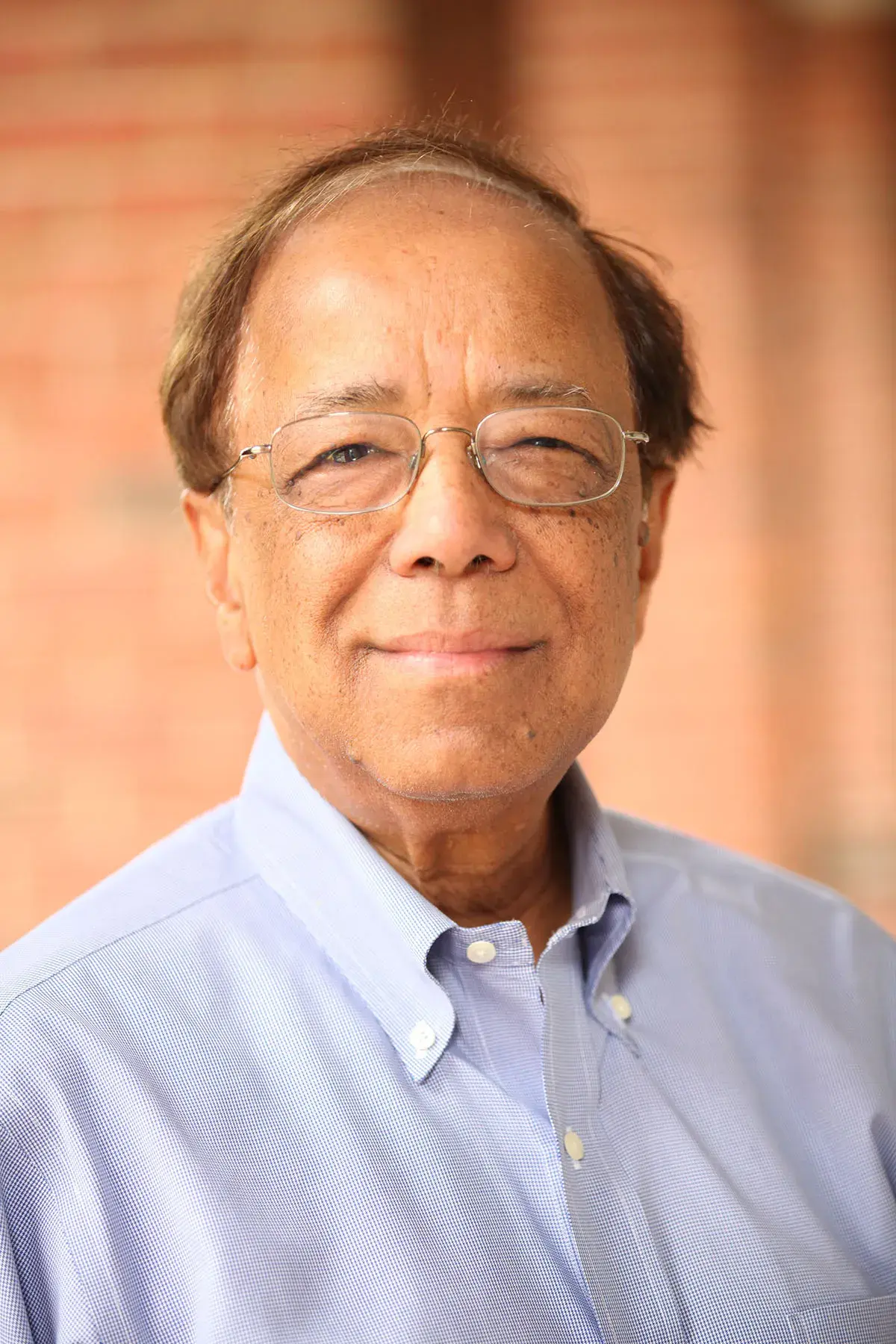
Vincent Noireaux is a Professor at the School of Physics and Astronomy at the University of Minnesota, Twin Cities. His research bridges biological physics and synthetic biology to develop cell-free transcription-translation systems and synthetic cell platforms . Current projects funded by the National Science Foundation and Department of Energy Collaborates with institutions in Israel, Romania, and Washington Expertise: Synthetic biology , cell-free systems , genetic circuits Research Focus : Develops quantitative models for in vitro gene expression and constructs synthetic cells using self-assembling systems . Key areas include biophysics , bioengineering , and biomanufacturing . Email: noireaux@umn.edu
Robert M. Hughes is an Associate Professor in the Department of Chemistry within East Carolina University's Thomas Harriot College of Arts and Sciences. His research develops protein and small molecule reagents for controlling biochemical pathways, with applications in neurodegenerative disease modeling and therapeutic development. Dr. Hughes' educational background includes: Ph.D. in Bio-Organic Chemistry, UNC Chapel Hill (2007) Graduate Study in Physical Chemistry, East Carolina University (2002) B.S./B.A., Washington and Lee University (1998) His primary research integrates optogenetics, protein engineering, and biocatalysis to create novel tools for cellular control. Key projects include CRY-BARs for membrane architecture manipulation, CofActor for modeling cofilin-actin pathology in Alzheimer's disease, OptoBax for light-induced apoptosis, and protaTETHER for optimizing protein fusions. The lab employs advanced techniques including fluorescence microscopy, mammalian cell culture, and enzyme screening to develop reagents that monitor oxidative stress and initiate controlled cell death pathways. Recent publications (2020-2024) demonstrate strong interdisciplinary output across biochemistry, neuroscience, and chemical education, with increasing focus on educational applications through ECU's CURE program. His work shows consistent innovation in optogenetic tool development and biocatalysis for sustainable chemistry. Students in the Hughes Lab receive comprehensive training in molecular and cellular techniques while contributing to active research projects. The lab actively participates in the CURE program, providing undergraduate organic chemistry students with authentic research experiences in enzyme screening and green synthesis. The Hughes Lab operates within ECU's Department of Chemistry, maintaining collaborations with UNC Chapel Hill and Duke University. Current projects emphasize translational applications of optogenetic tools for biomedical research and educational innovation in chemical biology.
Professor Christof Hamel is a faculty member at Anhalt University of Applied Sciences, where he serves in the Department of Applied Biosciences and Process Engineering within the Faculty of Engineering. His academic profile demonstrates a strong focus on sustainable chemical processes, particularly in biocatalysis and membrane technology applications. Professor Hamel's research interests center on biocatalytic processes for environmental applications, with particular emphasis on enzymatic hydrolysis of plastics (PET and PEF), membrane reactor systems, and sustainable process engineering. His work bridges fundamental enzyme kinetics with industrial-scale process implementation, addressing critical challenges in plastic recycling and circular economy development. His recent publication record shows consistent output in high-impact journals across chemical engineering and sustainability domains. The research trends indicate a growing focus on plastic waste valorization through biocatalytic approaches, with several publications extending into 2025 suggesting ongoing active research programs. As a professor at a German University of Applied Sciences, Professor Hamel likely combines research with strong practical applications and industry relevance, reflecting the mission of his institution to connect academic knowledge with real-world engineering challenges.
Professor Mark Hlawitschka serves as Head of the Institute of Process Engineering at Johannes Kepler University Linz, where he leads research and teaching in chemical and process engineering. His academic position as a full professor reflects his significant contributions to the field of process engineering, particularly in multiphase systems and advanced measurement techniques. Professor Hlawitschka's research focuses on critical areas including Extraction , Digitalization in Process Engineering , CFD Simulation , Interfacial Phenomena , Three Phase Systems , Separator Technology , Bubble Column Reactors , and Membrane Separation . His work bridges fundamental research with industrial applications, addressing challenges in sustainable process engineering and environmental protection. His recent publications (2025) demonstrate a strong focus on advanced measurement techniques for multiphase systems, particularly using distributed acoustic sensing for process monitoring, bubble dynamics analysis, and groundwater vulnerability assessment. These works reflect his integration of traditional process engineering with digital technologies and machine learning approaches. Professor Hlawitschka has received notable recognition including: Best Poster Award (July 2025) GVT Forschungsprojekt des Jahres (July 2023) GVT Forschungsprojekt des Jahres (February 2022) Top Reviewer Award 2021 He actively supervises student research through multiple thesis seminars and has secured substantial funding for his research through FWF and FFG projects. His current leadership of the Institute of Process Engineering and multiple research projects demonstrates his significant role in advancing process engineering research and education at JKU. Professor Hlawitschka directs several major research initiatives including PFAS removal from groundwater, particle-bubble interactions for green processes, micro-coalescence cell development, and zero liquid discharge systems, creating numerous opportunities for student involvement and collaboration.
Massimo Migliori serves as Associate Professor in Industrial and Technological Chemistry at the University of Calabria's Department of Environmental Engineering (DIAm), where he leads research in sustainable chemical processes and green chemistry. His institutional roles include membership in ANVUR's national evaluation body (GEV09) and prior service on the University Academic Senate (2012-2021). Research focuses on biomass valorization through supercritical water gasification, nanomaterial development for bio-fuel production, biogas purification via membrane separation, and waste plastic upcycling . Key methodologies integrate pilot-scale process engineering with nanomaterials characterization, emphasizing circular economy applications. His work targets industrial implementation through strong industry partnerships. Recent publications (2024-2026) demonstrate concentrated expertise in zeolite catalysis for biomass conversion, with 60% of output addressing acidity control in ZSM-5 for olefin production and biogas upgrading. Trends show increasing integration of techno-economic analysis using industrial data and advanced materials characterization for gas storage applications. Active funding includes EU M-ERA.NET project BIOVALUE (2019-present) and industry collaboration with TECHFEM S.p.A. Current projects span biogas upgrading (SYNREATTORE), PVC recycling (PVC UpCycling), and Italy-China biowaste conversion (B2CLIF). These provide substantial resources for graduate research and industrial technology transfer. The Chemical Engineering Catalysis and Sustainable Processes laboratory operates pilot-scale facilities for supercritical water gasification and membrane separation, enabling direct validation of research concepts for biogas grid injection and waste plastic recycling. This infrastructure supports strong industry-academia collaboration on implementable green chemistry solutions.
Dr. Melvin Wee Xin Jie is a Lecturer in Chemical Engineering at Swinburne University of Technology's Faculty of Engineering, Computing and Science. His research pioneers sustainable energy solutions through waste valorization and low-carbon technologies. His academic credentials include: PhD in Chemical Engineering (2024), Curtin University Malaysia Bachelor of Engineering (Chemical) (Hons) (2019), Swinburne University of Technology Dr. Wee's research spans Sustainable Hydrogen Production , Carbon Capture Membranes , and Catalytic Waste Conversion , with emphasis on transforming plastic and biomass waste into renewable fuels. His work integrates experimental pyrolysis studies with computational modeling to optimize reactor systems for environmental applications. Recent publications (2023-2025) demonstrate accelerating impact in waste-to-energy conversion, particularly in co-processing surgical masks with agricultural residues and advanced membrane reactor design for CO₂ utilization. These studies consistently target high-impact journals in chemical engineering and environmental technology. Key recognition includes: Silver Award at InTEX 2023 for catalytic co-pyrolysis innovation Dr. Wee maintains active industry-academia links through his prior role at LONGi Solar and current Board of Engineers Malaysia (BEM) membership. He supervises postgraduate researchers in sustainable energy projects and collaborates internationally with institutions including National University of Singapore and Curtin University. His lab focuses on experimental validation of waste conversion processes and membrane development for carbon-neutral energy systems.
Miguel Modestino is the Donald F. Othmer Associate Professor of Chemical Engineering at New York University and Director of the NYU Sustainable Engineering Initiative. He also serves as Distinguished Visiting Professor in Industrial Decarbonization at Tecnológico de Monterrey's School of Engineering and Sciences. His research bridges electrochemical engineering and sustainable materials development for industrial applications. Education includes: PhD in Chemical Engineering from University of California, Berkeley Master's in Chemical Engineering Practice from MIT Bachelor's in Chemical Engineering with minors in Chemistry and Economics from MIT Research focuses on electrochemical reactor design , sustainable manufacturing , and machine learning optimization for chemical processes. His work develops multifunctional materials to enhance electrochemical devices for energy conversion and sustainable chemical production. The Modestino Group specializes in industrial applications of electrochemistry. Recent publications demonstrate strong focus on organic electrosynthesis, plasma-liquid interfaces, electrocatalyst development, and electrochemical separation technologies, with consistent publication in high-impact journals including Nature and Journal of the American Chemical Society. Scientific Awards: NSF CAREER Award (2019) MIT Technology Review Innovator Under 35 Global (2020) & Latin America (2017) ACS Energy & Fuels Rising Star (2022) AIChE Journal Futures Speaker (2022) TED Countdown Speaker (2022) Leads the Modestino Group and NYU Sustainable Engineering Initiative, securing grants from NASA, NSF, and ExxonMobil. Co-founded Sunthetics Inc. to commercialize ML optimization for chemical manufacturing. Research has been featured in National Geographic documentaries and major media outlets.
Dr. Chang Ding is a Group Leader in the Department of Molecular Environmental Biotechnology at the Helmholtz Centre for Environmental Research - UFZ, Leipzig, Germany. He holds a Ph.D. in Civil and Environmental Engineering from the National University of Singapore (2014) and a Bachelor of Engineering in Environmental Science from Tsinghua University, China (2008). His career includes postdoctoral research at the National University of Singapore (2014–2015), a Humboldt Research Fellowship at UFZ (2015–2018), and a Scientist role at UFZ (2018–2023) before assuming his current leadership position. Ding's research focuses on anaerobic microbial processes critical to environmental sustainability, including: Anaerobic ammonium oxidation (anammox) and nitrogen cycle innovations Energy-efficient wastewater treatment with resource recovery Transformation pathways of trace organic contaminants in engineered ecosystems Development of automated bioreactor systems and proteomic methodologies (e.g., metaproteomics, protein stable isotope probing) His recent publications emphasize microbial detoxification mechanisms for pollutants like antibiotics, halogenated compounds, and artificial sweeteners, often leveraging cutting-edge techniques in genomics, enzymology, and reactor engineering. Articles consistently explore bioremediation strategies for wastewater and contaminated environments, with frequent collaborations across European and Asian institutions. Awards & Honors: Humboldt Research Fellowship (2015–2018) He leads the Anoxic Microbial Transformation group and contributes to EU-funded projects (e.g., RESPIMMOX, CLEANER) investigating anammox bacteria and micropollutant removal. Ding also develops open-source scientific tools, including a Raspberry Pi-based bioreactor control system and computational pipelines for protein stable isotope probing.
Francesco Parrino is an Associate Professor at the Department of Industrial Engineering, University of Trento. His research focuses on heterogeneous photocatalysis, synthesis and characterization of photocatalysts, advanced oxidation processes, and environmental remediation. Member of Società Chimica Italiana (Trentino AA-ST Division: Chemistry for Technologies) Member of Associazione Italiana Chimica per l'Ingegneria (AICING) Member of Scientific Committee for Chemistry World Conference 2020 Review Editor for Frontiers in Environmental Chemistry His work emphasizes process intensification, kinetic modeling, and photocatalytic membrane reactors for synthesizing high-value compounds.
Dibakar Bhattacharyya—known globally as "DB"—is the University Alumni Professor in the Department of Chemical Engineering and Director of the Center of Membrane Sciences at the University of Kentucky’s Stanley and Karen Pigman College of Engineering. Celebrating 50 years of service in 2017, he remains an internationally recognized leader in membrane science and water technologies. Education: Ph.D. Environmental Engineering, Illinois Institute of Technology, USA, 1966 M.S. Chemical Engineering, Northwestern University, USA, 1963 B.S. Chemical Engineering, Jadavpur University, India, 1962 Research Focus: DB’s group pioneers tunable membranes and biocatalytic systems for next-generation water treatment. Major thrusts include high-performance graphene-oxide and amine-functionalized membranes for PFAS detoxification, selective capture of noble metals from electronic-waste streams, and advanced micro/ultrafiltration platforms that clarify viral vectors for gene-therapy applications. Integration of catalytic layers with membrane pores enables simultaneous separation and reaction, pushing the boundary of reactive membrane filtration . His recent works (2022-25) exhibit a clear trend: multifunctional membranes engineered at the nanoscale to solve emerging environmental and biomedical challenges. PFAS remediation, viral-vector purification, and dual-use air/water cleaning filters dominate the portfolio, often coupled with techno-economic or CFD analyses to speed deployment. Current & Recent Support: Investigations are backed by NSF EPSCoR, NIEHS, NSF EAGER, Australian Research Council, Southern Co. and Chevron, among others, reflecting strong federal & industry confidence. Campus Leadership: DB co-chaired the 2018 North American Membrane Society Annual Meeting, bringing 400+ global experts to Kentucky, and continues to direct the interdisciplinary Center of Membrane Sciences.
Kiril Hristovski is an Associate Professor at Arizona State University's Polytechnic School within the Ira A. Fulton Schools of Engineering. He holds multiple affiliations including Senior Global Futures Scientist , faculty in the Environmental Engineering Graduate Program at the School of Sustainable Engineering, and advisor in the Barrett Honors College . His research focuses on nanomaterial synthesis for environmental applications , water/wastewater treatment systems, and environmental-health-safety (EHS) implications of nanotechnology. Ph.D., Civil and Environmental Engineering, ASU M.S., Technology (Environmental), ASU B.Sc., Chemical Engineering, University of Sts. Cyril and Methody, Macedonia He has led 15+ recent publications on microbial potentiometric sensors, nanomaterial adsorption mechanisms, and water quality innovations. His work spans from fundamental material science to applied systems for developing communities. Key subfields include biofilm-based monitoring, oxyanion removal, and electrochemical water treatment. Major awards include: Presidential Medal of Merit (Republic of Macedonia, 2016) 2015 Best Paper Award (Journal of Environmental Quality) Fulbright Scholar (Panama, 2012) Presidential Academic Award (U.S., 1991) He serves as advisor for patents related to nano-enabled water treatment systems and hybrid sorbent media , with active roles in global emergency management collaborations and environmental education programs.
Professor Felix H. Schacher is a leading polymer chemist at Friedrich Schiller University Jena's Institute of Organic Chemistry and Macromolecular Chemistry. As principal investigator of multiple DFG projects and speaker of the €10M+ Transregional Collaborative Research Center TRR 234, he directs cutting-edge research in block copolymer systems for energy, biomedical, and industrial applications. His research program spans: Nanostructured materials for energy storage (gel electrolytes, photoflow reactors) Stimuli-responsive drug delivery (photoacids, GLUT5-targeting micelles) Self-healing interfaces and biosensors Light-driven molecular catalysis in hierarchical structures Professor Schacher leads the TRR 234 Integrated Research Training Group, providing doctoral training in advanced polymer characterization and synthesis. His work bridges fundamental self-assembly mechanisms with real-world applications in batteries, targeted therapy, and sustainable chemistry through collaborations with Max Planck Institutes, Helmholtz Centers, and international partners. Recent projects like 'POMbranes' demonstrate strong industry transfer potential in catalytic membrane technology.
David Gregory Weissbrodt serves as Head of the Department of Biology and Full Professor in the Department of Biotechnology and Food Science at the Norwegian University of Science and Technology (NTNU), Faculty of Natural Sciences. Previously, he was a Tenure Track Assistant Professor at Delft University of Technology (2016-2022) and held postdoctoral positions at ETH Zürich and TU Delft. His academic journey spans environmental chemistry, microbiology, and biotechnology with a focus on water-resource nexus solutions. His educational background includes: Ph.D. in Environment, École Polytechnique Fédérale de Lausanne (2013) M.Sc. in Environmental Sciences & Engineering, École Polytechnique Fédérale de Lausanne (2006) Dipl.-Ing. in Chemistry for Life Technologies, HES-SO Valais/Wallis (2003) Professor Weissbrodt's research pioneers nature-based solutions for water security and circular economies. He integrates microbial ecology with engineering to address antibiotic resistance, nutrient recovery, and space agriculture. His work on recirculating aquaculture systems, purple bacteria biotechnology, and lunar hydroponics demonstrates cross-disciplinary innovation. Current projects like LunarPlant and PhageLand translate fundamental science into practical applications for ecological balance and resource recovery. His recent publications (2023-2025) reveal strong trends in antibiotic resistance dynamics (40%), microbial community engineering (30%), and space agriculture applications (15%), with increasing use of molecular techniques like Hi-C sequencing and metagenomics. These studies consistently bridge fundamental ecology with engineered systems for water treatment and resource recovery. His scientific recognition includes: IWA MEWE Early Career Researcher Award (2019) Springer Theses Series recognition (2015) EPFL's Luce Grivat Award (2013) Four consecutive 'Best Teacher' awards at TU Delft (2017-2022) Professor Weissbrodt actively mentors 7 graduate students (3 PhD, 4 MSc) while leading 8 major research projects funded by ESA, Research Council of Norway, and EU programs. His VertiGrow collaboration with SINTEF advances indoor farming, while PhageLand addresses global antibiotic resistance through wetland technology. He emphasizes responsible innovation through policy engagement and citizen science initiatives. Though no formal lab name is used, his research group operates through the Department of Biotechnology and Food Science, utilizing NTNU's water technology facilities and collaborating with CIRiS for space-related research. The team combines wet-lab experimentation, computational modeling, and field studies to develop scalable environmental solutions.
Dr. Rhea Verbeke is a researcher affiliated with the University of Mainz , focusing on polymer chemistry and membrane technology. She contributes to the synthesis and characterization of advanced materials for water desalination and separation processes in harsh conditions. Research Focus: Membrane technology for selective separations, interfacial polyether synthesis, and sustainable materials development. Collaborations: Active in interdisciplinary projects with Prof. Holger Frey's group and international teams. Scientific Contributions include innovative approaches to chlorine-resistant membranes, solvent-free synthesis, and MOF integration in thin films. Her work bridges material science and environmental engineering, particularly in water purification systems. Contact: Email: verbekrh@uni-mainz.de Office: +49 (0)6131 39 26139 Lab: +49 (0)6131 39 26273
Montserrat Pérez Moya is a Professor in the Department of Chemical Engineering at the Escola d'Enginyeria de Barcelona Est (EEBE) of the Universitat Politècnica de Catalunya (UPC). She holds a Doctorate in Industrial Engineering and is affiliated with two prominent research groups: CEPIMA (Center for Process and Environment Engineering) and ENCORE (Energy, Catalysis, Process and Reaction Engineering). Her research focuses on environmental engineering and chemical processes, particularly in wastewater treatment, advanced oxidation processes, membrane technologies, and resource recovery. Key areas include Photo-Fenton processes for contaminant degradation, solar photocatalysis using TiO2, nutrient and metal recovery from waste streams, and mathematical modeling of environmental processes. She has made significant contributions to developing low-tech sustainable solutions for water treatment and resource circularity. Analysis of her recent publications reveals a strong trend toward sustainable and circular approaches in environmental engineering. Her work increasingly focuses on resource recovery (nitrogen, phosphorus, metals) from waste streams, integration of advanced oxidation processes with conventional treatment systems, and development of low-cost, solar-driven technologies for water treatment. There's a clear emphasis on practical, pilot-scale applications with real-world implementation potential. Premi o reconeixement (3 awards) Professor Pérez Moya has supervised several doctoral students including Evelyn Yamal Turbay and Kourosh Nasr Esfahani, and has secured competitive research funding for projects related to environmental process engineering. Her research collaborations span multiple institutions and include significant work with Moisès Graells Sobre and other colleagues at UPC. She leads research in sustainable water treatment technologies with applications in industrial and agricultural wastewater management. Her laboratory work focuses on pilot-scale demonstration of membrane technologies for nutrient recovery, advanced oxidation processes for contaminant removal, and development of low-tech solar reactors for water treatment. Current projects emphasize circular economy principles in environmental engineering, with particular attention to resource recovery from waste streams.