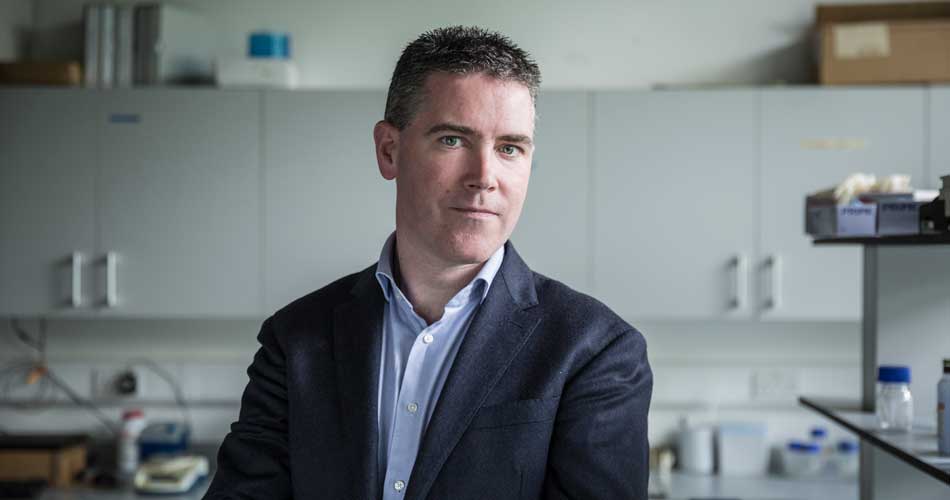
Dr. Peter Dunne is an Assistant Professor in Inorganic Energy Materials at Trinity College Dublin's Department of Chemistry. His research focuses on sustainable nanomaterials synthesis, particularly hydrothermal and solvothermal methods for producing inorganic nanocrystals. He has expertise in photocatalytic materials, layered double hydroxides, and 2D nanocomposites for water purification. Dunne's work emphasizes scalable production techniques and environmental impact assessment of nanomaterials. Education: BSc (Hons) Chemistry, National University of Ireland, Galway (2005) PhD in Chemistry, National University of Ireland, Galway (2009) Research Interests: His research integrates sustainable synthesis methods with advanced material characterization, emphasizing: Development of carbon dots from seaweed derivatives for optoelectronics Continuous-flow hydrothermal systems for energy materials Environmental lifecycle analysis of nanomaterial production Photocatalytic activity of transition metal-doped nanocrystals Current Project: Leading the SEAI-funded C-Weed project (2023–2026), exploring seaweed-derived carbon dots for energy applications like LEDs and photovoltaics. This work addresses sustainable materials design and renewable energy needs. Awards: No specific awards listed, but active in professional societies including the American Chemical Society. Grants/Labs: Recipient of SEAI funding for C-Weed project. Collaborates with international teams on nanomaterials projects, particularly in energy and environmental applications.
Professor Gil Lee holds the Stokes Full Professor of Physical Chemistry position at the University College Dublin, School of Chemistry . With a B.S. and Ph.D. in Chemical Engineering from Purdue University and University of Minnesota respectively, he transitioned to academia after postdoctoral research at the American Society of Engineering Education and a research engineer role at the Naval Research Laboratory. His career spans associate professorship at Purdue University (2000-2008) and adjunct roles, showcasing a trajectory marked by innovation in biomagnetic technologies . Education B.S. Chemical Engineering, Purdue University (1987) Ph.D. Chemical Engineering, University of Minnesota (1992) Postdoctoral Fellow, American Society of Engineering Education (1995) Executive Education Global EMBA, TRIUM (2016) His research is driven by three key areas : Bionanomaterials : Development of superparamagnetic microparticles for biological separations, drug delivery, and hyperthermia therapy. Techniques include iron-gold nanorods and self-assembled iron oxide nanoparticles with controlled surface chemistry. Single-Molecule Force Analysis : Pioneering work in atomic force microscopy (AFM) for quantitative force measurements, including streptavidin-biotin bond lifetime studies and magnetic tweezers for parallel ligand-receptor analysis. Biosensing & In Vitro Diagnostics : Innovations in immunomagnetic cell separation, magnetophoretic sensing, and microfluidic devices for rapid pathogen detection and cancer diagnostics. His scientific awards include the Stokes Chair (2008), E.T.S. Walton Fellowship (2006), and multiple Edison Patent Awards. He has received grants for projects in cancer diagnostics and microfluidic technologies . His teaching activities focus on advanced physical chemistry modules, emphasizing kinetics and thermodynamics, with roles as module coordinator since 2014.
Nikolay Solovyev is a Lecturer in Analytical Chemistry at the Department of Life Sciences, ATU Sligo. He holds a PhD in Natural Sciences from Saint Petersburg State University (2012), focusing on Zeeman modulation polarization spectrometry for toxic element analysis in blood. His research spans metallomics, metabolomics, and neurodegenerative diseases, with a strong emphasis on mass spectrometry techniques (e.g., ICP-MS, GD-TOFMS). Key areas include amyotrophic lateral sclerosis (ALS), Alzheimer’s disease, and cancer biomarkers. His work contributes to UN Sustainable Development Goals related to health and innovation. Recent studies explore metallome-metabolome interactions in ALS, isotope ratios in disease models, and cultural heritage analysis using proteomics. He has published over 55 peer-reviewed articles, with 22 h-index and 1,496 citations. Solovyev collaborates internationally and supervises PhD students in analytical and biomedical research. His lab develops novel membrane materials and advanced spectrometry methods for environmental and biomedical applications. Notable achievements include pioneering methods for direct quantification of high-ionization elements in solids and elucidating selenium’s role in neural barriers. His research bridges analytical chemistry with clinical and environmental challenges, emphasizing trace element speciation and toxicology.
Dr. Asif Raza is a Research Fellow affiliated with the Department of Chemical Sciences at the University of Limerick and SSPC - the Research Ireland Centre for Pharmaceuticals. His work focuses on advanced materials for gas separation applications. Primary Affiliation: University of Limerick Research Center: SSPC - Research Ireland Centre for Pharmaceuticals Department: Chemical Sciences Research Interests: Specializing in nanopore engineering and material science, Dr. Raza develops ultramicroporous polymers for industrial gas separation processes. His technical focus includes: Carbon dioxide capture technologies Acetylene purification membranes Molecular-level pore design Chemical sorbent materials Recent Publications (2025): His latest work in Chemical Communications demonstrates 100% effectiveness in nanopore-based separation systems, with potential applications in pharmaceutical manufacturing and environmental engineering.
Margaret McGee is an Associate Professor at the School of Biomolecular and Biomedical Science , University College Dublin , with a research focus on cancer biology and extracellular vesicle signaling. Her work spans hematological malignancies, bone marrow microenvironment interactions, and mitotic regulatory mechanisms. She coordinates major modules including Genetic Basis of Disease and Regulation of Gene Expression . BSc University of Reading Dip Applied Science Dublin Institute of Technology PhD Biochemistry Trinity College Dublin Her research explores extracellular vesicle-mediated communication in cancer progression, cyclophilin A's role in mitotic exit, and preclinical biotherapeutic development. Current collaborations with Vejle Hospital Denmark and Mater Hospital Dublin investigate EV-based liquid biopsies for therapy response prediction. Notably, she co-authored the foundational MISEV2023 guidelines for extracellular vesicle research. Scientific contributions include: Wellcome Trust ISSF Mid Career Fellow (2017) Conway Institute Fellow (2007) IRCSET Fellowship (2003) She leads the EU Twinflag consortium for EV-based biomarker development in joint disorders and chairs the SBBS Research, Innovation and Impact Committee (2020-2024). Her lab has trained numerous researchers who now hold prominent positions in academia and industry.
Dr. Damian Mooney is an Associate Professor and Programme Director in the School of Chemical and Bioprocess Engineering at University College Dublin (UCD). He holds a BE (Chemical) from UCD (1992) and a PhD from UCD (1996), followed by postdoctoral research at the Max-Planck-Institut für Polymerforschung (1996–1998). Before joining UCD in 2003, he worked as a Senior Process Engineer at Unifi Inc. and held academic positions at Queen's University Belfast and UCD's Department of Chemical Engineering. His research focuses on molecular simulation, environmental contaminants, and materials science, with notable contributions to CO₂ fixation, nanoporous materials, and veterinary drug residue analysis. He has secured grants from Science Foundation Ireland and coordinates multiple engineering modules emphasizing reflective teaching and professional development. Education: BE (UCD, 1992), PhD (UCD, 1996) Key Roles: Programme Director (ME Chemical & Bioprocess Engineering), Module Coordinator for Process Control and Advanced Process Design Research Interests: Molecular Simulation, Porous Materials, Ionic Liquids, Environmental Monitoring His research combines computational modeling and experimental techniques to address challenges in separation processes, sustainable materials, and environmental chemistry. Recent work includes studies on groundwater contamination by veterinary drugs and CO₂ fixation in biomimetic systems.
Dr Fatemeh Kavousi is a College Lecturer in the Department of Process and Chemical Engineering at University College Cork (UCC). She joined UCC in 2019 as the Eli Lilly lecturer in Biochemical/Biopharmaceutical Engineering. Previously, she held an Assistant Professor position at University College Dublin (UCD) in Chemical & Bioprocess Engineering. Her research focuses on fluid dynamics, membrane separation processes, and bioprocess optimization with applications in biochemical and biopharmaceutical systems. Dr Kavousi holds a BE (2007) and ME (2011) in Chemical Engineering from Iran University of Science and Technology (IUST), followed by a PhD from UCD (2012-2016) under Prof. Eoin Casey, funded by the IRC Embark Initiative Scholarship. Her work integrates computational fluid dynamics (CFD) with experimental analysis to advance bioreactor design, membrane technology, and sustainable bioproduction systems. Her research interests span bioreactor hydrodynamics, duckweed-based cultivation systems, and novel structural designs like kirigami/origami-inspired engineering solutions. Her recent studies explore multi-tiered duckweed cultivation systems and CFD modeling of stacked bioreactors, reflecting her interdisciplinary approach to biochemical engineering challenges. Dr Kavousi has been awarded the IRC Embark Initiative PhD Scholarship and has published extensively on topics ranging from hollow fiber membrane modules to vane demister optimization. Her academic contributions bridge engineering principles with biological systems, focusing on scalable and sustainable bioprocess solutions.
Ramesh Padamati is a Research Associate Professor at Trinity College Dublin, affiliated with both CRANN (Centre for Research on Adaptive Nanostructures and Nanodevices) and the Department of Chemistry. He serves as Research Manager of the Materials Ireland Polymer Research Centre, where he leads scientific, commercial, and administrative operations focused on advanced materials and nanotechnology research under European, national, and industrial funding programs. His research interests span nanocomposites, carbon nanotubes, quantum dot polymer composites, smart polymers, polymer synthesis and characterization, textile chemicals, and membrane technology . He is particularly focused on sustainable materials, biopolymers like polyhydroxyalkanoates (PHA), and waste-to-value processes for plastic upcycling and critical raw material recovery. The recent publication trends highlight his strong focus on biodegradable polymers, waste-derived feedstocks, microbial biotechnology, and advanced separation processes . His work integrates materials science, environmental sustainability, and industrial application, often through EU and national collaborative projects. Trinity Innovation Award (2018) Dr. Padamati has served as Principal Investigator on projects funded by Enterprise Ireland under the Innovation Partnership Scheme and is actively involved in EU programs. He collaborates with European universities on carbon nanotubes and nanocomposites. While specific advisees are not listed, his leadership in high-impact, multidisciplinary research indicates active mentoring of researchers and students. He is involved in labs and teams centered around CRANN, the Materials Ireland Polymer Research Centre, and the Department of Chemistry , focusing on polymer nanotechnology and sustainable materials development.
Professor Eoin Casey is a distinguished academic at University College Dublin's College of Engineering and Architecture, where he serves in the School of Chemical and Bioprocess Engineering. His career has been dedicated to advancing sustainable wastewater treatment technologies, with a particular focus on energy efficiency and environmental impact reduction. Professor Casey leads groundbreaking research that bridges academic inquiry with practical industrial applications through collaborations with spin-out companies. Professor Casey's primary research interests center around Membrane Aerated Biofilm Reactor (MABR) technology, which represents a paradigm shift in wastewater treatment. His work explores biofilm dynamics, energy optimization in treatment processes, membrane technology applications, and sustainable engineering solutions for water management. His research group investigates how bacterial biofilms function within MABR systems, examining both the fundamental science and practical implementation challenges. This research spans environmental engineering, chemical engineering, and sustainable technology development, with significant implications for global water and energy conservation efforts. The articles published by Professor Casey and his research group demonstrate a consistent focus on optimizing wastewater treatment processes while reducing energy consumption. Recent publications reveal an expanding scope that now includes data-driven modeling, continuous biomanufacturing, and integration of water treatment facilities into broader energy systems. His work shows a clear trajectory from fundamental biofilm research toward practical implementation of energy-efficient systems that address climate change challenges. The research increasingly incorporates advanced modeling techniques, process optimization, and consideration of the energy-water nexus. Professor Casey's research has generated significant commercial and environmental impact through the spin-out company OxyMem, founded in 2013 with support from NovaUCD. While specific personal awards aren't detailed in the provided text, his work has contributed to OxyMem receiving notable recognition including the 2014 Irish Times Innovation Award, the US Imagine H2O 2015 Infrastructure Challenge award, and a Knowledge Transfer Ireland 2015 Impact Award. OxyMem was also named in the prestigious Global Cleantech 100 in 2016 and 2017. Professor Casey's research group has secured substantial funding from Science Foundation Ireland and Enterprise Ireland to develop and scale MABR technology. His work has progressed from laboratory experiments to full-scale implementation at wastewater treatment plants, demonstrating energy savings of up to 75% compared to conventional treatment methods. The commercial deployment of this technology in countries including the United States, Singapore, Brazil, Spain, and Japan represents significant international impact. His research group continues to collaborate with OxyMem on further development and optimization of the technology. The research led by Professor Casey operates through specialized laboratories focused on membrane technology, biofilm reactors, and sustainable water treatment. His team has successfully demonstrated the scalability of MABR technology from laboratory settings to full-scale wastewater treatment plants, most notably in a demonstration plant near Birmingham, UK. The research infrastructure supports both fundamental investigations of biofilm mechanics and practical engineering development of commercial systems.
Dr. Prachi Varshney is a Research Fellow at Midwest, focusing on microbiological and environmental science research with applications in biotechnology. Her work emphasizes extremophilic microalgae, CO2 capture mechanisms, and sustainable biorefinery systems. She explores algal physiology under environmental stresses like elevated CO2 and pollutants, contributing to carbon-neutral technologies. Her research interests span environmental microbiology, extremophile biology, and industrial biotechnology. Notably, she investigates the physiological responses of green algae species such as Asterarcys quadricellulare and Chlorella sorokiniana to extreme conditions, aiming to harness their potential for CO2 sequestration and biofuel production. Her articles from 2012 to 2024 show a progression from foundational reviews on CO2 capture technologies to applied studies on algal strain isolation and biochemical characterization. These works highlight trends in leveraging extremophilic organisms for environmental and industrial challenges. No scientific awards are mentioned in the provided texts. Advising roles or grants remain unspecified. While no specific lab affiliations are detailed, her research suggests involvement in interdisciplinary teams focused on biotechnology and environmental engineering.
Dr. Joseph Sweeney is an Assistant Professor and Ad Astra Fellow at the School of Biosystems and Food Engineering, University College Dublin (UCD). He holds a multidisciplinary background with degrees in Industrial Microbiology (BSc), Computer Science (MSc), and Biosystems Engineering (PhD), all from UCD. His research focuses on integrating biotechnology, digital agriculture, and sustainable biorefinery systems to address environmental challenges in agriculture. Sweeney is the Co-PI of the first Irish-led Climate Action Life Programme project (LIFE farm4more), which develops green biorefinery technologies to mitigate climate change in agriculture. His work emphasizes applied, market-oriented research, including the development of E. coli-based biosensor platforms for bioprocess monitoring, for which he won the NovaUCD Invention of the Year Award 2023. Education BSc Industrial Microbiology, University College Dublin MSc Computer Science, University College Dublin PhD Biosystems Engineering, University College Dublin Research Interests Dr. Sweeney’s research spans digital agriculture, agritech innovation, green chemicals/energy production, and biosensor technologies. He leads projects on biorefinery optimization, microbial engineering for bioseparations, and sustainable feedstock utilization. His biosensor platforms enable real-time monitoring of anaerobic digestion and bioprocess parameters, enhancing industrial bioprocessing efficiency. Grants & Awards Recipient of NovaUCD Invention of the Year Award 2023 Principal Investigator for Horizon 2020-funded AgRefine project Co-PI of LIFE farm4more (Climate Action Life Programme) Teaching & Supervision Coordinates modules in AgTech programming, biosystems engineering, and renewable energy systems. Supervises multiple PhD students in biorefinery systems, microbial engineering, and sustainable agriculture. Labs & Collaborations Active in UCD’s Agri-Food and Biosystems Engineering research groups. Collaborates with industry partners on biorefinery pilot projects and biosensor commercialization.
Dr. Pedram Vousoughi is a postdoctoral researcher at the University of Limerick's Department of Biological Sciences, specializing in Life Cycle Assessment (LCA) , Bioeconomy Strategies , and Urban Sustainability . His work bridges chemical engineering with environmental science, focusing on biomass conversion optimization, circular economy models, and air pollution mitigation. PhD in Chemical Engineering (2023) from University of Tabriz MSc in Molecular Dynamics Simulation (2017) from Iran University of Science and Technology BSc in Bioethanol Production via Membrane Technologies (2014) from University of Tabriz His research spans six key areas: LCA for policy evaluation, Bioenergy Systems optimization, Environmental Policy Frameworks , Air Quality Monitoring using receptor modeling, Carbon Footprint Reduction strategies, and Smart City Planning with AI-driven models. Recent publications (2014-2024) demonstrate expertise in particulate matter analysis, hydrogen production methods, and sustainable motor thermal systems. Active in interdisciplinary collaboration, Dr. Vousoughi contributes to UN SDG initiatives and serves on the UL Environmental Committee . His work emphasizes translating scientific findings into actionable policy and industrial applications.
Steven Ferguson is an Associate Professor at the School of Chemical and Bioprocess Engineering, University College Dublin. His academic journey includes a BE and PhD from UCD, followed by postdoctoral research at MIT and industry roles at Biogen. He leads research in advanced pharmaceutical manufacturing, flow synthesis, and nanotechnology. His roles include Theme Lead in Manufacturing at the SSPC SFI Centre and leadership in the EPSRC-SFI Transformative PharmaTech CDT. Education: Bachelor of Engineering (BE), University College Dublin PhD in Chemical Engineering, University College Dublin Research Interests: Continuous pharmaceutical manufacturing and crystallization Flow chemistry and oligonucleotide synthesis Drug formulation using ionic liquids Nanoparticle applications in biomedicine and circular economy Downstream biopharmaceutical processing Grants & Collaborations: Enterprise Ireland Innovation Partnership with Pfizer (purification technologies) I-Form SFI Centre (advanced manufacturing projects) Leadership in SSPC Pharmaceutical Research Centre Labs & Teams: A multidisciplinary team specializing in reactor design, process simulation, and formulation engineering, with vertical integration from fundamental research to industrial application.
Matthias Vandichel is an Associate Professor at the University of Limerick, affiliated with the Bernal Institute, Centre for Battery and Energy Materials Research, and the SSPC - the SFI Research Centre for Pharmaceuticals. He holds a PhD in Chemical Engineering from Ghent University (2012) and has held postdoctoral positions at Chalmers University of Technology (2016-2018) and Aalto University (2018-2019). His research focuses on computational catalysis, electronic structure calculations, and molecular modeling, with applications in reaction network analysis, heterogeneous material interfaces, and adsorption phenomena in porous materials. Education: PhD in Engineering (Ghent University, 2012), MSc in Chemical Engineering (Ghent University, 2008), BEng in Chemical Engineering (Ghent University, 2005). Research Interests: Computational catalysis (including electro/photo catalysis), kinetic modeling, Monte Carlo methods, adsorption/desorption phenomena, and materials design for energy applications. His work addresses UN Sustainable Development Goals related to affordable and clean energy (SDG 7), industry innovation (SDG 9), and climate action (SDG 13). Recent publications highlight advancements in Pd-based electrocatalysts, flexible MOFs for gas separation, and computational modeling of catalytic surfaces. He is an FRSC Fellow and actively supervises PhD students in membrane design and reaction network modeling. Labs/Teams: Principal Investigator at the Bernal Institute, collaborating with interdisciplinary teams in Europe and globally. Research spans computational design, experimental validation, and electrochemical testing of novel materials.
Brendan Griffin is a Professor in Pharmaceutics at the University of College Cork (UCC) School of Pharmacy. He holds a BSc. Pharm. and PhD from Trinity College Dublin (TCD) and has extensive industry experience with Élan and Servier. As Course Director of the MSc in Pharmaceutical Technology and Quality Systems, he focuses on training pharmaceutical professionals to become Qualified Persons (QP). His research centers on optimized drug delivery systems, including lipid-based formulations, nanoparticulate systems, and targeted delivery to the brain and intestinal lymphatics. He leads the InPharma EU grant, an Industrial Doctorate program aiming to eliminate animal testing in formulation development by integrating computational and in vitro tools. His work emphasizes collaboration with industry and preclinical models like pigs to predict oral drug absorption and food effects. Education: BSc. Pharm. (TCD), PhD in Pharmaceutics (TCD). Research Interests: Lipid-based formulations for solubility enhancement and bioavailability Nanoparticulate drug delivery systems Targeted delivery mechanisms Computational models for drug development Regulatory science and quality-by-design approaches Pharmaceutical education and training InPharma Project: This EU Horizon 2020 initiative replaces animal testing with predictive in vitro and computational tools, linking drug discovery to clinical trial modeling. Key focus areas include end-to-end drug development and model-based design. Grants & Collaborations: Coordinates InPharma consortium involving academia and industry partners to advance drug formulation science. Labs/Teams: Associated with APC Microbiome Ireland and the School of Pharmacy’s Pharmaceutics division, focusing on interdisciplinary research in drug delivery and biopharmaceutics.