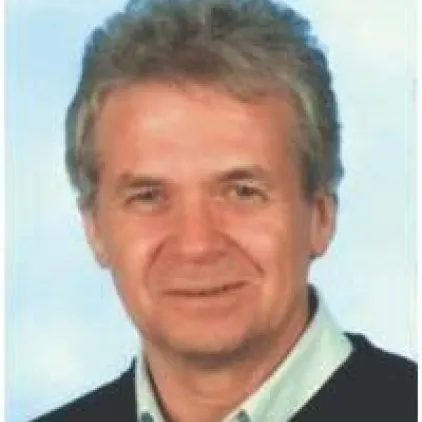
Rainer Böckmann is a Professor of Computational Biology in the Department of Biology at Friedrich-Alexander-University Erlangen-Nürnberg (FAU), Germany, where he leads the Group for Theoretical and Computational Membrane Biophysics. His research integrates molecular dynamics simulations with biophysical analysis to study membrane structure, dynamics, and function. Research Interests: His work focuses on computational biophysics, particularly lipid bilayers, membrane proteins, molecular dynamics, and structural bioinformatics. He investigates how lipid composition, cholesterol, and embedded peptides influence membrane organization, curvature, and permeability, with applications in antimicrobial strategies and mRNA vaccine delivery systems. Recent Research Trends: His recent publications reflect a strong emphasis on lipid nanoparticles (LNPs), particularly their phase behavior, pH-dependent protonation, and structural transitions relevant to mRNA vaccines. He also explores antimicrobial peptides, membrane domain formation, and the role of cholesterol in modulating membrane properties. His group develops and applies advanced simulation techniques, including constant-pH MD and coarse-grained modeling. Member of Editorial Board, Biophysical Journal (2024–present) Elected Member, DFG Review Board for Biophysics (2020–present) Chairman, Molecular Biophysics Section, German Biophysical Society (2011–2012) Leadership and Service: Böckmann is actively involved in academic governance, serving on editorial boards, DFG committees, and as a guest editor for special issues in Frontiers journals. He contributes to graduate education and high-performance computing initiatives at FAU, including the NHR@FAU and Life@FAU Graduate School. He has organized major conferences and workshops in biophysics and membrane modeling. Laboratory and Collaboration: He leads a research group focused on biomembrane physics, collaborating with experimentalists and theorists. His lab develops and applies simulation tools to study membrane systems, bridging computational insights with biological function.