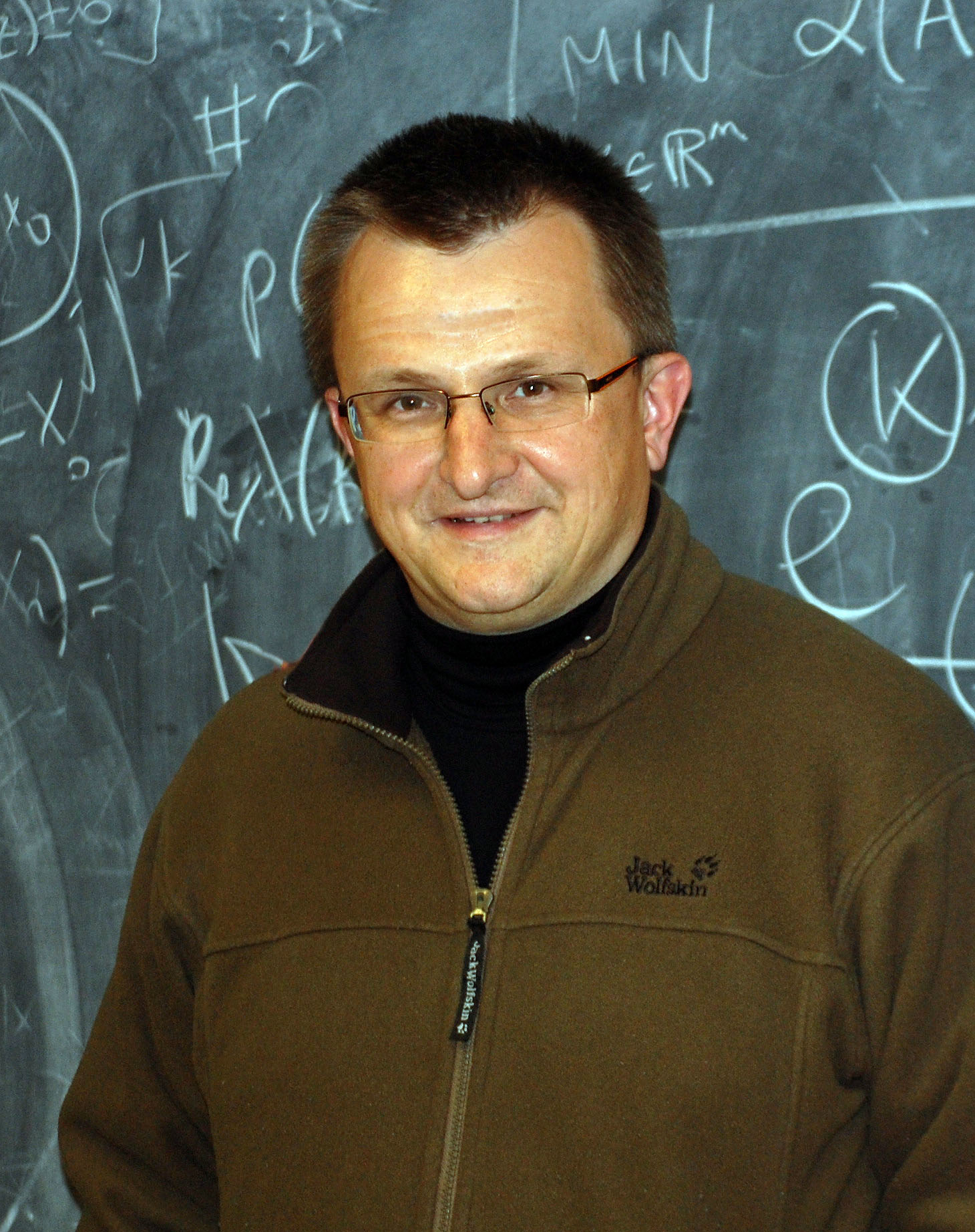
Assoc Prof Ng Teng Yong is an Associate Professor at the School of Mechanical & Aerospace Engineering (NTU), specializing in numerical modeling and simulation. With a background as Research Manager at A*STAR Institute of High Performance Computing, his work spans materials science, nanotechnology, and aerospace engineering. Current focus on graphene-based desalination membranes Expertise in molecular dynamics simulations Investigates nanoscale fluid mechanics and structural dynamics Recent publications highlight advancements in energy-efficient electrodialysis, smart robotics, and nonlinear vibration analysis. His interdisciplinary approach integrates computational methods with experimental validation in additive manufacturing and soft material mechanics.
Prof. Dr. Christian Breitsamter is a Professor at the Technische Universität München (TUM), leading the Chair of Aerodynamics and Fluid Mechanics within the TUM School of Engineering and Design. He has held this position since 2007 and has been a member of key committees such as the ICAS Programme Committee and STAB-Programmleitung. His research focuses on aerodynamics of aircraft and rotorcraft configurations, including vortex dynamics, aeroelasticity, and fluid-structure interaction. Education: PhD in Aerodynamics (1997) Master’s in Aerospace Engineering (1989) Research Interests: Prof. Breitsamter’s work spans experimental and numerical studies of high-agility aircraft, helicopter aerodynamics, and advanced wing designs. Key areas include leading-edge vortices, gust load mitigation using flexible wings, and flow control techniques. His group investigates cutting-edge topics like deep learning for buffet prediction and hybrid neural networks for aerodynamic modeling. Awards: Willy Messerschmitt Preis (1999) AIAA Associate Fellow (2007) Advising & Grants: While specific student names are not listed, his research involves collaborative projects with industry partners (e.g., RACER Compound Helicopter) and EU initiatives like the FURADO program. His team contributes to the NFDI4ING infrastructure for engineering data. Labs/Teams: Active in the Aerodynamics Wind Tunnel facilities (Windkanäle A/B/C) and leads the SAGITTA flying wing demonstrator project. His group also explores membrane wings and elasto-flexible morphing technologies.
Christiana Mavroyiakoumou is a Courant Instructor/Assistant Professor at the Courant Institute of Mathematical Sciences, New York University. She specializes in fluid dynamics and fluid-structure interactions, with a focus on vortex dynamics, membrane flutter, and bio-inspired systems. Her research integrates modeling, numerical simulations, and experimental insights to study phenomena such as bird flock formations and fish swimming hydrodynamics. Mavroyiakoumou holds a Ph.D. from the University of Michigan (2022), an M.Sc. from the University of Oxford (2017), and a B.Sc. from Imperial College London (2016). Education: PhD in Applied & Interdisciplinary Mathematics, University of Michigan (2017–2022) MSc in Mathematical Modeling and Scientific Computing, University of Oxford (2016–2017) BSc in Mathematics, Imperial College London (2013–2016) Her research interests span fluid-structure interactions, vortex dynamics, and collective locomotion. She investigates how fluid flows mediate interactions between bodies, such as the aerodynamics of bird formations and the hydrodynamics of flapping foils. Her work bridges theoretical models with experimental observations, contributing to both fundamental science and bio-inspired engineering. Mavroyiakoumou has received prestigious awards including the Joseph B. Keller Fellowship (NYU), Peter Smereka Award (U-M), and ProQuest Distinguished Dissertation (U-M). She actively engages in academic service, organizing conferences and mentoring students. Her teaching experience includes courses on mathematical modeling, differential equations, and algebra at NYU and the University of Michigan. Key Research Themes: Flow-mediated collective behavior and instability mechanisms Vortex wake interactions and their role in locomotion Membrane dynamics in inviscid and viscous flows She collaborates with experimentalists like Leif Ristroph and Jun Zhang at NYU's Applied Math Lab, focusing on experimental validation of theoretical models. Her recent work explores self-amplifying waves in bird formations and the aerodynamic origins of flight coordination.
Silas Alben is a Professor in the Department of Mathematics at the University of Michigan, affiliated with the College of Literature, Science, and the Arts. His research focuses on applied mathematics and mathematical biology, particularly fluid-structure interactions in biological systems. He employs computational simulations and laboratory experiments to study fundamental physics of flexible bodies in fluids. Research interests include biomechanics of swimming organisms, vortex dynamics in fluid-structure interactions, and thermal transport optimization. His work bridges mathematical modeling with experimental validation to understand complex physical phenomena. Publications demonstrate strong focus on fluid dynamics applications, including vortex-enhanced heat transfer, membrane flutter dynamics, and bio-inspired locomotion. Recurring themes include optimization of fluid-structure systems, vortex wake interactions, and computational methods for aeroelastic problems.
Dr. Donald L. Kunz is a Professor in the Department of Aeronautics and Astronautics at the Air Force Institute of Technology (AFIT), part of the Graduate School of Engineering and Management. He holds a PhD in Aerospace Engineering from the Georgia Institute of Technology and has extensive experience in both academic and military aerospace research environments. BS, Aerospace Engineering, Syracuse University, 1971 MS, Aerospace Engineering, Georgia Institute of Technology, 1972 PhD, Aerospace Engineering, Georgia Institute of Technology, 1976 Dr. Kunz’s research is centered on rotorcraft dynamics, structural dynamics, vibrations, aeroelasticity, multibody systems, smart structures, and computational structural mechanics . His work integrates advanced modeling and simulation techniques to solve complex problems in helicopter and tiltrotor systems. He has made significant contributions to understanding nonlinear vibrations, rotor fault detection, and active vibration control using smart materials. His recent publications show a strong trend in developing and applying high-fidelity computational models for rotorcraft components, with particular focus on vibration mitigation, dynamic balancing, and nonlinear structural behavior . The integration of numerical methods with experimental validation underscores his commitment to practical engineering solutions. Dr. Kunz has received numerous honors, including: Distinguished Service Award, AIAA (2006, 1998) Leadership Award, AIAA (2004) Gold Circle Award, American Helicopter Society (1999) NASA Tech Brief Award (1990) Multiple entries in Who's Who publications He has advised numerous graduate students through thesis research and collaborative projects, though specific names are not listed. His work has been supported by U.S. Air Force, NASA, and Army research programs. Dr. Kunz is also a licensed Professional Engineer in Virginia and maintains active affiliations with AIAA (Associate Fellow and Lifetime Member) and the American Helicopter Society (Lifetime Member). His research has contributed to major programs such as the Apache Longbow, CH-53E, and tiltrotor development, often involving experimental testbeds and simulation frameworks like GRASP (General Rotorcraft Aeromechanical Stability Program).
Oleg Kirillov is an Associate Professor of Applied Mathematics at Northumbria University in Newcastle, UK, where he has been employed since 2016. He initially joined as a Vice-Chancellor's Senior Research Fellow, was promoted to Senior Lecturer in 2018, and to Associate Professor in Mathematics in 2022. He serves as the Foundation Year Programme Leader for the Department of Mathematics, Physics, and Electrical Engineering. His academic journey began at Lomonosov Moscow State University, where he earned his PhD in Theoretical (Mathematical) Mechanics in 2000. His international research career includes prestigious fellowships at institutions across Europe and Japan, including an Alexander von Humboldt Research Fellowship in Germany and a JSPS fellowship in Japan. Dr. Kirillov's educational background includes a BSc (Hons) in Mathematical Sciences from Moscow Institute of Physics and Technology (1993), an MSc in Mathematical Sciences (1995), and a PhD in Mathematical Sciences from Lomonosov Moscow State University (2000). He has also earned professional recognition as a Fellow of the Higher Education Academy (2018), Member of the London Mathematical Society (2018), and Fellow of the Institute of Mathematics and its Applications (2018). His research focuses on the mathematics of nonconservative and non-Hermitian models in physics and engineering, where he has made key theoretical contributions. Dr. Kirillov integrates perturbation methods for multiparameter matrix and non-self-adjoint differential operators with asymptotic methods for partial differential equations, singularity theory, and dynamical systems. A major focus of his work is the study of non-Hermitian eigenvalue crossings and their geometry. He and his co-authors developed the first analytical computation of geometric phase around exceptional points, validated by microwave cavity experiments. His work on differential operators in Krein spaces also contributed to magnetohydrodynamic dynamo theory. Dr. Kirillov's publication record shows a consistent focus on stability phenomena in complex systems, particularly where nonconservative forces play a key role. His research spans fluid dynamics, magnetohydrodynamics, structural mechanics, and mathematical physics, with particular emphasis on dissipation-induced instabilities. His work often bridges theoretical developments with experimental validation, as evidenced by studies on Ziegler's paradox and flutter instabilities that have been experimentally confirmed. Recent publications indicate a growing interest in visco-thermodiffusive effects in rotating flows and their stability properties. Fellow of the Higher Education Academy (FHEA) 2018 Member of the London Mathematical Society (MLMS) 2018 Fellow of the Institute of Mathematics and its Applications (FIMA) 2018 Nominated for the Student-Led Teaching Awards Alexander von Humboldt Research Fellow JSPS fellowship at Kyushu University Over 2,800 citations and an h-index of 28 (Google Scholar) Dr. Kirillov has successfully supervised PhD and MSc students at Northumbria University and co-supervised doctoral candidates in Germany and Italy. His research portfolio includes 21 competitive fellowships and grants, reflecting significant external funding for his work. He has organized 10 international research workshops and symposia, including events at prestigious institutions like BIRS (Canada) and CISM (Italy). Currently, he chairs the Organizing Committee of the 23rd International Couette-Taylor Workshop - ICTW2025. Dr. Kirillov contributes to the academic community as an Associate Editor for the journal Frontiers in Physics and through his leadership in organizing international conferences and workshops. His research group focuses on theoretical developments with applications in physics and engineering, particularly in understanding instability phenomena in complex systems. His monograph "Nonconservative Stability Problems of Modern Physics" (De Gruyter, 2013, 2021) has become a standard reference in the field.
Rajat Mittal is a Professor of Mechanical Engineering at Johns Hopkins University (JHU), affiliated with the Whiting School of Engineering. He holds a secondary appointment in the JHU School of Medicine. His research focuses on computational fluid dynamics (CFD), biomedical flows, and bioinspired engineering, with applications to heart valve dynamics, digestive physiology, and drone rotor design. Education: B.S. in Aeronautical Engineering from IIT Kanpur (1989), M.S. in Aerospace Engineering from the University of Florida (1991), Ph.D. in Applied Mechanics from UIUC (1995). Postdoctoral research at Stanford University’s Center for Turbulence Research (1995-1996). Research emphasizes immersed boundary methods, fluid-structure interaction, and multiphase flow modeling. Key areas include gastric digestion mechanics, bioacoustics, and biomimetic propulsion systems. His lab (Flow Physics and Computation Lab) collaborates with zoology, cardiology, and robotics experts. Notable awards include the 2025 AIMBE Fellowship, 2022 Stanley Corrsin Award, and 2021 Freeman Scholar Award. He edits four journals and advises on projects funded by NIH, NSF, and DARPA. His work bridges engineering and medicine, with applications to surgical planning and medical device design. Recent projects model stomach biomechanics post-bariatric surgery, optimize drone rotor noise reduction, and study fish schooling hydrodynamics. He also explores transonic flutter in wings and porous media flow control.
Guillermo Martínez-López is a Researcher at the Chair of Statics and Dynamics, Technical University of Munich (TUM), since 2024, previously working at the Chair of Statics (2020-2024). His research focuses on computational structural mechanics with applications in wind engineering and civil infrastructure design. He holds a Master of Science (2017-2019) and Bachelor of Science (2013-2017) in Civil Engineering from Universitat Politècnica de València, with study periods at RWTH Aachen (2016-2017) and KTH Royal Institute of Technology (2018-2019). His research spans Wind Engineering , Structural Optimization , and Computational Mechanics , addressing critical challenges in long-span bridge aerodynamics and membrane structure design. Key contributions include flutter mitigation strategies for cable-supported bridges and standardized pressure mapping for membrane roof canopies, emphasizing computational efficiency through forced-motion simulation optimization. Analysis of his 2019-2024 publications reveals a concentrated focus on wind-structure interaction problems, with increasing emphasis on standardization methodologies for membrane structures and computational cost reduction in aerodynamic simulations. His work bridges theoretical computational mechanics with practical civil engineering applications. His scientific recognition includes: La Caixa Foundation Research Fellowship (2020-2022) DAAD Research Fellowship (2020) He actively contributes to third-party funded projects including CoDA, MistralWind, WINSENT, and FlexWing, focusing on wind engineering applications and structural optimization. As an instructor in Wind Engineering courses at TUM, he integrates research into teaching while collaborating within Prof. Wüchner's research group on advanced computational methods. His work is embedded within TUM's computational mechanics ecosystem, contributing to software development (Kratos Multiphysics) and participating in interdisciplinary teams addressing wind effects on civil structures through projects like Digitaler Baukasten.
Metin Orhan Kaya is a Professor at the Department of Aeronautical Engineering, Istanbul Technical University. His research focuses on aeroelastic analysis, vibration dynamics, and composite materials, with notable contributions to morphing wing technology and fluid-structure interaction. He has led multiple projects, including the dynamic analysis of aircraft wings modeled as composite beams and AI-driven aeroelastic response prediction using shape memory alloys. Research interests include flutter prediction, structural stability, and experimental wind tunnel testing. Recent work explores neural networks for wing model analysis and adaptive flap design. Over 36 theses supervised highlight his academic mentorship. Projects span from 2012 to present, emphasizing thin-walled composite structures and nonlinear aeroelastic phenomena.
Dr Neil Cagney is a Lecturer and Director of Outreach, Recruitment and Admissions at the School of Engineering and Materials Science, Queen Mary University of London. His academic career focuses on experimental fluid dynamics with particular emphasis on fluid-structure interactions and complex fluid behavior. Dr Cagney leads outreach initiatives to attract and admit students to the engineering programs at Queen Mary. Dr Cagney received his undergraduate degree in Mechanical Engineering from Trinity College Dublin, followed by a PhD from University College London in 2013 under the supervision of Prof. Stavroula Balabani. His doctoral research examined the vortex-induced vibration of structures, establishing the foundation for his current research interests. Dr Cagney's research centers on experimental analysis of fluid flows, with particular expertise in fluid-structure interaction, flow-induced vibrations, mixing and dynamics in complex fluids. His current research portfolio includes work on Vertical Axis Wind Turbines, energy harvesting from stall flutter, and viscoelastic turbulence. His interdisciplinary approach bridges engineering fundamentals with practical applications in renewable energy, water treatment, and industrial processes. The experimental nature of his work often involves sophisticated measurement techniques to capture complex flow phenomena in controlled environments. Analysis of Dr Cagney's recent publications reveals a strong focus on Taylor-Couette flow phenomena, particularly examining how viscoelastic and shear-thinning properties affect flow instabilities and transitions. His work spans multiple applications including energy harvesting systems, microfluidic mixing, dental aerosol dynamics, and microalgae processing for biofuels. This diverse portfolio demonstrates his ability to apply fundamental fluid dynamics principles to solve practical engineering challenges across different sectors. Small-scale vertical-axis wind turbines for backup domestic electricity generation in rural South African communities (£134,505 from Royal Society, 2024-2027) The Jetting of Complex Inks for Industrial Inkjet Technologies - KTP (£196,454 from Innovate UK, 2022-2024) Dr Cagney serves as module organiser for EMS460U Fluid Mechanics and Thermodynamics and EMS521U Cardiovascular Fluid Mechanics. His teaching directly connects with his research expertise, providing students with insights into both fundamental principles and cutting-edge applications of fluid dynamics. His outreach role demonstrates commitment to expanding engineering education access and diversity. Dr Cagney is affiliated with the Centre for Intelligent Transport at Queen Mary University of London, where his research on fluid dynamics contributes to transportation-related challenges including energy harvesting systems and fluid flow optimization. His collaborative work with researchers across disciplines highlights the interdisciplinary nature of modern engineering research.
Olivier DOARÉ serves as a Professor at ENSTA Paris within the Mechanics Unit (UME) and holds an Associate Professor position at École Polytechnique. His academic career spans fluid-structure interaction, acoustics, and smart materials research, with significant contributions to energy harvesting from fluid instabilities and dielectric elastomer applications. His research interests span multiple interdisciplinary domains with particular emphasis on fluid-structure interaction phenomena , acoustic metrology , and smart material applications . He has developed innovative techniques for analyzing acoustic fields using boundary element methods and robotic measurements. His work on piezoelectric and dielectric elastomer loudspeakers has led to multiple patents and publications. The professor's research on energy harvesting from flutter instabilities in piezoelectric flags represents a significant contribution to renewable energy technology. Analysis of his recent publications (2017-2025) reveals a strong focus on wind turbine acoustics , dielectric elastomer technology , and energy harvesting systems . His work combines theoretical modeling with experimental validation, often employing advanced computational methods. The research shows increasing emphasis on practical applications of fluid-structure interaction phenomena, particularly in renewable energy contexts. Professor DOARÉ has developed several software tools for mechanical analysis including measpy (Python module for data acquisition), FX-Mechanics (audio plugins), and mesuMat (Matlab acquisition functions). His teaching portfolio includes courses on fluid-structure interaction (offered at ENSTA Paris, École Polytechnique, and Centrale Supélec), acoustics, and experimental methods in mechanics. He has also contributed to educational initiatives through Coursera MOOCs on fluid-solid interactions and wave vibrations.
Professor Yibin Fu is a distinguished academic in the School of Computer Science and Mathematics at Keele University, where he holds the position of Professor of Applied Mathematics. His career spans several prestigious institutions including the University of Manchester and Keele University, where he has been a faculty member since 1997. Professor Fu's educational background includes: BSc in Mathematics and Mechanics (1982) from Central South University, China MSc (1986) and PhD (1988) in Theoretical Mechanics from the University of East Anglia Professor Fu is a leading researcher in solid mechanics, with particular expertise in elastic wave propagation and stability/bifurcation analysis of pre-stressed elastic solids and structures. His work bridges theoretical mathematics with practical applications in signal processing, seismology, non-destructive testing, and the design of smart materials and structures. His recent research has resolved long-standing theoretical disputes, provided new Hamiltonian interpretations of established formalisms, and delivered important insights into phenomena like localized bulging in inflated membrane tubes with applications in aneurysm modeling. Professor Fu's theoretical contributions have direct relevance to biomedical engineering, particularly in understanding vascular mechanics and developing non-invasive stress measurement techniques for soft tissues. An analysis of Professor Fu's recent publications reveals a strong focus on nonlinear elasticity, particularly concerning the mechanical behavior of soft materials and structures. His work consistently addresses fundamental questions about instability phenomena such as wrinkling, necking, bulging, and buckling in various material systems including bilayers, tubes, and membranes. A significant portion of his recent research explores the intersection of mechanics with biomedical applications, demonstrating how theoretical mechanical principles can inform our understanding of biological systems and medical conditions. Professor Fu serves in significant editorial capacities, including: Co-Editor for Journal of Mechanics of Materials and Structures Editorial board member of Proceedings of the Royal Society A Editorial board member of Acta Mechanica Solida Sinica Editorial board member of International Journal of Applied Mechanics Editorial board member of Acta Mechanica Sinica Editorial board member of Mechanics of Soft Materials Editorial board member of Forces in Mechanics Editorial board member of Applications in Engineering Science Editorial board member of Mathematics and Mechanics of Solids He previously served as Joint Editor-in-Chief of the IMA Journal of Applied Mathematics from 2005-2018. Professor Fu teaches advanced mathematics courses including Partial Differential Equations (MAT-30003) and Continuum Mechanics (MAT-40012). His research has established important theoretical frameworks that connect mathematical analysis with real-world engineering and biomedical applications. His work on localized bulging phenomena has particular relevance to understanding aneurysm formation, while his contributions to surface elasticity theory provide foundations for non-invasive stress measurement in soft materials. Professor Fu's research is organized around two primary themes: Theoretical Solid Mechanics and Biomechanics and Biomedical Engineering. His laboratory and research group focus on developing mathematical models to understand complex mechanical behaviors in both engineered and biological materials, with particular attention to instability phenomena that have critical implications for structural integrity and biomedical conditions.
Vibhav Durgesh, Ph.D., is an Associate Professor in the Department of Mechanical Engineering at the University of Idaho. His research focuses on experimental aerodynamics, biofluids, renewable energy systems, and fluid-structure interactions. He holds a Ph.D. from the University of Wyoming (2008), an M.S. from the same institution (2004), and a B.Tech. from the Indian Institute of Technology Kharagpur (1999). Key research areas include wind/water tunnel testing, low-Reynolds aerodynamics, and porous media flow. He has secured grants totaling over $500k from NASA, Idaho Water Resources Research Institute, and NSF, focusing on fluid-membrane interactions, groundwater dynamics, and biofluids instrumentation. His lab uses advanced tools like PIV systems and 3D printers for flow visualization and diagnostics. Teaching: ME 330, ME 420/520, ME 424/426, ME 551/451 Leadership: Principal Investigator on 5+ funded projects Expertise: Modal decomposition (POD/DMD), turbulence measurement, and biomedical fluid dynamics Recent work explores surface-subsurface flow interactions in salmon redds, FSI in flapping flags, and ventilator-mediated pulmonary dynamics. His interdisciplinary approach bridges mechanical engineering with biomedical and environmental applications.
Pascal Hémon is a CNRS Research Engineer at the Hydrodynamics Laboratory (LadHyX) within École Polytechnique in France. His academic background includes a Habilitation (HDR) from Université Pierre et Marie Curie (2013), a PhD in Mechanics from CNAM (1997), and an engineering degree in fluid mechanics from ESSTIN (1989). He specializes in experimental and theoretical aspects of flow-induced vibrations, with applications spanning civil engineering, aerospace, and environmental systems. His research focuses on aeroelastic phenomena including vortex-induced vibrations, galloping instabilities, and fluid-structure interactions. Key application areas include wind engineering for large-scale structures, energy harvesting from flow-induced oscillations, and biomechanics of wind-vegetation interactions. Experimental methodologies, particularly wind tunnel testing and field measurements, form the core of his investigative approach. Publication analysis reveals consistent focus on experimental fluid-structure interactions , with recent work emphasizing energy harvesting applications, full-scale structural monitoring, and advanced measurement techniques. Research evolves from fundamental vortex dynamics to applied solutions for industrial challenges in wind engineering and renewable energy. Research collaborations include major industrial partners (Airbus, Vinci, Bouygues) and academic institutions worldwide (University of Victoria, Bochum University). He has supervised multiple PhD candidates including work on wind effects on cables, bridge deck aerodynamics, and vortex-induced vibrations of industrial structures. At LadHyX, Hémon contributes to experimental facilities development and maintains active industry partnerships for applied research projects. Additional pursuits include polar expeditions and scientific outreach through technical books and novels.