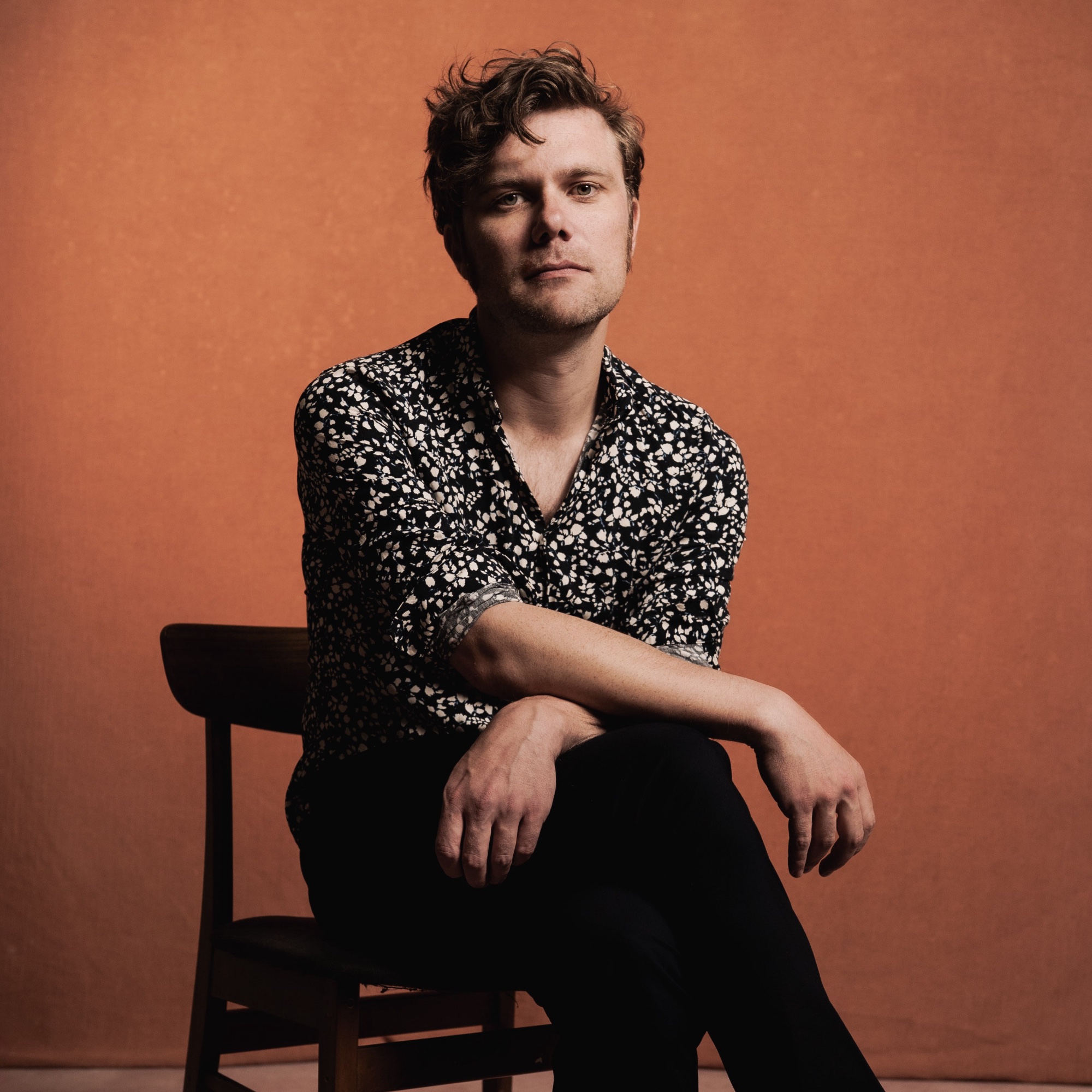
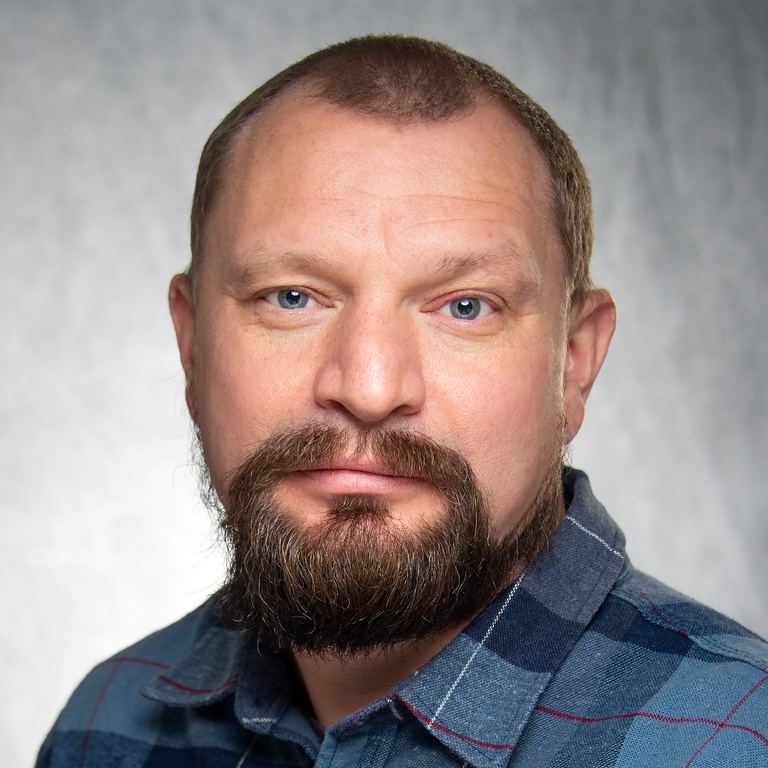
Jacob Warren is an Adjunct Assistant Professor at Bowling Green State University's College of Musical Arts, specializing in double bass performance and composition. He holds degrees from the University of Michigan (BM, 2017; MM in Improvisation, 2018; MM in Chamber Music, 2019) and has been recognized with the 2023 International Society of Bassists Soloist Competition First Prize. His work spans classical, bluegrass, jazz, and original compositions, performed with ensembles like Warren & Flick, Westbound Situation, and Grammy-nominated Kittel & Co. Research interests focus on genre-blending acoustic music, extended instrumental techniques, and pedagogical innovation. He maintains an active private studio and has presented at institutions including Curtis Institute and Indiana University. Notable collaborations include residencies in Ohio schools and performances at venues like Royal Albert Hall and Kennedy Center. Recent works include the Cormorant album (2025), exploring experimental acoustic textures, and Waxwing (2022), featuring genre-defying compositions. His educational programs emphasize creativity through workshops on improvisation, ensemble dynamics, and historical style adaptation.
Tom Coult is a Professor of Composition at the Royal Northern College of Music (RNCM). Since 2021, he has served as Composer-in-Association with the BBC Philharmonic Orchestra, producing works performed by leading orchestras worldwide. His opera Violet (2022), co-written with Alice Birch, received critical acclaim and multiple awards, including the International Opera Award and South Bank Sky Arts Award. Coult’s compositions blend playful and seductive elements with rigorous craft, spanning orchestral, chamber, vocal, and operatic works. Education: Bachelor’s/Master’s studies at University of Manchester (with Camden Reeves and Philip Grange) King’s College London (with George Benjamin) Trinity College Cambridge (Visiting Fellow Commoner, 2017–2019) Research Interests: Coult explores transformation of historical musical forms (e.g., Byzantine chants, Baroque lute pieces) into modernist frameworks. His works often involve textural experimentation, collaborative storytelling, and interdisciplinary approaches. Awards: Paul Hamlyn Award for Artists Lili Boulanger Memorial Fund Prize Royal Philharmonic Society Composition Prize International Opera Award (Violet) Grants & Labs: He has been Composer-in-Residence at Aldeburgh Festival, Musikdorf Ernen Festival, and Oxford Lieder Festival. His work is frequently commissioned by institutions like BBC Proms, Lucerne Festival, and Britten Pears Arts.
Louis S. Karchin is a Professor of Music at New York University's Department of Music, affiliated with the College of Arts and Science. He holds a Ph.D. (1978) and M.A. (1975) from Harvard University, and a B.Mus. (1973) from the Eastman School of Music. A renowned composer and conductor, Karchin has composed over 100 works, including two operas (Jane Eyre and Romulus), orchestral pieces, chamber music, and vocal cycles. His music is celebrated for its harmonic adventurousness and dramatic intensity, with recordings on Naxos, Bridge, and other labels. He serves as Music Director of the Orchestra of the League of Composers and Conductor of the Chamber Players of the League-ISCM. Karchin has received prestigious awards such as the Guggenheim Fellowship, multiple American Academy of Arts and Letters prizes, and commissions from the Koussevitzky, Barlow, and Fromm Foundations. Upcoming performances include the London premiere of Incantations and Dances and the premiere of The Four Seasons of Bernini. Education: Eastman School of Music (B.Mus., 1973), Harvard University (M.A. 1975, Ph.D. 1978) Key Works: Jane Eyre (opera), American Visions (song cycle), Chamber Symphony, Romulus (opera) Awards: Guggenheim Fellowship, NEA Grants, Eastman Centennial Award His research interests span composition, 20th/21st-century music performance, and conducting. Recent projects include collaborations with poets like Yevgeny Yevtushenko and retrospectives by the League-ISCM and ensemble mise-en.
Adrián Cabedo Nebot is a Professor in the Department of Spanish Philology at the Universitat de València, affiliated with the Faculty of Philology, Translation and Communication. He is a core member of the Val.Es.Co research group, focusing on Colloquial Spanish and prosodic analysis. Research Interests: His work centers on speech prosody, acoustic phonetics, discourse analysis, and the pragmatics of colloquial Spanish. He investigates how intonation shapes discourse units, speaker subjectivity, linguistic politeness, and direct speech. His research also extends to clinical linguistics, particularly prosodic patterns in Wernicke’s aphasia, and applied areas such as teaching Spanish as a foreign language (E/LE), academic writing, and plagiarism detection. Publication Trends: His recent work emphasizes quantitative and qualitative analysis of prosodic features using tools like PRAAT, corpus-based studies (CORLEC, Val.Es.Co), and the development of segmentation models. He frequently explores the intersection of phonetics, pragmatics, and discourse structure in spoken Spanish. Collaborations: He has co-authored works with Antonio Hidalgo-Navarro and Bert Cornillie, among others, reflecting interdisciplinary and international research partnerships. Scientific Contributions: Developed and applied the Val.Es.Co model for oral discourse segmentation. Advanced understanding of prosodic cues in modal adverbs and intersubjectivity. Contributed to methodology in linguistic politeness and plagiarism detection. Advising and Grants: While specific students and grants are not mentioned in the provided texts, his supervisory role is indicated by his PhD supervision of others and collaborative research leadership. His work implies involvement in funded research projects related to language, prosody, and corpus development. Labs and Teams: He is an active member of the Val.Es.Co research group, which develops and applies tools for analyzing colloquial Spanish, including the Corpus Val.Es.Co 2.0. This team focuses on integrating prosodic, semantic, and pragmatic features in discourse analysis.
Hayo Terband, PhD, is an Assistant Professor in the Department of Communication Sciences and Disorders at the University of Iowa. His research focuses on speech-language pathology, particularly in speech motor control, developmental speech disorders, and bilingual speech production. He teaches courses in evidence-based practice, developmental speech disorders, speech anatomy/physiology, and speech acoustics. University of Iowa, Health Sciences Academic Building Specializes in auditory feedback mechanisms and speech sound disorder severity assessment Developed standardized protocols for speech production testing Active in clinical validation of the Computer Articulation Instrument (CAI) Recent research trends include auditory feedback perturbation modeling , music-based interventions for childhood apraxia of speech (CAS), and cross-linguistic studies in Australian English–Dutch bilingual children. His work emphasizes process-oriented diagnostics and treatment frameworks for speech sound disorders (SSD), integrating computational models like the DIVA model to examine sensorimotor integration deficits.
Galina Apostolova is affiliated with the National Music Academy, holding a position in the Department of Music Performance Art, Faculty of Music Performance Art. Her work spans musicology, pedagogy, and performance studies. She has contributed to research on ensemble dynamics, historical musical practices, and interdisciplinary links between music and drama. Her research interests include the analysis of musical textures, innovative teaching methods in solfège and instrumental training, and the preservation of cultural heritage through arrangements of folk music. She explores historical figures like Anton Dikov and Nikolay Kaufman, examining their contributions to Bulgarian and Jewish musical traditions. Her articles reflect a focus on bridging historical studies with contemporary performance practices, such as examining Scriabin’s cosmic symbolism or German cello pedagogy in the 19th century. While no scientific awards are explicitly mentioned, her prolific output highlights expertise in music education and performance art.
Paweł Łukaszewski is a Professor of Musical Arts and Chairman of the Department of Composition and Theory of Music at the Academy of Music in Warsaw. He also serves as Chairman of the Council of Artistic Discipline, President of the Musica Sacra Institute, and Director of the Choir of the Warsaw-Prague Cathedral 'Musica Sacra'. His work spans composition, conducting, and education, with a focus on sacred and contemporary music. Education: Graduated with honors from the State Secondary Music School in Częstochowa (1987–1992) under Andrzej Wróbel and Marian Borkowski. Completed postgraduate studies in choirmaster training and cultural management. Holds a PhD (2000) and habilitation (2006) in composition. Research Interests: Specializes in sacred choral music, orchestral compositions, and contemporary musical techniques. His works blend medieval influences with modern expression, often using liturgical texts and dramatic storytelling. Notable compositions include Winterreise and Via Crucis , praised for their emotional depth and innovative structure. Awards: Recipient of the Knight’s Cross of the Order of Polonia Restituta (1998), Gloria Artis Medal (2011), Fryderyk Award (2013), and Orphee d’Or (2014). Honored for contributions to Polish musical heritage and international recognition of his compositions. Other Activities: Founded the Musica Sacra Edition publishing house and participates in international composition competitions. His works have been performed globally and recorded on over 50 CDs. Active in music education, he has taught at the Academy of Music in Warsaw since 1996.
Dr. David Glaser serves as Professor and Chair of Music at Yeshiva University's department of Music. He holds academic appointments focused on composition and music theory instruction. His professional affiliations include board memberships with the United States section of the League of Composers/ISCM and Parthenia viol consort. Education: Other degree from Columbia University (1994) MA from Queens College/CUNY (1984) AB from Hunter College/CUNY (1975) Research interests emphasize contemporary composition techniques and theoretical analysis of modern musical structures. His compositional work has been described by the American Academy of Arts and Letters as 'subtly potent,' with notable pieces including Concertino for Guitar and Chamber Ensemble (2017) and String Quartet No. 4 (2016). Recent works demonstrate exploration of non-traditional ensembles and innovative harmonic structures. Awards and recognition include commissions from the Fromm Foundation, American Academy of Arts and Letters, and Alice M. Ditson Fund, along with residencies at MacDowell Colony and Wellesley Composers Conference. He has held composer-in-residence positions at East Carolina University and Utah Arts Festival. Teaching responsibilities include courses on harmony, composition, and music history. Recent course offerings span Diatonic Harmony, Baroque-Classical Music studies, and introductory composition seminars. Professional activities include CD releases on Albany Records and ongoing compositional projects that bridge classical traditions with modern experimental techniques.
Dušan Erak is a full professor at the Music Academy of the University of East Sarajevo, specializing in music pedagogy and solfeggio methodology. He has held roles including Head of the Department of Theoretical Teaching (since 2018) and Vice-Dean for Artistic and Scientific Research (2020–2022). Born in Sarajevo in 1974, he graduated in General Music Pedagogy (2004) and Guitar (2006), with a master's in Solfeggio Teaching Methodology (2007). His doctoral studies at Belgrade's Faculty of Music focused on music pedagogy. His research emphasizes solfeggio methodology and music education, with notable contributions including co-authoring 'Application of Artistic Literature in Solfeggio Teaching' (2013) and organizing international events like the Solfeggio Seminar and Days of Vojin Komadina. He has conducted choirs nationally and internationally, winning awards in competitions across Europe. His artistic career includes over 85 performances as a guitarist and collaborations with renowned orchestras and ensembles. Erak has mentored numerous students, reviewed academic papers, and served on expert juries for music competitions. His work bridges traditional and contemporary pedagogical approaches, leveraging technology (e.g., The Ear Gym app) in modern solfeggio instruction. He received the Dean’s Award in 2014 for promoting the academy abroad through performances and academic collaborations.
Prof. Dr. Markus Roth is a Professor of Music Theory at Faculty 2 of Folkwang Universität der Künste in Essen, Germany, a position he has held since his appointment in 2009. He joined the university in 2006 as a lecturer for special duties. His academic work is deeply rooted in music theory, with a focus on analytical methodologies across historical periods. His research interests are extensive and include Music Analysis, the History of Music Theory, Contemporary Music, Historically Informed Theory, and the History of Listening. His scholarship bridges the Renaissance to the 21st century, examining composers such as Cipriano de Rore, Jacobus Gallus, Schubert, Hanns Eisler, and Enno Poppe. His work often explores the intersection of composition and theory, the rhetoric of music, and the analytical challenges of chromaticism and polyphony. His recent publications, including a 2024 co-authored paper on Cipriano de Rore, demonstrate a sustained and active scholarly output. The trends in his research show a consistent engagement with analytical techniques—ranging from linear analysis and Schenkerian methods to historically informed and performer-oriented approaches—and a fascination with paradox, idiosyncrasy, and the boundaries of tonal systems. Recipient of a doctorate summa cum laude in 2006 for his work on Hanns Eisler’s Hollywood-Liederbuch . Author of the book Der Gesang als Asyl (2007) and Einem Traume gleich (2012). Co-editor of the proceedings from the 2012 GMTH Congress Musiktheorie und Komposition (2015). Served as Vice-President of the Gesellschaft für Musiktheorie (GMTH) from 2010 to 2014. Prof. Roth has advised numerous students and contributed to academic discourse through lectures at international conferences such as GMTH and EUROMAC. He is also a composer, with works for piano and chamber ensembles. He is affiliated with a research environment that values the dialogue between historical and contemporary music practices.
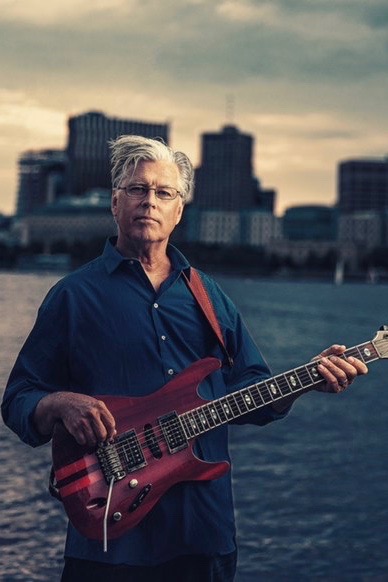
Jon Finn is a Professor in the Department of Guitar at Berklee College of Music, Boston, where he has been a faculty member since 1988. He is internationally recognized as a leader in Modern Rock Guitar, excelling as a performer, composer, and educator. He is also the founder of the Jon Finn Group, active since 1988, with multiple international releases. His research and professional interests focus on Modern Rock Guitar , improvisation , and music education , particularly in developing expressive and technically proficient playing that transcends genre limitations. He emphasizes understanding students' individual learning styles and strengths to foster growth. His work challenges the stereotype of rock guitarists by advocating disciplined practice and intellectual engagement without sacrificing primal energy. The body of his publications and recordings over the past two decades reveals a strong trend in guitar pedagogy , modal and rock improvisation , and stylistic versatility . His instructional materials, especially with Truefire and Mel Bay, consistently target practical, accessible techniques for modern guitarists, bridging theory and performance. Recordings with the Jon Finn Group and Boston Pops demonstrate his ability to operate across instrumental rock , orchestral fusion , and contemporary ensemble settings. Scientific and Professional Awards: Dean’s Award for Outstanding Achievements in Teaching, Berklee College of Music (1995) Nomination for Outstanding Instrumentalist, Boston Music Awards (1994) Performer of the Year, New England Performer Magazine (1995) Emmy Award – Mike Adam’s Sportsworld TV show (1996) Grammy Nomination – The Celtic Album, Boston Pops (1999) Grammy Nomination – The Latin Album, Boston Pops (2000) Advising and Grants: While specific student names are not listed, Jon Finn’s long-standing role as a professor and author of educational materials indicates significant mentorship and curriculum development. His publications represent funded or independently produced educational projects, and his performances with major orchestras and artists suggest grant or institutional support for collaborative artistic work. His global clinics and seminars further underscore his influence in music education. Labs and Teams: Jon Finn leads the Jon Finn Group , an ensemble active since 1988, performing in New England and internationally. He is also a longstanding performer with the Boston Pops Orchestra (since 1996) and the Boston Symphony Orchestra (since 2002), contributing guitar expertise to major orchestral and pops productions. His educational outreach includes clinics at institutions worldwide, such as Souza Lima (Brazil), Nanjing University (China), and ISM Guitar Training (Japan), forming an informal global network of music educators and students.
Akira Tana is a Japanese American jazz drummer and educator at the San Francisco Conservatory of Music , where he teaches Applied Lessons , Jazz Seminar , and Ensembles . Renowned for his cross-cultural projects, Tana has performed with jazz icons like Sonny Rollins and Lena Horne while pioneering fusion of Japanese folk traditions with jazz. Born in Palo Alto, California (1950s) Harvard University (BA in Social Relations) New England Conservatory of Music (MM in Jazz Studies) Research and Artistic Focus His work emphasizes cross-cultural jazz interpretation , notably through the Otonowa Ensemble which: Reimagines Japanese folk songs in modern jazz formats Conducts educational tours in post-disaster Tohoku region Integrates traditional Japanese instruments with jazz Explores modal jazz waltz techniques (e.g., reinterpretation of 'Sakura') As co-leader of TanaReid , he developed: Modal jazz compositions Bass-drums collaborative frameworks Live performance innovations Studio recording techniques Artistic Impact His discography spans 200+ recordings including: Secret Agent Men series (2000-2018) Kiss Kiss Bang Bang (James Bond themes) JAZZaNOVA (2018) featuring Branford Marsalis Looking Forward (1997) with Rufus Reid Teaching Legacy With teaching experience at: Rutgers University Queens College California Jazz Conservatory San Francisco State University He emphasizes technical mastery through daily practice routines and artistic self-expression while mentoring emerging musicians like the Tohoku trumpet player he inspired.
Meghan Quinlan serves as an Affiliated Researcher in the Department of Musicology at Uppsala University, Sweden. Her interdisciplinary scholarship bridges medieval musicology, literary studies, and cultural history with a focus on French and Occitan song traditions from the Middle Ages. Her academic foundation includes: B.Arts.Sc. in Liberal Arts and Natural Sciences from McMaster University M.St. in Medieval Studies from the University of Oxford DPhil in Musicology from the University of Oxford Quinlan's research specializes in the intersection of text and music in medieval song, particularly examining female-voiced contrafacta, gender representation, and historical narrative construction. As both a scholar and trained choral conductor/singer, she integrates performance practice into her methodology, sharing interpretations through her videocast 'Chanter m'estuet'. Her work reveals how medieval songs functioned as cultural artifacts that negotiated identity, power, and community. Analysis of her 2019-2022 publications shows consistent engagement with Gautier de Coinci's miracle songs, troubadour/trouvère repertoire, and the adaptation of melodies across linguistic contexts. Key thematic threads include the semiotic potential of musical repetition, the transformation of historical figures into lyric subjects, and the reconstruction of lost performance practices. Her scholarship demonstrates rigorous interdisciplinary methodology connecting musicology with literary criticism, gender studies, and cultural anthropology. Information regarding graduate student supervision and external research funding was not documented in available sources.
Dave Barton is an Adjunct Lecturer in the Music Department at Queen's University's DAN School of Drama and Music. He holds a B.Mus (1981) and B.Ed (1982) from Queen's University. A multifaceted musician, he specializes in jazz guitar, classical guitar, and composition. His work spans performances with renowned Canadian jazz artists, recordings with groups like the Toronto Jazz Orchestra and Greg Runions Big Band, and educational roles including high school music teaching and guidance counseling. His research interests include jazz improvisation pedagogy, large-ensemble composition, and the intersection of classical and jazz techniques. Barton has composed extensively for big bands and orchestras, with works featured at venues like the Prince Edward County Jazz Festival. He maintains an active performance schedule, including monthly gigs with the Big Phat Horn Band and collaborations with artists like saxophonist Alex Dean and violinist Drew Jurecka. His discography includes solo classical guitar releases, jazz trio albums, and session work on over 100 recordings. Awards and grants are not explicitly mentioned, though his extensive performance and composition credits highlight his contributions to Canada's jazz scene.
Andrew Rathbun is a Professor and Head of Jazz Studies at the Irving S. Gilmore School of Music, Western Michigan University. His roles include teaching Saxophone, Jazz Arranging, and Jazz Style and Analysis. A renowned saxophonist and composer, he holds a D.M.A. from Manhattan School of Music and a M.M. from New England Conservatory, complemented by a B.A. from Queen's University. His research focuses on rhythmic complexity, metric experimentation, and cross-genre collaborations. Notable works include The Speed of Time (2023), which explores polyrhythmic structures, and Semantics (2022), nominated for a JUNO Award. Recent projects include the septet recording Dark Journey (2024) and collaborations with musicians like Rich Perry and Ran Blake. Rathbun has been honored with residencies at MacDowell Colony and Banff Center. His discography spans 15 releases, blending avant-garde techniques with lyrical expression. Critical acclaim highlights his 'impressive compositional intelligence' and 'well-honed artistry.' He has performed at major festivals including Stowe Jazz Festival and collaborates with institutions like the Kalamazoo Symphony Orchestra. His teaching emphasizes innovation while maintaining deep roots in jazz tradition.