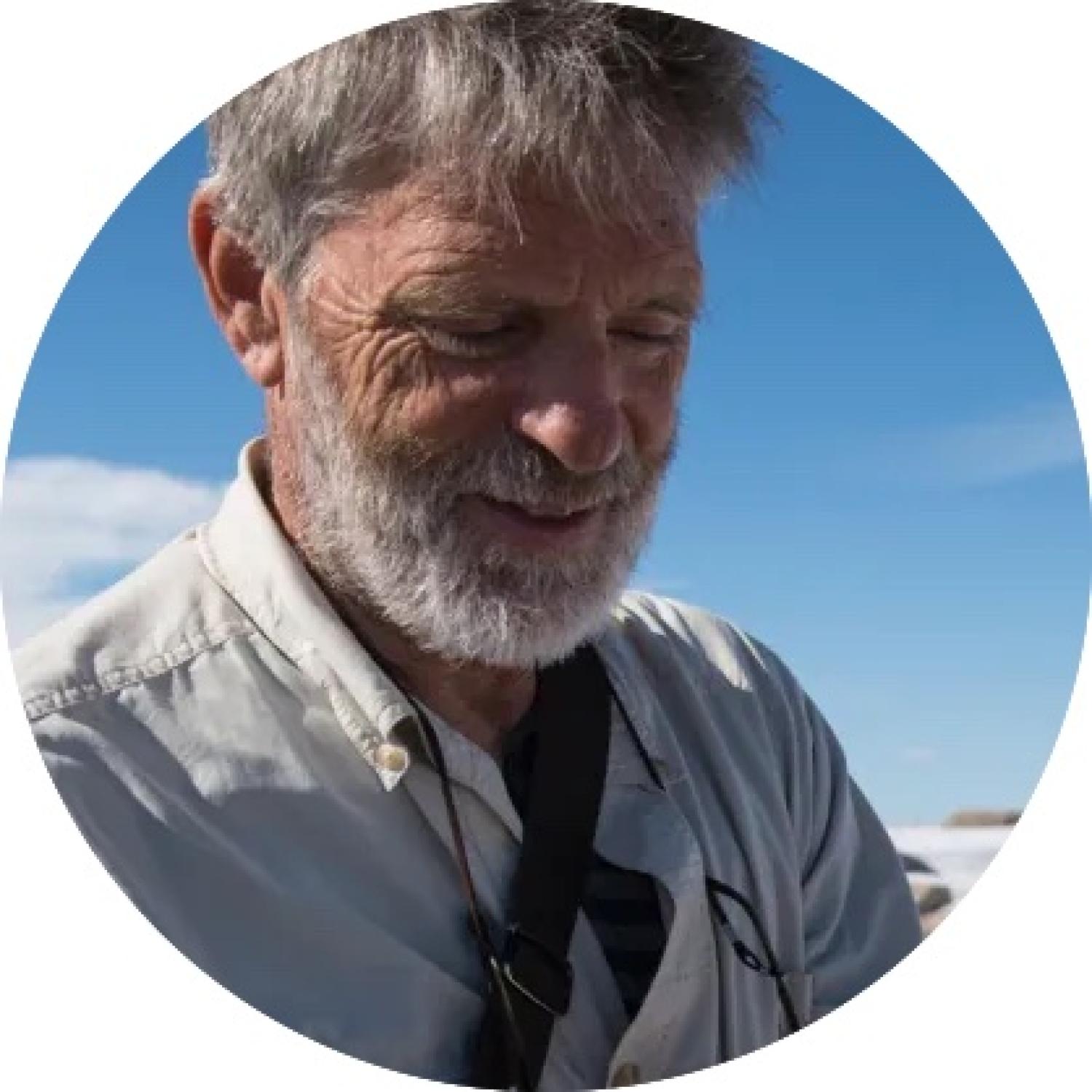
Gifford H. Miller is a Professor at the University of Colorado Boulder and serves as the Director of the Center for Geochemical Analysis of the Global Environment (GAGE) . His research focuses on reconstructing Earth's climate system using Quaternary records, with expertise in amino acid geochronology and cosmogenic exposure dating. Specializes in Arctic climate history, ice sheet dynamics, and human impacts on ecosystems Active in teaching courses on global change, Quaternary dating methods, and Holocene nonlinearities His recent work explores Holocene climate variability through lake sediments in Iceland and Baffin Island, integrating biomarkers and ancient DNA. Awards include the 2021 University of Colorado Distinguished Professor title and fellowships from AGU and GSA. 2021: Distinguished Professor, University of Colorado System 2018: Distinguished Career Award, American Quaternary Association 2009: Elected Fellow, American Geophysical Union
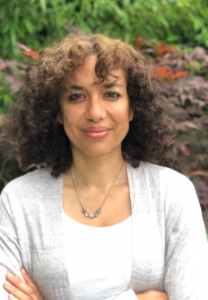
Professor Joy Singarayer is a leading academic in the Department of Meteorology at the University of Reading, specializing in paleoclimatology. She holds the position of Joint Head of Department (Facilities and Finance) and is actively involved in research on climate-human interactions and past environmental changes. Her work bridges climate science, archaeology, and ecology, with a focus on understanding how past climate fluctuations inform future environmental resilience. Her research interests include the impact of climate change on agriculture and water resources, human-land-climate interactions across prehistoric to modern eras, and paleoclimate reconstructions using Quaternary records. Notable projects include CROPP (Peruvian climate resilience), PRIDE (Caspian Sea biodiversity), and Amazonian paleoecology studies. Professor Singarayer has supervised numerous PhD students exploring topics like agent-based modeling of pre-Columbian cultures, Caspian Sea hydrology, and Amazonian drought responses. Her interdisciplinary approach integrates climate modeling, fieldwork, and data analysis to address global environmental challenges. She is affiliated with the University of Reading's Meteorology Department and collaborates internationally on projects like the PotASH initiative studying southern hemisphere paleolakes. Her contributions span academic leadership, policy-relevant research, and fostering inclusive academic environments through her role on the SMPCS WIDE committee.
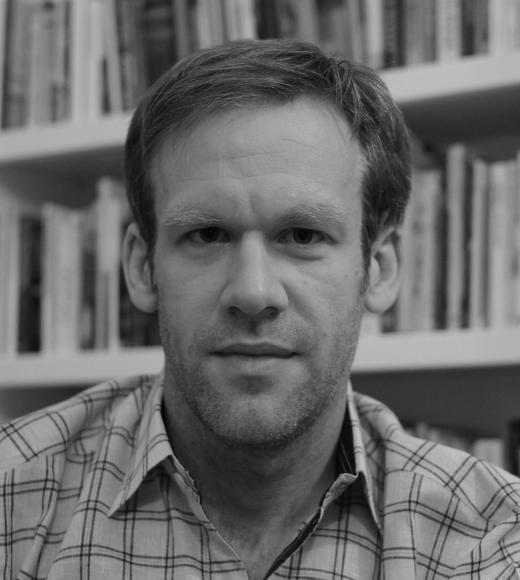
Hernan Eduardo Morales Villegas is an Associate Professor at the Section for Hologenomics within the Globe Institute of the University of Copenhagen, holding dual affiliations with the Faculty of Science and Faculty of Health and Medical Sciences. His research bridges evolutionary biology and conservation science through genomic approaches to biodiversity crises. Dr. Morales specializes in genomic erosion—the loss of genetic diversity during population collapse—and its implications for extinction risk and species recovery. Leading the Evolutionary and Conservation Genomics Group, he integrates paleogenomics, evolutionary modeling, and quantitative analyses to study endangered species, museum specimens, and simulated evolutionary dynamics. His work spans adaptation mechanisms, speciation processes, and conservation genetics, with emphasis on how anthropogenic pressures alter genomic landscapes across taxa. Recent publications (2019-2025) reveal a cohesive research trajectory applying genomic tools to urgent conservation challenges. Studies on the kākāpō, woolly mammoth, and Iberian wolf demonstrate how genetic load, adaptive introgression, and habitat fragmentation influence species resilience. His work increasingly focuses on predictive modeling of genomic erosion dynamics, with methodologies evolving from single-species analyses toward cross-taxon comparative frameworks that inform conservation prioritization. As director of the Evolutionary and Conservation Genomics Group, Morales fosters international collaborations evidenced by multi-institutional publications in high-impact journals. His research attracts significant scientific attention, with studies covered by hundreds of news outlets and cited extensively in policy discussions, highlighting the translational impact of genomic insights for biodiversity conservation in the Anthropocene.
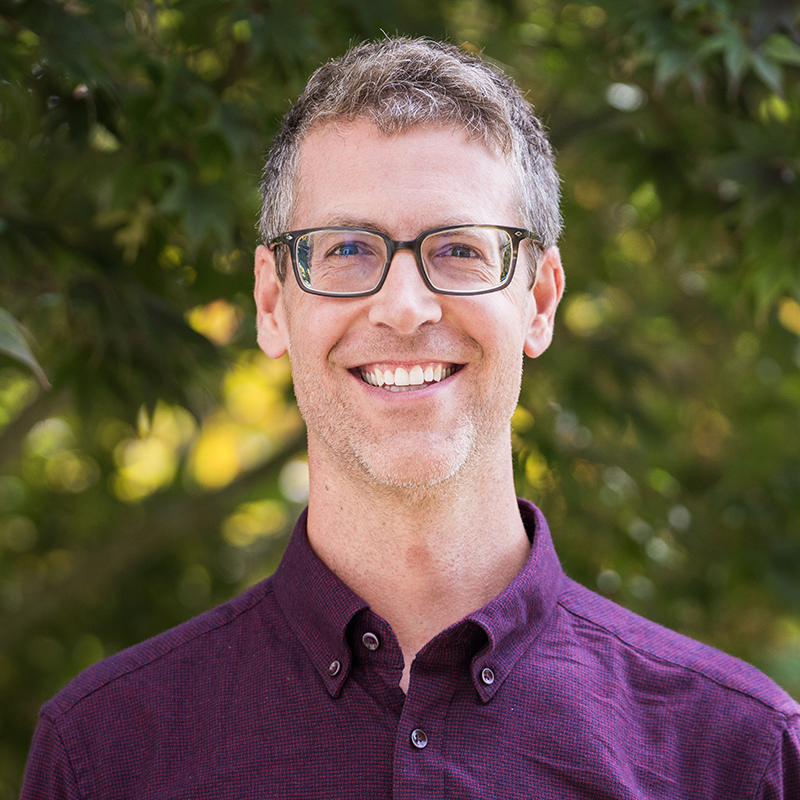
Carsten Rahbek is a Full Professor in Biodiversity at the University of Copenhagen's Globe Institute, where he directs the Center for Macroecology, Evolution and Climate (CMEC) and the Villum Center for Global Mountain Biodiversity. He holds concurrent appointments as Adjunct Professor at the University of Southern Denmark, Visiting Professor at Imperial College London, and Professor at Peking University. His research spans biodiversity science, macroecology, climate change impacts, conservation biology, and science-policy interfaces. Key interdisciplinary work explores connections between biodiversity and human health, green economy transitions, and sustainable development policies. Education: • PhD in Biogeography (1995), Smithsonian Institution & University of Copenhagen • MSc in Biology/Zoology (1992), University of Copenhagen Research Leadership: • Leads Denmark's IPBES (UN Biodiversity Panel) activities • Scientific advisor to EU Presidency, World Bank, and Danish government • Developed international MSc programs in Climate Change and Nature Management Honors & Awards: Order of Dannebrog (Danish Royal House, 2020) Annual Natural Sciences Research Prize (2019) Villum Kann Rasmussen Prize (2012) Danish Elite Researcher Prize (2010) Elected Member, Royal Danish Academy of Sciences Supervision & Training: Mentored >33 PhD students, 37 postdoctoral researchers (including 10 Marie Curie Fellows), and >20 MSc/BSc students. Developed curricula for international biodiversity science programs. Centers & Teams: Directs two major research centers focusing on macroecological patterns and mountain biodiversity conservation, coordinating international teams across 15+ countries.
Christopher Bronk Ramsey is Professor in Archaeological Science and Head of the School of Archaeology at the University of Oxford, affiliated with Merton College. As chair of the INTCAL committee, he oversees global radiocarbon calibration. His expertise spans archaeological science, Quaternary environmental research, and nuclear instrumentation development. Research focuses on radiocarbon dating, Bayesian chronological modeling, and AMS techniques. Key areas include Quaternary chronology, human evolution, climate change impacts, and archaeological applications in the eastern Mediterranean, Amazonia, and Anglo-Saxon England. He develops the OxCal software for statistical chronology analysis. Recent publications emphasize radiocarbon calibration advancements, pre-Columbian land-use in Amazonia, European Neolithic chronologies, and high-precision dating methods. His work integrates archaeology, environmental science, and data science to address chronological challenges across diverse temporal and spatial scales. No specific scientific awards were detailed in the source material. He supervises numerous doctoral students on topics ranging from dendrochronology to digital archaeology and Middle Stone Age chronology. Major projects include FeedSax (Anglo-Saxon agriculture) and HERCA (Amazonian human-environment interactions), securing research grants for interdisciplinary teams. Professor Ramsey directs the OxCal project and co-leads IntCal, IntChron, FeedSax, and HERCA initiatives. These teams develop calibration standards, integrate chronological data, and investigate past human adaptations to environmental change, particularly in Amazonia and Europe.
Tobias Menely is a Professor and Chair of English at the University of California, Davis. His research focuses on ecocriticism, environmental humanities, and British literature from Milton to the Romantics. He has authored two major books: The Animal Claim: Sensibility and the Creaturely Voice (2015) and Climate and the Making of Worlds: Toward a Geohistorical Poetics (2021), both critically acclaimed and award-winning. His work bridges literary analysis with environmental and political theory, emphasizing the intersection of climate, literature, and world-making. Menely’s current projects include studies on megafauna conservation and planetary futures through scenarios and models. He has received notable awards, including the UC Davis Academic Senate Distinguished Teaching Award (2024) and the MLA’s William Riley Parker Prize (2012). His scholarship appears in journals like PMLA , European Romantic Review , and Studies in Romanticism . Education: PhD, Indiana University; BA, Beloit College. Menely also co-edited Anthropocene Reading: Literary History in Geologic Times (2017) and frequently contributes to interdisciplinary dialogues on climate change, ecology, and literature.
Andrew Jacobson is an Associate Professor of GIS & Conservation at Catawba College, affiliated with the Department of Environment & Sustainability and the Center for the Environment . His career bridges geospatial technology with wildlife conservation, focusing on species distribution in human-impacted landscapes. Education: B.A. in Environmental Studies, St. Olaf College M.E.M. in Environmental Management, Nicholas School of the Environment Ph.D. in Geography, University College London His research explores the intersection of GIS, drones, and carnivore conservation , particularly for species like lions, cheetahs, and hyenas in East Africa. He investigates how human activities fragment habitats and affect large carnivore populations, while developing geospatial workflows to enhance conservation assessments. Recent publications highlight trends in species distribution modeling, biodiversity threat analysis, and policy critique . Notable topics include the limitations of the IUCN Red List, human-wildlife conflict in savannahs, and the role of geospatial tools in identifying low-impact zones for conservation. At Catawba College, Jacobson collaborates with students, faculty, and local organizations to advance conservation science. He previously served as a Science and Geospatial Advisor to the National Geographic Society, prioritizing global wild places for protection.
Associate Professor Jeremy Austin is a leading evolutionary biologist at the University of Adelaide , affiliated with the School of Biological Sciences and serving as Deputy Director of the Australian Centre for Ancient DNA (ACAD) . His work bridges ancient DNA analysis, molecular ecology, and forensic biology to address critical questions in conservation genetics and human identification. PhD in Evolutionary Biology from University of Tasmania (1995) Jeremy's research focuses on ancient DNA techniques to study evolutionary histories of extinct and extant vertebrates, assess environmental change impacts, and develop genomic tools for forensic identification of degraded human remains. His work supports agencies like the Australian Defence Force and humanitarian organizations. Recent publications highlight applications of LAMP assays for invasive species detection, genome-wide hybridization capture in forensic profiling, and phylogeographic analysis of endangered species. His team's innovations in trace DNA recovery and environmental DNA (eDNA) have advanced biosecurity monitoring. Australian Research Council Future Fellowship (2011) As a Senior Lecturer , Jeremy supervises research students and collaborates across conservation, forensics, and evolutionary biology . He leads ACAD's efforts to integrate historical museum samples into modern genomic studies, with applications for wildlife management and human remains identification.
Natalie Warburton is an Associate Professor in Zoology at Murdoch University, Australia, affiliated with the Harry Butler Institute and the School of Medical, Molecular and Forensic Sciences, College of Environmental and Life Sciences. She holds a PhD in Zoology (University of Western Australia, 2004), a BSc(Hons) in Zoology (UWA, 1998), and a Graduate Diploma in Education (Murdoch University, 2002). She is also a Research Associate at the Western Australian Museum. Her research focuses on the functional morphology of marsupials, integrating anatomy, ecology, and evolution. Key interests include locomotion adaptations (digging, climbing, bounding), reproductive strategies, and the evolutionary drivers of musculoskeletal systems. Her work bridges extant and extinct species, particularly tree-kangaroos (e.g., Bohra , Congruus ) and marsupial moles. She has pioneered techniques for transferring anatomical insights from living species to fossil analysis, contributing to palaeontological reconstructions. Dr. Warburton has received awards such as the Vice Chancellor's Award for Excellence in Learning and Teaching (2015) and Senior Fellow status from Advance HE (2017). She actively engages in public science communication through podcasts (e.g., 'Aussie Wildlife Show', 'Palaeo Jam') and documentaries (e.g., ABC Catalyst's 'Megafauna'). Her research has produced over 50 peer-reviewed articles, emphasizing skeletal anatomy, muscle function, and evolutionary adaptations. Current projects explore predator escape behaviors in marsupials and the functional morphology of extinct species. She collaborates across disciplines, integrating CT scanning, biomechanics, and comparative anatomy.
Kostas Triantis is an Associate Professor of Biodiversity of Ecosystems at the Department of Ecology and Taxonomy, Faculty of Biology, National and Kapodistrian University of Athens. He holds a PhD from the University of Crete and has held post-doctoral positions at institutions including Oxford University and the University of Azores. His research focuses on island biogeography, macroecology, conservation biology, and the biogeography of Aegean invertebrates. He has served as a Visiting Professor at the University of Bayreuth and held roles in Greece’s Ministry of Environment. Triantis is a leading expert in land snail biodiversity and has contributed to over 70 peer-reviewed articles. Awards include Marie Curie Fellowship and editorial roles in journals like Journal of Biogeography . His work addresses species-area relationships, island ecosystems, and conservation strategies for endangered species. Current projects include understanding biodiversity patterns in the Aegean under the Anthropocene and global avian extinction dynamics. Education: PhD and MSc in Biology, University of Crete Post-doctoral fellowships at Oxford, Azores, and Patras Research Interests: Island biogeography, conservation biology, macroecology, ecological modeling, Aegean biodiversity His articles explore topics like ant biodiversity on Aegean islands, global avian functional diversity loss, and extinction debt on oceanic islands. Triantis collaborates internationally on projects such as the European Red List of terrestrial molluscs and biodiversity databases like MEDIS. He actively contributes to conservation policy through IUCN Red Listing assessments for over 200 Greek land snail species. Grants & Projects: Principal Investigator: 'Understanding the Anthropocene: the case of the Aegean Islands' (Hellenic Foundation for Research and Innovation, 2020–2023) Co-PI: 'Biodiversity on Oceanic Islands' (Portugal’s FCT, 2012–2015) Triantis leads the University of Athens’ Ecology and Taxonomy Department’s research on island ecosystems, emphasizing the interplay between ecological theory and conservation practice. His lab focuses on integrating spatial data and evolutionary dynamics to address biodiversity challenges.
Stephen J. Burns is a Professor in the Department of Geosciences at the University of Massachusetts Amherst, within the College of Natural Sciences. His research centers on paleoclimatology using speleothems as high-resolution archives of continental climate change. He investigates stable isotopes and trace elements to reconstruct past precipitation and monsoon dynamics, with a focus on tropical and subtropical regions such as Mexico, Madagascar, South America, and Southeast Asia. Education: Ph.D., Duke University, 1987 (Dolomite Geochemistry) M.S., University of North Carolina (Carbonate Sedimentology) B.A., Rice University Post-11 years at University of Bern, Switzerland His research focuses on understanding climate variability on orbital to decadal timescales, especially in continental regions where data are sparse. He uses speleothems—cave deposits like stalagmites—as 'underground ice cores' to extract paleoclimate signals from oxygen and carbon isotopes. His work explores climate-culture interactions, including links between climate shifts and the decline of the Mayan civilization and Madagascar's megafauna. He has led major projects in the Yucatan, Peruvian Andes, Oman, Yemen, Brazil, and Vietnam, often in collaboration with anthropologists and international climate scientists. The recent publications reflect a strong trend in tropical paleoclimatology, with emphasis on monsoon systems, interhemispheric climate dynamics, and human-environment interactions during the Holocene and Late Pleistocene. His work frequently appears in top-tier journals such as Science , PNAS , and Geophysical Research Letters , demonstrating both methodological rigor and broad scientific impact. Scientific Awards: No awards explicitly mentioned in the text. Stephen J. Burns actively mentors students and leads interdisciplinary research teams. He has secured sustained funding for field expeditions and laboratory analyses, though specific grants are not listed. His collaborations span departments (e.g., Anthropology at UMass) and institutions (e.g., MIT, Duke, international universities). He is currently engaged in three major speleothem-based projects: (1) climate variability in the Yucatan and its link to Mayan cultural evolution, (2) environmental history of Madagascar and megafaunal extinction, and (3) climate change in Vietnam with David McGee (MIT). These efforts are supported by advanced geochemical facilities and fieldwork logistics. Labs and Research Teams: Geochemistry and Paleoclimate Laboratory at UMass Amherst (implied through research activity) Collaborative network with stable isotope labs (e.g., Cheng/Edwards lab for U-Th dating) Field teams in tropical cave systems across multiple continents Interdisciplinary group including anthropologists and climate modelers
Meghan Balk is a Postdoctoral Fellow with the Evolution and Paleobiology Group at the Natural History Museum, University of Oslo. Her work combines museum collections and trait databases to investigate how inter- and intra-specific traits change across time and space. She is passionate about digitizing museum data and enabling FAIR data principles for continued exploration of data-driven science across evolutionary biology and ecology. Balk received her Ph.D. from the University of New Mexico in 2017 with a concentration in Interdisciplinary Science through the Department of Biology. She earned her B.S. from the University of California, Davis in 2010 in the Department of Evolution, Ecology, & Biodiversity, with a minor in Paleobiology through the Department of Geology. Her academic journey reflects a strong foundation in both biological sciences and geological perspectives on evolutionary processes. Her research employs both micro- and macroscopic approaches to understand abiotic and biotic drivers of phenotypic evolution. She investigates within and among lineage phenotypic evolution using fossil and modern records of organisms like bryozoans. Her work on abiotic drivers examines body size changes in species like the bushy-tailed woodrat across geological time, while her research on biotic drivers explores predator-prey relationships in the fossil record, particularly focusing on species like Otodus megalodon. She utilizes machine learning and computational approaches to extract morphological trait data from specimen images. Balk's publication record demonstrates expertise across evolutionary biology, paleontology, ecology, and computational approaches. Her recent work focuses on developing FAIR and modular workflows for image-based knowledge discovery in the emerging field of imageomics. She has made significant contributions to understanding body size evolution across geological time, predator-prey relationships in the fossil record, and promoting open science principles for trait-based research. Her work bridges traditional paleontological methods with cutting-edge computational techniques. Balk is actively involved in several research projects including ROCKS PARADOX (Dissecting the paradox of stasis in evolutionary biology) and Machine-readable Nature (MaNa). She collaborates with researchers across institutions to create ontologies and workflows for trait data, such as the Functional Trait Resource for Environmental Studies (FuTRES) project and the Biology-Guided Neural Networks project. She teaches courses including Foundational Open Science Skills workshop, Git for Mere Mortals webinar, and R Basics Crash course, emphasizing the importance of reproducible research practices.
Briana L. Pobiner is an Associate Research Professor affiliated with the National Museum of Natural History. Her research focuses on paleoanthropology, zooarchaeology, and taphonomy, with a regional specialization in Africa. She investigates early human diets, particularly the role of meat-eating, using bone surface modifications to analyze interactions between hominins, predators, and scavengers. Her fieldwork spans Kenya, Tanzania, South Africa, Romania, and the U.S., including projects at Ol Pejeta Conservancy, Olorgesailie, Engare Sero, and Friesenhahn Cave. Education: Ph.D. in Anthropology (2007, Rutgers University), M.A. Anthropology (2002, Rutgers), B.A. Evolutionary Studies (1997, Bryn Mawr College, magna cum laude). Teaching includes courses on archaeological methods, biological anthropology pedagogy, and science communication. She has received prestigious awards for outreach, including the 2021 Leakey Foundation Communication Award and Friend of Darwin Award. Research interests emphasize experimental taphonomy, Pleistocene subsistence strategies, and science education. Over 50 peer-reviewed publications span topics from bone modification analysis to human evolution pedagogy. Active projects include taphonomic surveys in Kenya and Romania, and collaborations on early hominin fossil sites. Her work bridges empirical field research with public engagement, advocating for accurate evolution education in schools and museums.
Professor Michael Archer is a distinguished academic at the University of New South Wales (UNSW), where he serves as a Professor in the School of Biological, Earth & Environmental Sciences and is a member of the PANGEA Research Center. Born in Sydney but raised in the USA, Archer has had a remarkable career spanning multiple institutions including the Queensland Museum (as Curator of Mammals), UNSW (as Lecturer and later Dean of Science), and the Australian Museum in Sydney (as Director). His educational background includes a BA in Geology/Biology from Princeton University (1967) and a PhD in Zoology from the University of Western Australia (1976). Archer's research focuses on three interconnected areas: the deep past (particularly the World Heritage fossil deposits at Riversleigh), the fragile present (conservation through sustainable use of native resources including native animals as pets), and securing the future based on the wisdom of the fossil record, with special emphasis on de-extinction efforts for species like the Gastric-brooding Frog and the Thylacine. Archer's scholarly output is extensive, with over 350 scientific publications including 15 books, and an impressive h-index of 55 as of 2022. His research spans paleontology, evolutionary biology, and conservation science, with particular emphasis on Australian marsupials, fossil records, and species evolution. The most recent publications show continued activity in describing new fossil species from Riversleigh and other Australian sites, as well as expanding research into New Zealand's St Bathans Fauna. His scientific recognition includes numerous prestigious awards and fellowships: Fellow of the Australian Academy of Science (FAA) Distinguished Fellow of the Royal Society of NSW (DistFRSN) Fellow of the Royal Zoological Society of NSW (FRZS) Fellow of the Australian College of Educators (FACE) Fellow of the Western Australian Academy of Science (FWAAS) Member of the Order of Australia (AM) Eureka Prize for Promotion of Science Professor Archer has supervised or co-supervised more than 80 research student degrees, demonstrating his commitment to academic mentoring. His work extends beyond traditional academic boundaries into public engagement and policy discussions about conservation, sustainable use of native resources, and the ethical considerations of de-extinction science. His laboratory work primarily focuses on the Riversleigh World Heritage Area, one of the world's richest fossil sites, where his team continues to uncover new species and refine our understanding of Australia's evolutionary history.
Dr Sean Tomlinson is an ARC Grant-Funded Researcher (A) in the Department of Ecology and Evolutionary Biology at the University of Adelaide. His work focuses on integrating physiological and ecological principles to address challenges in conservation biology, restoration ecology, and biodiversity management. Key research areas include seed germination dynamics, animal metabolic responses to environmental stressors, and the application of physiological tools to inform conservation strategies. His research employs interdisciplinary approaches, combining field studies, experimental laboratory work, and computational modeling to understand ecological processes at multiple scales. Notable contributions include studies on the impacts of climate change on plant and animal physiology, the reconstruction of historical ecological dynamics, and the development of frameworks for effective ecological restoration. Recent work emphasizes the importance of physiological data in guiding translocation programs for threatened species, optimizing seed-banking strategies for degraded landscapes, and bridging gaps between theoretical models and applied conservation practices. Dr Tomlinson collaborates extensively with government agencies, NGOs, and international research networks to ensure his work informs policy and on-ground management decisions. His publications highlight innovative methodologies such as LiDAR-based habitat analysis for endangered species, high-resolution niche modeling informed by edaphic factors, and quasi-mechanistic spatial models for insect energetics. Ongoing projects explore the interplay of temperature, moisture, and bioclimatic factors in shaping species' distributions and resilience to anthropogenic pressures.