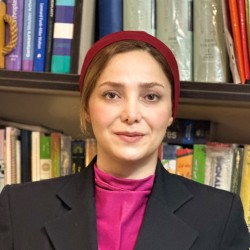
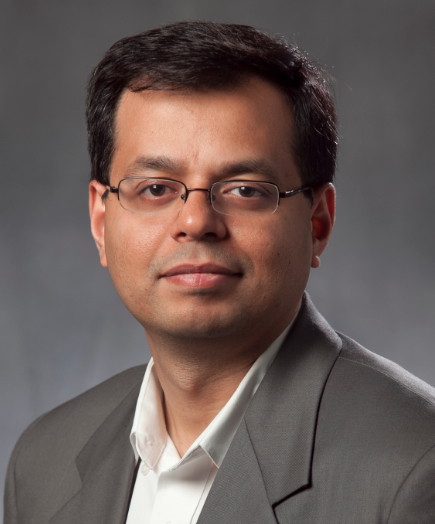
Yanping Zhang, PhD, is a Professor in the Department of Computer Science at Gonzaga University, specializing in network security, wireless sensor networks, and bio-computing. Her work bridges cybersecurity, IoT, and telemedicine systems. Ph.D., University of Alabama (2012) M.B.A., Gonzaga University (2023) M.S., University of Alabama (2009) Research focuses on Medium Access Control (MAC) layer optimization in wireless sensor networks, intrusion detection, and cybercrime prevention, with applications in underwater networks, cloud computing, and telemedicine. Recent publications explore secure key distribution, anomaly detection, and health system encryption. Her scientific award highlights include receiving the Outstanding Dissertation Award during her doctoral studies.
Javad Ghaderi is an Associate Professor in the Department of Electrical Engineering at Columbia University. He holds affiliations with the Data Science Institute and the Department of Computer Science. His research bridges algorithms, optimization, and machine learning to enhance the efficiency of communication networks, data centers, and AI systems. Ph.D., University of Illinois at Urbana-Champaign (2013) M.A.Sc., University of Waterloo (2008) B.Sc., University of Tehran (2006) Dr. Ghaderi's research focuses on network algorithms, control, and optimization, particularly for large-scale systems like wireless networks, data centers, and AI infrastructures. His group develops scalable algorithms for real-time data collection, communication, and processing, including medium access protocols for low-delay wireless networks and scheduling frameworks for machine learning acceleration in data centers. Recent publications highlight trends in edge-cloud collaboration , real-time packet scheduling for deadlines, urban sensing architectures , and robust decentralized learning . His work integrates theoretical rigor with practical applications in wireless networks , distributed AI , and smart city systems . Best Paper Awards: IEEE INFOCOM 2024/2020, ACM CoNEXT 2016 NSF CAREER (2017), CRII (2016) Mac Van Valkenburg Graduate Research Award (2013) Dr. Ghaderi has advised 6 graduate students since joining Columbia in 2014, including co-advised projects with Prof. Gil Zussman. His teaching spans courses like Computer Communication Networks and Reinforcement Learning in Information Systems , emphasizing mathematical foundations and algorithmic design.
Pramod Viswanath holds the Gilmore Family Endowed Professorship and is designated Professor Emeritus in the Department of Electrical and Computer Engineering at the University of Illinois at Urbana-Champaign , with additional affiliation to the Coordinated Science Laboratory (CSL) . Education: Doctor of Philosophy in Electrical Engineering and Computer Science, University of California at Berkeley, 2000 Research Interests: Viswanath’s work focuses on the intersection of wireless communication networks and information theory , with recent expansion into cryptocurrencies and blockchain technology . He seeks to understand fundamental limits of reliable wireless communication and to translate these insights into practical network designs that jointly optimize medium-access control, networking, and the time-varying wireless channel. Beyond wireless, he investigates broader questions of optimal network information compression, distributed trust mechanisms, and resource-efficient consensus protocols for blockchains. Scientific Awards: NSF CAREER Award, 2003 Bernard Friedman Prize, Department of Mathematics, UC Berkeley, 2000 Eliahu Jury Award, Department of EECS, UC Berkeley, 2000 Motorola Gold Medal, Indian Institute of Science, 1995 M R Khambati Gold Medal, Indian Institute of Science, 1995 Associate Editor for Communications, IEEE Transactions on Information Theory (2006–2008) Grants & Projects: Viswanath currently leads or co-leads multi-institutional efforts such as Unit-e , a high-throughput cryptocurrency initiative under the Distributed Technology Research (DTR) foundation involving MIT, Stanford, and UC Berkeley. He is also PI on the Army Research Office grant “Rethinking Cryptocurrencies for Resource-Constrained Networks” ($588,850 over three years) aimed at redesigning blockchain architectures for storage- and network-constrained environments. Labs & Teams: He is a core faculty member of the Coordinated Science Laboratory (CSL) , where he collaborates with post-docs and graduate students on distributed systems, information-theoretic security, and next-generation wireless protocols.
Nikos Passas is a Professor at the Department of Informatics and Telecommunications, University of Athens, leading the Green, Adaptive and Intelligent Networking (GAIN) research group. He has coordinated numerous national and European research projects, including SMART-NRG,ROSSFIRE,SEOVEREIGN,CASPERS, and SEMANTIC. His research focuses on mobile network architectures, QoS provisioning, wireless protocols, and 5G/6G technologies. He has published over 120 papers and 12 book chapters, with key contributions in MAC protocols, mobility management, and network security. Education: PhD in Informatics & Telecommunications (University of Athens, 1997), Diploma in Computer Engineering (University of Patras, 1992). Teaching: Mobile/Wireless Networking courses at undergraduate and postgraduate levels. Recent roles include guest editor for IEEE Wireless Communications and Wiley's Wireless Communications and Mobile Computing Journal. Research highlights include work on LTE-Advanced networks, D2D communications, and blockchain-based mobile data access. He holds a US patent for wireless traffic scheduling. Active in IEEE and the Technical Chamber of Greece. Current projects emphasize smart energy networks, cognitive radio technologies, and user-centric service provisioning. His lab develops solutions for HetNets, edge computing, and AI-driven network optimization.
Mahtab Mirmohseni is a Senior Lecturer at the University of Surrey's School of Computer Science and Electronic Engineering, affiliated with the Institute for Communication Systems. She leads the Intelligent Communication Systems and Networks MSc program and co-leads the EPSRC Centre for Doctoral Training (CDT) in Future Open SecuRe NeTworks (FORT) . Her research focuses on Information Theory, Secure Communications, Molecular Communications, and Integrated Sensing and Communication (ISAC). She advises multiple PhD students and collaborates on projects involving RIS-aided systems, physical layer security, and biomedical applications of molecular communication. Notable contributions include work on OFDM ISAC, semantic communication over wiretap channels, and secure multi-hop beamforming. Education: Ph.D. in related fields (not explicitly stated in provided text). Research Interests: Information Theory and Secure Communication Protocols Integrated Sensing and Communication (ISAC) Systems Molecular Communication for Healthcare and Biomedical Applications Intelligent Reflecting Surfaces (IRS) and Reconfigurable Antennas Recent Article Trends: Focus on ISAC performance limits, physical layer security frameworks, and optimization techniques for IRS-aided networks. Her work bridges theoretical analysis (e.g., Cramér-Rao bounds) with practical transceiver design. Awards: None explicitly listed in provided text. Grants/Teams: Leads the FORT CDT and collaborates with industry partners on RIS and molecular communication projects.
Milica D. Jovanovic is an Assistant Professor in the Department of Electronics at the Faculty of Electronics, University of Niš, Serbia. She has been with the institution since 2013, progressing from assistant trainee to her current academic rank, and holds a PhD earned in 2017 from the same faculty. PhD, Faculty of Electronics, University of Niš (2017) MSc, Microsystems Design and Engineering, Faculty of Electronics, University of Niš (2011) BSc, Computer Engineering and Informatics, Faculty of Electronics, University of Niš (2003) Her research centers on wireless sensor networks, networks-on-chip, and communication protocols, with a focus on MAC layer design, contention resolution, and indoor localization. She employs signal processing, fuzzy logic, and optimization techniques to enhance network performance and reliability. Her recent publications reflect a strong trend in improving communication efficiency and robustness in constrained environments such as wireless sensor networks and on-chip interconnects. Key themes include tone-based contention resolution, multi-channel MAC protocols, deflection routing, and UWB-based localization, placing her work at the intersection of embedded systems, networking, and signal processing. She is actively involved in one national and one international research project, contributing to both theoretical and applied aspects of electronic systems. Her work has appeared in high-impact journals including The Journal of Supercomputing , Expert Systems with Applications , and Computer Communications . She has collaborated extensively with researchers such as Igor Z. Stojanovic, Sandra Djosic, and Goran Lj. Djordjevic. While no formal advisees are listed, her involvement in doctoral studies and research projects suggests mentorship roles within her lab and department.
Prof. Mohamed Anis LAOUITI is a Professor at Telecom SudParis, affiliated with the SAMOVAR research laboratory. His work focuses on vehicular networks, wireless sensor networks, blockchain applications, UAV systems, and cybersecurity. He has contributed extensively to MAC protocols for VANETs, distributed trust management in IoT, and optimization algorithms for UAV routing. Research interests include: Vehicular Ad Hoc Networks (VANET), blockchain technology for industrial and agricultural applications, network security, and efficient communication protocols. His work bridges theoretical research with practical implementations in smart cities and Industry 4.0. Recent publications (2024–2001) emphasize blockchain-based systems for IoT security, UAV path planning, and TDMA scheduling in vehicular networks. He has co-authored over 50 papers in journals like Journal of Supercomputing and Drones , and conferences such as IEEE WCNC and IWCMC. Key contributions include the OB-VAN opportunistic broadcast scheme for VANETs and the TAR channel access mechanism. His research also explores RINA-based security architectures and hybrid MAC protocols for safety-critical vehicular communications.
Wolfgang König is a full Professor of Probability Theory at the Institute of Mathematics, Faculty of Mathematics and Natural Sciences, Technische Universität Berlin, and leads the research group Stochastic Systems with Interaction at the Weierstraß Institute for Applied Analysis and Stochastics (WIAS Berlin). His research focuses on probability theory and its applications in statistical physics and telecommunications. Education 1984–1989: Diplom in Mathematik, Technische Universität Berlin 1994: Dr. Phil, Universität Zürich 2000: Habilitation, Technische Universität Berlin Research Interests Professor König's work spans: Stochastic processes and large deviations Parabolic Anderson model and random media Statistical mechanics of interacting particle systems Probabilistic methods in telecommunications Branching processes in random environments Publications His recent publications (2019–2025) explore large deviations in sparse networks, Bose gas physics, stochastic PDEs, and applications of probability in telecommunications. Works consistently demonstrate rigorous mathematical analysis of complex physical systems. Grants DFG Priority Programme 2265: Random Geometric Systems DFG Collaborative Research Center 1114: Scaling Cascades in Complex Systems DFG Research Unit 2402: Rough paths, stochastic partial differential equations Research Groups Leads the Stochastic Systems with Interaction group at WIAS Berlin and coordinates the IRTG 2544 Stochastic Analysis in Interaction graduate school.
Violet Syrotiuk is an Associate Professor in the School of Computing and Augmented Intelligence at Arizona State University, where she has served since 2002, achieving tenure as Associate Professor in 2008. She also holds the position of Senior Global Futures Scientist within ASU's Global Futures Scientists and Scholars program. Her academic journey began with a B.Sc. in Computer Science from the University of Alberta (1983), followed by an M.Sc. from the University of British Columbia (1984), and culminated with a Ph.D. from the University of Waterloo (1992). Prior to joining ASU, she was an Assistant Professor at the University of Texas at Dallas from 1999-2002. Dr. Syrotiuk's research focuses on complex engineered networks, with specific interests in medium access control (MAC) protocols for wireless networks and dynamic optimization of radio/network parameters. Her work bridges combinatorial mathematics with practical network engineering, developing innovative approaches like topology-transparent scheduling and locating arrays for network screening. She has secured substantial research funding from NSF, DARPA, LANL, Raytheon, and other major organizations, supporting her investigations into wireless network optimization and experimental design methodologies. Analysis of her recent publications reveals a strong trend toward combinatorial approaches for network screening and optimization, with significant emphasis on locating arrays, detecting arrays, and their applications in wireless network parameter identification. Her research has evolved from foundational work on MAC protocols to more sophisticated combinatorial frameworks for identifying critical network parameters and interactions. This trajectory demonstrates a progression from protocol-specific optimization to systematic methodologies for characterizing complex network behaviors. Editorial Board, Computer Networks (Elsevier), since 2004 Editorial Board, Computer Communications (Elsevier), since 2008 Senior Member, Association for Computing Machinery (ACM) Senior Member, Institute of Electrical and Electronics Engineers (IEEE) Host of the 24th GENI Engineering Conference (GEC-24) at ASU (2016) Dr. Syrotiuk has mentored an impressive 9 doctoral students, 25 master's students, and 14 undergraduate researchers throughout her career. Her research grants portfolio includes numerous NSF awards, particularly through the NeTS and GENI programs, as well as collaborations with defense and industry partners like Raytheon, General Dynamics, and LANL. She has established the Network FRESCO framework for experimental screening, control, and optimization, which has become a cornerstone of her research methodology. Her laboratory work leverages advanced wireless testbeds for empirical validation of theoretical models, with recent work extending into FABRIC infrastructure for large-scale network experimentation.
Dr. Asis Nasipuri serves as Professor and Chair of the Department of Electrical and Computer Engineering at the University of North Carolina at Charlotte. Previously, he held administrative roles including Graduate Program Director (2006-2013) and Associate Chair (2013-2014), following faculty positions at the Indian Institute of Technology Kharagpur (1993-1998) and University of Texas at San Antonio (1998-2000). His educational background includes: Ph.D. in Electrical and Computer Engineering from University of Massachusetts at Amherst (1993) M.S. in Electrical and Computer Engineering from University of Massachusetts at Amherst (1990) B.Tech. (Hons.) in Electronics and Electrical Communication Engineering from Indian Institute of Technology Kharagpur, India (1987) Research focuses on multi-hop wireless networks spanning sensor networks, mesh networks, and mobile ad-hoc systems with emphasis on routing protocols, medium access control, energy management, and experimental testbed development. His work integrates statistical signal processing techniques including distributed and non-parametric detection schemes for practical wireless applications. Recent publications (2010-2018) demonstrate consistent innovation in network reliability and efficiency through adaptive routing, channel selection, and transmission diversity techniques. These works bridge theoretical protocol design with industrial applications like substation monitoring, highlighting his commitment to solving real-world wireless communication challenges. Dr. Nasipuri has served the academic community as General Chair of the 2012 ACM MobiHoc symposium and on numerous editorial boards and conference committees. His research impact is evidenced by over 85 peer-reviewed publications and approximately 6000 citations. He has advised graduate students and developed wireless experimental testbeds for practical validation of networking protocols, fostering hands-on research in energy-constrained and mission-critical environments.
Prof. Congduc Pham is a faculty member at the University of Pau and Pays de l'Adour, France, specializing in Internet of Things (IoT) technologies with emphasis on low-power wide-area networks (LPWANs) like LoRa. His research bridges theoretical networking concepts and practical deployments in resource-constrained environments, particularly across African developing regions. His core research domains include: LPWAN protocol design and optimization for dense IoT deployments Resource allocation and medium access control in wireless sensor networks Edge computing integration for agricultural applications Data governance frameworks using semantic web technologies Surge protection engineering for electrical systems Analysis of his 2021-2024 publications reveals a strategic shift toward real-world IoT implementations, with 60% focusing on agricultural applications (particularly precision irrigation for smallholder farmers) and 30% on network protocol enhancements. His work consistently emphasizes cost-effective solutions validated through field deployments like the WAZIUP project across West Africa. Prof. Pham actively contributes to European IoT research initiatives, co-authoring frameworks for international cooperation in IoT innovation. His collaborations span institutions including CONACyT-INRIA RESO and research groups in Mexico and Senegal, with notable partnerships involving Muhammad Ehsan and Laurent Lefèvre on LPWAN optimization challenges.
Michael Paterakis is a Professor in the Department of Electronic and Computer Engineering at the Technical University of Crete, where he has served since 1995. His leadership roles include Vice-Rector for Academic Affairs & Personnel (2005-2010), Director of the University Research Institute of Telecommunications Systems (2000-2005), and Department Chair (1999-2001). His education includes a Diploma in Electrical Engineering from NTUA (1984), M.Sc. from University of Connecticut (1986), and Ph.D. from University of Virginia (1988). Prior to TUC, he was Assistant/Associate Professor at University of Delaware (1988-1995). Professor Paterakis's research centers on Computer Communication Networks with emphasis on protocol design , performance modeling of broadband wireless networks, and applied queuing theory . His work spans Wireless Communications , Multimedia Systems , and Network Optimization , addressing challenges in next-generation telecommunications infrastructure through rigorous mathematical analysis. Analysis of his 2006-2016 publications reveals persistent focus on wireless/powerline MAC protocols , multimedia call admission control , and video caching mechanisms . His research evolved from fundamental queuing theory toward practical implementations in heterogeneous networks, consistently prioritizing performance efficiency in resource-constrained environments. He has supervised 5 Ph.D. and 17 M.Sc. students while managing significant projects including the Information Society Operational Programme (2005-2009), which deployed Crete's metropolitan fiber optic networks across six municipalities. His service includes editing ACM journals, co-organizing IEEE workshops, and reviewing for major telecommunications conferences. Based in the Information and Networks Laboratory , his team develops protocols for unified services wireless networks with applications in mobile multimedia delivery and distributed information systems.
Semiha Tedik Başaran is an Assistant Professor in the Department of Electronics and Communication Engineering at Istanbul Technical University's Faculty of Electrical and Electronics Engineering. She received her PhD in Telecommunications Engineering from Istanbul Technical University in 2019 and has been working at the university since 2011, first as a Research Assistant and then as an Assistant Professor starting in 2020. Her educational background includes: PhD in Telecommunications Engineering from Istanbul Technical University (2013-2019) MSc in Telecommunications Engineering with Thesis from Istanbul Technical University (2011-2013) Bachelor's Degree in Electronics and Communication Engineering (Double Major) from Istanbul Technical University (2006-2011) Dr. Başaran's research focuses on wireless communications, network coding, and next-generation wireless networks. Her work spans theoretical analysis and practical implementation of communication systems, with particular emphasis on network coded cooperation, physical layer security, and wireless network reliability. She has made significant contributions to understanding the performance of network coded systems in various wireless environments, including satellite communications and 5G/6G networks. Her recent publications demonstrate a growing interest in integrating artificial intelligence with wireless communications, particularly for IoT applications and edge computing, while also advancing research in THz communication systems and their challenges in adverse weather conditions. Her scientific achievements have been recognized with several prestigious awards: Doctoral Thesis Award from Istanbul Technical University (2020) IEEE Türkiye Doctoral Thesis Award (2020) Best Poster Award at IEEE International Conference on Wireless for Space and Extreme Environments (WiSEE-2016) (2016) Dr. Başaran serves as Principal Investigator for multiple research projects including 'Designing 5G and Beyond Cellular Private Networks Secure Against DDoS Attacks,' 'Performance Analysis of THz Communication Systems,' 'Coverage Analysis of LEO Satellite Systems,' and 'Development of Multiple Access Techniques Providing Low Latency Performance for Next Generation Communication Systems.' Her h-index of 8 (based on Scopus) reflects her impactful contributions to the field of wireless communications, with 36 research outputs spanning from 2013 to 2024. She maintains an active research lab focused on wireless communications and network coding, where her team works on both theoretical analysis and practical implementation of next-generation communication systems using software-defined radio platforms, with strong international collaborations extending across multiple countries as indicated by her research footprint.
Romit Roy Choudhury is the Gilmore Family Endowed Professor of Electrical and Computer Engineering (ECE) at the University of Illinois at Urbana-Champaign (UIUC) and an Amazon Scholar since 2022. He earned his Ph.D. in Computer Science from UIUC in 2006 and previously held positions at Duke University, including Associate Professor (2011–2013) and Assistant Professor (2006–2011). His research spans generative models, signal processing, and wearable computing, with a focus on audio denoising, source separation, and spatial inference. Education: Ph.D. in Computer Science, University of Illinois at Urbana-Champaign, 2006. Research Interests: Generative Models, Machine Learning, Sensing, Inverse Problems, Wearable Devices, Localization, and Acoustic Sensing. His lab, Signals and Inference Research Group (SiNRG), explores innovations in audio and sensor-based systems. Publications: Over 50+ peer-reviewed articles, including impactful work on inaudible sound attacks (MobiSys 2017 Best Paper), noise cancellation via IoT (SIGCOMM 2018), and earable computing (MobiCom 2020). Awards: ACM Sigmobile Rockstar Award (2015), IEEE Fellow (2019), NSF CAREER Award (2007), and multiple best-paper recognitions. Teaching: Courses include ECE 438 (Communication Networks), ECE 434 (Real-World Algorithms for IoT), and ECE 101 (Intro to Computing). Labs/Teams: SiNRG at UIUC, collaborations with Amazon, Samsung AI, Intel, and Microsoft Research.
Jean-Daniel Medjo is an Assistant Teaching Professor at Syracuse University , serving as the Director of the Electrical Engineering and Computer Engineering Undergraduate Program. His academic background includes a Ph.D., M.A.Sc., and B.Eng. in Electrical and Computer Engineering from Carleton University and Polytechnique Montreal. His research focuses on wireless ad hoc networks , particularly in mobile/flying networks like UAVs and LEO satellites. Key areas include routing protocols (network layer) and MAC protocols (link layer) to improve packet delivery and reduce latency. He integrates AI techniques like deep learning and reinforcement learning into network design. His publications emphasize multi-beam antenna systems and their role in optimizing ad hoc networks. Recent work includes a novel routing protocol (2023) and MAC protocols like MBA-DbMAC (2019). Earlier studies (2014–2018) explored mobility models and directional antennas in UAV networks. No awards, advising records, or grants are listed in the provided texts.