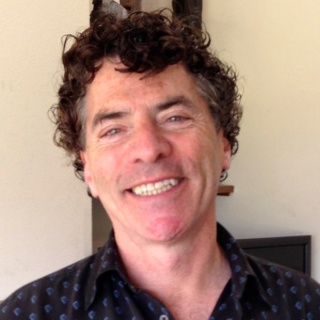
Michael S. Allen is an Associate Professor in the Department of Religious Studies at the University of Virginia. His work bridges philosophy and religion in South Asia, with broader interests in global philosophy and environmental ethics. He specializes in the intellectual history of Advaita Vedānta, utilizing Sanskrit and early Hindi sources. Allen earned his PhD from Harvard University, MTS from Harvard Divinity School, and BA from the University of South Carolina. His research explores how South Asian perspectives, particularly vernacular texts, shape contemporary understandings of human-environment relationships and ethics. Key themes include: Advaita Vedānta's social history Vernacular and Persian Vedānta Environmental ethics and climate action Hindu-Buddhist debates Global philosophy of religion His publications highlight trends in Advaita Vedānta's global influence, the integration of vernacular traditions into scholarly canons, and cross-cultural dialogues on divine infinitude and idolatry. Recent scholarship (2017–2022) emphasizes inclusivism in Vedantic doxographies, environmental stewardship, and synthesis of devotion and knowledge. Allen was a Mellon Fellow at UVa’s Institute of the Humanities & Global Cultures and co-founded the American Academy of Religion's Hindu Philosophy Unit. He advocates for pedagogy that respects non-Western epistemologies and addresses modern ecological challenges.
Associate Professor Romy Lauche serves as Deputy Director (Research) at the National Centre for Naturopathic Medicine , Faculty of Health , Southern Cross University , Australia. A psychologist by undergraduate training and medical scientist by doctoral education, she has built an international reputation for rigorous methodological expertise in clinical and public-health research focused on complementary, integrative and traditional medicine. Education Master of Psychology – Friedrich Schiller University Jena, Germany Doctor of Health Science (Medical Science) – University of Duisburg-Essen, Germany Research Interests Lauche’s work integrates mind–body interventions (yoga, Tai Chi, mindfulness), manual and non-pharmacological therapies , and self-care strategies within the frameworks of public health , health-services research and evidence-based medicine . She specializes in advanced study designs including randomized controlled trials , systematic reviews , meta-analyses and qualitative inquiry , frequently leveraging large national datasets such as the U.S. NHIS. Scientific Awards 2017 – Dean’s Academic Excellence Award – Research High Achiever, Faculty of Health, University of Technology Sydney 2022 – Award for Research Excellence – Mid-Career Researcher, Southern Cross University Grants & Funding She has attracted a substantial portfolio of competitive research grants supporting clinical and public-health investigations in integrative medicine, although specific grant details are not enumerated in the provided text. Supervision & Teaching Lauche is an experienced supervisor of PhD, Masters and Honours students and welcomes projects on yoga, Tai Chi, hydrotherapy, traditional and cultural medicine, and methodological innovation. She lectures in research methodology, biostatistics, public health and complementary medicine . Professional Service She sits on the Southern Cross University Human Research Ethics Committee , holds editorial roles with leading integrative-medicine journals, and contributes to the Cochrane Collaboration via Cochrane Translate and Cochrane Crowd.
Lobsang Tenzin Negi is a Teaching Professor in Emory University’s Department of Religion and Executive Director of the Center for Contemplative Science and Compassion-Based Ethics (Emory Compassion Center). He leads initiatives integrating Tibetan Buddhist contemplative practices with modern scientific research, including developing programs like Cognitively-Based Compassion Training (CBCT®), the Emory-Tibet Science Initiative (ETSI), and the SEE Learning® framework. Born in a Himalayan region, he holds a PhD from Emory University and a Geshe Lharampa degree from Drepung Loseling Monastery. His work bridges contemplative science, education, and global ethics, emphasizing compassion as essential for human flourishing. Education: PhD, Emory University, 1999 (interdisciplinary dissertation on Buddhist and Western approaches to emotions) Geshe Lharampa, Drepung Loseling Monastic University, 1994 (highest Tibetan monastic degree) MA, Institute for Buddhist Dialectics, 1984 Research & Programs: Compassion Science: Examines compassion’s effects on mental/physical health and social well-being through CBCT®. ETSI: Develops modern science curricula for Tibetan monastics, training them as educators and researchers. SEE Learning®: Global K-12/Higher Ed framework for social, emotional, and ethical education. Mind-Body Sciences Program: Offers study abroad courses in India, integrating Tibetan Buddhism with Western science. Recent Article Trends: Focus on compassion’s applications in healthcare (PTSD, depression, HIV), education (SEL frameworks), and interdisciplinary mind-body research. Studies emphasize measurable impacts on neurology, immune response, and behavioral outcomes. Awards & Honors: While no specific prizes are listed, his leadership roles and global partnerships (e.g., with His Holiness the Dalai Lama) reflect recognition in contemplative science and intercultural education. Grants & Advising: Oversees multi-year initiatives like Tibet Week and the Emory-Tibet Partnership renewal. Advises on global compassion programs and collaborates with institutions like the Piramal Foundation in India. Labs/Teams: Directs the Emory Compassion Center and collaborates with Drepung Loseling Monastery, Emory’s Institute of Tibetan Studies, and international partners to advance compassion-based research and education.
David S. Steingard serves as Associate Professor in the Department of Management at Saint Joseph's University, Philadelphia, where he has held a tenure-track position since 1999 after teaching at Maharishi University of Management (1997-1999). His academic work critically examines business through spiritual, ethical, and postmodern frameworks with emphasis on socially responsible practices and organizational transformation. His educational foundation includes: BS, University of Illinois, Urbana-Champaign (1986) MA, University of Illinois, Urbana-Champaign (1988) PhD, Case Western Reserve University (1997) Steingard's research pioneers spiritually-integral management theory , challenging conventional paradigms through postmodern deconstructions of TQM and workforce diversity while advancing natural law perspectives on environmental stewardship. His work consistently bridges Vedic philosophy, Catholic social teaching, and stakeholder theory to develop consciousness-based organizational models. Key domains include: Business ethics grounded in spiritual-relational frameworks Globalization critiques emphasizing ethical interbeing Mediation practices informed by Taoist metaphysics Transformative pedagogy for spiritually-whole classrooms Arts-based organizational healing methodologies Analysis of his 15 most recent publications reveals an evolutionary trajectory from postmodern critiques of 1990s management fads toward sophisticated spiritually-integral frameworks that position consciousness as central to organizational viability. This progression demonstrates increasing sophistication in synthesizing Eastern philosophies with Western business theory, particularly evident in his environmental management and educational transformation work post-2000. His scholarly impact is recognized through: ONE Doctoral Dissertation Award Finalist (1998) Andrew W. Mellon Dissertation Fellowship (1996) Saint Joseph's University Faculty Merit Teaching Award (2001) Maharishi University Teacher Appreciation Award (1997-1998) Steingard secured significant external funding including a two-year The Body Shop International PLC research residency (1993-1995) and Mandell Center grants for nonprofit organizational development. While specific doctoral students aren't documented, his extensive teaching across undergraduate, MBA, Executive MBA, and international programs (India, Guadeloupe, Holland) indicates substantial mentoring activity. His consulting portfolio with The Body Shop, Northeast Ohio Jazz Society, and Romanian healthcare officials demonstrates applied scholarship connecting academic theory to real-world organizational transformation. Though no formal research labs are described, his collaborative publications with scholars like Fitzgibbons and Khalsa reveal active participation in transdisciplinary communities exploring spirituality's role in business and education, particularly through the Organization and Environment academic consortium.
Neil Dalal is an Associate Professor at the University of Alberta, holding a joint appointment in the Department of Philosophy and the Religious Studies Program. He specializes in South Asian Philosophy and Religious Thought, with expertise in Advaita Vedānta, Yoga philosophies, and Buddhist thought. His research bridges Philosophy and Religious Studies, focusing on contemplative practices, meditation, and self-inquiry in classical Indian traditions. Education: PhD in Asian Cultures and Languages (University of Texas at Austin), MA in East-West Psychology (California Institute of Integral Studies). He has also engaged in extensive fieldwork with Indian monastic renouncers and traditional scholars. Research interests include sudden vs gradual enlightenment in Advaita, meditational roles of memory, philosophy of dreaming, and Yogic approaches to well-being. Current projects explore these themes through close readings of Advaita philosophers like Śaṅkarācārya and their interpretations of Upaniṣads and Bhagavadgītā. Teaching spans undergraduate and graduate courses such as 'Happiness in Indian Philosophy,' 'Meditation and Mind in Indian Philosophy,' 'Advaita Vedānta: India’s Philosophy of Nonduality,' and courses on Hinduism, Buddhism, and Eastern Religions. He also teaches Environmental Ethics and Comparative Philosophy. No scientific awards or grants are explicitly listed in the provided texts. His academic service includes course coordination in Philosophy and Religious Studies programs.
Michael Evans is a Senior Lecturer in Painting and Programme Leader for Fine Art Painting and Drawing at the University of Northampton, where he has been teaching since 1996. He holds a BA (Hons) in Fine Art from Coventry University and completed a practice-based PhD in 2012 on contemporary abstract painting and spiritual experience. He is an active artist and scholar, supervising PhD students and contributing to journals and edited volumes. Bachelor of Arts (Hons) in Fine Art, Coventry University (1984–1987) PhD in Fine Art (Practice-Based), University of Northampton (awarded 2012) Michael Evans' research is deeply rooted in the intersection of abstract painting, spirituality, and contemporary philosophical inquiry. His work explores apophatic modes of thought, the numinous, and transcendental abstraction within a secular context, while also examining how digital technologies influence contemporary painting practices. He investigates how painting can evoke spiritual or transcendent experiences even in non-religious settings, drawing on traditions of negative theology and Jungian psychology. His recent scholarly and artistic output demonstrates a consistent engagement with themes of emptiness, selfhood, otherness, and the metaphysical dimensions of artistic practice. Publications and exhibitions reflect a trajectory focused on the experiential and contemplative aspects of art, particularly how abstraction can serve as a conduit for spiritual or psychological insight. His work often bridges theory and practice, emphasizing process-based approaches and reflective inquiry. Michael Evans has contributed to significant publications such as the International Journal of Religion and Spirituality in Society and the International Journal of Jungian Studies , as well as edited volumes like Contemplations of the Spiritual in Art and Digital, Painting . His exhibitions, including at the Royal College of Art and Northampton Museum & Art Gallery, highlight his commitment to public engagement and artistic innovation. Contributing author to Contemplations of the Spiritual in Art and Photography Published in International Journal of Religion and Spirituality in Society Published in International Journal of Jungian Studies Exhibitions at Royal College of Art, Northampton Museum & Art Gallery, and North East Wales Institute Michael Evans supervises PhD candidates in Fine Art, including Francis Blore, Nour Zantah, and Natasha Toms, whose projects explore drawing, violence in art, and Baroque imagery. He has not received any explicitly mentioned grants, but his sustained research activity and public exhibitions indicate ongoing institutional and academic support. His leadership in the Fine Art programme underscores his role in shaping contemporary art education. He is actively involved in curatorial and collaborative projects, such as the Material Matters exhibition at Northampton Museum and Art Gallery and the Viewfinder digital art project. These initiatives reflect his engagement with interdisciplinary practices, digital media, and community outreach, positioning him at the forefront of contemporary art discourse.
Marcelle Freiman is an Associate Professor in the School of Humanities at Macquarie University, Australia. Her research focuses on Creative Writing pedagogy, theory, and practice, with specialties in ekphrasis, cognition in creative processes, and postcolonial creativity. She has published extensively in journals like TEXT , AXON , and New Writing , and authored three poetry collections: Spirit Level (2021), White Lines (Vertical) (2010), and Monkey's Wedding (1995). Her work has been recognized with awards including the ASAL Mary Gilmore Award (Highly Commended) and a shortlisting for the Newcastle Poetry Prize (2021). Freiman has supervised 14 PhD and 6 MRes theses, with two recent doctoral works receiving Vice-Chancellor's Commendations. She has led research projects like Transformations of Writing: A Cognitive Approach to Creative Writing Process, Practice, and Technologies (2015) and Creative Writing, Literature, Cognition: Analysing Jean Rhys’ Writing Practices (2019). Her interdisciplinary work bridges creative practice with cognitive theory, examining how extended mind frameworks apply to writing processes. Key research areas include the intersection of poetry and visual art (ekphrasis), postcolonial creativity, and the evolution of the sonnet form. She actively publishes in literary journals globally and has contributed book chapters to volumes such as the Cambridge Guide to the Sonnet . Current projects explore distributed cognition in creative processes and the role of material objects (e.g., Patrick White’s briefcase) in shaping literary practices.
Scott Ragland, Ph.D., is a Professor and Chair of the Philosophy Department at Saint Louis University's College of Arts and Sciences. He holds a B.A. from Asbury College (1991), an M.A. from the University of Wisconsin-Milwaukee (1993), and a Ph.D. from Yale University (2001). His research focuses on Early Modern Philosophy (especially Descartes), Free Will theories, and Philosophy of Religion, with notable contributions to Cartesian theodicy and metaphysics. Key publications include The Will to Reason: Theodicy and Freedom in Descartes (Oxford, 2016) and co-edited volumes such as What is Philosophy? (Yale, 2001). His work explores topics like divine providence, free will mechanisms, and the intersections of theology and metaphysics in early modern thought. He has contributed to peer-reviewed journals including Archiv für Geschichte der Philosophie and Religious Studies . Ragland's research also engages with contemporary debates on environmental ethics, as seen in his analysis of Laudato Si' and classical philosophical texts. His academic leadership includes editorial roles and interdisciplinary collaborations, reflecting a commitment to advancing philosophical inquiry in both historical and applied contexts.
John Horgan is a Teaching Assistant Professor in the School of Humanities, Arts and Social Sciences at Stevens Institute of Technology, where he also serves as Director and Chair of the Stevens Center for Science Writings. He teaches courses in science writing, freshman communication, and the relationship between science and war, while maintaining an active career as a science writer and commentator. His educational background includes a BA in English and an MS in Journalism, both from Columbia University. These foundations have shaped his interdisciplinary approach to analyzing science, technology, and their societal implications. Horgan's research and writing focus on the limits of scientific knowledge, consciousness, the philosophy of mind, science and spirituality, and the roots of war and peace. He critically examines whether science can answer all fundamental questions, especially regarding subjective experience and existential meaning. His work bridges journalism, philosophy, and cognitive science, often challenging mainstream assumptions in neuroscience, physics, and artificial intelligence. His recent publications reflect a consistent thematic thread: the boundaries of rationality and empiricism. From quantum mechanics to mysticism, from war to mortality, Horgan explores topics where data meets doubt. His books and articles reveal a deep skepticism toward scientism while affirming the value of inquiry, narrative, and ethical reflection. Included in Best American Science Writing (2009) Included in The Best American Science and Nature Writing (2007, 2006, 2005) Templeton-Cambridge Journalism Fellowship in Science and Religion (2005) American Psychiatric Association Certificate of Commendation (1997) American Association for the Advancement of Science Journalism Award (2007, 1992) National Association of Science Writers Science-in-Society Award (1993) Forbes Media Guide 'Excellent' rating (1994) National Magazine Award (1986) Society of National Association Publications Award (1985) Horgan has mentored students through senior theses and seminars in science writing, and has played a key role in shaping Stevens’ academic initiatives, including serving on faculty search committees and developing a new undergraduate course in quantum technology. He continues to direct the Center for Science Writings, hosting public lectures by prominent science authors. His influence extends beyond the classroom through his widely read columns and books, which have reached millions of readers globally. The Stevens Center for Science Writings, under Horgan’s leadership, functions as a hub for dialogue between science, humanities, and public audiences. It organizes lectures, supports student writers, and fosters interdisciplinary engagement with science communication. Horgan’s own website, johnhorgan.org, serves as a platform for independent commentary, further amplifying his role as a public intellectual.
Jonathan Schooler is Distinguished Professor in the Department of Psychological and Brain Sciences at UC Santa Barbara, where he directs the META Lab and Center for Mindfulness and Human Potential. His research integrates empirical psychology with philosophical inquiry, examining: Meta-awareness and its role in regulating thought Creative benefits of mind-wandering Belief in free will and its behavioral consequences Anomalous cognition phenomena Meditation-induced cognitive changes Schooler leads multiple large-scale projects including research on digital attention training for adolescents and the neuroscience of creativity. His work has been supported by Templeton Foundation, National Institute of Mental Health, and Bower Foundation.
Konstantinos Alexakos is a Professor and Program Coordinator for General Science (GSCI) and Science Education (covering biology, chemistry, physics and earth science for grades K-12) at the School of Education, Brooklyn College, City University of New York (CUNY). He also holds a professorship in The Ph.D. Program in Urban Education at the Graduate Center, CUNY. His academic work focuses on science education, teacher development, and the integration of mindfulness practices in educational settings. His educational background includes: B.S. in Physics from The City College of New York - CUNY (1989) M.A. in Education in Physics and General Science from New York University (2000) M.Phil. in Science Education from Columbia University (2004) Ph.D. in Science Education from Teachers College, Columbia University (2005) Alexakos's research interests span multiple interconnected domains within science education. He has made significant contributions to understanding mindfulness and wellness in educational contexts , particularly how contemplative practices can enhance teaching and learning environments. His work explores emotional dimensions of science education , examining how teachers and students navigate emotional landscapes in classrooms. He has pioneered research on cogenerative dialogue and coteaching as mechanisms for improving educational practice. His scholarship also addresses diversity, equity, and inclusion in science education, with particular attention to race, gender, and cultural considerations. Alexakos investigates teacher identity formation and the challenges science educators face in urban settings, while also developing frameworks for authentic inquiry that empower teachers as researchers. His recent work increasingly focuses on holistic approaches to education that integrate physical, emotional, and intellectual dimensions of learning. Analysis of his recent publications (2017-2022) reveals a clear trajectory toward integrating contemplative practices with science education. His scholarship demonstrates a consistent focus on teacher development through authentic inquiry, with increasing emphasis on wellness, mindfulness, and emotional dimensions of teaching and learning. The publications show a progression from theoretical frameworks to practical applications of heuristics and contemplative practices in educational settings. His collaborative work with Kenneth Tobin forms a substantial portion of his output, indicating a productive research partnership focused on transforming educational practices. The publications span multiple formats including books, book chapters, and journal articles, demonstrating versatility in scholarly communication. His scientific awards and recognitions include: Brooklyn College Student Technology Fee Award for "Science Lab Probes" ($12,000) PSC-CUNY Research Award (PSCREG-38-335) for "Self and Science Teacher Attrition" ($6,000; 2007-08) PSC-CUNY Research Award (PSCOOC-37-30) for "The Science Teacher, Subjective Constructs of Science Teaching, and the 'Organic Link'" ($5,990; 2006-07) Alexakos has been actively involved in mentoring students through various teaching practicums and research activities. His courses include Natural Science for Early Childhood & Childhood Education, General Science for Child & Elementary School, Physical Science for Childhood Teachers, and multiple student teaching practicum courses. He has developed the master of arts in teaching (MAT) in science education program at Brooklyn College that infuses research and practice in science teaching in urban settings. His grant activities include research projects on teacher attrition, the science teacher as the organic link, and wellness practices in educational contexts. He has also secured funding for technology implementation in science education through the Student Technology Fee Award. While not explicitly mentioned as leading a specific laboratory, Alexakos is deeply involved with the Urban Science Education Research Seminar at the CUNY Graduate Center, where he has presented and organized numerous sessions. He has collaborated extensively with colleagues including Kenneth Tobin, Maria Powietrzynska, and Leah Pride on research related to emotions, mindfulness, and wellness in educational settings. His work with the Association of Greek American Professional Women (AGAPW) on "Inspiring Women in Science, Technology, Engineering, and Mathematics (STEM)" demonstrates his commitment to supporting underrepresented groups in STEM fields.
Professor Jing Lin is a faculty member in the Department of Counseling, Higher Education, and Special Education at the University of Maryland's College of Education. Her work focuses on transformative education integrating contemplative practices, Daoist philosophy, and ecological awareness. She explores themes of interconnectedness, sustainability, and equity through pedagogical innovation. Research Interests: Prof. Lin's scholarship bridges Eastern philosophies with modern educational challenges. Core areas include eco-justice pedagogy, virtue cultivation through Daoist principles, and reimagining education to address global crises like climate change and social inequity. She emphasizes love-based education, intercultural collaboration, and the integration of science with spiritual inquiry. Publications Trends: Recent work highlights contemplative practices as pathways to planetary healing, critiques anthropocentric educational frameworks, and advocates for decolonizing higher education. Her articles often blend interdisciplinary approaches (e.g., quantum physics, neuroscience) with spiritual traditions to propose holistic educational models. Awards: No specific awards listed, but her contributions are recognized through frequent publication in transformative education fields. Advising/Grants: No student advisees or grant details provided in current materials. Her focus appears centered on research and conceptual frameworks rather than applied grant-funded projects. Labs/Teams: Engaged with the Harriet Tubman Department's research initiatives, particularly the Indigenous Futures Lab and D.C. Queer Studies projects. Collaborates internationally on eco-justice and contemplative education networks.
Lance Storm is a Researcher at the School of Psychology within the Faculty of Health and Medical Sciences at the University of Adelaide. He specializes in anomalistic psychology, focusing on research methodologies and statistical analyses to explore normal and paranormal phenomena. Storm is Chief Editor of the Australian Journal of Parapsychology and holds committee positions with the Australian Institute of Parapsychological Research. His work spans parapsychology, Jungian psychology, gambling behavior, and theories of perception. Storm has led numerous research projects, including investigations into imagery cultivation’s effects on mood and psi performance, and the phenomenology of altered states. He has secured grants totaling over AU$600,000 from institutions like the Bial Foundation and the Cardigan Fund. His research often employs meta-analytic approaches, analyzing decades of psi studies to assess methodologies like the Ganzfeld and forced-choice designs. Teaching experience includes lecturing on motivation, emotion, and perception. Storm’s publications span peer-reviewed journals such as Psychological Bulletin and Journal of Parapsychology , with key works addressing synchronicity, the sheep-goat effect, and the psychology of spiritual emergency. He advocates for rigorous empirical inquiry into parapsychological phenomena while critiquing methodological challenges in the field. Professional activities include editorial roles, grant review, and supervision of Honours, Masters, and PhD students. His work bridges theoretical perspectives with empirical research, exploring intersections between consciousness studies, existential psychology, and anomalous experiences.
David Albertson is an Associate Professor of Religion at the University of Southern California , specializing in medieval and early modern Christianity, Christian mysticism, and the interplay between religion and visual culture. He serves as a faculty member in the Department of Religion and is affiliated with the Nova Forum for Catholic Thought. Albertson holds a B.A. in Religion from Stanford University, an M.Div. in Theology from the University of Chicago, and a Ph.D. in Religion from the University of Chicago. Research Interests : Albertson’s work bridges medieval and early modern philosophy with theological inquiry, focusing on figures like Nicholas of Cusa and Thierry of Chartres. He explores mystical contemplation, the mathematical dimensions of theology, and the visual representation of sacred concepts. His research also intersects with continental philosophy, particularly in analyzing modern thinkers like Emmanuel Falque and Gilles Deleuze alongside medieval traditions. Publications : Albertson’s recent work (2024–2025) examines Cusanus’s relevance today, Deleuze’s engagement with Christian Neoplatonism, and the mystical philosophies of Hadewijch and Falque. His scholarship often integrates interdisciplinary approaches, merging theology with mathematics, aesthetics, and existential thought. Scientific Awards : Alexander von Humboldt Fellowship (2021–2022) NEH Scholarly Editions and Translations Grant (2016–2021) Charles A. Ryskamp Fellowship (2015–2016) NEH Enduring Questions Grant (2010–2011) Grants & Teaching : Albertson has secured multiple USC research grants and was honored with the USC General Education Teaching Award in 2009. He has also held visiting professorships, including the J. E. & Lillian Byrne Tipton Distinguished Visiting Professorship at UC Santa Barbara in 2025.
Timothy J Geiger serves as a Professor in the Department of English Language and Literature within the University of Toledo's College of Arts and Letters. He teaches specialized courses in Creative Writing, Poetry, and Letterpress Printing and Book Design, while also directing the Aureole Press letterpress imprint housed at the university since 1997. His educational background includes dual MFA degrees in Poetry and Letterpress Printing from the University of Alabama (1994), establishing the foundation for his integrated creative and technical practice. Geiger's research centers on contemporary poetry creation and the material art of letterpress printing. His work explores nature imagery, philosophical inquiries into existence, and the intersection of scientific concepts with poetic form. The Aureole Press represents a significant scholarly contribution, producing limited-edition poetry volumes that bridge traditional craftsmanship with contemporary literary expression. His creative methodology emphasizes precise imagery, formal innovation, and thematic depth across ecological, mathematical, and metaphysical domains. Recent publications (2021-2024) demonstrate sustained engagement with ecological themes through nature poetry, experimental structural approaches using mathematical and scientific metaphors, and philosophical explorations of perception and existence. These works consistently appear in prestigious literary journals including Poetry , Tar River Poetry , and Mid-American Review , reflecting his prominence in contemporary poetry circles. Geiger's scholarly recognition includes major awards in literary achievement: Pushcart Prize XVIII for exceptional poetry Holt, Rinehart and Winston Award in Literature Vern Rutsala Poetry Prize (2019) for Weatherbox Finalist for State of Ohio Poet Laureate (2019) Sundress Academy for the Arts Writer's Residency Through his teaching and direction of the Aureole Press, Geiger mentors students in both poetic composition and book arts craftsmanship. His creative work has been supported by state and local grants across Alabama, Minnesota, and Ohio, enabling sustained production of poetry collections and letterpress editions that contribute significantly to literary culture. The Aureole Press stands as Geiger's most distinctive scholarly contribution - a letterpress imprint established in 1989 that produces finely printed limited editions of contemporary poetry. Housed at the University of Toledo since 1997, its collections reside in major special archives including Yale University's Beinecke Rare Book Collection, SUNY-Buffalo, and the University of Alabama, cementing its importance in preserving and advancing the art of letterpress poetry publishing.