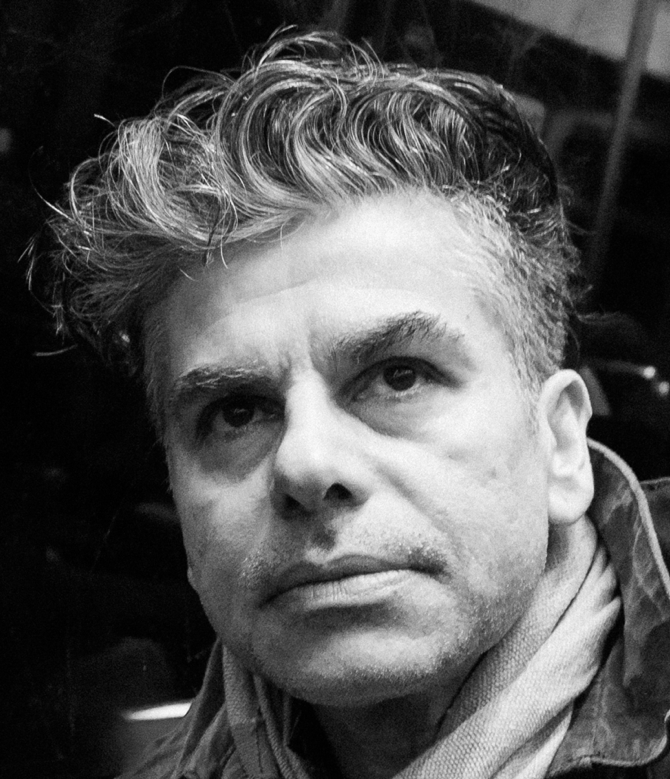
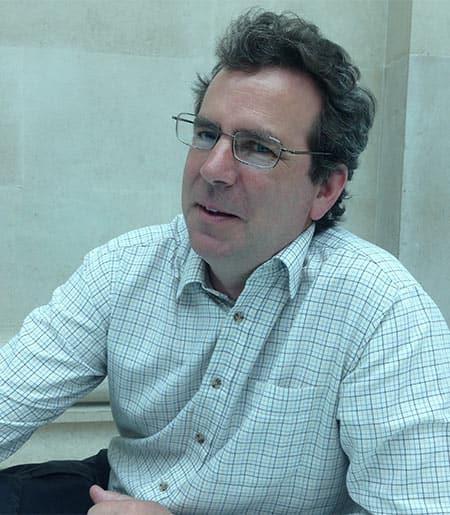
Peter K. Bol is the Charles H. Carswell Professor of East Asian Languages and Civilizations at Harvard University. His research focuses on China's cultural elites from the 7th to 17th centuries, geospatial analysis, and digital humanities projects including the China Historical Geographic Information Systems (CHGIS) and China Biographical Database (CBDB). His research interests include: Intellectual transitions in Tang and Sung China Neo-Confucianism and its historical context Geospatial analysis in historical research Biographical database development Digital approaches to Chinese history Bol has led significant university-wide initiatives including the establishment of Harvard's Center for Geographic Analysis in 2005 and has served as Vice Provost (2013-2018) overseeing HarvardX, the Harvard Initiative in Learning and Teaching, and online learning research.
Jamal J. Elias serves as the Walter H. Annenberg Professor of the Humanities and Professor of Religious Studies at the University of Pennsylvania, where he teaches courses on Islamic intellectual history and culture with a focus on Western and South Asia. He was also a Wolf Humanities Center Penn Faculty Fellow during the 2019-2020 academic year, contributing to the Forum on Kinship. His research spans Islamic intellectual history, visual culture, and Sufism, with particular attention to the intersections of material culture, emotion, and identity in Islamic societies of Western and South Asia. Elias's work often examines historical and contemporary expressions of Islamic art, religious practice, and the construction of spiritual authority, as evidenced by his extensive publications on topics ranging from childhood in Islam to truck art in Pakistan. An analysis of Elias's recent publications reveals a trajectory deeply engaged with the sensory and material dimensions of Islamic life. His books consistently explore how visual and material culture shape religious experience and identity, moving from the study of individual artifacts (like Aisha's cushion) to broader cultural phenomena (such as truck art), and delving into the historical foundations of Sufi orders. This body of work underscores a commitment to understanding Islam through its diverse cultural expressions across time and space. His notable recognition includes: Wolf Humanities Center Penn Faculty Fellow (2019-2020) While the source text does not detail specific grants or advising activities, Elias's role as a full professor at a major research university implies significant mentorship of graduate students and potential involvement in funded research projects, though explicit information is absent from the provided material. No information regarding laboratory or team affiliations was provided in the source text.
Charles Brittain is a Professor of Classics and Philosophy at Cornell University’s College of Arts and Sciences. Specializing in ancient philosophy, his work spans Hellenistic philosophy, Cicero, Augustine, and the Platonic tradition from Plato to Simplicius. Departmental Affiliations: Classics, Philosophy, Medieval Studies Program, Religious Studies Program His research focuses on Hellenistic epistemology and ethics , the Academic Sceptics , Stoic theories of attention , and the Platonic influence on Augustine . The 2025 article on Simplicius’ commentary on Epictetus marks his ongoing engagement with Late Antiquity. His 2021 publications include analyses of Cicero’s dialogues, Stoic ethics, and Arcesilaus’ sceptical method. Recent trends in his work (2017–2021) explore Platonism in late antique Gaul , Hellenistic debates on virtue , and self-knowledge in Cicero and Augustine . Earlier contributions (2001–2012) examine non-rational perception in Stoics , Presocratic influences , and theories of the soul . Scientific Awards: Susan Linn Sage Professor of Philosophy and Humane Letters His publications bridge academic articles and book chapters , with co-edited works like Plato: The Divided Self and Simplicius’ Commentaries . He has reviewed major works on Scepticism , Stoic ethics , and Lucretius , contributing to the critical discourse in ancient philosophy.
Scott Mandelbrote is a Fellow, Director of Studies in History, and Perne Librarian at Peterhouse, University of Cambridge. His research explores early modern intellectual history with emphasis on the history of scholarship, science, and biblical interpretation. Mandelbrote teaches courses on the history of the book, nature and knowledge, and the politics of knowledge. He serves as Editorial Director of The Newton Project and General Editor for the Oxford Bibliographical Society. His current projects include digital approaches to watermark analysis using Isaac Newton's manuscripts and studies of early modern Hebrew books in Cambridge collections. Mandelbrote has published extensively on Isaac Newton, biblical scholarship, and early modern intellectual networks. His work bridges history of science, religious studies, and book history across Europe from the Renaissance to the Enlightenment.
Connie M. Koski is an Assistant Professor in the Department of Criminal Justice at North Dakota State University. She earned her PhD from the University of Nebraska Omaha in 2013, an MS from Wayne State University, and a BS from Ferris State University. A retired police officer from Michigan, Koski brings practical experience to her academic work. Her research examines police-citizen perceptions, crime geography, formal/informal social control mechanisms, and officer wellness. Koski's interdisciplinary research spans police-community relations, historical marketplaces, disability access in archaeology, and gender barriers in leadership. Recent publications analyze millennial retention in hospitality sectors, heritage accessibility, and qualitative research challenges in developing nations. She has developed inclusive pedagogical tools like Inclusivity Knowledge Cards and led student consultancy projects with organizations including Lincoln City Football Club. At NDSU, she teaches Introduction to Policing (CJ 210) and Criminal Law and Procedure (CJ 330). Her professional background includes prior teaching positions at Longwood University and Oglala Lakota College.
Michaela Valente is an Associate Professor in Early Modern History at the Department of Political Science, Sapienza University of Rome , where she has taught since 2021. Previously, she was Associate Professor at the University of Molise (2005-2021) after postdoctoral work at Salerno. Her research focuses on witchcraft, inquisition practices, religious migrations, and historiographical debates in Early Modern Europe. Her scholarship explores the demonological discourse through works like Charles V (2013) and co-edited volumes on the Roman Inquisition. She has contributed to international research projects including COST Action PIMo (2019-2023) on Mediterranean displacements and PRIN initiatives on Renaissance philosophy. Recent publications analyze transnational religious refugees ( Religious Refugees in the Early Modern World , 2023), gender in exile (2024), and witchcraft's intellectual legacy . Her teaching includes Modern History and Migration History courses, with exam texts emphasizing primary sources and critical historiography. Scientific Awards : Anna Maria Battista Fellowship Fondazione Luigi Firpo Fellow (2000) University of Rome Research Fellow (2001-2003)
Stefan Büttner is Professor of Classics (Greek) at the University of Vienna , serving as Deputy Head of the Department of Classical Philology, Medieval and Neo-Latin Studies. His academic career spans institutions including Philipps University Marburg, University of Konstanz, and University of Vienna since 2011. Born 1986–1997: Studied Classical Philology and Philosophy at Johannes Gutenberg University Mainz, Ludwig Maximilian University Munich, and Philipps University Marburg. 1997: Doctorate at Marburg on Plato's Literary Theory. 2007: Habilitation in Classical Philology. 2011: Appointed Professor at University of Vienna. His research focuses on Ancient Philosophy , Antique Aesthetics , Greek Tragedy , and Reception History . Current projects include analyzing the modern self-perception of antiquity , the Euripides reception , and Artes Liberales educational programs . Recent publications explore: Euripides 's shifting image from antiquity to modernity. Mimesis in Platonic dialogues. Homeric elements in Aristotle's Rhetoric. Symmetry as a foundational concept in ancient aesthetics. He serves on editorial boards for Wiener Studien für Klassische Philologie and Eisodos. Zeitschrift für Antike Literatur und Theorie , and chairs the Society for Ancient Philosophy Austria . Supervised theses at University of Vienna include topics on Aristotelian analytics, Platonic deconstruction, and Chrysippus' Medea adaptation. Büttner leads research seminars on ancient rhetoric, metaphor theory, and the interplay of philosophy and tragedy. He co-founded the book series Philosophie und Literatur and Studien zu Literatur und Erkenntnis , emphasizing interdisciplinary approaches to classical studies.
Nicholas Paul is a Professor of History and Director of the Center for Medieval Studies at Fordham University. His research focuses on medieval European history, particularly the Crusades, family memory, and cultural capital in medieval nobility. He has held a Fulbright U.S. Scholar grant (2019-2020) at the University of Birmingham, UK, conducting research on medieval history. His work examines topics such as Angevin dynasty narratives, material religion in crusader contexts, and the intersection of medieval memory with modern public perception. He has authored or edited books including The French of Outremer (2018) and To Follow in their Footsteps (2012), and contributes to academic journals like Traditio and Journal of Medieval History . Key Research Areas: Crusader societies, medieval family memory, cultural history of nobility, historiography of the medieval Mediterranean Grants/Awards: Fulbright U.S. Scholar Grant (2019-2020) Paul’s interdisciplinary approach bridges textual analysis, material culture, and memory studies. His current projects include exploring Angevin imperial contexts and the role of cultural capital in medieval warfare. He directs Fordham’s Center for Medieval Studies, fostering interdisciplinary medieval research and education.
Associate Professor Andrea Bubenik is an expert in Renaissance and Baroque art, specializing in early modern visual culture. She holds dual affiliations at the University of Queensland: as an Associate Professor in the School of Communication and Arts' Department of Art History, and as an affiliate of three interdisciplinary research centers (Centre for Architecture, Theory, Criticism and History; Centre for Critical and Creative Writing; Research Centre in Creative Arts and Human Flourishing). Her research focuses on printmaking, art-science intersections, court cultures, and reception histories of iconic artworks. She served as Director of the UQ Node of the ARC Centre of Excellence for the History of Emotions (2019–2022). Her recent publications include monographs like *Reframing Albrecht Dürer* (2013, AAANZ award winner) and edited volumes such as *The Persistence of Melancholia in Art and Culture* (2019). She has curated major exhibitions like *Ecstasy: Baroque and Beyond* (2017) and *Five Centuries of Melancholia* (2014), both at the UQ Art Museum. Public engagement includes annual art history courses at QAGOMA and international lectures in Australia, Canada, and Europe. Education: PhD in Art History (not explicitly detailed, but extensive international fellowships at institutions like the Warburg Institute and the Huntington Library) Teaching: Supervised over 20 Honours, MPhil, and PhD students; developed an undergraduate Venice study abroad program Labs/Teams: Collaborates with the Digital Futures Lab and multiple art institutions Her research grants include funding from AIAH/AAANZ for her upcoming monograph *Living Pictures: The Renaissance Artist-Scientist*, exploring Dürer and Leonardo’s natural studies. Awards include the AAANZ Best Book Prize (2014).
Margaret Peters is Professor and Vice Chair for Graduate Studies in Political Science at UCLA. Her research examines international political economy with specialization in migration politics, particularly how trade, foreign investment, and globalization intersect with immigration policies. Her award-winning book 'Trading Barriers: Immigration and the Remaking of Globalization' analyzes how trade policy and outsourcing influence immigration restrictions. Current NSF-funded projects investigate migration waves and Venezuelan displacement in Colombia. Research employs mixed methods including surveys, experiments, archival work, and cross-national analysis. Education: PhD in Political Science, Stanford University (2011) MA in Economics, Stanford University (2008) BA in Political Science, University of Michigan (2002) Publications focus on migration policy determinants, inequality effects, pandemic xenophobia, and historical political economy. Honors include the APSA Lowi Book Award and Helen Dwight Reid Dissertation Prize. She directs research on migrant dignity perceptions using behavioral games and leads projects on authoritarian emigration controls and post-pandemic refugee integration. Teaching includes graduate seminars on international political economy and undergraduate courses on migration politics. She mentors students in research design and policy analysis.
Abdulhamit Arvas is an Assistant Professor of English at the University of Pennsylvania, with affiliations in Gender, Sexuality and Women's Studies; Comparative Literature & Literary Theory; the Middle East Center; and Global Medieval and Renaissance Studies. He is an extraordinary member of Exeter College at the University of Oxford. BA, Hacettepe University, Turkey MA, Eastern Michigan University PhD, Michigan State University His research and teaching focus on early modern literature and culture, comparative histories of sexuality and race, queer studies, trans history, cross-cultural encounters, and Islam in the Renaissance. His work bridges literary analysis with critical race and gender theory, particularly examining the intersections of homoeroticism, empire, and race in transnational Mediterranean contexts. Dr. Arvas’s publications span journals like GLQ: A Journal of Lesbian and Gay Studies , English Literary Renaissance , and Shakespeare Survey , alongside edited collections such as The Cambridge History of Gay and Lesbian Literature . He is currently editing a new edition of Shakespeare’s Othello for Oxford University Press, reflecting his engagement with transhistorical and cross-cultural dialogues. 2025 Charles Ludwig Distinguished Teaching Award 2025 and 2022 David Delaura Teaching Awards Fellowships from Fulbright, Folger Shakespeare Library, SSHRC Early Modern Conversions at the University of Cambridge, University of Oxford, and University of California Humanities Research Institute His courses at Penn include topics like “Premodern Trans Studies,” “Queer Islam and the Renaissance,” and “Shakespeare Now,” emphasizing interdisciplinary approaches to gender, race, and cultural memory. Dr. Arvas also co-edited the tenth anniversary issue of postmedieval , later published as a book, and his first monograph Boys Abducted: The Homoerotics of Empire and Race in Early Modernity (Duke UP, 2025) redefines early modern transnational sexualities.
Maura Nolan is an Associate Professor in the Department of English at the University of California, Berkeley. She specializes in late medieval English literature, particularly focusing on the 14th and 15th centuries, and examines the relationship between medieval aesthetics and early modern developments. Her work bridges sensory experience, cultural cognition, and literary style. Education: A.B. in English, Dartmouth College M.A. and Ph.D. in English, Duke University Research Interests: Nolan’s research explores the role of the aesthetic in medieval vernacular literature, particularly through analyses of sensation, style, and cultural context. Current projects include studies of John Gower’s contingency and sensation, and the intersection of medieval beauty concepts with emerging literary style. She interrogates how medieval texts engage with sensory perception and how these inform modern understandings of aesthetics. Publications: Her work spans monographs, edited volumes, and articles, with a focus on figures like Chaucer, Gower, and Lydgate. Key themes include textual criticism, medieval manuscript studies, and interdisciplinary approaches to aesthetics. Recent publications address Ovidian allusions, Lancastrian literature, and digital humanities methodologies in medieval text analysis. Teaching and Affiliations: Nolan teaches undergraduate and graduate courses at Berkeley and has held roles such as Wheeler Fellow (2005–2008). Her office is in Wheeler Hall 230, and she holds office hours by appointment.
Dr. Mark K. Spencer is a Professor of Philosophy at the University of St. Thomas, where he contributes to the College of Arts and Sciences. His academic background includes a PhD in Philosophy from the University at Buffalo, an MA in Philosophy from Franciscan University of Steubenville, and a BA in Philosophy and Theology from the same institution. Spencer's research focuses on aesthetics, ancient and medieval philosophy, scholastic traditions, metaphysics, and philosophical theology. He has published extensively on topics such as divine simplicity, Thomistic metaphysics, and the interplay between beauty and theology. His work often bridges classical philosophical systems with contemporary theological discourse, emphasizing Catholic intellectual traditions. Awards include the ACPA Young Scholar Award (2014) for his paper on Thomistic hylomorphism. Spencer currently teaches courses on natural philosophy, metaphysics, and the philosophy of the human person. His educational journey includes advanced studies in philosophy and theology, with a strong emphasis on integrating medieval thought into modern philosophical frameworks. Spencer's research interests span from analyzing the metaphysical foundations of beauty to exploring the nature of the human soul and its relationship to divine causality. His publications frequently engage with thinkers like Aquinas, von Hildebrand, and contemporary philosophers, synthesizing their ideas into coherent theological and metaphysical frameworks. Spencer’s recent work includes exploring the implications of quantum randomness for classical theism and re-examining hylomorphic theories of death. He collaborates with scholars like Tim Pawl on topics such as Christologically inspired hylomorphism. His contributions to the field are marked by rigorous engagement with both historical and contemporary debates, particularly in the areas of personalism, scholastic metaphysics, and the philosophy of religion.
Academician Vasil Todorov Gyuzelev (born 1936) is a prominent Bulgarian historian specializing in medieval Bulgarian history. He holds a professorship at Sofia University and served as director of the National Museum of History (1975-1977). Elected associate member (1995) and later academician (2003) of the Bulgarian Academy of Sciences, his work bridges academic research and public heritage preservation. After graduating from Sofia University (1954-1959), Gyuzelev began his career at Dimitrovgrad's Museum of History before transitioning to university teaching. His research focuses on medieval Bulgarian political structures, cultural exchanges, and historiographical debates. Key themes include the reign of Prince Boris I, the influence of Byzantine culture, and the legacy of Cyril and Methodius. With over 50 books and 240 articles, his publications analyze regional dynamics in the Bulgarian Northeast, museum curation ethics, and the interplay between historical narratives and national identity. His 2006 work Bulgarians are a Nation with an Unlived Childhood critiques modern perceptions of Bulgarian historical development through a sociological lens. Gyuzelev's contributions to cultural heritage preservation include curating exhibitions at the National Museum of History that emphasize interactive engagement with material culture. Despite his prolific output, he remains active in mentoring new scholars through lectures and academic advising, though formal student names are not listed in available materials.
Professor Adrian Bell is Chair in the History of Finance at the ICMA Centre, Henley Business School, University of Reading, where he also serves as Associate Pro-Vice-Chancellor for Research (Prosperity and Resilience). He has been a faculty member since 1994 and leads a major AHRC-funded project, 'The People of 1381', examining the Peasants' Revolt through interdisciplinary economic and social lenses. His research integrates medieval financial systems with modern economic theory. His research interests span History of Finance , Medieval Economic History , Football Finance , Hundred Years War , and Higher Education Policy . He employs quantitative and archival methods to explore topics such as medieval real estate bubbles, credit systems, and pandemic economics. His work often bridges historical analysis with contemporary financial issues, such as the economic impact of football clubs on universities or lessons from the Black Death for modern crises. The 15 most recent publications reflect a strong trend in medieval financial systems , behavioral and market finance , and socioeconomic impacts of sports and pandemics . His articles frequently analyze long-term economic patterns, price formation, and institutional finance, combining history with econometrics. Key themes include market efficiency, credit innovation, and the social consequences of financial decisions. Professor Bell has received continuous research funding from prestigious bodies including the AHRC , ESRC , and Leverhulme Trust . Notable projects include: The People of 1381 (AHRC) The first real estate bubble in medieval England (Leverhulme Trust) The Soldier in Later Medieval England (AHRC) Advance contracts for wool supply (ESRC) Medieval foreign exchange and credit finance (ESRC) He has advised on numerous collaborative research initiatives and contributes actively to public discourse through media appearances, podcasts (e.g., The Unexpected World of Business), and blogs. He is a frequent expert commentator on financial history and football economics. His work is supported by research teams and digital platforms such as 1381.online and the medievalsoldier.org database. He also contributes to academic leadership as former Head of the ICMA Centre and Associate Dean (International).