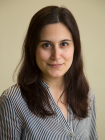
Professor Anna Korhonen is a leading academic at the University of Cambridge, holding positions as Professor of Natural Language Processing, Co-Director of the Language Technology Laboratory (LTL), Director of the Centre for Human-Inspired Artificial Intelligence (CHIA), and Fellow of Churchill College. Her work bridges computational linguistics, artificial intelligence, and interdisciplinary applications. Her research focuses on human-centric NLP with core interests in multilingual/low-resource systems, conversational AI, and responsible technology development. She emphasizes applications for social and global good, including healthcare, climate science, and equitable language technologies. Her methodology integrates cognitive modeling with machine learning to create interpretable, fair NLP systems. Key projects include ERC-funded initiatives like MultiConvAI (multilingual conversational AI) and Towards Globally Equitable Language Technologies , alongside Innovate UK's ESG RoboFactory and EPSRC's Modeling Idiomaticity project. Her work spans biomedical text mining ( PheneBank , LION ), educational technology ( EF Education First Research Lab ), and cross-lingual transfer learning. Fellow of the Association for Computational Linguistics (ACL) Fellow of ELLIS (European Laboratory for Learning and Intelligent Systems) Royal Society University Research Fellow (2005-2014) Google Faculty Award recipient EACL Chair Elect Korhonen actively supervises PhD/MPhil students in Computation, Cognition and Language programs and leads interdisciplinary collaborations across computer science, linguistics, and domain sciences. Her lab (LTL) develops foundational NLP techniques while addressing real-world challenges through partnerships with healthcare, environmental science, and education sectors. Current strategic initiatives include the Institute for Technology and Humanity and CHIA's human-inspired AI framework.
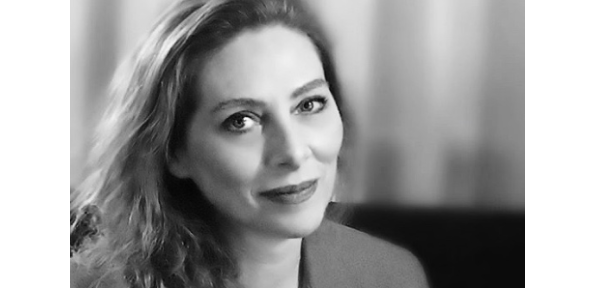
Prof. Dr. Claudine Moulin is a Full Professor of Historical Linguistics at the Department of German Studies, University of Trier. She co-directs the Trier Center for Digital Humanities and serves as Vertrauensdozentin der Deutschen Forschungsgemeinschaft. With academic roots in Brussels and Bamberg, she completed her PhD in 1990 and Habilitation in 1999 at the University of Bamberg. Her research spans medieval and early modern languages, manuscript studies, digital humanities, and Luxembourgish linguistics. As a leading scholar in historical linguistics, Moulin's work explores urban language history, phraseology, and cultural knowledge transmission through manuscripts. She has directed major digital humanities projects like LexicoLux and Cartul@rium, while pioneering digital codicology methods for medieval texts. Her research combines traditional philology with computational approaches. Her academic accolades include the Akademiepreis Rheinland-Pfalz (2010), Landesverdienstorden (2014), and the Verdienstkreuz am Bande (2025). She has held visiting professorships at Sorbonne, EHESS Paris, and EPHE, and received fellowships from the Humboldt Foundation and European Science Foundation. Notable Academic Roles: Co-founder and Chair of DHd (Digital Humanities in German-speaking countries) Founding member of Trier Center for Language and Communication Member of German Historical Institute Paris scientific board Advisory positions at Austrian Center for Digital Humanities and Herzog August Bibliothek Her editorial leadership includes chief editorship of Sprachwissenschaft journal and co-editorship of Germanistische Bibliothek monograph series. She has mentored over 40 graduate students in topics ranging from medieval marginalia to urban language studies.
Ali Karjoo-Ravary is the Richard W. Bulliet Assistant Professor of Islamic History at Columbia University, specializing in the intellectual, social, and visual histories of premodern Islam through Arabic, Persian, and Turkic sources. His research intersects historical writing, cosmology, Sufism, and multilingual poetry in the Islamic East (Mashriq). Education: Ph.D., University of Pennsylvania (2018) M.A., University of Pennsylvania (2016) B.A., SUNY Stony Brook (2011) His current book project, Muhammad’s Song: Politics, Performance, and Cosmology in the Fourteenth Century , examines post-Mongol Islamic monarchy through Kadi Burhaneddin's life and rule. He also explores Sufi visual iconography, science fiction's relationship to religion, and architecture's role in evolving Islamic discourses. Scientific Awards and Fellowships: Bard Graduate Center Visiting Fellow (Fall 2020) Wolf Humanities Center Graduate Research Fellow (2016-2017)
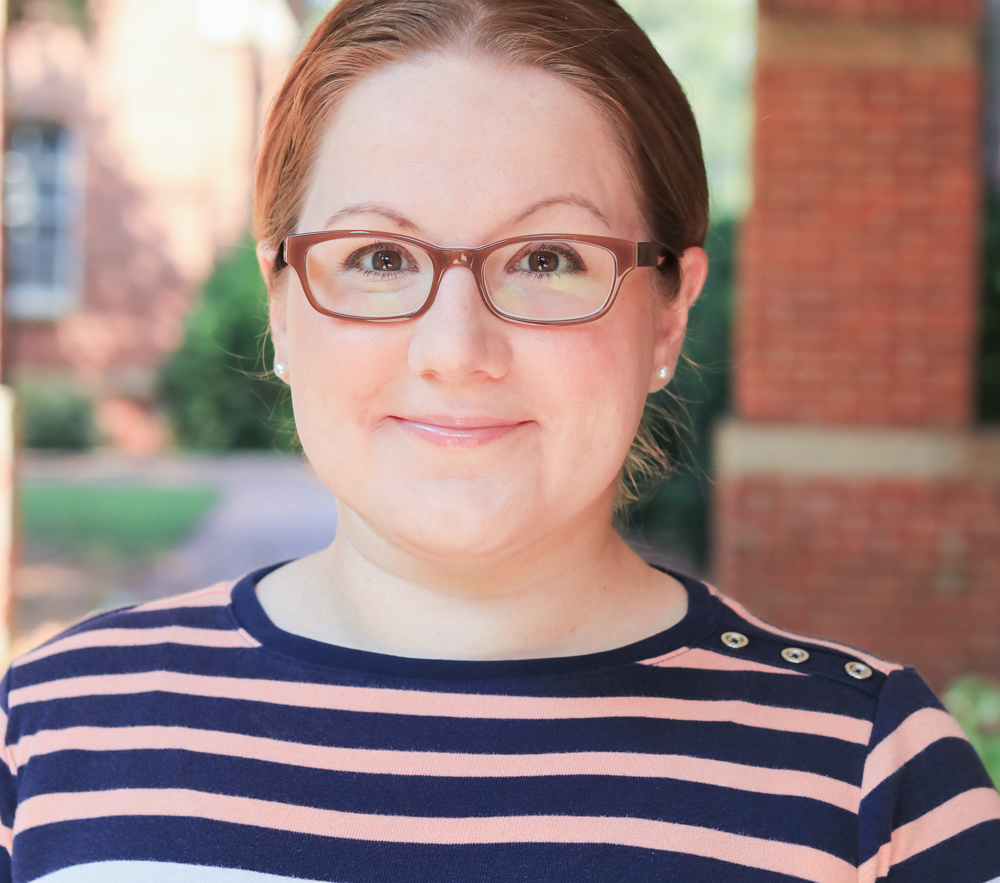
Henriëtte Hendriks is a Professor in Language Acquisition and Cognition at the University of Cambridge, affiliated with the Faculty of Modern and Medieval Languages and Linguistics and the Theoretical and Applied Linguistics (TAL) department. She leads the Cambridge Processing and Acquisition of Language lab (CAMPAL) and serves as Deputy Director of the Centre for Lifelong Learning and Individualised Cognition (CLIC). Education: Sinology at Leiden University Early Career: Coordinator at Max-Planck Institute for Psycholinguistics (DFG/ESF projects) Her research explores how languages encode concepts (person, time, space, causality) and their impact on language acquisition. Key themes include: Cognitive Linguistics and Language-Cognition Interfaces First and Second Language Acquisition Mechanisms Multilingualism and Cognitive Flexibility Typological Variation in Semantic Structures Deictic Terms and Dynamic Space Representation Recent publications focus on motion event typology across English, German, French, and Uyghur, examining cross-linguistic influences in acquisition processes. Her work combines experimental methods with syntactic analysis to study semantic mapping and grammaticalization in multilingual contexts. Current projects include: Centre for Lifelong Learning and Individualised Cognition (CLIC) - Principal Investigator MEITS Project (Strand 5) - Co-Investigator Cambridge Language Sciences Incubator projects on cognitive pacing and parental linguistic contributions International DeicTeS project on deictic meaning processes Labs & Teams: Cambridge Processing and Acquisition of Language lab (CAMPAL) Collaborations with Zoe Kourtzi, Vicky Leong, and Clare Hughes
Andrew J Fleck is an Associate Professor in the English and Comparative Literature Department at San José State University, affiliated with the College of Humanities and the Arts. He has been teaching since 2001, specializing in Early Modern British Literature with a focus on Dutch-English cultural relations between 1588-1688. Fleck holds a PhD from Claremont Graduate University (2000). His research explores how Dutch figures influenced English literary and cultural imagination, including studies on John Donne, Thomas Nashe, and early modern drama. He has published widely in journals like Studies in Philology and Journal of British Studies , with a particular emphasis on textual analysis, historical narratives, and cross-cultural exchanges. Fleck’s work spans from examining the role of Dutch language performances in early modern theater to analyzing the representation of national identity in texts like The Shoemaker’s Holiday . His recent publications (2013) include studies on John Donne’s engagement with astronomical themes and global adaptations of Macbeth . He maintains an active presence in academic encyclopedias, contributing entries on Milton’s Dutch connections and Renaissance authors. His scholarship bridges literary analysis with historical context, often highlighting how literature reflects political, religious, and cultural tensions of the period. Fleck’s teaching and research reflect a commitment to interdisciplinary approaches, integrating historical, linguistic, and cultural methodologies.
Alexander Key is an Associate Professor of Comparative Literature at Stanford University, specializing in Classical Arabic literature and the intellectual history of Arabic and Persian-speaking worlds from the 7th century onwards. His scholarship focuses on the philosophy of language, literary theory, and cross-cultural translation. Ph.D. in Arabic and Islamic Studies from Harvard University (2012) Current research: Arabo-Persian linguistic intersections, poetics in translation, and pre-modern theories of syntax and affect His articles span diverse eras and topics, including: Medieval Arabic language philosophy (5th–11th century) Modern Arabic political poetry analysis (20th–21st century) Comparative methodologies bridging Islamic and Western traditions A key editorial role includes: Board Member of Stanford University Press Advisory roles at Habib University and Stanford’s Markaz Resource Center His work bridges academic publication with public discourse through: Contributions to Arcade Colloquy Interviews on poetics, religion, and contemporary politics Podcasts and literary salon discussions
Andrew Ollett is an Associate Professor and Director of Graduate Studies in the Department of South Asian Languages and Civilizations at the University of Chicago , where he has taught since 2019. His research focuses on the literary and intellectual traditions of South and Southeast Asia, particularly through works in Sanskrit, Prakrit, Apabhramsha, and Kannada from the first millennium CE. Co-founder and editor of NESAR (New Explorations in South Asia Research) Director of NEH-funded edition/translation of the Kavirājamārga (earliest Kannada literary manual) Expert in Prakrit and Kannada literary traditions His work explores the 'question of language'—examining how language choice shaped cultural production and change in premodern India. Current projects include a monograph on context-sensitivity in Indian language theories and a study of manuscript technology's impact on early South Asian knowledge communities. He has authored The Mirror of Ornaments (Naples: Unior Press, 2025) and Language of the Snakes (UC Press, 2017), and co-authored Lilavai (Harvard, 2021). Recent publications include interdisciplinary studies on: Sanskrit-Prakrit campū genre reevaluation Pragmatics in Mīmāṁsā interpretive concepts Manuscript literacy's influence on literary forms Historical linguistics of Middle Indic syllable reduction Philosophy of language in Śālikanātha and Kumārila Bhaṭṭa Awarded the NEH 'Scholarly Editions and Translations' grant , he teaches classical South Asian literature courses covering Sanskrit, Prakrit, and Tamil traditions. He maintains digital resources including a Prakrit Digital Texts Project and Mīmāṁsādigdarśinī digital text repository, and actively contributes to open-access scholarship.
Lucia Binotti is a Professor of Spanish and Digital Humanities at the University of North Carolina at Chapel Hill (UNC-CH), with dual affiliations in the Department of Romance Studies and interdisciplinary Digital Humanities initiatives. She serves as Graduate Advisor for Hispanic Linguistics and Director of the Honors Study Abroad Program in Rome. Her work bridges traditional philology with cutting-edge digital scholarship, emphasizing immersive learning experiences through virtual reality (VR) and augmented reality (AR) technologies. Binotti holds a Ph.D. from UC Santa Barbara (1990), an MA (1985), and a BA (1984) in Romance Philology from the Università degli Studi di Pisa. Her research focuses on linguistic identity, cultural heritage preservation, and innovative educational platforms like Amirabilia—the world’s first experiential learning platform. Notable projects include nXimena (healthcare training for Latinx abuse survivors) and Entiendelo (a linguistic/cultural navigation app for Latinx communities). Her scholarly interests span Early Modern Spanish literature, digital humanities applications, and the intersection of technology with social justice. She has directed grants totaling over $500K for projects involving AR/VR integration in education, including collaborations with the UNC Health Science Library and NCSU’s DELTA initiative. Recent awards include the John K. Walsh Award (2010) and Digital Innovation Fellow status (2014). Grants & Leadership: CFE-Lenovo Technology Grants (2018–2019) for AR/VR expansion iLRN 2020 International Co-Chair XR Faculty Learning Community Leader (UNC) Teaching: Courses span from introductory Hispanic literature to advanced topics like medieval intellectual history and digital humanities methodologies. Binotti’s work emphasizes ‘place, presence, and perspective’ in Cyber-Humanities education, particularly addressing marginalized communities through technology-driven solutions.
Dr. Julia Costa López is an Assistant Professor (tenured) in History and Theory of International Relations at the Department of International Relations and International Organisation, Faculty of Arts, University of Groningen. Her work bridges international relations, history, and political thought, focusing on how historical frameworks shape modern disciplinary concepts. PhD from University of Oxford Lecturer at St Hilda's College Fulbright scholar at University of Denver's Josef Korbel School Graduate studies at University of Cambridge Research spans medieval political authority, sovereignty emergence, racialized medievalisms in extremism, and translation politics in global scholarship. Key projects include Routledge Handbook of Historical International Relations (2021) and the Oxford Handbook of History and International Relations (2023). Publications address Eurocentrism, conspiratorial ideology, and ritual's role in authority production. Scientific contributions appear in Cambridge Review of International Affairs , International Organization , and European Journal of International Law . Awards include the Fulbright scholarship. Recent work explores terraqueous relations and premodern world conceptualizations, challenging simplistic land-sea dichotomies in IR.
Professor Helena Sanson is a Full Professor of Italian, History of Linguistics, and Women's Studies at the University of Cambridge , where she is also a Fellow of Clare College and serves as Postgraduate Teaching and Examining Officer for the Italian Section. She joined Cambridge in 2005 after teaching at University College London (1998-2003) following her British Academy Postdoctoral Fellowship. PhD from University of Reading (2002) Her interdisciplinary research focuses on the intersection of Italian linguistic history , literary culture , and gender studies from the Renaissance to post-Unification period. Particular emphasis includes women's contributions to linguistic thought , conduct literature analysis , and female roles in translation networks . Her work examines how women navigated language standardization, educational access, and literary production across social strata. Recent projects include Leverhulme-funded research on women's linguistic experiences in 18th-19th century Italy and co-edited volumes on transnational travelers' accounts and early modern female education . She founded the Women and Gender in Italy (1500-1900) book series and the journal Women Language Literature in Italy . Scientific awards include: British Academy Postdoctoral Fellowship Leverhulme Research Fellowship Philip Leverhulme Prize CRASSH Early Career Fellowship Isaac Newton Trust grant Senior Visiting Fellowship at University of Bologna She supervises graduate research in topics spanning women's writing , linguistic thought , translation history , and cultural marginalization in 16th-20th century Italy. Her work bridges philology, literary criticism, and social history through rigorous textual analysis.
Dr. Hannah Zdansky is an Assistant Professor of English at Belmont Abbey College, specializing in medieval languages, literatures, and manuscript studies. Her research focuses on cross-cultural connections in medieval Britain and Ireland, particularly exploring multilingualism, religion in literature, and medieval reading practices. She holds a B.A. from Baylor University, an M.A. from the National University of Ireland, Galway, and a Ph.D. from the University of Notre Dame. Her expertise spans Old and Middle English, French, Irish, Welsh, and Latin, with a methodological focus on digital humanities and the history of the book. Dr. Zdansky’s work examines how medieval literary and material cultures were shaped by multicultural interactions, including studies on medieval manuscripts, the role of women in literary production, and the intersection of religion with secular narratives. Her recent scholarly engagements include presentations on topics like the transnational dimensions of medieval texts, the interplay between sacred and secular themes in works such as Gui o Bharbhuic , and comparative analyses of Welsh and English manuscript traditions. Her publications span peer-reviewed articles, encyclopedia entries, and book reviews, reflecting her commitment to interdisciplinary medieval studies. Dr. Zdansky teaches a wide range of courses, from Old English Language and Literature to Irish History, emphasizing close textual analysis and historical context. She has advised numerous students through independent studies and thesis work, fostering academic rigor and intellectual curiosity in her classroom.
Mohammad T. Alhawary is Professor of Arabic Linguistics and Second Language Acquisition at the University of Michigan's Middle East Studies department within the College of Literature, Science, and the Arts. He serves as Director of both the MA Program in Arabic for Professional Purposes (APP) and the MA Program in Teaching Arabic as a Foreign Language (TAFL). His educational background includes a Ph.D. from Georgetown University (1999). Prior to joining the University of Michigan, he contributed to developing Arabic and Middle Eastern Studies programs at various US institutions. Professor Alhawary's research spans both theoretical and applied Arabic linguistics, with particular focus on second language acquisition processes. His work examines how factors like age, input quality, output practice, and first language transfer affect Arabic language learning. He has made significant contributions to understanding Arabic language pedagogy, curriculum design, proficiency testing, and the application of technology in language learning. His research also extends to bilingualism, multilingualism, language impairment, and Arabic medieval grammatical traditions. His publications reflect a strong trajectory in Arabic linguistics research, with recent works focusing on practical language teaching applications, reading comprehension mechanisms, code-switching patterns in digital communication, and multilingual acquisition processes. The 2023 publication 'Teaching Arabic as a Foreign Language' represents his latest contribution to language pedagogy methodology. 2019 AATA Book Award for 'Arabic Second Language Learning and Effects of Input, Transfer, and Typology' As an academic leader, Professor Alhawary serves as Executive Director of the American Association of Teachers of Arabic and edits both the Journal of Arabic Linguistics Tradition and Al-'Arabiyya journal. He continues to develop empirical research on Arabic second language acquisition to inform teaching practices both in America and globally.
Hakan Özkan is a Privatdozent and Research Associate at the Institute of Arabic and Islamic Studies, Department of Middle Eastern Studies, University of Münster, where he has been working since 2007 in various capacities. He was awarded his Venia Legendi (Habilitation) in November 2019 for Arabic and Islamic Studies with his thesis 'History of Eastern Zajal – Dialectal Arabic Verse Poetry from the East of the Arab World.' His academic background includes a Franco-German doctorate completed in 2006 from Université de Provence and University of Cologne, supervised by Claude Audebert and Monika Gronke, with external reviewers including Wolfhart P. Heinrichs from Harvard University. His educational background includes: 2019: Venia Legendi for Arabic and Islamic Studies, University of Münster 2002-2006: Franco-German Doctorate in Arabic Studies and Narratology (Université de Provence and University of Cologne) 1995-2000: Master of Arts in Islamic Studies, Oriental Languages and Literatures (University of Cologne) 2000-2001: Course program in Modern Standard Arabic and Syrian-Lebanese dialect at Institut Français d'Etudes Arabes de Damas Özkan's research focuses on premodern Arabic dialect poetry, particularly zajal and muwashshaḥ forms, narratology, prosimeter literature, socio-literary history, and diachronic dialectology. His interdisciplinary approach bridges linguistic analysis with literary criticism, examining how dialectal forms evolved within Arabic literary traditions across different historical periods and geographical regions. He has conducted extensive field research in Arab countries including Syria, Egypt, Lebanon, Tunisia, and Morocco, with particular emphasis on the historical development of poetic forms from the Mamluk through Ottoman periods. His publication history demonstrates consistent scholarly contributions to Arabic literary studies, with his 2020 monograph 'History of Eastern Zajal' representing a landmark study in the field. His recent work has expanded to include analyses of religious poetry praising the Prophet Muhammad in zajal form, wine poetry in Arabic literary traditions, and the integration of dialects into Arabic language teaching methodologies. His scholarly output spans monographs, critical editions, encyclopedia entries, journal articles, and book chapters across multiple languages including German, English, French, and Turkish. Among his academic recognitions: 2018: Second place on shortlist for W2 Professorship for Arabic Language and Translation Science, University of Leipzig 2008: Offered Junior Professorship at American University in Cairo (declined) 2007: Second place on shortlist for maître de conférence position at University of Nancy 2007: Official Qualification from National University Council (CNU) for positions as maître de conférence at French universities Özkan has served on numerous academic committees, including appointment committees for professorships in Sinology and Arabic and Islamic Studies at the University of Münster. He has been a juror for the Sheikh Hamad Award for Translation and International Understanding in Doha and has served on the steering committee for the 'Translation for Dialogue' program of the Anna Lindh Foundation. His editorial work includes reviewing for Mamluk Studies Review, Die Welt des Islams, and Middle Eastern Literatures since 2012. His scholarly activities extend to linguistic fieldwork on Pontic Greek dialects in Turkey and organizing significant academic conferences including 'The Race Course of Literature – An-Nawāǧī and His Contemporaries' in 2018 at the University of Münster. His multilingual capabilities (Arabic, Turkish, German, French, English, Persian, Ottoman Turkish, and knowledge of Modern Greek) enable his comparative work across multiple linguistic and cultural traditions in the Mediterranean region.
Dr Syamala Roberts serves as an Affiliated Lecturer in the German Section of the Faculty of Modern and Medieval Languages and Linguistics at the University of Cambridge and holds a Fellowship with Director of Studies responsibilities at Emmanuel College. Her academic profile spans teaching German and Comparative Literatures from the 18th century to contemporary periods, alongside specialized supervision in undergraduate papers Ge1, Ge5, Ge6, and Ge12. Her educational foundation encompasses German, French, and Comparative Literatures studied across the University of Cambridge, University of Paris, and Humboldt University of Berlin. This multilingual background informs her interdisciplinary scholarship. Roberts' research investigates Modernism through intersecting lenses of Sound Studies, Media Theory, and Art History, with particular emphasis on auditory representation in early 20th-century German texts. Her doctoral work identified emerging 'aural imaginaries' in Rilke, Kafka, and Thomas Mann, while current postdoctoral research examines Indo-German cultural cross-fertilization during the interwar period. This includes analyzing reciprocal intellectual exchanges between German-speaking intellectuals and pre-independence Indian thinkers through literary and artistic production. Recent publications demonstrate consistent thematic focus across German literary studies and cross-cultural analysis, particularly in journals like the Publications of the English Goethe Society and Austrian Studies. Key contributions address Kafka's auditory poetics, comparative studies of Mann's Death in Venice with Rilke's elegies, and critical assessments of German-Indian cultural intersections. No major scientific awards are documented in available sources. As Director of Studies, Roberts provides undergraduate supervision and encourages Year Abroad Project proposals aligned with her research interests. Her postdoctoral work receives institutional support through an Emmanuel College research fellowship.
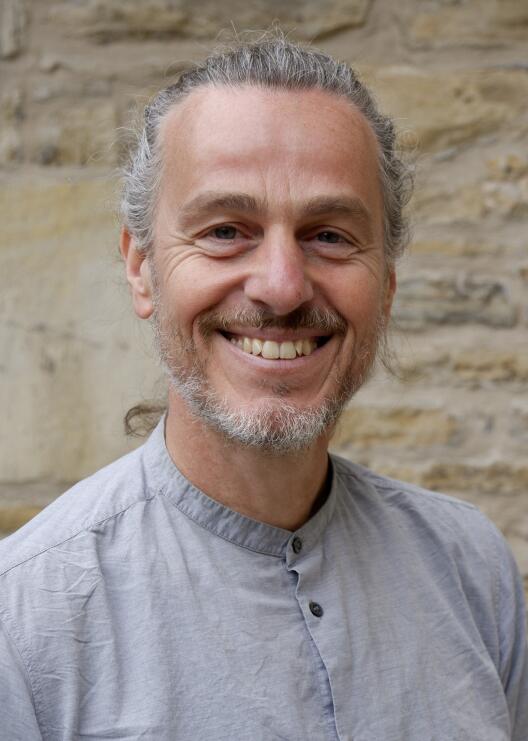
David Burn is a Professor and Program Director of the POC Archeologie, Kunstwetenschappen en Musicologie (AKM) at the Faculty of Arts, KU Leuven. His research focuses on Heinrich Isaac and Renaissance musicology, with specializations in polyphony, liturgical chant, and source-critical studies. He leads multiple projects on medieval and Renaissance courtly song, Jesuit musical heritage, and multilingualism in early song. Burn supervises doctoral research and teaches courses on music history, analysis, and digital musicology. His editorial work includes co-editing the Journal of the Alamire Foundation . Research Interests: Polyphony, liturgical music, 15th–16th century Imperial lands, source studies, early music analysis. Teaching: Courses include 'Analysis in Context: Music to 1750', 'Music of the Middle Ages and Renaissance', and 'Research Colloquia in Musicology'. Projects: Promoting studies on Trouvère music, Jesuit musical inheritance, and Scottish polyphony. He actively contributes to academic conferences and publishes on topics like Czech National Library manuscripts and Low Countries musical traditions.